
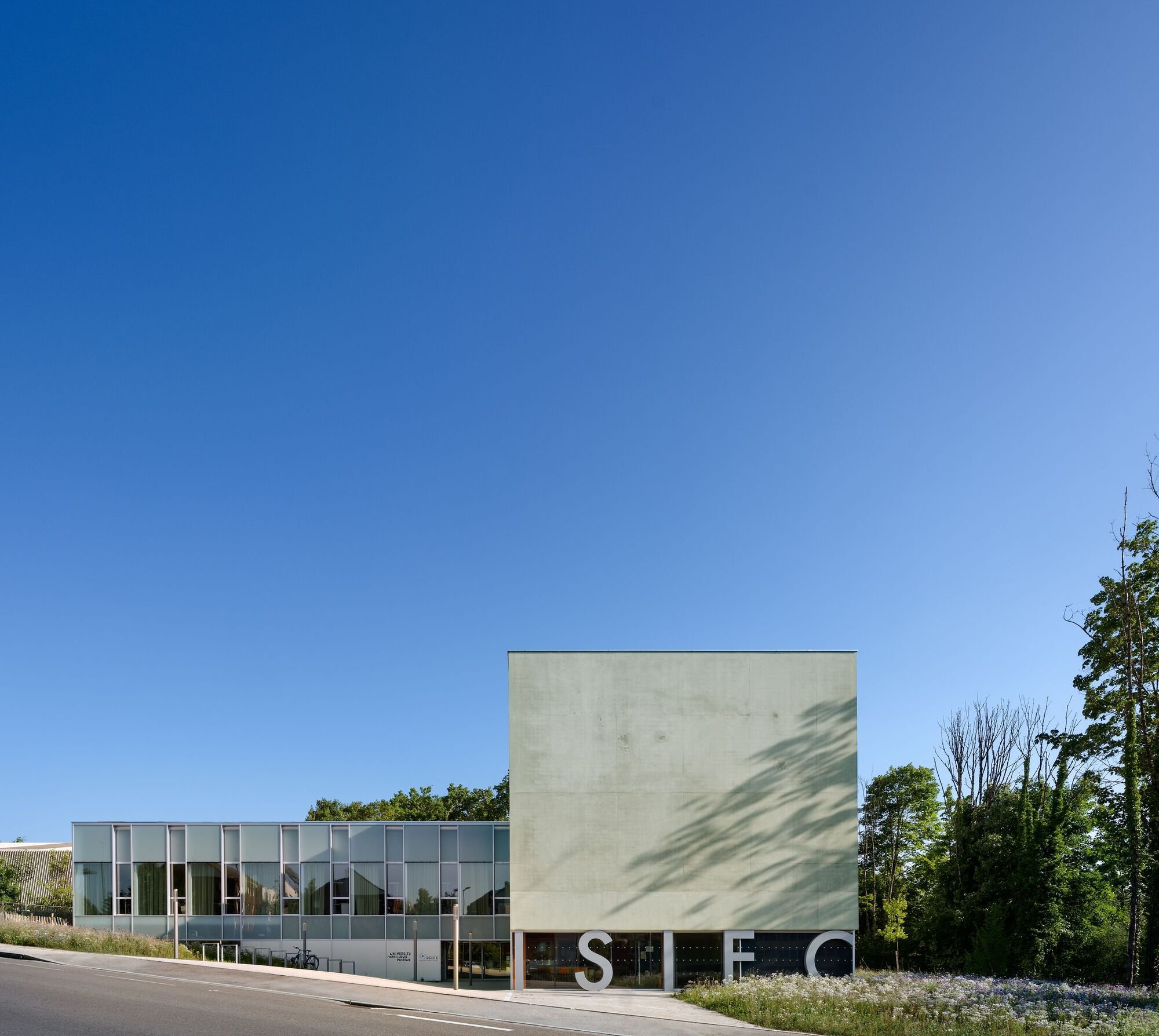
Franche-Comté Advanced School of Engineering by Dominique Coulon & associés, Besançon
A flexible engineering school immersed in woodland, combining concrete minimalism, adaptable spaces, and natural light to support evolving educational environments.

The Franche-Comté Advanced School of Engineering in Besançon, France, designed by Dominique Coulon & associés, is a compelling example of how architecture can mediate between landscape, pedagogy, and adaptability. Located within the Bouloie-Temis campus, the building is carefully positioned along a sloping road, embedding itself into a small protected woodland and establishing a direct relationship between learning spaces and nature.
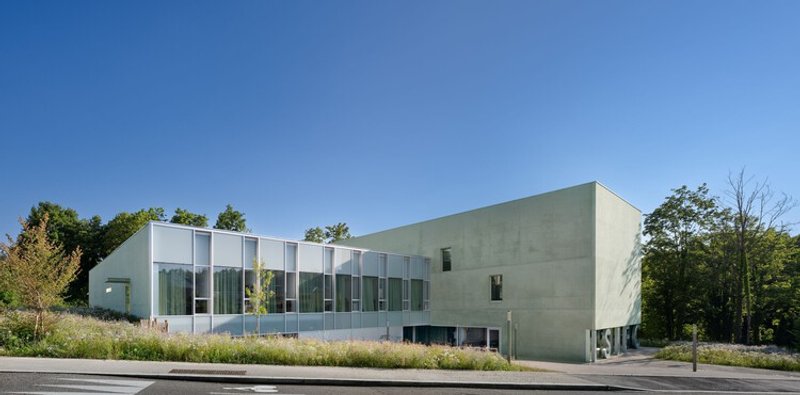
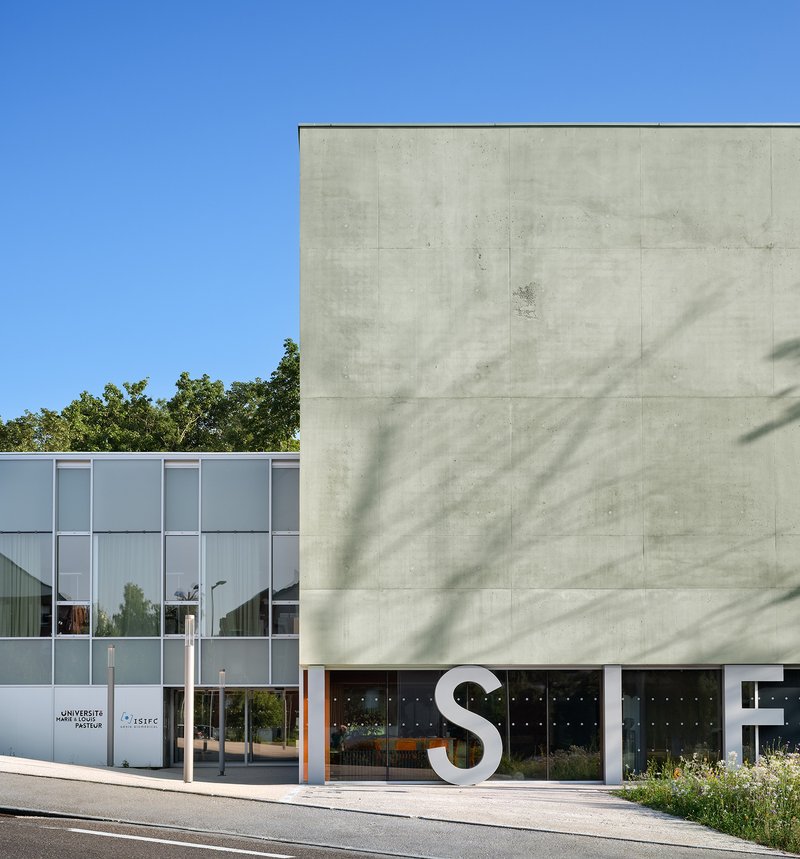
Rather than asserting itself as a dominant object, the school is conceived as a subtle intervention that integrates with its environment. The proximity of trees to the building envelope creates an immersive atmosphere, where classrooms benefit from filtered light, natural cooling, and constant visual connection to the surrounding forest. This approach reinforces a biophilic learning environment, enhancing both comfort and spatial quality.
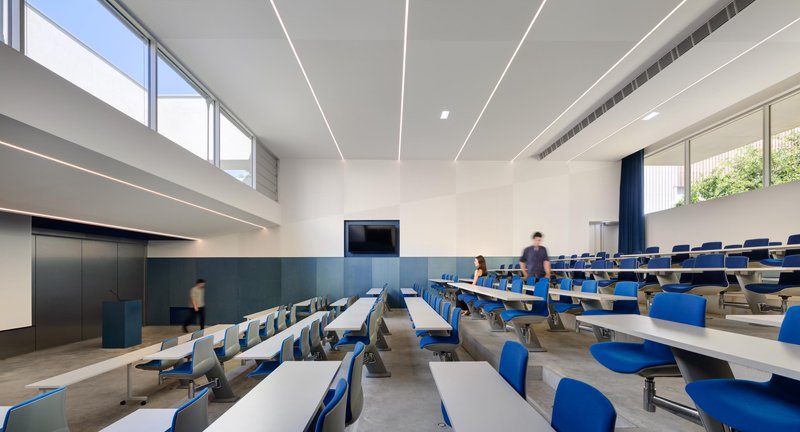
The building is organized into two distinct volumes, allowing for functional clarity and future expansion. One volume accommodates specialized spaces, including a large lecture hall, conference facilities, and administrative areas. The second volume houses standard classrooms and is elevated on pillars, creating a flexible ground plane and enabling potential extensions without disrupting the existing structure.
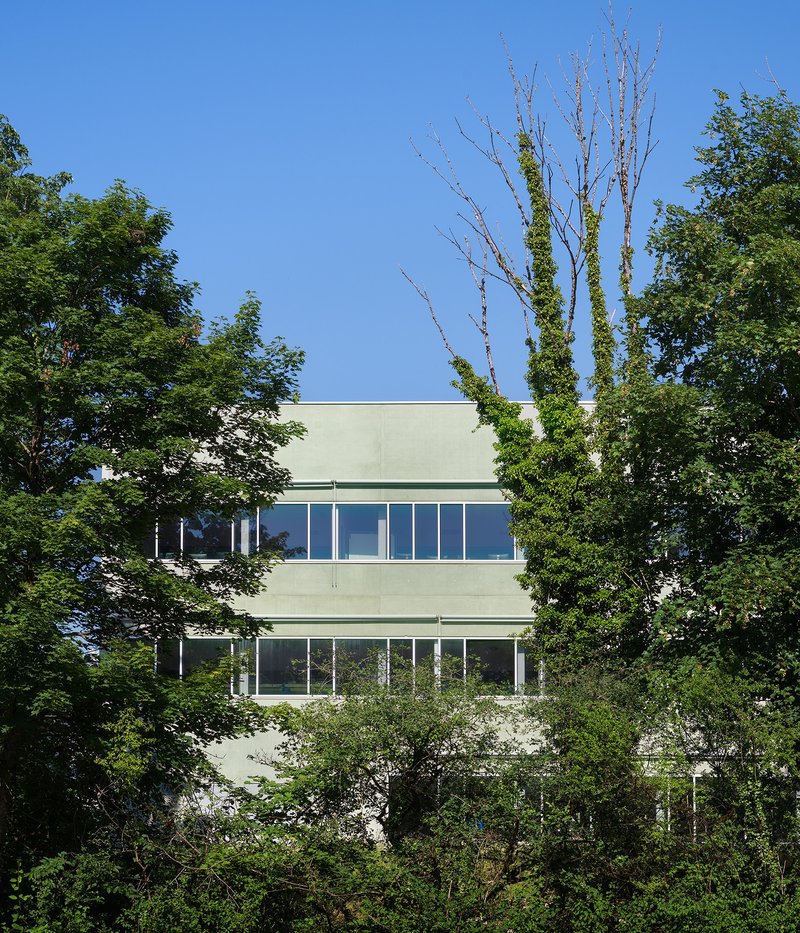
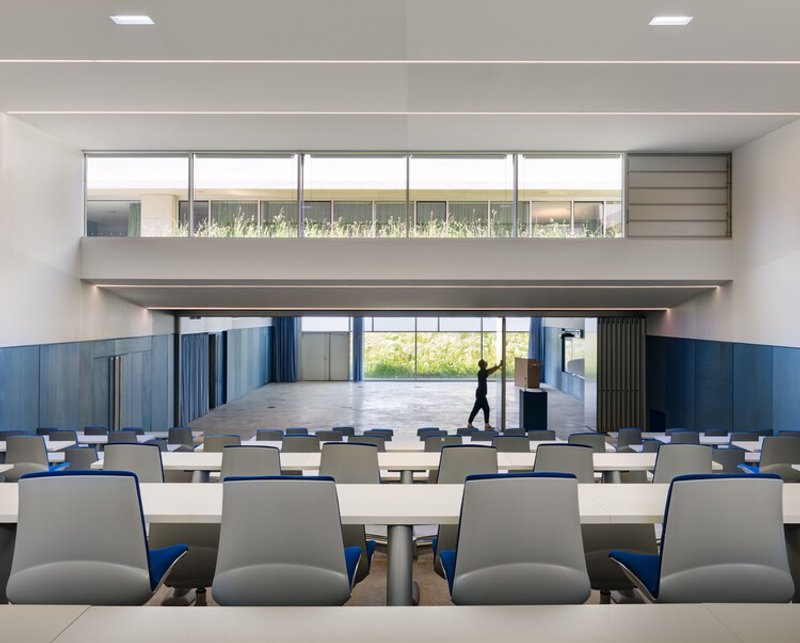
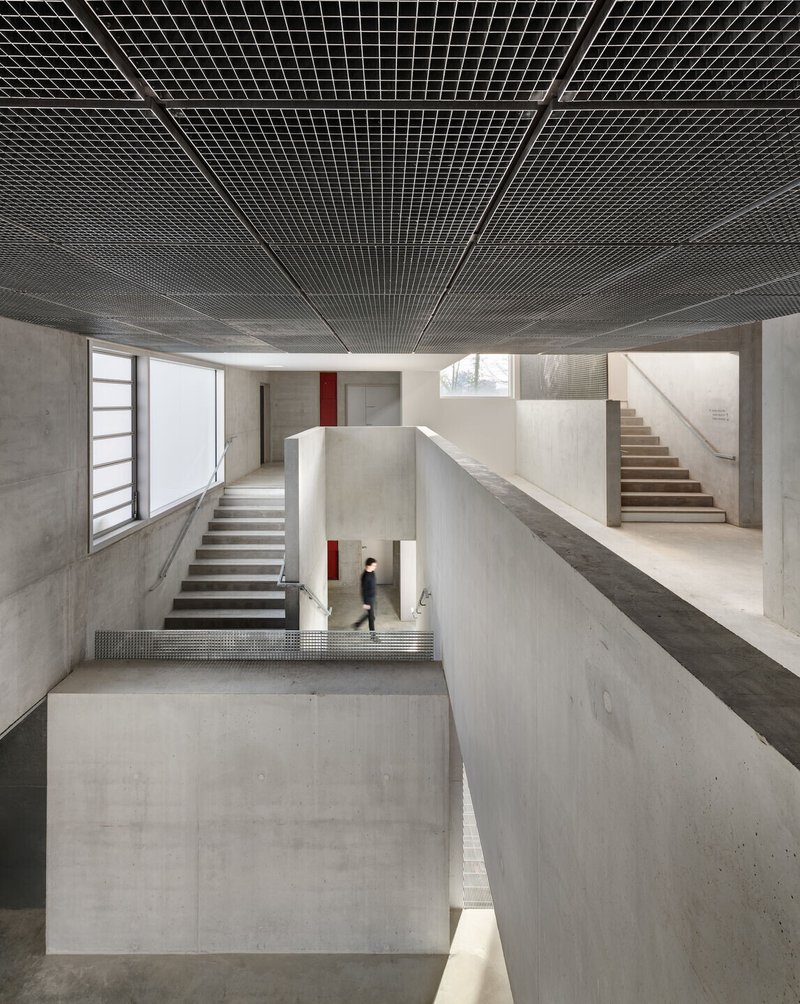
A key architectural concept is the idea of a “gradual slide,” which generates a sequence of transitional spaces throughout the building. This spatial strategy enhances internal fluidity and creates a sense of openness, encouraging movement, interaction, and informal encounters among students and faculty. Collective areas are intentionally designed to support exhibitions and collaborative activities, reflecting the evolving nature of engineering education.
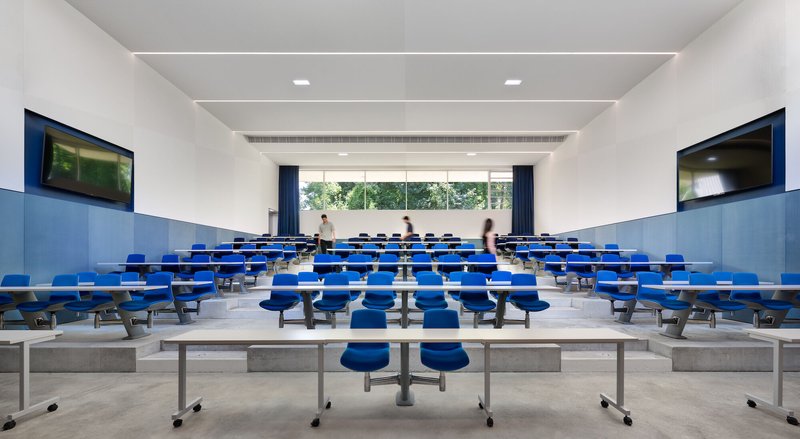
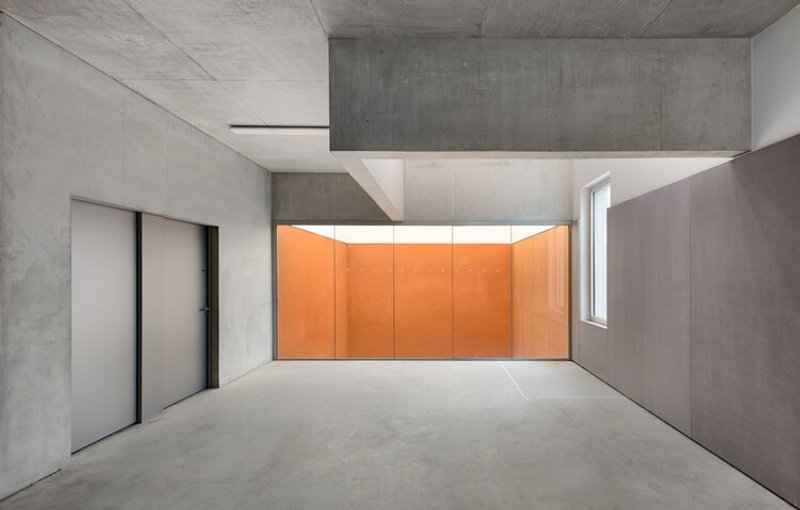
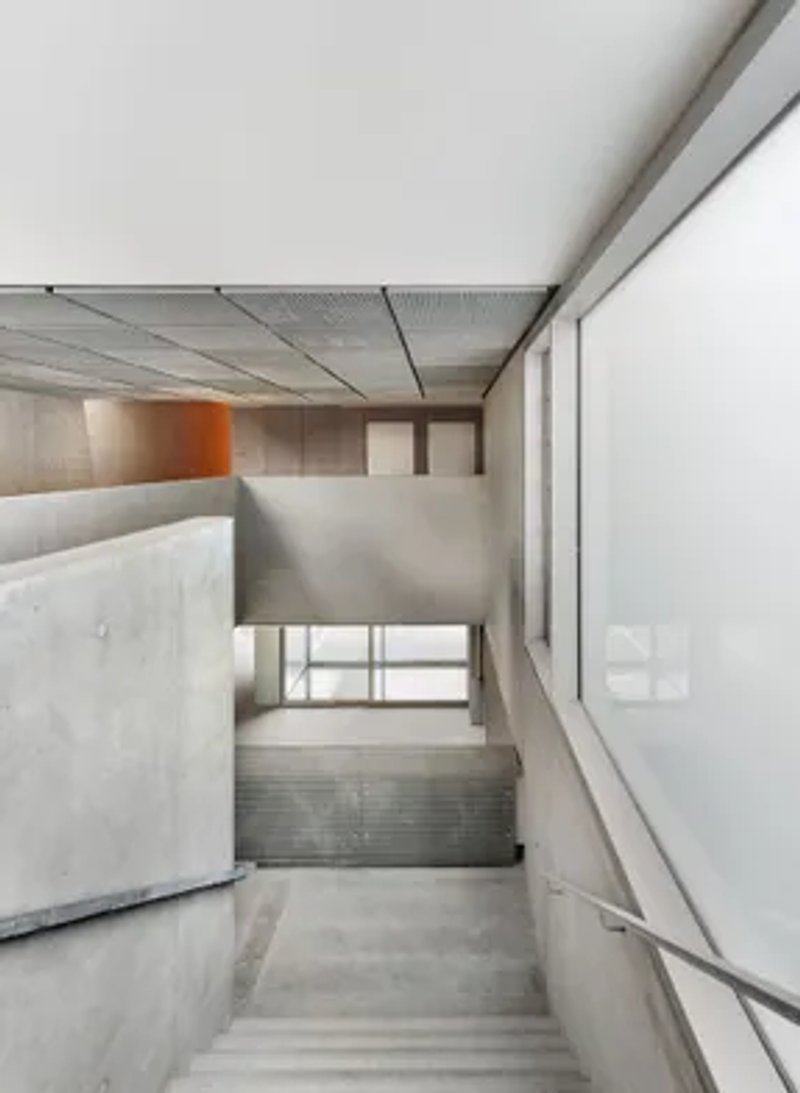
Inside, the architecture is defined by a raw and honest material palette. Exposed concrete surfaces establish a calm and neutral background, while generous volumes are filled with natural light. This restrained approach is punctuated by moments of vibrant color, most notably in the double-height student common room, where a bold orange hue introduces energy and contrast, transforming the space into a social focal point.
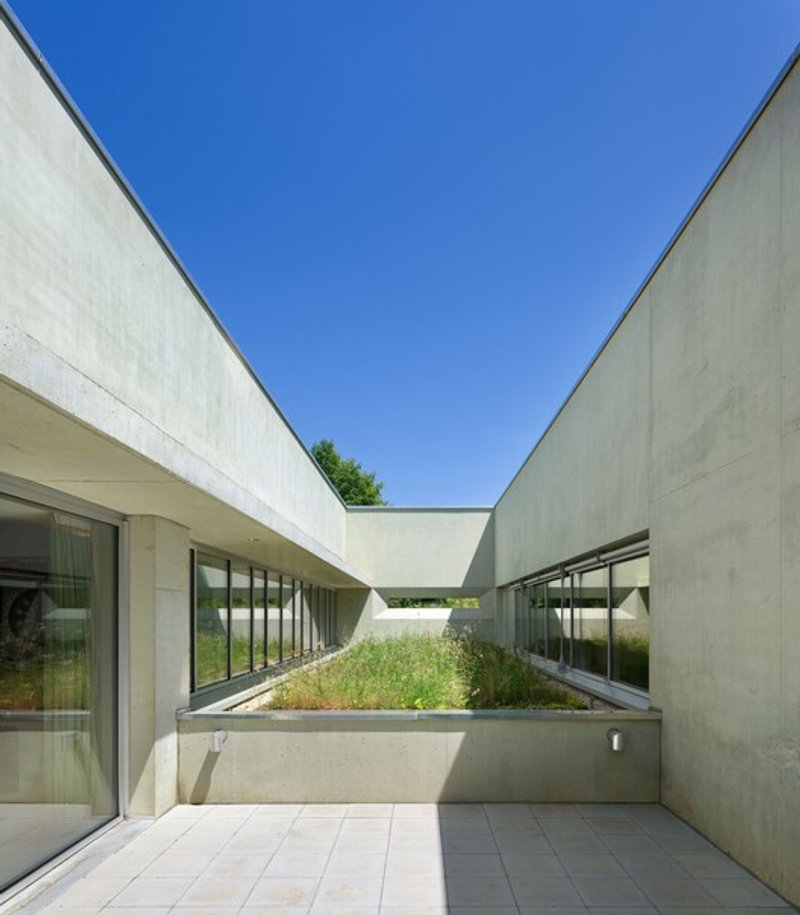
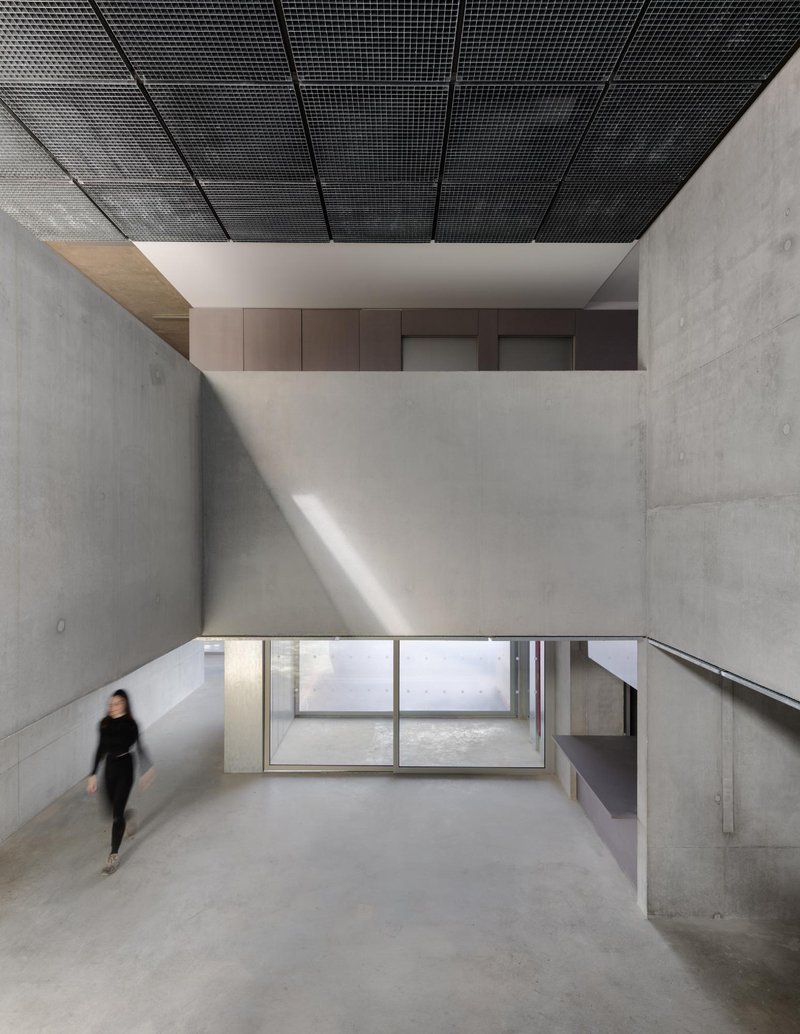
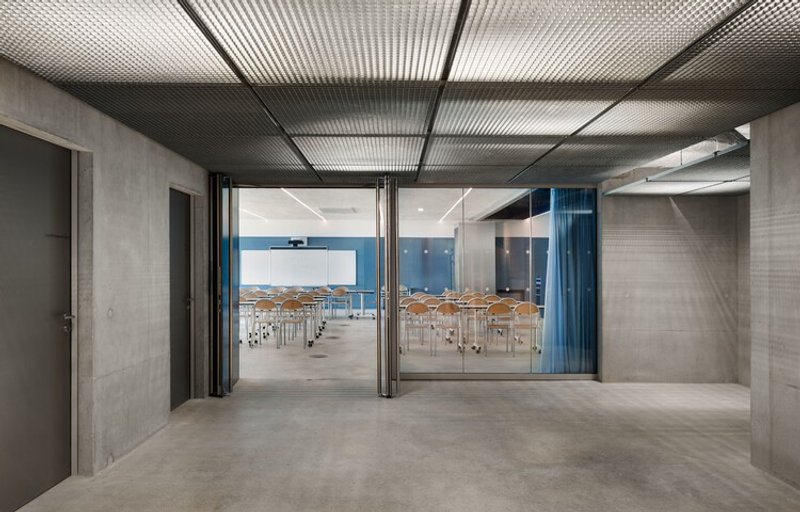
Flexibility is central to the project’s design logic. The lecture hall and examination room are connected by a sliding partition, allowing the spaces to merge into a larger venue for conferences and events. This adaptability extends throughout the building, enabling it to accommodate changing academic needs and diverse modes of learning.
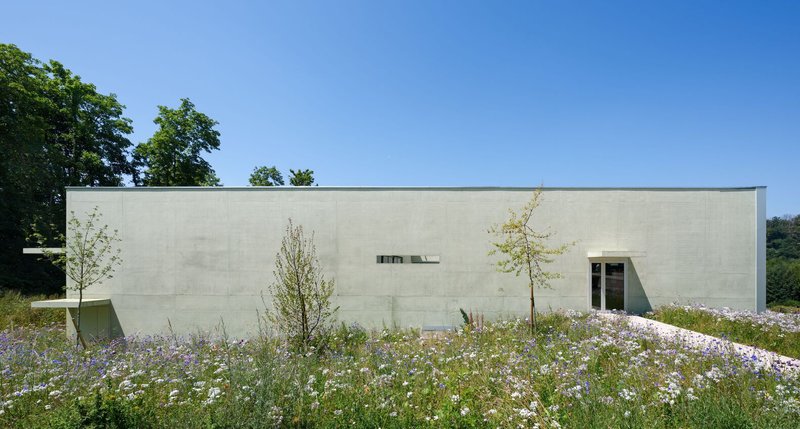
The concept of reversibility underpins the entire project. Spaces are designed not as fixed entities but as adaptable frameworks capable of evolving over time. This forward-thinking approach addresses the question of permanence in educational architecture, how buildings can remain relevant in the face of shifting pedagogical models and technological advancements.
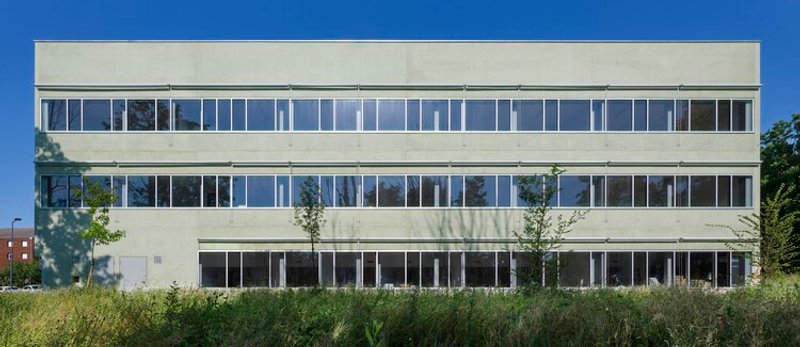
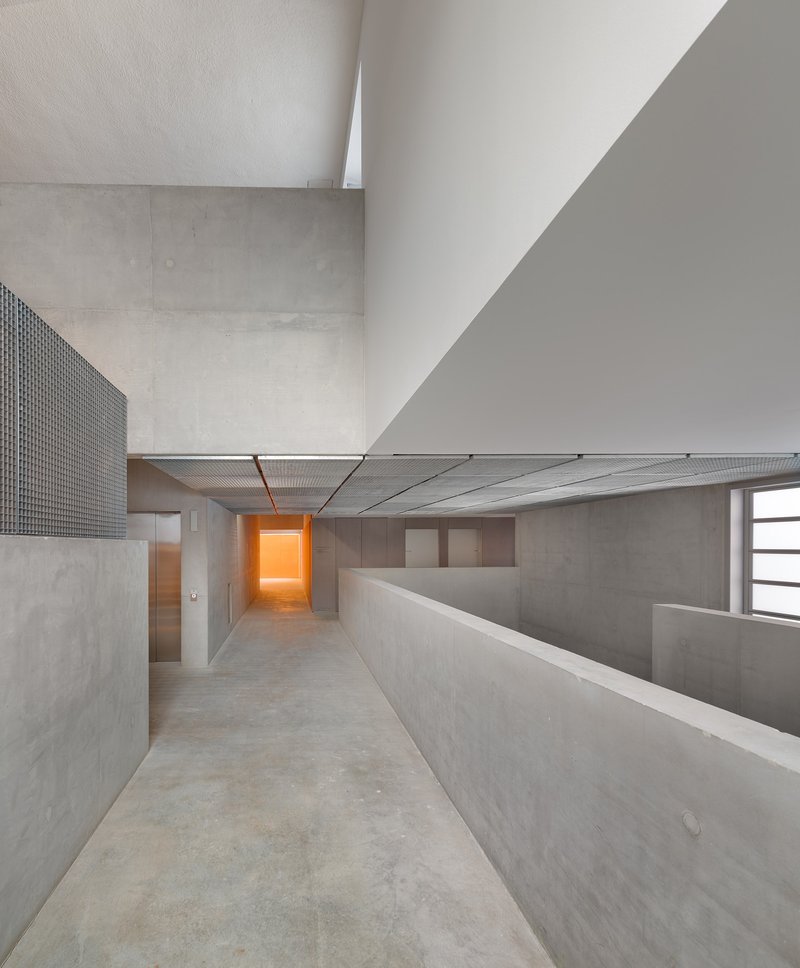
Despite its relatively modest size of 2,105 m², the school achieves a remarkable sense of spatial generosity. The interplay of light, volume, and material creates an environment that feels expansive and dynamic, supporting both individual focus and collective engagement.
Ultimately, the Franche-Comté Advanced School of Engineering demonstrates how thoughtful design can align architecture with education and environment. By integrating flexibility, natural context, and spatial clarity, Dominique Coulon & associés have created a building that is not only functional but also deeply responsive to its users and surroundings: an enduring framework for learning, interaction, and innovation.
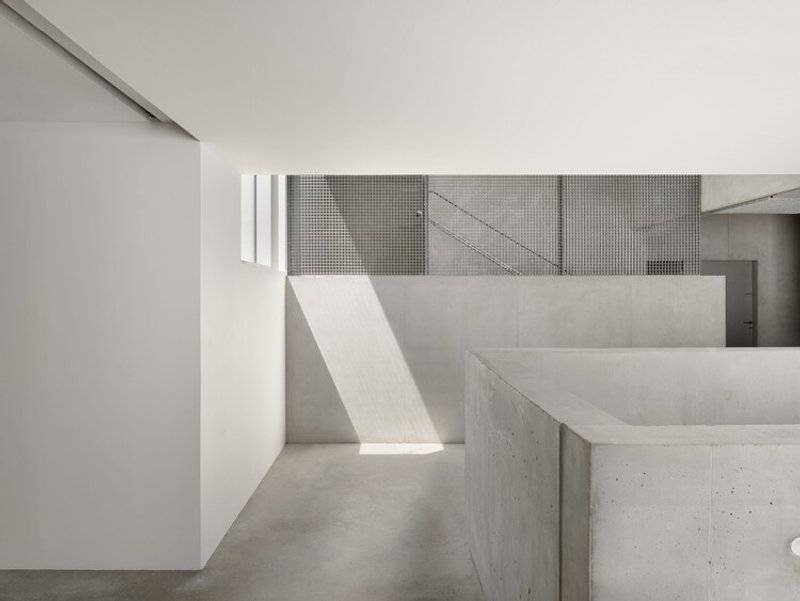
All the Photographs are works of Eugeni Pons




Popular Articles
Popular articles from the community

Takeshi Hosaka Architects Suspends a Concrete Cross Above a Yokohama Cemetery
A 28-square-meter burial renovation in Yokohama lifts the symbol of resurrection into the sky so mourners see it against heaven.
HCCH Studio Wraps a Shanghai High-Rise Office in Curved Walls of Translucent Glass
A 1,000 square meter fit-out in Lujiazui replaces the typical tech-office palette with layered glass, micro-cement, and quiet rigor.
Bernardes Arquitetura Stretches a Timber Roof Along a Reservoir's Edge in Minas Gerais
Dam House in Itaúna lets a sweeping wooden canopy dissolve the boundary between hillside terrain and open water.

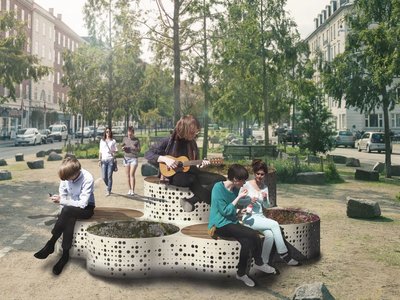
20 Most Popular Furniture Design Projects of 2025
Modular street systems, parametric benches, and insect hotels: the furniture design projects that captivated architects on uni.xyz in 2025.


Similar Reads
You might also enjoy these articles
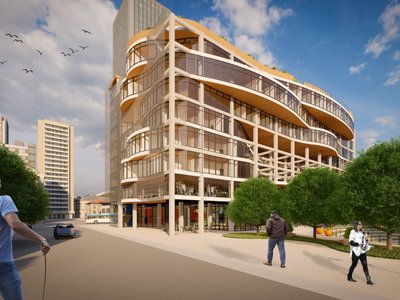
Olio Towers: A Mid-Rise for Performers That Fuses Housing, Rehearsal, and Stage
Located blocks from Houston's Theater District, this modular tower stacks living units around a central performance atrium.
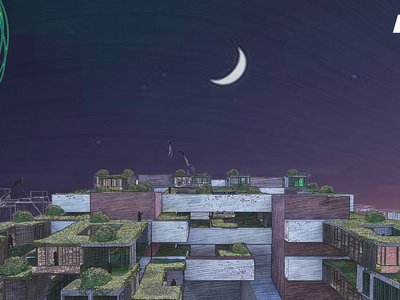
Oasis: Modular Green Housing Carved into Dhaka's Urban Fabric
A shortlisted Plugin Housing entry reclaims unauthorized settlements in Dhaka with stepped concrete volumes, green roofs, and ventilation-driven design.

Black Hole: A Floating Megastructure for the Post-Physical Era
Emiliano Mazzarotto envisions a spherical, self-scaling arena where e-sports, digital hotels, and holographic stadiums replace traditional public space.
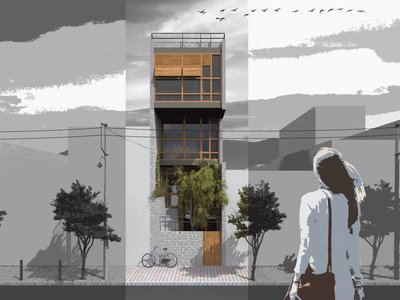
Compact & Sustainable Living in Piraeus: A Four-Level Family Home Built Around Light and Air
A narrow townhouse in one of Greece's densest port cities uses a central atrium and passive strategies to house three generations under one roof.

Explore Architecture Competitions
Discover active competitions in this discipline




The International Standard for Design Portfolios


The Global Benchmark for Architecture Dissertation Awards


The Global Benchmark for Graduation Excellence


Challenge to design public laboratory
Comments (0)
Please login or sign up to add comments
No comments yet. Be the first to comment!