

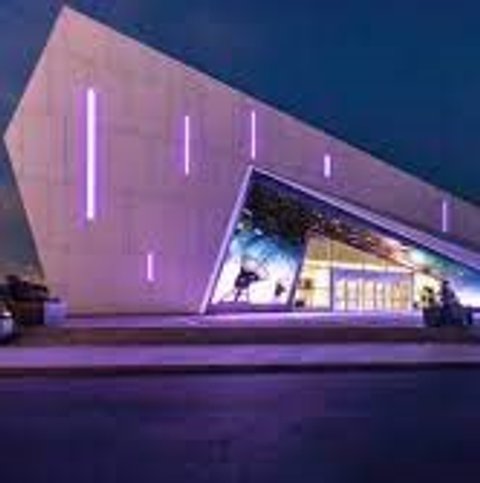
Public Building
Architecture and design of buildings serving public functions, from cultural centers to hospitals and civic institutions.


Any publicly owned streets, walkways, sidewalks, parks, publicly accessible open spaces, and any public and civic building and facility to which the public has access are considered public real estate. Any structure that is open to the public and is supported by public funds is referred to as a public building.Public architecture has a communal value and reflects the history and culture of the city. It is the prospect of intervening, to better life in society, creating a democratic urban space with citizen involvement. Community centers, libraries, courts, information centers, and government buildings are examples of public buildings. Each of these locations fosters community by bringing people together in ways that define and sustain it. Buildings that are open to the public contribute to a city's or town's feeling of place, or communal living area.Who or what is the 'public'?The word ‘Public’ is a wide umbrella term referring to elements of both physical and sociological matters. Public is the people, or any matter pertaining to or affecting the entire population or territory of a country or state. It can also be a space that is accessible or visible to the general population. The term "public" is synonymous with the terms "audience," "market segment," "community," "constituency," and "stakeholder."“Public realm” often finds its way into the architecture and urbanism field. The terms public domain, public realm, and public life are used to describe the social processes that take place in public spaces among city dwellers. People from many walks of life, into public spaces for a variety of reasons, and join together. Many viewpoints and the common world may be found in the public sphere; inside the public realm, young and old can learn about and from each other.What is the role of public architecture in society?Public architecture has the potential to build society's ideals: a space where people meet, interact, and become citizens.Public architecture (civic, cultural, infrastructure, religious, and other typologies) recognises the people who live there and creates a shared environment that benefits everyone. These locations have long shaped our cultural landscape, served as a forum for expression and dissidence, and provided a means of connecting with our fellow citizens. These landmarks improve our quality of life by generating a shared cultural heritage that reminds us of our shared obligations and democratic expression. And, as we progress toward a more democratic and open society, public buildings becomes a critical instrument for promoting equality in an ever-growing metropolitan context.Img 1: Public buildings offer an inclusive and accessible space for gathering of people.Public buildings most famously mark cities as monumental landmarks. Cities frequently create huge public buildings such as central libraries, government buildings, and courthouses to represent the objectives of the people and governments of the time. As a result, public structures are frequently a living record of the community that built them.In recent years, public buildings have frequently been constructed to reflect new ideas of sustainability and inclusion. They are less massive: the requirement for numerous projects dispersed around a city means that each building receives less funding than in past eras. Nonetheless, they can be architecturally significant and leave a lasting impression. What are some of the types of public architecture?Img 2: Public libraries are symbolic of government and public relations in terms of education service provision.Public LibrariesA library can be a physical facility, a virtual space, or both, and provides tangible (hard copies documents) or digital access (soft copies) contents. It is a storage facility for literary, musical, artistic, or reference resources (such as books, manuscripts, recordings, or films) that are not for sale. Library buildings frequently feature peaceful and conducive study places, as well as common areas for group study and collaboration. Libraries can also serve as community hubs, where people can attend programmes and engage in lifelong learning. Libraries have become focal points for the movement supporting women, immigrants, people of color, the LGBTQ community, and those facing religious persecution in today's political context. They are open-air public spaces where anyone can feel comfortable and find opportunities. They not only provide a secure and free haven for people in need, but they also provide assistance to those in need. When public libraries open their doors in the morning, they transform into shelters, learning centers, and job hubs for the most underserved. Many individuals may not consider the role libraries play in the economy because they are free to patrons, but libraries play a critical role in financially supporting local communities.CourthousesA courthouse is a public building that houses a local court of law as well as the area county administration. There are as many different courthouses as there are people and places in this world. Some courthouses are made of a single courtroom that sits all by itself, while others look more like high-rise buildings with 70 individual courtrooms to keep up with the demands of a growing community. Some courthouses might take any case they can get while others only handle one specific type of case (and some may not handle anything at all!)The courthouse is a busy area with lots of activity, involving a variety of different justice operations and numerous people with different responsibilities. Some parts are more welcoming to the public, while others are organized to host justice system professionals who work in the building every day. The buildings have quite a programmatic structure which need architects who can create an optimal layout to make sure that every separate part works properly together.Img 3: Enagaging with the public in an impartial environment strenghtens th community.Town Hall or City HallIn local government, a city hall is the building where your city’s operations are carried out. These include civil administration and social services. City halls serve as the bureaucracy's help desks for the most part. However, they can also have other symbolic purposes, such as when they are used as protest places.The local government might choose to use the building as a way to encourage and promote a clear sense of community. Often town halls or civic centers are used for more than just government functions, also providing facilities for various cultural activities like art displays, theatrical productions and festivals. Some community centers even have the ability to host sporting events like basketball tournaments. Modern buildings are often equipped with a great deal of versatility in mind.City Halls serve as a physical and metaphorical symbol of the people's relationship to the government. A strong city hall means a strong sense of community, regardless if you have one or many city halls within your area.How can architects contribute to public architecture?City services buildings such as the police, fire stations, libraries and city halls are touchpoints through which communities are engaged with their government. They maintain a key role in defining the character of government while giving a sense of identity to citizens who use these buildings to interact with public servants within them. One of the main architectural elements that define a community space is its ability to be open and accessible but also secure. The best way to build such spaces is by employing design strategies that are sensitive to people’s needs; for example, individuals could be encouraged to make stronger connections with their surroundings when a space invites collaboration and dialogue yet has areas for quiet contemplation should they need it.Sustain in - LEED certification, water management, green space. Safe & Secure - perimeter security, lighting, smart parking design, traffic calming. Docile & Accessible - making space welcoming and safe to people of all abilities. Transport - access and safety for all modes of transport, safe bike parking. Community & Cultural Context - historic preservation of older sites, placemaking, grassroots engagement and architectural context as well as what it takes promote vitality in the area. Aesthetics - people prefer attractive spaces that are both artistic and green.Beyond providing a functional response to space needs, civic architecture also serves as a city’s most permanent and prominent billboard and storytelling tool. Thoughtful design allows cities to leverage their buildings to communicate strategic messages in a powerful way.It is of utmost importance that the place a city chooses to explore, interact, and engage with be treated as just as much of a priority as the activities it hosts. Architecture plays a crucial role in rendering this possible by providing a taxonomy through which citizens can interact physically and functionally with their space. This physical identity manifests itself in several ways - timeless or forward-thinking aesthetic design, placement and orientation of objects within an environment that allows for ample light or ventilation, and details within aspects large or small of an architecture firm's project to communicate principles or qualities the designer wishes to express values that should be upheld throughout an urban community. At its simplest level: the better designers are at creating structures and spaces conducive to human interaction, the better they serve their community.Architecture CompetitionsArchitecture competitions have been a big part of historic construction innovation. For centuries, architecture competitions have helped source the best and most unique designs for projects, spurred community development (think: urban planning), and created huge publicity around new projects. Competitions are a great way to try out new things, make mistakes and learn from them. They're also a great opportunity for portfolio building because everything you submit gets contextualized based on where it ranks against everyone else's work. And perhaps most importantly, they give you extra insight into what the judges see in your submitted work as well as how they don't see it - which is yet another fantastic way to improve your designs in unexpected ways!Some of the competitions for public architecture being hosted all over the world are PINOCCHIO CHILDREN'S LIBRARY by Young Architects, DALIAN LIBRARY Design Submission by 10 Design, Future Library Competition by competitionsfordesigners.com, TINY LIBRARY ARCHITECTURE COMPETITION by Volzero, Brussels Courthouse Competition Belgium, DONGBU DISTRICT COURTHOUSE DESIGN SUBMISSION by 10 Design, TOWN HALL DESIGN COMPETITION by SKLArchitects, International Design Competition for the (New) GOYANG CITY Hall and so on.Explore projects on public building published on UNI website:UNI Design CompetitionsUNI is a global network of architects and designers who are solving some of the most challenging problems around the globe. UNI brings together the world's largest pool of design challenges that are curated by the finest architecture academicians and professionals globally. With over 200,000+ registered members, UNI brings academia and professional spheres of architecture together through a unique knowledge sharing web platform. Since 2017, UNI has hosted more than 200+ architecture competitions for various idea level to realization level briefs. In the past, UNI has helped 50+ organizations, universities, and government bodies to use our platform to generate architecture and design solutions through competitions.There are many competitions hosted by UNI on our website relating to public architecture discipline such as Forum, LibGen, Little Library, Mies Memorial Library, Hall of Justice, and many more.Explore current challenges on public architecture hosted by UNI:Discover other competitions: https://uni.xyz/competitions