
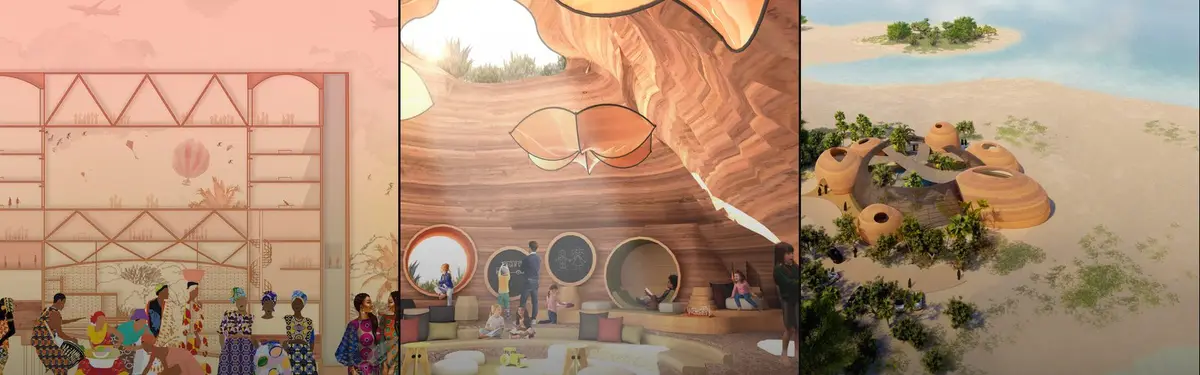


Soil Architecture
Design and architecture that engages soil as a material, medium, and organizing principle for landscapes and built environments.
Soil architecture explores the intersection of earth, landscape, and design. It treats soil not merely as a foundation but as an active material that shapes spatial experience, ecological function, and cultural meaning.
The community examines agricultural landscapes, terraced systems, earth-based installations, and urban interventions that work with soil's properties. Projects range from archaeological site design and desert cooling strategies to food-growing installations and environmental art that foreground the ground itself.


Popular projects
View all 55 projects





Latest journals
View all 57 journals

Earthen Angularity: A Stepped Tower in Accra That Grows a Garden Through Its Core
Tapering floor plates on angled struts wrap a leaf-lined atrium, staging a meeting between vernacular ground and modern frame in Accra.

Sky Dome: 3D-Printed Mud Domes Hover Over Rubble Stone Rooms in a Syrian Courtyard
Clustered mud shells float above rubble stone rooms, while a raised red route stitches the courtyard back into the blocks that surround it.

Earth Made: A Rammed Earth Courtyard Housing Scheme Built Around a Stepped Water Kund
Three earthen bars frame a sunken, terraced pool in Gwalior, proposing that the oldest building material can still organise shared urban life.

Terraces Park: A T-Shaped Bridge Building Strung Across the Stepped Walls of an Open-Pit Mine
A shortlisted proposal that bridges a toxic mining pit with a solar-skinned deck, an inner garden and a rooftop park, and asks what repair should weigh


