


Street Art
Public art interventions and murals that activate urban spaces and engage communities through visual design.
Street art is visual art made in public places for public view: murals, graffiti, stencils, posters, mosaics, stickers and installations on walls, pavements and street furniture. It grew out of unsanctioned graffiti, but today it also includes commissioned murals and public art programmes that architects and urban designers use to give streets, facades and neglected spaces an identity.
What is street art?
Tate's glossary describes street art as related to graffiti art, because it is created in public locations and is usually unsanctioned, while covering a wider range of media and being more closely connected with graphic design. Graffiti in the modern sense revolves around the tag, a stylised signature; street art is open to almost any technique, from stencils and wheatpasted posters to mosaic tiles, yarn and light.
Three neighbouring terms are worth separating. Graffiti is writing or drawing on a surface, usually without permission, and is the root of the whole movement. Murals are large paintings applied directly to a wall, and are often commissioned by owners, cities or communities. Public art is the widest category: any artwork in the public realm, whether a sculpture in a plaza, a sanctioned mural or a temporary installation. Street art sits across all three, and its link to architecture is simple. It almost always lives on a building, a wall, a bridge or a ground plane, so it changes how people read and use those surfaces.
For architects and urban designers, street art matters less as a style than as a tool. A painted gable can mark a neighbourhood entrance, a mural can turn a blank party wall into a landmark, and a festival of temporary works can bring people back to an underused street.
A short history of street art
People have written on city walls for as long as there have been cities. The word graffiti comes from the Italian graffiato, "scratched", and examples survive from ancient Egypt, Greece and the Roman Empire. The walls of Pompeii still carry painted notices and scratched messages left by its residents.

Painted facades have an equally long history as a commissioned form. In Bavaria and the Tyrol, Lüftlmalerei grew from Baroque trompe-l'œil: painters applied colour to fresh lime plaster to imitate cornices, window frames and pilasters and to add saints, biblical scenes and everyday rural life to house fronts. The term may come from the house name of the Oberammergau facade painter Franz Seraph Zwinck (1748 to 1792).
The 20th century made the wall political. After the Mexican Revolution (1910 to 1920), the government funded artists to paint the walls of public buildings with scenes of the nation's past, present and future. Mexican muralism, led from the 1920s by Diego Rivera, José Clemente Orozco and David Alfaro Siqueiros, later inspired the Chicano art movement in the United States.
Modern graffiti began in 1970s New York, when young people used spray paint on buildings and subway trains, according to Tate's entry on graffiti art. Street art as a wider practice traces its origins to that New York boom and to Paris in the 1960s, where Blek le Rat introduced pre-cut stencils in the 1970s. Cities responded in different ways. In 1984 Philadelphia set up the Anti-Graffiti Network, which brought in the artist Jane Golden to work with young people and grew into Mural Arts Philadelphia, which describes itself as the nation's largest public art program.
Key principles of street art in urban design
The facade as a canvas
A blank wall is a design opportunity rather than a leftover. Gable ends, firewalls, underpasses and retaining walls are large, visible and cheap to transform with paint. The painted house fronts of Bavarian villages show how long architecture has used this idea, and how painted cornices and window surrounds can redraw a plain facade.

Site and community first
Good street art responds to who lives around it. Priyank Ajudiya's Samanvitaha, a geometric wall mural for the community space of a housing project in Vijayawada, is designed for one particular shared space rather than as a picture that could hang anywhere.

Placemaking, not decoration
Project for Public Spaces defines placemaking as a collaborative process for shaping the public realm, with community participation at its centre. Murals and installations work best inside that process: they give people a reason to stop, gather and talk. See placemaking for related projects.
"What attracts people most, it would appear, is other people."
Scale and viewing distance
A mural seen from a moving car, a tram stop and a café table needs three different levels of detail. Designers work out where the work will be read from and set its graphics, colour contrast and text size accordingly. Windows, downpipes, signs and trees all cut into a wall, so a good design works with the elevation drawing rather than ignoring it, and is tested at full scale on site before the final coat.
Permanence and change
Street art ages, gets painted over and is replaced. Some cities treat certain walls as rotating canvases, and designers plan for maintenance, anti-graffiti coatings or deliberate impermanence from the start.
Street art on uni.xyz
Members approach street art in two ways: as wall designs, especially mural entries for the Canva competition, and as spatial proposals that use art to activate streets, parks and plazas.
The most liked project is The Interfusion by Ömer Seçim and Barkin Karabas, entered in the Opera Truck competition. It sets out to develop the relationship between art and its observer and, in the team's words, "interfuses the 'street' with the 'art'".
"The most captivating conversations happen when everyone's voice is heard."
Ömer Seçim and Barkin Karabas, The Interfusion

The mural entries show how differently a wall can be read. Canva Mural Design by Harsahib Shergill, Sana Sawhney, Siddharth Mahajan and Seerat Sandhu, entered in the Canva competition, received the People's Choice Award. PIXEL WALL by Saranya Harikumar, a winning entry in the same competition, builds its design on three ideas: sacred geometry, dynamism and social interaction. Nidhin Joseph's Beyond the Horizon, a runner-up, is an illustrative quest into the hidden realms of the universe and its sacred geometry, while Paul Huguet's Fabric of Life, an Editor's Choice, takes its colours from the hues of the surrounding urban landscape and uses a pattern that evolves like the city.

The same competition produced a smaller, mobile reading of the brief. Marta Woźniak's Opera Truck presents a moveable stage that shows the idea of street art, so the work can travel to the street instead of waiting for the street to come to it. Anthony Ramirez's Blank Canvas, discussed below, works in a similar way: a canvas carried on a cart-like frame with extendable rails and a pulley system, draped across the street so performers can use it as a stage.
Some members use the mural as a social instrument. A Tribute to Ukrainian Resilience by Hamid Raza and Ilsa Ahmed proposes a temporary memorial installation that explores how an interactive mural can help Ukrainians cope with loss and conflict.

Others take street art into public space design. Gateway Park Proposal by Hector Armando Lopez Segura, a People's Choice Award winner in the Re-connect competition, designs a park intervention that helps people meet again in public space safely and evokes a state of "stillness". Our Infinite Consequence by Roberta Sinesio and Veronica Vacaro, runner-up in the Elevate 2019 competition, traps visitors between mirrored planes so they confront their own place in the collective space. Tijana Pejic's colour bar, a People's Choice Award winner in the Art Garden competition, zones an art garden by the colours of the SMPTE test bars.
Journals extend the theme to buildings. Beneath the Surface describes Adam Vadas's Amsterdam proposal, an Editor's Choice at Overseas Oasis 2020, which puts a calm grassy terrace on the roof and a plaza with a ceiling covered in street art underneath it.
Challenges and future directions
Street art lives in a permanent tension between freedom and control. Unsanctioned work is often illegal, while the same cities that remove it promote commissioned murals for tourism. Member Anthony Ramirez puts the contradiction directly in his journal on Blank Canvas, a proposal that drapes a mobile canvas across the street as a stage for performers.
"Blank Canvas challenges the governmental control that often stifles street artists, who are paradoxically celebrated by the same systems for tourism and economic gain."
Other questions follow. A commissioned wall has to answer who it speaks for, and who chose it. Ownership is complicated: the artist may hold copyright in a work painted on someone else's building, so demolition, repainting and even photography raise legal questions that vary by country. And many works are temporary by nature.
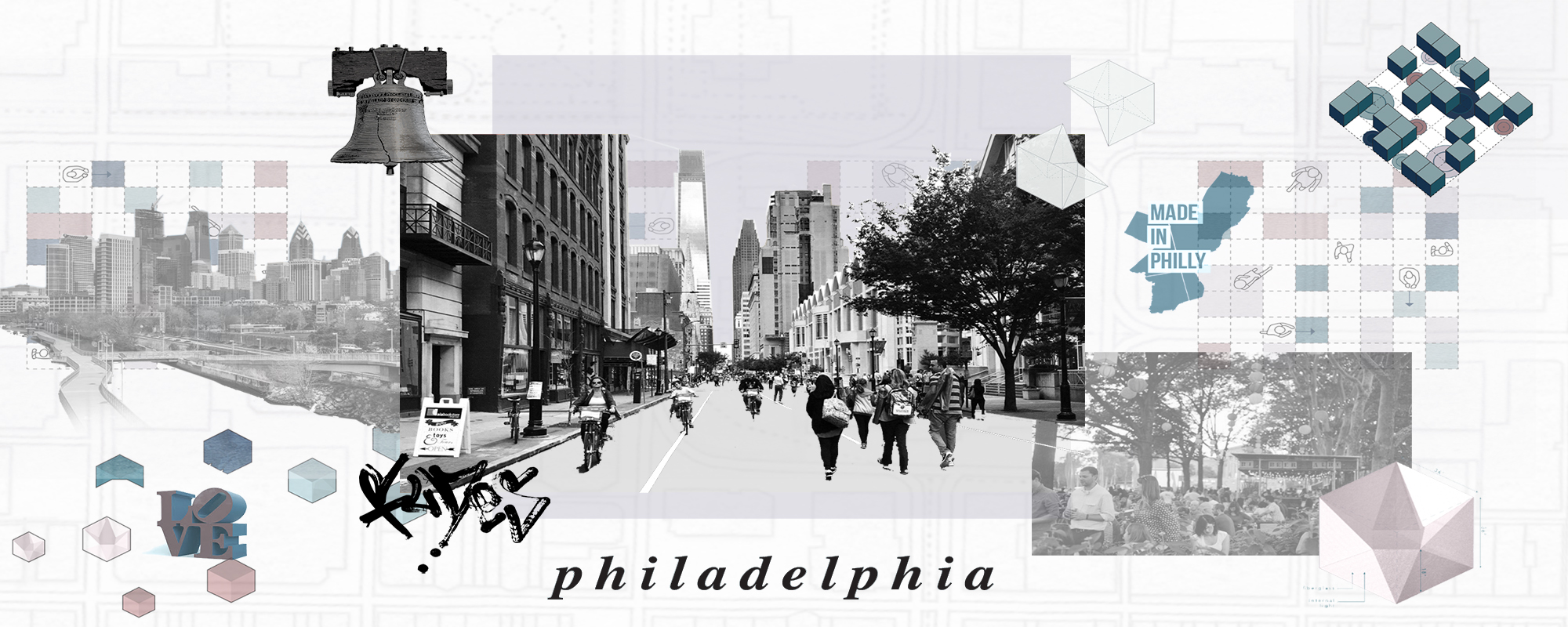
Bottom-up approaches offer one answer. re-grouping by Shannon McLain and Petra Stanev, shortlisted in the Urbanscape: Symbiosis competition, starts from Philadelphia's culture of residents filling public space with murals and gardens, and proposes movable, internally lit fiberglass cubes that can become benches, bike racks, planters or art pedestals across the city's vacant lots. It sits close to tactical urbanism.
Street art for students and designers
Thesis angles include a mural strategy for a specific street, a museum that hands its walls to artists, the reuse of infrastructure leftovers as painted public routes, or a toolkit that lets residents commission their own walls. M.A.U, Museum of Urban Art by Caterina Di Giorgio is a good model: it sits on land left by a former viaduct in Rome's Serpentara district, lets the park run over its roof and gives its interior walls to murals.

Look for mural, park and public space briefs among current design competitions on uni.xyz, and follow urban design for the larger scale.
Frequently asked questions
What is the difference between street art and graffiti?
Graffiti centres on lettering and tags, usually made with spray paint and without permission. Street art covers a wider range of images and media, from stencils and posters to mosaics and installations, and is often closer to graphic design. Both are made in public places for public view.
Is street art legal?
It depends on permission. Work painted with the owner's consent or under a city programme is legal; work painted without permission is usually treated as vandalism, even when it is admired.
How does street art relate to architecture?
Street art uses buildings and public surfaces as its support, so it changes how facades, underpasses and plazas are perceived. Architects and urban designers can plan walls, lighting and viewing points with murals in mind.
What is the difference between a mural and street art?
A mural is a painting applied directly to a wall, and many are commissioned. Street art is broader and includes unsanctioned and temporary work in many media. A commissioned mural on a street is both.
How do I design a mural for a building?
Study the wall, its surroundings and the people who use the space; decide the viewing distances; test colour and scale on a facade elevation; and plan for weather, maintenance and community input before painting.
References and further reading
- Street art, Tate
- Graffiti art, Tate
- Street art, Wikipedia
- Mexican muralism, Wikipedia
- History, Mural Arts Philadelphia
- What is Placemaking?, Project for Public Spaces


Open competitions in Street Art
See all Street Art competitions

Challenge to design a portable theatre

The Global Benchmark for Architecture Dissertation Awards
Popular projects
View all 80 projects


Latest journals
View all 15 journals

Beneath the Surface: An Amsterdam Hillside That Hides a Graffiti Sky Underneath
A grassy, bike-laced terrace on top, a mural-covered plaza below: Adam Vadas splits one building into Amsterdam's calm postcard and its loud metropolis.

Cat Alley: Turning Hong Kong's Back-Alley Pipes into an Elevated Network for Stray Cats
A low-cost tactical intervention wraps existing utility pipes in rope and pastel tubing, layering cat paths above a ground plane built for pausing.

M.A.U Museum of Urban Art: A Rome Museum That Sinks Into the Park and Hands Its Walls to Street Art
Caterina Di Giorgio embeds a museum in the Serpentara slope, letting the park flow over its roof while murals claim its interior walls.

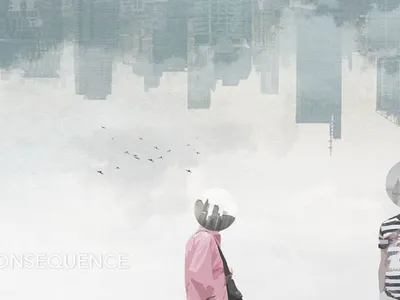
Our Infinite Consequence: Mirrored Voids That Force a City to Look at Itself
A vertical installation of reflective surfaces and helicoidal stairs reframes urban disconnection as a spatial problem with an architectural answer.


