
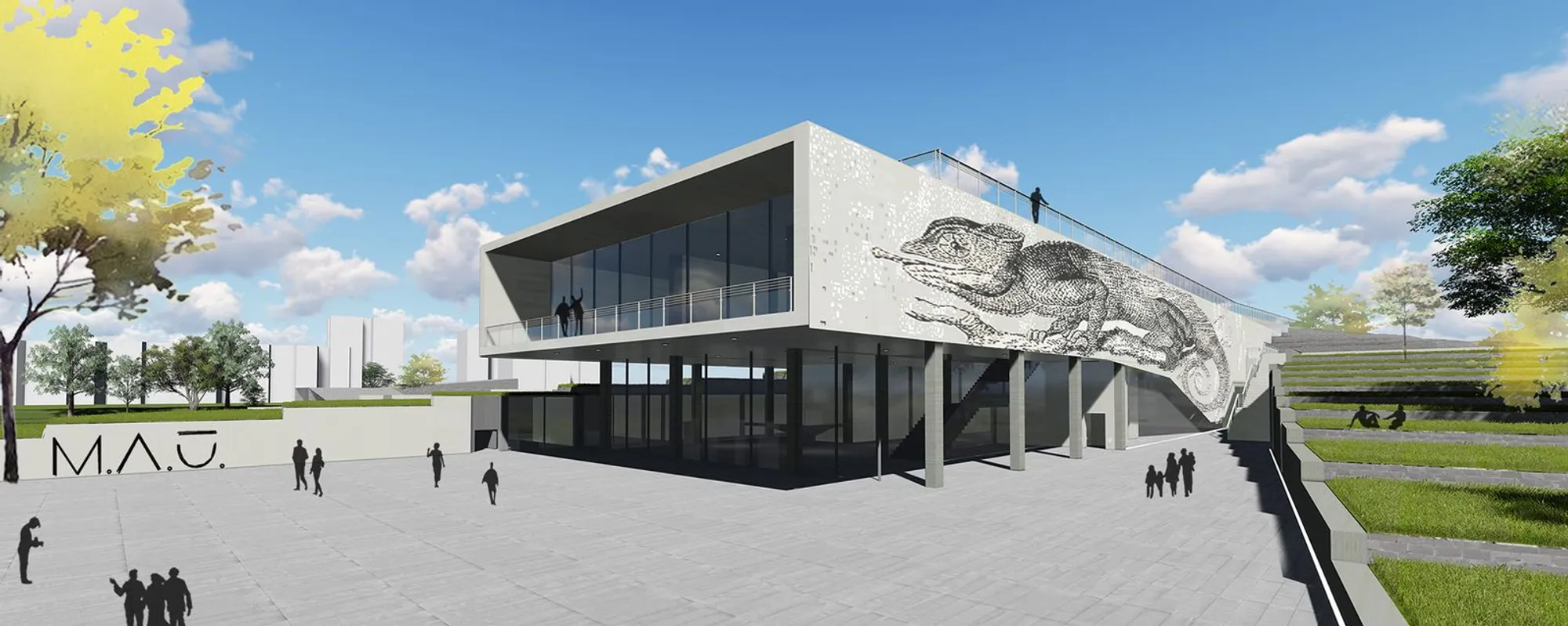
M.A.U: Museum of Urban Art, Rome
An adaptive reuse architecture project in Rome that transforms infrastructure into a living museum where street art, landscape, and city life merge.


The M.A.U, Museum of Urban Art is an ambitious example of adaptive reuse architecture that reimagines infrastructure as a cultural catalyst. Located in the Serpentara district of Rome, the project challenges the traditional idea of a museum by turning architecture itself into a medium for urban expression. Designed as a continuation of the city’s street art culture, the museum moves art from the streets into an inhabitable landscape, without disconnecting it from its urban roots.
Conceived as a response to the redevelopment of a former elevated viaduct, the project aligns architecture, public space, and movement into a single continuous experience. Rather than standing as an isolated object, the museum integrates seamlessly into the terrain, reinforcing Rome’s evolving relationship between heritage, contemporary culture, and public life.
Urban Context and Adaptive Reuse Strategy
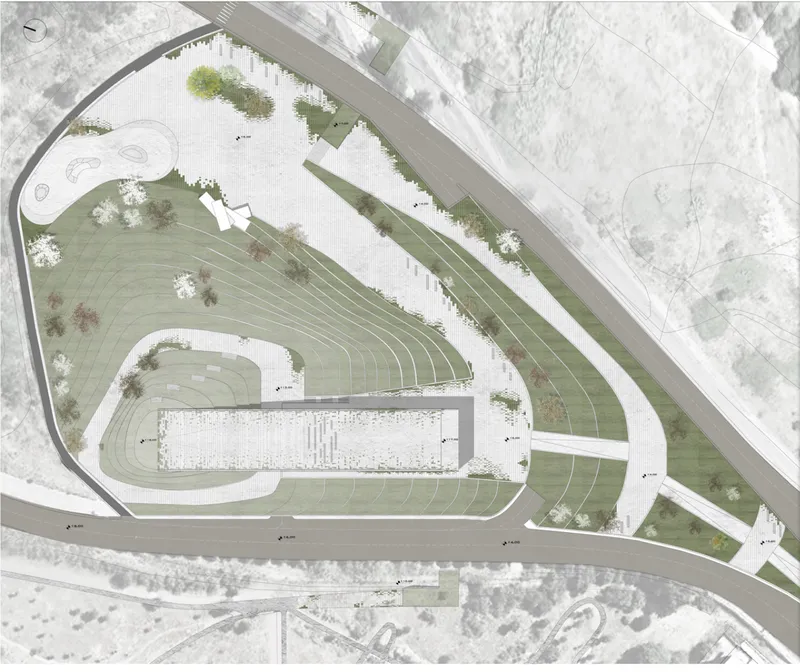
At the heart of the proposal lies the idea of adaptive reuse architecture as a tool for urban regeneration. The site sits between two major green spaces, Parco delle Sabine and Parco di Largo Labia, along a former infrastructural corridor. By transforming the residual landscape of the viaduct into a linear cultural spine, the project reconnects fragmented urban zones while introducing a new cultural destination.
Pedestrian paths, rest areas, and urban connections are woven into the masterplan, ensuring that the museum is not only a destination but also part of everyday urban movement. The project establishes strong visual and physical links with surrounding neighborhoods, parks, and public routes, allowing the museum to function as a meeting point between art, mobility, and landscape.
Architecture Embedded in the Landscape
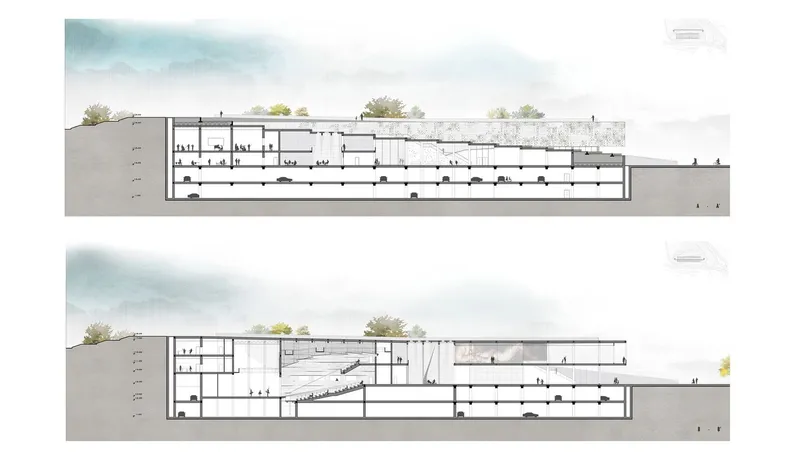
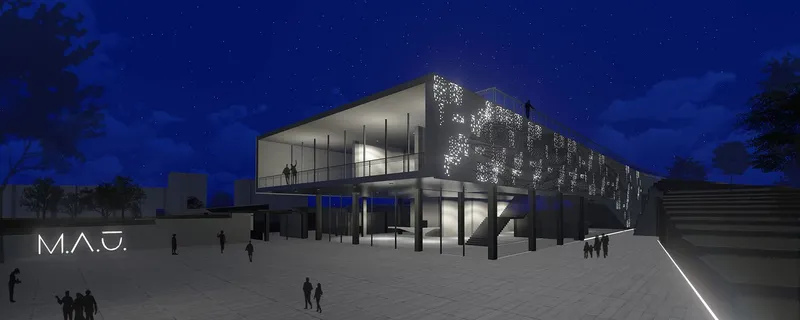
The architectural language of the M.A.U is deliberately restrained. The building is partially embedded into the sloping terrain, allowing the landscape to flow over its roof and minimizing its visual impact. From a distance, the museum reads as an extension of the park rather than a conventional cultural building.
This approach reinforces the project’s adaptive reuse philosophy: architecture does not dominate the site but adapts to it. Only selected facades and openings reveal the presence of the museum, creating moments of discovery along pedestrian routes. A large panoramic opening aligns with the former viaduct, framing views of the Serpentara district and establishing a visual dialogue between the city and the interior spaces.
Spatial Organization and Program
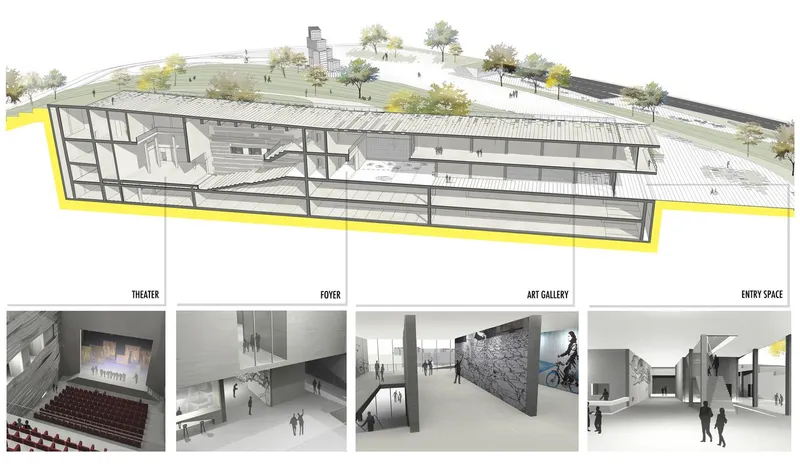
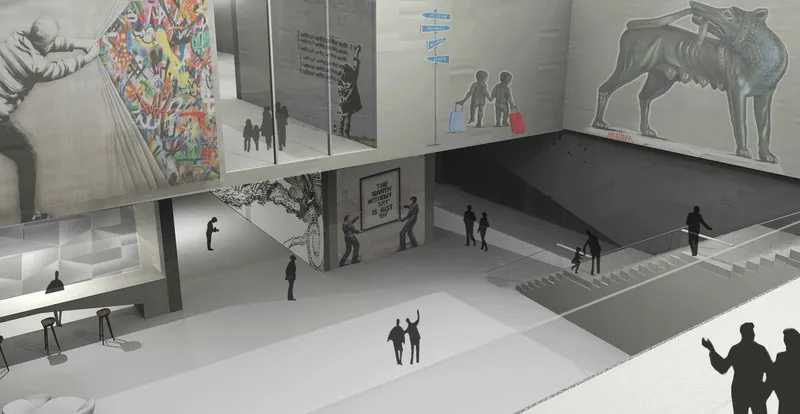
The museum’s program unfolds across multiple levels, organized through a continuous internal circulation path. This spatial sequence reflects the movement found in urban streets, reinforcing the idea of bringing street art indoors.
Key functions include:
- Art galleries for permanent and temporary exhibitions
- Artistic workshops and creative studios
- A theater and concert hall
- School of music, acting, and dance
- Public foyer and gathering spaces
- Rooftop promenade and belvedere
- Underground parking and service areas
An internal spiral circulation connects these functions, guiding visitors through a fluid experience that culminates at the rooftop. Here, the building transforms into a public terrace overlooking the surrounding parks and city skyline, blurring the boundary between architecture and open space.
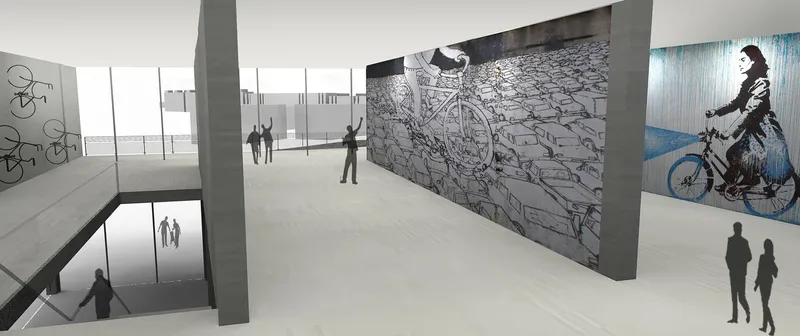
Interior Experience: Architecture as Canvas
In contrast to traditional museum design, the interior of the M.A.U is conceived as an active participant in the exhibition. Walls, floors, and structural surfaces are designed to host murals, installations, and large-scale artworks. The architecture becomes a canvas, allowing street art to retain its raw, immersive character within an enclosed environment.
Double-height spaces, visual connections between levels, and framed views toward the city reinforce the relationship between art and urban context. Natural light filters through carefully positioned openings, enhancing the spatial experience while maintaining controlled conditions for exhibitions.
Construction and Material Strategy
The construction system reflects the project’s sustainable and adaptive ethos. Green roofs, layered wall assemblies, and energy-efficient envelopes contribute to environmental performance. The material palette remains understated, allowing artworks and spatial experiences to take precedence.
Concrete, steel, and mineral-based finishes provide durability and neutrality, while planted surfaces and landscaped roofs soften the overall presence of the building. This balance between robustness and landscape integration reinforces the museum’s role as both infrastructure and cultural space.
Cultural Impact and Urban Significance
The M.A.U, Museum of Urban Art represents a contemporary model of adaptive reuse architecture in Rome. By transforming infrastructural remnants into a civic and cultural landmark, the project demonstrates how architecture can respond to urban change without erasing existing identities.
More than a museum, the M.A.U functions as a social condenser: an environment where art, movement, and public life intersect. It celebrates street culture while providing a permanent, inclusive platform for artistic expression, reinforcing the idea that cities themselves are living galleries.
Project Name: M.A.U, Museum of Urban Art
Location: Rome, Italy
Project Type: Adaptive Reuse Architecture / Cultural Architecture
Designed by: Caterina Di Giorgio


Popular Articles
Popular articles from the community


Conexión: Biophilic Design Reimagines High-Rise Living in Hong Kong
Conexión reimagines high-rise living in Hong Kong through biophilic design, green facades, shared spaces, daylight, water and nature within.

The Earth Pod: 3D Printed Homes for Resilient Refugee Communities
The Earth Pod reimagines refugee housing through 3D printed homes made from clay, combining resilience, self-sufficiency, and rapid shelter.

Lunar Spiral: Space Architecture Shaped by the Mathematics of the Universe
Lunar Spiral reimagines space architecture through Fibonacci geometry, lunar regolith, levitating habitats, and self-sustaining Moon living.

Play: Fragments of Their World
Familiar architecture becomes modular playground design, creating safe spaces where displaced children can learn, connect, imagine and play.


Similar Reads
You might also enjoy these articles

Eco Chapel: A Green Architecture Pavilion Designed in Symbiosis with the Forest
Eco Chapel uses green architecture to weave prayer, learning and reuse into a forest pavilion shaped by modular hexagonal canopies for life.
Kaffeebühnen: Coffee Shop Architecture Designed as a Civic Stage Between Vienna’s City and Park
Kaffeebühnen turns coffee shop architecture into a civic stage, linking Vienna’s park edge, urban life, warm timber yards, and coffee craft.
Healing Façade: Sustainable Architecture for Reforestation, Community, and Sacred Ecology in Ethiopia
Healing Façade reimagines sustainable architecture as a living wall that restores soil, catches water and renews Ethiopia's forest churches.

Urban Forest: A Vertical Ecosystem for 5,000 Workers in Singapore's Changi Business Park
Radially stacked pods and layered green decks turn a 7-acre plot into 47 acres of ecological workspace projected for 2040.

Comments (0)
Please login or sign up to add comments
No comments yet. Be the first to comment!