
OVERVIEW
PREMISE
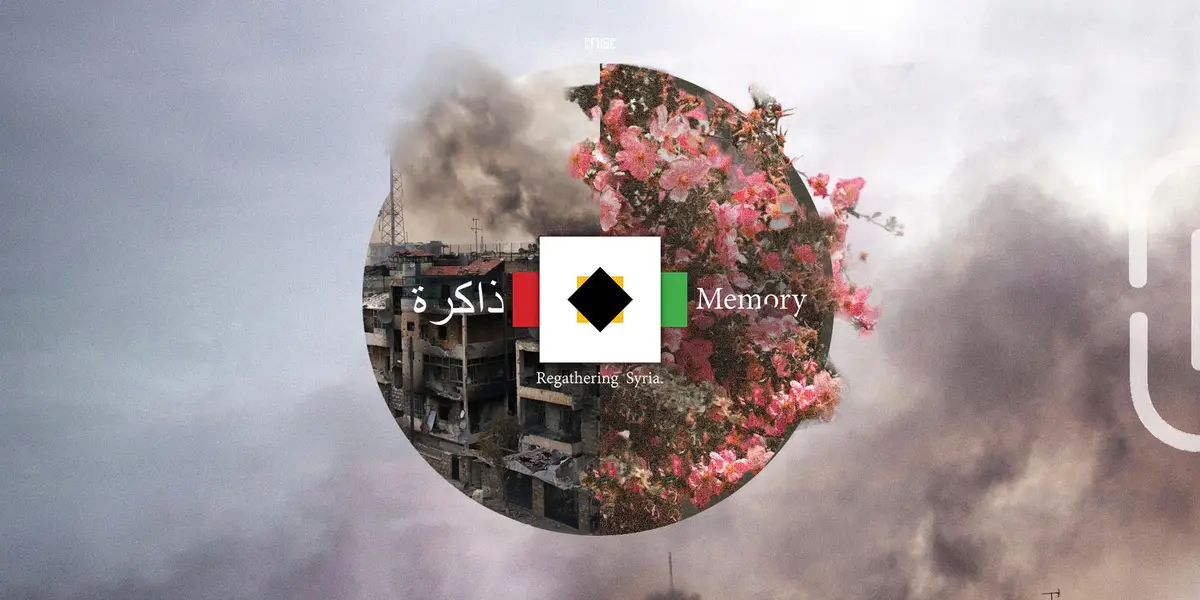
War is the most serious reason for causing damage to both artificial and natural landscapes. Syria, one of the oldest civilizations in the world is entering another year of debilitating violence at a moment of geopolitical flux. It has been and remains a crucible in the geopolitics of the Middle East; a flashpoint in great power play; a source of instability; and a devastating human tragedy. The international response to Syria has dealt with those aspects in that order rather than prioritizing human suffering.
Looking at the current dynamics - the dissent between rebellion - the Government along with other spectating powers of the world involved in the war, it is far from being solved. A huge deficit that is created in Syria, including corruption and chaos, the place has lost a lot more than what it had. What it means for the people now is that a top-down approach to solving this crisis is way too far from the population it is intended for.
But why is the conflict so complex and assumed unsolvable in the first place?
WAR ENDS?
Its eruption in March 2011 as a peaceful protest turned into a violent storm; triggered this civil war to an outbreak. The traces of the public dissent against the ongoing Assad regime has been clear since the pre-war years and had reached its boiling point on this event where they collided.
There have been several violent exchanges in the past, between the Rebellion (Identified as Free Syrian Army) who refuse to accept the current Government (Lead by President Bashar al Assad). Eventually, in the lengthy crossfire, there have been more factions who took birth which made the war even complex. With all this assault around, the inhabitants who did not pick up any arms - the citizens of Syria suffered the most.
With its 7th Year of catastrophe, damage assessment reports say the payback amount is over 4 times Syria’s 2010 GDP. While the immeasurable loss to property, life, tourism, and heritage is beyond valuation. The war eventually has plundered all the social life and key hotspots of major cities
ISSUE
The cost of war cannot be quantified, but the price that Syria has to pay now is much more than it can afford. As the ruling government figures out where the funds will come from, the spectating countries are still skeptical to invest as the economic leaders realize it is still a risky place to put money on.
Assuming the conflict is completely solved, the investment will come at the price of diplomatic motives rather than the problems of the individuals on the ground. In fact, as the residents are now returning from their refugee camps to their dilapidated homes - the daily life they used to live is totally impaired.
PROBLEM
The only hope Syria now has is that the reconstruction of this broken place might bring the region together. It will cost a lot which cannot/won’t come from anyone's side, and by the trends of today, no side will actually outright win the war in the longer run. To even fix the abject destruction of Syria will require a peace deal producing a level of economic cooperation between all sides, foreign, domestic, and people on the ground.
Without it, Syria will perish.
Challenge: The first step of this cooperation begins with
(A) Creating a memory-infused architecture with a (B) Function by the (C) Citizens of the place in one of the damaged/destroyed yet (D) Important sites of Syria.
A. Memory?
To accept the catastrophe that has happened today and rebuilds here on. Memory is a precursor to hope. It can be a precursor of Anguish. A memory precedes stimuli of never repeating the same mistakes again. Similarly Rage, Anger, Trust, Remembrance, Glory, Potential, Reminding inhabitant there’s always a way back, A memory that motivates to do better than before - the aim here is to use Architecture as a vessel to infuse memory.
Visualizing memory as a gateway to gather people and connecting past to future. Memory as seen above; is a multidimensional concept and not limited to only mourning - neither it should be.
B. Function (program)
With a much larger debt to begin with - and the Syrian economy already in jeopardy, public architecture with a functional purpose will help the quantitative needs of the place. The function can be derived from the need of the place by understanding the past dynamics - or can be re-analyzed from a point of today where the question of what people need has completely changed.
The function shall be derived by putting people first instead of a political approach, of the immediate locality. This attempt of a qualitative blend with needs on the ground will benchmark all the upcoming architecture in the immediate place and sow new seeds of hope in Syria.
C. Citizens of place (Aleppo)
Aleppo, one of the oldest cities in the world and home to the oldest world heritage sites stated by UNESCO, has been one of the key battlefields of the war. However, the same has been at the center of crossfire with massive damages incurred on its built and social heritage. As people are moving back to the city to rebuild their lives again, the damage, to begin with, has been huge. Covered markets, Mosques, bustling neighborhoods with blooming public life a decade ago are heavily impaired.
Being one of the oldest inhabited cities in the World, Aleppo has witnessed various Dynasties - Wars - Empires - Culture throughout history. That has also earmarked its essential place in the silk route where its influence extended in countries beyond its geographic borders. Historically; one of the most desired places in terms of quality of life and trade, this place has been a clear example in history no matter how many times it has been destroyed, it has been built back again yet.
Aleppo is the hotspot of the political tussle at large considering the control map of Syria. If a truce of peace begins at Aleppo, it has the most probability to heal the communal division at large through Syria
D. Important sites of Syria (Grand Serail of Aleppo)
Originally conceived to be the seat of Governor of the Government, the Grand Serail (Also known as New Serail) held its place in history as an important structure in the citadel periphery in the past century. During various war clashes, conflicting forces demolished this historic structures by an underground tunnel bomb explosion. The site sits right next to the citadel of Aleppo and is at the heart of the walled city historic precinct.
Similar Competitions
Discover competitions you might be interested in


Design challenge to reuse E-waste

Bring back Drive In's

Challenge to design locus for the upliftment of human rights


A Global Graduation Competition for Architecture, Urban Design & Interior Design
