
Overhaul
Challenge to illustrate a future service station
OVERVIEW
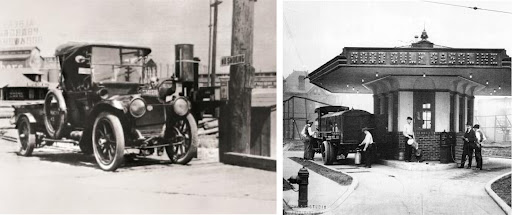 Fig: 1 - The first "drive-in" station, Gulf Refining Company, opened in Pittsburgh in 1913.
FIRST SERVICE STATION
Replacing animal-drawn carriages and carts, the first modern car was invented by Karl Benz in 1886. It became accessible to the masses in 1909s by American manufactured Ford Motor Company. Automobile ownership increased after Henry Ford started to sell it at a cheaper prices for the middle class, which led to an increased demand for service stations.
The first ‘drive-in’ service station, (also known as petrol station, gas station, and gasoline stands in different cultures) was opened to the public in 1913. Stations besides pumping fuel into tanks also calculate the financial cost of the amount transferred. Besides fuel dispensers - air compressors to inflate car tires, convenience stores, and washrooms are also part of the layout.
But its demand has changed over the past few decades.
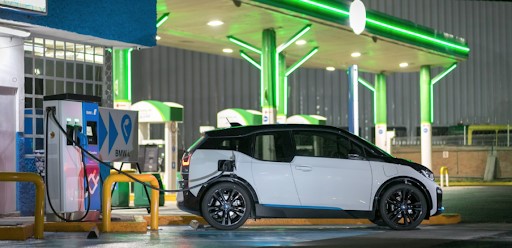 Fig: 2 - An hybrid patrolling and recharging service station
DECLINE IN SERVICE STATIONS
The population is directly proportional to the number of vehicles on the road. In lieu, city fabrics are being designed to facilitate vehicular circulation. They also contribute significantly to increased density and pollution. Alternatives are being implemented to displace the traditional prototype.
Since the last few decades, the total number of service stations is decreasing. Be it in UK, from 18,000 in 1992 to 8386 in 2019 or 60,000 in 1994 to 40,000 in 2009 in Japan. Mass consumption and sustainability have replaced the trend of consumer consumption everywhere.
With better public transit incentives, there has been a shift from private ownership. Paris made its public transport free for children under 11 while Luxembourg made it free for all its citizens. For efficient urban transportation, services such as Uber are providing shared mobility.
Accelerating the decline is the rise of electric cars. There was an increase of 2 million cars from 2017, with service stations now slowly integrating electric charging points. With the solar city venture, there is a possibility wherein cars will become heavily dependent on solar energy.
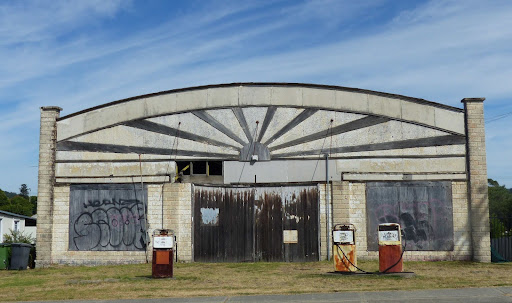 Fig: 3 - A service station becoming a ‘ruin of modernity’ relics the gap between urbanism and automobiles.
Impact of technology on service station
With technology and a shift from private to public mobility, it will be hard for service stations to be profitable. BCG, a global consulting firm reports that If fuel retailers don’t adjust their model, it will render 45%-60% of service stations unprofitable by 2035. Many lack a convenience store component and therefore depend completely on fuel sales.
Service stations are only used by the public when their vehicle needs to be serviced. A desolate space, that becomes an urban void once it’s a dependency on fuel dispensers is completely removed. There are no edges designed for social or community activity, that could garner a density of people. This results in a decreased number of ‘eyes on the street’ and makes such a space less safe. In fact, in South Africa, fuel stations are a popular destination for vehicle theft and car hijackings.
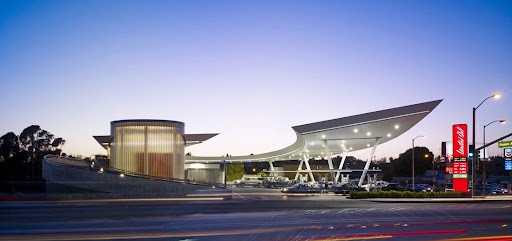 Fig: 4 - United oil gasoline station
BRIEF OF THE COMPETITION
With the transformation of fuel consumption, what will service stations look like in the future? How may they adapt to the shifting landscape, public transportation, and shared mobility?
Stations can no longer be dependent on the service of pumping fuel to earn commerce. To be profitable, it needs to open to other avenues. Recently, Elon Musk floated the idea of building retro drive cinemas at Tesla charging points. Intent to holistically integrate the public and provide services for all possible modes of transit. Equally, embrace user experience as well as commerce.
Visualize a service station to facilitate vehicles driven (diesel, gas, hybrid, electric, autonomous). A public space where all forms of technology that will drive transportation in the future coexist.
OBJECTIVES
- Form: Reinvent the visual form and experience of a conventional service center.
- Technology: The design must represent what the station would look like in the future.
- Technical: Try to express through design/engineering how the station works and functions in connection to the vehicles.
- Expression: The graphic should effectively communicate its intent and landscape to the viewer.
The station will aim to service vehicles of different types while offering commercial spaces (depending on the user) like coffee shops, supermarkets, and lounges with high-speed internet. The focus is not on the technicality of automobiles or the station but on spatial functioning and design conceptualization.
DELIVERABLES
You have to deliver a visualization outcome in the form of an architectural illustration. Where the outcome represents the given aim. Three visuals need to be submitted. The images should be of the size of [2800px × 3200px] in portrait or landscape digital format (JPEG only)
The visualizations are to be entirely rendered and digitally created. The usage of photographs, stylised/credited or otherwise, directly is strictly not allowed.
The use of lassoed graphics lifted from an existing image is limited to half of the total graphic content. (The guidelines are indicative and are placed only to reduce plagiarized artworks - any infringement detected or reported will be notified, and may be removed from competition if found guilty)
The list of deliverables are:
- Title
- Subtitle
- Views x 2
- Detailed views x 3
- A few process images
- A statement in about 100 words supporting the idea - you can attach this as an additional image below the visuals.
Similar Competitions
Discover competitions you might be interested in


Render competition to represent the city as a machine

Challenge to imagine architecture inspired by fiction

Challenge to illustrate the ruins of Petra

Challenge to visualize slums of 2080