Quick Architecture Competitions: For Designers Who Can't Wait Six Months (Updated June 2026)
This is the UNI editorial home for quick architecture and design competitions — the small-scale, fast-paced briefs that can be entered in a weekend, a long evening, or a single focused week. While most architecture competitions demand 2-to-6 months of commitment, the briefs in this section are designed to fit into the cracks of a working life: 24-hour charrettes, 48-hour sprints, weekend sketch competitions, week-long illustration challenges, essay writing briefs, concept-only proposals, and single-drawing competitions where the idea matters more than the documentation. If you are a busy professional, a student between projects, a first-time entrant testing the format, or a designer who just wants to practice working under pressure — this section is built for you.
What "Quick Competition" Actually Means
A quick competition on UNI is defined by three characteristics, not just one:
- Short duration. From 24 hours to roughly 2 weeks maximum. Anything longer is a conventional competition, not a quick brief.
- Small scope. Single object, single drawing, single concept, single essay, single photograph, or single rendered scene. Not a full masterplan with 20 boards of supporting documentation.
- Low barrier to entry. Usually free or under $20. Rarely requires a team. Often open to any discipline. Designed to welcome first-time competitors and lapsed ones alike.
Taken together, these characteristics solve a real problem for the global design community: most designers never enter a real competition because the commitment is too large. Quick competitions fix that. They are the low-risk, high-frequency on-ramp to the competition format.
The Charrette Tradition: A 200-Year History of Rapid Design
Quick competitions are not a trendy new format. They are a return to the oldest architectural training tradition in the world. The word charrette comes from 19th-century Paris, where students at the École des Beaux-Arts had to finish their drawings before a small cart — en charrette — came by to collect them for the jury. As the deadline approached, students would jump onto the cart and continue drawing as it rolled toward the school. The cart would not wait. The sprint was literal.
That tradition never stopped. It became the charrette — the intensive short-duration design workshop that remains standard practice in architecture schools worldwide. It became 24h Competition (Ideas Forward, founded 2014, running 32+ editions), 120 Hours (Oslo student collective, founded 2010), 72 Hour Urban Action (Stuttgart, international urban intervention sprints), the 48H Floor Plan Battle, the ACSA Exhibit Charrette, and the World Architecture Festival Student Charrette. Every major architecture school in the world runs charrettes as a standard part of design pedagogy.
UNI's quick competitions section is the online, global, year-round extension of that tradition. The cart is still rolling — it just moved to the internet.
Why Quick Competitions Are the Best Entry Point to Competition Practice
If you have never entered an architecture competition before, a quick brief is almost certainly the right place to start. Here is why:
- No six-month commitment required. You can enter a quick brief on Friday evening and submit by Sunday night. The entire experience fits around an existing full-time job or student workload. There is no "I'll enter next year when I have time" excuse.
- Lower emotional investment means more experimentation. When you have invested 100 hours in a project, every design decision feels precious. When you have invested 24 hours, you can afford to be wrong, weird, or bold. The best quick competition entries are often the ones that would never have survived a long-duration process.
- Practice working to a hard deadline. Deadline pressure is a core architectural skill. Professional practice is an endless series of deadlines. Quick competitions train that muscle without the stakes of a real client project.
- Win or learn, both build your career. Quick competitions have short feedback cycles. You submit, you see the results, you learn what juries valued, and you enter the next one. This iteration loop is the fastest way to develop competition instincts.
- Portfolio-building without thesis-scale commitment. A student can realistically enter one quick competition a month through a semester and finish the year with a dozen portfolio pieces. One strong long-form competition and a dozen quick entries together make a genuinely diverse portfolio.
- Break creative blocks. A hard brief with a fixed clock is the most reliable way to unstick a creative practice. Many working architects use quick competitions exactly for this — to shake themselves out of client-driven design fatigue.
Who Quick Competitions Are Built For
- Busy working architects who genuinely cannot commit 3 months to a full competition but want to keep their personal creative practice alive between client projects.
- Architecture students building a rapid-fire portfolio — one quick entry a month through a semester produces a dozen portfolio pieces alongside thesis work.
- First-time competition entrants testing the format without committing to something they might drop halfway through.
- Freelancers between client projects who want to keep their skills sharp and produce spec work for visibility.
- Illustrators and visualizers who work best under deadline pressure and want creative briefs that reward strong single images over comprehensive documentation.
- Studio teams practicing rapid ideation together. A weekend charrette is a great internal training exercise for a small practice.
- Designers exploring new disciplines — an architect curious about product design, an illustrator testing conceptual architecture, a photographer trying essay writing. Quick competitions are the lowest-risk way to cross disciplines.
- Architects returning to creative practice after a career break, a parental leave, or a long project drought. Quick competitions are the gentlest re-entry.
Types of Quick Competitions on UNI
The format varies by brief. The common types you will find in this section:
24-Hour Design Charrettes
The classic format. Brief drops at a fixed time, you have exactly 24 hours to read, design, render, and submit. Pure intensity. Usually small-scale (pavilion, installation, small object) and concept-driven. The 24h Competition by Ideas Forward is the canonical contemporary example.
48-Hour and 72-Hour Sprints
Slightly more forgiving than the 24-hour format but still deeply time-constrained. Allows for more developed drawings and sometimes a sleep cycle. 72 Hour Urban Action deploys this format for real physical interventions in cities worldwide.
Weekend Competitions
The most accessible format for working professionals. Brief opens Friday, submission by Sunday night. Fits entirely around a standard working week. The format of choice for UNI competitions aimed at busy architects.
One-Week and Two-Week Briefs
Still "quick" by competition standards — just enough time to develop a more considered response without losing the urgency that makes short-form competitions work.
Single-Drawing and Single-Image Competitions
Submit one hand drawing, one rendered image, or one diagrammatic section. Judges on the strength of that single image. Perfect for illustrators and visualizers.
Essay Competitions
Write a short architectural essay — criticism, theory, personal reflection, or speculation. Requires no rendering or drawing. UNI's Domain essay brief on architecture in video games is a recent example.
Photography Competitions
Submit one or more photographs documenting a specific architectural prompt. Open to anyone with a camera, not just practicing architects.
Concept-Only Briefs
Write and diagram a single architectural concept — no building required, no construction documents, no BIM model. Pure idea, presented clearly.
Illustration and Rendering Challenges
Produce a hero render, an architectural illustration, a watercolour sketch, or a CG scene responding to a prompt. Judged as much on visual craft as on underlying concept.
Open Quick Competition Briefs on UNI Right Now
The competitions currently curated in the quick competitions section:
- Rebuilding Mordor — Challenge to imagine architecture inspired by fiction
- Packed — Packaging designs inspired by the works of Frank Gehry
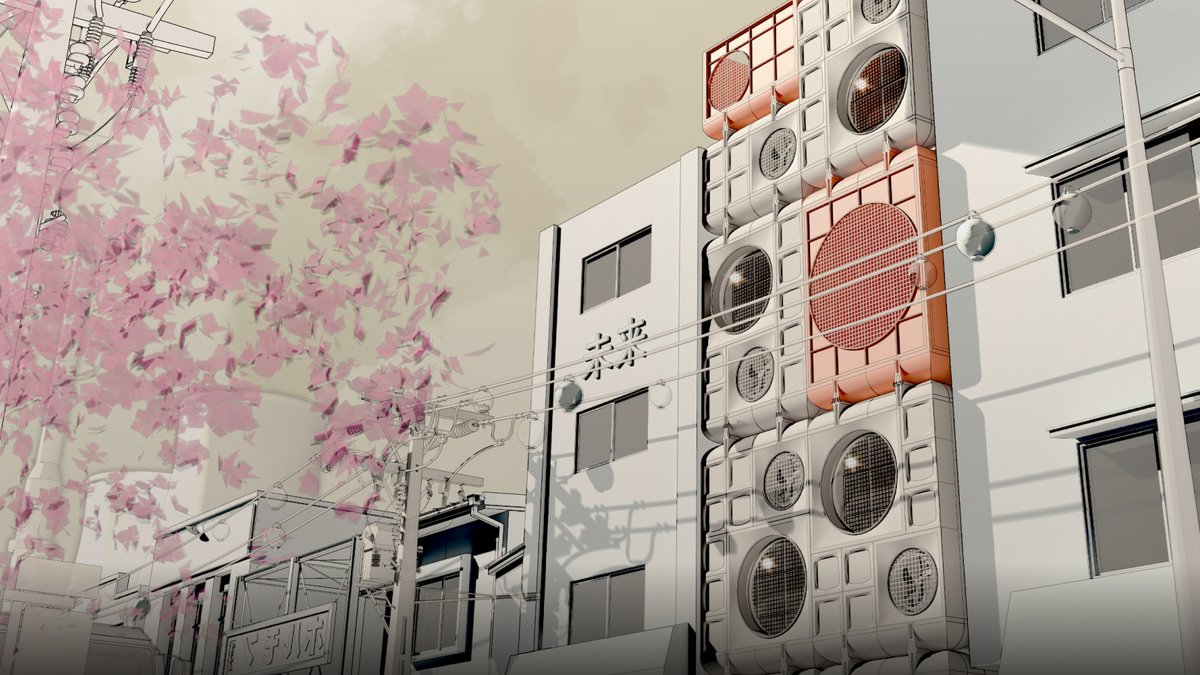
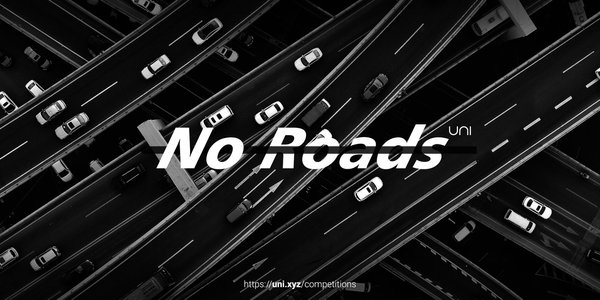
- No Roads — Challenge to visualize a future with no roads
- One Change — Challenge to illustrate the change you wish in architecture
For more fast-paced briefs across the platform, browse all ongoing competitions.
How Quick Competitions Differ From Major Awards
Quick competitions are not a lesser version of full-scale architecture awards — they are a different discipline that reward different things. The comparison:
- Scope: quick briefs usually ask for a single object, concept, or drawing. Major awards ask for a full masterplan with 15+ boards of supporting documentation.
- Timeline: quick briefs run 24 hours to 2 weeks. Major awards run 2 to 6 months.
- Entry fee: quick briefs are often free or under $20. Major awards range from $50 to $350 per entry.
- Jury criteria: quick briefs reward speed of idea, conceptual clarity, and visual impact. Major awards reward comprehensive documentation, technical feasibility, and depth of development.
- Outcome: quick briefs give you fast feedback and portfolio pieces. Major awards give you career-defining recognition and publication.
- Risk: quick briefs are low-risk, low-reward. Major awards are high-stakes, high-reward.
A mature competition practice uses both. Quick competitions are the scales you practice every day; major competitions are the concerts. Most established architects who regularly compete work at both scales simultaneously.
Tools and Strategies for Rapid Design Work
Speed competitions demand tools and workflows optimized for time pressure. The short kit:
- Hand drawing is faster than digital modelling. For 24-hour briefs, a strong pencil sketch beats an unfinished 3D render. The fastest architects working in this format sketch first, render only if time permits.
- Templates and hotkeys. Have a board template ready (title block, credits area, narrative space). Know the keyboard shortcuts of your main tool. Do not learn the tool during the competition.
- AI-assisted concept generation. Midjourney, Stable Diffusion, and Veras can produce concept imagery in minutes. For quick competitions where AI is allowed and credited, this is a legitimate accelerator — just disclose tool use honestly.
- Twinmotion or Unreal Engine 5 for rendering. Real-time rendering means you can iterate frame composition instead of waiting for overnight renders.
- Grasshopper or parametric tools for rapid iteration where geometry is the subject — explore 20 variations in the time a manual process would produce 2.
- Clear conceptual hook written first. The strongest quick entries are built around a single idea you can say in one sentence. Write that sentence before you draw anything.
- Solo vs team. Solo is often faster for 24-hour briefs (no coordination overhead). Teams are faster for 48-hour+ briefs where work can be split. Know which format the brief fits.
The 10 / 60 / 30 Rule for 24-Hour Competitions
Experienced rapid-competition entrants use a rough time-budget rule. For a 24-hour brief:
- 10% reading and conceptualizing (2-3 hours). Read the brief twice. Identify the core question. Decide on your one-sentence concept before you draw anything.
- 60% designing and producing (~14 hours). Sketch, render, lay out boards, write narrative. This is the hardest phase to discipline — do not let it eat into the presentation phase.
- 30% presenting and submitting (~7 hours). Final board layout, writing polish, export to submission format, upload, verify receipt. Never let this phase run short. The best idea in the world loses to a submitted mediocre one.
Scale the ratios for 48-hour and 72-hour briefs. Keep the 30% presentation reserve sacred — juries never see the work you couldn't finish.
What Juries Look For in Quick Competition Entries
Quick competition juries evaluate entries differently from major-award juries. Key criteria:
- Conceptual clarity over completion. A single strong idea clearly communicated beats a partially-developed comprehensive response. Juries know you had 24 hours.
- Visual impact in a single glance. Most quick competition entries are judged in under 60 seconds. Your hero image has to land instantly.
- A single memorable hook. Can the jury describe your entry to a colleague in one sentence? If not, rethink.
- Originality in response to the prompt. Quick competitions reward unexpected readings of the brief more than long competitions do.
- Technical polish relative to time available. Juries scale their expectations to the brief duration. A 24-hour entry does not need photorealistic rendering — it needs clarity.
- Written narrative that matches the drawing. Even a one-sentence concept statement helps juries understand what they are looking at.
Building a Portfolio Through Quick Competitions
A serious portfolio strategy based on quick competitions looks something like this:
- One quick competition per month through an academic year or a calendar year. 10-12 pieces of work by year-end.
- Deliberate discipline spread. Don't enter 12 pavilion competitions. Alternate: pavilion, essay, illustration, photograph, concept, speculative, object. Build breadth.
- Honest self-critique after each entry. What worked? What didn't? What would you do differently next time? Keep a short log — it accelerates learning.
- Show quick work alongside long work in your portfolio. A single thesis project plus 8 strong quick entries tells a richer story than a thesis alone.
- Credit the format. When presenting quick competition work in a portfolio, note the time constraint. Reviewers respect "designed in 48 hours" as a legitimate creative accomplishment.
- Graduate to longer briefs gradually. After a year of quick competitions, you will be ready to enter major awards with genuine competition instincts.
How to Prepare for Your First Quick Competition on UNI
- Browse this section and pick a brief that matches your skills — illustration, essay, concept, rendering, photography.
- Clear your schedule. Tell the people around you that you're unavailable for the duration. Put the phone away.
- Set up your workstation before the brief drops. Templates ready. Tools open. Reference library bookmarked. Water and snacks at hand.
- Download the brief the moment it opens. Read it twice before drawing. Identify the core question.
- Write your one-sentence concept. If you cannot say the idea in one sentence, the idea is not clear enough.
- Follow the 10/60/30 rule. Read, produce, present. Never skip the presentation phase.
- Submit 30+ minutes before deadline. Upload issues, export errors, and file format problems are real. Leave yourself runway.
- Screenshot your submission confirmation. Then walk away. Whatever you submit is what you submit.
- Come back for the results. Even if you don't win, read what the jury awarded and why. That's your learning.
- Enter the next one. Competition practice compounds. One entry teaches you more than reading ten books about competitions.
June 2026 Platform Snapshot
- 4 open briefs currently curated in the quick competitions section
- 52 competitions currently open across all themes on the platform
- 767 total competitions hosted on UNI since 2017
- 7594 total entries submitted across all competitions
- 898 jurors have evaluated work on the platform
- 270K+ architects and designers in the global UNI community
- 68 disciplines covered across architecture, illustration, photography, essay, and allied design fields
Frequently Asked Questions About Quick Architecture Competitions
How long do quick competitions last?
Anywhere from 24 hours to 2 weeks. The most common formats are 24-hour charrettes, 48-hour sprints, 72-hour hackathons, weekend briefs, and one-week challenges. Anything longer than 2 weeks stops being "quick" and becomes a conventional competition.
Do I need to be a professional architect to enter a quick competition?
No. Quick competitions are explicitly designed to welcome students, emerging designers, first-time entrants, illustrators, photographers, writers, and anyone with a creative response to the brief. Many are open to every discipline on the platform.
Are quick competitions free to enter?
Many are. UNI hosts a number of free quick briefs specifically to lower the barrier to entry for new competitors. Paid quick briefs typically cost under $20. A UNI Membership starting at $9 a week unlocks unlimited entries across every competition on the platform — free, paid, and premium alike. See also free architecture competitions.
Can I enter a quick competition as a team?
Most quick competitions allow both solo and team entries. For 24-hour briefs, solo is often faster (no coordination overhead). For 48+ hour briefs, teams can split work productively. Each brief states its team policy clearly.
How are quick competition entries judged?
Juries in quick competitions scale their expectations to the duration. They reward conceptual clarity, visual impact in a single glance, originality in response to the prompt, and technical polish relative to the time available. They do not expect photorealistic rendering or 20 boards of documentation — they expect a clear idea, communicated well.
What can I win in a quick competition?
Rewards vary by brief. Typical outcomes include cash prizes (often modest, $100-$1,000), certificates of recognition, publication in the UNI Design Yearbook, portfolio-grade credentials, and the professional development of having entered and submitted under pressure. The learning is often worth more than the prize.
How does a quick competition help my portfolio?
Enormously. A student who enters one quick competition a month finishes the year with 10-12 portfolio pieces built under time pressure — a diverse body of work that demonstrates deadline discipline, conceptual range, and professional competition practice. Recruiters and graduate schools notice. "Designed in 48 hours" is a legitimate portfolio credential, not a limitation.
What is a charrette?
A charrette is an intensive short-duration design workshop, typically 24 hours to a week. The word comes from the 19th-century École des Beaux-Arts in Paris, where students rushed to finish their drawings before a cart — en charrette — came by to collect them for the jury. Charrettes remain standard practice in architecture schools worldwide, and quick competitions are the online global extension of the tradition.
Can AI tools be used in quick competitions?
Yes, where the brief allows, and with honest disclosure. Midjourney, Stable Diffusion, Veras, and real-time rendering tools like Twinmotion are legitimate accelerators for fast-paced briefs. UNI's policy is straightforward: AI is a tool, the human designer is the author, and credit is required. Entries that use AI must disclose tool use in their submission.
How do I know if a competition is a quick competition on UNI?
This section — Quick Competitions — curates all of UNI's fast-paced briefs in one place. Look for competitions tagged with short timelines (24h, 48h, 72h, weekend, 1-week, 2-week) or single-output formats (single drawing, single image, essay, concept-only). Every brief in this section is designed for fast turnaround.
Recommended Reading and Resources
For deeper context on the charrette tradition: Wikipedia's entry on "charrette" for the École des Beaux-Arts origin story, Harvard Design Magazine's "Are Charrettes Old School?" essay, and the published catalogues of 24h Competition, 120 Hours, and 72 Hour Urban Action. For time-management in rapid design work, the Pomodoro technique (25-minute focused sprints), Cal Newport's Deep Work, and the "perfect is the enemy of done" attitude that every experienced competition architect eventually learns.
Explore More on UNI
Beyond quick competitions, browse all ongoing competitions, see what's trending, preview upcoming launches, or study the past competitions archive. Related sections that often overlap with quick briefs: free architecture competitions (lowest-barrier entry points), narrative and thematic design (concept-forward briefs), art and installation, and UNI Design Awards. Want unlimited access to every brief on UNI — including all quick competitions past and future? Explore UNI Membership.