
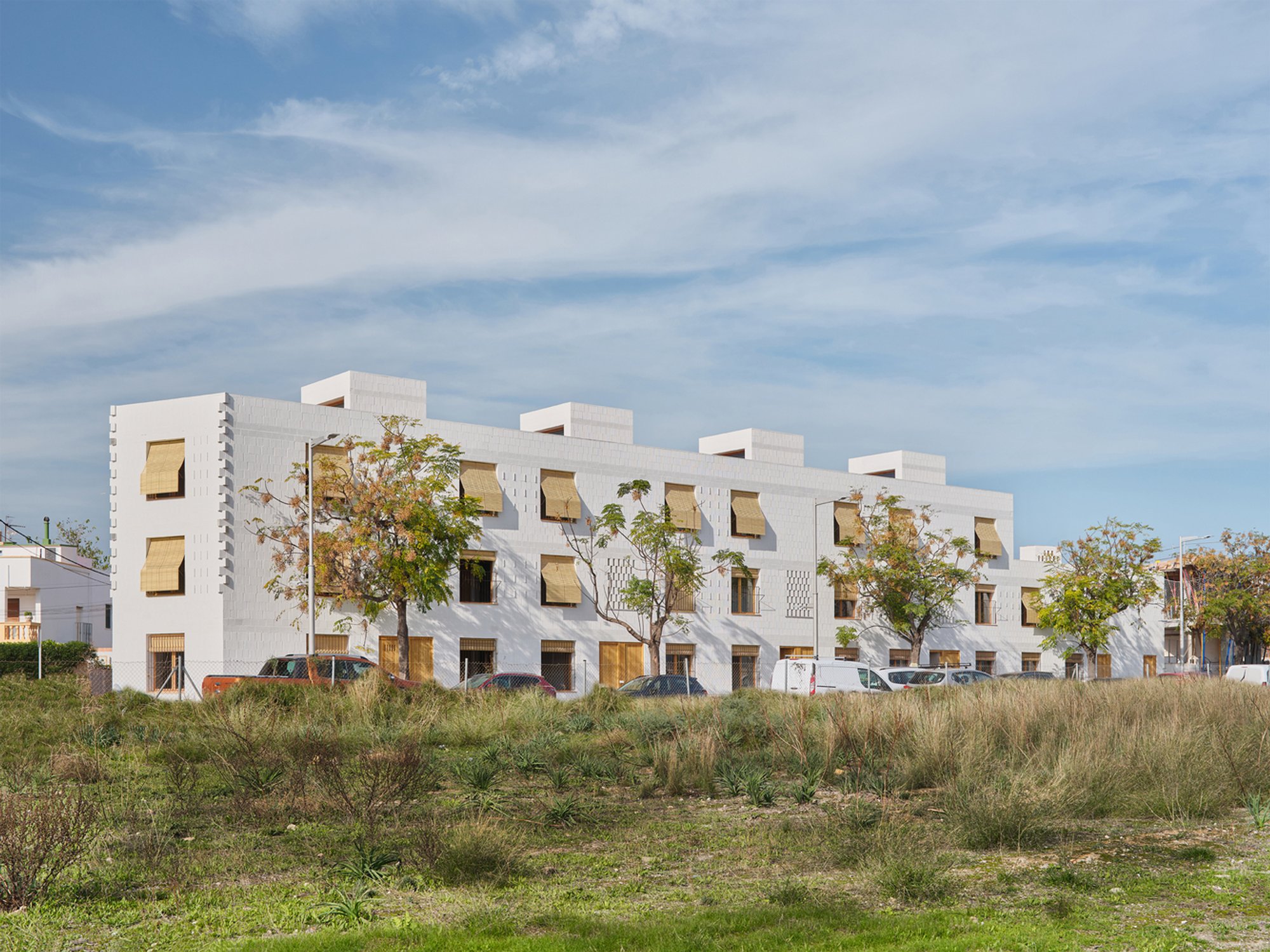
11 Social Houses in Palma by Carles Enrich Studio: A Sustainable Urban Housing Model
Sustainable social housing in Palma by Carles Enrich Studio, integrating passive design, adaptable layouts, and eco-friendly materials for climate resilience.

Innovative Social Housing in Palma
The 11 Social Houses in Palma, designed by Carles Enrich Studio, introduce an innovative and sustainable approach to urban housing. Situated on a compact site that was once a marés stone quarry, the project seamlessly integrates into the surrounding urban fabric of El Coll d’en Rabassa, on the outskirts of Palma, Spain. This development not only responds to the need for affordable housing but also addresses climate adaptation and sustainable construction practices.
A Thoughtful Architectural Approach
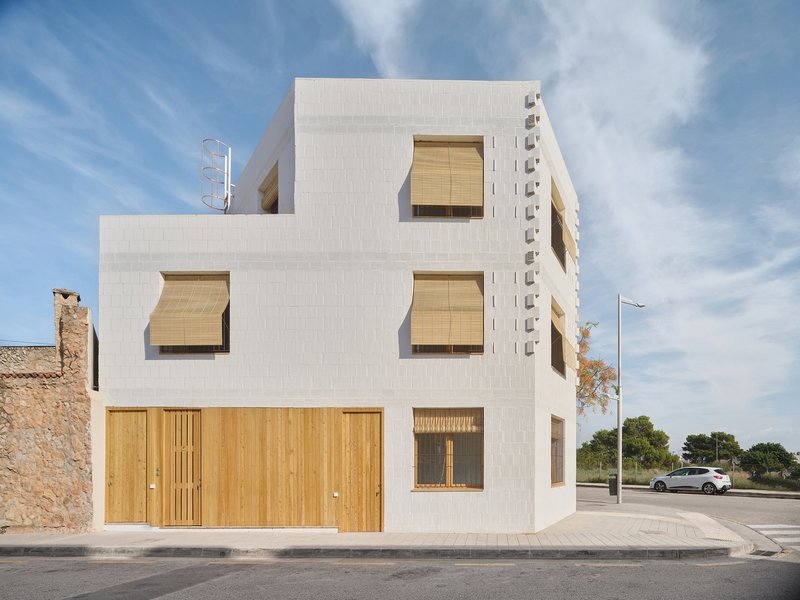
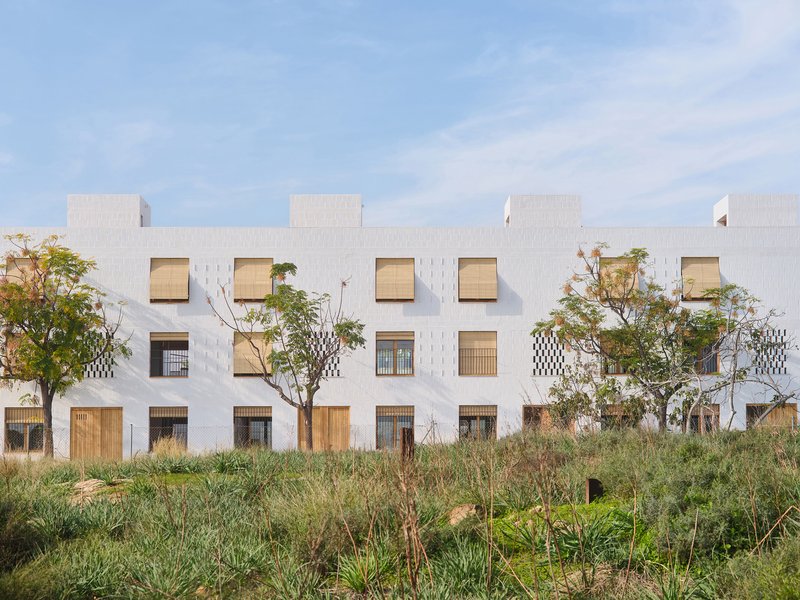
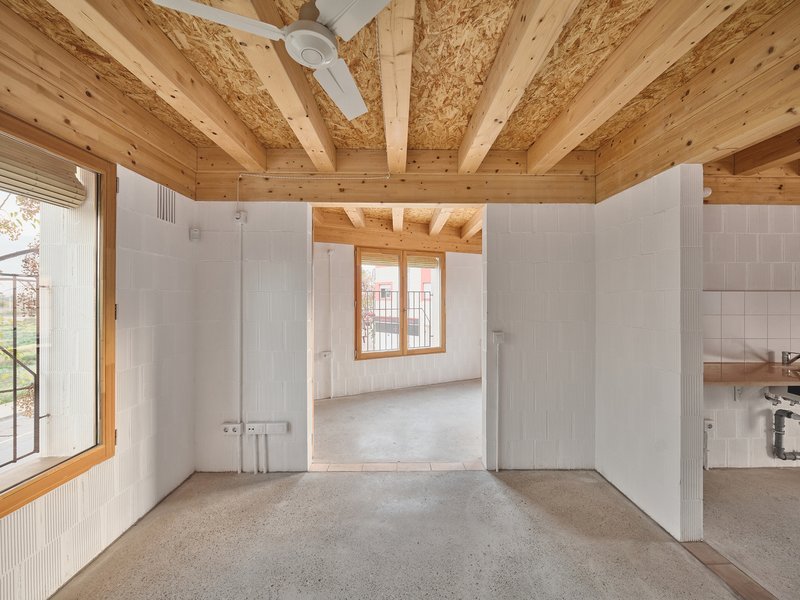
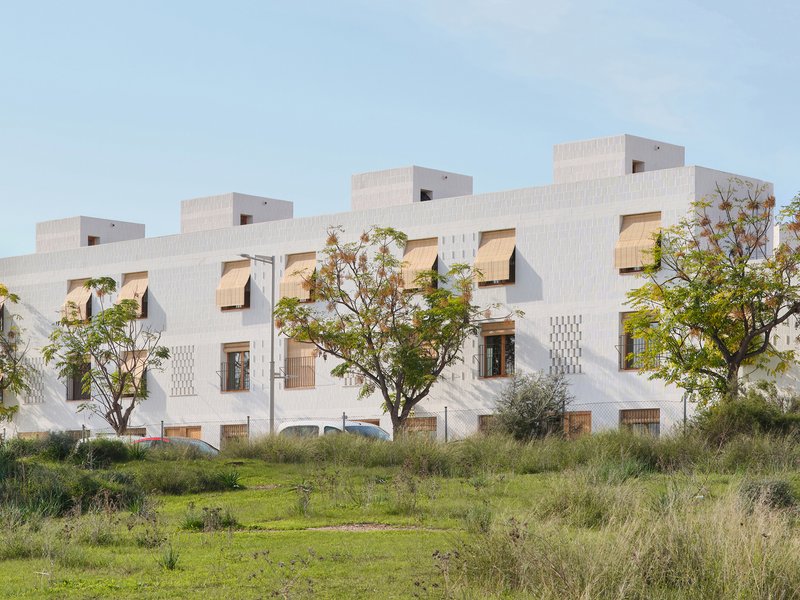
The project prioritizes spatial efficiency and environmental consciousness, employing a compact design strategy that maximizes natural ventilation and light. The decision to detach the structure from the party wall and preserve the site's geological remnants leads to a dual design approach:
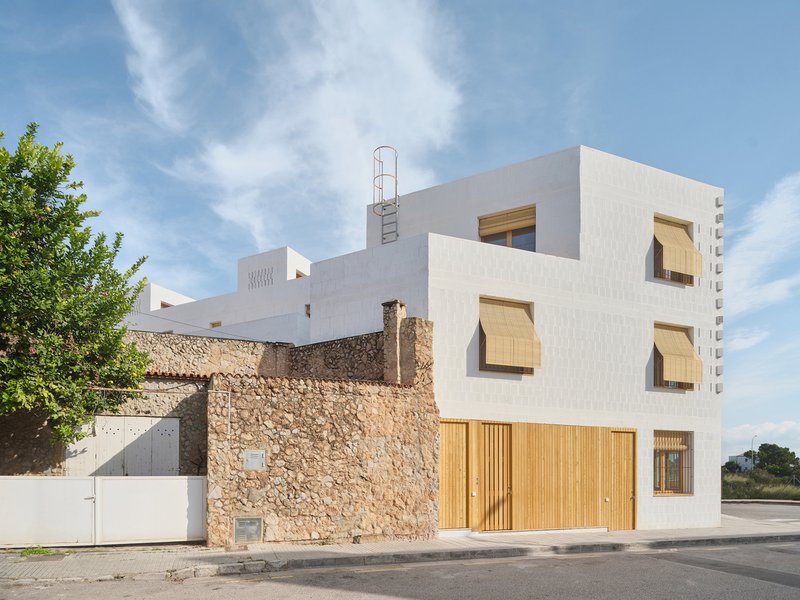
- The exterior façade follows a regular, compact form, ensuring a structured urban presence.
- The interior façade is set back, creating courtyards and semi-private outdoor spaces that enhance passive cooling and promote community interaction.
This design strategy improves thermal performance, reduces energy consumption, and fosters bioclimatic adaptability.
Flexible and Efficient Housing Typologies
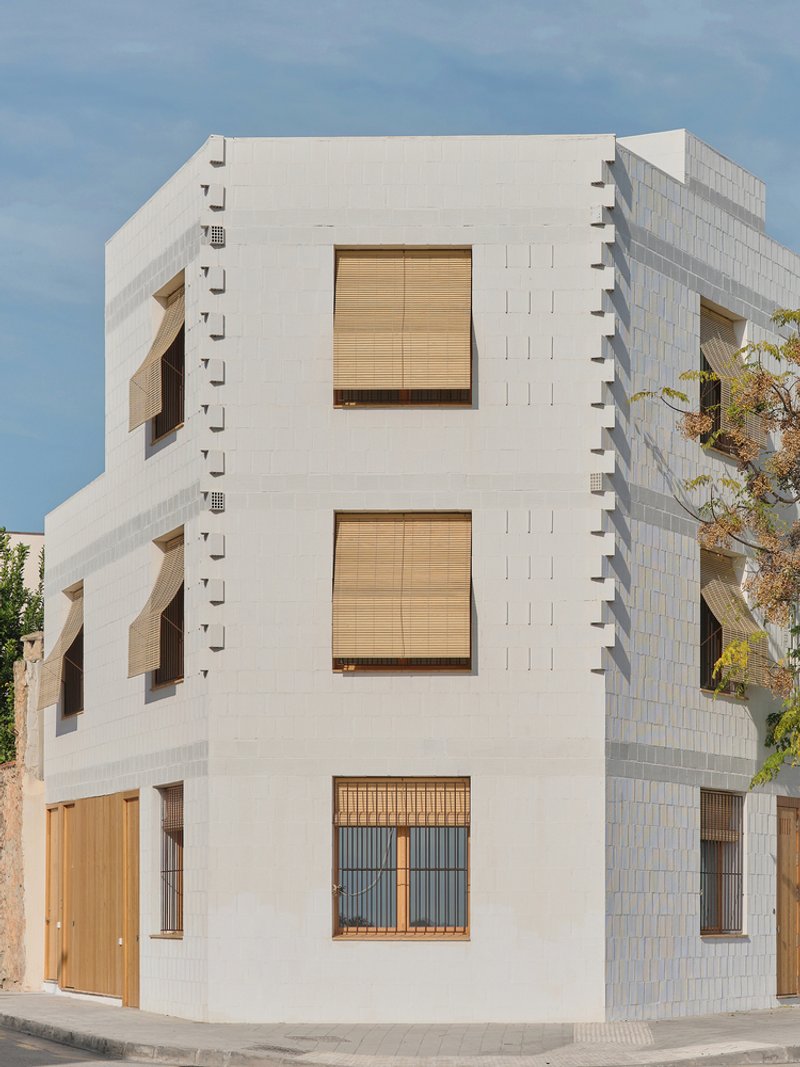
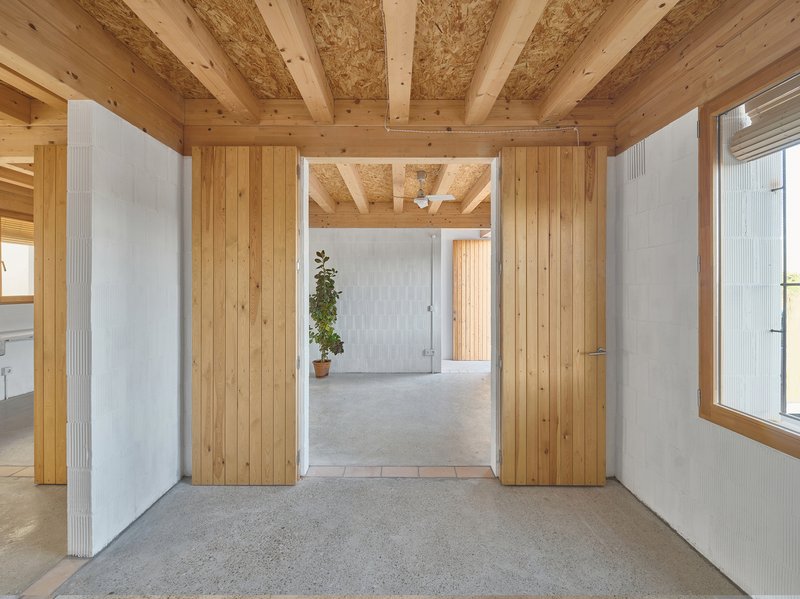
The 11 residential units are designed with a non-hierarchical spatial concept, eliminating unnecessary circulation areas to optimize usable space. The project features three primary housing typologies:
- One-bedroom units for individuals or couples.
- Two-bedroom apartments designed for small families.
- Three-bedroom homes for larger households.
By allowing flexible layouts, the adaptive housing model caters to varying family structures and future-proof living needs.
Passive Design for Climate Resilience
The project incorporates vernacular architectural principles to enhance climate resilience. Passive strategies include:
- Cross ventilation through strategically placed openings on opposite facades.
- Skylights in stairwells, acting as solar collectors and thermal dissipators.
- A volumetric setback on the western façade to reduce heat gain.
- Draining gardens with native, low-water-demand vegetation to regulate microclimate and reduce ambient temperature.
- A rainwater collection system for irrigation reuse, supporting water conservation.
These elements significantly lower the building's energy demand, reducing reliance on mechanical cooling systems.
Energy Efficiency and Sustainable Materials
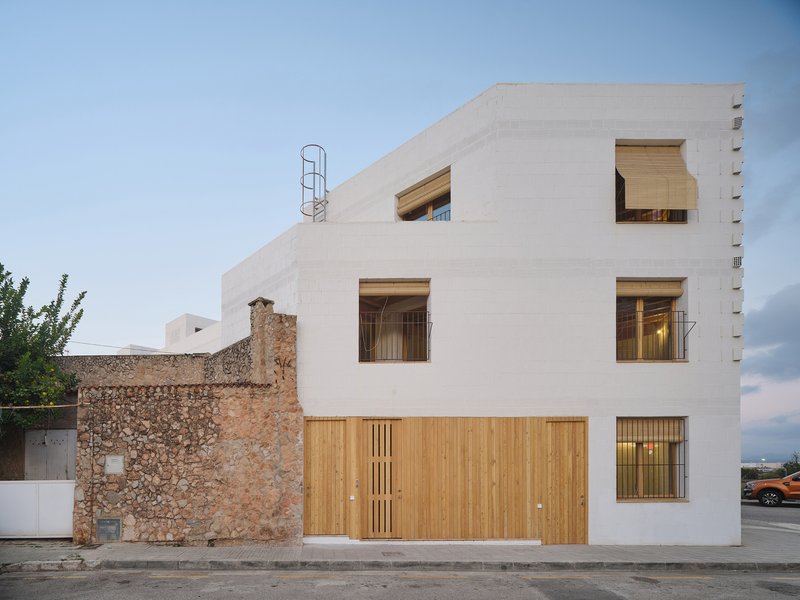
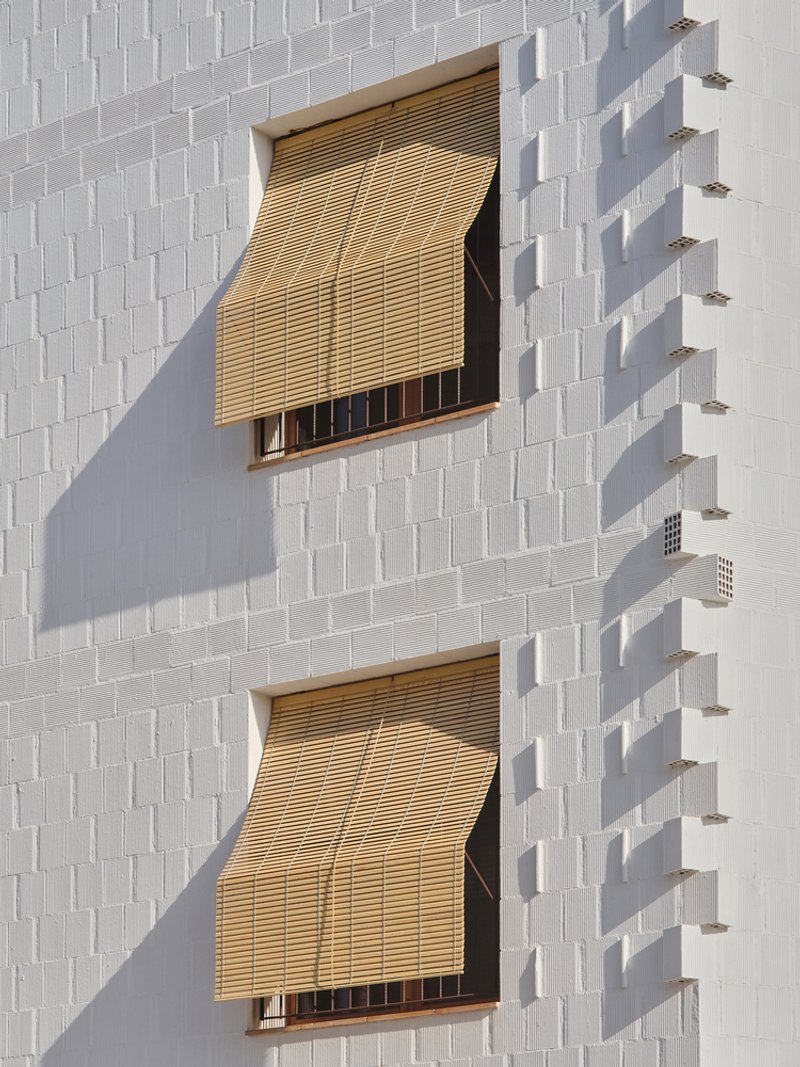
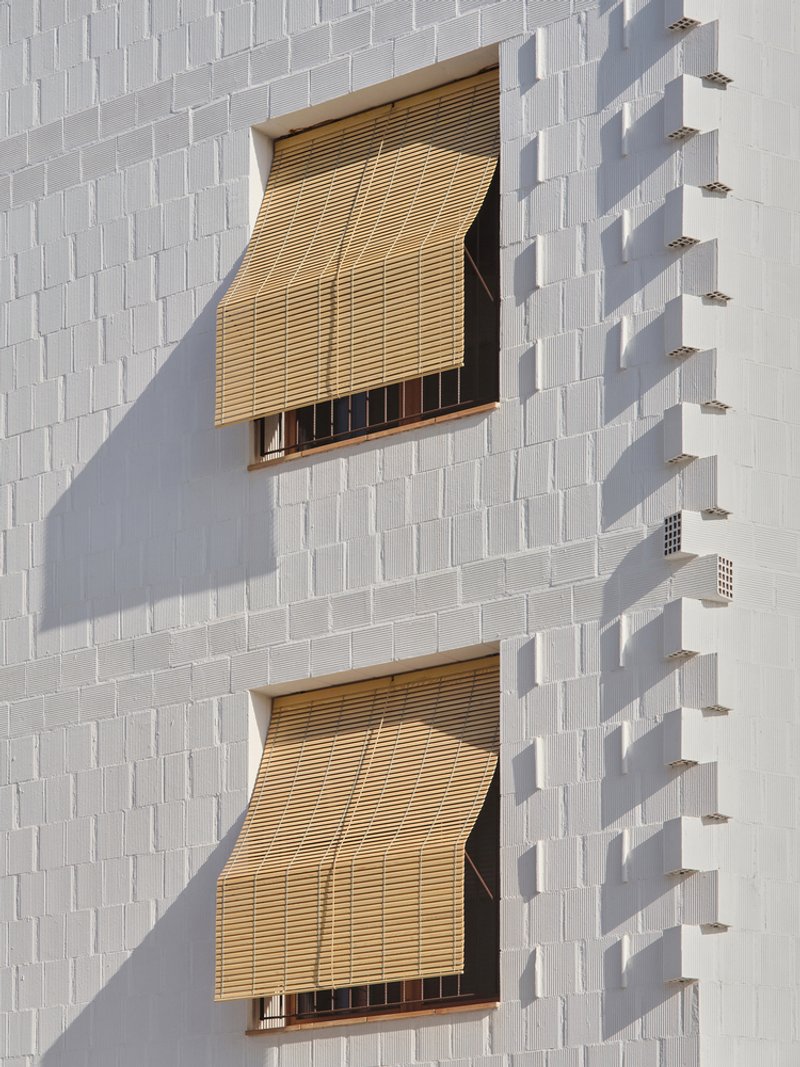
The building envelope is finished with a lime-based render (jabelga), ensuring waterproofing while enhancing thermal insulation. The white façade reduces heat absorption, optimizing indoor comfort.
Further sustainability features include:
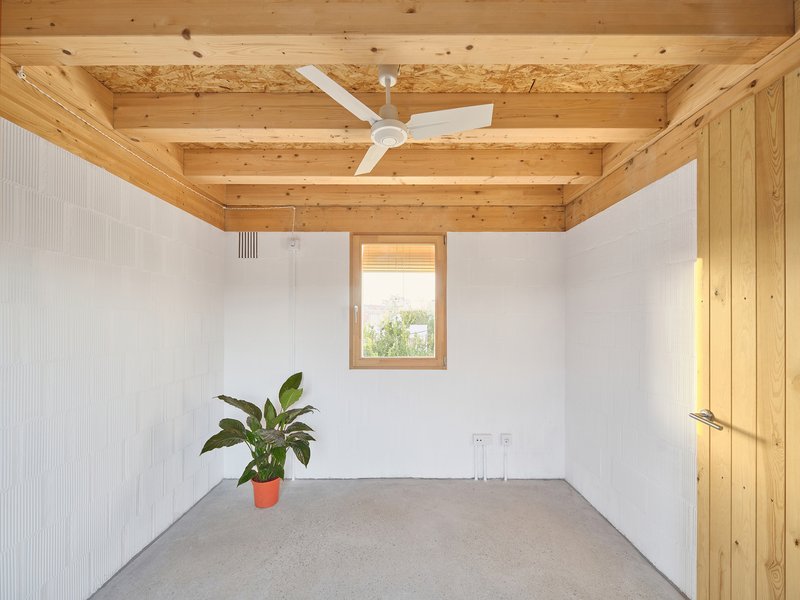
- Prefabricated wooden slabs, promoting modular construction and reducing waste.
- Load-bearing walls made of Mallorcan ceramic blocks, integrating local materials for thermal inertia and acoustic insulation.
- Earth-filled masonry perforations to enhance insulation performance.
- A laminated wood perimeter beam, enabling disassembly and future recycling of structural elements.
A Low-Impact Urban Housing Model
The 11 Social Houses redefine urban living by eliminating elevators and instead offering direct street access to each unit. This approach not only enhances community interaction but also promotes a low-carbon housing model that minimizes maintenance costs and energy use.
By implementing standardized construction techniques, the project ensures economic efficiency while maintaining a high level of architectural quality.
A Blueprint for Sustainable Social Housing
The 11 Social Houses in Palma demonstrate a holistic approach to sustainable urban housing, balancing affordability, environmental responsibility, and architectural innovation. Through passive design, climate resilience, and adaptable living spaces, this project serves as a blueprint for future social housing developments in dense urban areas.
All Photographs are works of Adrià Goula




Popular Articles
Popular articles from the community

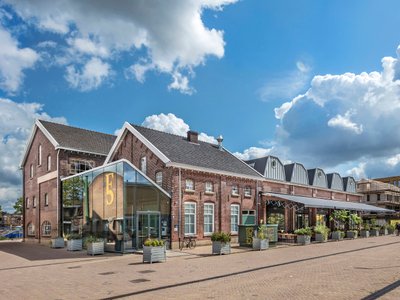
Fifth NRE Jazz Club – De Bever Architecten: Eindhoven’s Revitalized Cultural Hub
Historic gas factory transformed into Fifth NRE Jazz Club blending modern sustainability, jazz culture, dining, and heritage architecture seamlessly.
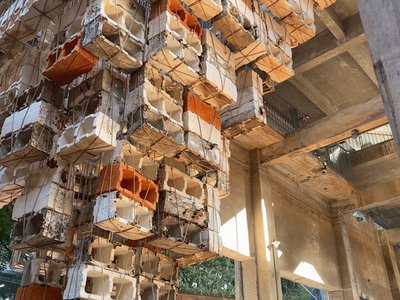
Inverted Architecture Installation by Studio Link-Arc: Exploring the Intersection of Architecture and Living Organisms
Inverted Architecture Installation by Studio Link-Arc blends mycelium, sustainability, inverted design, ecological cycles, and urban adaptive architecture in Shenzhen.


The Ken Roberts Memorial Delineation Competition (Krob)
As the most senior architectural drawing competition currently in operation anywhere in the world, it draws hundreds of entries each year, awarding the very best submissions in a series of medium-based categories.

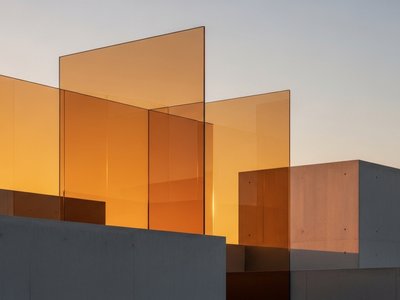
Free Architecture Competitions You Can Enter Right Now
No entry fees, real prizes. Here are the best free architecture competitions open for submissions in 2026.

Similar Reads
You might also enjoy these articles
The Ken Roberts Memorial Delineation Competition (Krob)
As the most senior architectural drawing competition currently in operation anywhere in the world, it draws hundreds of entries each year, awarding the very best submissions in a series of medium-based categories.

Waterfront Redevelopment and Urban Revitalization in Mumbai: Forging a New Dawn for Darukhana
A transformative waterfront redevelopment project reimagining Darukhana’s shipbreaking heritage into an inclusive urban future.

OUT-OF-MAP: A Call for Postcards on Feminist Narratives of Public Space
Rhizoma Design and Research Lab invites artists, designers, architects, researchers, and students to reflect on how feminist perspectives can reshape public space. Selected works will be exhibited in Barcelona, October 2026. Submissions open until 15 April 2026.


Documentation Work on Buddhist Wooden Temple
Architectural syncretism and cultural hybridity: A comparative study of the Buddhist temples in Chattogram Hill tracks


Explore Architecture Competitions
Discover active competitions in this discipline




The International Standard for Design Portfolios


The Global Benchmark for Architecture Dissertation Awards


The Global Benchmark for Graduation Excellence


Challenge to reimagine the Iron Throne
Comments (0)
Please login or sign up to add comments
No comments yet. Be the first to comment!