
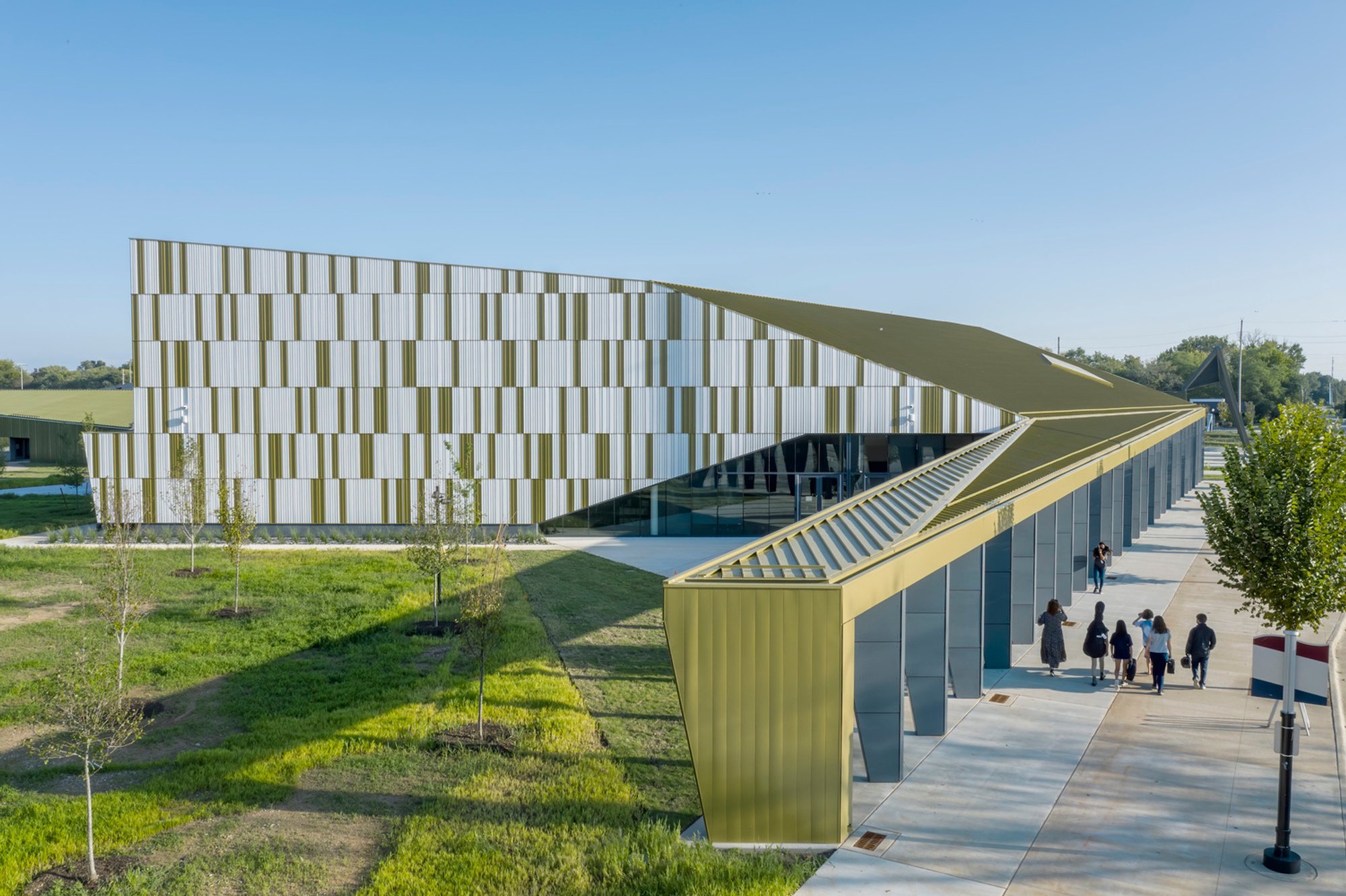
A Model of Sustainable and Innovative School Architecture by Marlon Blackwell Architects
Thaden School by Marlon Blackwell Architects combines sustainable design with a unique curriculum, fostering creativity and environmental awareness.

Thaden School, a private middle and high school in Bentonville, Arkansas, designed by Marlon Blackwell Architects, is a prime example of sustainable and innovative school architecture. Built with a unique curriculum that blends academic excellence with hands-on learning, the school serves not only as an educational institution but also as a model for future school designs. The architecture of Thaden School responds to both environmental challenges and the need for a stimulating, flexible learning environment. With a focus on sustainability and community, the campus integrates natural landscapes, cutting-edge design, and performance-driven building solutions.
Concept and Pedagogical Approach
Thaden School offers a curriculum that fosters academic excellence while emphasizing experiential learning. The school’s signature programs—Wheels, Meals, and Reels—combine hands-on learning experiences in fields such as physics, biology, and the arts. Students construct bicycles and other wheeled machines, grow and prepare food, and create films and videos. This pedagogical approach emphasizes the development of both the mind and the body, ensuring students gain both intellectual knowledge and practical skills.
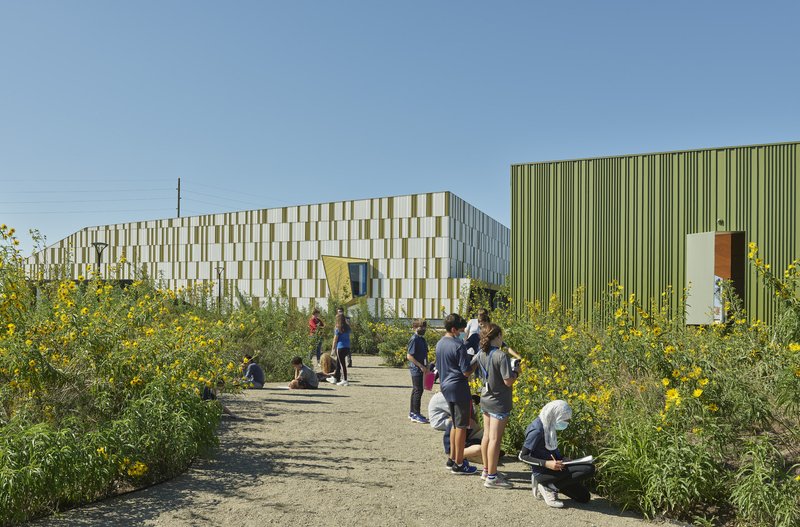
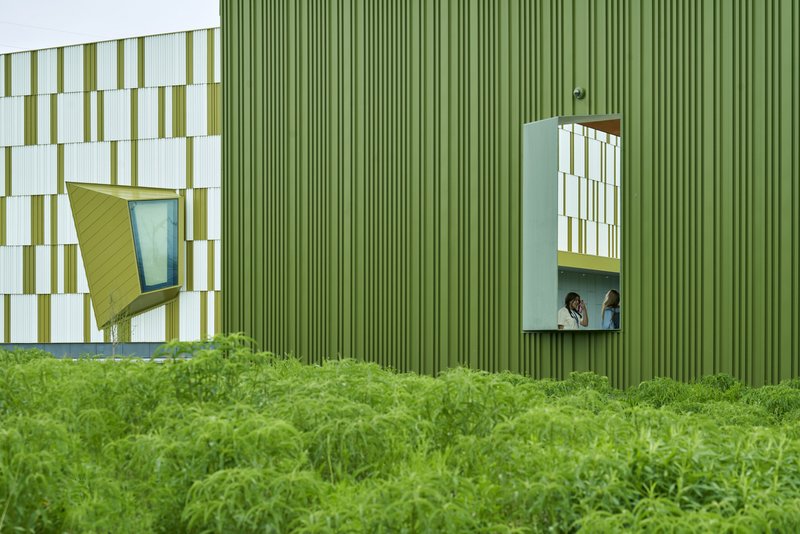
Designed to support this innovative curriculum, the school’s architecture is a direct response to the needs of the students and the surrounding community. The integration of indoor and outdoor learning environments allows students to engage with the natural world while benefiting from state-of-the-art facilities.
Campus Design and Planning
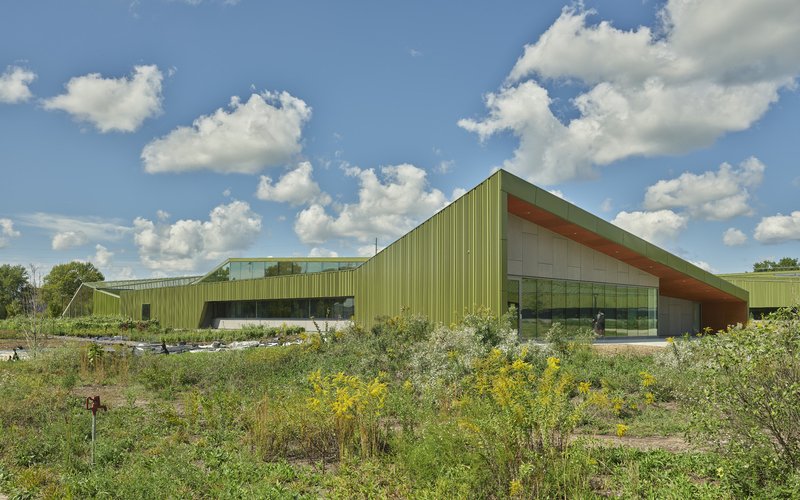
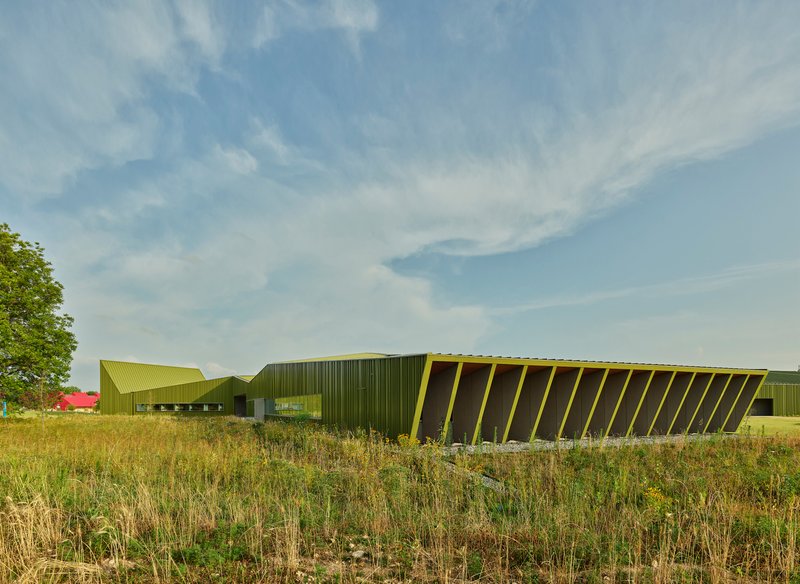
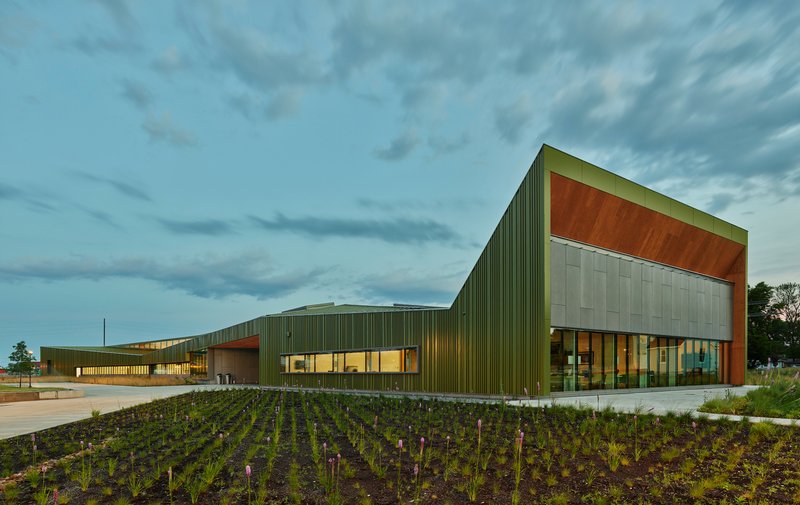
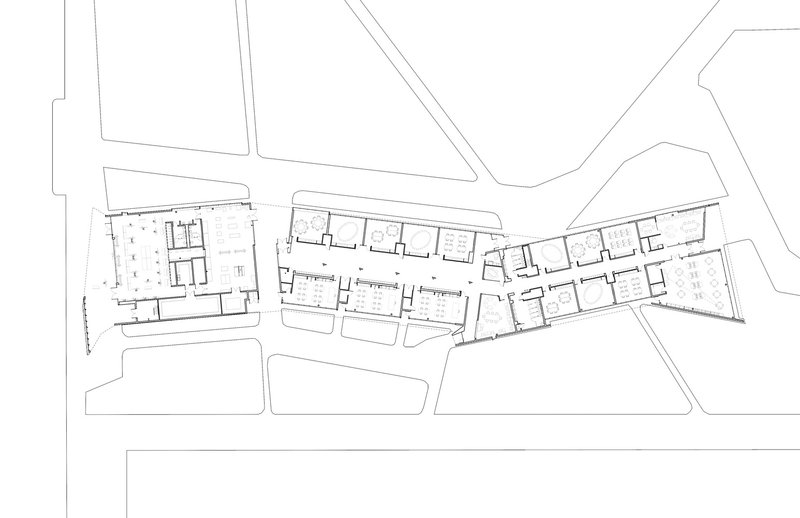
The campus plan of Thaden School unifies two separate plots of land through a "shared street" that accommodates pedestrians, cyclists, and vehicles. The design emphasizes sustainability and collaboration by offering a campus where various disciplines intersect both socially and educationally. Inspired by traditional Arkansas architecture, the buildings feature long, narrow forms that help control sun exposure while providing natural ventilation. These architectural strategies are designed to optimize energy efficiency and comfort while minimizing the environmental footprint.
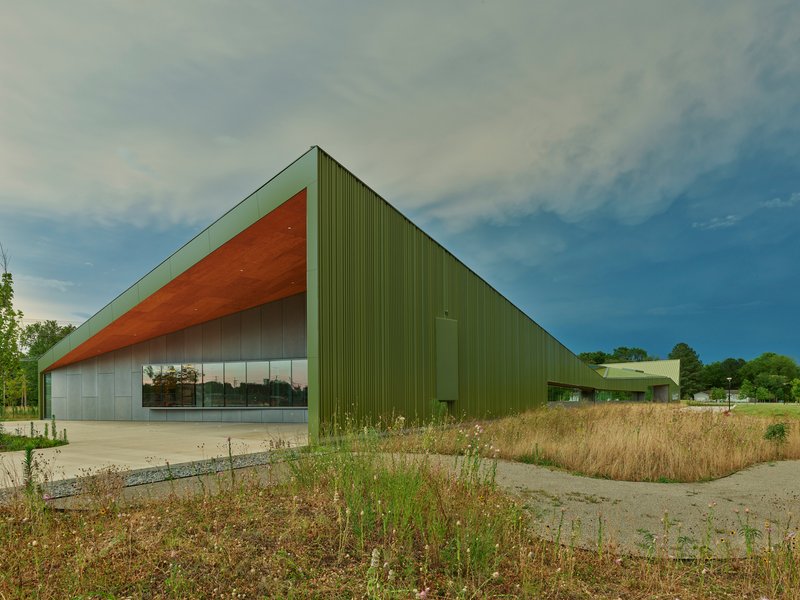
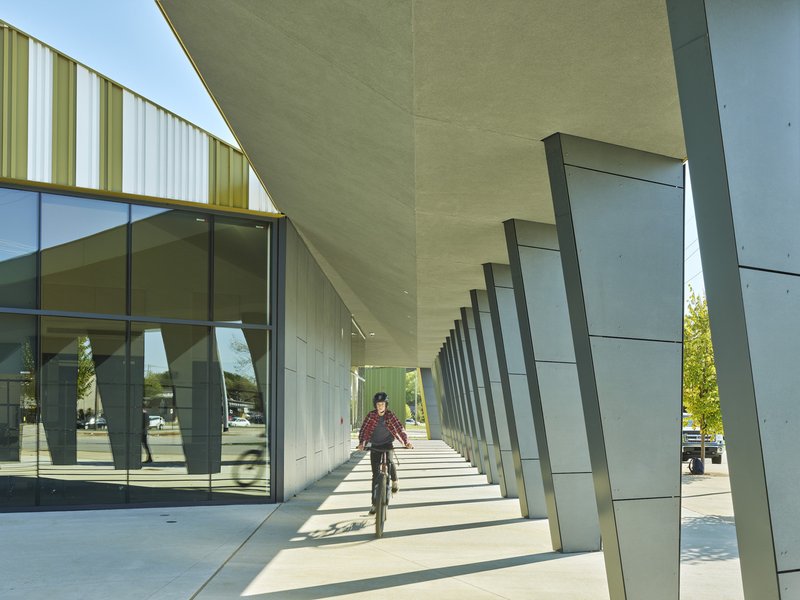
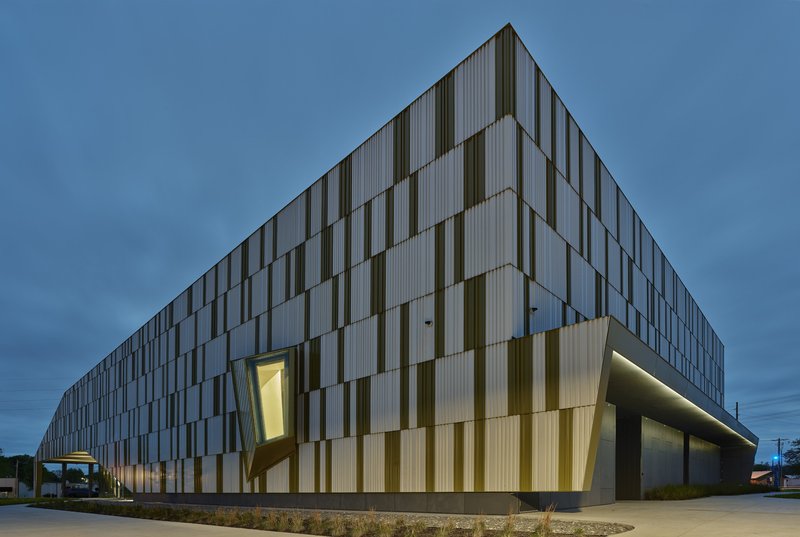
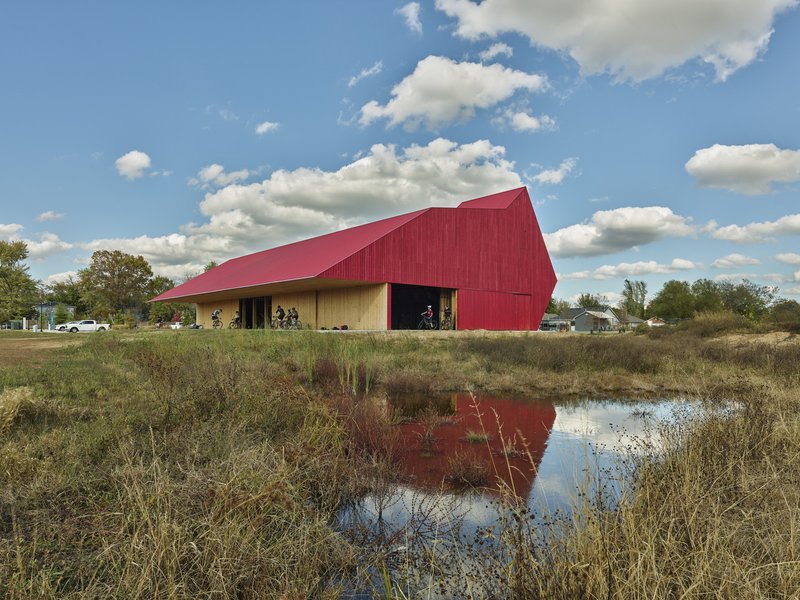
Each building on campus serves a specific educational purpose and is designed to reflect the school’s mission of fostering a hands-on, interconnected learning environment. The buildings, from the science labs to the performance halls, are positioned to encourage collaboration and engagement, with shared spaces that allow students to interact across disciplines.
Sustainable Architecture and Environmental Features
Thaden School's commitment to sustainability is reflected not only in its curriculum but also in its design. The campus is a productive landscape for agriculture and a restorative environment that addresses local flooding issues and supports native ecosystems. The use of natural materials and local expertise in the construction of the buildings promotes sustainability, while the inclusion of water-collection systems and energy-efficient features reduces the school’s environmental impact.
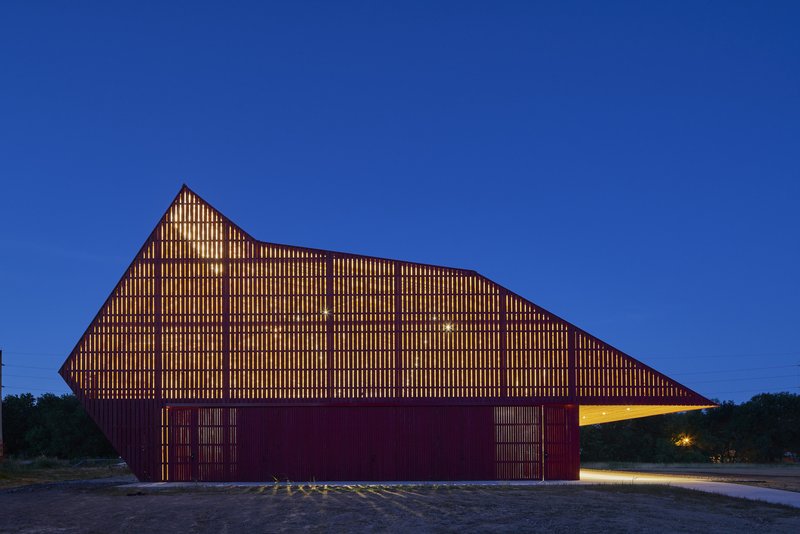
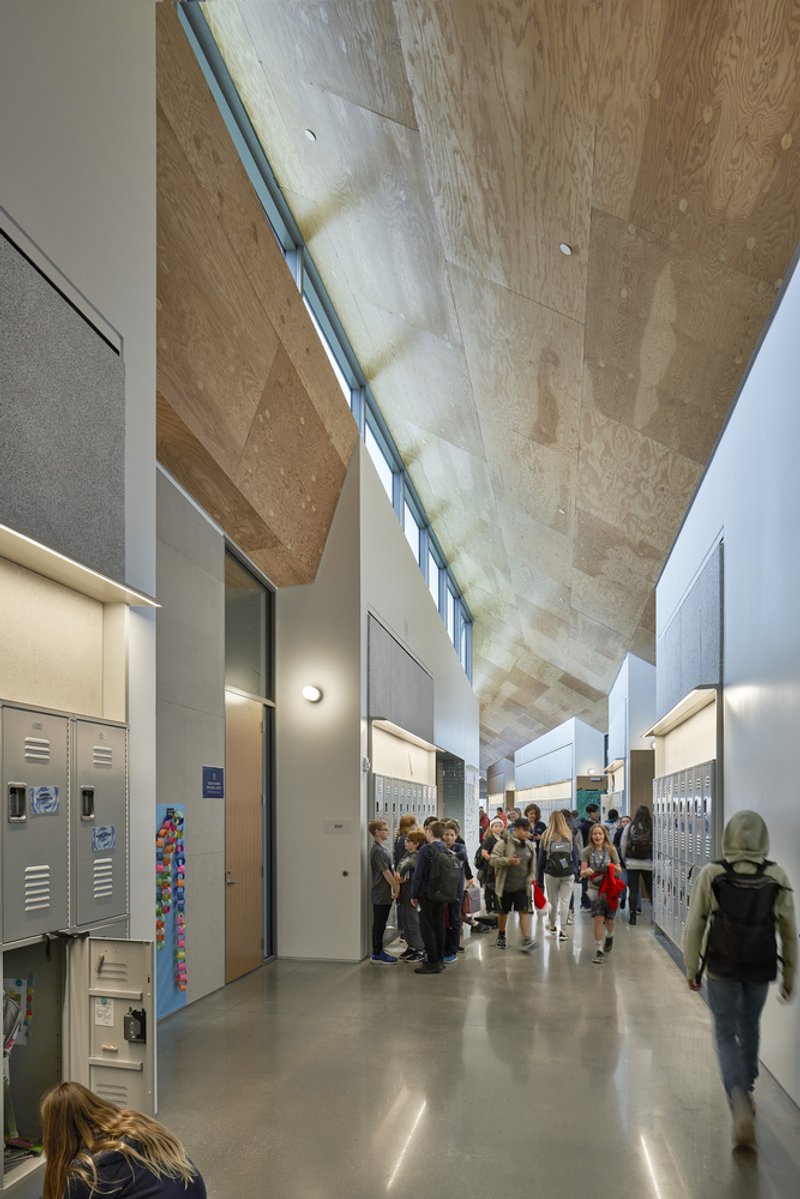
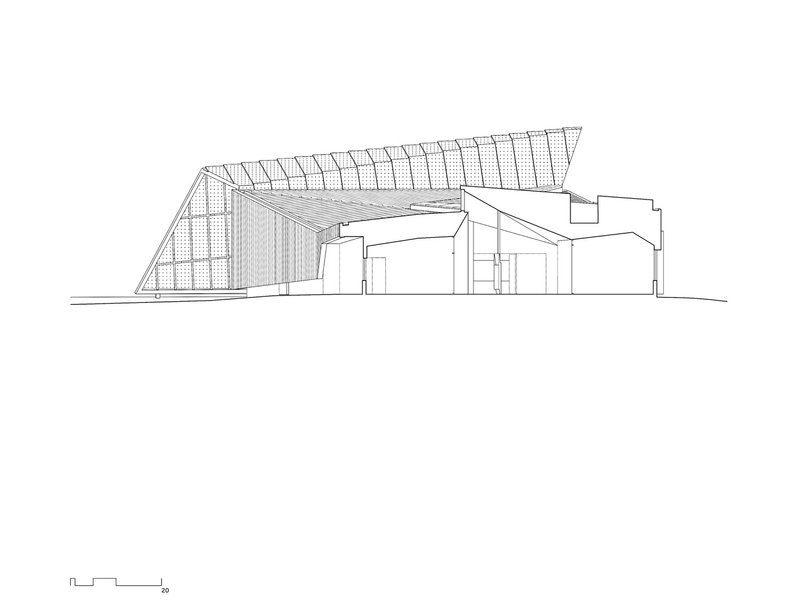
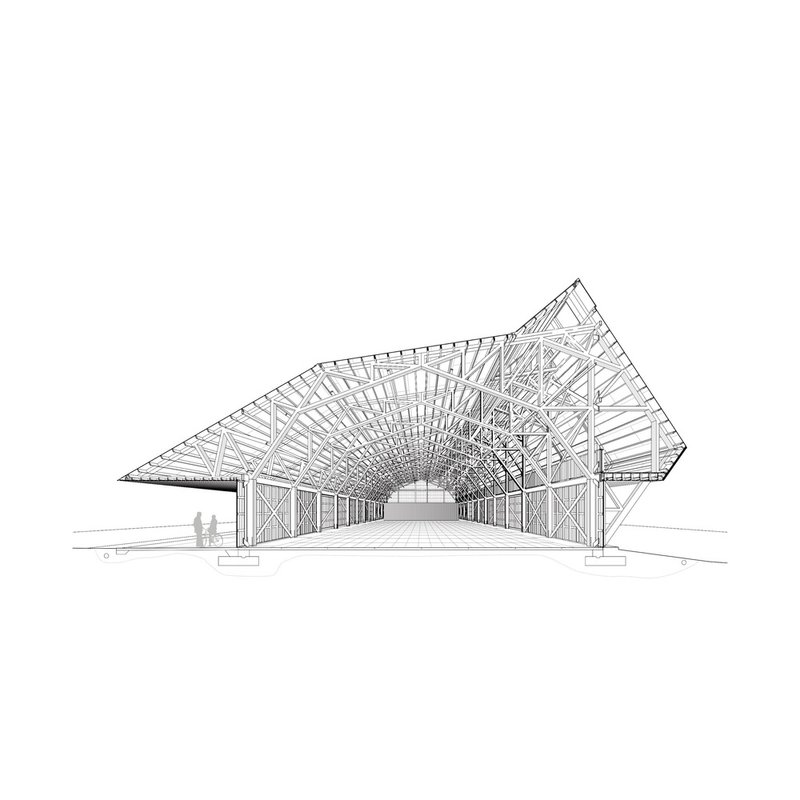
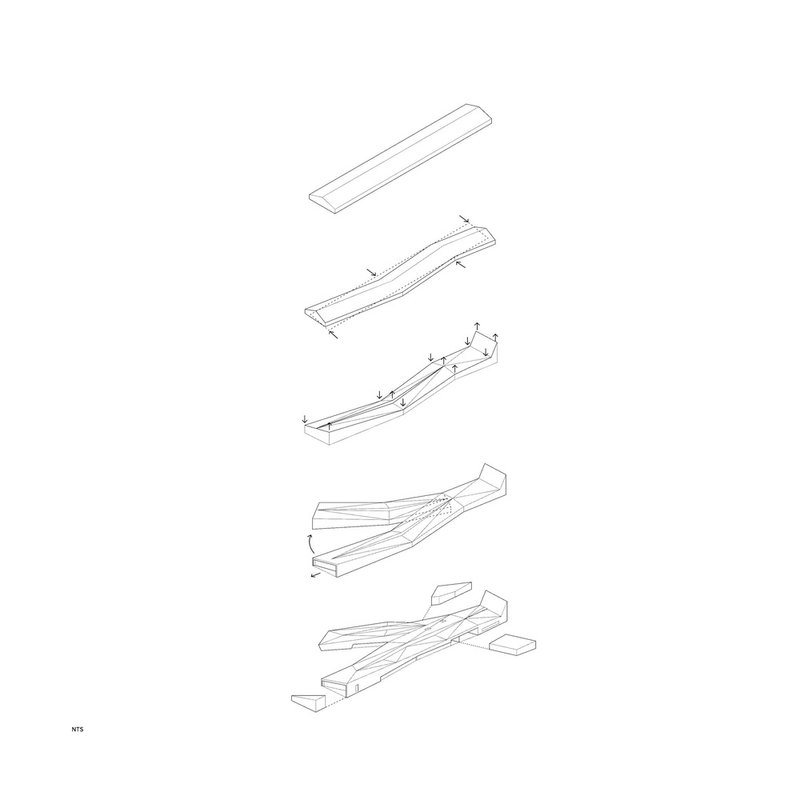
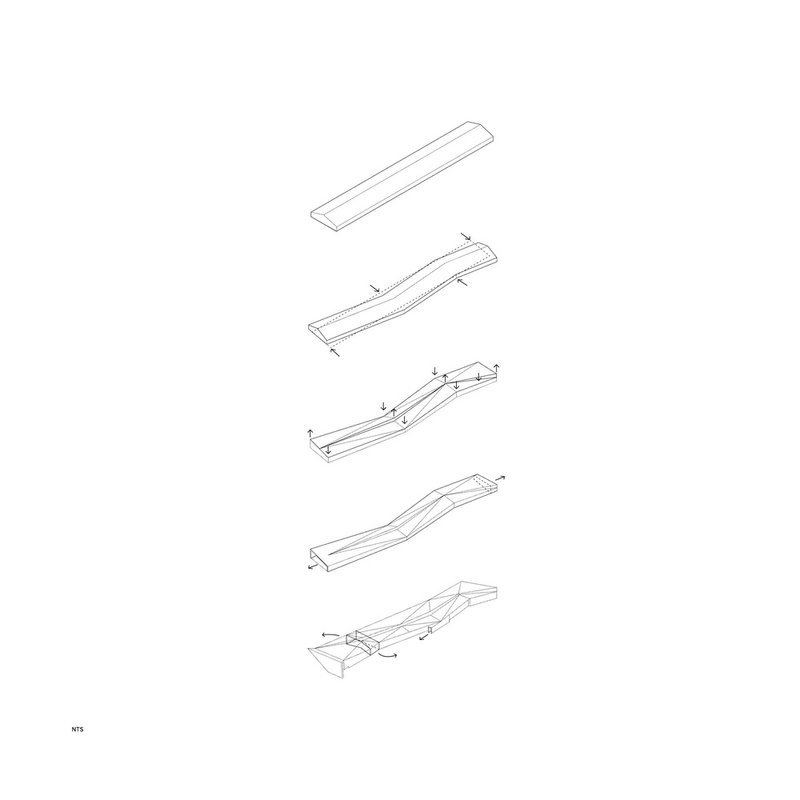
The buildings feature passive design elements, such as undulating roofs that allow for natural daylight and ventilation. The strategic placement of windows and the use of locally sourced materials further enhance the energy efficiency of the campus. These features not only contribute to the environmental performance of the school but also create visually dynamic and engaging spaces for learning.
Key Buildings and Their Functionality
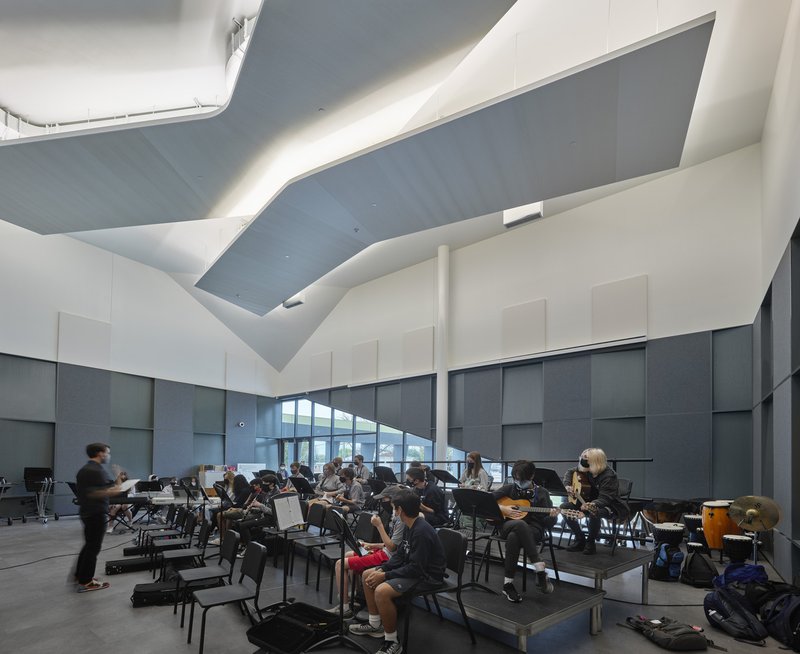
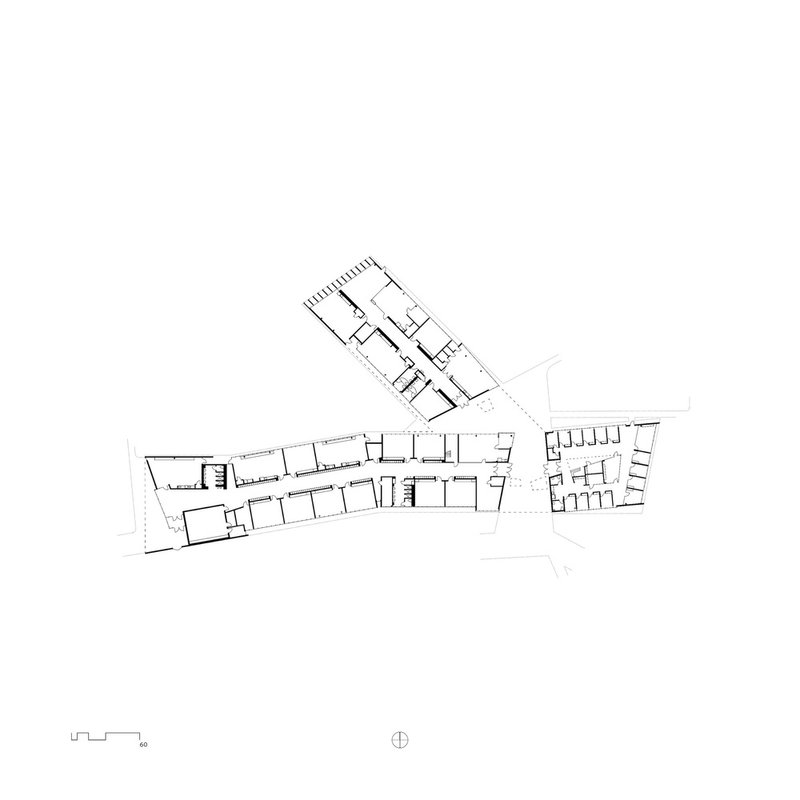
Thaden School’s campus consists of several distinct buildings, each designed to serve specific functions while maintaining a cohesive architectural language. The Reels Arts and Administration Building, for instance, houses the school’s arts program and administrative spaces. Its distinctive undulating roof serves both aesthetic and environmental purposes, providing ample daylight while responding to the local climate. The building is designed to facilitate collaboration, with classrooms and labs arranged around communal spaces that encourage interaction and learning.
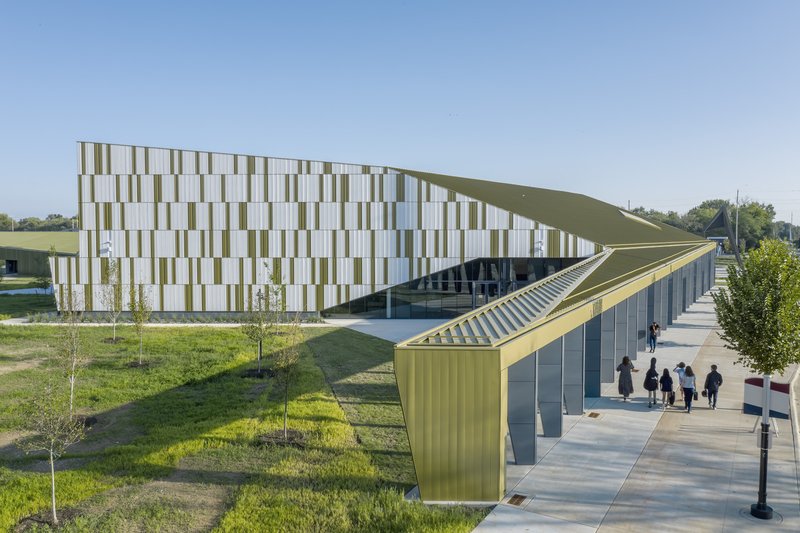
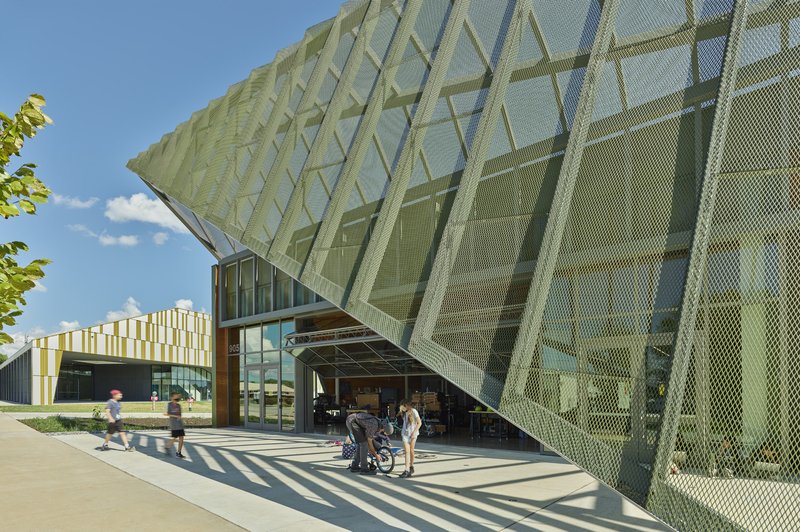
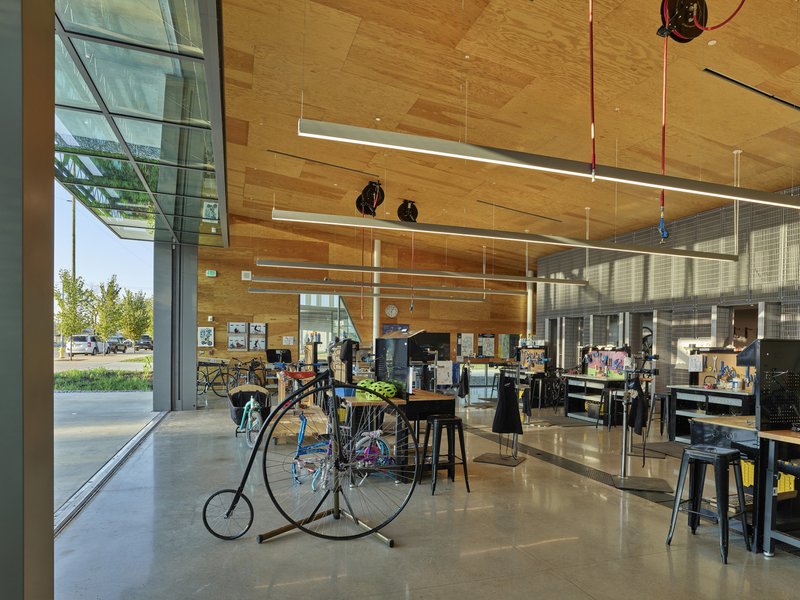
The Wheels Science and Fabrication Building is another key facility, designed to support the school’s emphasis on hands-on learning in the fields of science and mechanics. Its long, linear design opens up to the outdoors, connecting students to the surrounding campus and providing spaces for outdoor activities and collaboration. The building’s roof, like that of the Arts Building, serves as both a functional and expressive architectural element, promoting natural ventilation and contributing to the building’s overall sustainability.
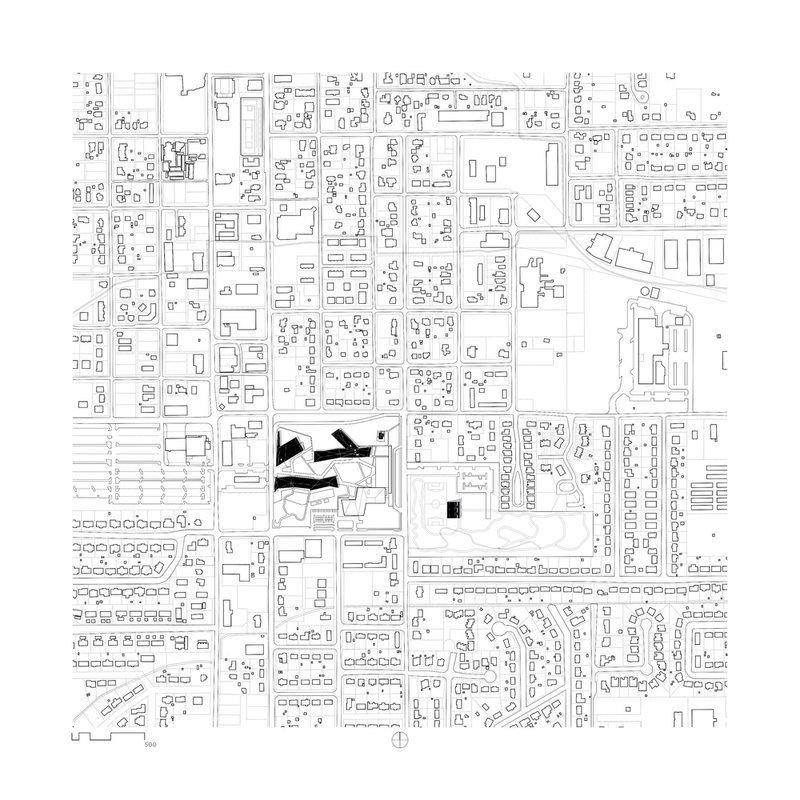
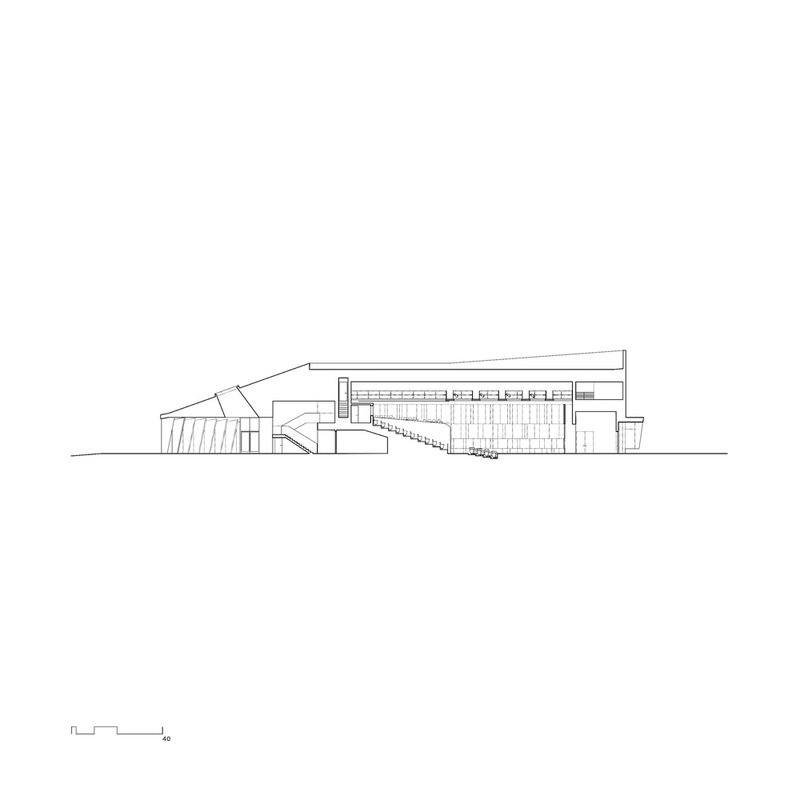
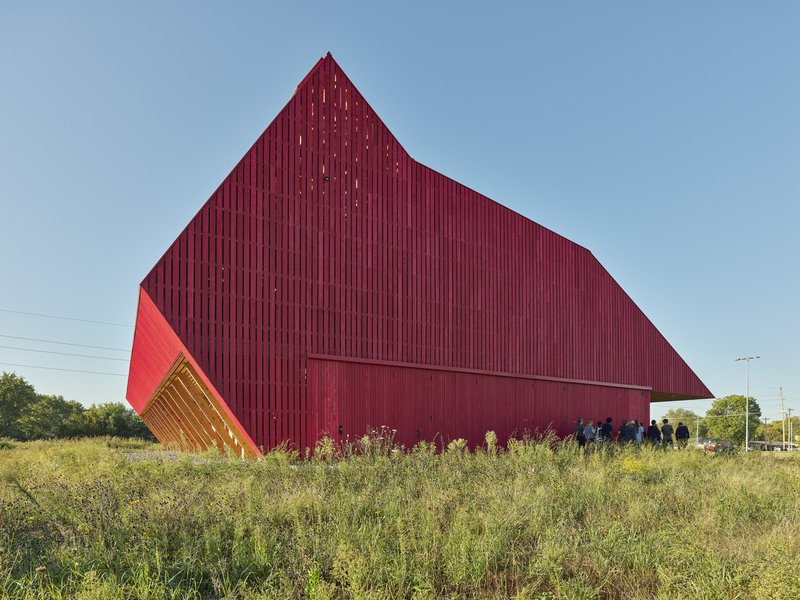
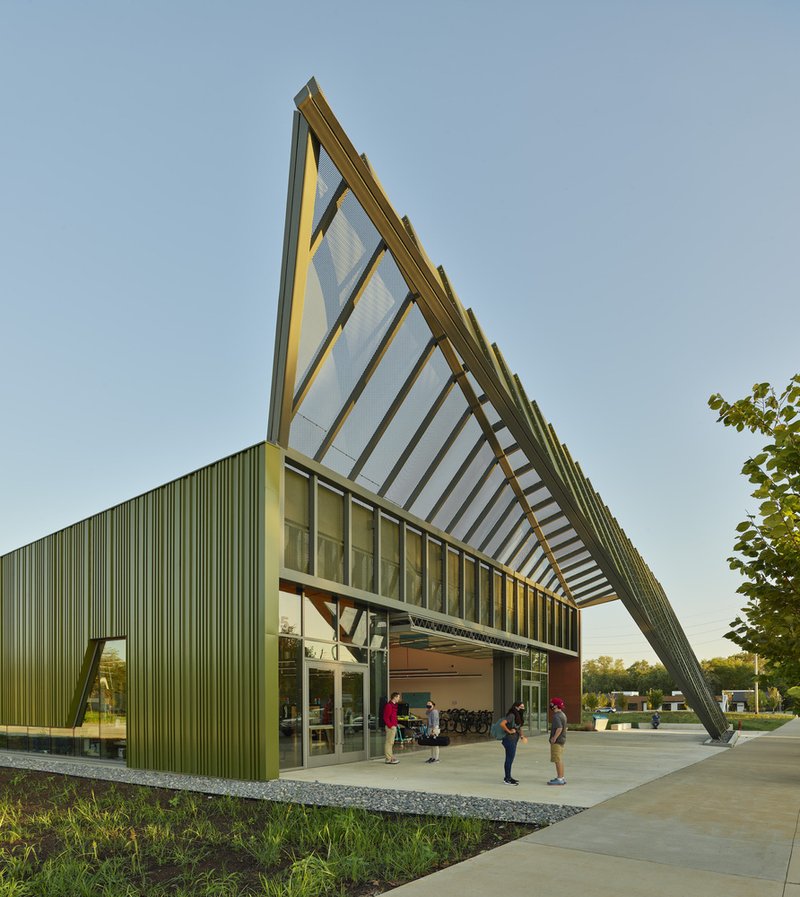
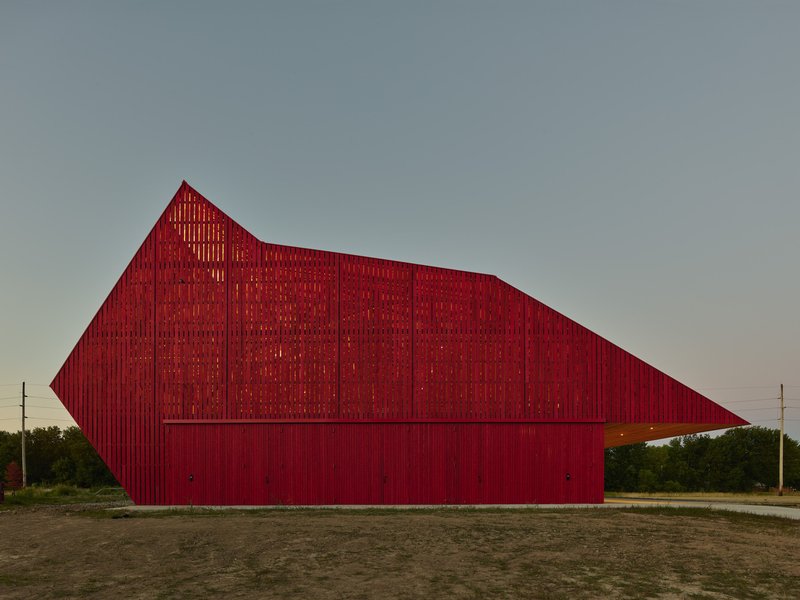
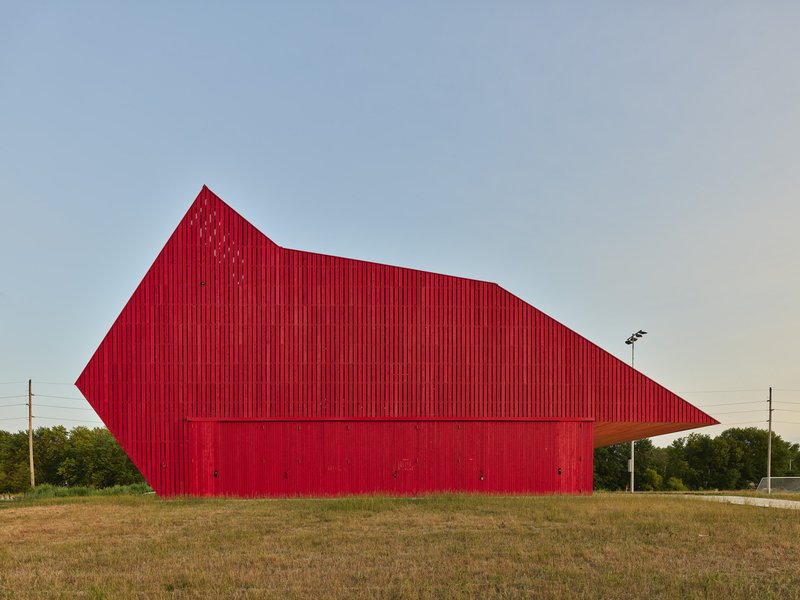
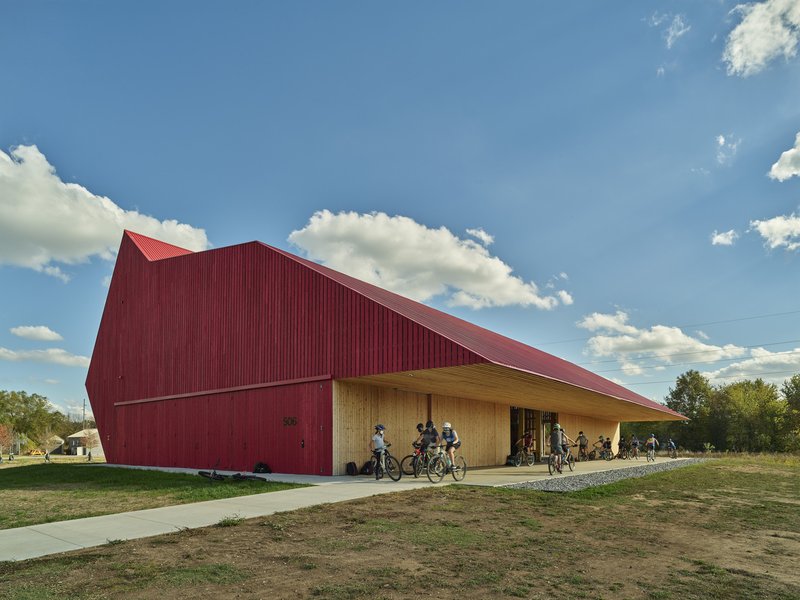
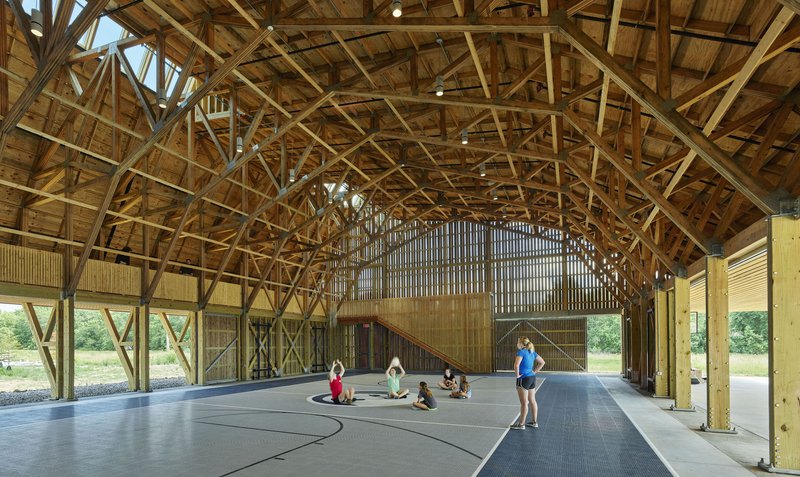
Additionally, the Bike Barn, located at the edge of the campus, provides space for sports, including cycling and volleyball, while also serving as bike storage and support facilities. The building’s design incorporates locally sourced materials and offers natural ventilation through open joints and vented skylights, ensuring a comfortable environment for both students and spectators.
Integration with the Community
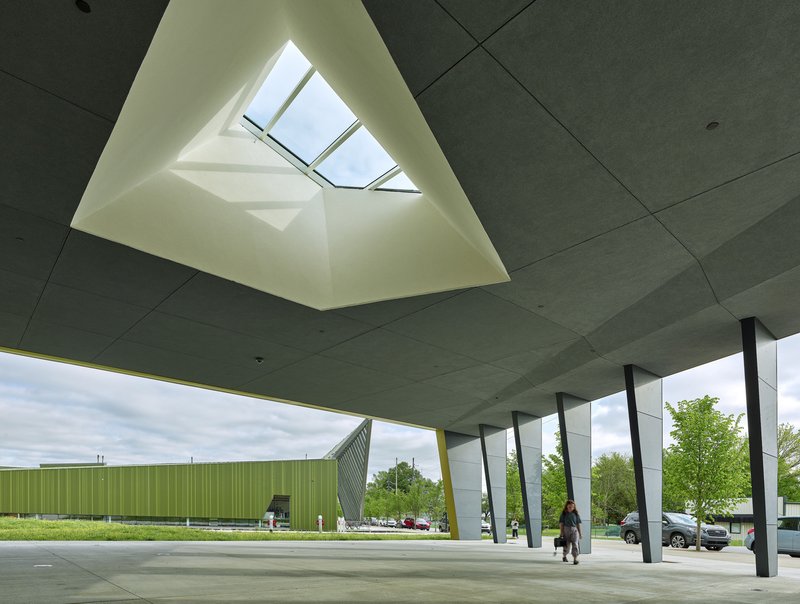
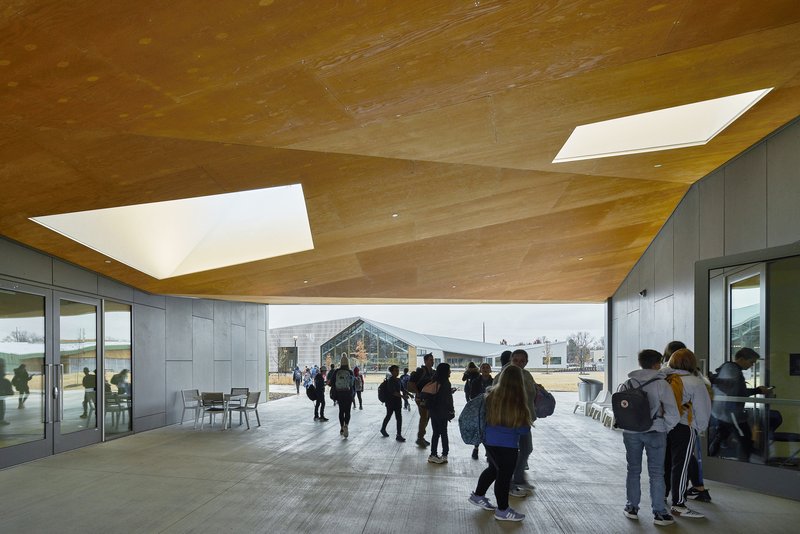
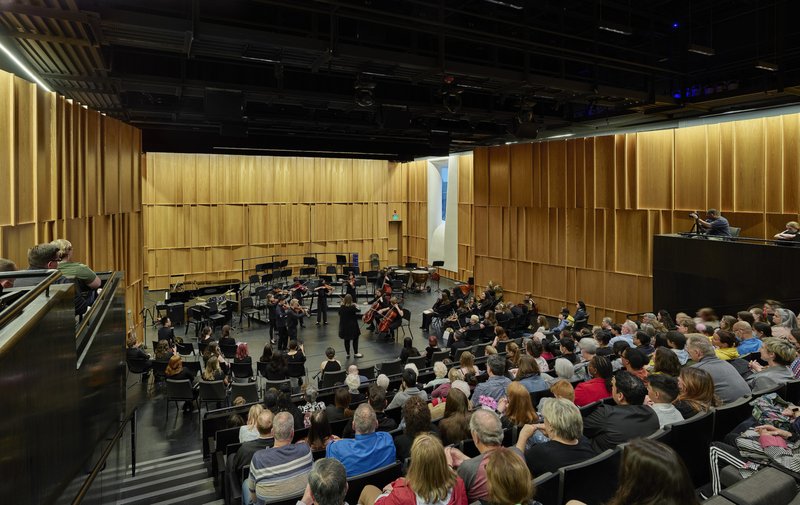
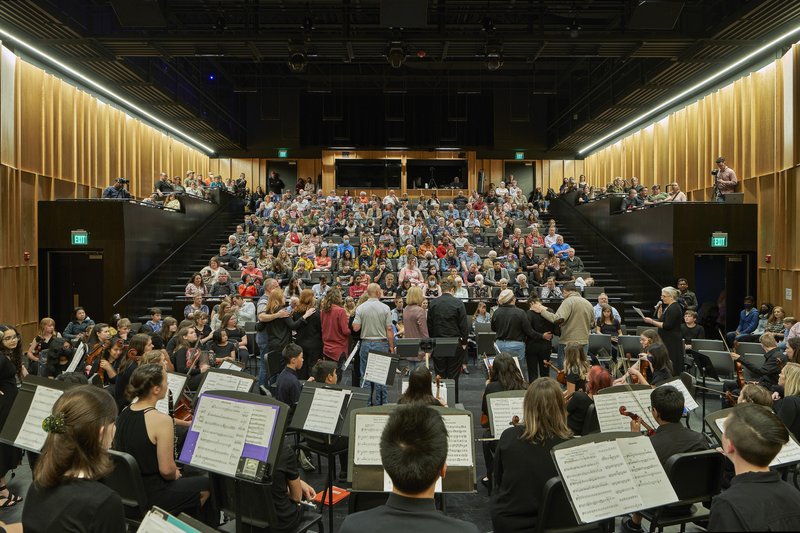
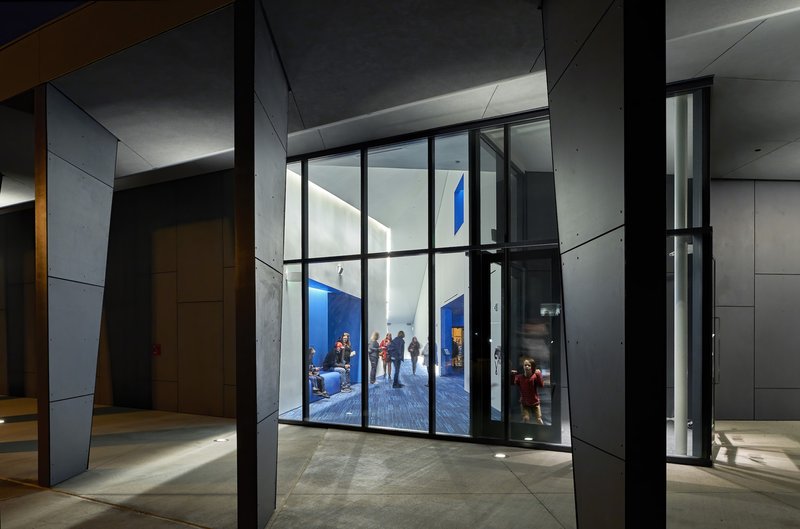
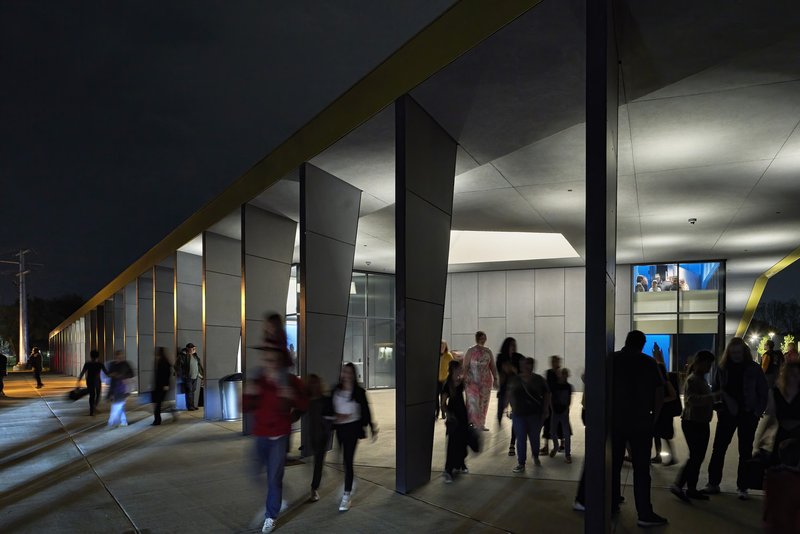
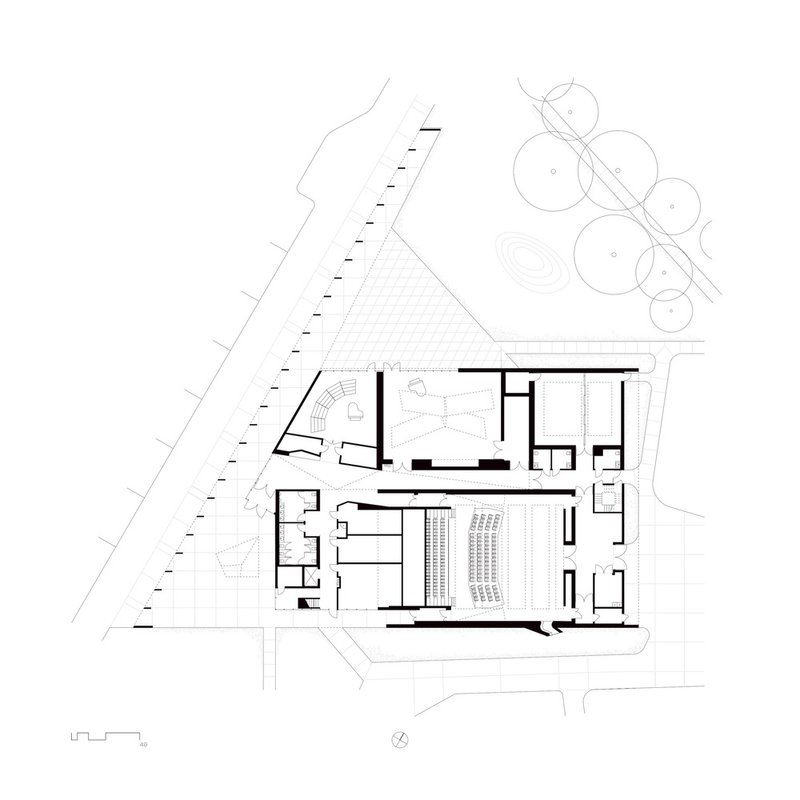
Thaden School’s design goes beyond the boundaries of the campus, connecting with the wider Bentonville community. The school’s strategic location and open, inviting architecture make it a community hub for cultural and educational events. The Performance Building, with its large, welcoming entry and expansive canopy, serves as a public venue for music, drama, and film performances. Its architectural design reflects the school’s identity as a place of creativity, experimentation, and imagination, with a versatile space that can accommodate various forms of artistic expression.
Through its partnerships with local organizations and its emphasis on community engagement, Thaden School fosters a sense of connection between students and the community. The campus itself is a resource for learning, offering opportunities for students to engage in projects that benefit both the school and the surrounding area.
Thaden School, with its forward-thinking design and commitment to sustainability, serves as an exemplary model of modern educational architecture. Marlon Blackwell Architects have created a space that not only supports a dynamic, hands-on learning environment but also responds to the environmental challenges of the region. With its focus on community, sustainability, and innovative pedagogy, Thaden School is setting a new standard for school architecture that will inspire future generations of students and educators.
All Photographs are works of Timothy Hursley




Popular Articles
Popular articles from the community


Solar Steam: A Climate-Responsive Architecture That Redefines the Monument
A climate-responsive memorial architecture that transforms heat, decay, and time into a living system reflecting humanity’s ecological impact.
Fifth NRE Jazz Club – De Bever Architecten: Eindhoven’s Revitalized Cultural Hub
Historic gas factory transformed into Fifth NRE Jazz Club blending modern sustainability, jazz culture, dining, and heritage architecture seamlessly.


The Ken Roberts Memorial Delineation Competition (Krob)
As the most senior architectural drawing competition currently in operation anywhere in the world, it draws hundreds of entries each year, awarding the very best submissions in a series of medium-based categories.

Inverted Architecture Installation by Studio Link-Arc: Exploring the Intersection of Architecture and Living Organisms
Inverted Architecture Installation by Studio Link-Arc blends mycelium, sustainability, inverted design, ecological cycles, and urban adaptive architecture in Shenzhen.


Similar Reads
You might also enjoy these articles
The Ken Roberts Memorial Delineation Competition (Krob)
As the most senior architectural drawing competition currently in operation anywhere in the world, it draws hundreds of entries each year, awarding the very best submissions in a series of medium-based categories.


Waterfront Redevelopment and Urban Revitalization in Mumbai: Forging a New Dawn for Darukhana
A transformative waterfront redevelopment project reimagining Darukhana’s shipbreaking heritage into an inclusive urban future.

OUT-OF-MAP: A Call for Postcards on Feminist Narratives of Public Space
Rhizoma Design and Research Lab invites artists, designers, architects, researchers, and students to reflect on how feminist perspectives can reshape public space. Selected works will be exhibited in Barcelona, October 2026. Submissions open until 15 April 2026.


Documentation Work on Buddhist Wooden Temple
Architectural syncretism and cultural hybridity: A comparative study of the Buddhist temples in Chattogram Hill tracks
Explore Architecture Competitions
Discover active competitions in this discipline




The International Standard for Design Portfolios


The Global Benchmark for Architecture Dissertation Awards


The Global Benchmark for Graduation Excellence


Challenge to reimagine the Iron Throne
Comments (0)
Please login or sign up to add comments
No comments yet. Be the first to comment!