
Adaptive Reuse Museum Architecture: Fenix Art Museum by MAD Architects
MAD Architects transform a historic warehouse into Fenix Art Museum—an iconic example of adaptive reuse and cultural storytelling.

A Cultural Beacon in Rotterdam’s Historic Port
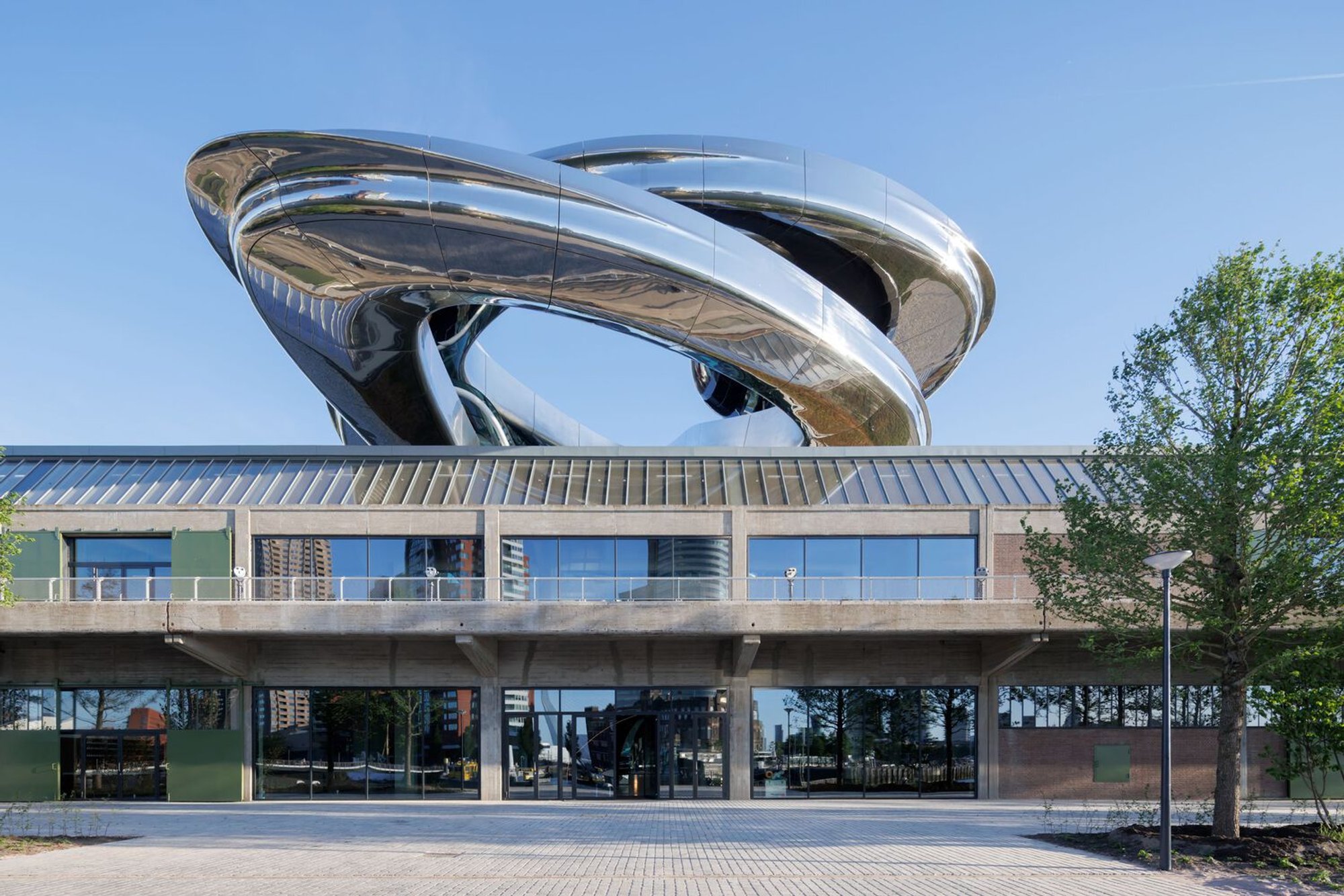
The Fenix Art Museum, designed by MAD Architects, is a landmark example of adaptive reuse museum architecture, breathing new life into Rotterdam's historic City Harbor. Officially opening in 2025, the 8,000 m² museum is built within a once-dilapidated transshipment warehouse—formerly one of the world’s largest—transformed into a contemporary cultural institution that tells the complex, moving story of migration through art, design, photography, and history.
This is MAD Architects’ first public cultural project in Europe and the first European museum designed by a Chinese architecture firm. The project was initiated by the Droom en Daad Foundation, aiming to redefine Rotterdam as a 21st-century cultural hub by establishing dynamic, inclusive institutions that honor the city’s diverse roots.
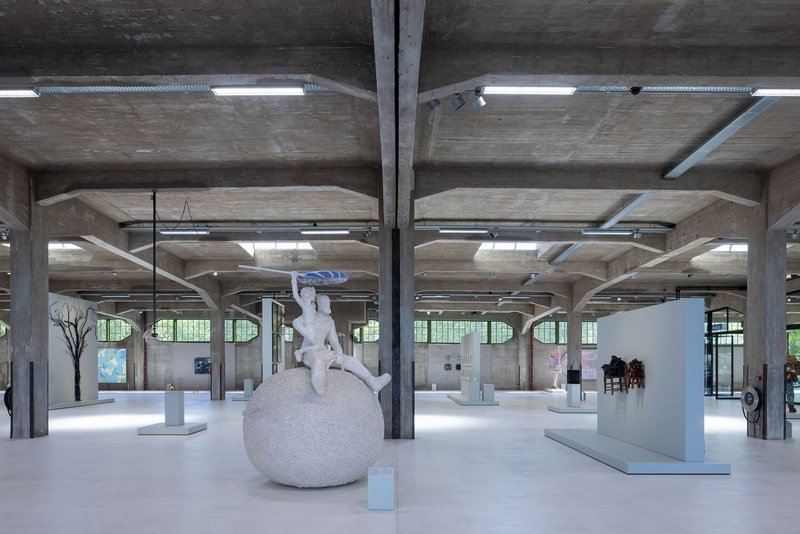
A Historic Warehouse Turned Museum of Migration
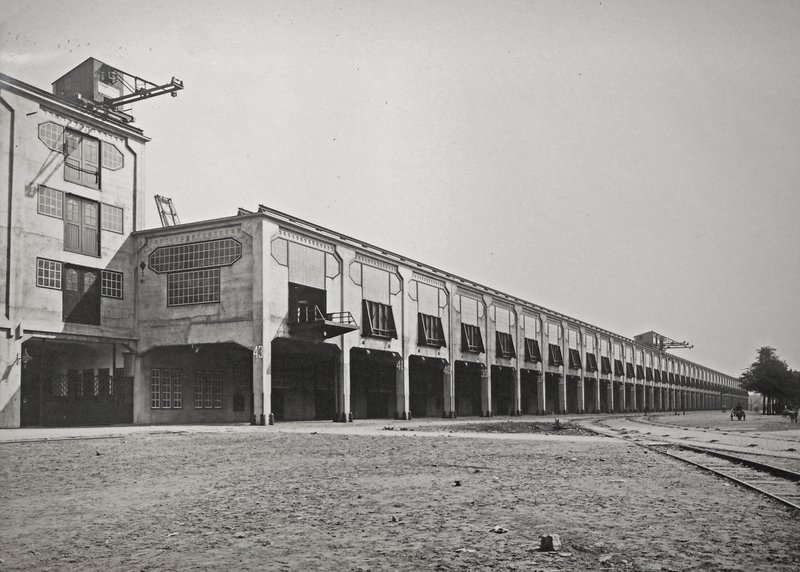
Fenix occupies a 16,000 m² early 20th-century shipping and storage warehouse situated on a peninsula in Rotterdam’s port district—historically a point of departure and return for millions of migrants. The building’s layered history is physically embedded in its structure, with architectural features dating to both its original 1923 construction and its post-WWII reconstruction.
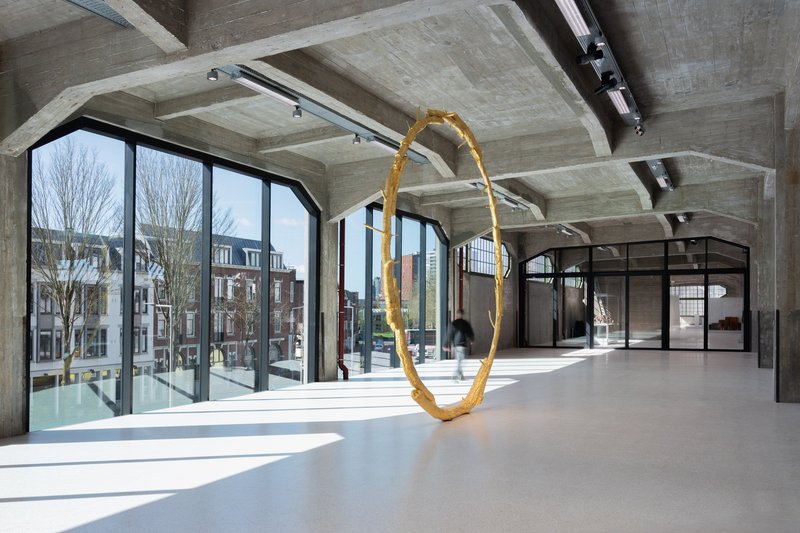
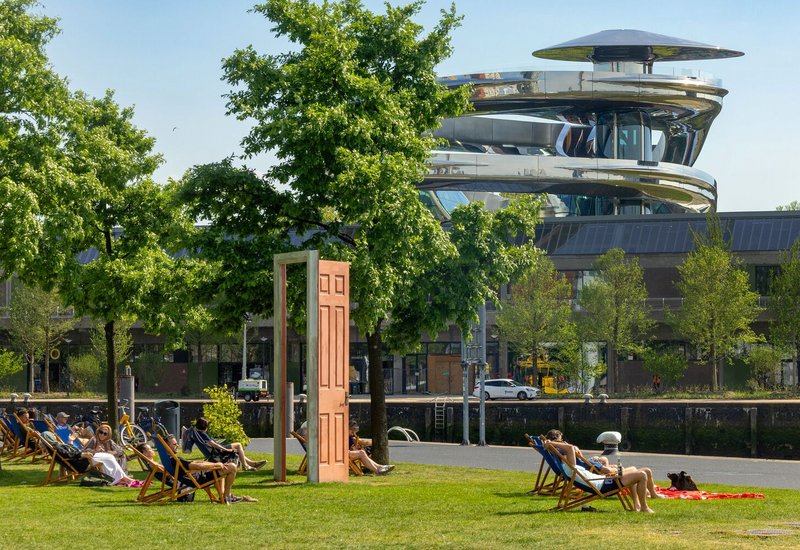
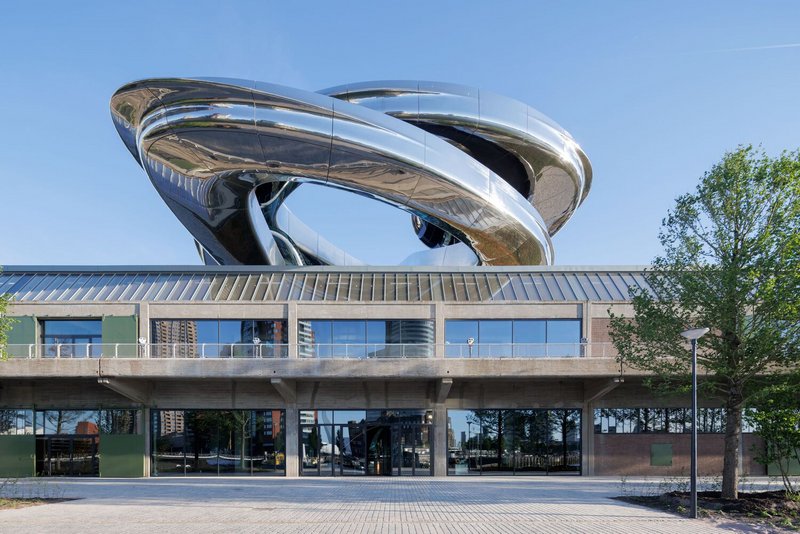
MAD Architects collaborated with Bureau Polderman to meticulously restore the building’s 172-meter-long façade, a monumental task that took 18 months. Every architectural detail—from rusted window frames to faded post-war sliding doors—was either restored or reconstructed. Cement stucco was reapplied, green steel doors were repainted in their original shade, and a rhythmic harmony of historic columns and window frames was revived to emphasize the building’s long horizontal silhouette.
The Tornado: A Sculptural Intervention in Motion
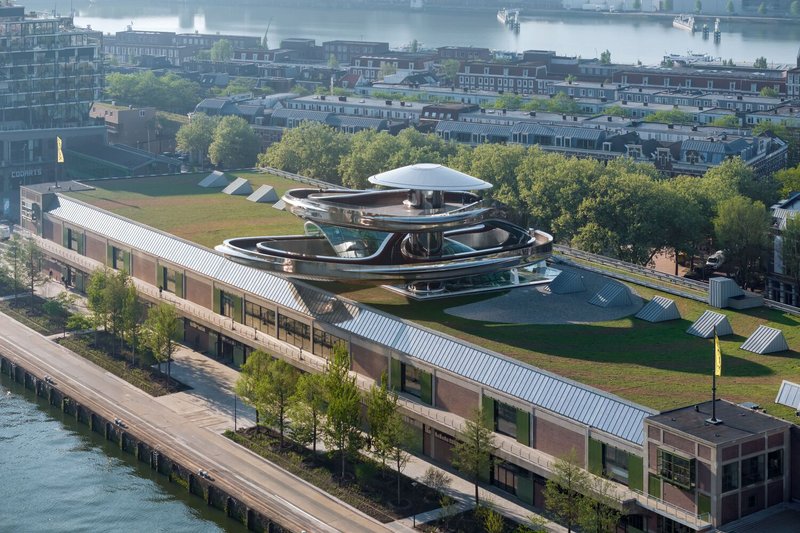
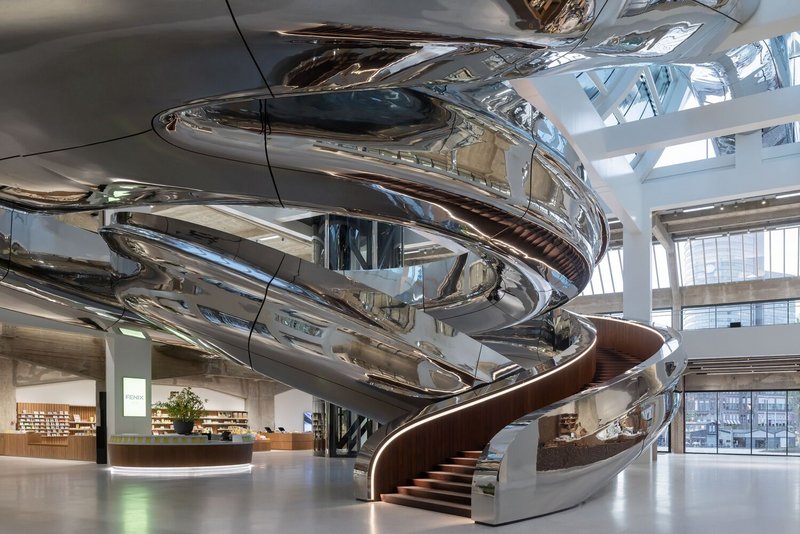
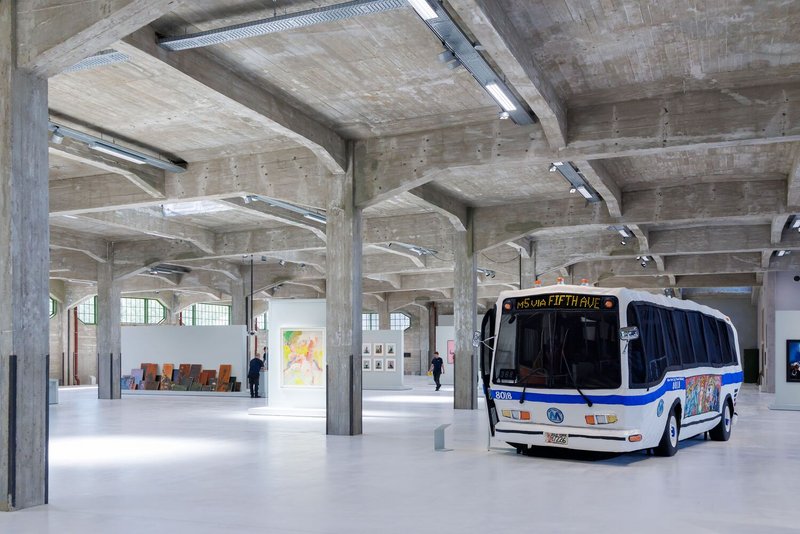
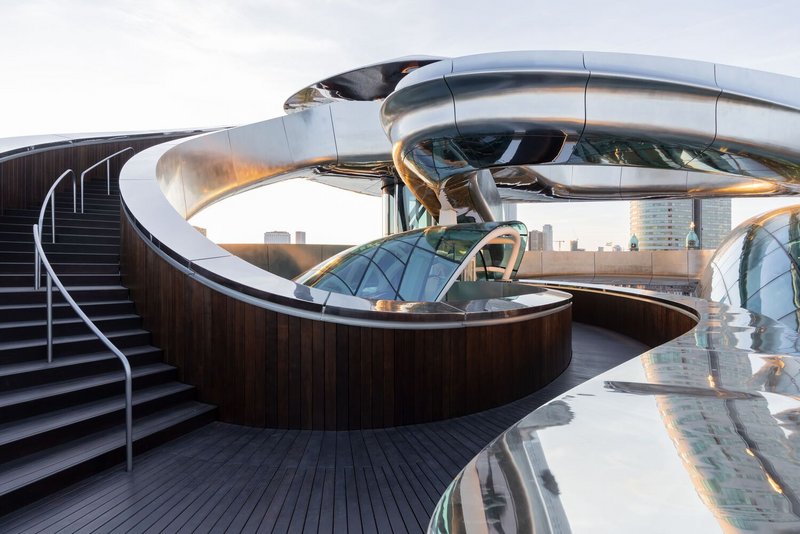
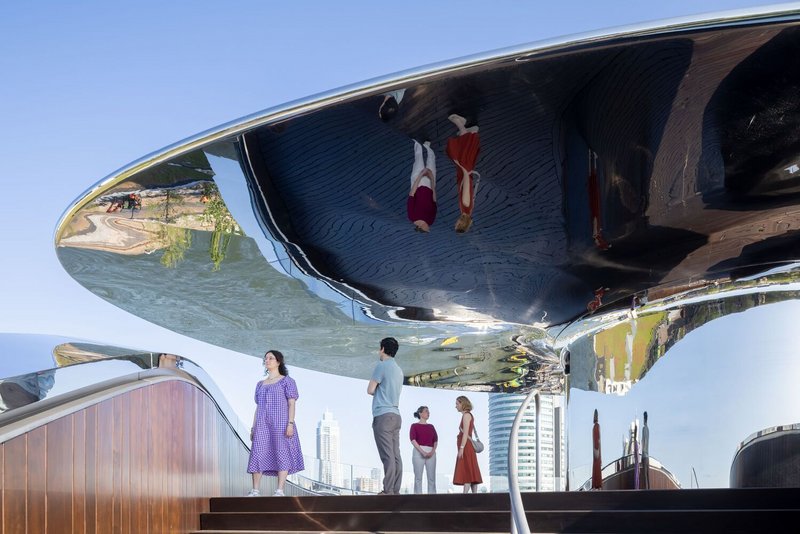
While the exterior honors the past, the interior injects a bold contemporary vision. The most striking new feature is the Tornado, a double-helix staircase that spirals upward like a rising gust of wind. This sculptural form—made from 297 polished stainless-steel panels—is both functional and symbolic, physically linking the ground floor to a rooftop observation platform 24 meters above the Maas River.
The Tornado’s wooden staircase coils within a central shaft, encouraging movement and visual curiosity as visitors ascend toward panoramic views. A 17-meter-long canopy crowns the structure, assembled and lifted into place after being transported by boat from Groningen—merging craft, engineering, and storytelling in one dramatic gesture.
Inside the Fenix: Expansive Galleries and Community Anchors
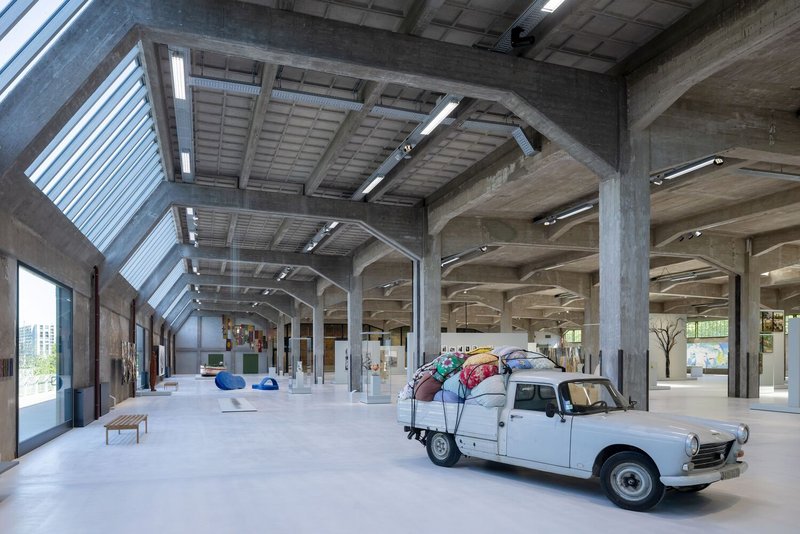
The museum unfolds across two floors. The ground level features dynamic exhibition spaces, event venues, a café, and public programming zones, including Plein, a 2,275 m² flexible hall designed for rotating community-led events and performances. This space opens on three sides, blurring the line between interior and exterior and reinforcing the building's civic presence.
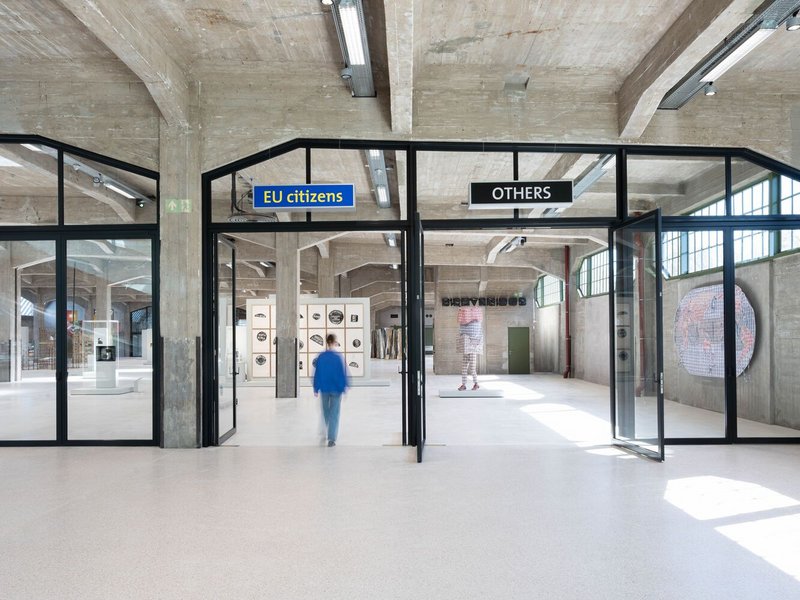
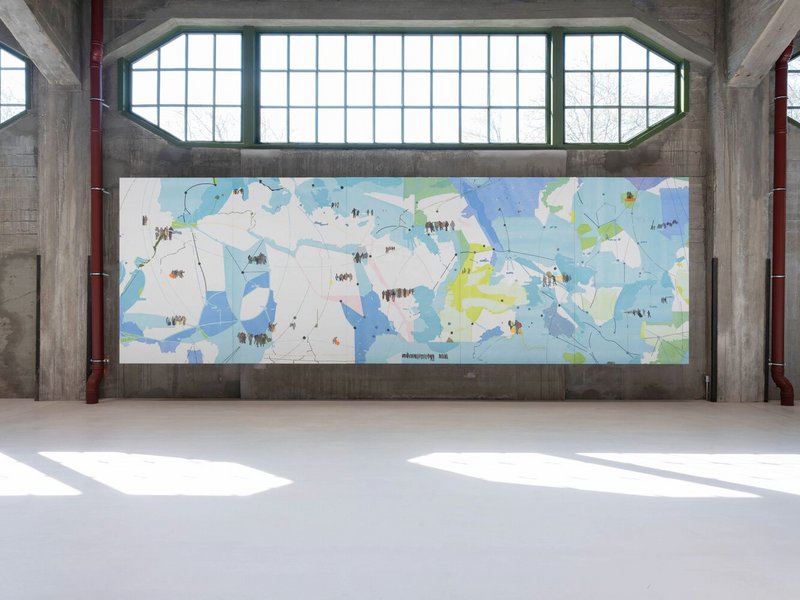
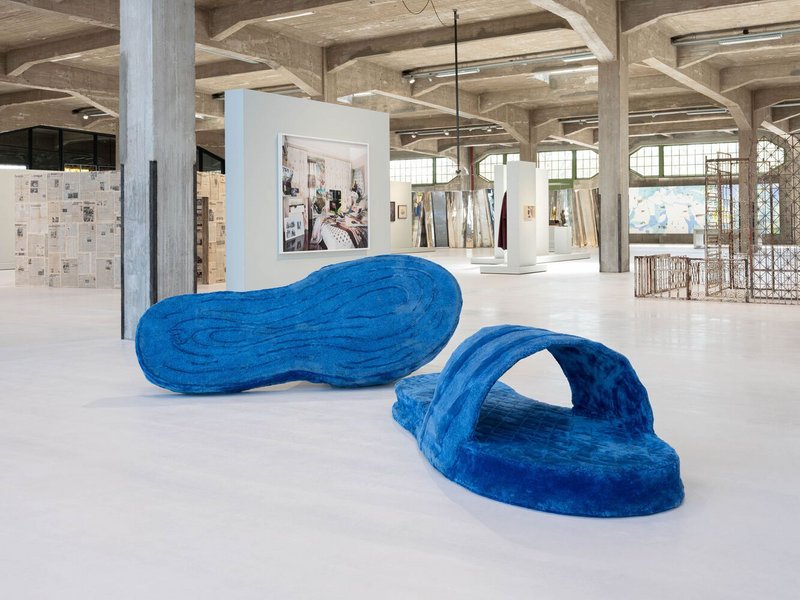
Above, the upper galleries house the Fenix Collection, an ever-growing archive of artworks and historical objects focused on themes of migration. The museum curates rotating commissions from international emerging artists, reflecting Rotterdam’s cosmopolitan identity. The central atrium is topped by a glass roof that bathes the interior in natural light, creating an atmosphere of openness and transparency that resonates with the museum’s mission.
A New Chapter in Adaptive Reuse
The Fenix Art Museum is a visionary example of adaptive reuse museum architecture, seamlessly integrating heritage preservation, cultural storytelling, and contemporary design. The project demonstrates how a forgotten industrial relic can be reborn as a world-class institution—one that serves not only as a repository for art and memory, but also as a gathering space for present and future generations.
Through thoughtful restoration, bold architectural interventions like the Tornado, and a deeply embedded social mission, MAD Architects have redefined the role of the museum in an urban setting. Fenix stands as both a symbol of Rotterdam’s layered past and a beacon for inclusive cultural futures.
All Photographs are works of Iwan Baan , Titia Hahne, Iris van den Broek, Rotterdam City Archives




Popular Articles
Popular articles from the community


Solar Steam: A Climate-Responsive Architecture That Redefines the Monument
A climate-responsive memorial architecture that transforms heat, decay, and time into a living system reflecting humanity’s ecological impact.

Inverted Architecture Installation by Studio Link-Arc: Exploring the Intersection of Architecture and Living Organisms
Inverted Architecture Installation by Studio Link-Arc blends mycelium, sustainability, inverted design, ecological cycles, and urban adaptive architecture in Shenzhen.
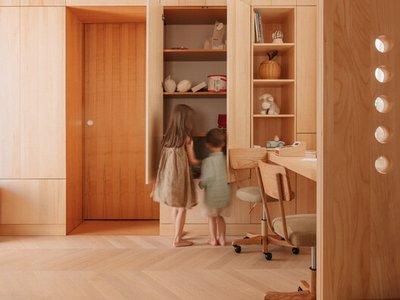
Treehouse Apartment: A Warm Timber Interior Blending Craft, Play, and Contemporary Living
Warm timber apartment with integrated treehouse, combining natural materials, craftsmanship, and playful design to create a flexible, family-oriented living environment.


The Ken Roberts Memorial Delineation Competition (Krob)
As the most senior architectural drawing competition currently in operation anywhere in the world, it draws hundreds of entries each year, awarding the very best submissions in a series of medium-based categories.


Similar Reads
You might also enjoy these articles


Top 15 Architecture Competitions to Enter in 2026
From student-friendly idea competitions to prestigious international awards, here are the best architecture competitions open for entries in 2026. Updated regularly.

DIY & Engineering in Computational Design : Enter the BeeGraphy Design Awards
Showcase Your Creativity with Computational Design and Open Source Projects
Innovative Design Solutions: Award-Winning Projects from Recent Architecture Competitions
Exploring award-winning architectural projects shaping the future of design, sustainability, and community.



Explore Architecture Competitions
Discover active competitions in this discipline




The International Standard for Design Portfolios


The Global Benchmark for Architecture Dissertation Awards


The Global Benchmark for Graduation Excellence


Challenge to reimagine the Iron Throne
Comments (0)
Please login or sign up to add comments
No comments yet. Be the first to comment!