
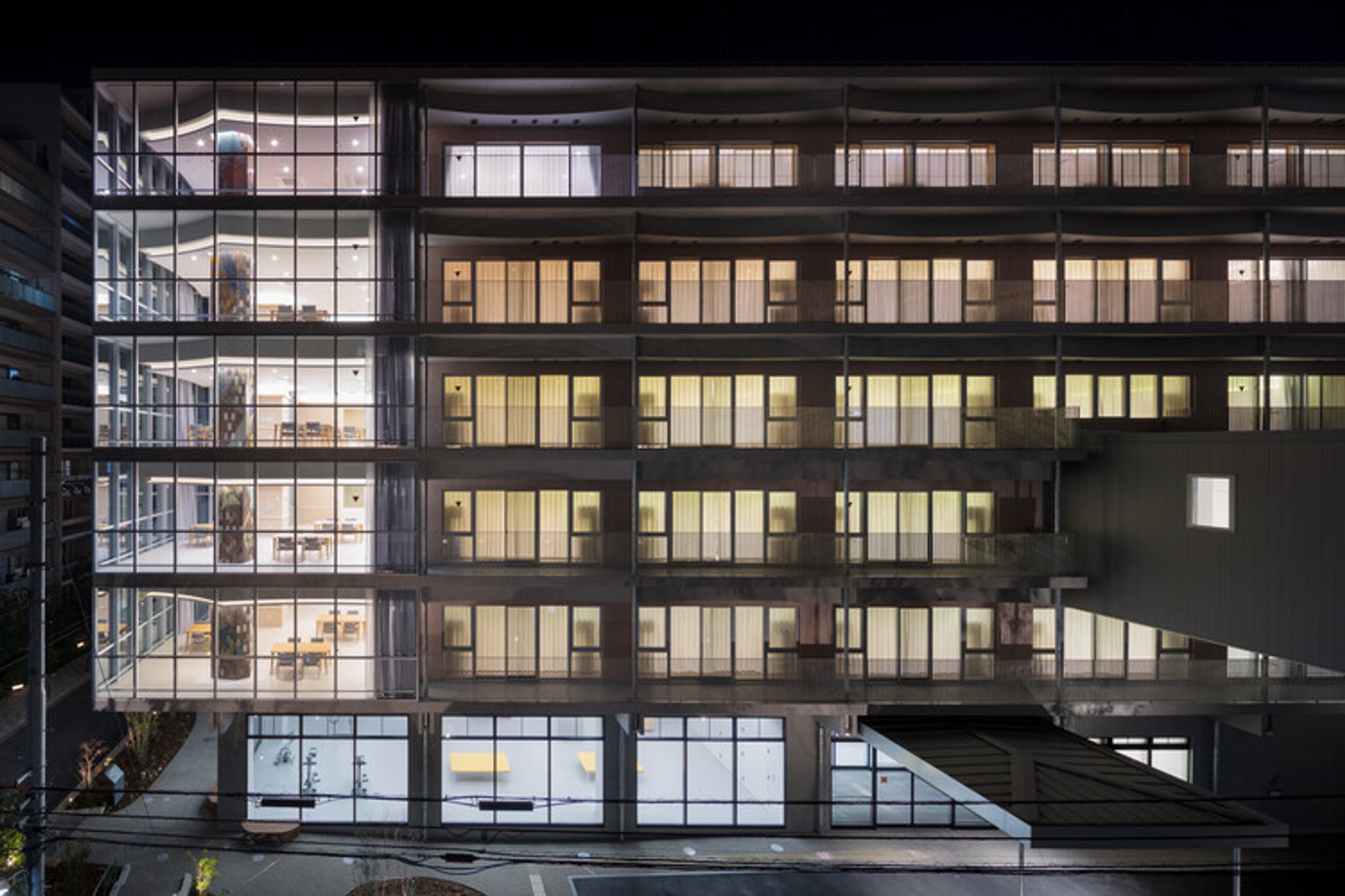
Asoka Hospital South Wing By AIDAHO – Architecture of Regeneration in Tokyo
Asoka Hospital South Wing in Tokyo blends modern healthcare, Kintsugi-inspired design, traditional craftsmanship, and patient-centered spaces for healing, regeneration, and community.

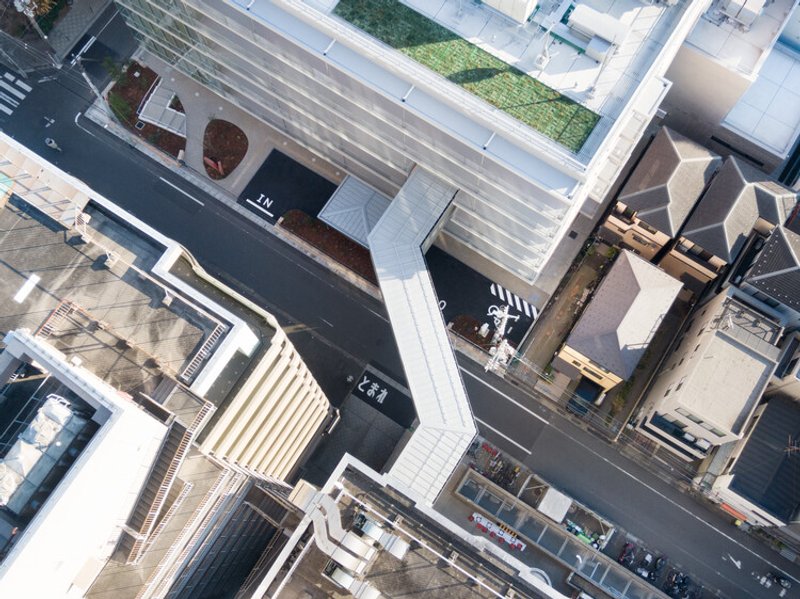
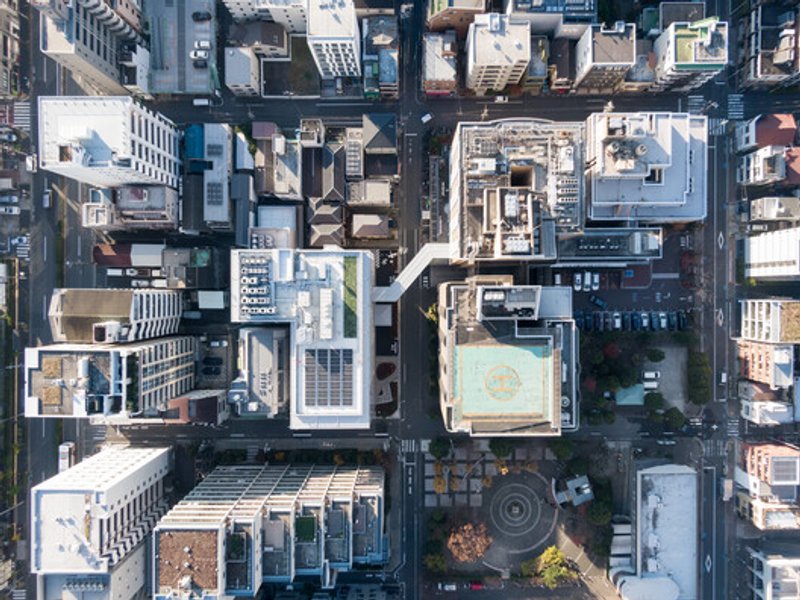
Located in Koto-ku, Tokyo, Asoka Hospital South Wing by AIDAHO Architects is a groundbreaking healthcare project that combines cutting-edge medical technology with a philosophy of healing and regeneration. Completed in 2024, the 1005 m² South Wing extends the nearly century-old hospital, originally established in 1930, to meet the growing rehabilitation needs of Japan’s aging population. This new annex seamlessly integrates modern architecture, traditional craftsmanship, and patient-centered design to redefine what a contemporary hospital can be.
Design Concept: Kintsugi and Regeneration
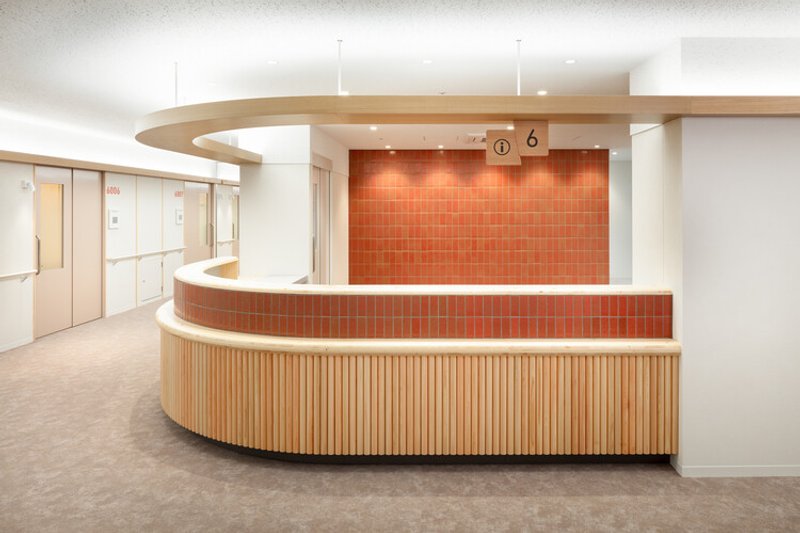
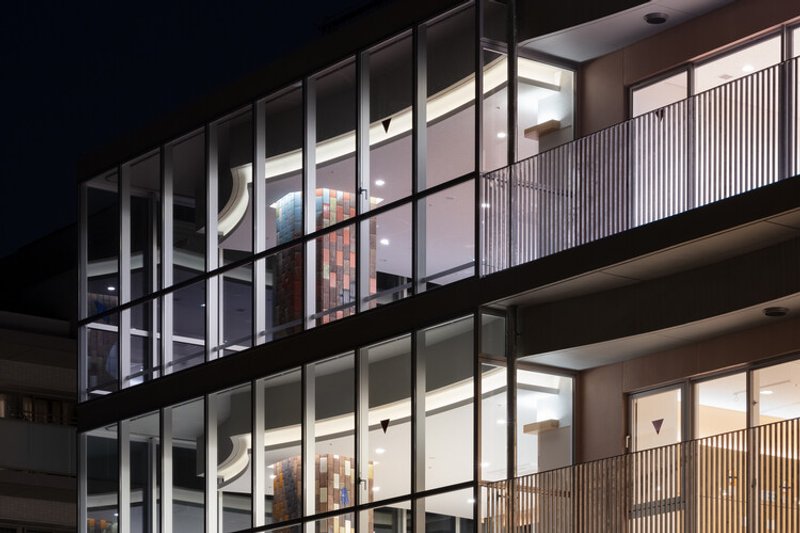
The South Wing is deeply inspired by the Japanese philosophy of Kintsugi, the art of repairing broken ceramics with gold. Here, the architectural concept transforms the idea of healing into a visual and spatial experience. Just as Kintsugi celebrates the beauty in imperfection, the design of Asoka Hospital South Wing views recovery as an opportunity for patients to rebuild their lives and embrace their renewed selves. This philosophy of regeneration is embedded throughout the building, from exterior materials to interior finishes, creating an environment that nurtures both body and spirit.
Patient-Centered Interior Strategy
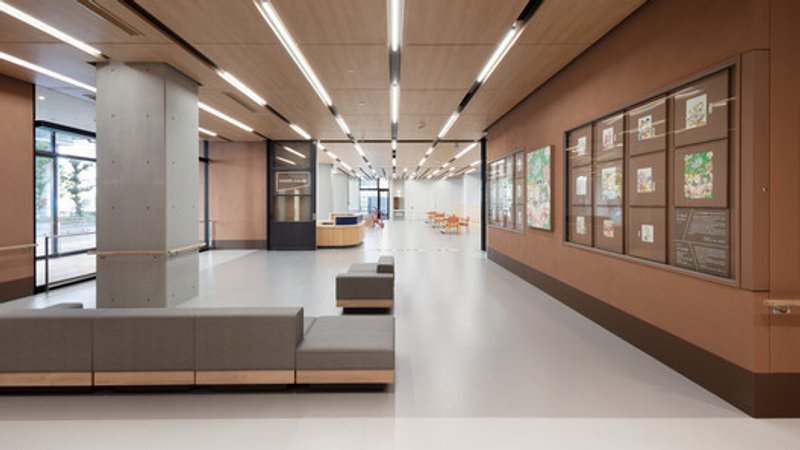
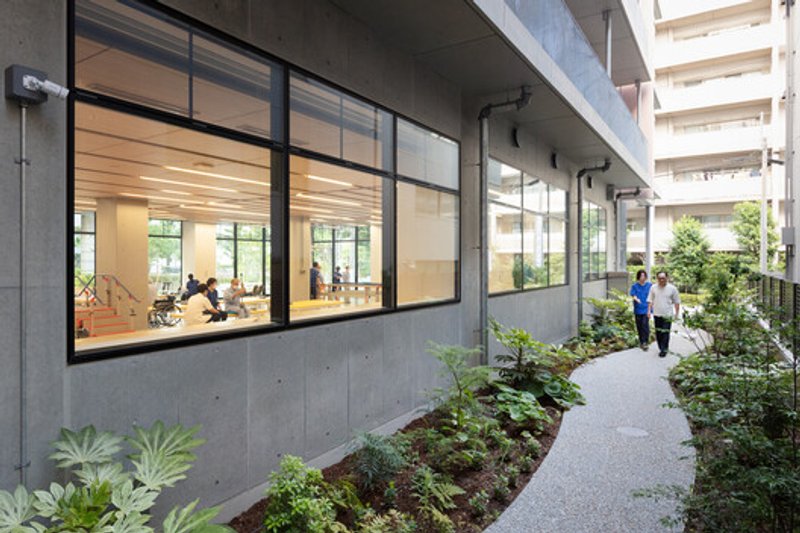
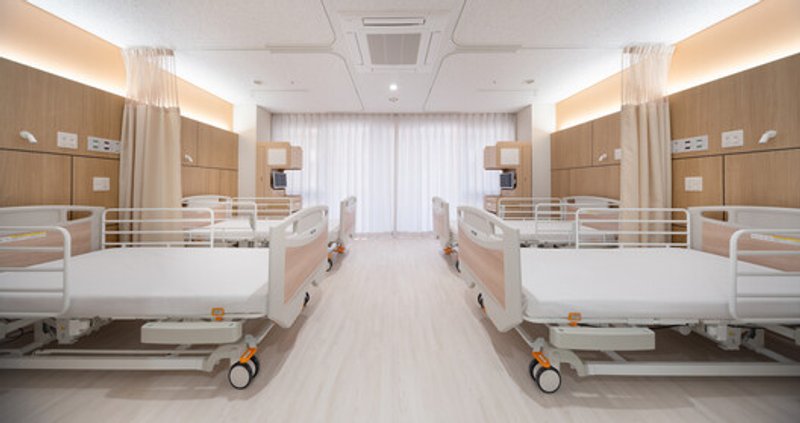
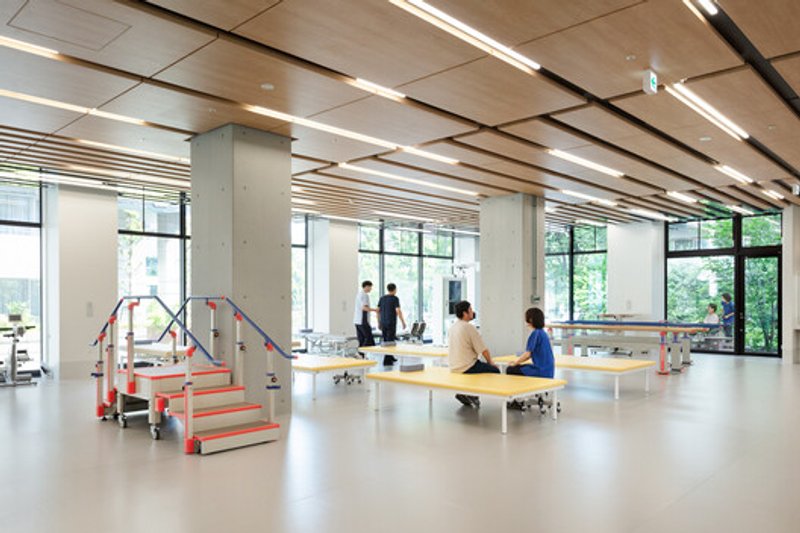
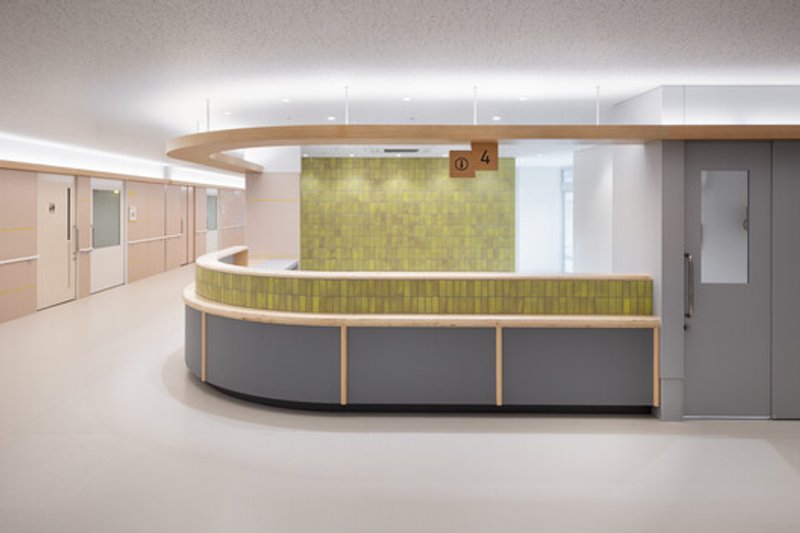
The hospital’s interior spaces are carefully crafted to enhance well-being and promote a sense of calm. In the general wards on floors 2 through 5, walls feature segmented patterns with visible joints, echoing the Kintsugi motif and symbolizing the mending of body and mind. The ground-floor rehabilitation room emphasizes functional therapy with a mirrored ceiling and expansive glazing, blurring the boundary between indoors and outdoors. Patients can practice movement along the Outdoor Therapy Path, designed with realistic slopes and steps that simulate urban streets, facilitating practical recovery for daily life.
Integration of Traditional Craftsmanship and Community
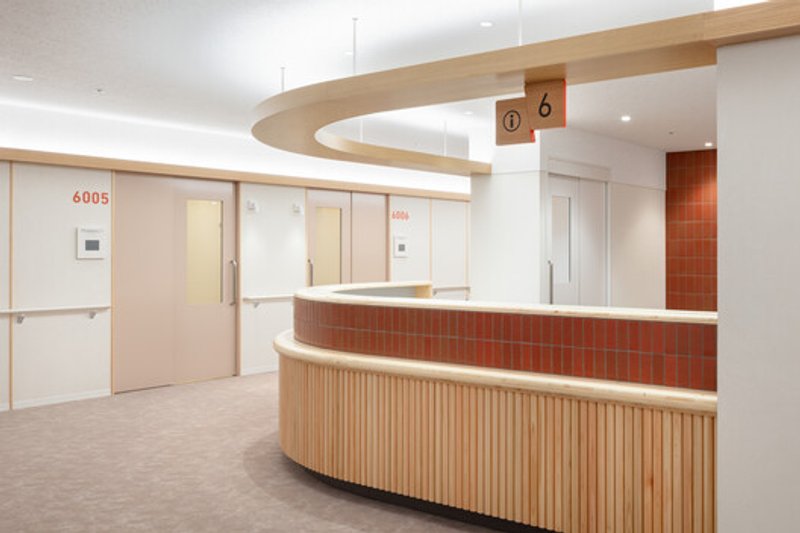
AIDAHO Architects integrated local culture and craftsmanship into the hospital design. The symbolic “giant tree” pillars in common areas are made of art tiles produced in collaboration with the traditional kilns of Tokoname and a social welfare employment center. These columns symbolize the hospital’s role as a supportive pillar within the community, reinforcing social inclusion and cultural heritage.
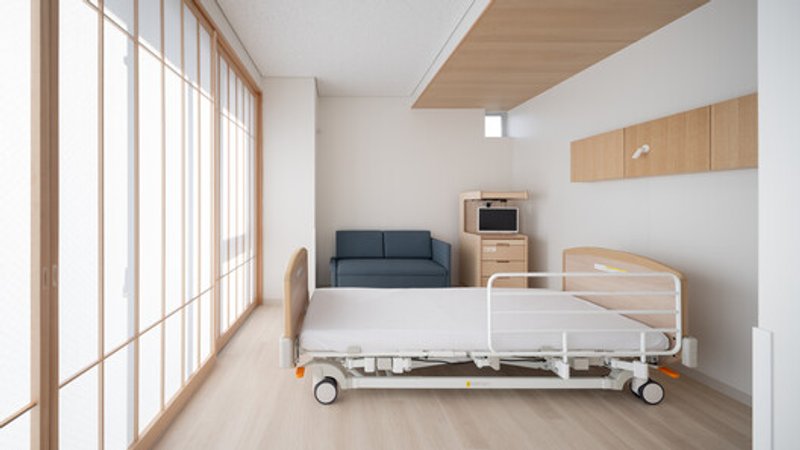
The palliative care ward, located on the top floor, features natural wood and traditional shikkui plaster, creating a warm and domestic atmosphere. Custom lighting made from Edo Kiriko cut glass highlights the Japanese craftsmanship, while medical consoles are discreetly integrated into joinery, ensuring patient dignity, comfort, and a home-like environment.
Architectural Innovation Meets Medical Function
The project addresses complex technical requirements while maintaining hospital operations during construction. The South Wing’s design allows phased renovation of the aging main building and incorporates state-of-the-art medical technology, flexible rehabilitation spaces, and patient-friendly circulation. By combining these functions with symbolic architectural gestures, AIDAHO creates a hospital that is both efficient and emotionally supportive.
Redefining Modern Healthcare Architecture
Asoka Hospital South Wing demonstrates that hospitals can be more than places of treatment—they can be spaces of beauty, healing, and regeneration. By blending modern architecture, traditional craftsmanship, patient-centered design, and community engagement, the project sets a new standard for healthcare environments in Japan and worldwide. The South Wing embodies a philosophy where architecture itself participates in the restoration of life, offering hope, dignity, and comfort to all who enter.
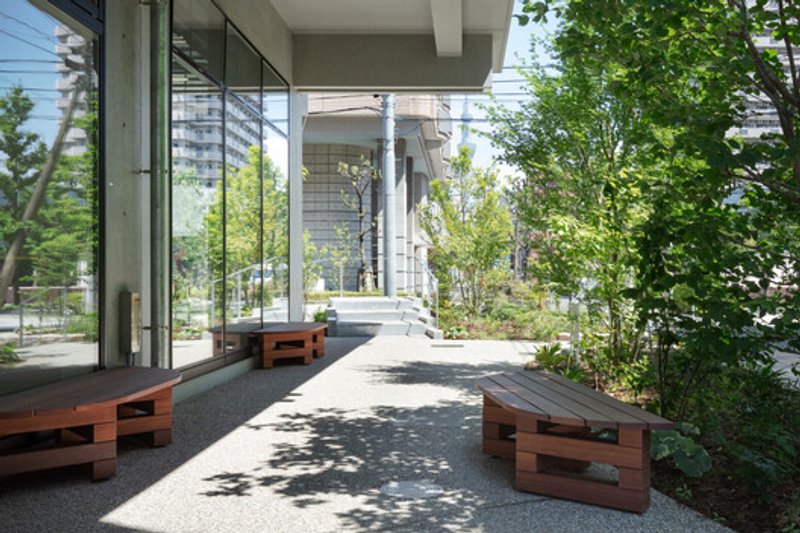
All the photographs are works of Takumi Ota Photography Co., Ltd.




Popular Articles
Popular articles from the community

Atelier Macri Concept Store Interior Design by CASE-REAL
Atelier Macri store features a "ko" counter, walnut wood details, cork displays, blending retail, gallery, and seamless customer experiences.

Free Architecture Competitions You Can Enter Right Now
No entry fees, real prizes. Here are the best free architecture competitions open for submissions in 2026.
Split House: A Compact Urban Home Blending Privacy, Light, and Flexible Living in Japan
Compact Japanese home featuring DOMA space, flexible café potential, passive lighting, privacy zoning, and sustainable urban living design.
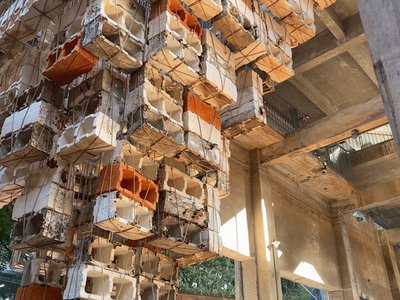
Inverted Architecture Installation by Studio Link-Arc: Exploring the Intersection of Architecture and Living Organisms
Inverted Architecture Installation by Studio Link-Arc blends mycelium, sustainability, inverted design, ecological cycles, and urban adaptive architecture in Shenzhen.


Similar Reads
You might also enjoy these articles


The Ken Roberts Memorial Delineation Competition (Krob)
As the most senior architectural drawing competition currently in operation anywhere in the world, it draws hundreds of entries each year, awarding the very best submissions in a series of medium-based categories.

Waterfront Redevelopment and Urban Revitalization in Mumbai: Forging a New Dawn for Darukhana
A transformative waterfront redevelopment project reimagining Darukhana’s shipbreaking heritage into an inclusive urban future.

OUT-OF-MAP: A Call for Postcards on Feminist Narratives of Public Space
Rhizoma Design and Research Lab invites artists, designers, architects, researchers, and students to reflect on how feminist perspectives can reshape public space. Selected works will be exhibited in Barcelona, October 2026. Submissions open until 15 April 2026.


Documentation Work on Buddhist Wooden Temple
Architectural syncretism and cultural hybridity: A comparative study of the Buddhist temples in Chattogram Hill tracks


Explore Architecture Competitions
Discover active competitions in this discipline




The International Standard for Design Portfolios


The Global Benchmark for Architecture Dissertation Awards


The Global Benchmark for Graduation Excellence


Challenge to reimagine the Iron Throne
Comments (0)
Please login or sign up to add comments
No comments yet. Be the first to comment!