
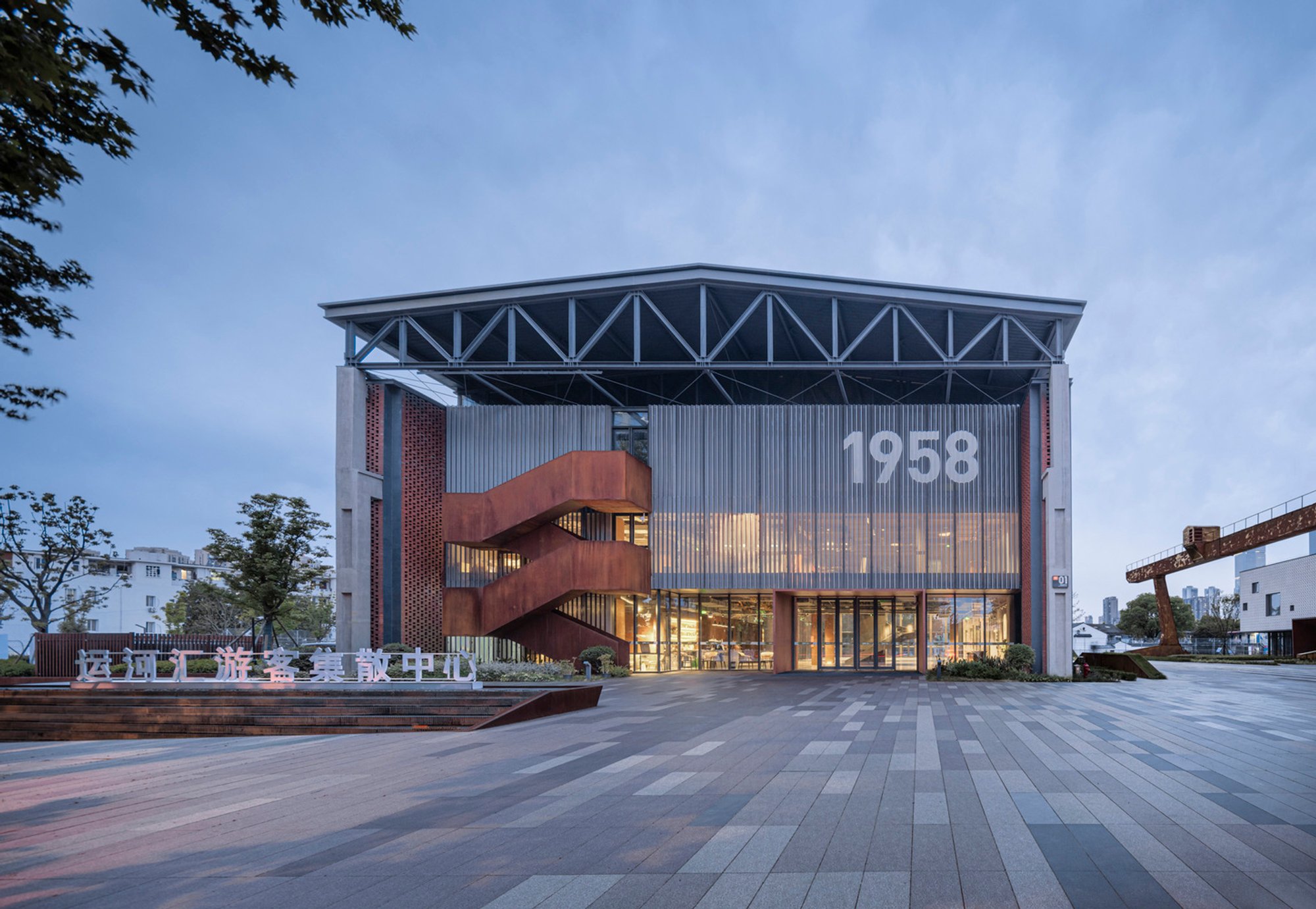
Canal Hub 1958: Revitalizing Industrial Heritage into a Cultural Landmark
Canal Hub 1958 revitalizes Wuxi’s industrial heritage into a vibrant cultural, commercial, and urban landmark through adaptive reuse and innovation.

A Vision for Urban Regeneration
Nestled along the historic Grand Canal, Canal Hub 1958 is an ambitious urban renewal project by Shenzhen Huahui Design, seamlessly blending industrial heritage, cultural regeneration, and modern urban planning. Situated on the former Wuxi Iron and Steel Plant, this transformative endeavor reinvents a once-thriving industrial complex into a multifunctional space that fosters culture, commerce, and community engagement.
Covering an expansive 60,505 square meters, the project is a testament to adaptive reuse, integrating historic structures with contemporary architecture to redefine the city’s relationship with its industrial past.
Preserving the Past: The Legacy of Wuxi’s Industrial Heritage
The site of Canal Hub 1958 holds deep historical significance, tracing back to 1958, when the Wuxi Local State-owned Iron and Steel United Company was founded. This industrial giant played a crucial role in the city's economic growth, symbolizing Wuxi’s transformation into a modern manufacturing hub.
With time, the once-bustling steel factory fell into disuse, leaving behind an architectural relic of Wuxi’s industrial era. The challenge of this project was to breathe new life into these aging structures while retaining their cultural and historical essence.
By merging architectural conservation with modern urban strategies, Canal Hub 1958 reimagines this historical landmark as a dynamic public space, celebrating its past while embracing the future.
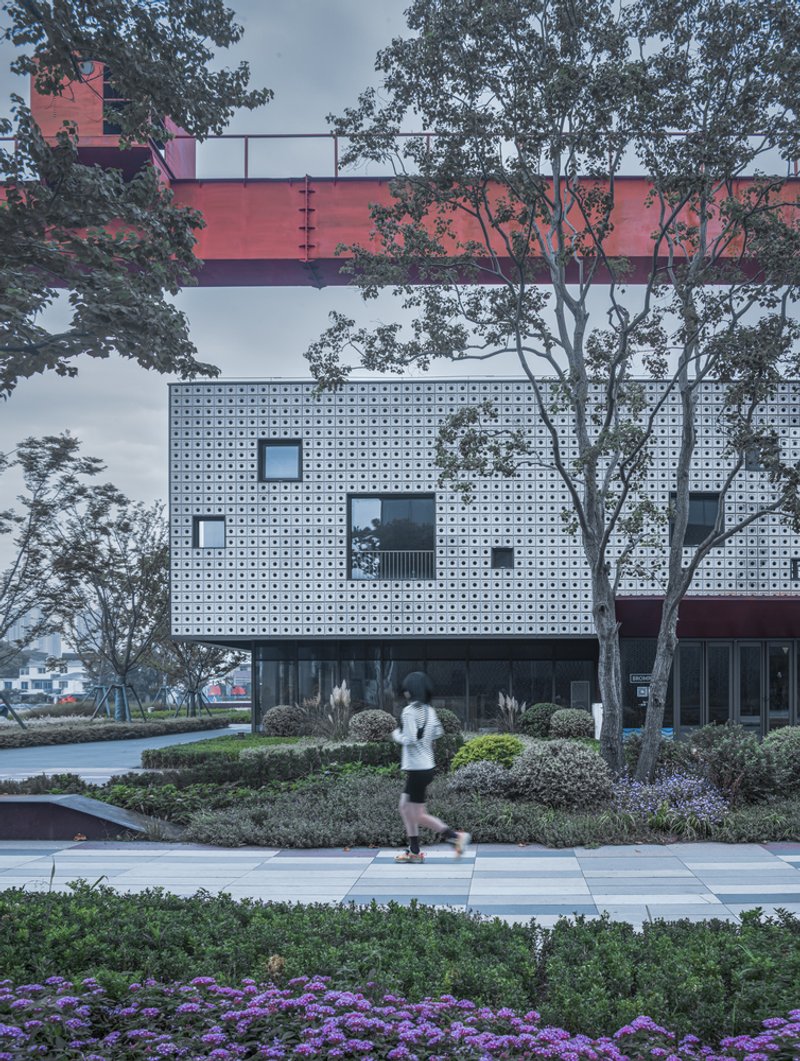
Masterplan: Merging Old and New
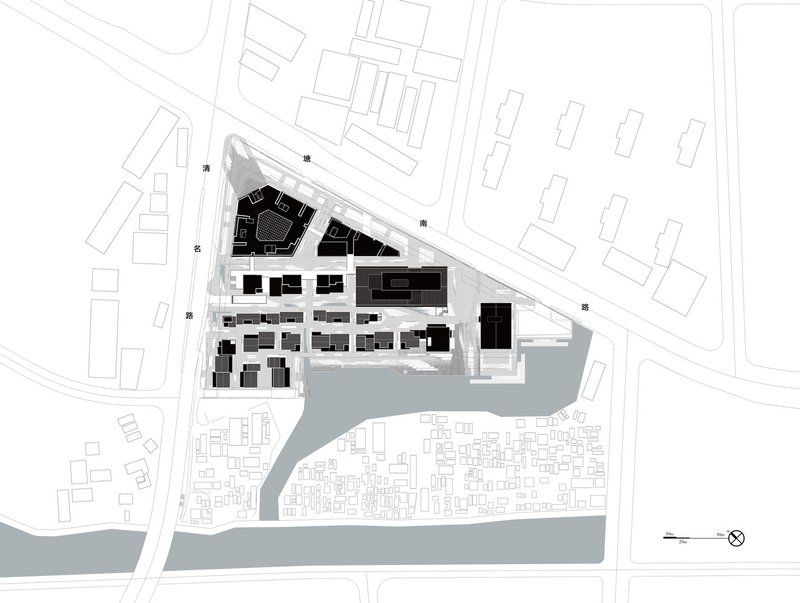
The design philosophy behind Canal Hub 1958 revolves around integrating historic structures with contemporary elements, creating a harmonious dialogue between the past and the present. The site is structured around two main industrial buildings, Factory Building No. 1 and Factory Building No. 3, which are preserved and repurposed to serve distinct functions.
Factory Building No. 1: A Cultural and Tourism Hub
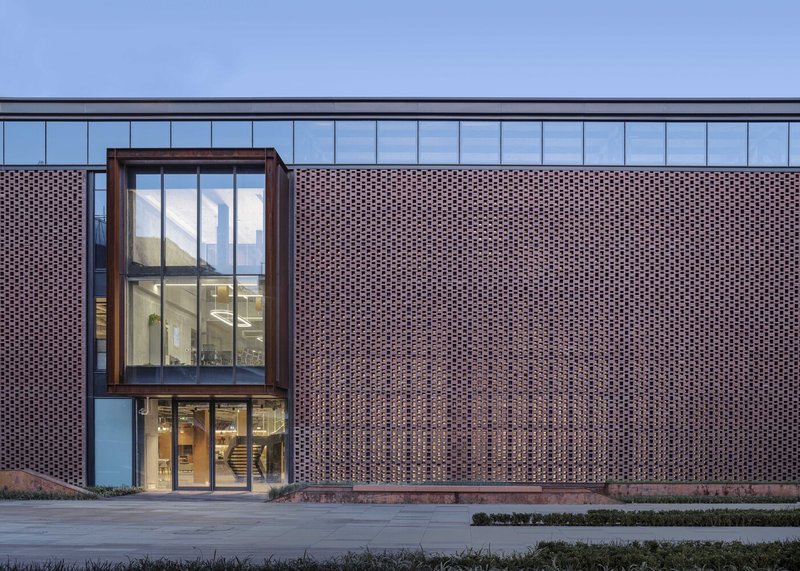
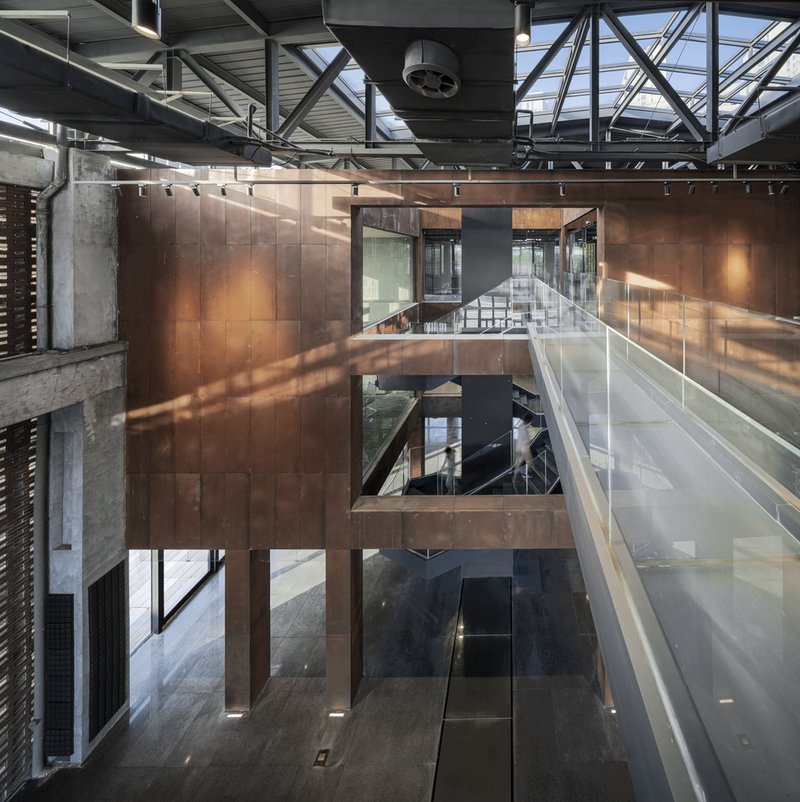
- This structure, originally a red-brick industrial building, has been meticulously restored while introducing modern design interventions.
- The renovation strategy preserves the original brickwork and perforated facade, incorporating glass bricks for a refined old-meets-new aesthetic.
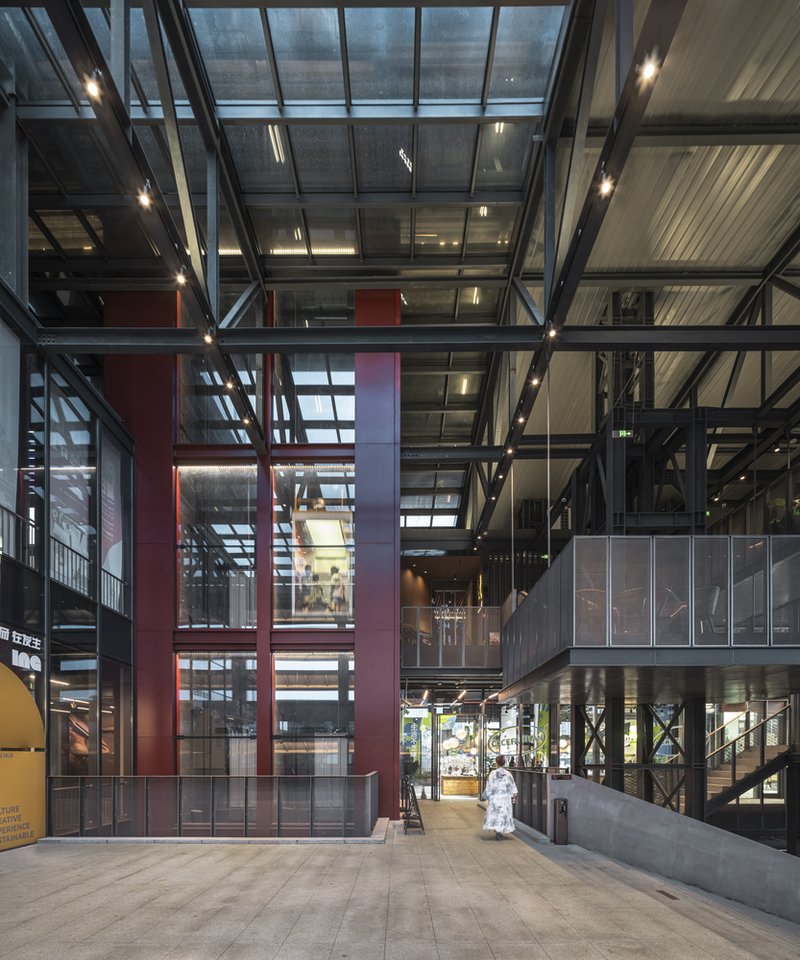
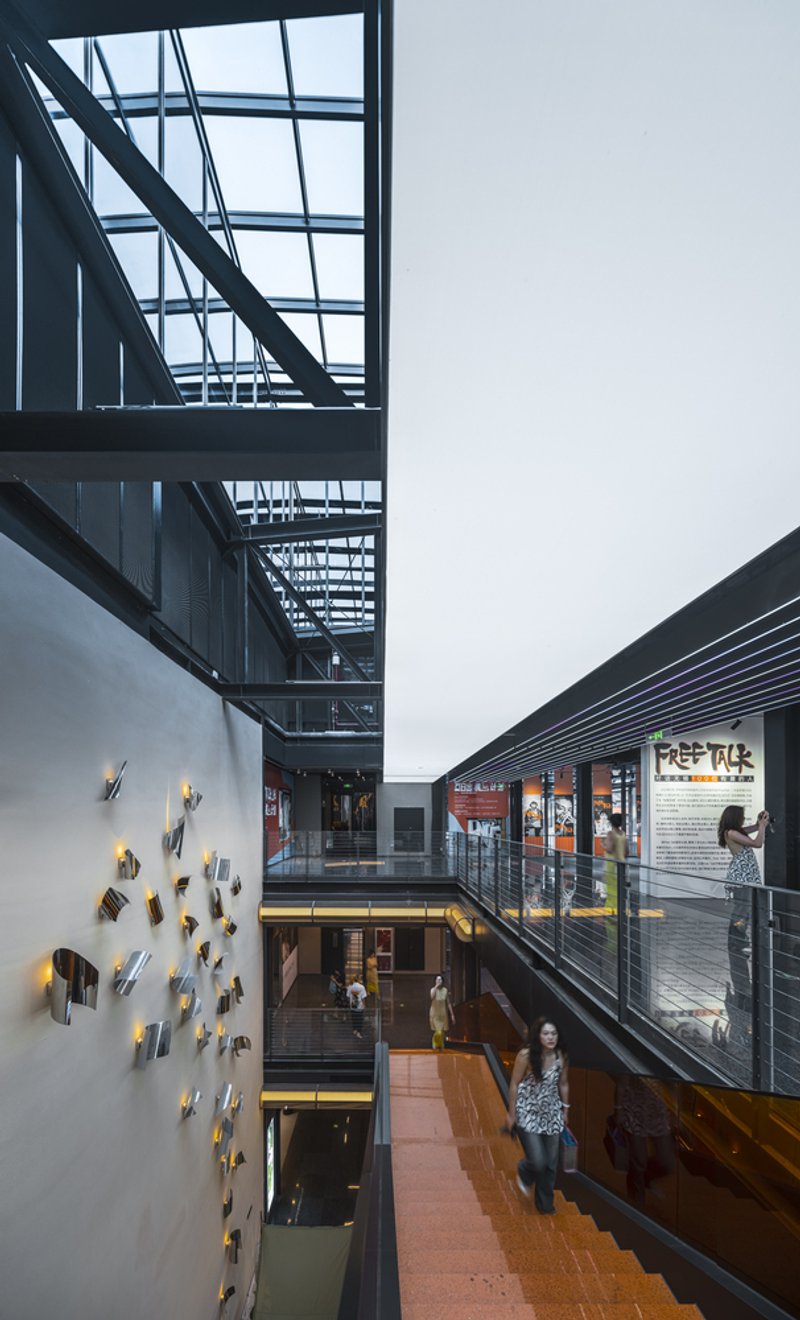
- Inside, a multi-level atrium creates an open and inviting space for exhibitions, art installations, and community gatherings.
- The spatial layout follows an intersecting axis design, seamlessly blending public areas with functional spaces.
- A canal-side dock extends the usability of the space, transforming it into a scenic waterfront venue for events and leisure activities.
Factory Building No. 3: A Miniature City Within a Giant Structure
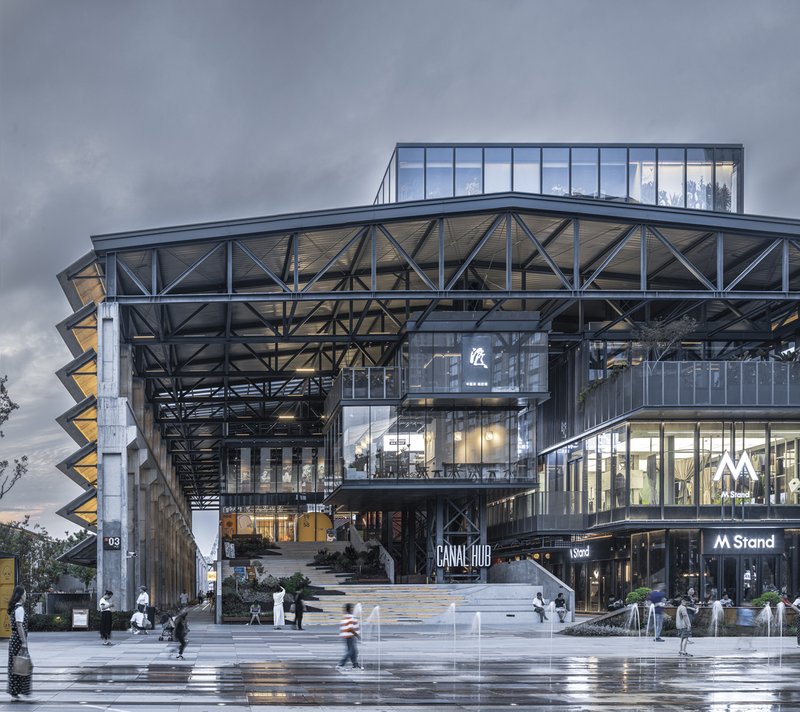
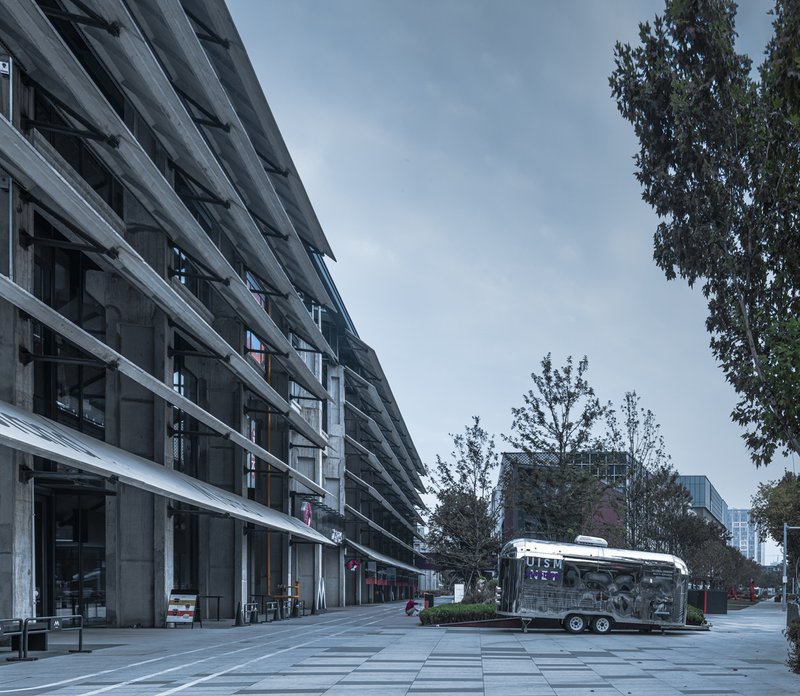
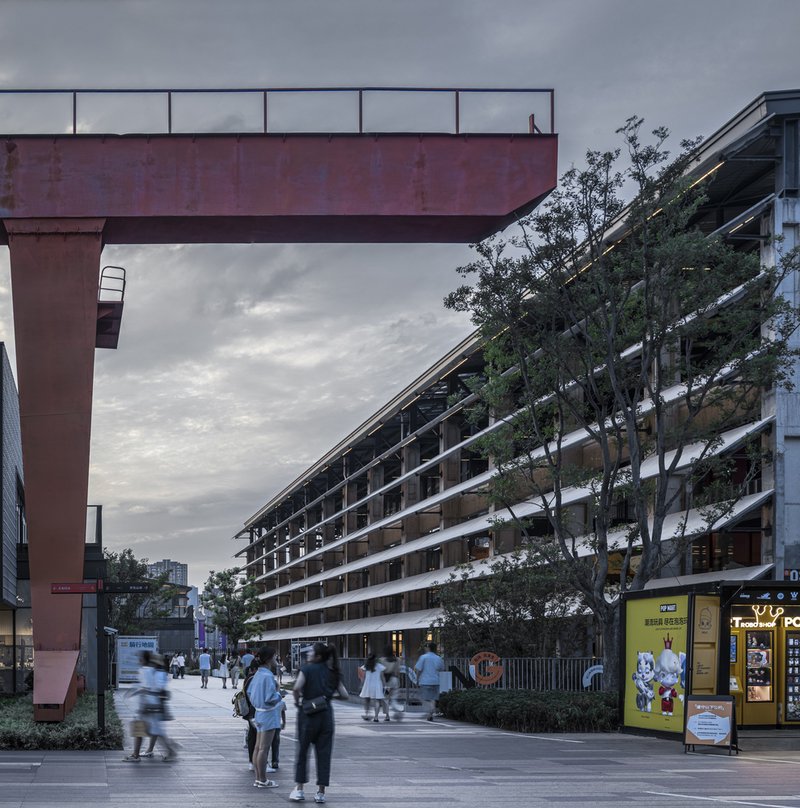
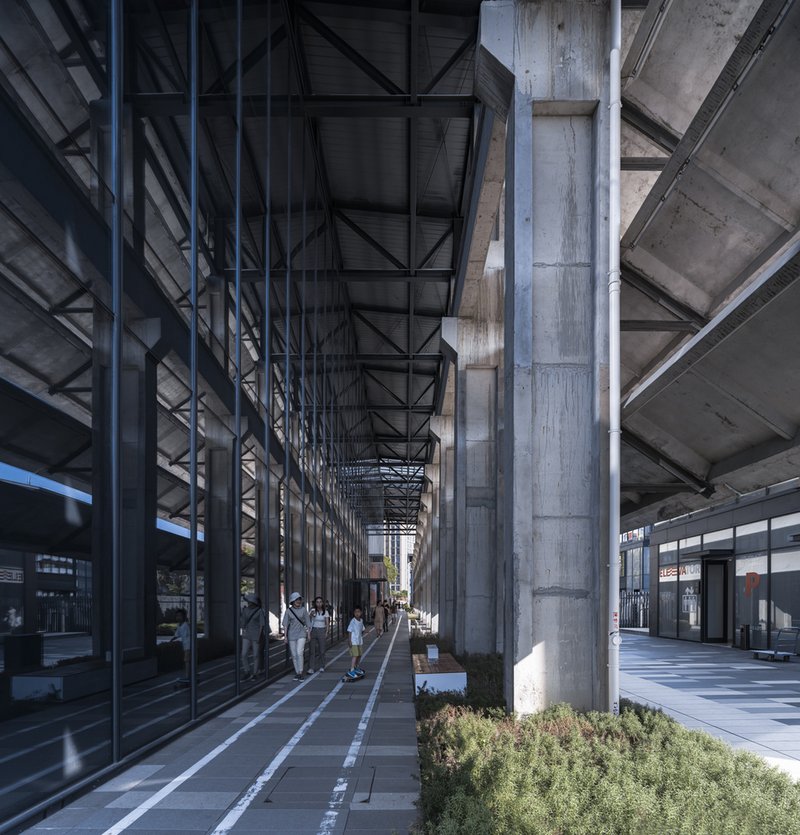
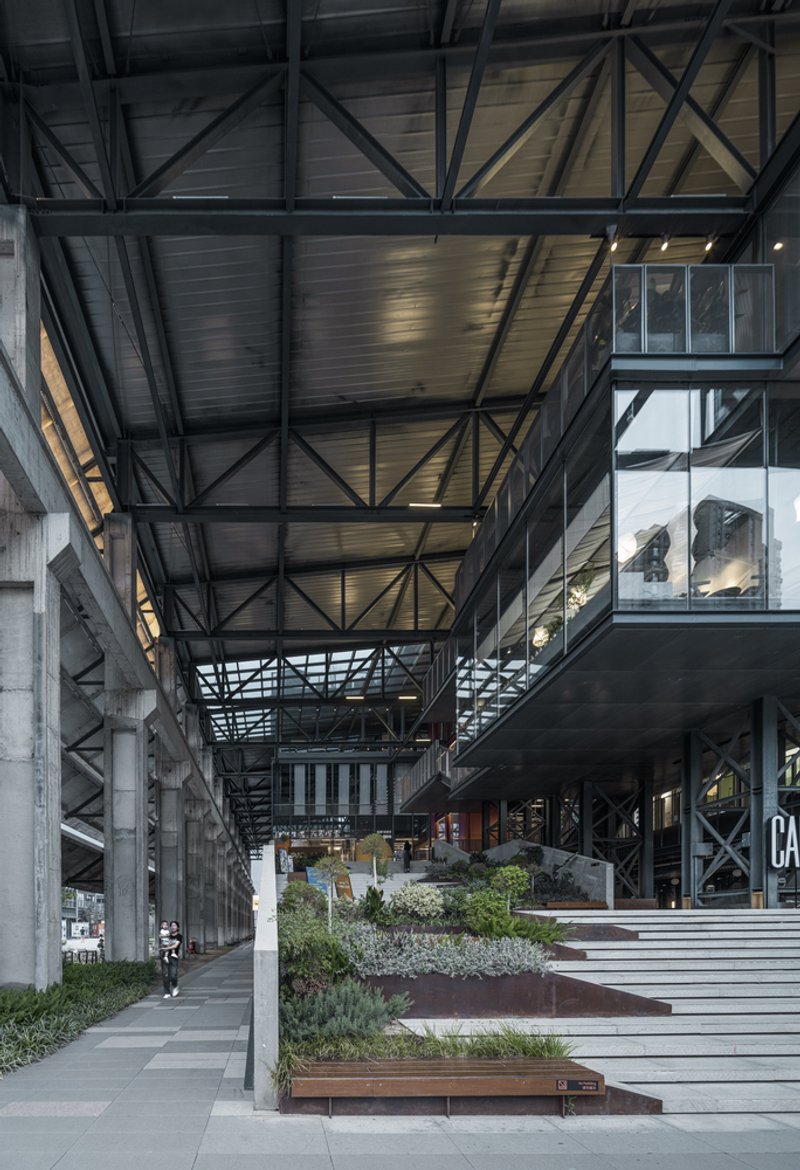
- As the largest structure on-site, Factory Building No. 3 spans over 200 meters, making it a dominant architectural feature.
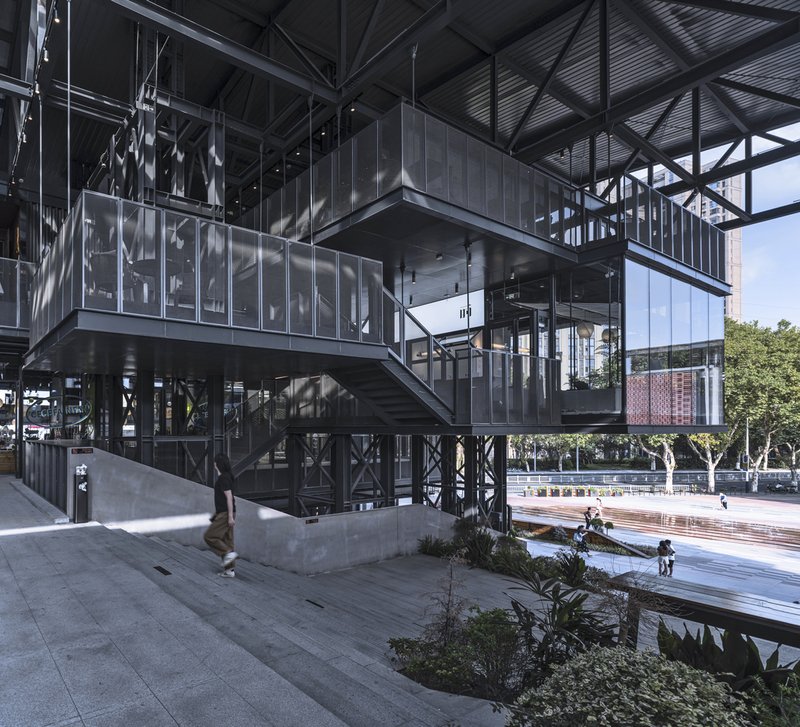
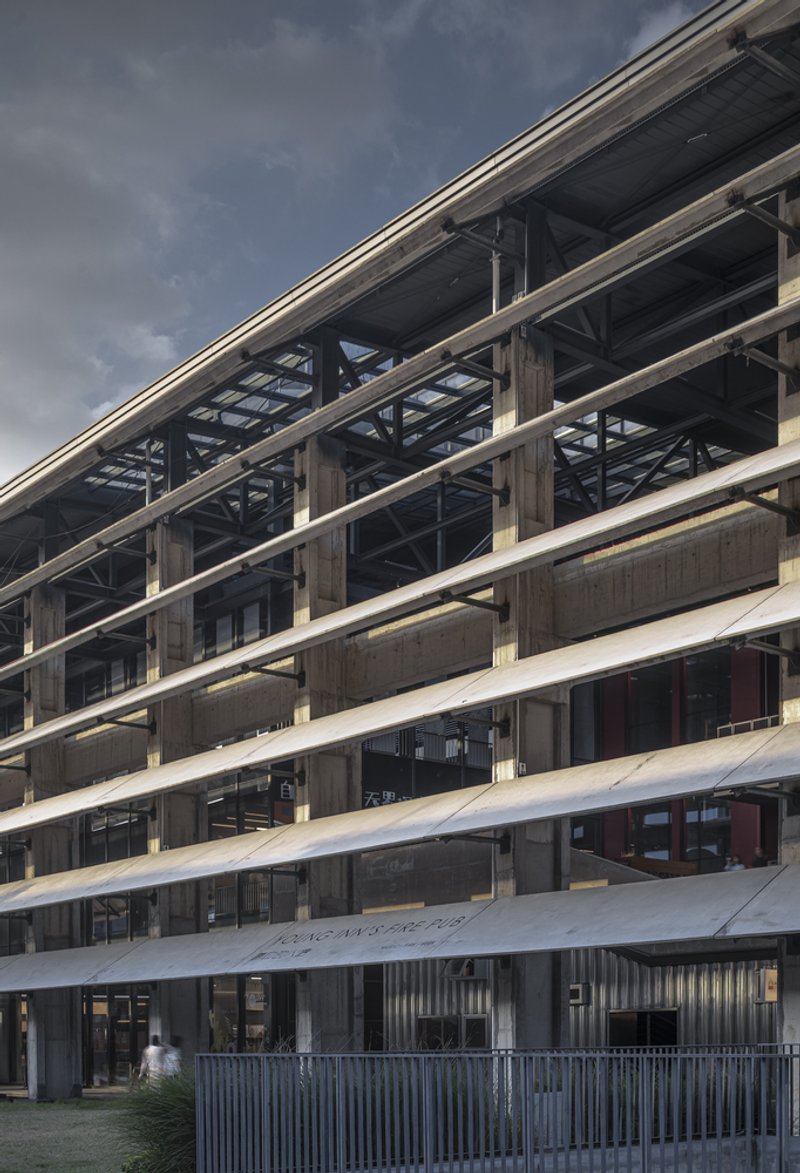
- The preservation approach retains its strong industrial character, highlighted by horizontal sunshades, exposed concrete, and steel frameworks.
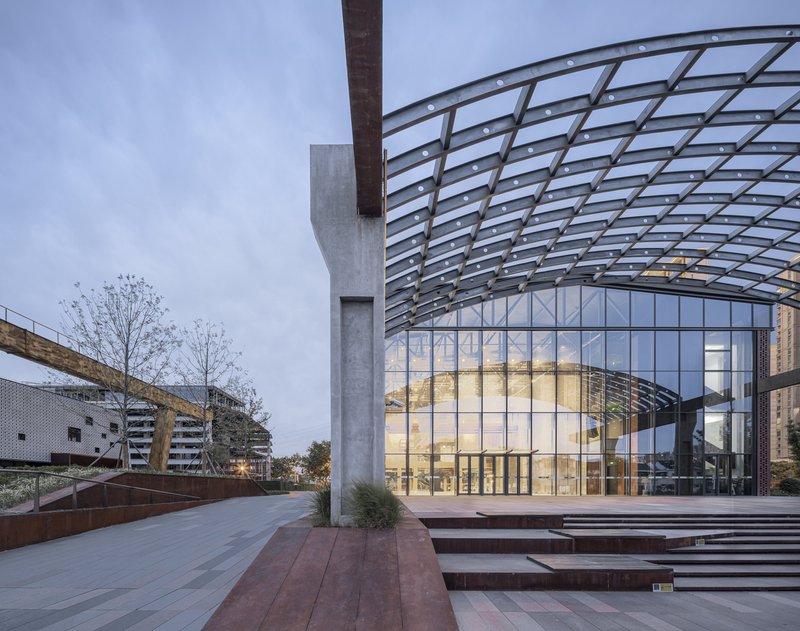
- A floating rooftop art gallery, featuring a fully glazed volume, contrasts dramatically with the building’s heavy concrete panels, adding a contemporary touch.
- The interior layout is designed to maximize functionality, incorporating retail, dining, co-working spaces, and cultural venues.
- A series of courtyards and skylights introduce natural light, enhancing the connection between interior and exterior spaces.
- A stepped plaza at the entrance acts as an urban amphitheater, encouraging public engagement, performances, and social interaction.
Expanding the Urban Fabric: New Public Spaces
Beyond the adaptive reuse of industrial buildings, Canal Hub 1958 introduces two additional urban zones that enhance connectivity and community interaction.
The Boxed District: A Contemporary Urban Interface
- Located at the intersection of major city roads, this zone serves as the gateway to Canal Hub 1958.
- The design features stepped volumes that gradually transition from high-density commercial buildings to the historic industrial structures, ensuring visual balance and pedestrian comfort.
- The district houses retail outlets, co-working spaces, creative studios, and boutique hotels, making it a hub for entrepreneurship and innovation.
Waterfront Cultural District: A Modern Interpretation of Jiangnan’s Water Towns
- Inspired by Wuxi’s historic canal-side villages, this area reintroduces a traditional street layout with low-rise buildings and narrow alleys.
- Facades incorporate GRC modular elements, reflecting the texture of Wuxi’s ancient kiln architecture.
- The district features art galleries, craft workshops, bookstores, and cafés, cultivating a rich cultural atmosphere that celebrates the city’s artistic heritage.
Reimagining Public Life: A Space for Culture and Community
Canal Hub 1958 is more than an architectural preservation project—it is a living, breathing cultural destination that fosters community interaction and creative expression.
Since its opening, the site has hosted over 100+ public events, including:
Theater festivals and live performances .
Art exhibitions and creative workshops
Book clubs and literary gatherings .
TED talks and design conferences .
Concerts and stand-up comedy shows.
By integrating architecture, business, and public engagement, the project transforms a forgotten industrial site into a thriving urban landmark, demonstrating the potential of adaptive reuse and sustainable urban development.
A Model for Future Urban Regeneration
Canal Hub 1958 exemplifies how historical preservation and contemporary urban design can coexist, setting a new benchmark for industrial revitalization projects in China and beyond.
By embracing the rich heritage of Wuxi, while introducing innovative architectural strategies, this project proves that the past and future can merge seamlessly, creating a dynamic public space that enriches the city’s cultural and social landscape.
All Photographs are works of Chao Zhang




Popular Articles
Popular articles from the community


The Ken Roberts Memorial Delineation Competition (Krob)
As the most senior architectural drawing competition currently in operation anywhere in the world, it draws hundreds of entries each year, awarding the very best submissions in a series of medium-based categories.

Treehouse Apartment: A Warm Timber Interior Blending Craft, Play, and Contemporary Living
Warm timber apartment with integrated treehouse, combining natural materials, craftsmanship, and playful design to create a flexible, family-oriented living environment.

Solar Steam: A Climate-Responsive Architecture That Redefines the Monument
A climate-responsive memorial architecture that transforms heat, decay, and time into a living system reflecting humanity’s ecological impact.
Inverted Architecture Installation by Studio Link-Arc: Exploring the Intersection of Architecture and Living Organisms
Inverted Architecture Installation by Studio Link-Arc blends mycelium, sustainability, inverted design, ecological cycles, and urban adaptive architecture in Shenzhen.

Similar Reads
You might also enjoy these articles
The Ken Roberts Memorial Delineation Competition (Krob)
As the most senior architectural drawing competition currently in operation anywhere in the world, it draws hundreds of entries each year, awarding the very best submissions in a series of medium-based categories.

Waterfront Redevelopment and Urban Revitalization in Mumbai: Forging a New Dawn for Darukhana
A transformative waterfront redevelopment project reimagining Darukhana’s shipbreaking heritage into an inclusive urban future.

OUT-OF-MAP: A Call for Postcards on Feminist Narratives of Public Space
Rhizoma Design and Research Lab invites artists, designers, architects, researchers, and students to reflect on how feminist perspectives can reshape public space. Selected works will be exhibited in Barcelona, October 2026. Submissions open until 15 April 2026.

Documentation Work on Buddhist Wooden Temple
Architectural syncretism and cultural hybridity: A comparative study of the Buddhist temples in Chattogram Hill tracks


Explore Architecture Competitions
Discover active competitions in this discipline




The International Standard for Design Portfolios


The Global Benchmark for Architecture Dissertation Awards


The Global Benchmark for Graduation Excellence


Challenge to design an urban locus of culture and heritage
Comments (0)
Please login or sign up to add comments
No comments yet. Be the first to comment!