
Cave-Inspired Architecture: The Sculptural Design of Gruta House in Yucatán
Gruta House in Yucatán embodies cave-inspired architecture, using organic forms and natural materials to create a sculptural, immersive living experience.

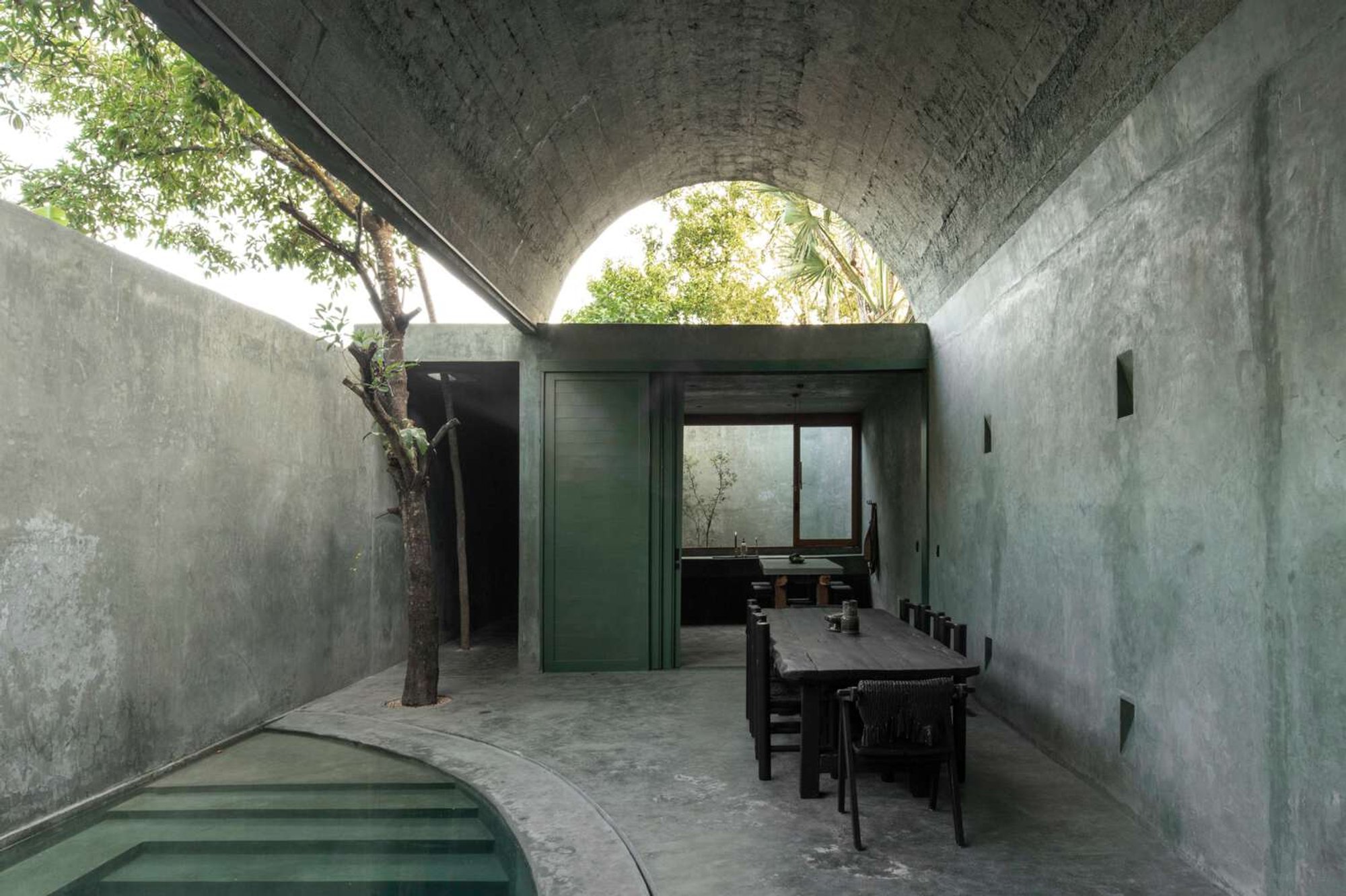
Cave-inspired architecture is redefining modern residential design by blending organic forms, natural materials, and immersive spatial experiences. Gruta House, designed by Salvador Román Hernández and Adela Mortéra Villarreal, embodies this philosophy, drawing inspiration from the geological formations of the Yucatán Peninsula. Located in the Sisal neighborhood of Valladolid, the residence functions as a habitable sculpture, merging contemporary aesthetics with timeless natural elements.
A Home Rooted in Geological Inspiration
The concept of Gruta House is deeply influenced by the cenotes and caves found in Yucatán. These natural underground formations, created over thousands of years, have served as sacred spaces for the Mayan civilization. The house replicates their spatial dynamics through tunnels, vaults, and open courtyards, offering an experiential journey that evokes both discovery and refuge. The design fosters a seamless interaction between built structures and natural elements, creating a profound sense of place.
Materiality and Light Play
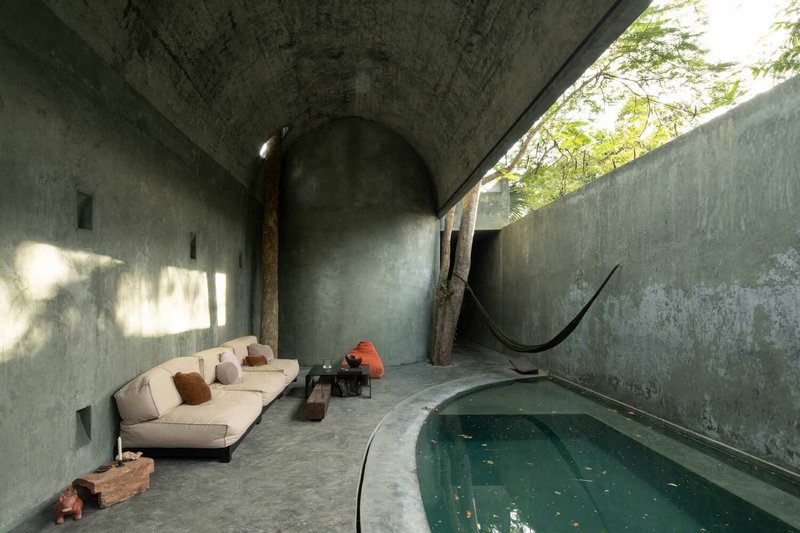
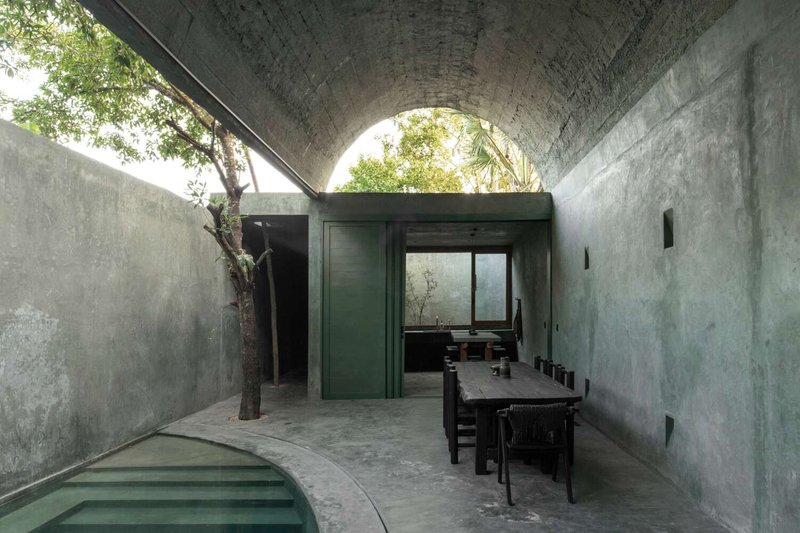
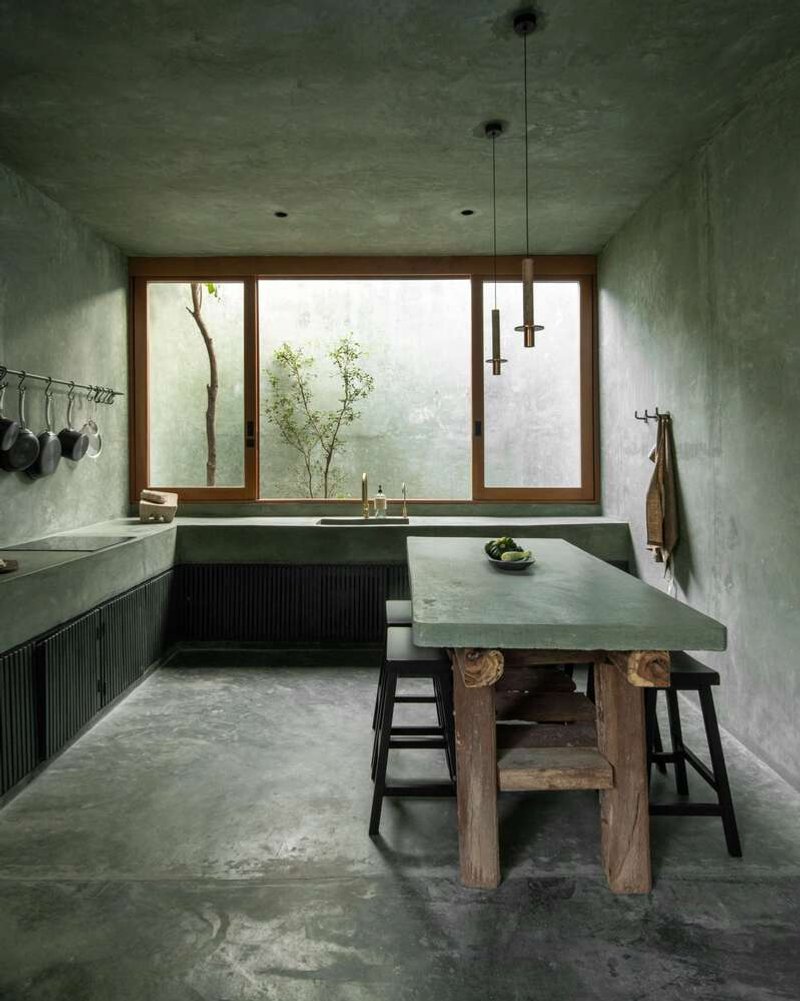
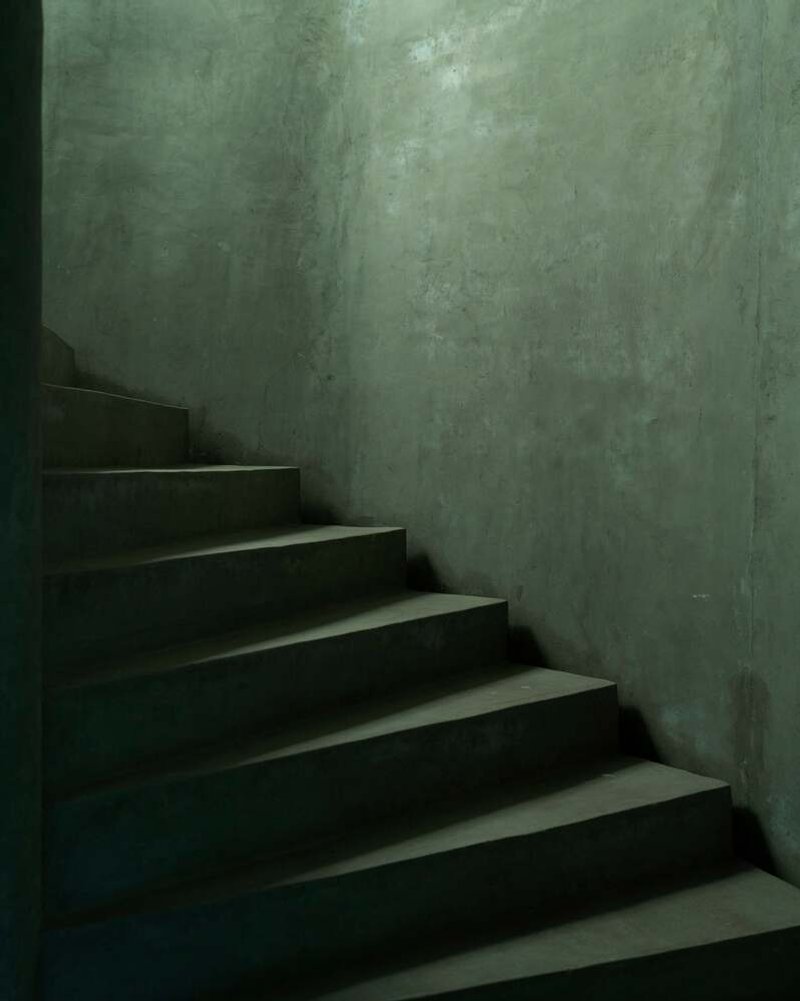
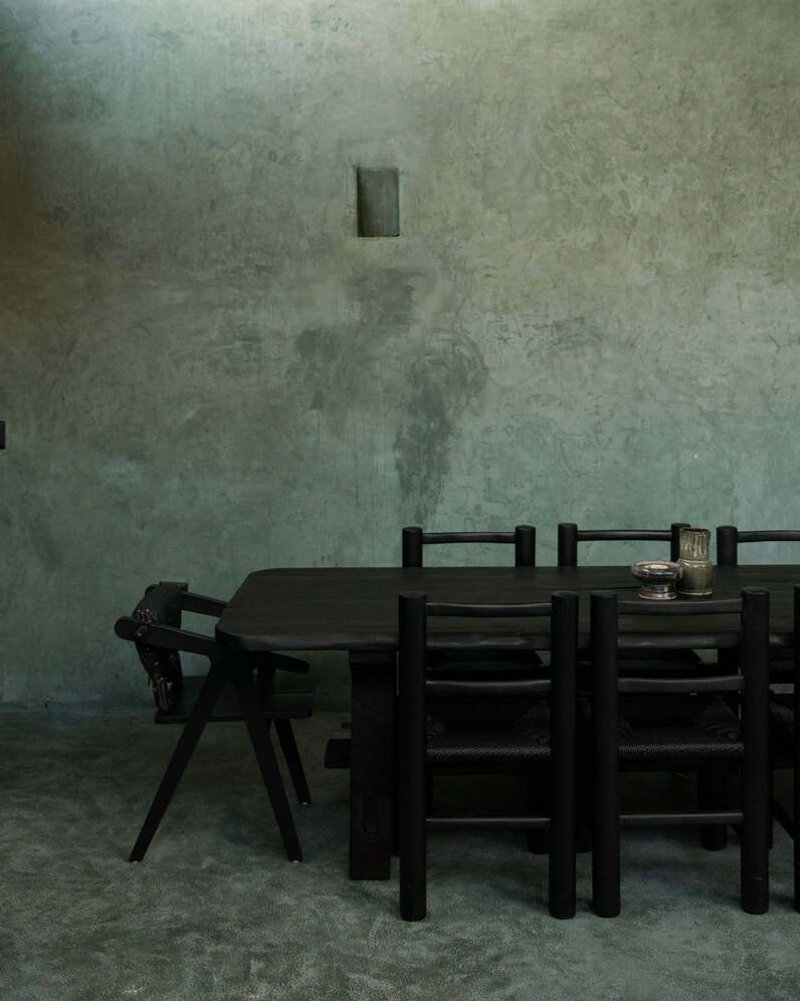
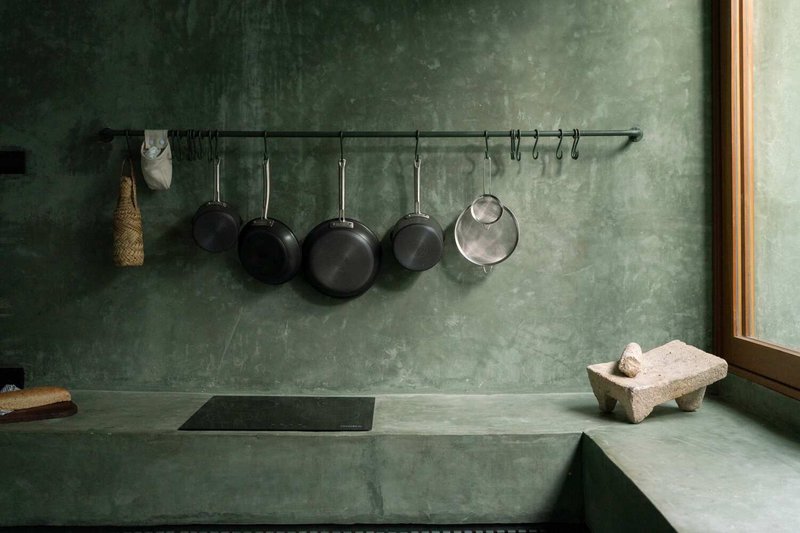
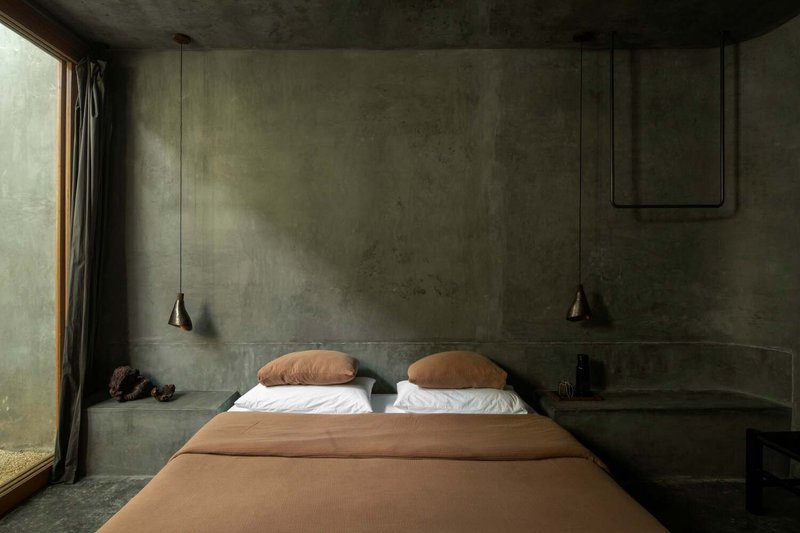
The use of materials in Gruta House reflects the organic textures and hues of its surroundings. Pigmented concrete, in a gray-green shade, mirrors the ever-changing tones of limestone caves as sunlight shifts throughout the day. The contrast of natural cedar wood introduces warmth, referencing the rich vegetation of the region, while golden hardware accents symbolize the minerals embedded in the land. These materials not only establish an aesthetic connection to nature but also contribute to the house’s atmospheric dynamism.
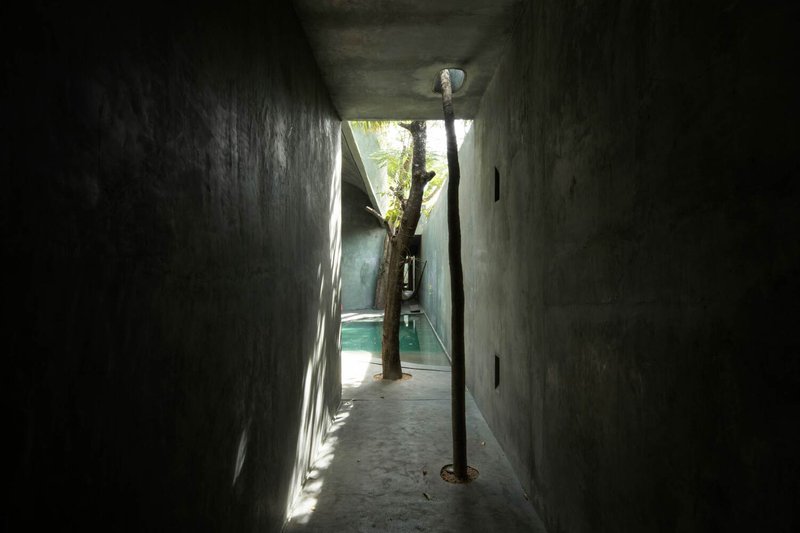
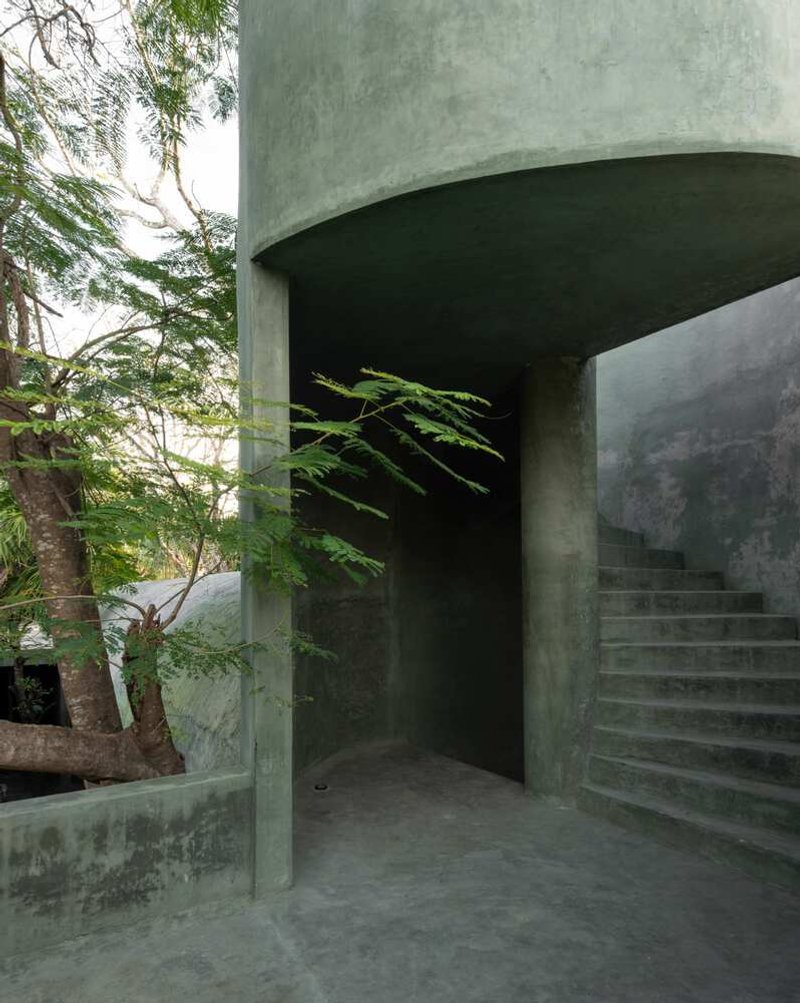
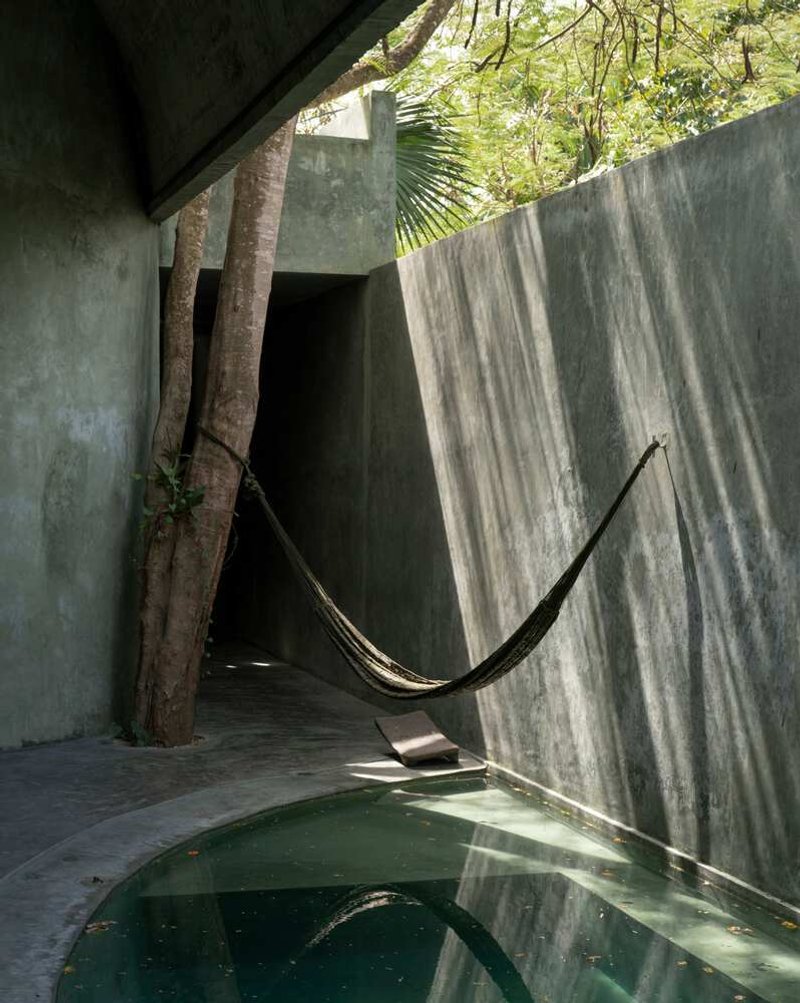
Light and shadow play a fundamental role in shaping the experience of the house. The architecture is designed to respond to the movement of the sun, casting shifting shadows that emphasize the sculptural qualities of the space. The strategic positioning of courtyards and openings enhances natural illumination while maintaining an intimate, cave-like ambiance.
A Spatial Journey Through Organic Forms
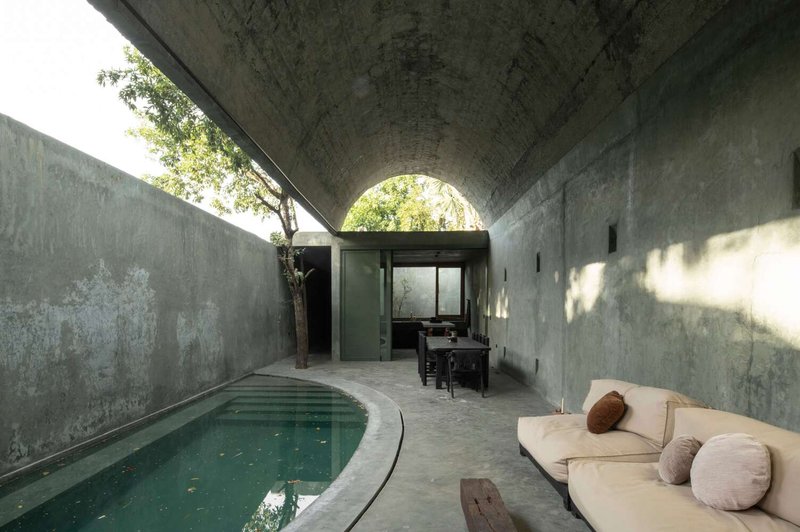
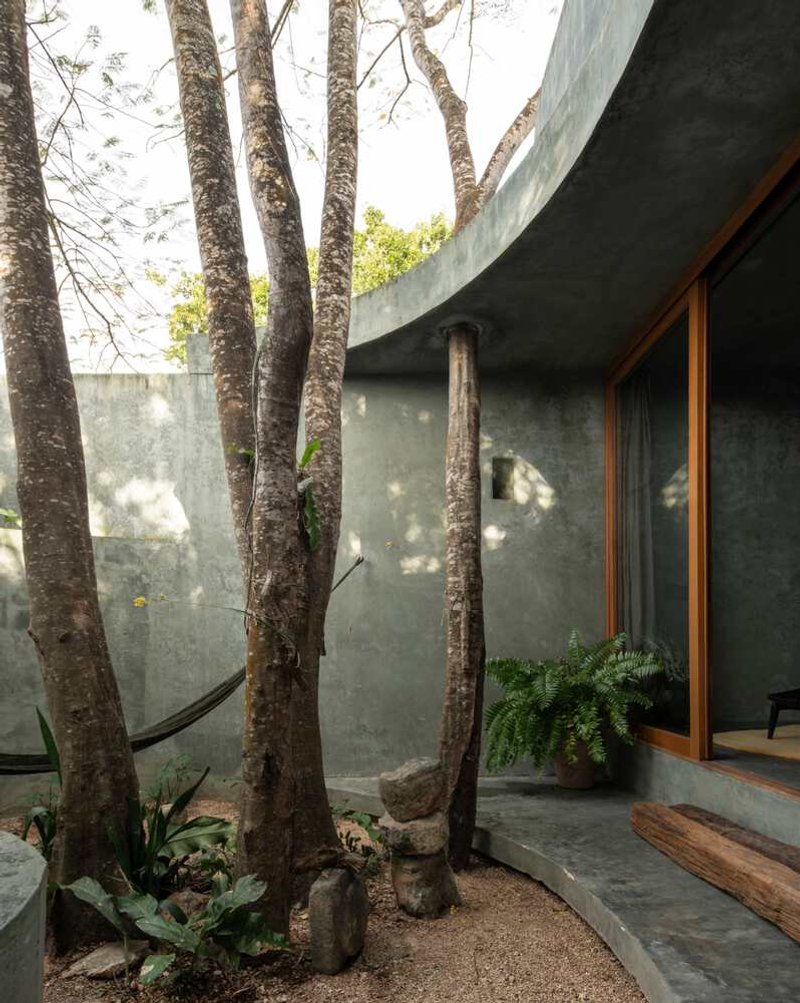
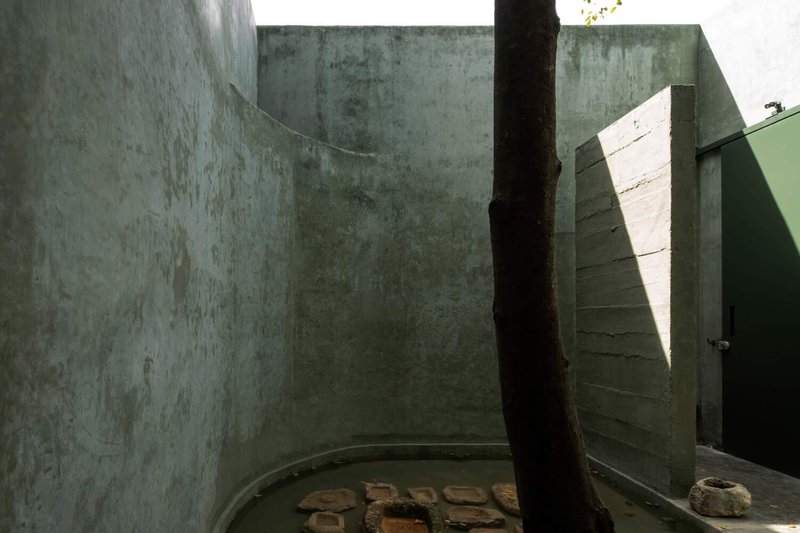
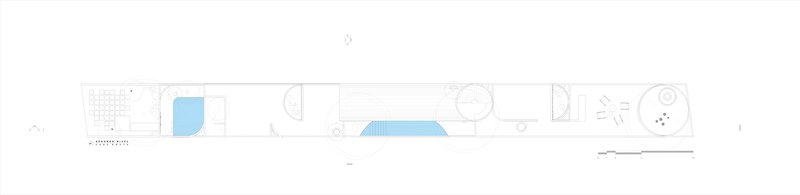
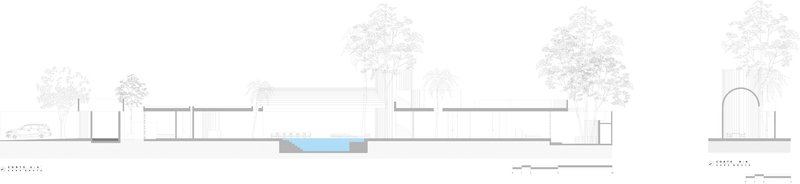
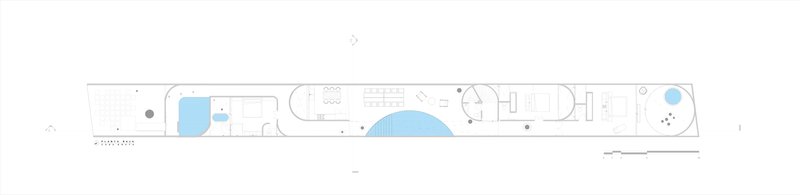
The spatial configuration of Gruta House invites inhabitants to embark on a journey reminiscent of exploring a grotto. The entrance, marked by a poplar tree—an indicator of underground water formations in Mayan traditions—leads to an outdoor vestibule featuring a reflective body of water designed by artist Andrés Briceño. This element pays homage to Mayan purification rituals before entering cenotes, reinforcing the home’s spiritual connection to its site.
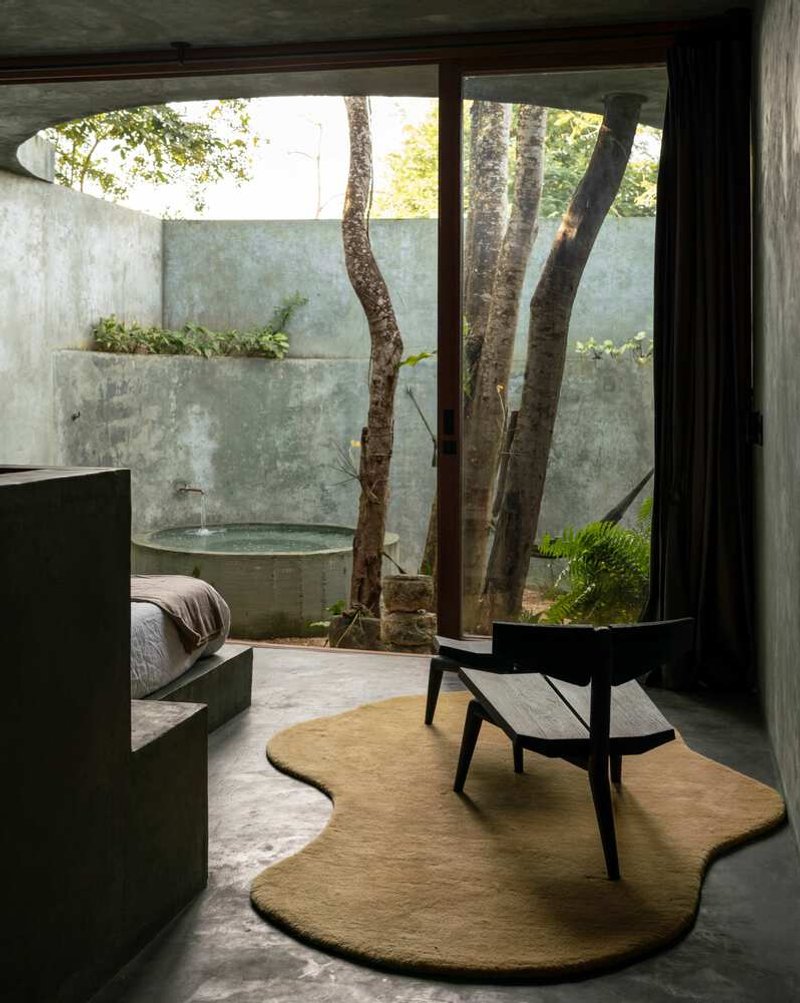
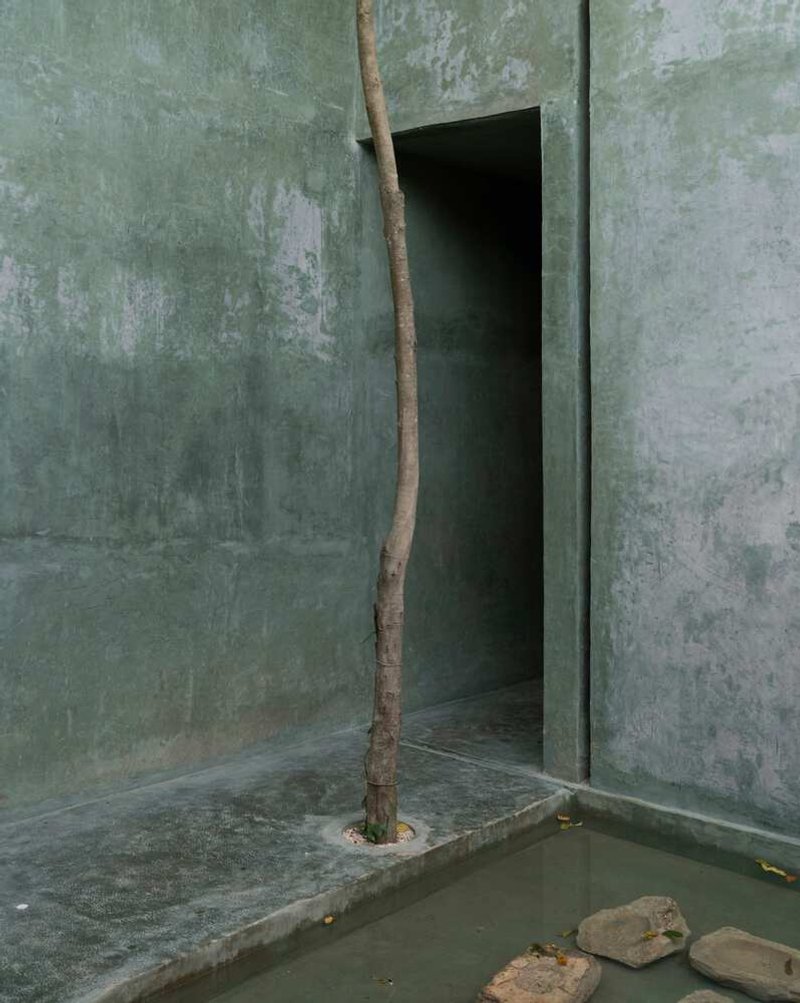
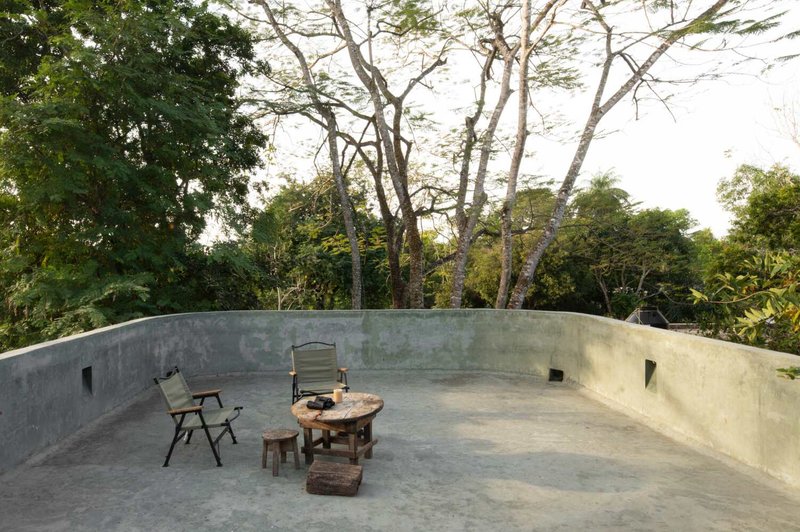
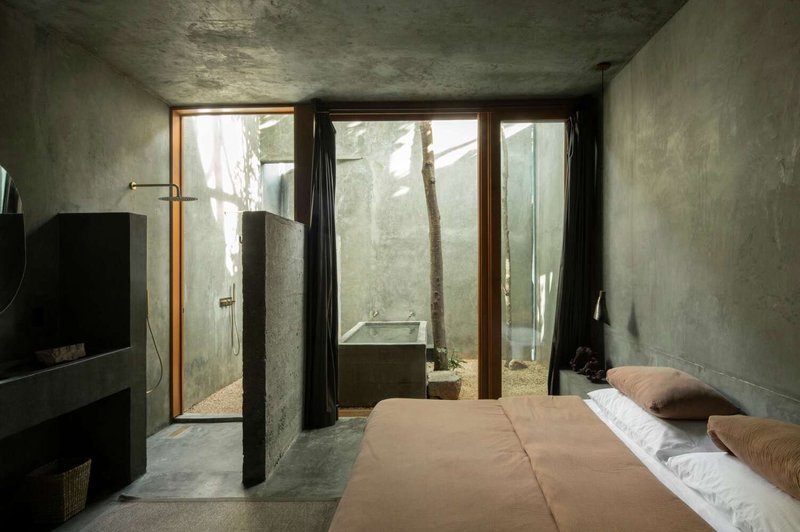
A tunnel-like passage guides visitors through the home, opening gradually into different living spaces. The first stop is a secluded room with a private patio, an outdoor shower, and a water feature that enhances the cooling microclimate. As the tunnel extends, it leads into the main living area, a vast communal space under a hammered concrete vault that amplifies the cave-like atmosphere. The journey culminates in a cylindrical volume that houses the staircase, leading to a rooftop terrace with panoramic views of the landscape.
Emphasizing Contemplation and Nature
Gruta House integrates contemplative spaces that promote a deep connection with time and nature. The ground floor includes two additional rooms, one of which opens to a sculptural courtyard where vegetation and artwork create a tranquil retreat. The master bedroom embraces an indoor patio with a circular water element, reinforcing the interplay between light, shadow, and reflection. A pre-existing flamboyant tree further enhances the dynamic interaction between architecture and its environment.
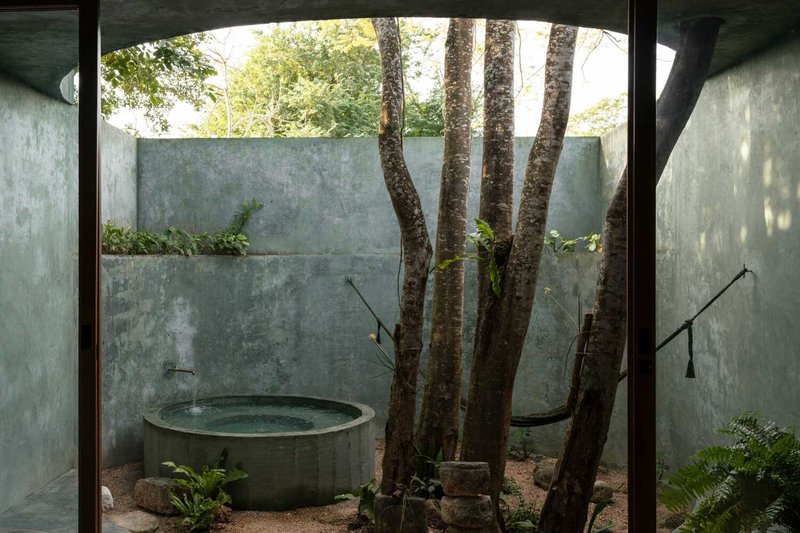
Beyond its aesthetic and sensory qualities, Gruta House serves as a refuge from the fast-paced rhythms of contemporary life. By drawing on cave-inspired architecture, it offers a timeless sanctuary that encourages introspection, mindfulness, and appreciation of natural cycles.
A Testament to Organic Architecture
Gruta House stands as an exceptional example of cave-inspired architecture, demonstrating how organic forms and natural materials can shape meaningful living environments. By respecting the geological and cultural heritage of its site, the design seamlessly integrates with its surroundings, creating a home that feels both ancient and contemporary. As architecture continues to evolve, projects like this remind us of the power of nature-driven design in fostering harmony between humans and their environment.
All Photographs are works of Fabian Martinez



Popular Articles
Popular articles from the community


The Ken Roberts Memorial Delineation Competition (Krob)
As the most senior architectural drawing competition currently in operation anywhere in the world, it draws hundreds of entries each year, awarding the very best submissions in a series of medium-based categories.

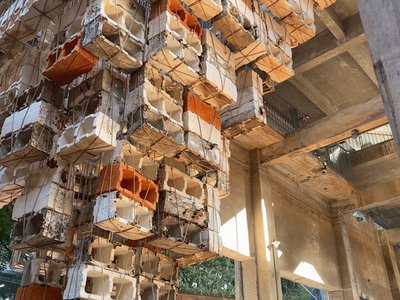
Inverted Architecture Installation by Studio Link-Arc: Exploring the Intersection of Architecture and Living Organisms
Inverted Architecture Installation by Studio Link-Arc blends mycelium, sustainability, inverted design, ecological cycles, and urban adaptive architecture in Shenzhen.
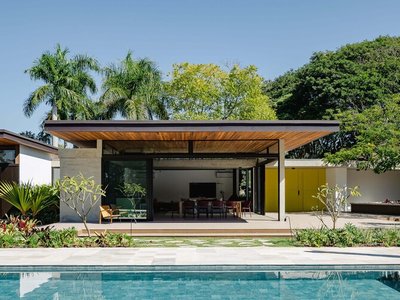
Flamboyant House by Juliana Camargo + Prumo Projetos
Modern Brazilian house integrating existing tree, pool, and volumes with glass, wood, and transitional spaces blending interior, exterior, and landscape seamlessly.
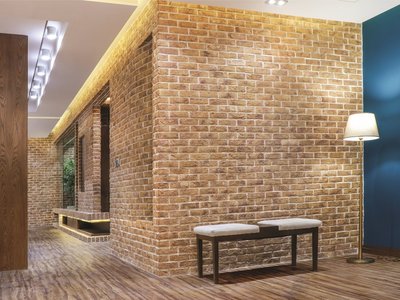
A Contemporary Take on Iranian Residential Architecture
A modern interior design in Mashhad that reinterprets brick, light, and spatial flow to create a warm, contemporary residential architecture.

Similar Reads
You might also enjoy these articles
The Ken Roberts Memorial Delineation Competition (Krob)
As the most senior architectural drawing competition currently in operation anywhere in the world, it draws hundreds of entries each year, awarding the very best submissions in a series of medium-based categories.


Waterfront Redevelopment and Urban Revitalization in Mumbai: Forging a New Dawn for Darukhana
A transformative waterfront redevelopment project reimagining Darukhana’s shipbreaking heritage into an inclusive urban future.

OUT-OF-MAP: A Call for Postcards on Feminist Narratives of Public Space
Rhizoma Design and Research Lab invites artists, designers, architects, researchers, and students to reflect on how feminist perspectives can reshape public space. Selected works will be exhibited in Barcelona, October 2026. Submissions open until 15 April 2026.


Documentation Work on Buddhist Wooden Temple
Architectural syncretism and cultural hybridity: A comparative study of the Buddhist temples in Chattogram Hill tracks


Explore Architecture Competitions
Discover active competitions in this discipline




The International Standard for Design Portfolios


The Global Benchmark for Architecture Dissertation Awards


The Global Benchmark for Graduation Excellence


Challenge to reimagine the Iron Throne
Comments (0)
Please login or sign up to add comments
No comments yet. Be the first to comment!