
Center for Intangible Cultural Heritage: Preserving Korean Tradition Through Contemporary Architecture
GAGAHOHO Architects' cultural center in Gwangmyeong harmonizes traditional Korean performance arts with contemporary design, creating dynamic spaces celebrating intangible heritage preservation.

Introduction: Architecture as Cultural Custodian
In the heart of Gwangmyeong City, South Korea, a new architectural landmark rises as both guardian and celebrant of Korean intangible cultural heritage. The Gwangmyeong Center for Intangible Cultural Heritage, designed by GAGAHOHO Architects and officially opened in August 2024, represents a profound architectural response to one of humanity's most challenging design briefs: how to create physical form that honors and houses the intangible—the songs, dances, rituals, and traditions that exist not in objects but in living practice.
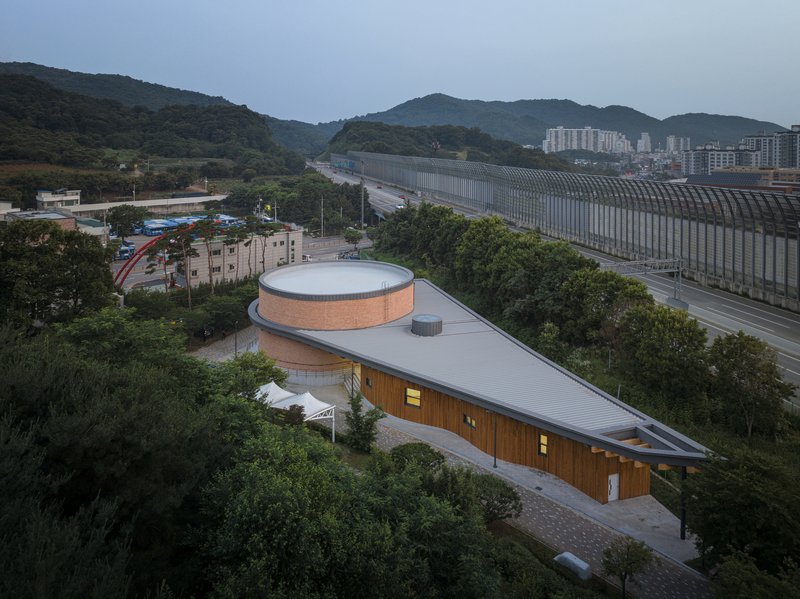
Completed in 2022 after winning a competitive design process three years prior, this 997-square-meter cultural facility stands as a testament to the possibility of contemporary architecture that neither mimics historical forms nor ignores cultural context. Instead, it translates the essence of traditional Korean performance—the rhythm of sound (eum) and the dynamism of dance (mu)—into built form through sweeping curves, carefully chosen materials, and spatial sequences that prepare visitors for cultural encounter.
This is not merely a building but a stage for living tradition, a classroom for cultural transmission, and a gathering place where communities can reconnect with practices that have shaped Korean identity for centuries. It is architecture in service of memory, continuity, and celebration.
Cultural Context: Gwangmyeong's Living Heritage
The City of Nongak and Seodo Songs
Gwangmyeong has long been recognized as a city of profound cultural significance, home to intangible cultural assets of exceptional artistic and academic value. To understand the architectural response that GAGAHOHO Architects developed, one must first understand the cultural practices this building was designed to serve and preserve.
Gwangmyeong Nongak represents one of the city's most precious cultural treasures—a tradition of farmers' music and dance that has been continuously practiced and handed down for over 450 years in the Soha-dong and Hakon-dong regions. Nongak is not simply entertainment but a complex artistic form that embodies the agricultural rhythms of Korean rural life, the communal spirit of farming communities, and the celebratory exuberance of harvest festivals. Performers wear distinctive costumes including the sangmo—a hat adorned with long ribbons that create mesmerizing circular patterns as dancers spin and leap.
Seodo Songs constitute another vital thread in Gwangmyeong's cultural fabric. This genre of Korean folk music originates from the northwestern provinces of Hwanghae and Pyeongan, regions now part of North Korea, making these songs particularly poignant as carriers of cultural memory from a divided homeland. Seodo folk music expresses the full spectrum of human experience—joy and sorrow, hope and longing—through rich, melodic vocals characterized by distinctive ornamentation and emotional depth.
Both Nongak and Seodo Songs are preserved and actively transmitted by recognized human cultural assets—individuals officially designated by the Korean government as living repositories of traditional knowledge and practice. These masters dedicate their lives to ensuring these art forms survive and thrive for future generations.
Additional Local Traditions
Beyond these officially recognized practices, Gwangmyeong's communities cherish additional traditions including Abang-ri Farming Songs and Abang-ri Tug-of-War. Though not formally designated as cultural properties, these practices remain vital to local identity and social cohesion, demonstrating how intangible heritage extends beyond official recognition into the lived experience of communities.
The Need for Dedicated Space
For many years, Gwangmyeong lacked a dedicated facility specifically designed for training and performances related to this intangible heritage. Practitioners made do with multipurpose community centers, school auditoriums, and outdoor spaces—none optimized for the acoustic requirements of traditional music, the spatial needs of dance performances, or the pedagogical demands of cultural transmission to new generations.
The absence of appropriate infrastructure posed real risks to cultural continuity. Without systematic spaces for practice, performance, and education, the transmission of these traditions to younger generations faced increasing challenges. This recognition led municipal authorities to commission a design competition for a purpose-built facility that would serve as both guardian and showcase for Gwangmyeong's intangible cultural wealth.
Site and Context: The Gi Hyeong-do Cultural Park
A Landscape of Poetry and Memory
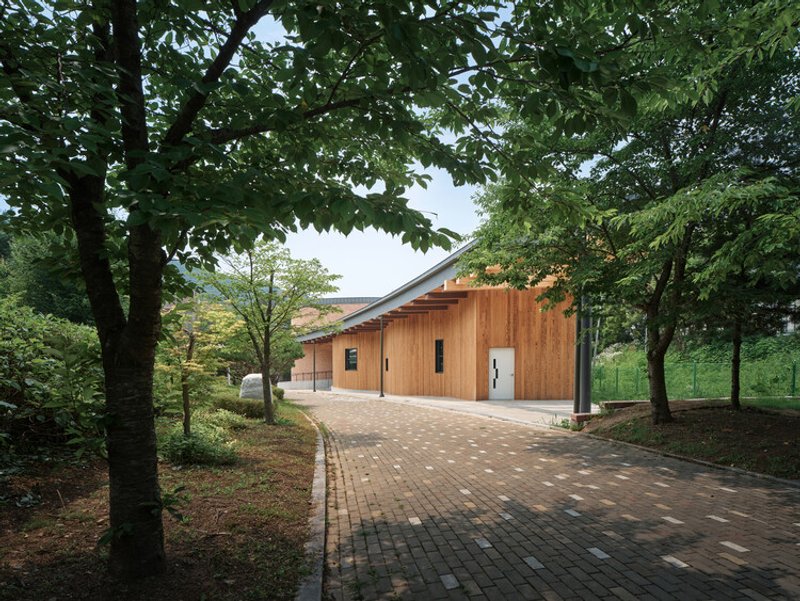
The Center for Intangible Cultural Heritage occupies a privileged position within the Gi Hyeong-do Cultural Park, named in honor of one of Gwangmyeong's most beloved poets. The park itself serves as a vital green lung for the city—a lush forest environment threaded with tranquil walking trails that provide residents with respite from urban density and the stresses of contemporary life.
The center stands adjacent to the Gi Hyeong-do Literary Museum, creating a cultural complex that celebrates both literary and performative arts. This proximity is not coincidental but strategic, positioning different forms of cultural expression in dialogue with one another and encouraging visitors to experience the full breadth of Korean cultural heritage.
Integration with the Poetry Trail
The entrance to the cultural center connects directly to the park's poetry trail—a landscaped pathway where visitors encounter verses inscribed on stones and plaques as they walk through the forest. This physical connection between building and trail is both practical and symbolic: it enhances accessibility while metaphorically linking the written word with performed art, silent reflection with joyful sound, individual contemplation with communal celebration.
The landscaping strategy developed for the center seamlessly extends the vocabulary of the park itself. Rather than creating sharp boundaries between "building" and "nature," the design allows these conditions to blur and interpenetrate, creating graduated zones of transition that offer varied visual and spatial experiences. Visitors moving from the forest trail into the cultural center experience a gradual shift from natural to built environment, never feeling they have crossed an abrupt threshold.
Design Challenges: Constraints as Creative Catalyst
Every architectural project confronts constraints—limitations of site, budget, program, or regulation that define the boundaries within which design must operate. Exceptional architecture transforms these constraints from obstacles into opportunities, finding creative solutions that not only accommodate limitations but leverage them toward enhanced outcomes.
The Triangular Site
The site allocated for the cultural center presented immediate geometric challenges. Its tight triangular configuration offered limited options for building orientation and layout. Conventional rectangular planning would have wasted precious site area or required awkward adjustments. GAGAHOHO Architects embraced the triangle, allowing it to generate the building's distinctive curving form rather than fighting against it.
Topographic Variation
The site's sloping terrain added complexity to accessibility planning and foundation design. Different elevations needed to be managed while maintaining barrier-free access for visitors with mobility limitations. The architects turned this challenge into an advantage, using grade changes to create varied spatial experiences and enhance the drama of approach and entry.
Acoustic Pollution
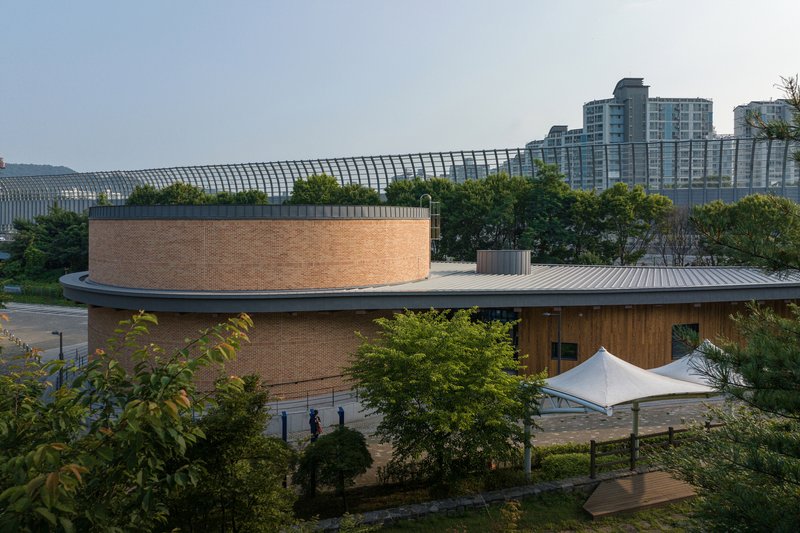
Perhaps the most difficult site condition involved noise from a nearby expressway. High-speed vehicular traffic generates continuous sound pollution that could have severely compromised the acoustic quality essential to music performance and appreciation. The building's orientation, massing, and material choices all respond to this challenge, creating an acoustic sanctuary despite the adverse external sound environment.
Capturing the Intangible
Beyond these pragmatic constraints lay a more conceptual challenge: how to create architecture that captures and expresses the intangible essence of Korean traditional performance. How can static building form embody dynamic movement? How can solid materials evoke ephemeral sound? How can contemporary construction techniques honor centuries-old traditions without resorting to superficial historicism?
These questions guided every design decision, from overall massing to detail resolution, resulting in architecture that is simultaneously abstract and deeply referential, contemporary and timeless.
Architectural Form: Translating Performance into Space
The Language of Curve and Flow
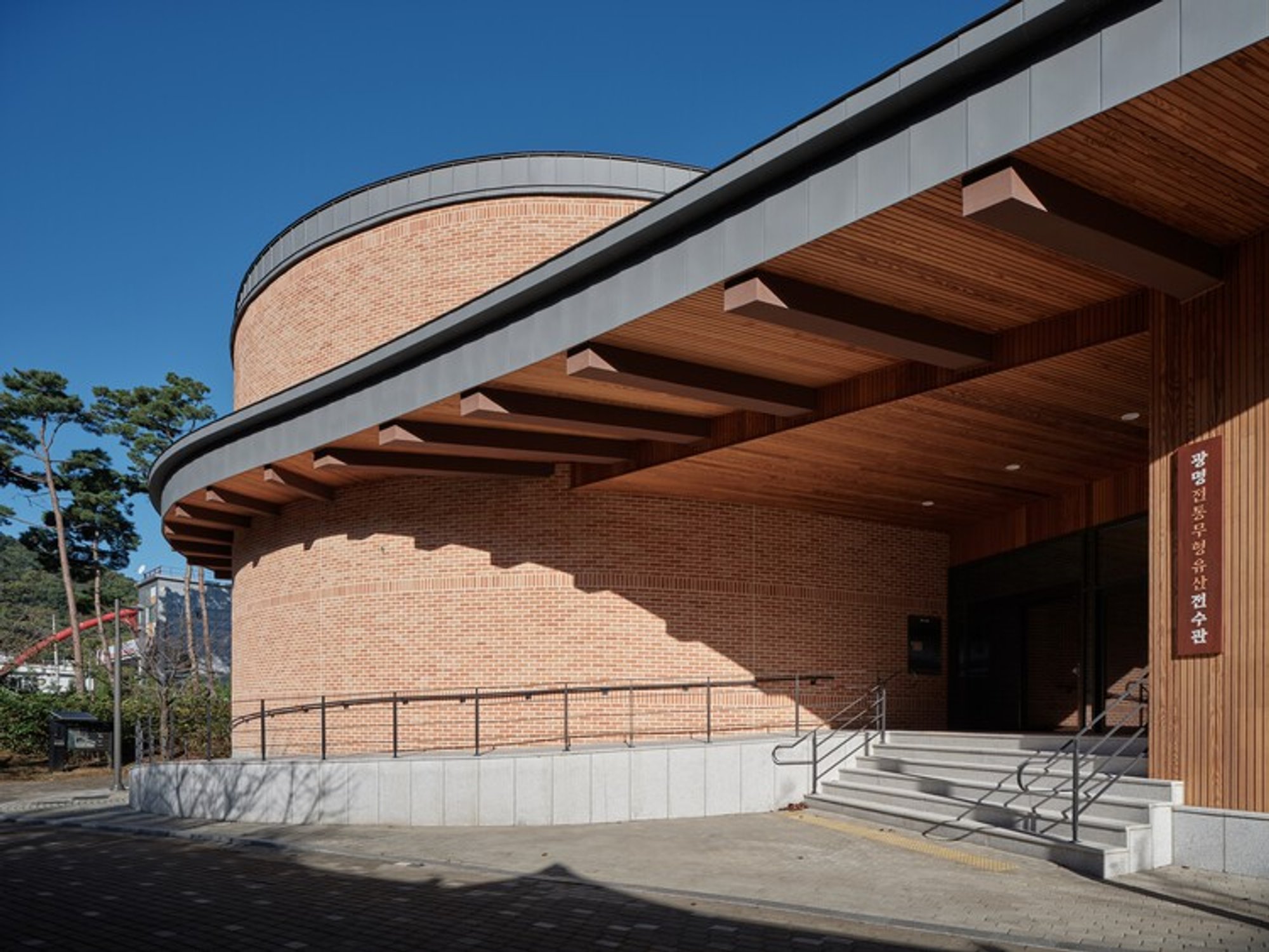
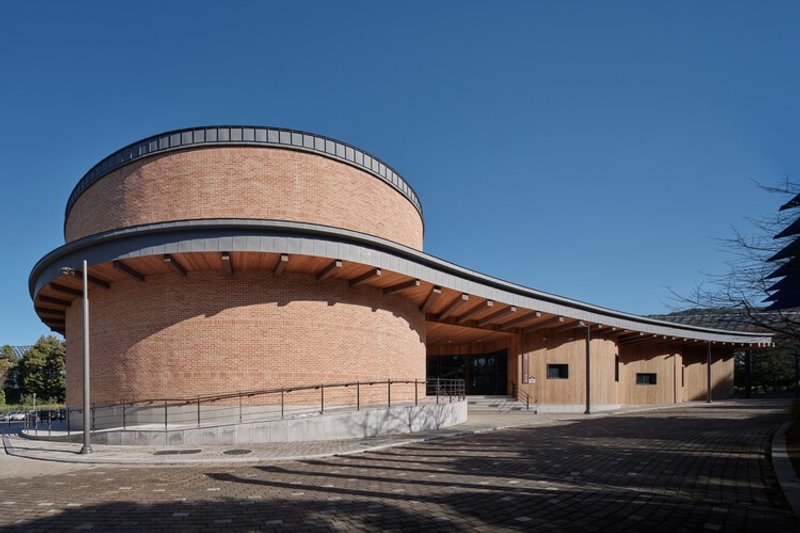
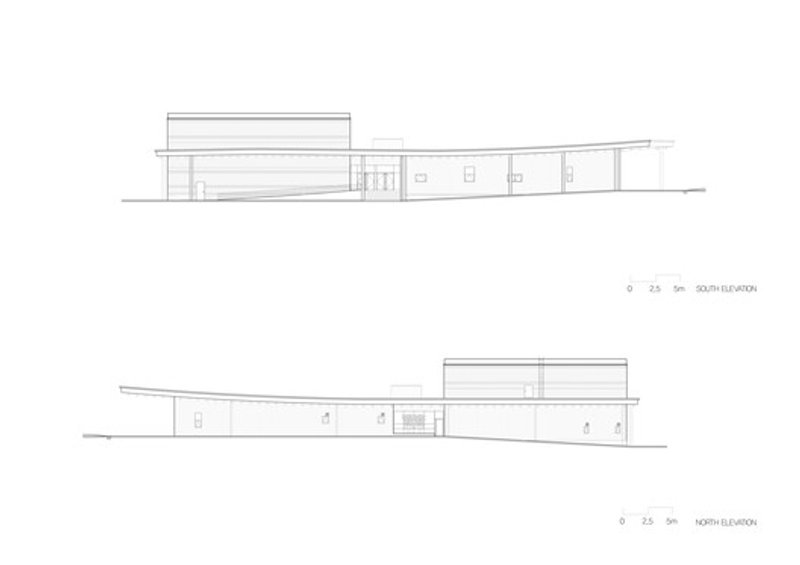
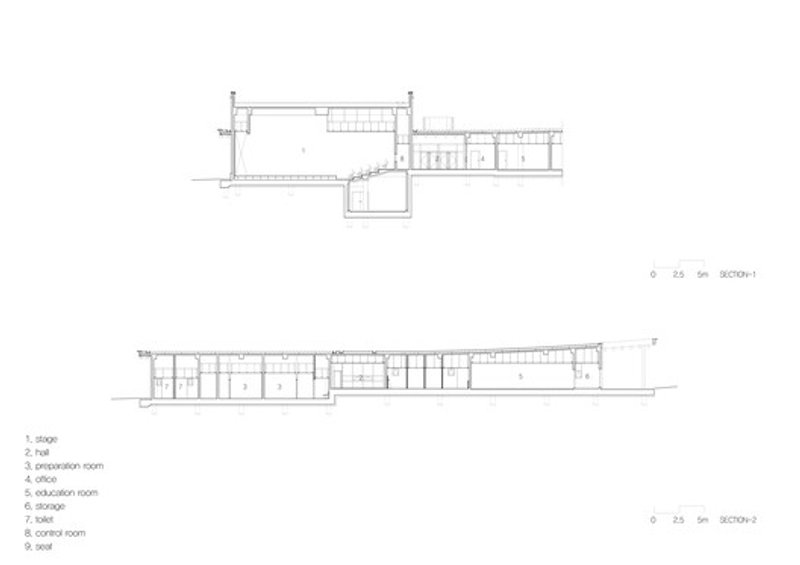
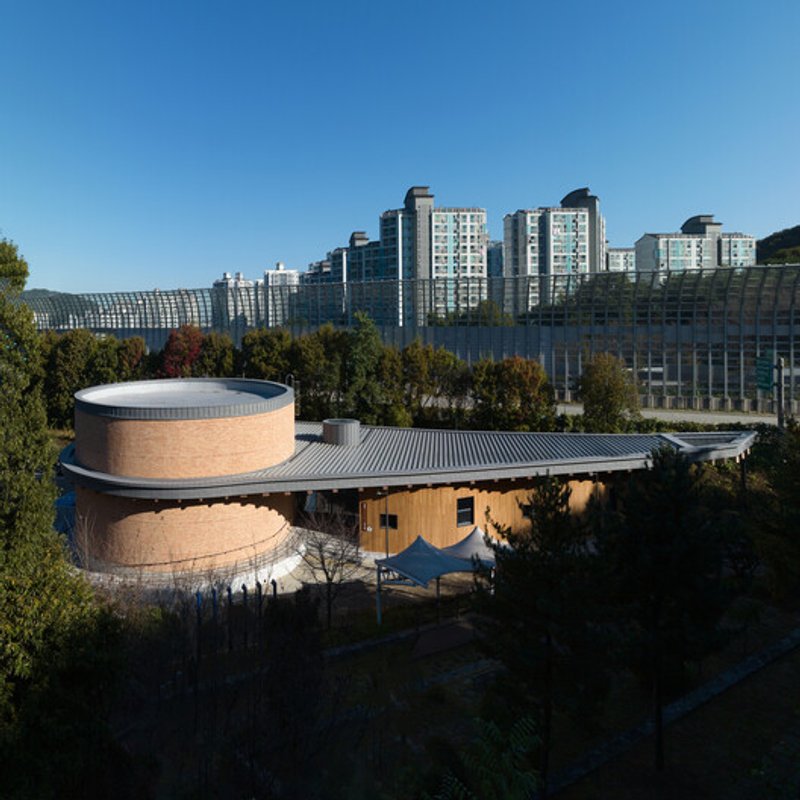
The building plan stretches horizontally across the site, its elongated form maximizing perimeter exposure while maintaining a compact footprint. The performance hall occupies the curved edge of the site—a strategic positioning that addresses multiple concerns simultaneously. The curve responds to the triangular site geometry, creates a distinctive profile that establishes the building's identity, and provides optimal acoustic geometry for the performance space within.
These sweeping curved rooflines and dynamic exterior walls are not arbitrary formal gestures but deliberate translations of performance into architectural language. They echo the swirling motion of the sangmo—the ribbon hat worn in Nongak performances whose long tassels create spectacular circular patterns as performers spin. The walls seem to capture mid-motion the very dances they will house, freezing kinetic energy in permanent form.
Structural Expression: Reinterpreting Tradition
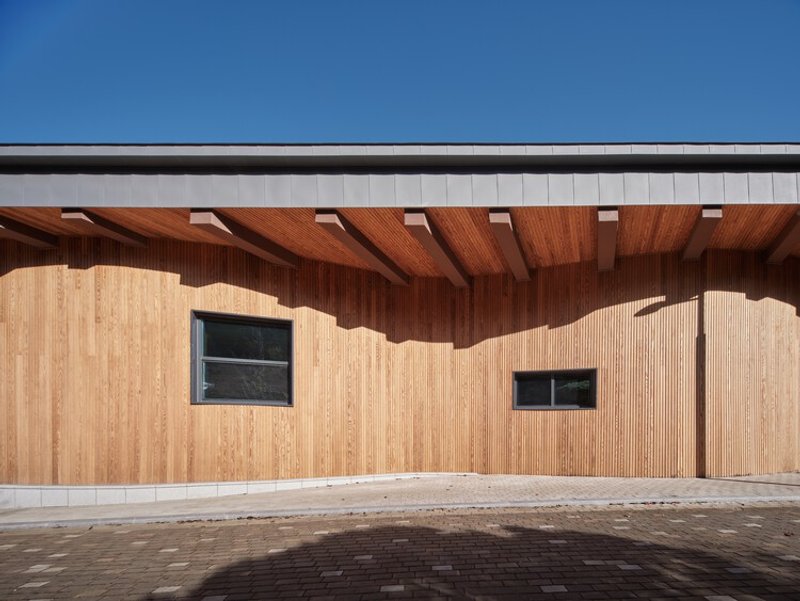
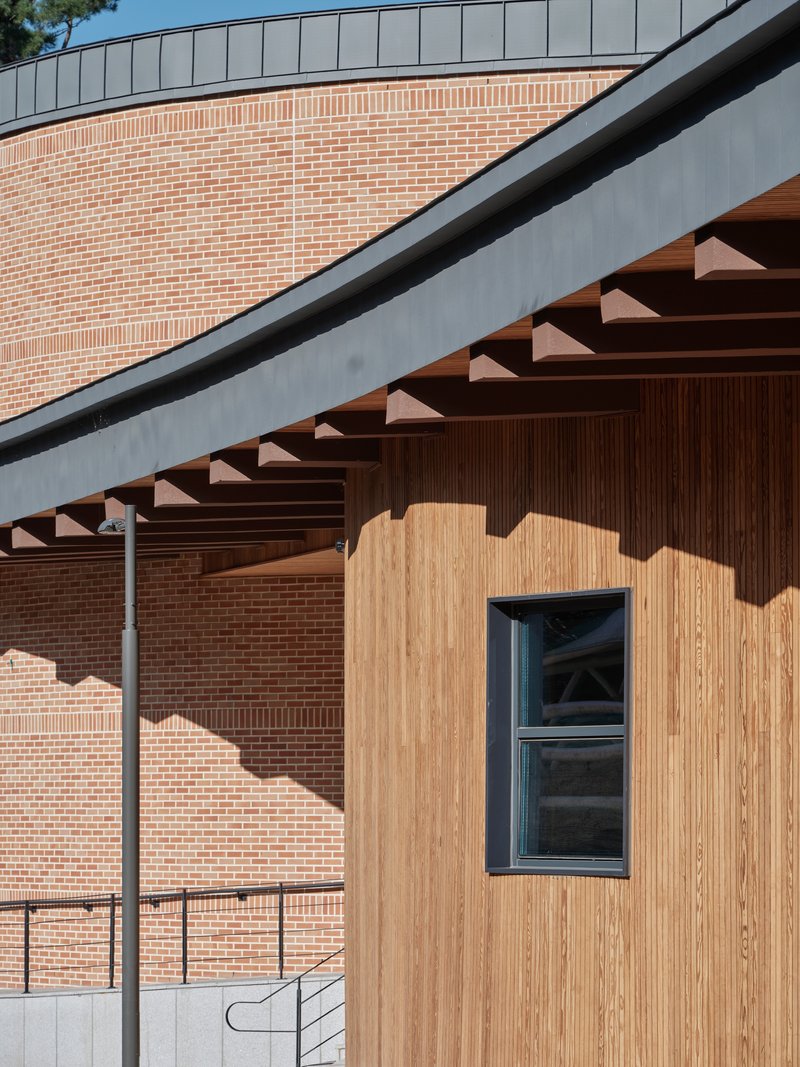
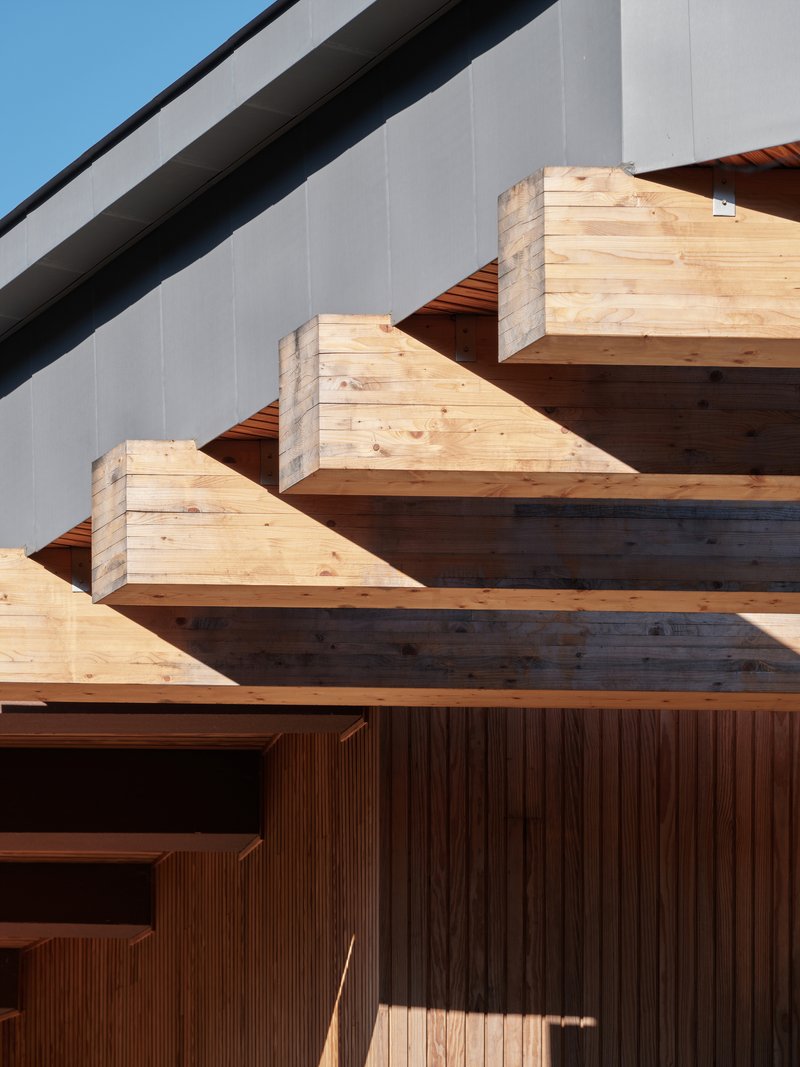
The exposed rafters visible beneath the generous roof overhangs constitute another layer of cultural reference. Traditional Korean wooden architecture—exemplified by temples, palaces, and aristocratic homes—features elaborate bracket systems (gongpo) and exposed structural timber that expresses both engineering logic and aesthetic refinement. GAGAHOHO Architects reinterpret this structural expressiveness through contemporary means, revealing rather than concealing how the building is made while establishing visual continuity with historical precedent.
This approach honors the spirit rather than the letter of tradition. The rafters employ modern materials and engineering, yet their rhythmic repetition and honest expression of structural function resonate with Korean architectural values refined over centuries.
Material Strategy: Time, Transformation, and Connection
Carbonized Wood: The Primary Envelope
The exterior cladding employs carbonized wood—a material choice that operates on multiple levels simultaneously. Carbonization—the controlled charring of wood surfaces—dramatically enhances durability and weather resistance through a traditional Japanese technique called Shou Sugi Ban. The process also imparts a distinctive dark coloration and rich surface texture that sets the building apart from its surroundings.
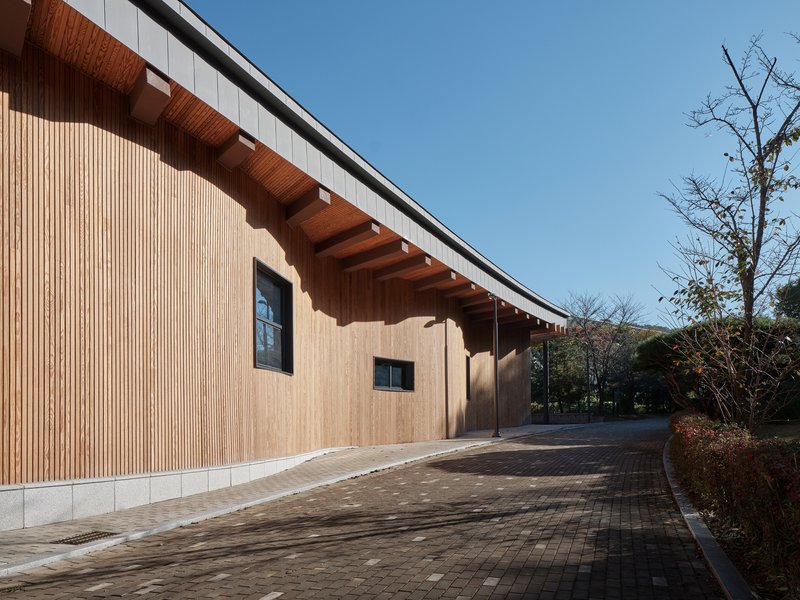
More importantly for this project, carbonized wood transforms over time. As it weathers and ages, the initial dark tones gradually shift toward a silvery-gray patina—a subtle evolution that embodies Korean aesthetic values of impermanence, natural aging, and quiet dignity. The building will not remain static but will mature alongside the traditions it houses, its changing appearance marking the passage of time much as the intangible heritage itself evolves through successive generations of practitioners.
The use of the same material both inside and outside creates a seamless connection between interior space, exterior form, and surrounding landscape. Moving through the building, visitors experience material continuity that dissolves the conventional separation between inside and outside, suggesting that cultural practice similarly transcends artificial boundaries.
Exposed Brick: Grounding in Local Identity
While carbonized wood dominates the exterior and most interior spaces, the performance hall features a contrasting finish: exposed brick. This deliberate material shift serves specific purposes. Acoustically, the masonry mass provides superior sound isolation and desirable acoustic properties for musical performance. Aesthetically, the brick references the material palette of Gwangmyeong Art Center, another significant cultural facility in the city.
This material reference creates architectural dialogue between civic cultural buildings, reinforcing Gwangmyeong's evolving architectural identity. Just as the intangible heritage connects present to past, the material choices connect this new building to its broader urban context, suggesting that architecture participates in networks of meaning that extend beyond individual projects.
Living Walls: Integration Through Growth
The architects anticipate that over time, vines will climb the exterior brick walls—a process of biological colonization that will further soften the structure and integrate it into the park setting. This patient approach to landscape integration acknowledges that architecture achieves its fullest realization not at completion but through years of habitation, weathering, and organic growth. The building is designed not as a finished object but as a framework for ongoing transformation.
Spatial Organization: Orchestrating Cultural Encounter
The Central Atrium: Heart of the Building
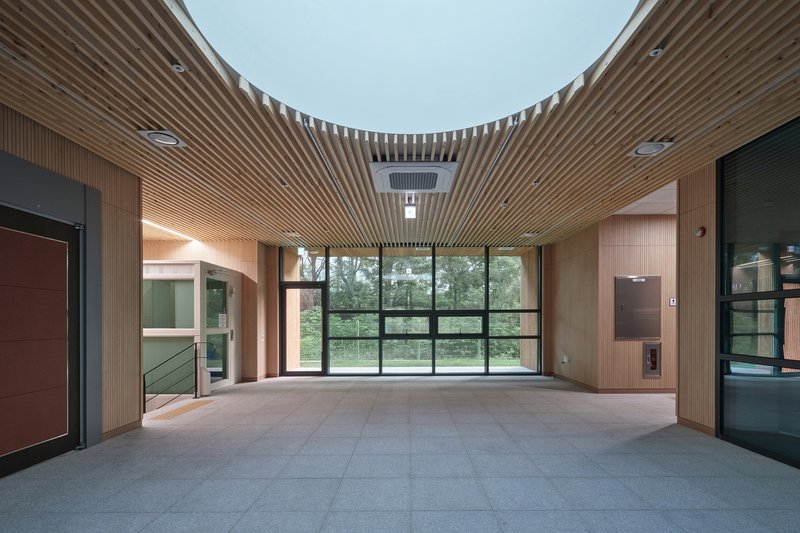
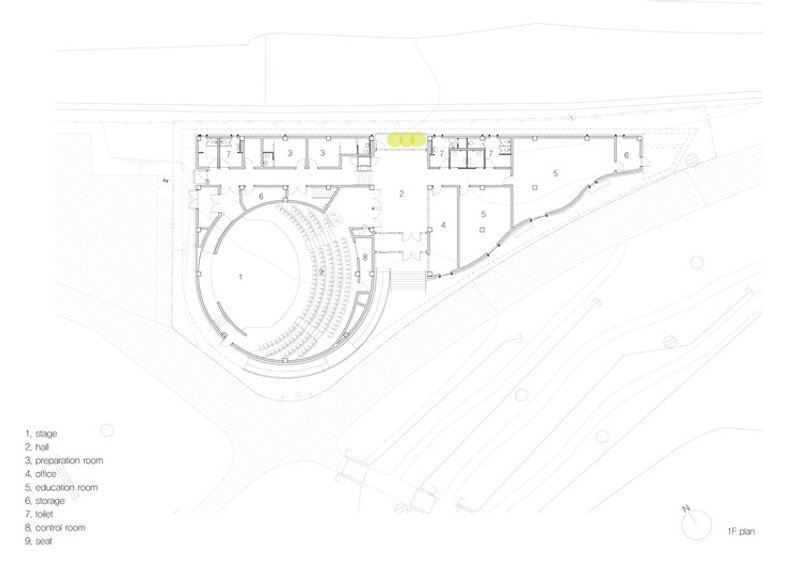
At the building's center lies an atrium that serves as organizational and experiential heart. This central void allows natural light to penetrate deep into the plan while creating spatial orientation for visitors who might otherwise find themselves disoriented in an unfamiliar building. The atrium operates as a social condenser—a space where performers, students, staff, and visitors naturally encounter one another, fostering the informal exchanges that sustain cultural community.
Functional Distribution
The spatial organization flanks this central atrium with clearly differentiated functional zones. To the left lie the performance hall and associated waiting rooms—spaces dedicated to public presentation and the focused preparation it requires. To the right are located the rehearsal room, educational spaces, and administrative offices—the working heart of the building where daily training, teaching, and organizational operations occur.
This organizational clarity serves multiple purposes. It allows different activities to occur simultaneously without interference—a public performance can proceed while students practice in rehearsal rooms and staff conduct administrative work. It also enables phased operation, allowing portions of the building to remain open or closed as needed, improving operational efficiency and security.
The Performance Hall: Intimate Encounter
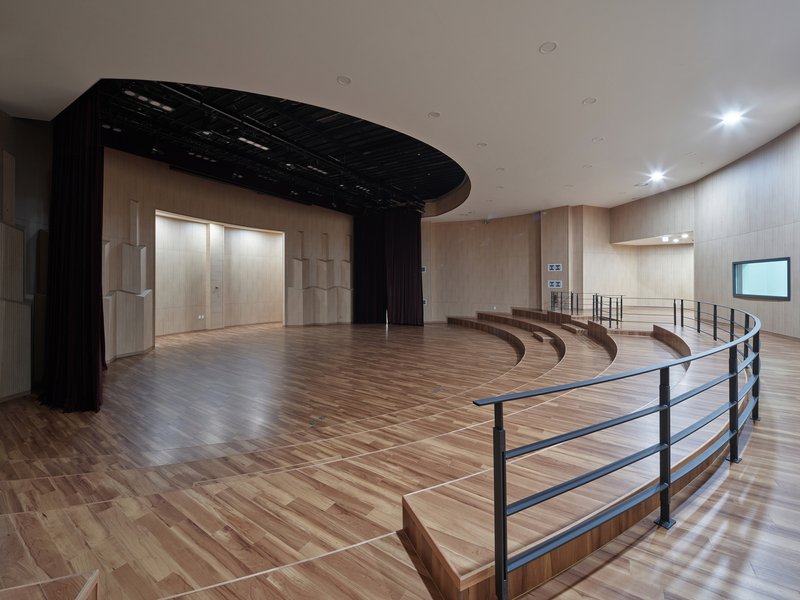
The 150-seat auditorium represents the building's programmatic centerpiece—the space for which all other functions exist in support. Intimacy guided the hall's design. The compact, semi-circular stage configuration brings performers and audiences into close proximity, fostering the vibrant connection essential to traditional performance.
In Nongak and Seodo Songs, the relationship between performer and audience differs fundamentally from Western concert hall traditions. These are not performances to be observed from detached distance but experiences to be shared, where audience energy feeds performer enthusiasm in reciprocal amplification. The hall's geometry acknowledges this by eliminating hierarchical separation between stage and seating, creating instead a unified volume that encourages collective participation.
Natural Light: The Central Skylight
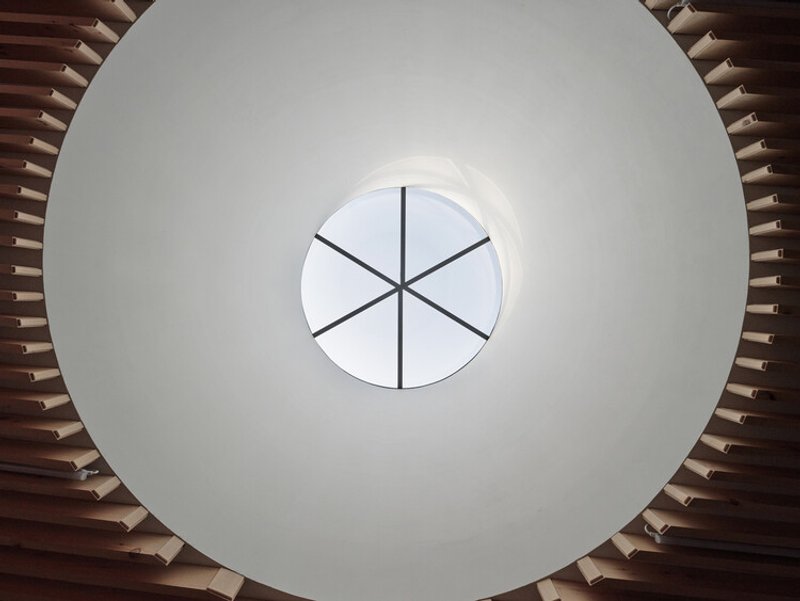
A large circular skylight positioned at the atrium's center bathes the interior in natural light, creating openness and dramatic spatial relationships despite the building's limited footprint. This skylight serves practical purposes—reducing artificial lighting needs, improving wayfinding through the clear establishment of spatial hierarchy, and providing biophilic connection to natural rhythms of day and weather.
It also carries symbolic weight. The circle—a fundamental form in Korean cosmology and aesthetics—suggests completeness, continuity, and the cyclical nature of tradition. Light descending from above might recall theatrical spotlights or divine illumination, metaphorically blessing the cultural work conducted below.
Acoustic Design: Serving Sound and Silence
Though not extensively detailed in the project description, the acoustic design of a facility dedicated to musical performance and education demands sophisticated attention. Several strategies evident in the project address these concerns:
Spatial Configuration: The performance hall's curved walls help distribute sound evenly throughout the space while avoiding problematic acoustic reflections that rectangular geometries can produce.
Material Selection: The exposed brick finish in the performance hall provides desirable acoustic mass and diffusion characteristics that enhance musical clarity and warmth.
Isolation: The building's relationship to the noisy expressway required careful attention to sound isolation—likely involving acoustic insulation in walls and roof, specialized glazing, and the creation of acoustic buffer zones between exterior and interior.
Volume and Proportion: The hall's relatively compact size and careful dimensional proportioning ensure that unamplified traditional music and voice can be clearly heard throughout the audience area without electronic reinforcement.
These acoustic considerations, while technically demanding, remain largely invisible to casual observers—appropriately, since effective acoustic design should be heard, not seen.
Circulation and Experience: The Journey Through Culture
The experience of visiting the Center for Intangible Cultural Heritage unfolds as a carefully choreographed sequence:
Approach: Visitors arrive via the poetry trail, moving through the forested park environment while encountering literary works that prepare them for cultural engagement.
Threshold: The connection between trail and building entry creates a transitional zone—neither fully landscape nor fully architecture—where the shift from natural to cultural space begins.
Entry and Orientation: Upon entering, the central atrium immediately orients visitors, with sight lines and material cues indicating the locations of different functional areas.
Dispersion: From the atrium, visitors move toward their intended destinations—the performance hall for audiences, rehearsal rooms for students, offices for administrative purposes.
Encounter: Within each space, the architecture creates appropriate conditions for its intended use—intimate performance, focused practice, efficient administration.
Return: After their cultural engagement, visitors retrace their path through the atrium and back to the park, carrying their experience back into the broader landscape.
This circulatory sequence transforms a simple visit into a ritual—a structured progression from everyday life into cultural space and back again, marked by architectural thresholds that acknowledge the significance of cultural encounter.
Sustainability and Longevity: Building for Continuity
While the project description does not extensively discuss environmental performance, several design features suggest attention to sustainable operation:
Natural Ventilation: The atrium and building configuration likely enable natural ventilation strategies that reduce mechanical cooling needs.
Daylighting: The central skylight and generous glazing reduce artificial lighting requirements during daytime operation.
Durable Materials: Carbonized wood and exposed brick both offer exceptional longevity with minimal maintenance, reducing lifecycle costs and resource consumption.
Adaptive Capacity: The clear spatial organization and flexible programming allow the building to accommodate evolving uses over time without requiring major structural modification.
Landscape Integration: The seamless connection with the park and encouragement of vine growth promote biodiversity and ecological connectivity rather than creating isolated building sites.
Perhaps most importantly from a sustainability perspective, the building serves cultural sustainability—the preservation and transmission of knowledge, practices, and values that constitute intangible heritage. In this sense, the building's greatest environmental contribution may be fostering cultural continuity that connects communities to place, tradition, and identity in ways that resist the homogenizing pressures of globalization.
Cultural Transmission: Architecture as Pedagogical Tool
The center functions simultaneously as performance venue, educational facility, and community gathering place—a multiplicity of roles that reflects the complex nature of cultural transmission in contemporary society.
Performance Function: Public performances introduce broader audiences to traditional arts, potentially inspiring interest and appreciation among those unfamiliar with these practices.
Educational Function: Dedicated instructional spaces allow recognized masters to teach students, ensuring direct transmission of knowledge and technique from one generation to the next.
Community Function: The building serves as gathering place where practitioners, students, enthusiasts, and curious visitors encounter one another, creating social networks that sustain cultural practice beyond formal instruction.
The architecture supports all these functions not through specialized gadgetry but through fundamentally good spatial design—appropriate room sizes, beneficial acoustic properties, comfortable environmental conditions, and gracious circulation that brings people together.
Architectural Precedents and Influences
The Center for Intangible Cultural Heritage participates in several architectural lineages:
Korean Modernism: The project reflects the sophisticated contemporary architecture emerging from South Korea in recent decades—work that engages seriously with cultural context while employing contemporary materials and construction methods without pastiche.
Cultural Buildings as Contemporary Monuments: The center joins a global tradition of cultural facilities designed to house and celebrate specific traditional practices, from concert halls to museums to community centers.
Material Expressionism: The honest expression of materials and structure connects to broader trends in contemporary architecture that value authenticity and tectonic clarity over applied decoration.
Landscape Integration: The seamless connection between building and park reflects growing architectural attention to dissolving boundaries between built and natural environments.
The Spirit of Festivity: "Ehe-ra Manseonida!"
The phrase "Ehe-ra Manseonida!" appears in the project description—a traditional exclamation used in Nongak performances that roughly translates to expressions of joy, abundance, and celebratory welcome. This phrase captures the spirit the architects hope to cultivate within their building.
The beauty that has endured through generations resides deeply within intangible traditions—in the melodies of Seodo songs that express life's joys and sorrows, in the exuberant rhythms of Nongak that embody agricultural celebration, in the communal practices that bind individuals into communities. These traditions exist not in objects but in living practice, in bodies that move and voices that sing, in skills passed from teacher to student through patient demonstration and attentive observation.
It is, as the architects note, our shared responsibility to preserve and pass on these traditions. The Gwangmyeong Center for Intangible Cultural Heritage aspires to be a place where people can feel, learn, and celebrate the timeless values embedded in tradition—a space filled with energy, brightness, and abundance, like a boat returning home laden with a full catch.
Reception and Impact
Since opening in August 2024, the center has begun fulfilling its mission. The stage now hosts vibrant performances of Gwangmyeong Nongak and Seodo Songs. Students gather in rehearsal rooms to learn from recognized masters. Visitors from throughout the region come to experience traditional performances in purpose-built surroundings.
The building has become more than a facility—it has become a symbol of Gwangmyeong's commitment to cultural preservation and a gathering place where tradition and community intersect. Its presence within the park creates new patterns of cultural engagement, drawing diverse audiences into encounter with practices they might not otherwise experience.
All the Photographs are works of Han-ul, Lee, Narcillion




Popular Articles
Popular articles from the community


The Ken Roberts Memorial Delineation Competition (Krob)
As the most senior architectural drawing competition currently in operation anywhere in the world, it draws hundreds of entries each year, awarding the very best submissions in a series of medium-based categories.

A Contemporary Take on Iranian Residential Architecture
A modern interior design in Mashhad that reinterprets brick, light, and spatial flow to create a warm, contemporary residential architecture.
Atelier Macri Concept Store Interior Design by CASE-REAL
Atelier Macri store features a "ko" counter, walnut wood details, cork displays, blending retail, gallery, and seamless customer experiences.
An Miên Lumière Cafe by xưởng xép, Ho Chi Minh City, Vietnam
An industrial-inspired café where layered steel and warm light create a dynamic, immersive environment shaped by reflection, depth, and perception.

Similar Reads
You might also enjoy these articles
The Ken Roberts Memorial Delineation Competition (Krob)
As the most senior architectural drawing competition currently in operation anywhere in the world, it draws hundreds of entries each year, awarding the very best submissions in a series of medium-based categories.


Waterfront Redevelopment and Urban Revitalization in Mumbai: Forging a New Dawn for Darukhana
A transformative waterfront redevelopment project reimagining Darukhana’s shipbreaking heritage into an inclusive urban future.

OUT-OF-MAP: A Call for Postcards on Feminist Narratives of Public Space
Rhizoma Design and Research Lab invites artists, designers, architects, researchers, and students to reflect on how feminist perspectives can reshape public space. Selected works will be exhibited in Barcelona, October 2026. Submissions open until 15 April 2026.


Documentation Work on Buddhist Wooden Temple
Architectural syncretism and cultural hybridity: A comparative study of the Buddhist temples in Chattogram Hill tracks

Explore Architecture Competitions
Discover active competitions in this discipline




The International Standard for Design Portfolios


The Global Benchmark for Architecture Dissertation Awards


The Global Benchmark for Graduation Excellence

Challenge to design an urban locus of culture and heritage
Comments (0)
Please login or sign up to add comments
No comments yet. Be the first to comment!