
City Fields: Integrating Sustainable Architecture with Urban Agriculture
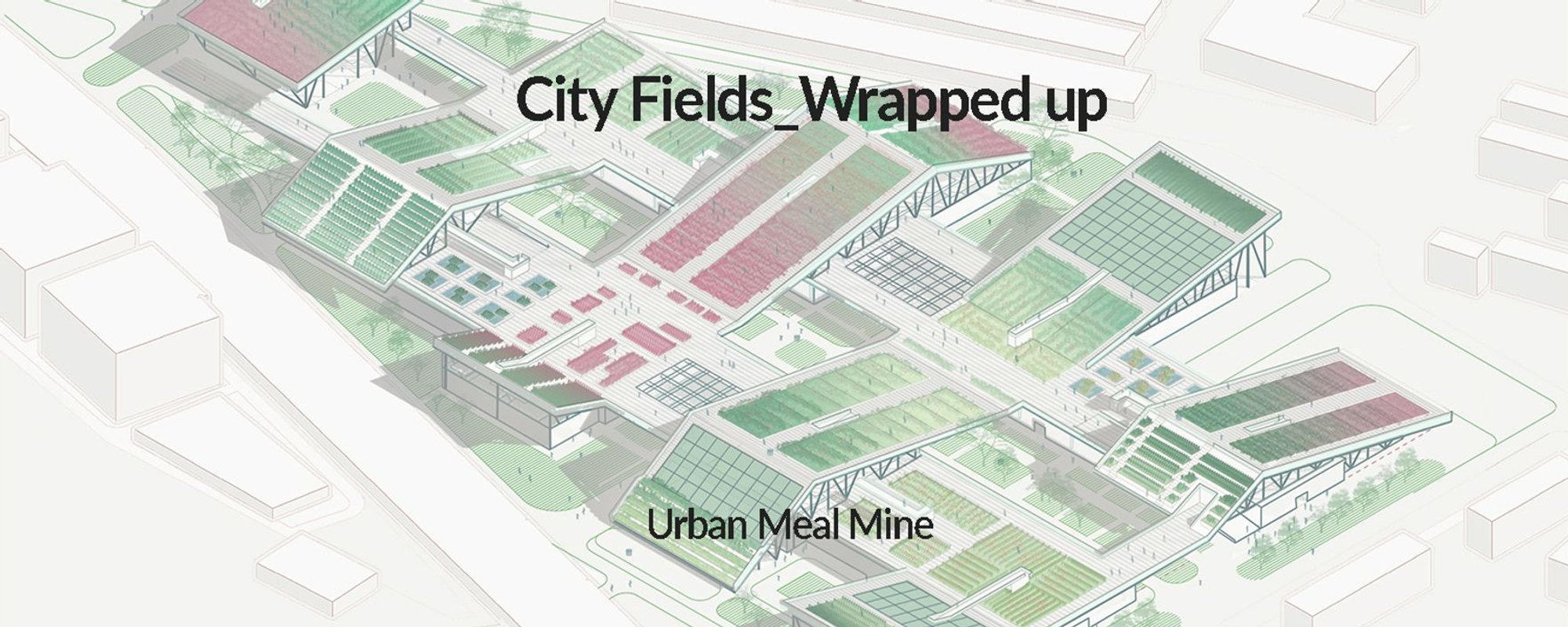
City Fields blends landscape and urban design into a sustainable architecture model, uniting farms, markets, and public spaces.

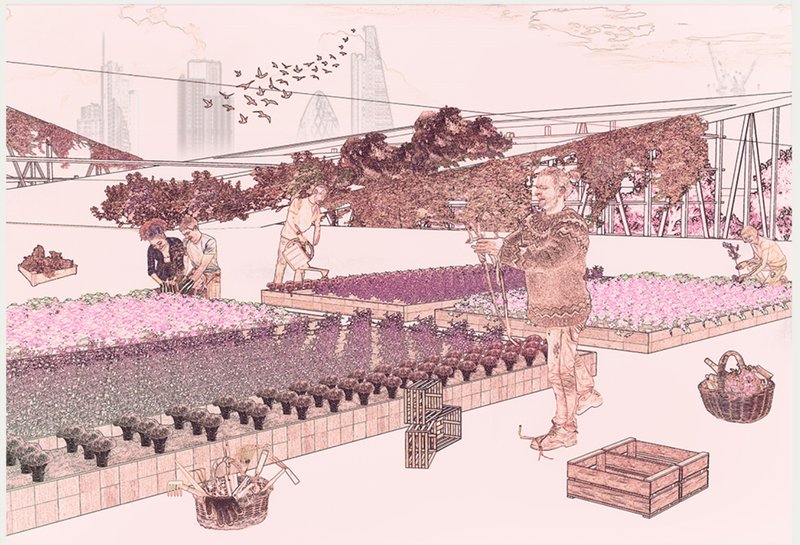
The project City Fields_wrapped up reimagines the role of sustainable architecture in reshaping urban environments. By embedding landscape principles into dense city fabrics, it transforms underutilized urban land into a thriving ecosystem of fields, markets, and public hubs. Designed by Marina Mihailovic, Kristina Verušeski, and Jelena Z, this concept was awarded an Honorable Mention in the Urban Meal Mine competition.
Rethinking Urban Space through Architecture
Cities today struggle with rapid urbanization, fragmented public space, and food insecurity. City Fields addresses these issues by merging agricultural production, marketplaces, workshops, and communal gathering areas within a single, holistic architecture framework. This integration allows the city to function as both a producer and consumer of resources, reducing dependence on external food supply chains while reinforcing community bonds.
A Productive Ecosystem
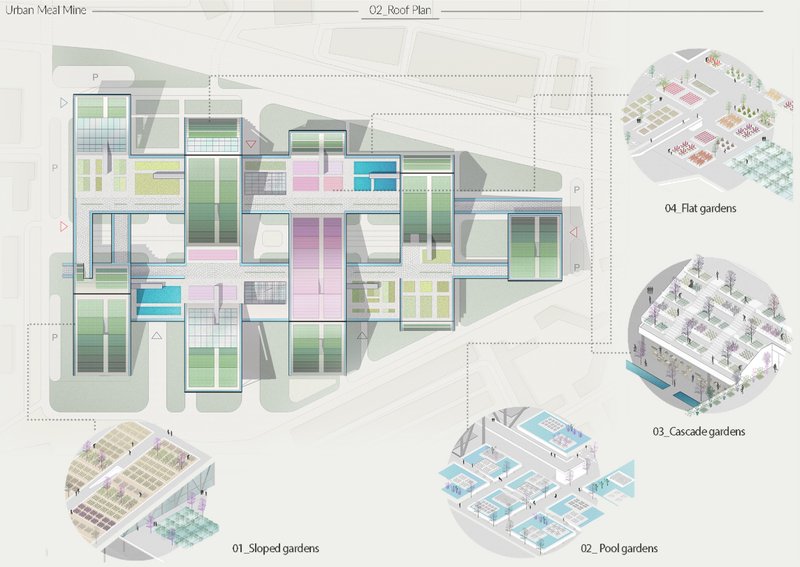
The architectural strategy is grounded in creating a self-sustaining urban ecosystem. The design integrates:
- Sloped gardens and rooftop farms that transform building surfaces into fertile agricultural zones.
- Public workshops and hubs where knowledge sharing and community participation strengthen local culture.
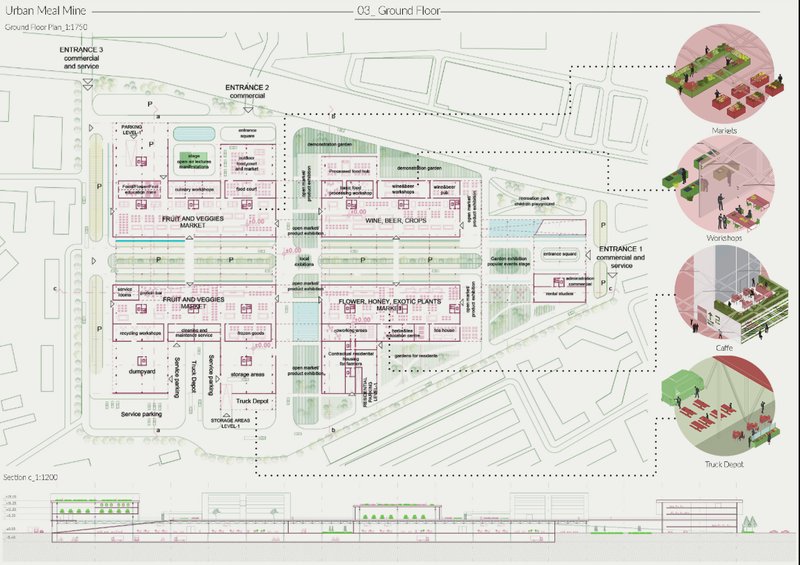
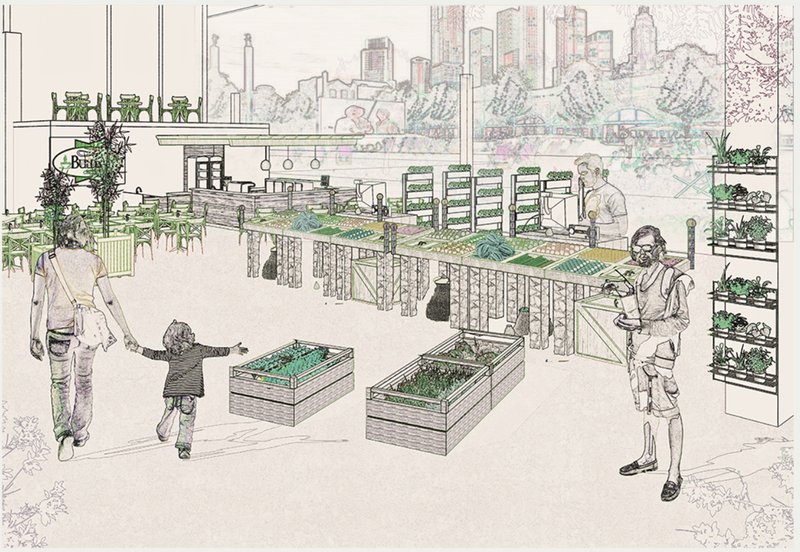
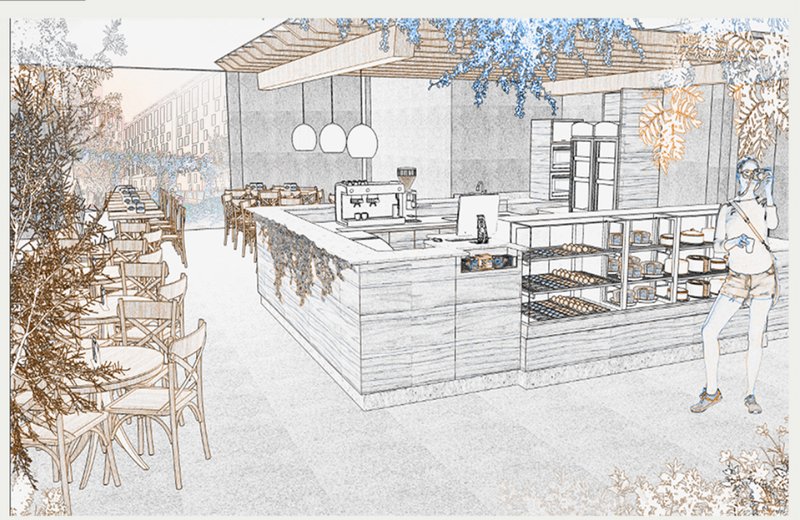
- Markets and cafés that connect food production directly with consumption, minimizing waste and transport.
- Aquaponic and hydroponic systems on upper floors, showcasing technological innovation in food growth.
This layered approach positions architecture not merely as shelter, but as an active agent in ecological and social sustainability.
Morphological and Functional Connectivity
One of the defining features of City Fields is its ability to forge new morphological and functional links within the city. By weaving agriculture into the built environment, the project creates continuity between fragmented urban districts. Roofs, gardens, and plazas overlap to generate multifunctional zones that serve both ecological and social needs.
The scheme emphasizes:
- Circulation systems that connect markets, farms, and recreational areas.
- Flexible urban modules adaptable to different city contexts.
- Community-driven spaces that prioritize inclusivity and education.
Sustainable Architecture for the Future
At its core, City Fields envisions a city that is resilient, adaptable, and self-sufficient. It demonstrates how architecture can balance productivity and livability, offering a model for future urban developments. By merging food production with social infrastructure, it ensures that sustainability is not an afterthought but a foundational principle.
The project stands as a visionary blueprint for cities seeking to reclaim agency over food, public space, and ecological health.
Honorable Mention – Urban Meal Mine Competition
Project by Marina Mihailovic, Kristina Verušeski, and Jelena Z




Popular Articles
Popular articles from the community

Atelier Macri Concept Store Interior Design by CASE-REAL
Atelier Macri store features a "ko" counter, walnut wood details, cork displays, blending retail, gallery, and seamless customer experiences.


The Ken Roberts Memorial Delineation Competition (Krob)
As the most senior architectural drawing competition currently in operation anywhere in the world, it draws hundreds of entries each year, awarding the very best submissions in a series of medium-based categories.
An Miên Lumière Cafe by xưởng xép, Ho Chi Minh City, Vietnam
An industrial-inspired café where layered steel and warm light create a dynamic, immersive environment shaped by reflection, depth, and perception.
A Contemporary Take on Iranian Residential Architecture
A modern interior design in Mashhad that reinterprets brick, light, and spatial flow to create a warm, contemporary residential architecture.


Similar Reads
You might also enjoy these articles

Top 15 Architecture Competitions to Enter in 2026
From student-friendly idea competitions to prestigious international awards, here are the best architecture competitions open for entries in 2026. Updated regularly.

DIY & Engineering in Computational Design : Enter the BeeGraphy Design Awards
Showcase Your Creativity with Computational Design and Open Source Projects
Innovative Design Solutions: Award-Winning Projects from Recent Architecture Competitions
Exploring award-winning architectural projects shaping the future of design, sustainability, and community.



Explore Educational Building Competitions
Discover active competitions in this discipline




The Global Benchmark for Architecture Dissertation Awards


Challenge to design public laboratory
Comments (0)
Please login or sign up to add comments
No comments yet. Be the first to comment!