
COFCO Qianhai Innovation Center: A Landmark of Sustainable Office Tower Architecture in Shenzhen
An architectural exploration of the COFCO Qianhai Innovation Center as a pioneering example of sustainable office tower design in Shenzhen.

A New Paradigm for Office Tower Design in China
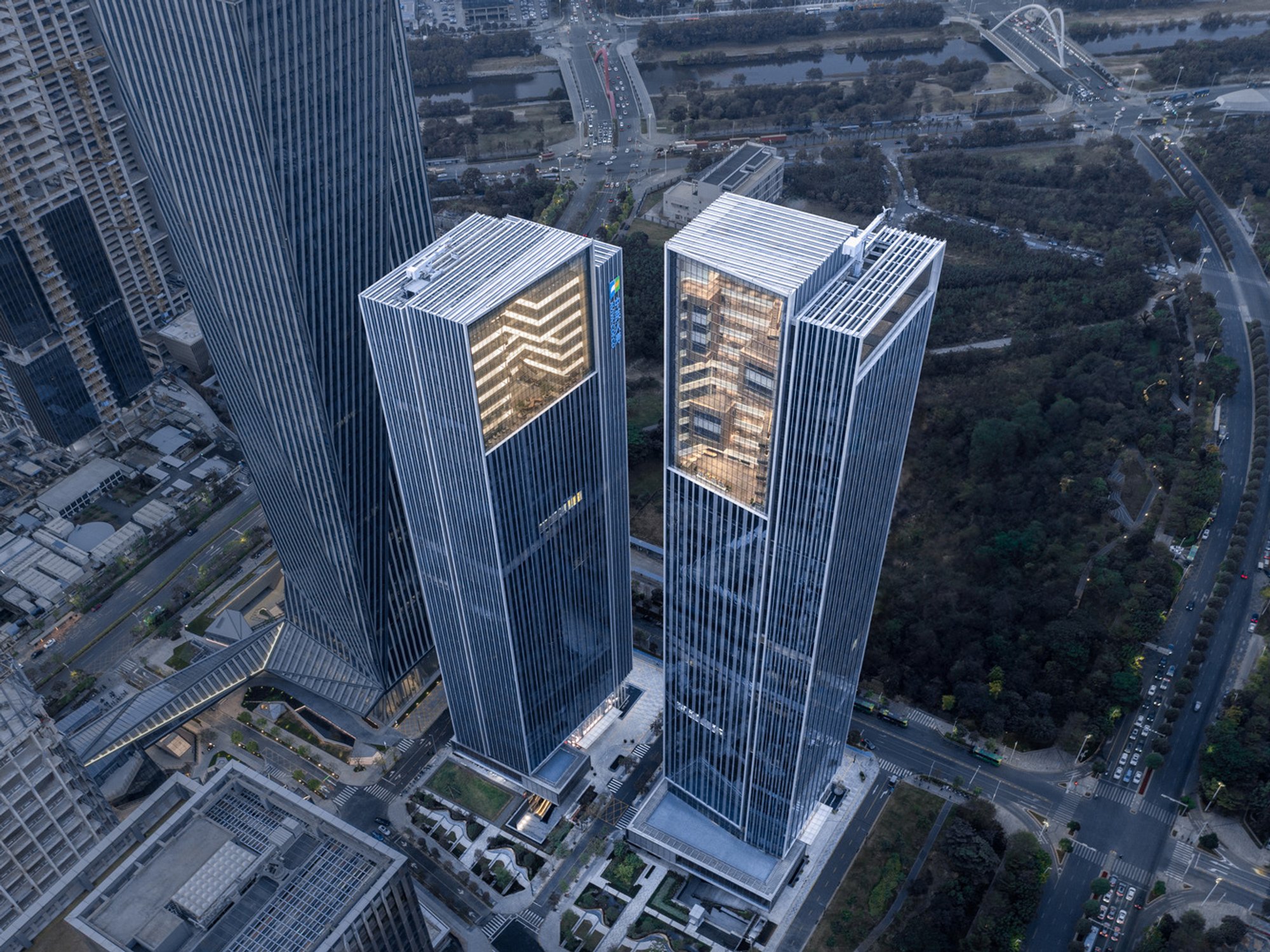
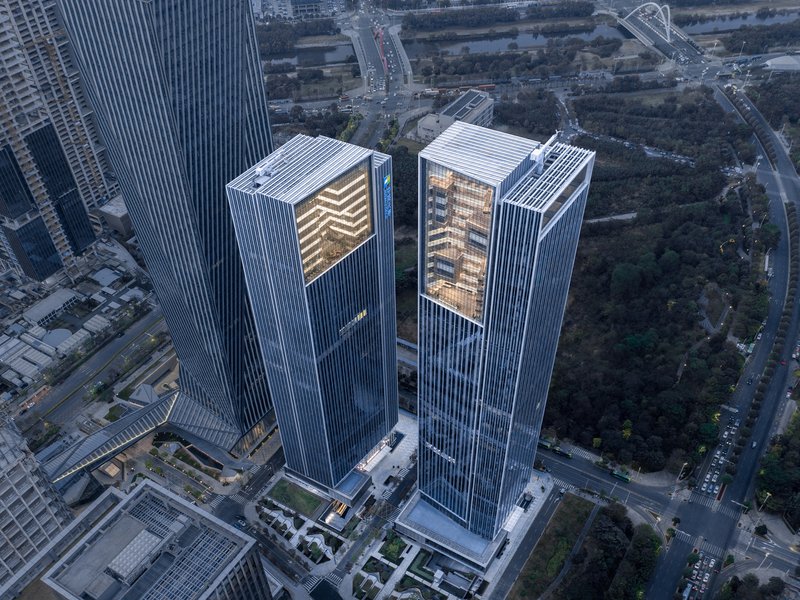
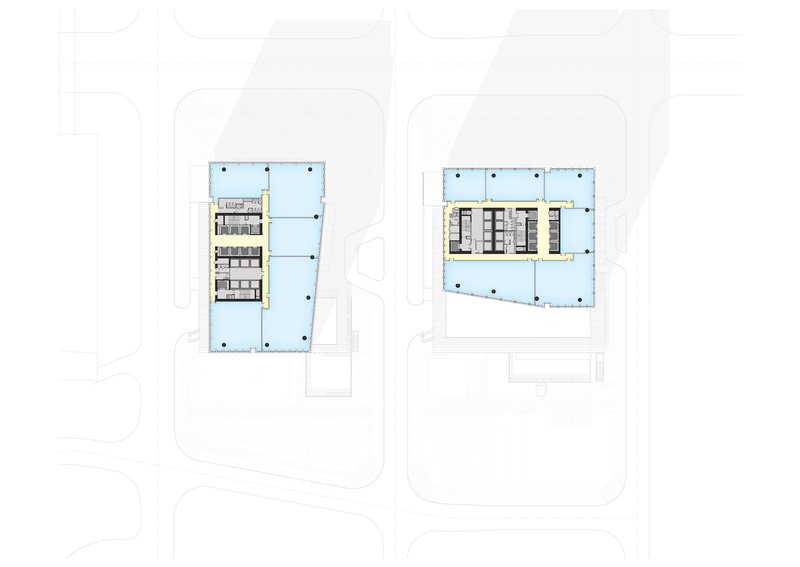
Located in Shenzhen, China, the COFCO Qianhai Innovation Center by Goettsch Partners is a pioneering office tower complex that redefines urban workspaces through the lens of sustainability, architectural innovation, and urban integration. This 190,000-square-meter development comprises two nearly identical towers, one rising to 200 meters and the other to 180 meters, serving as headquarters for COFCO Group and Aviva-COFCO Life Insurance. More than just high-rise buildings, these towers are conceived as “sky villages”—a visionary reinterpretation of the workplace that embraces openness, community, and environmental performance.
Architectural Identity Rooted in Shenzhen’s Urban Evolution
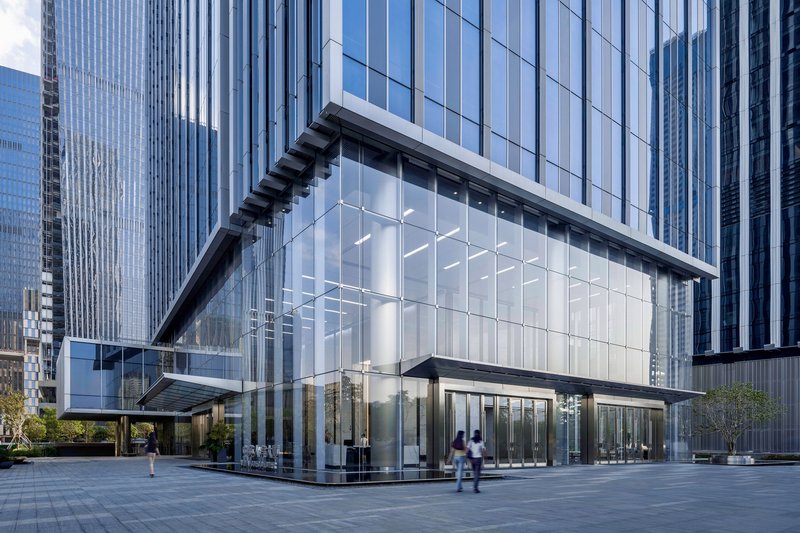
Drawing from the city’s rapid transformation from fishing village to global megacity, the design reflects the layered, organic density of Shenzhen’s historic urban villages. The towers are composed of three slender vertical masses. Their upper levels are carved back to form open-air sky terraces and atria, visually and spatially extending the buildings toward Qianhai Bay and an adjacent greenbelt.
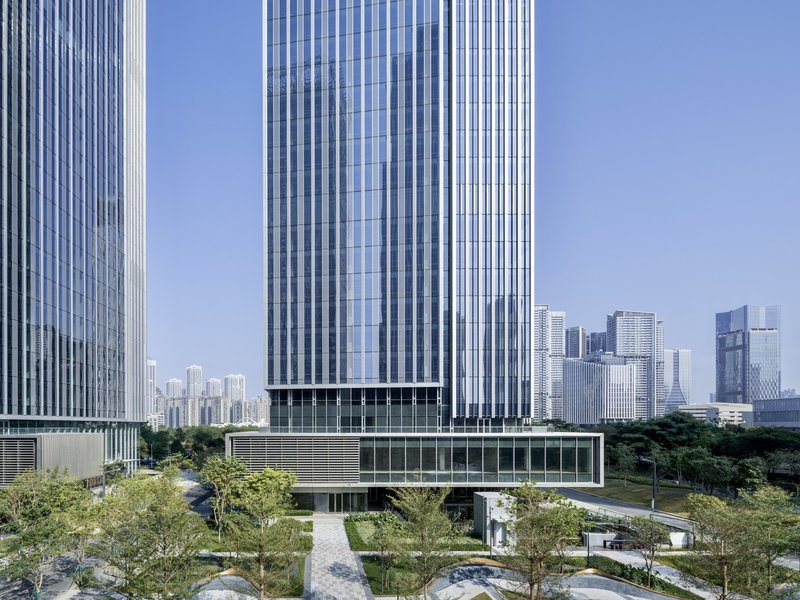
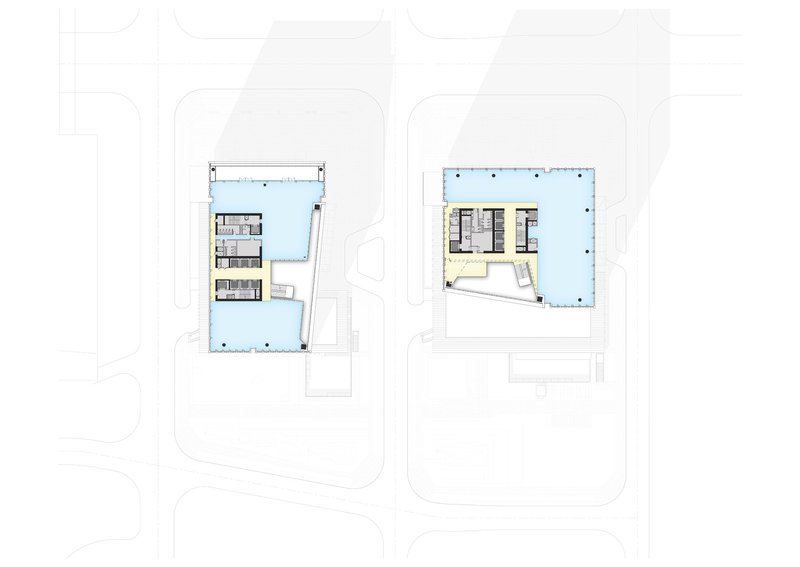
One edge of each tower is subtly tapered, expanding views toward the waterfront and maximizing daylight penetration. These subtle manipulations of form serve a dual purpose: providing each company with a unique spatial identity while maintaining harmony in the shared urban context.
The Sky Atrium: Where Transparency and Connectivity Converge
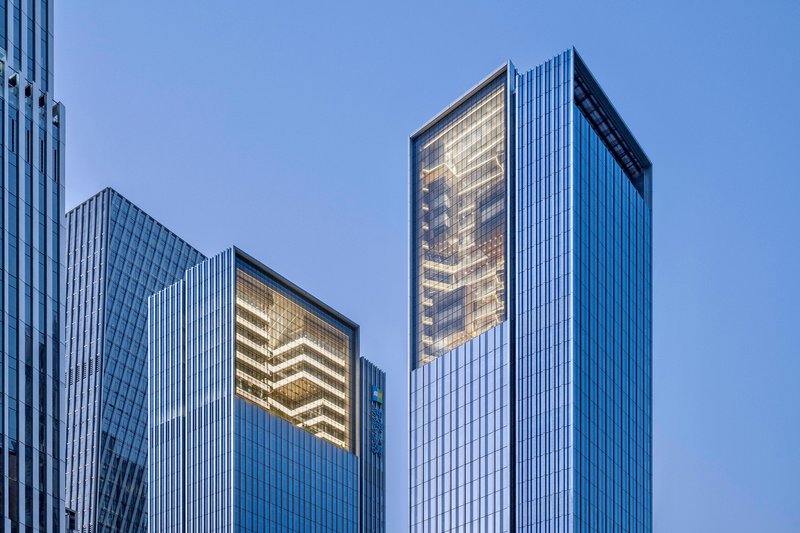
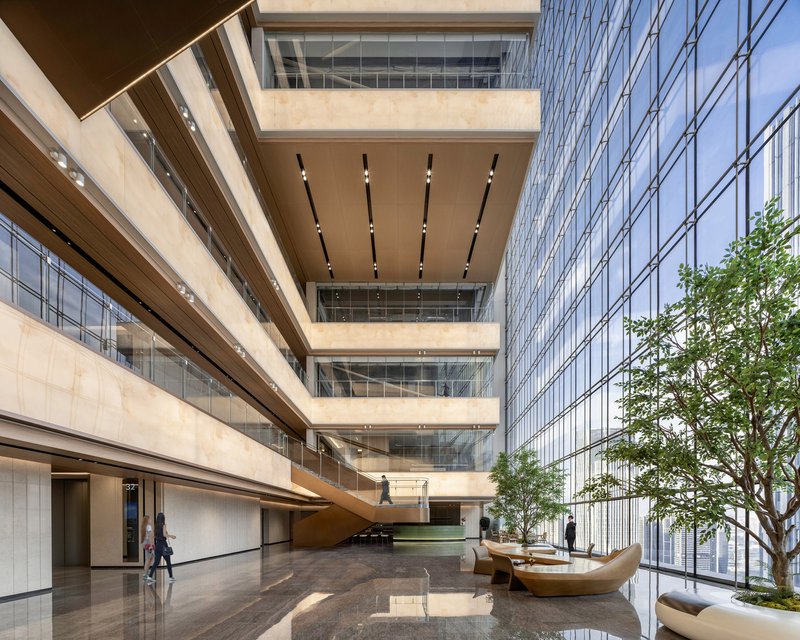
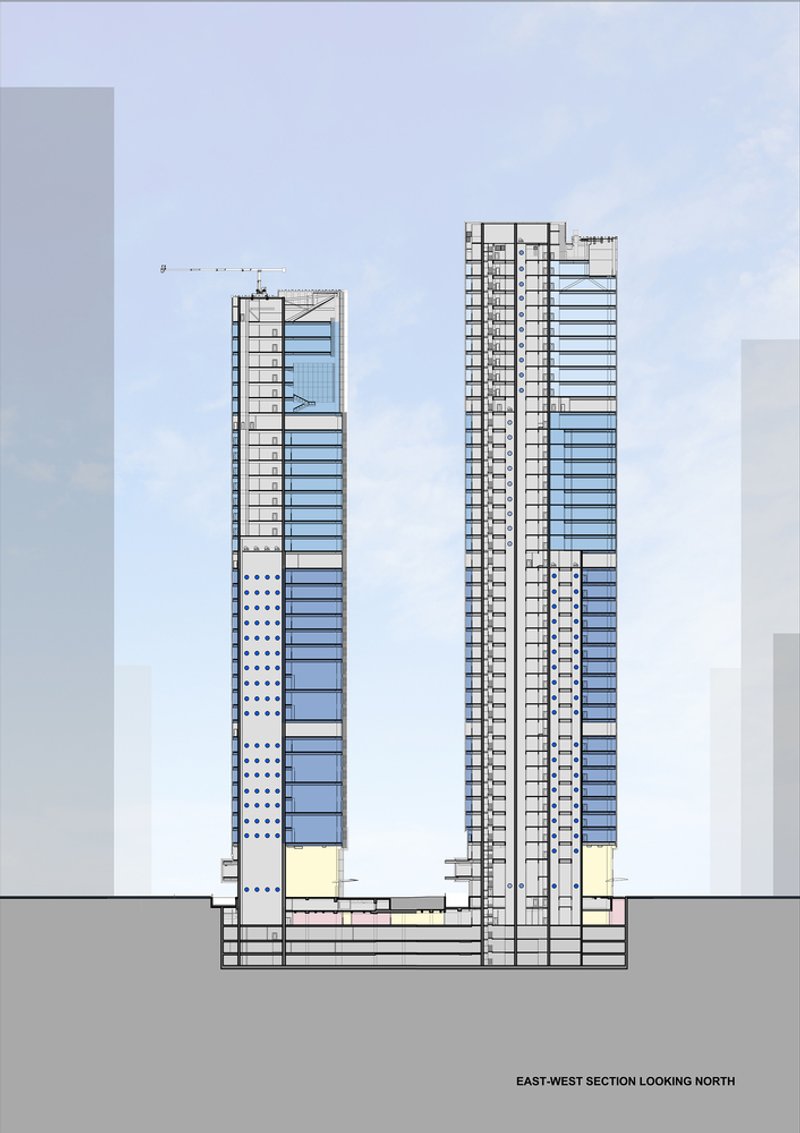
At the crown of each tower is a dramatic, glass-enclosed atrium—a multifunctional hub uniting the headquarters floors. Designed with open corridors, interconnecting staircases, and flexible meeting spaces, the atrium fosters both planned collaboration and spontaneous interaction. These spaces also serve as venues for large-scale corporate events.
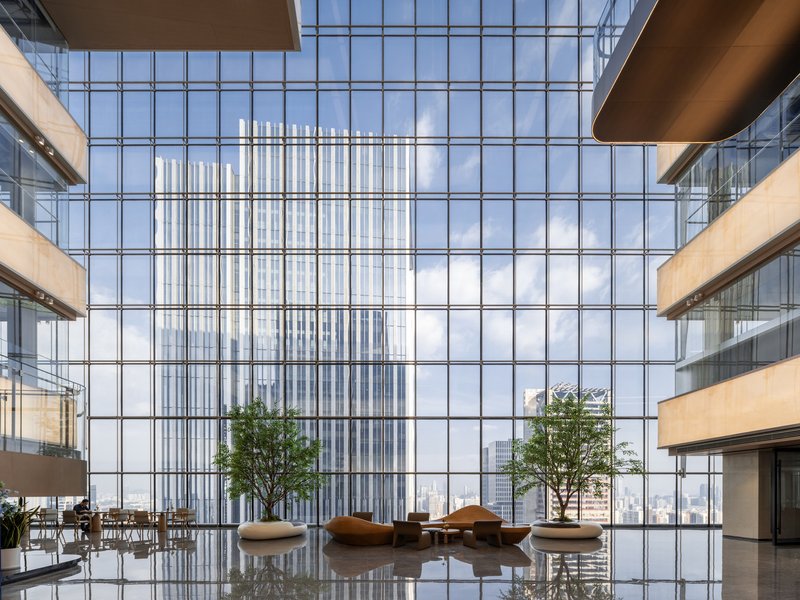
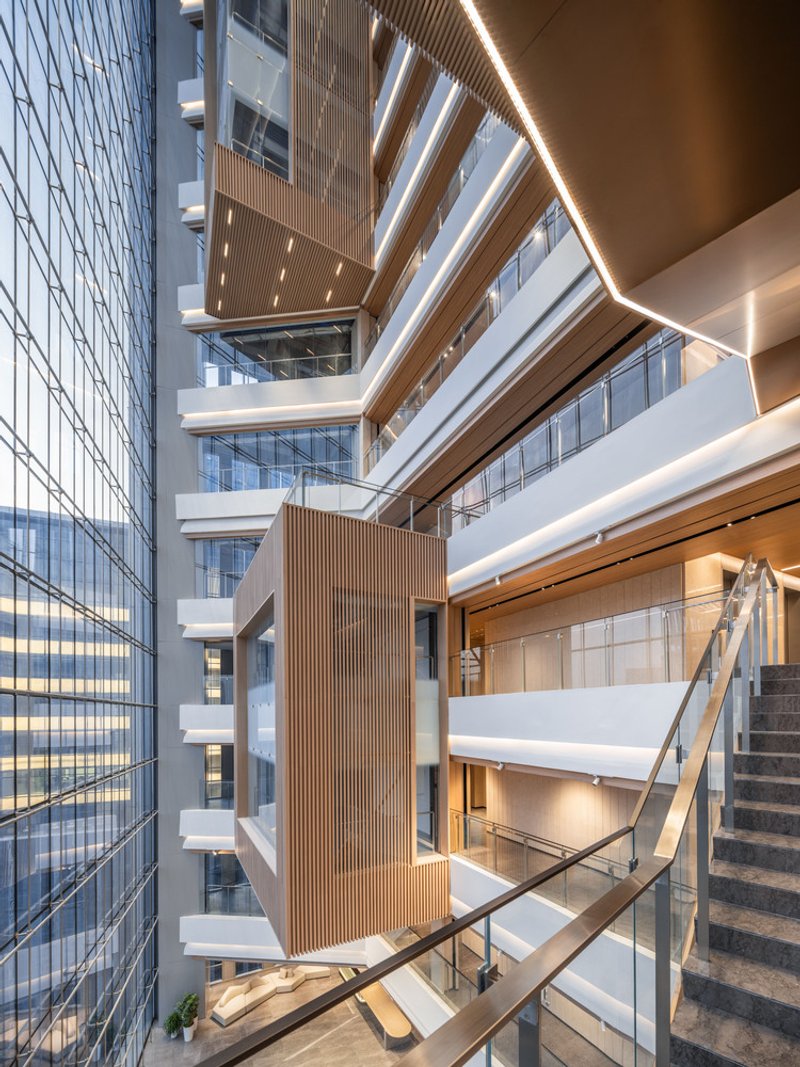
Fully enclosed by transparent cable-supported glass façades, the atria create a seamless transition between indoor and outdoor environments. The vertical transparency of the atrium not only frames skyline views but also metaphorically links the “sky villages” to the ground-level “urban villages,” reinforcing a sense of community and vertical continuity.
Engineering the Future: Structural Innovation for Sustainability
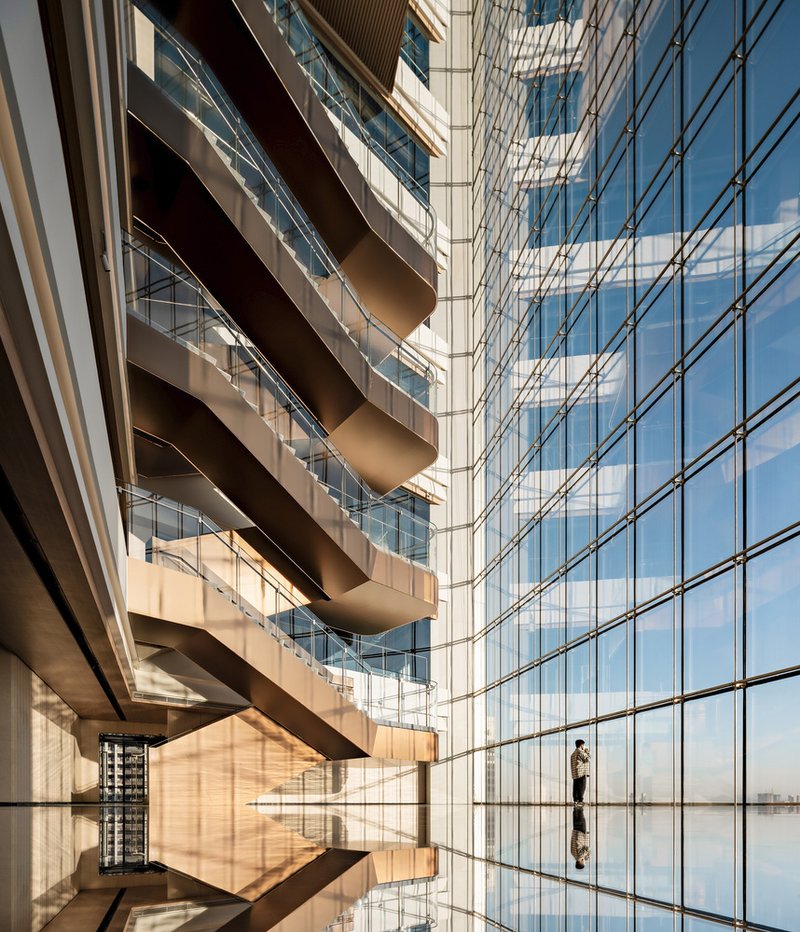
The cable wall system is a standout element of the COFCO Qianhai Innovation Center, engineered for both performance and visual impact. Outward-angled columns support horizontal cables, which are reinforced at each floor slab and anchored back to the structural core. This dynamic facade system is designed to flex under external loads and internal stresses, offering resilience against seismic activity and wind pressure.
In contrast to conventional static facades, this adaptive system brings a layer of intelligent engineering to the buildings’ envelope—showcasing how sustainability and technology can coexist beautifully.
High-Performance Facades for Climate-Responsive Comfort
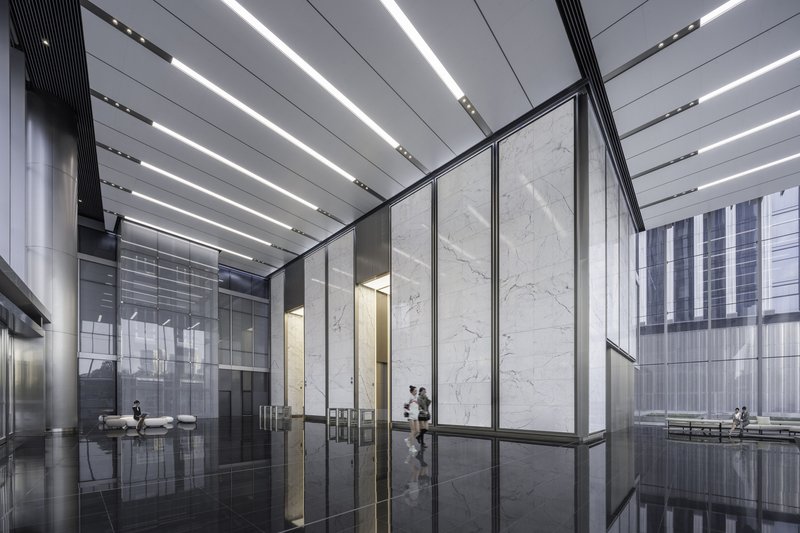
In Shenzhen’s humid subtropical climate, the design responds with a suite of passive and active strategies. The towers use double-laminated low-E glass with ceramic frit coatings, significantly reducing solar heat gain. Operable windows provide natural ventilation, diminishing reliance on mechanical HVAC systems. The atria are ventilated from ground level, drawing cooler air upwards to promote passive cooling throughout the towers.
Together, these features dramatically improve energy efficiency while maintaining thermal comfort—a benchmark for sustainable office tower architecture in dense urban climates.
Ground-Level Integration and Sponge City Design
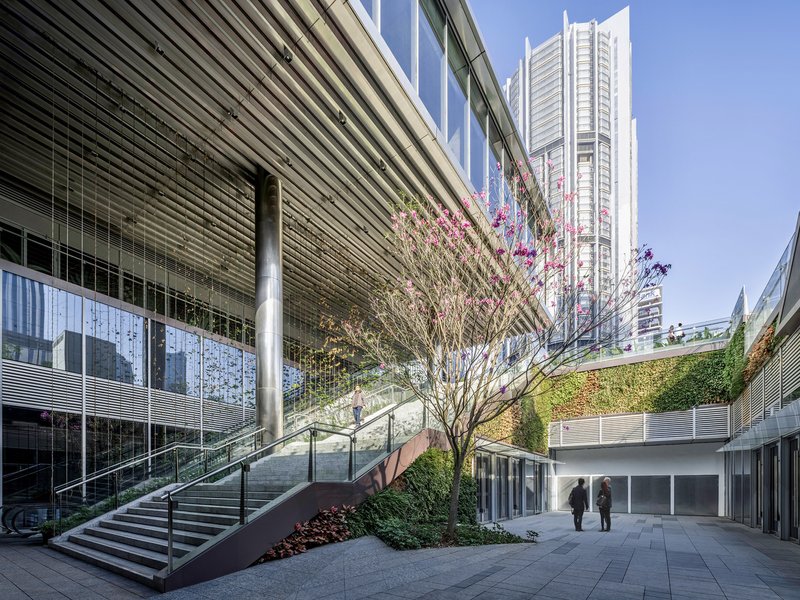
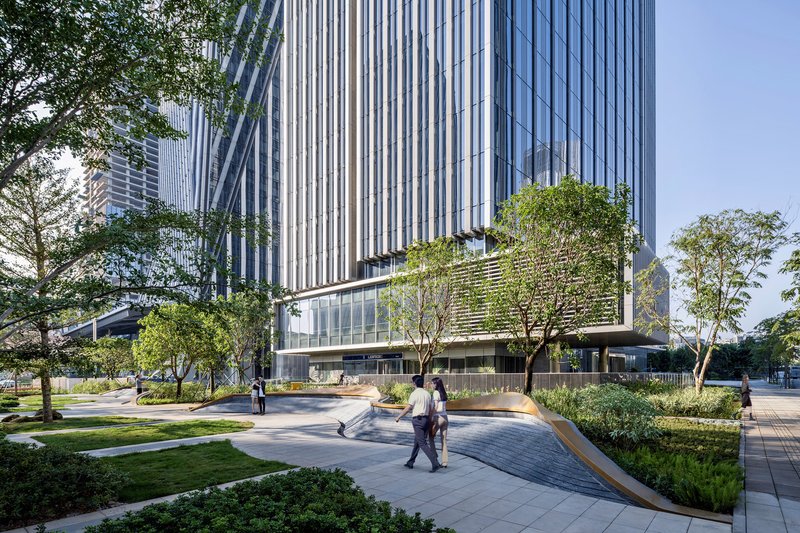
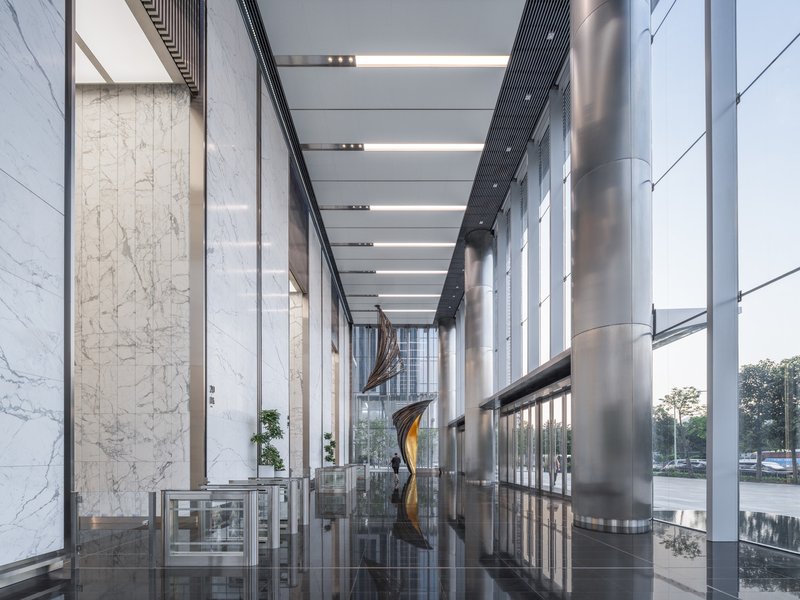
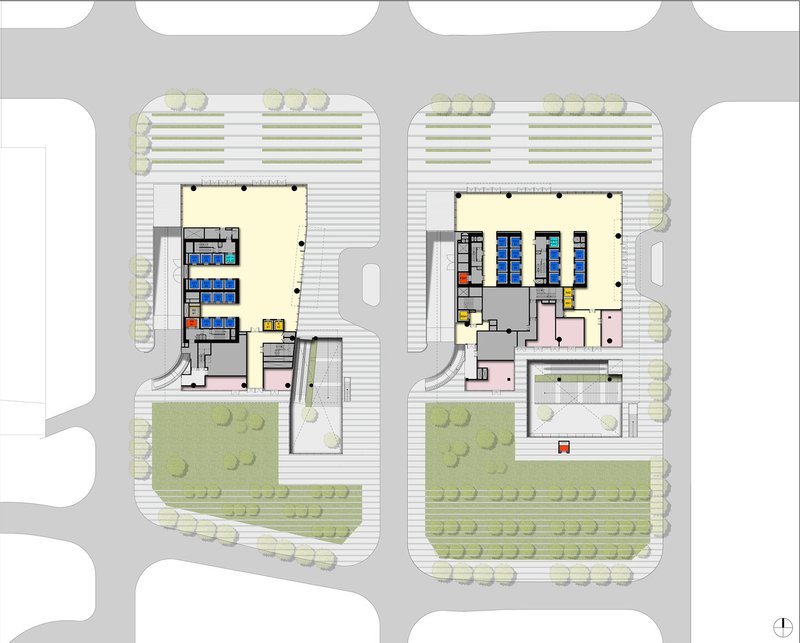
Beyond the towers, the complex’s base is designed to act as a sponge city, incorporating permeable paving, stormwater filtration, and drought-resistant landscaping. A sunken garden and layers of pedestrian greenery offer shaded public spaces and reinforce the ecological ethos of the project. These ground-level design elements not only manage rainwater and reduce flood risk but also visually and physically link the complex with the adjacent urban park and greenbelt.
Defining a New Standard for Human-Centered Workplaces
The COFCO Qianhai Innovation Center represents a radical shift in how we think about high-rise workspaces. Rather than isolating individuals in hermetically sealed towers, the “sky village” model prioritizes human interaction, community, and well-being. By merging environmental strategies with spatial openness and organizational flexibility, Goettsch Partners have created a workplace that is both future-ready and culturally grounded.
As a high-profile addition to Shenzhen’s skyline, the complex sets a new standard for office tower design—not just in China but globally. Its success lies not only in its technical prowess or architectural elegance but in its ability to reimagine urban life at height.
A Global Benchmark for Sustainable Office Tower Architecture
With its innovative structural systems, energy-efficient envelope, and human-centered spatial concepts, the COFCO Qianhai Innovation Center raises the bar for future office developments. It reflects Shenzhen’s global ambitions while paying homage to its roots—establishing a new benchmark for sustainable office tower architecture that integrates technology, ecology, and community.
All Photographs are works of CreatAR




Popular Articles
Popular articles from the community


Solar Steam: A Climate-Responsive Architecture That Redefines the Monument
A climate-responsive memorial architecture that transforms heat, decay, and time into a living system reflecting humanity’s ecological impact.
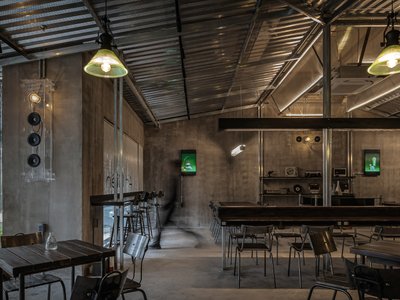
An Miên Lumière Cafe by xưởng xép, Ho Chi Minh City, Vietnam
An industrial-inspired café where layered steel and warm light create a dynamic, immersive environment shaped by reflection, depth, and perception.


The Ken Roberts Memorial Delineation Competition (Krob)
As the most senior architectural drawing competition currently in operation anywhere in the world, it draws hundreds of entries each year, awarding the very best submissions in a series of medium-based categories.
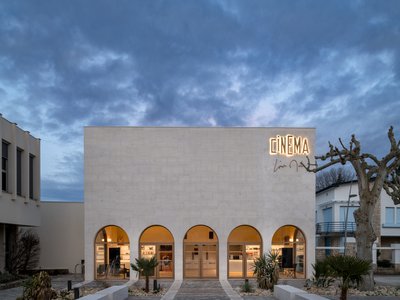
Louis Malle Cinema: A Limestone Cultural Landmark Revitalizing Community Life in Prayssac
Limestone cinema extension with public forecourt, blending heritage and modern design to create flexible cultural spaces and strengthen community interaction.


Similar Reads
You might also enjoy these articles


Top 15 Architecture Competitions to Enter in 2026
From student-friendly idea competitions to prestigious international awards, here are the best architecture competitions open for entries in 2026. Updated regularly.

DIY & Engineering in Computational Design : Enter the BeeGraphy Design Awards
Showcase Your Creativity with Computational Design and Open Source Projects
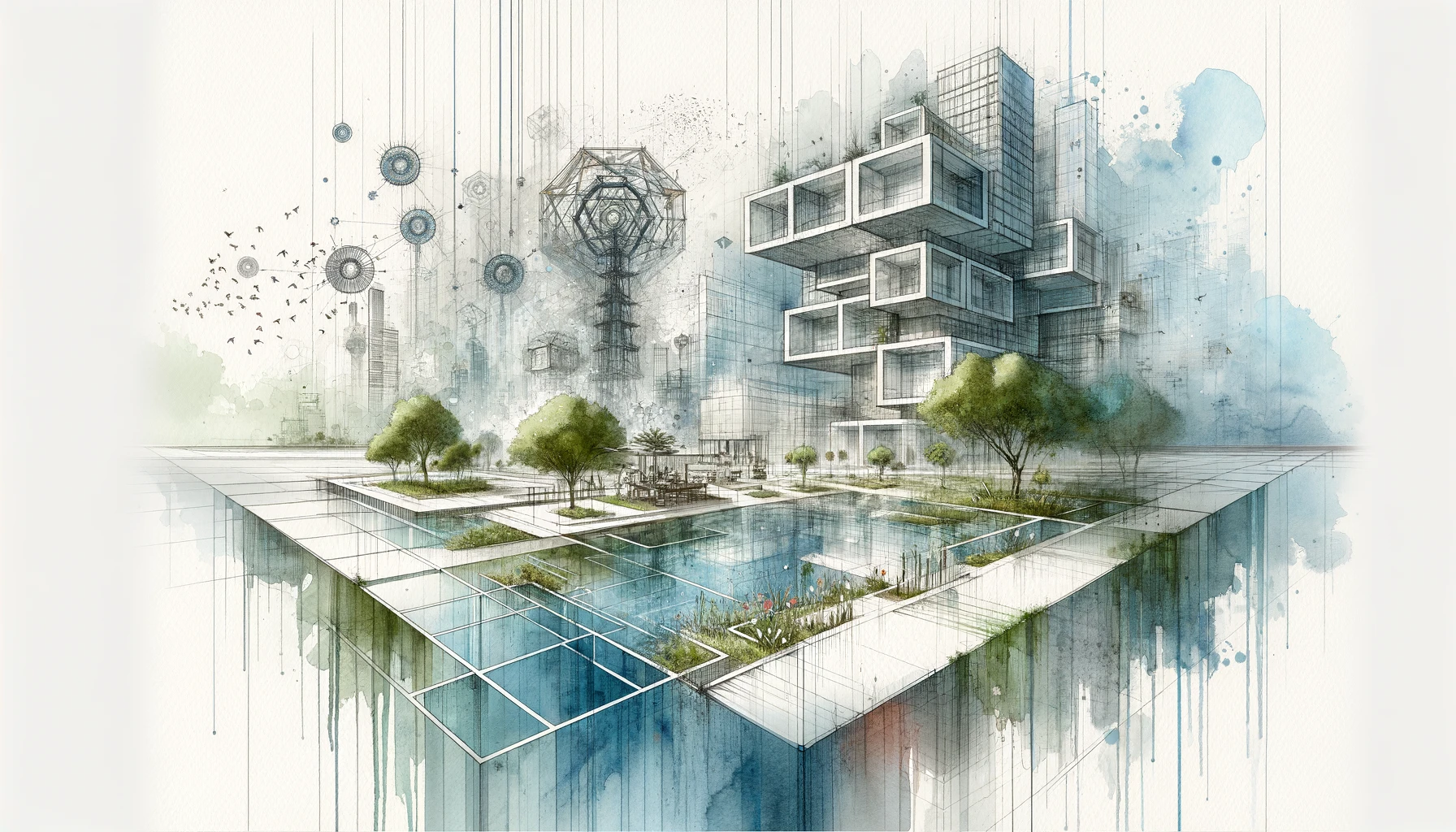
Innovative Design Solutions: Award-Winning Projects from Recent Architecture Competitions
Exploring award-winning architectural projects shaping the future of design, sustainability, and community.

Explore Architecture Competitions
Discover active competitions in this discipline




The International Standard for Design Portfolios


The Global Benchmark for Architecture Dissertation Awards


The Global Benchmark for Graduation Excellence


Challenge to reimagine the Iron Throne
Comments (0)
Please login or sign up to add comments
No comments yet. Be the first to comment!