
Embracing Tradition in Modernity: Exploring Vernacular Architecture Design at Tribhuvana Office
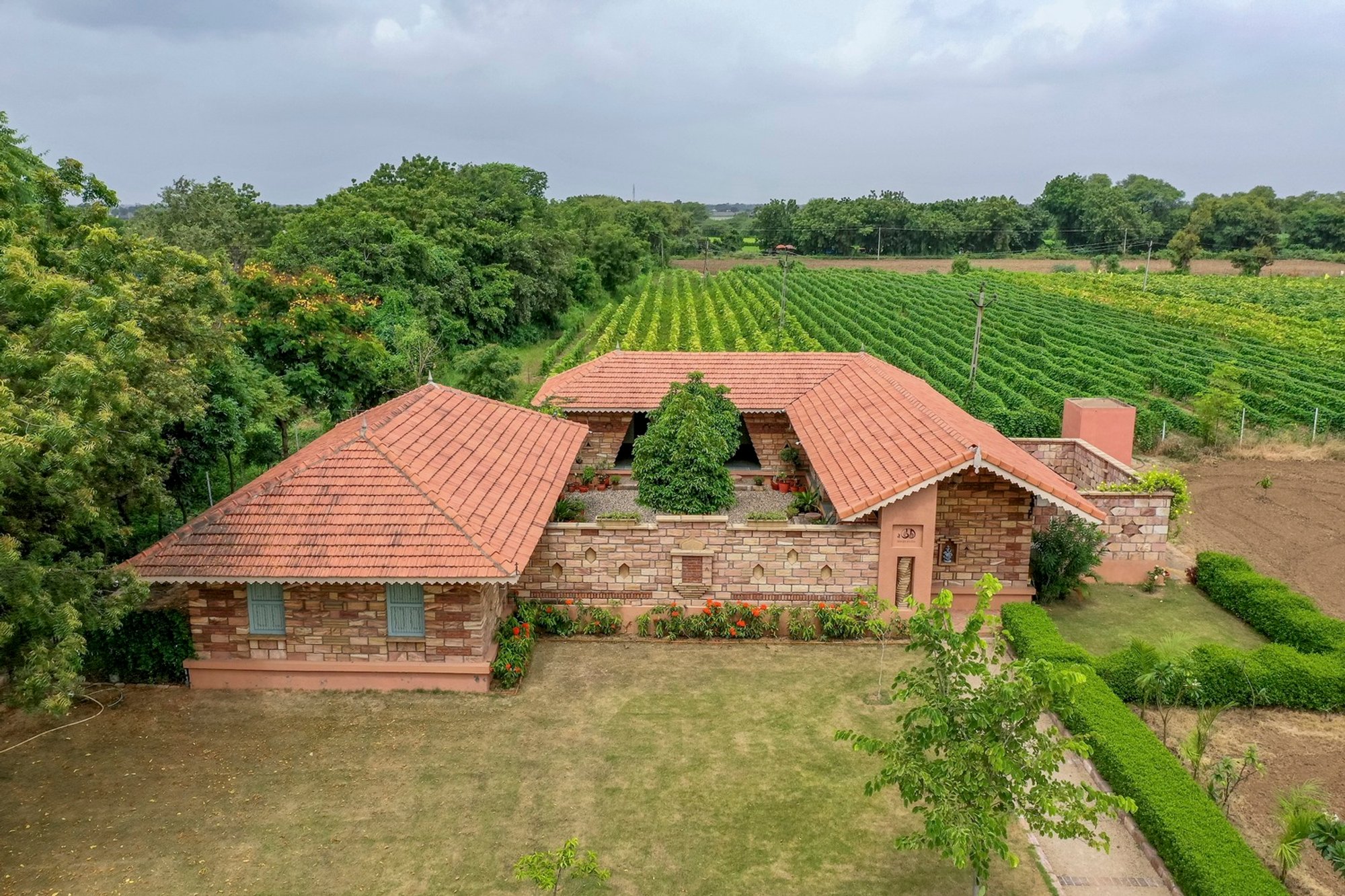
Exploring the Tribhuvana Office's blend of vernacular architecture with modern design in Ahmedabad by d6thD studio.

Vernacular Architecture Design
Vernacular architecture design, a term that evokes the essence of localized, culturally rooted building practices, has found a contemporary canvas at the Tribhuvana Office by d6thD design studio. Located in the serene village of Khanderaopura near Ahmedabad, Gujarat, this project exemplifies the harmonious blend of tradition and innovation, serving as a testament to the enduring relevance of vernacular principles in today's architectural discourse.
The Philosophy Behind Tribhuvana Office
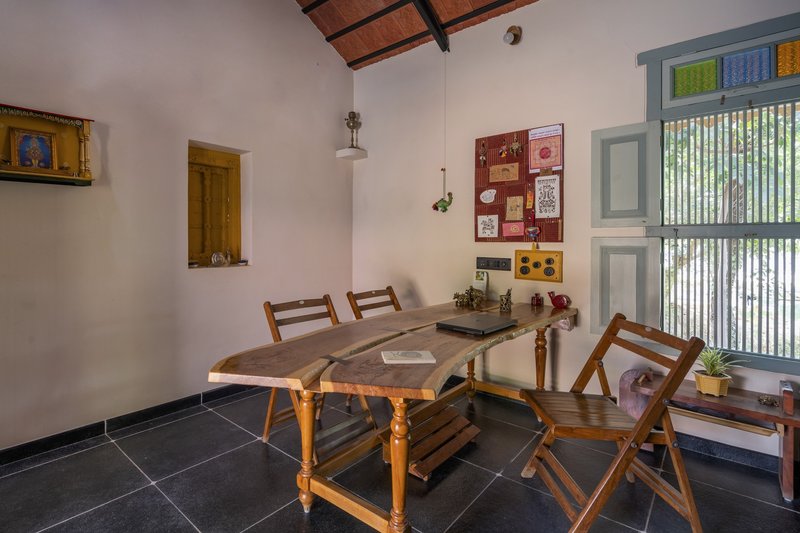
The design philosophy of Tribhuvana Office is deeply influenced by the concept of "The Art of Building Responsibly," a principle that advocates for architecture that is in harmony with its environment, culture, and history. Inspired by Alain de Botton's "Architecture of Happiness," the project emphasizes the profound impact of our physical surroundings on our emotions and well-being. By weaving traditional architectural elements with modern design practices, the Tribhuvana Office stands as a beacon of how spaces can seamlessly blend with their surroundings, promoting a sense of contentment and well-being among its users.
Architectural Details and Design Approach
Integration with Nature and Tradition
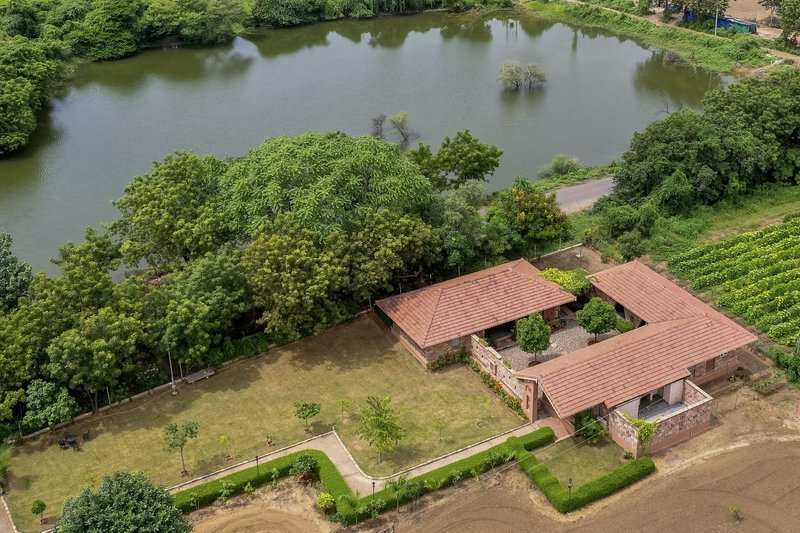
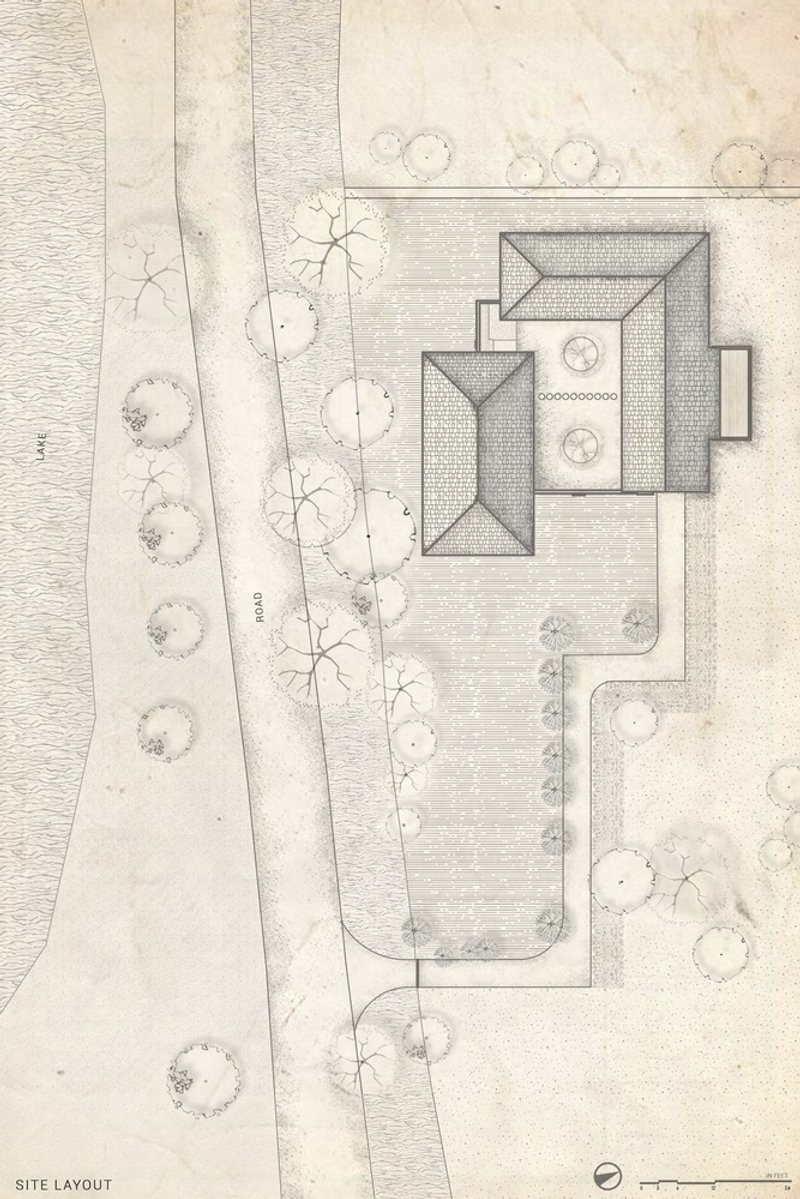
At the heart of Tribhuvana Office's design is its integration with the natural and cultural fabric of its rural setting. The office is designed as a space that not only fosters creativity but also invites a renewed connection with nature and tradition. Its location within a farm, alongside ongoing farming activities and near an expansive lake, informs its orientation and design, ensuring that the building group exists in symbiosis with its environment.
Spatial Dynamics and Material Palette
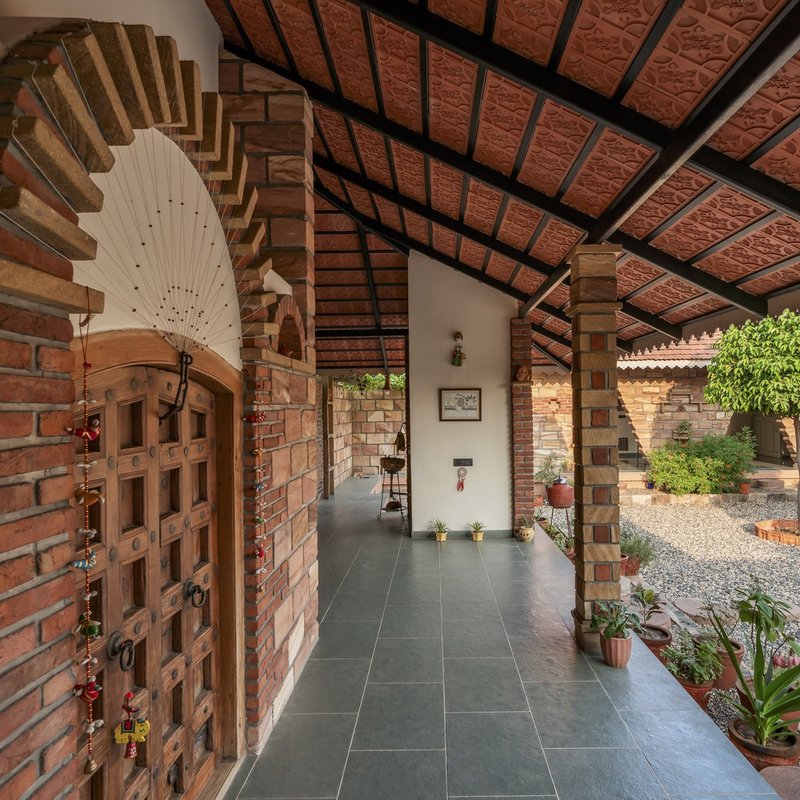
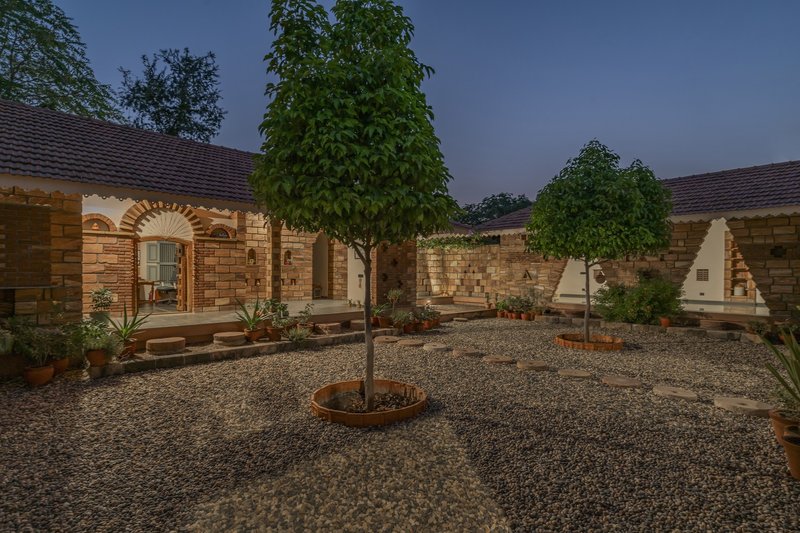
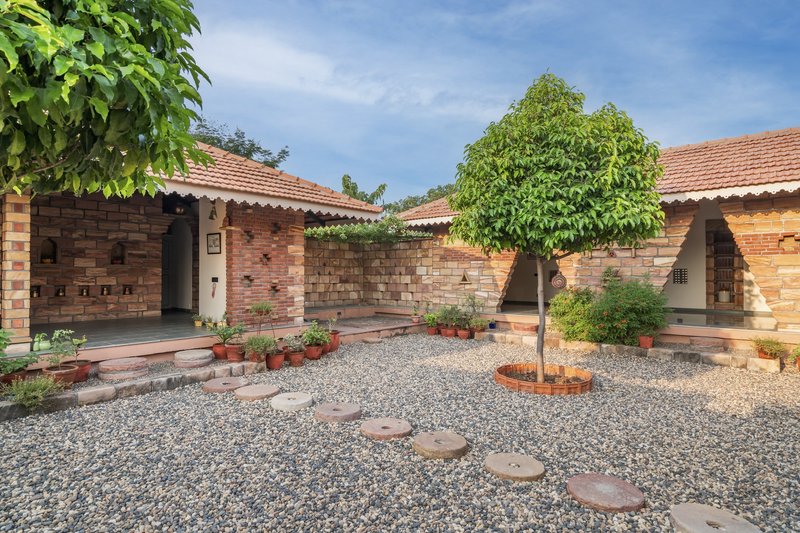
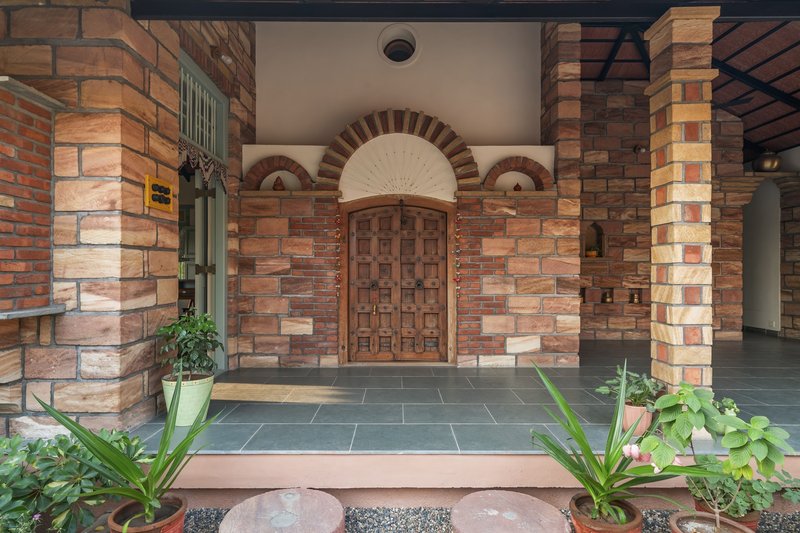
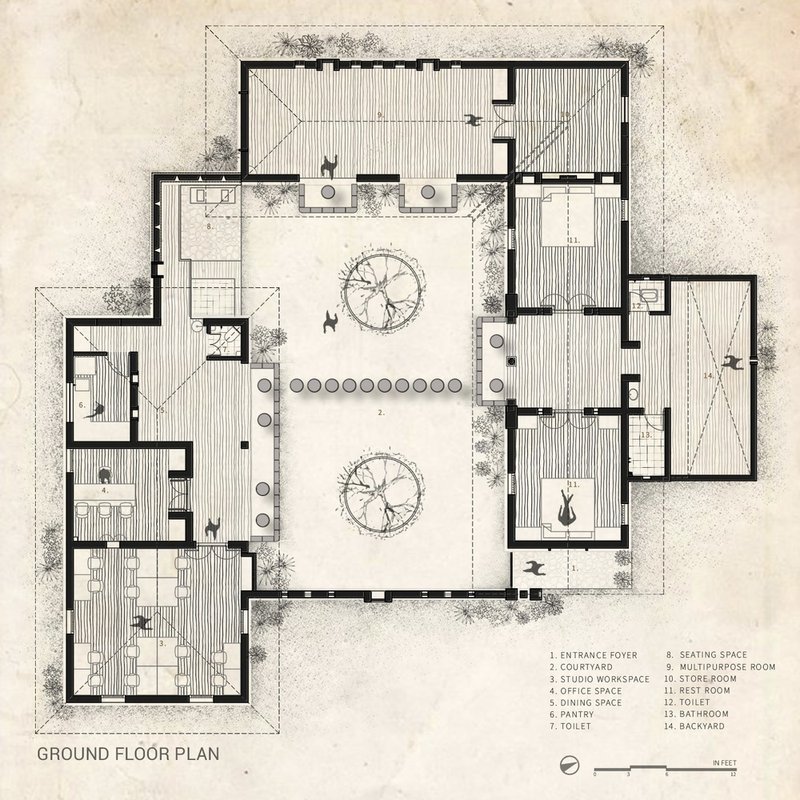
The architectural narrative of Tribhuvana is articulated through its spatial dynamics, characterized by a captivating journey from the entrance corridor to the courtyard at the building's core. This courtyard, framed by guardian trees, serves as a verdant sanctuary that connects the indoors with the outdoors. The use of local stone, bricks, and terracotta tiles across diverse functions and walls creates a unified character, emphasizing the project's commitment to climate responsiveness and sustainability.
Climate-Conscious Design
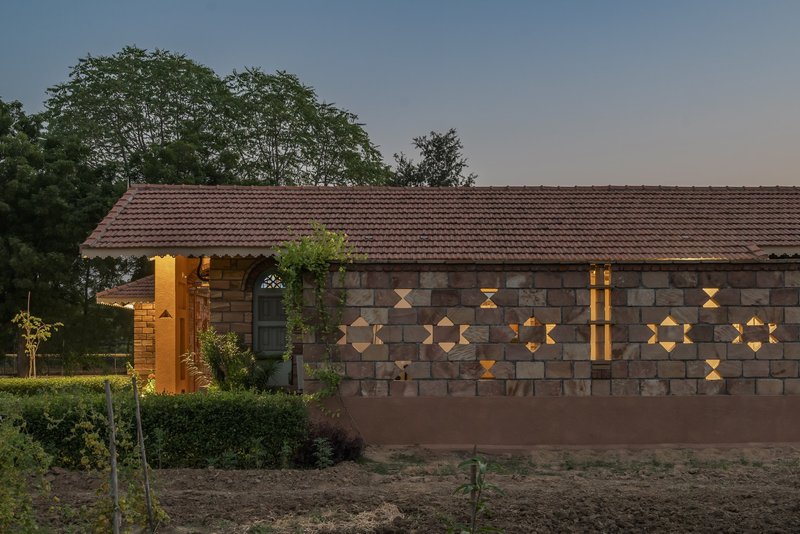
A climate-conscious design approach is evident in the studio and residence blocks' north-south alignment, which combats heat gain, and the multipurpose hall's versatility. The design also features carefully curated smaller openings and the incorporation of traditional elements like terracotta jalis and recycled materials, showcasing a thoughtful balance between control, openness, and environmental sensitivity.
Celebrating Local Crafts and Sustainability
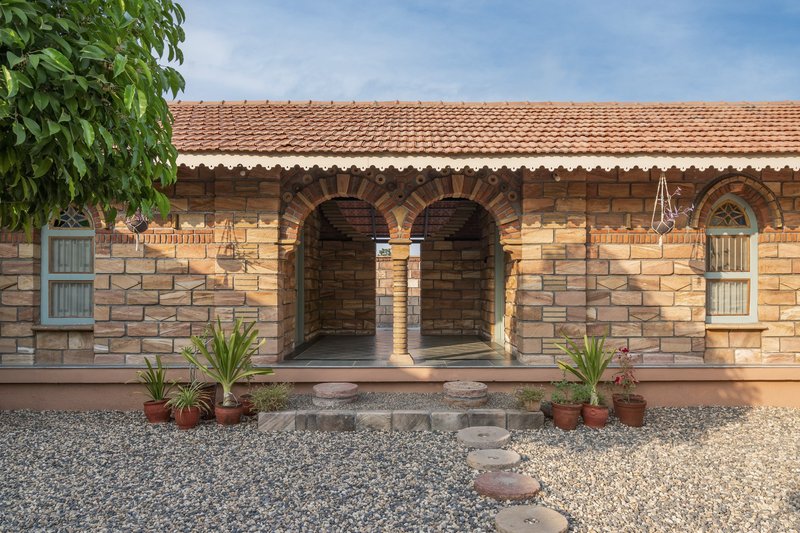
The project's dedication to sustainability extends beyond its architectural design to the incorporation of local crafts and techniques. By engaging local artisans and utilizing repurposed materials, the Tribhuvana Office not only reduces costs but also celebrates the region's heritage and craftsmanship. This approach not only dignifies and empowers craftsmen but also infuses the building process with a sense of human spirit and heritage.
A Model for Future Architecture
The Tribhuvana Office by d6thD design studio stands as a paradigm of how vernacular architecture design can be reinterpreted and applied in contemporary settings. It showcases the potential of architecture to bridge the gap between tradition and modernity, creating spaces that are not only aesthetically pleasing and functional but also deeply rooted in their cultural and environmental context. As we move forward, projects like Tribhuvana Office serve as a reminder of the importance of building responsibly, emphasizing the need for architecture that respects its heritage while embracing the challenges and opportunities of the present.
By focusing on vernacular architecture design, we can continue to craft spaces that reflect the essence of their surroundings, promoting well-being, sustainability, and a deeper connection to our cultural roots.
All photographs are work of Inclined Studio



Popular Articles
Popular articles from the community

On the Brooks House by Monsoon Collective – A Contemporary Kerala Home Rooted in Tradition
Kerala home blending tradition and modernity with water-inspired design, brick architecture, courtyard planning, and sustainable rainwater harvesting strategies.
A Contemporary Take on Iranian Residential Architecture
A modern interior design in Mashhad that reinterprets brick, light, and spatial flow to create a warm, contemporary residential architecture.
Louis Malle Cinema: A Limestone Cultural Landmark Revitalizing Community Life in Prayssac
Limestone cinema extension with public forecourt, blending heritage and modern design to create flexible cultural spaces and strengthen community interaction.

Solar Steam: A Climate-Responsive Architecture That Redefines the Monument
A climate-responsive memorial architecture that transforms heat, decay, and time into a living system reflecting humanity’s ecological impact.


Similar Reads
You might also enjoy these articles

Top 15 Architecture Competitions to Enter in 2026
From student-friendly idea competitions to prestigious international awards, here are the best architecture competitions open for entries in 2026. Updated regularly.

DIY & Engineering in Computational Design : Enter the BeeGraphy Design Awards
Showcase Your Creativity with Computational Design and Open Source Projects
Innovative Design Solutions: Award-Winning Projects from Recent Architecture Competitions
Exploring award-winning architectural projects shaping the future of design, sustainability, and community.


Explore Office Building Competitions
Discover active competitions in this discipline




The International Standard for Design Portfolios


The Global Benchmark for Architecture Dissertation Awards


The Global Benchmark for Graduation Excellence


Challenge to reimagine the Iron Throne
Comments (0)
Please login or sign up to add comments
No comments yet. Be the first to comment!