
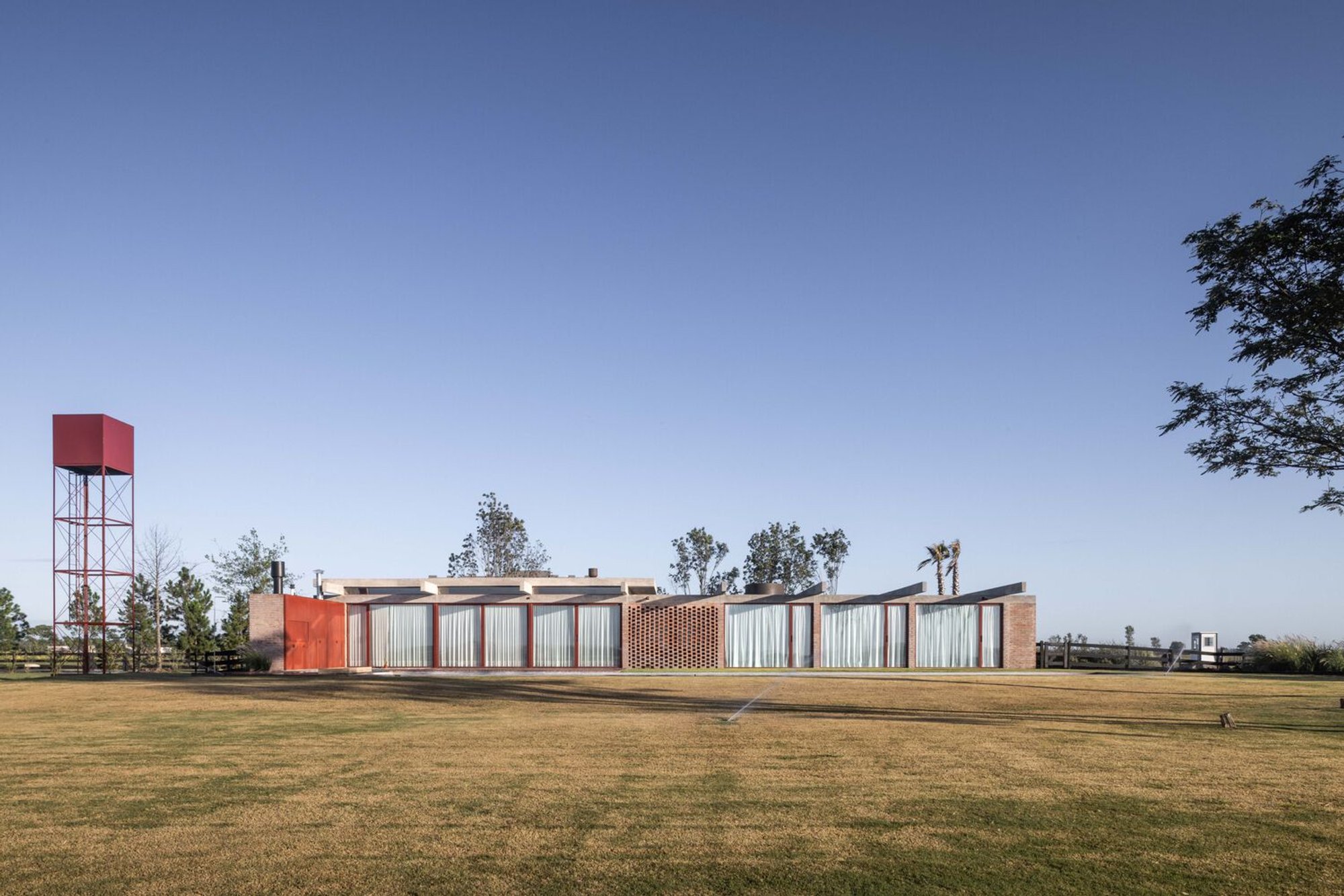
H – House Saul by Parada Cantilo Estudio
Concrete beams, brick screens, and glass unite in a rural Argentine retreat that blends structure, landscape, privacy, and light.

A Sculptural Rural Retreat Integrating Concrete, Brick, and Landscape in Cañuelas, Argentina
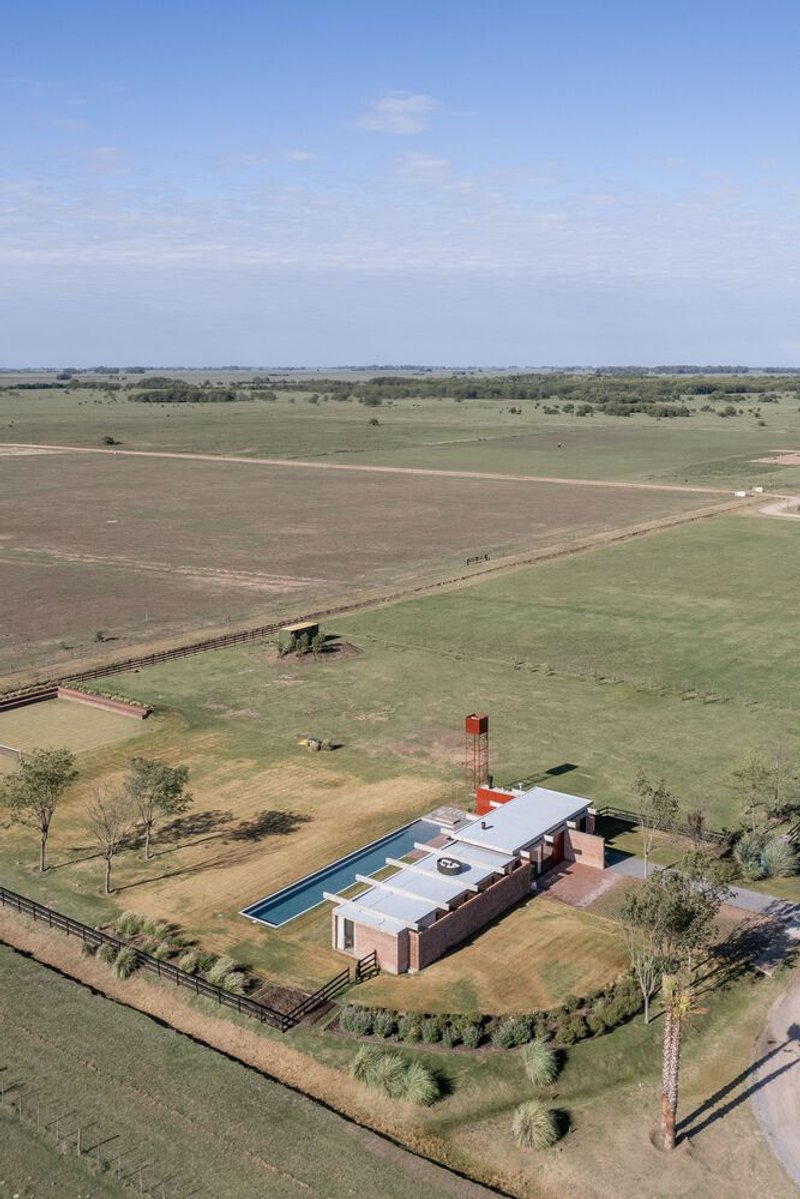
Located within the serene expanse of Estancia Puesto Viejo country club in Cañuelas, Argentina, H – House Saul is a thoughtfully designed vacation residence by Parada Cantilo Estudio. Set on a generous corner plot amidst a rural landscape, the 155-square-meter house reinterprets vernacular building materials and structural logic into a modern architectural narrative that simultaneously anchors and elevates the dwelling within its natural surroundings.
Structure as Experience: Concrete Beams and Spatial Rhythm
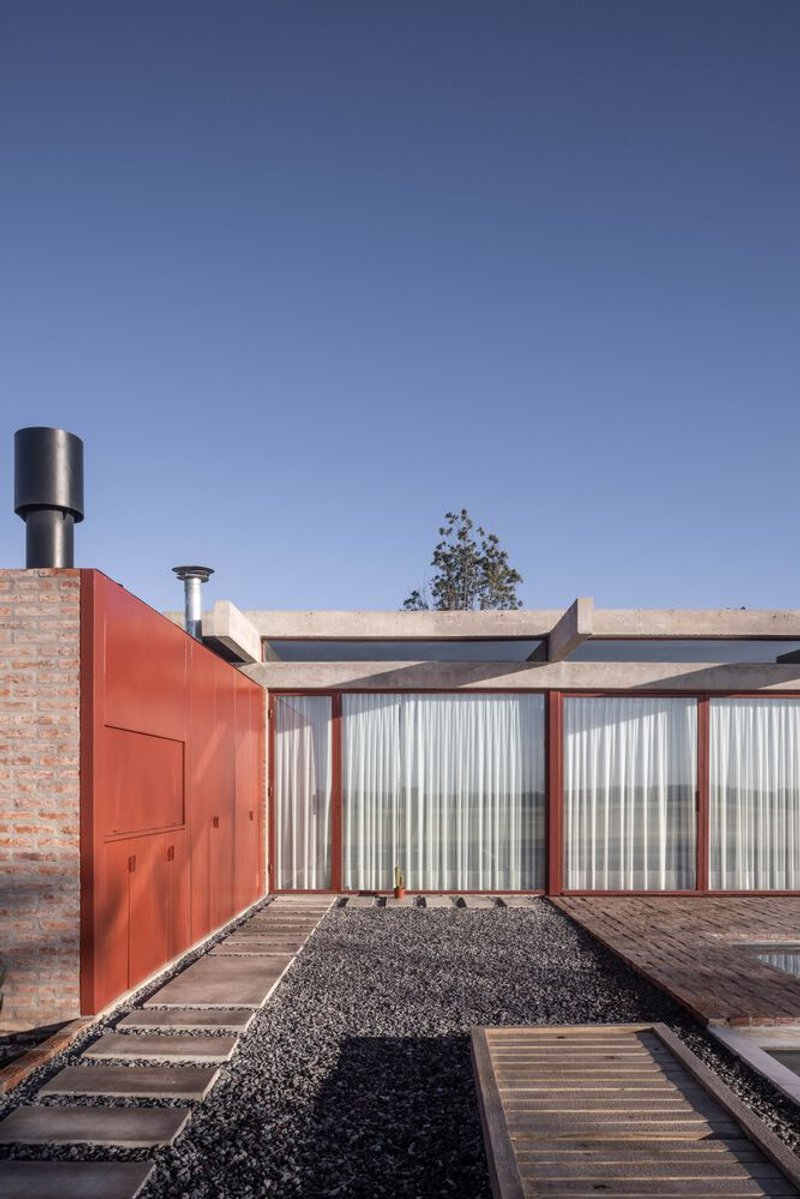
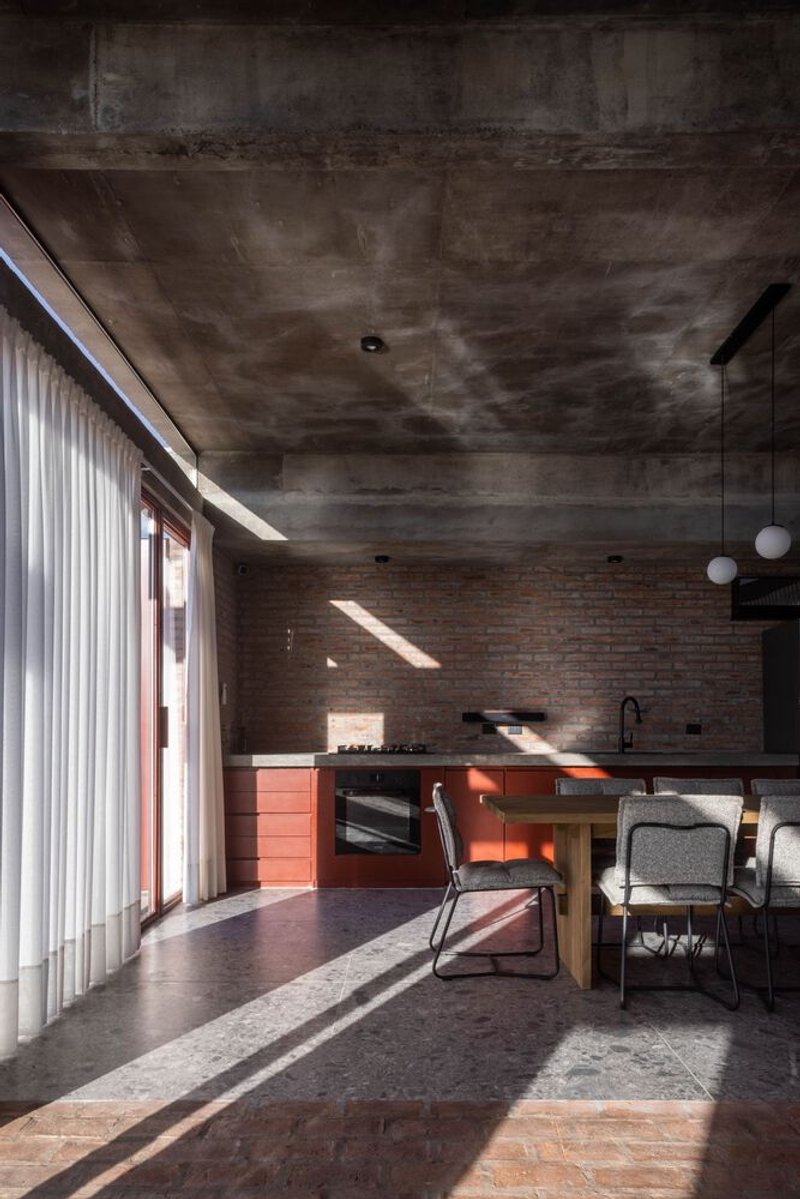
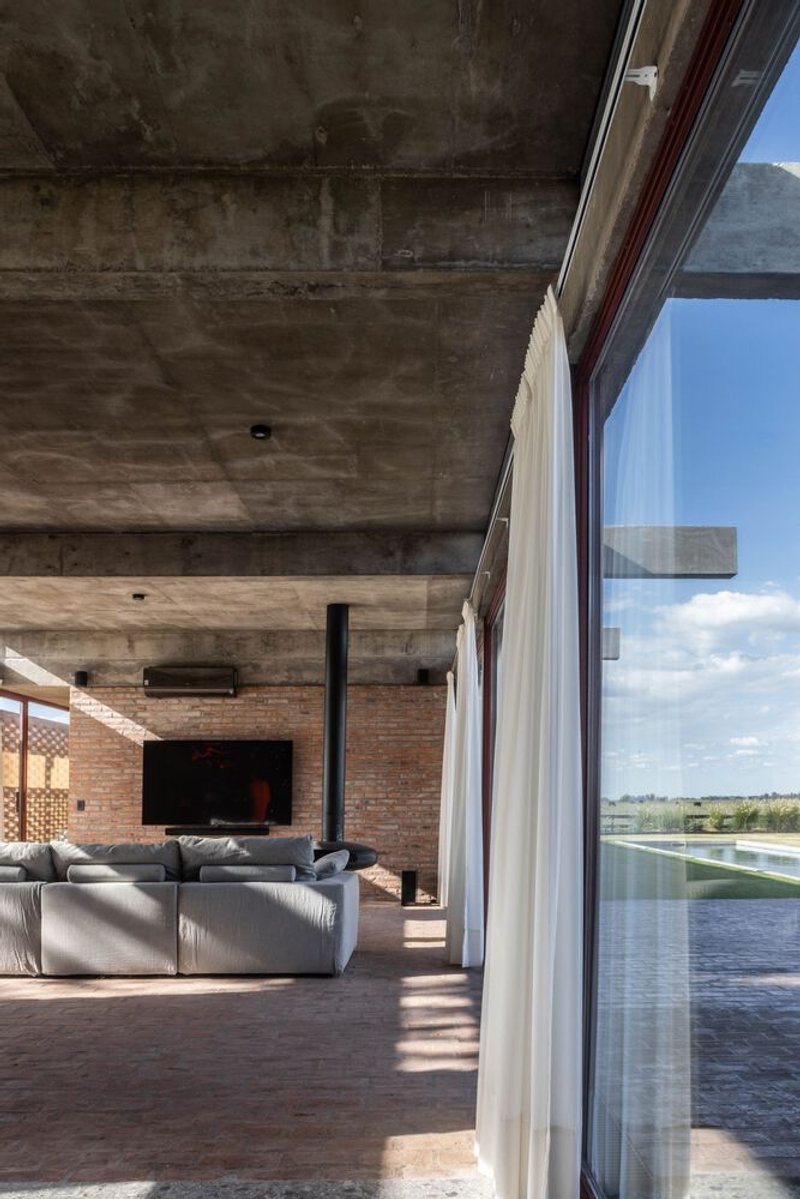
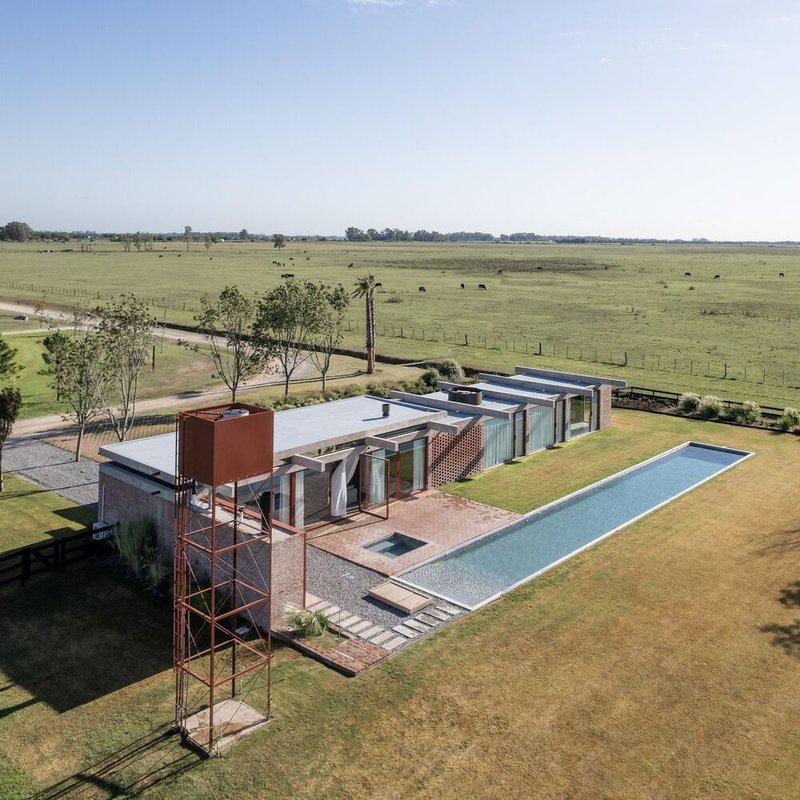
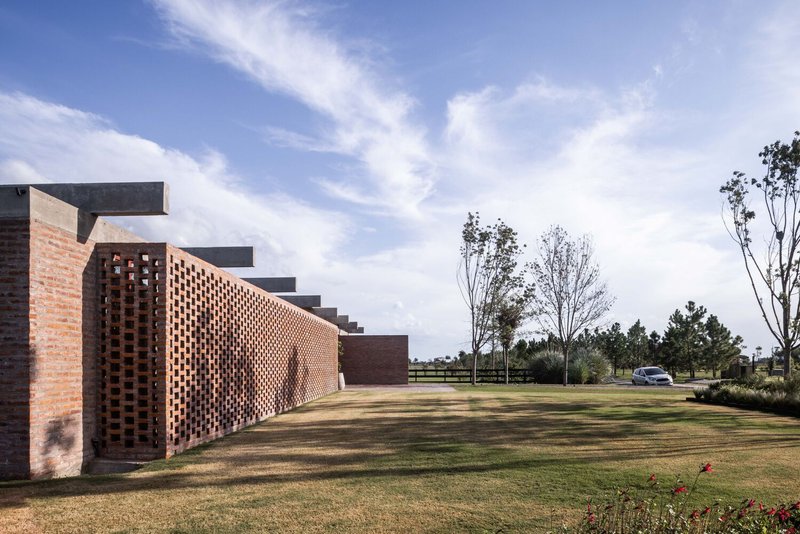
At the heart of the architectural concept lies the repetition of exposed concrete beams, acting as a rhythmic structural spine that both organizes and connects the home to its site. These beams stretch across the plot, enhancing the house’s longitudinal depth while visually integrating the building with its expansive landscape. The beams serve not just as functional supports, but as architectural devices that frame space, light, and movement.
Depending on the programmatic requirement—whether for public or private use—the slabs supported by these beams vary in positioning. This deliberate variation creates dual spatial scales: more intimate and sheltered zones beneath the ribbed structure, and more open, monumental spaces where the beams soar overhead.
Material Expression: Brick as Climate Filter and Privacy Screen
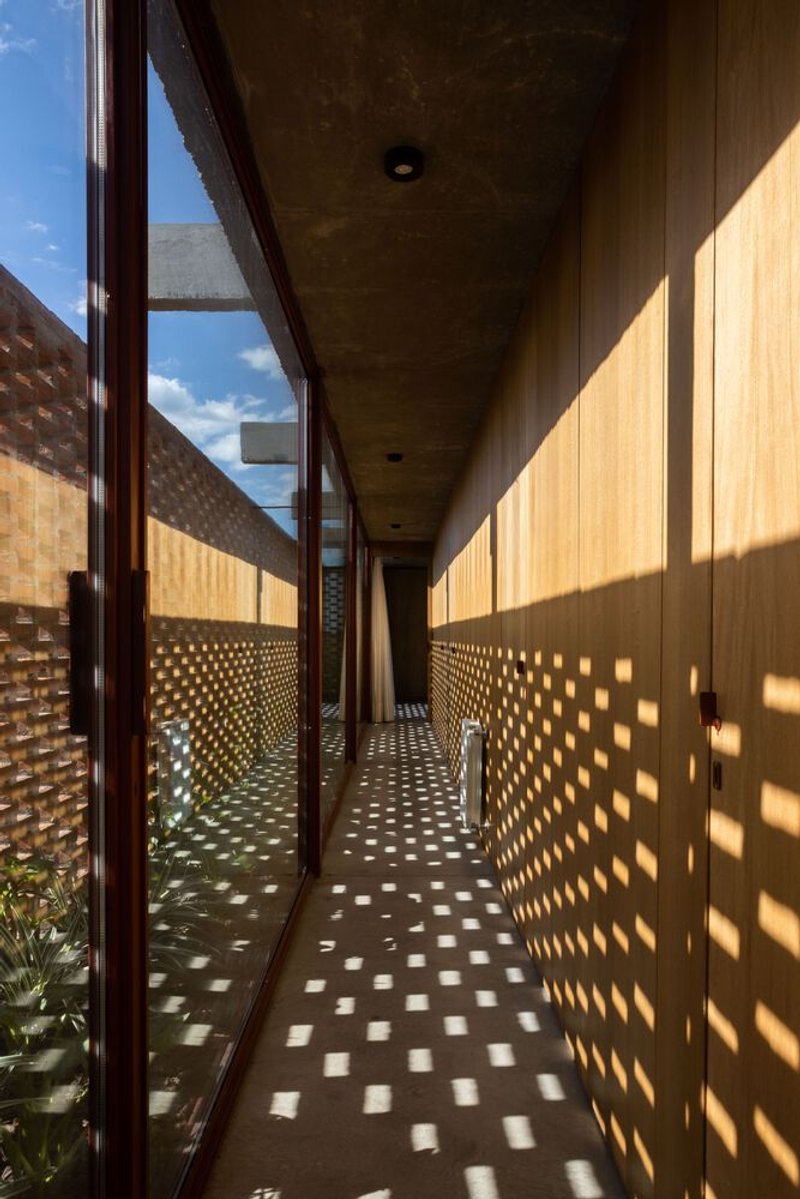
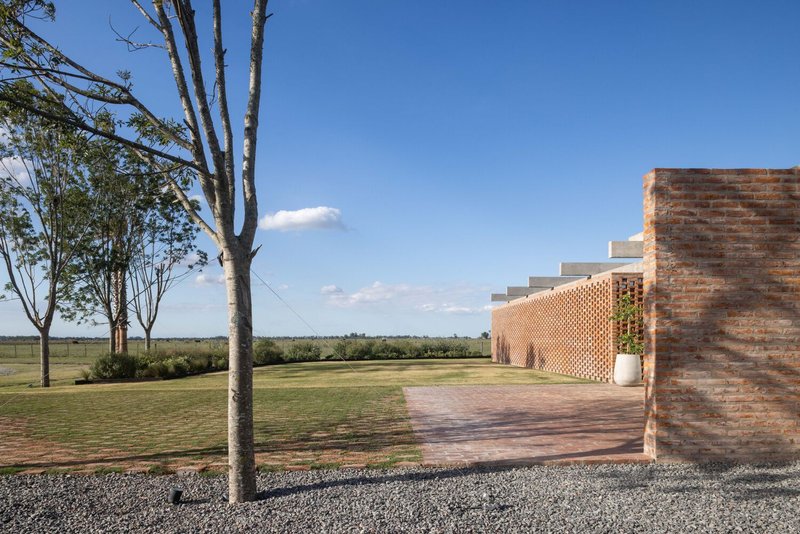
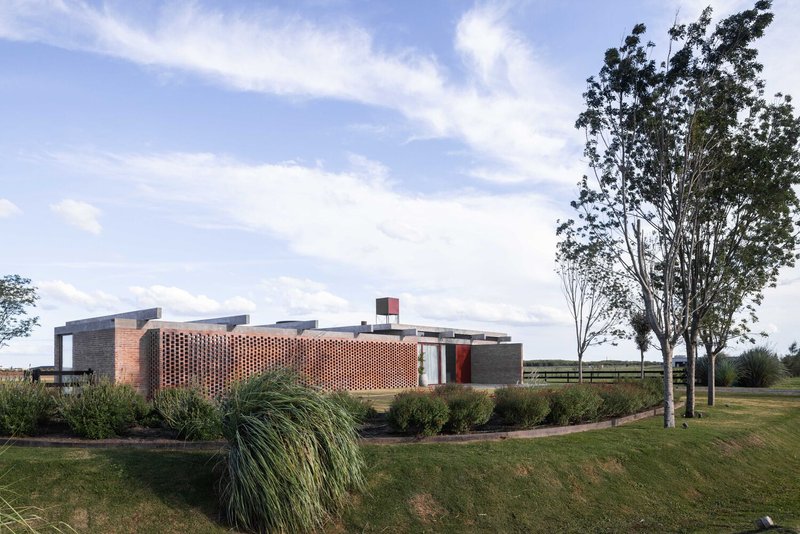
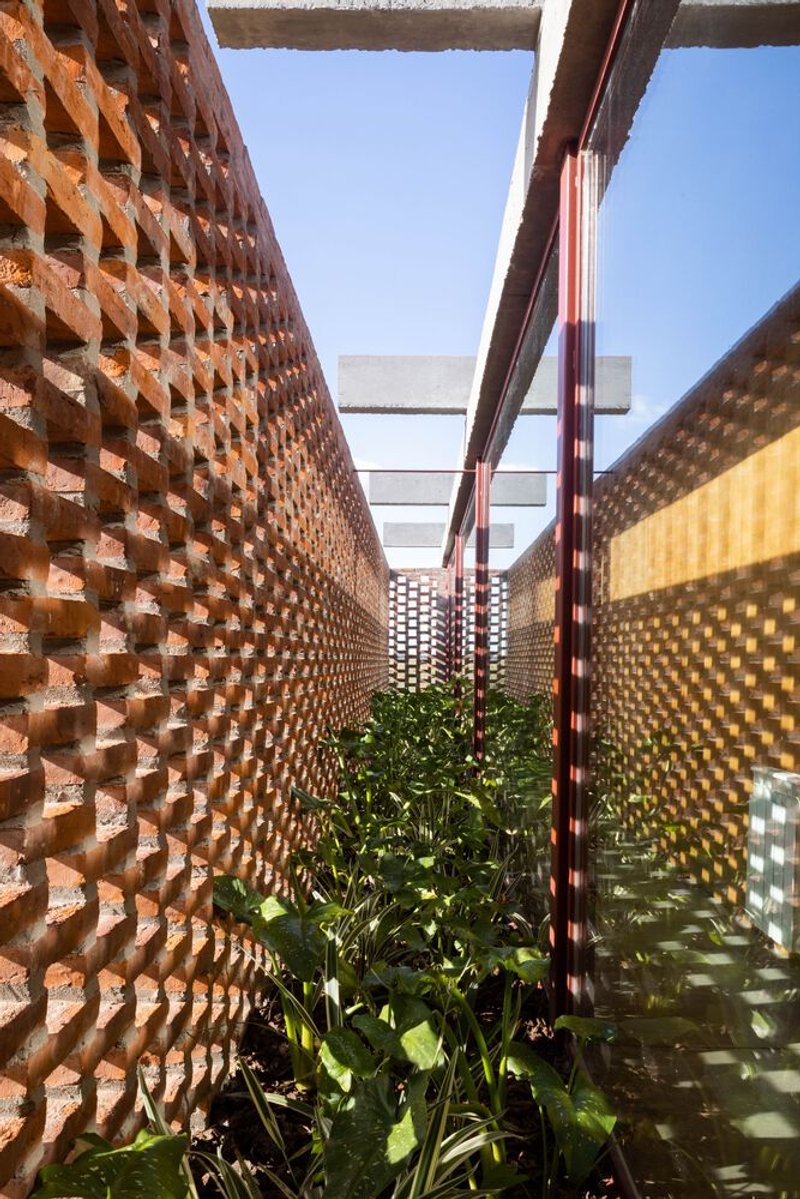
In complement to the concrete framework, brickwork plays a prominent environmental and aesthetic role. Used both structurally and decoratively, brick operates as a thermal filter that moderates solar exposure, particularly in circulation areas leading to the bedrooms. Here, perforated brick walls allow dappled light to filter through, softening the sun's intensity while enhancing privacy and natural ventilation.
Along the south-facing elevation, a double-layered brick wall shields the interior from prevailing winds—demonstrating the architects’ sensitivity to site-specific climate control through passive design strategies.
Spatial Continuity: A Horizontal Gesture from Street to Landscape
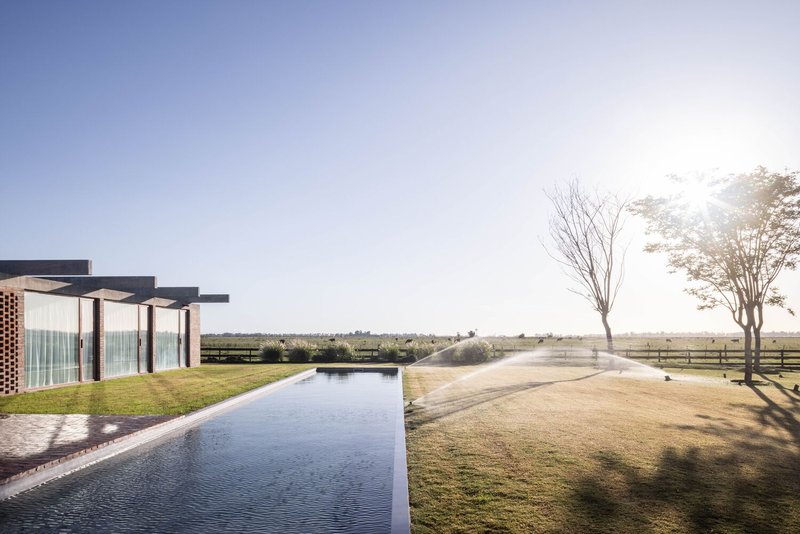
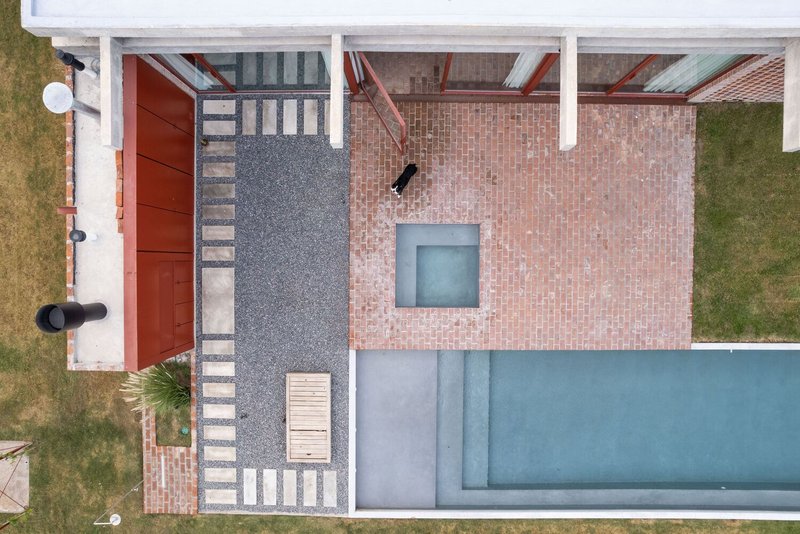
One of the defining features of H – House Saul is a prominent horizontal plane that originates at the street and cuts through the house, guiding visitors toward a reflective water mirror at the far end of the property. This architectural gesture not only reinforces spatial continuity but also integrates outdoor features like the tennis court steps, blurring the lines between built form and landscape architecture.
This plane, reminiscent of a floating tongue, articulates a sense of flow and visual openness while grounding the house’s circulation. It creates an experiential promenade that invites exploration and discovery.
Transparency and Texture: Iron-Framed Glazing with Earthy Harmony
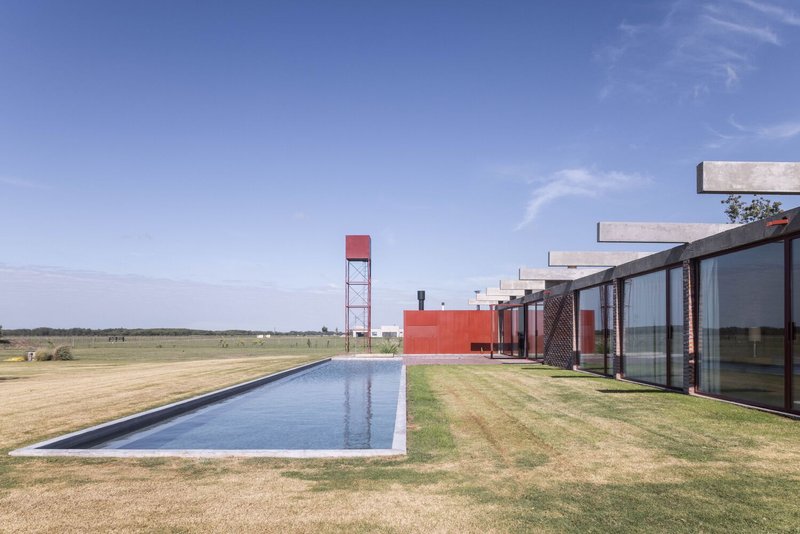
Glass and iron carpentry form the third layer of material articulation in the project. The expansive glazing ensures that the house maintains a direct relationship with the surrounding landscape, while the iron frames, color-matched to the earthy tones of brick, achieve a material harmony across structural elements. Transparency here is not just visual—it’s conceptual, enhancing the continuity between interior, exterior, and the natural world beyond.
Architecture as Integration: A Rural Home Rooted in Context
H – House Saul exemplifies how structural logic, climate responsiveness, and material clarity can converge to create a sophisticated yet grounded living environment. Every architectural decision—from beam spacing to brick placement, from glass orientation to site gestures—reinforces the idea of contextual modernism in a rural Argentinian setting.
This is not just a vacation house—it is a built dialogue between form, function, and landscape, where materiality and structure define spatial experience.
Project Details
- Project Title: H – House Saul
- Architects: Parada Cantilo Estudio
- Location: Cañuelas, Buenos Aires Province, Argentina
- Area: 155 m²
- Year Completed: 2021
- Lead Architects: Gonzalo Pérsico, Juan Pérsico
- Photography: © Luis Barandiarán
- Manufacturers: Arcelor Mittal, Blindex, Cemento Loma Negra, Chacabuco
All photographs are works of
Luis Barandiarán



Popular Articles
Popular articles from the community

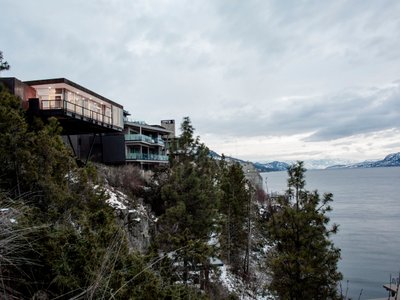
Alton Cliff House: A Harmonious Retreat by f2a Architecture in Lake Country, Canada
Alton Cliff House blends corten steel, prefabrication, and sustainable design, creating a luxurious, energy-efficient retreat perched on Canadian cliffs.
Atelier Macri Concept Store Interior Design by CASE-REAL
Atelier Macri store features a "ko" counter, walnut wood details, cork displays, blending retail, gallery, and seamless customer experiences.
Split House: A Compact Urban Home Blending Privacy, Light, and Flexible Living in Japan
Compact Japanese home featuring DOMA space, flexible café potential, passive lighting, privacy zoning, and sustainable urban living design.


The Ken Roberts Memorial Delineation Competition (Krob)
As the most senior architectural drawing competition currently in operation anywhere in the world, it draws hundreds of entries each year, awarding the very best submissions in a series of medium-based categories.

Similar Reads
You might also enjoy these articles
The Ken Roberts Memorial Delineation Competition (Krob)
As the most senior architectural drawing competition currently in operation anywhere in the world, it draws hundreds of entries each year, awarding the very best submissions in a series of medium-based categories.

Waterfront Redevelopment and Urban Revitalization in Mumbai: Forging a New Dawn for Darukhana
A transformative waterfront redevelopment project reimagining Darukhana’s shipbreaking heritage into an inclusive urban future.

OUT-OF-MAP: A Call for Postcards on Feminist Narratives of Public Space
Rhizoma Design and Research Lab invites artists, designers, architects, researchers, and students to reflect on how feminist perspectives can reshape public space. Selected works will be exhibited in Barcelona, October 2026. Submissions open until 15 April 2026.


Documentation Work on Buddhist Wooden Temple
Architectural syncretism and cultural hybridity: A comparative study of the Buddhist temples in Chattogram Hill tracks

Explore Architecture Competitions
Discover active competitions in this discipline




The International Standard for Design Portfolios


The Global Benchmark for Architecture Dissertation Awards


The Global Benchmark for Graduation Excellence


Challenge to reimagine the Iron Throne
Comments (0)
Please login or sign up to add comments
No comments yet. Be the first to comment!