
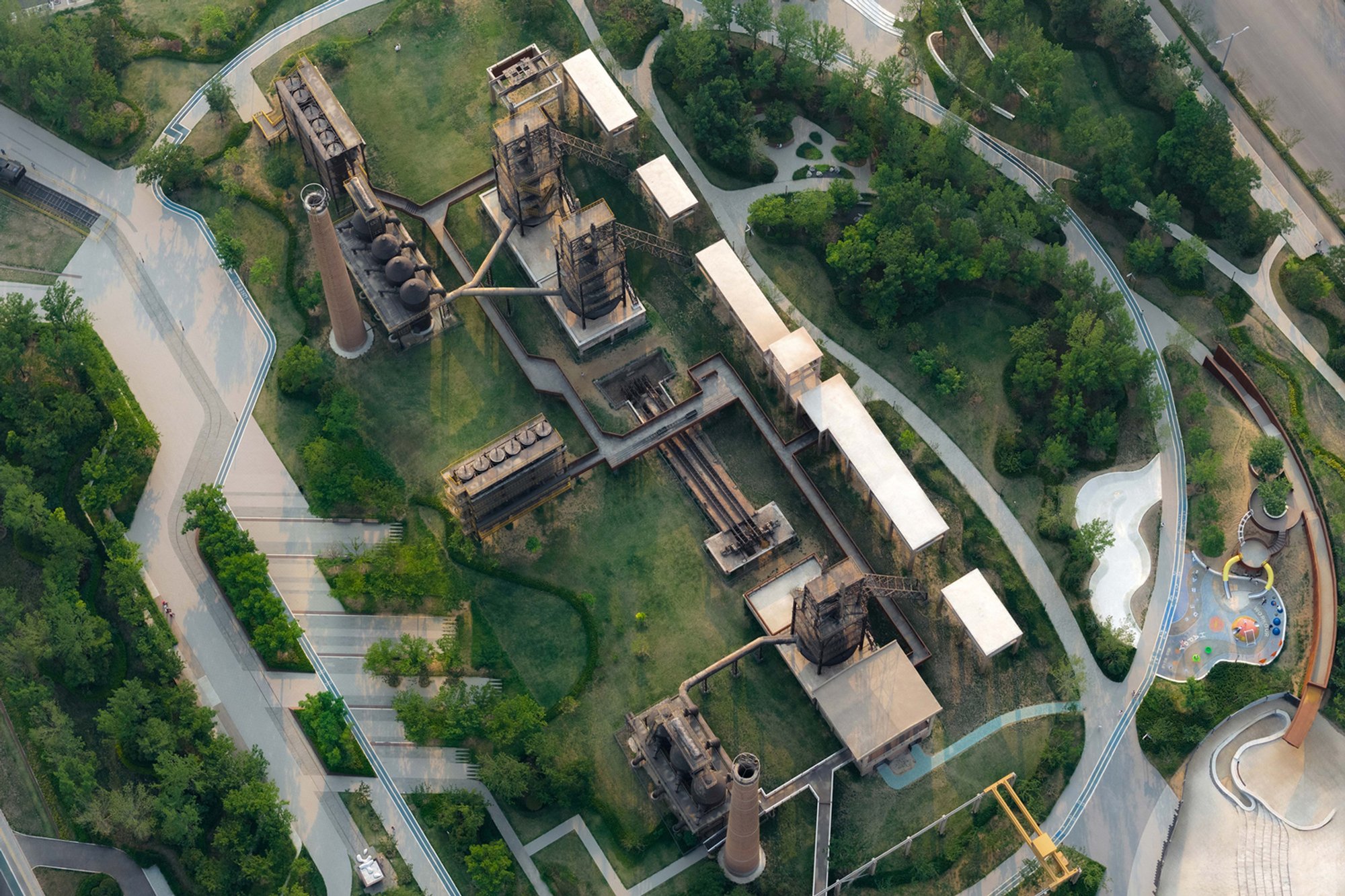
Jining Zoucheng Ferroalloy 1971 Industrial Heritage Park (Phase I) by DDON
DDON transforms a former ferroalloy factory into an ecological industrial heritage park blending history, landscape, and community-driven urban regeneration in Zoucheng.

Reclaiming the Past: Transforming Industrial Legacy into Urban Green Space
The Jining Zoucheng Ferroalloy 1971 Industrial Heritage Park reimagines the site of the historic Lunan Ferroalloy Factory, one of China’s key metrology units founded in 1971. Once a symbol of heavy industry and local prosperity, the site faced decline in the early 2000s. In 2017, the Zoucheng Municipal Government partnered with private capital to restore and redevelop the area into a vibrant post-industrial cultural landscape, giving new life to the local community.
Covering more than 61,000 square meters—including 45,000 square meters of urban greenery—the park transforms the decaying factory into a dynamic public destination. The design by DDON Architects integrates industrial relics with ecological landscapes, creating a space that celebrates both industrial memory and contemporary urban leisure.
Heritage and Experience: Preserving the Industrial Core
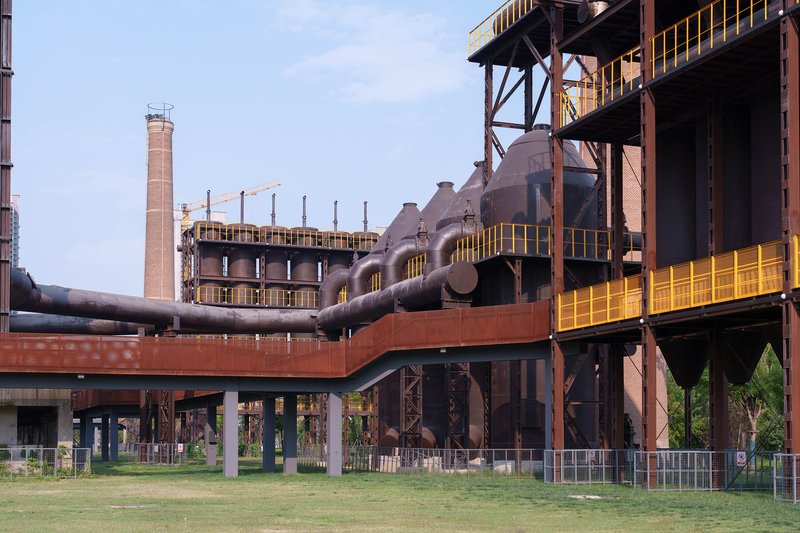
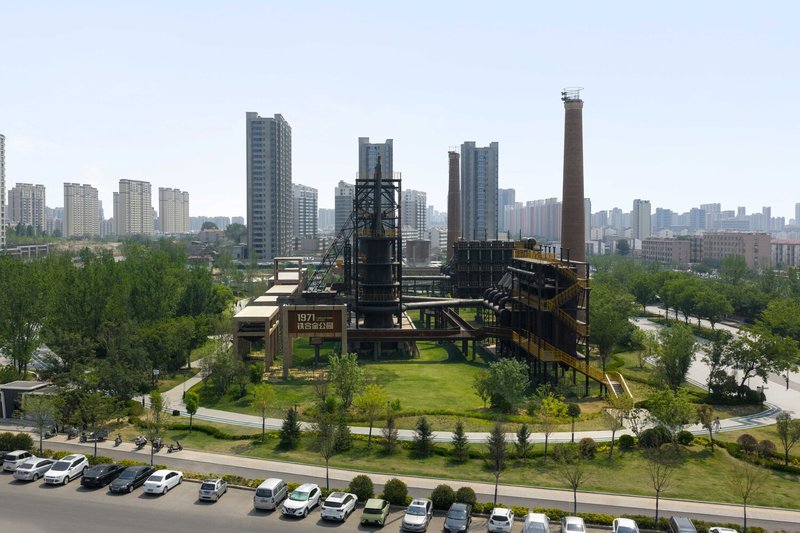
At the heart of the park lies the Core Heritage Area, where iconic structures such as blast furnaces, hot blast furnaces, bag filters, and storage silos have been preserved as monumental symbols of industrial craftsmanship. These structures, once central to ferroalloy production, now form the spine of an immersive cultural experience.
DDON’s design follows the principle of “minimal intervention”, ensuring that the raw aesthetic of the site remains intact. The juxtaposition of rugged steel structures against soft natural vegetation creates a striking visual dialogue between industry and ecology. Visitors are encouraged to walk through the preserved production corridors, experiencing firsthand the material legacy, spatial rhythm, and human stories embedded within the site.
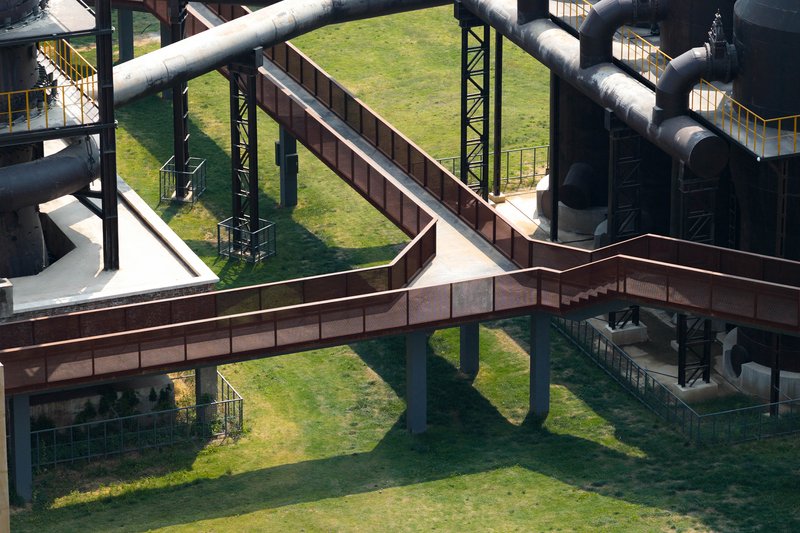
The design also introduces a secondary circulation system, allowing visitors to access elevated viewing corridors and vantage points overlooking the industrial landscape. This innovative approach enhances connectivity and provides panoramic views, blending industrial heritage conservation with contemporary spatial storytelling.
Order and Nature: Creating a Green Framework Around the Heritage Site
The park’s master plan carefully divides the site into northern and southern zones, each responding uniquely to its urban context.
The southern zone, adjacent to the main city road, serves as a public interface that highlights the industrial character of the park. Here, DDON preserved existing vegetation and restructured the spatial order with a minimalist aesthetic—emphasizing geometric clarity, material restraint, and visual contrast. The result is an open urban plaza that encourages public engagement while maintaining the historical spirit of the site.
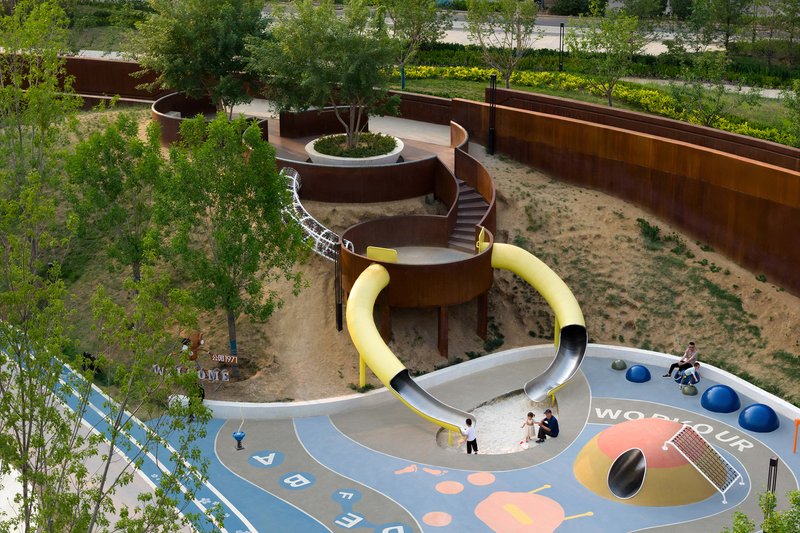
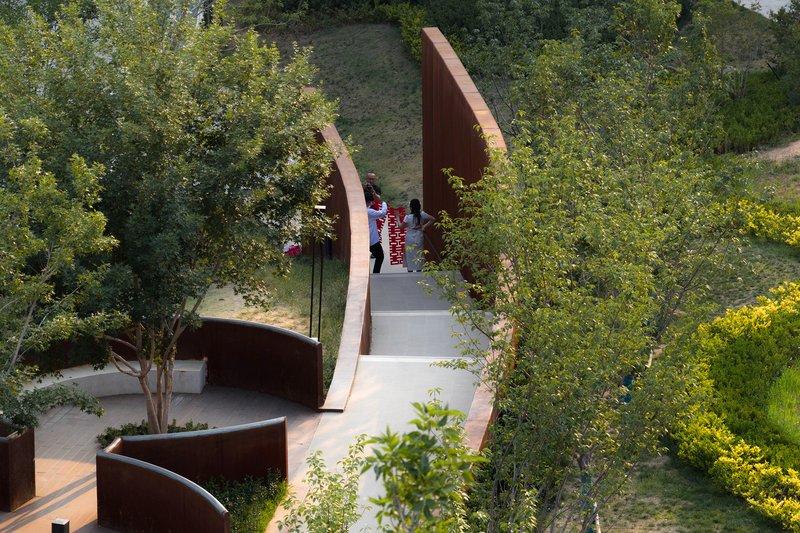
In contrast, the northern zone functions as a community green belt, designed for everyday recreation. With its curvilinear pathways, layered greenery, and terraced topography, this section offers a softer, more fluid spatial experience. Residents and visitors can engage in various social and cultural activities while enjoying framed views of the industrial monuments in the distance.
Culture and Details: Integrating Human Scale and Memory
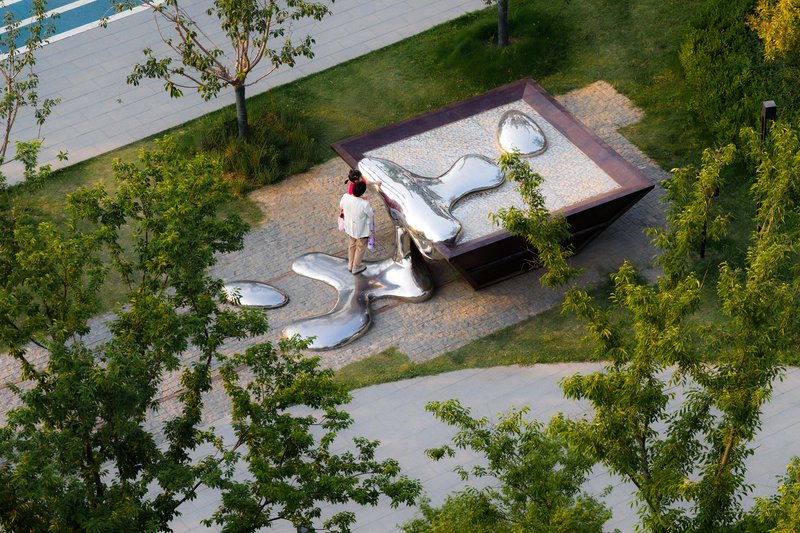
Beyond large-scale heritage preservation, the park emphasizes human-centered design and spatial intimacy. Scattered throughout the landscape are thematic nodes—pavilions, rest areas, and interpretive spaces—dedicated to the factory’s history and industrial culture.
These new interventions are crafted with refined materials, tactile finishes, and inviting scales, encouraging public interaction. They serve as cultural reminders that connect visitors to the emotional and social fabric of the site while promoting daily leisure and community gathering.
Industrial Ecology and Urban Regeneration
Through a delicate balance of heritage conservation, landscape restoration, and public programming, the Ferroalloy 1971 Industrial Heritage Park embodies a new model of post-industrial regeneration in China. It not only provides urban green infrastructure and recreational amenities but also functions as a social catalyst, enhancing the city’s cultural identity and environmental resilience.
The park has become a major cultural landmark—attracting residents, tourists, and photographers—and a symbol of Zoucheng’s industrial transformation toward sustainability and inclusivity. By merging history, ecology, and innovation, the project celebrates the enduring relationship between industry, landscape, and community.
All Photographs are works of Chill Shine




Popular Articles
Popular articles from the community

Alton Cliff House: A Harmonious Retreat by f2a Architecture in Lake Country, Canada
Alton Cliff House blends corten steel, prefabrication, and sustainable design, creating a luxurious, energy-efficient retreat perched on Canadian cliffs.


The Ken Roberts Memorial Delineation Competition (Krob)
As the most senior architectural drawing competition currently in operation anywhere in the world, it draws hundreds of entries each year, awarding the very best submissions in a series of medium-based categories.

Free Architecture Competitions You Can Enter Right Now
No entry fees, real prizes. Here are the best free architecture competitions open for submissions in 2026.
Solar Steam: A Climate-Responsive Architecture That Redefines the Monument
A climate-responsive memorial architecture that transforms heat, decay, and time into a living system reflecting humanity’s ecological impact.


Similar Reads
You might also enjoy these articles
The Ken Roberts Memorial Delineation Competition (Krob)
As the most senior architectural drawing competition currently in operation anywhere in the world, it draws hundreds of entries each year, awarding the very best submissions in a series of medium-based categories.
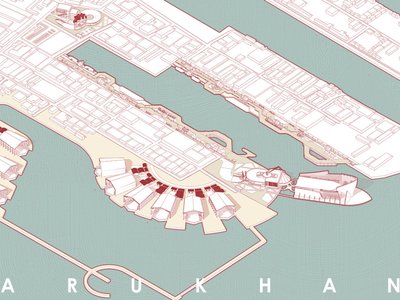
Waterfront Redevelopment and Urban Revitalization in Mumbai: Forging a New Dawn for Darukhana
A transformative waterfront redevelopment project reimagining Darukhana’s shipbreaking heritage into an inclusive urban future.
OUT-OF-MAP: A Call for Postcards on Feminist Narratives of Public Space
Rhizoma Design and Research Lab invites artists, designers, architects, researchers, and students to reflect on how feminist perspectives can reshape public space. Selected works will be exhibited in Barcelona, October 2026. Submissions open until 15 April 2026.

Documentation Work on Buddhist Wooden Temple
Architectural syncretism and cultural hybridity: A comparative study of the Buddhist temples in Chattogram Hill tracks

Explore Architecture Competitions
Discover active competitions in this discipline




The International Standard for Design Portfolios


The Global Benchmark for Architecture Dissertation Awards


The Global Benchmark for Graduation Excellence


Challenge to reimagine the Iron Throne
Comments (0)
Please login or sign up to add comments
No comments yet. Be the first to comment!