
Lawrenceville School Tsai Field House Architecture: A Hub for Wellness, Athletics, and Community
The Lawrenceville School Tsai Field House combines athletics, wellness, and dining, redefining student life with innovative campus architecture.

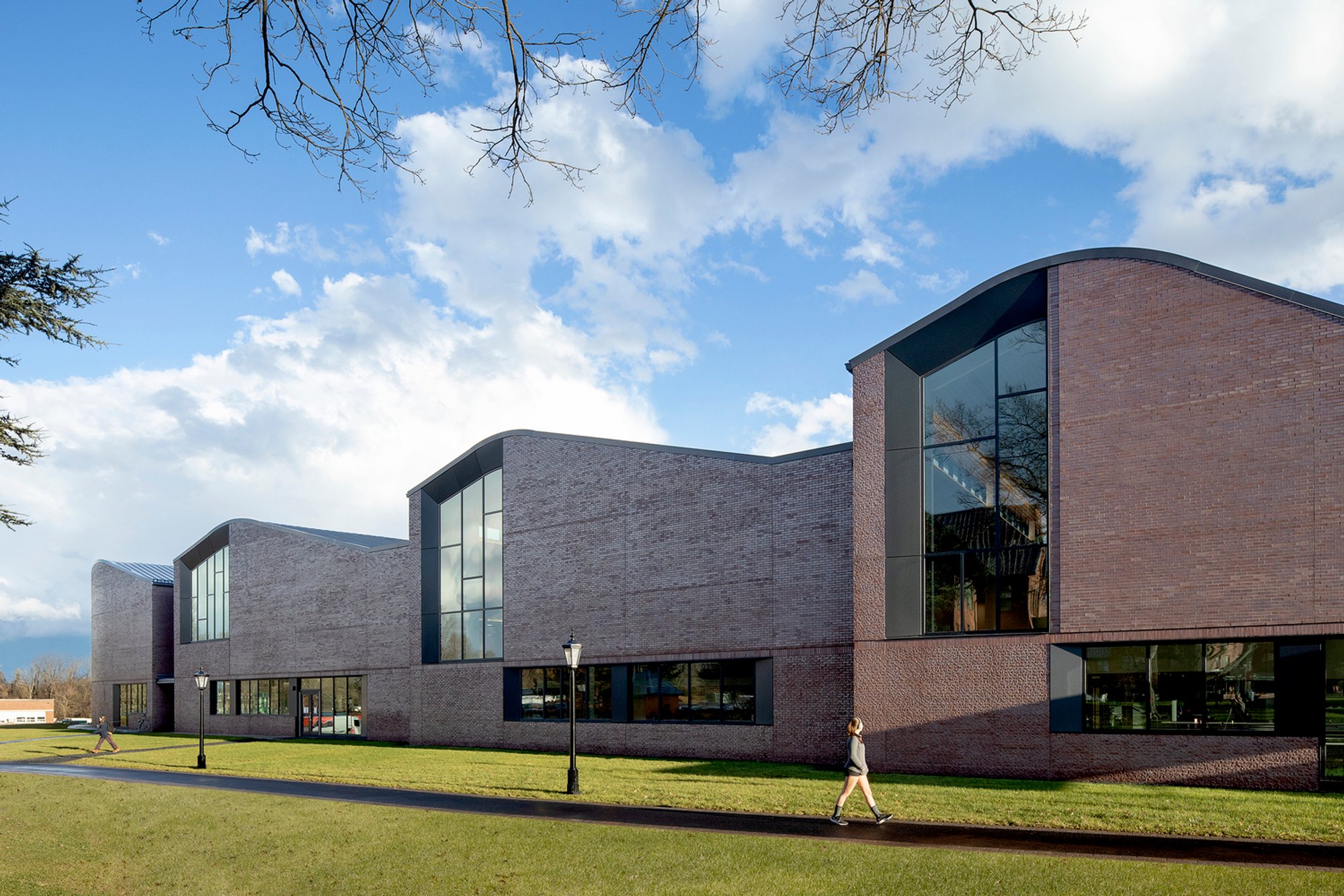
The Lawrenceville School Tsai Field House, designed by Sasaki and completed in 2022, represents a transformative addition to the historic campus in the United States. This 253,000-square-foot facility redefines student life by combining recreation, athletics, wellness, and dining under one roof. Anchoring the second phase of the school's master plan, the Field House and Tsai Commons demonstrate a thoughtful approach to scale, functionality, and community-centered design.
A Unified Approach to Design
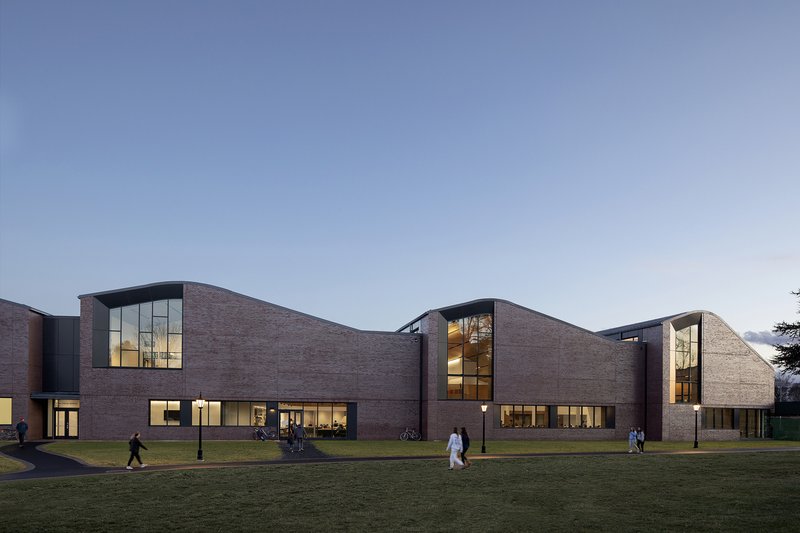
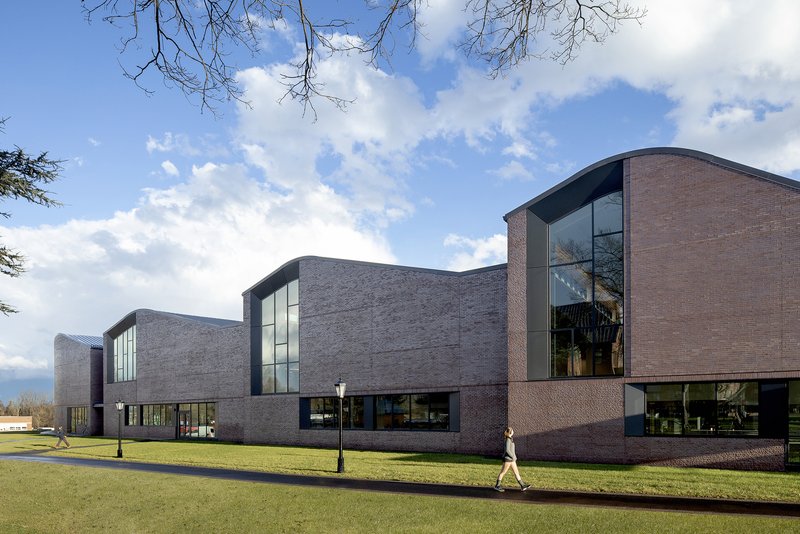
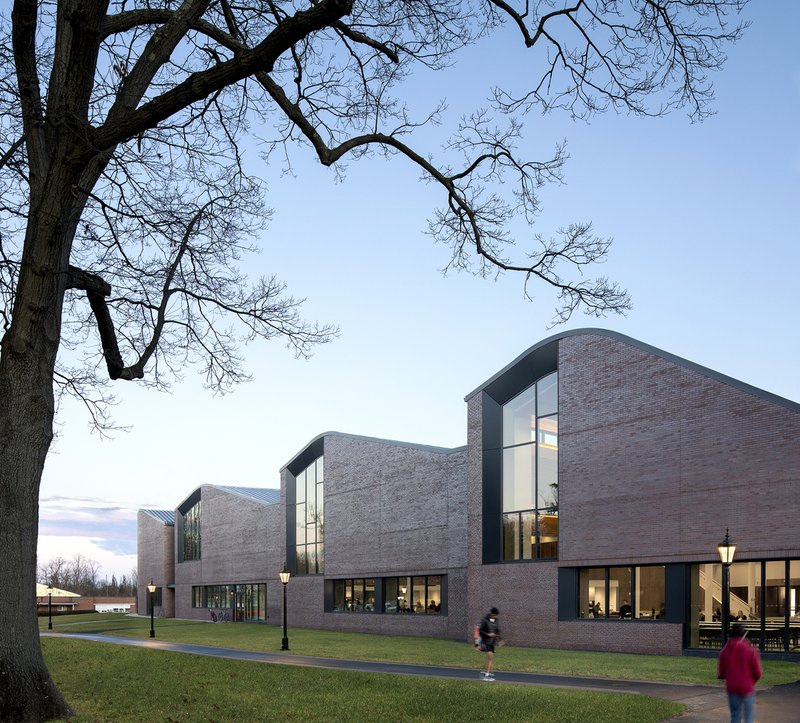
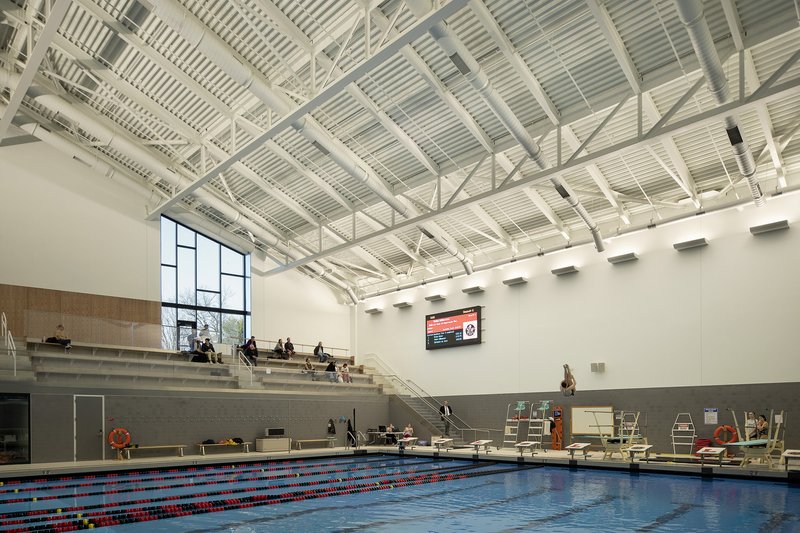
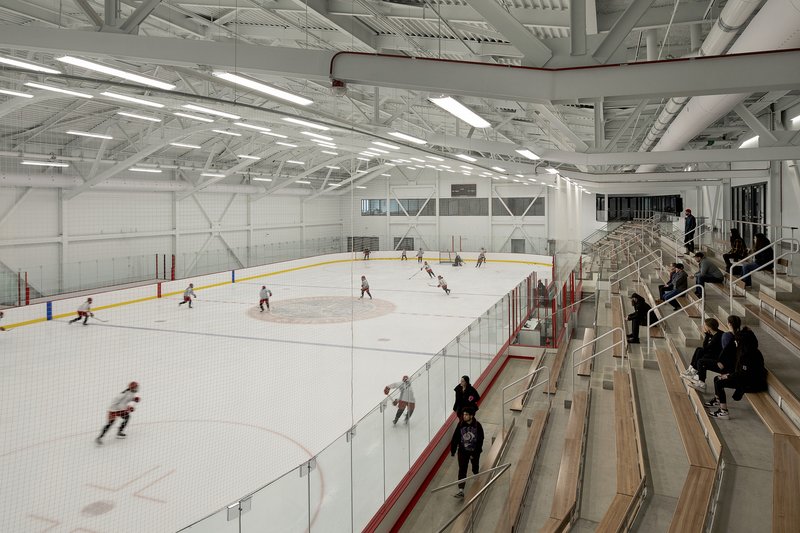
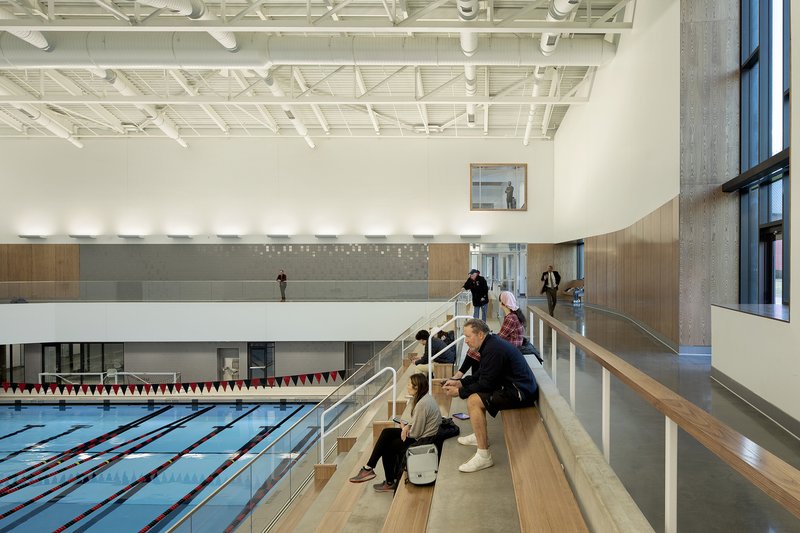
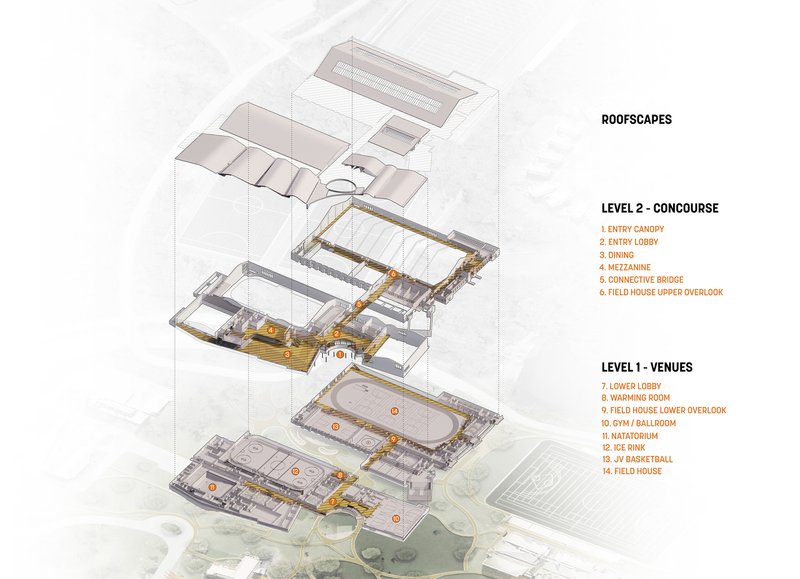
The architectural design prioritizes harmony with the existing campus scale. Sports buildings often require large volumes, which can dominate their surroundings. To maintain the aesthetic integrity of The Lawrenceville School, the Tsai Field House’s design incorporates subtle rooflines and thoughtful placement. By embedding large-scale facilities such as the pool, ice rink, and basketball courts below ground level, the building minimizes its visual impact. The concourse-level upper floor allows spectators to overlook these venues while preserving a sense of intimacy on the campus.
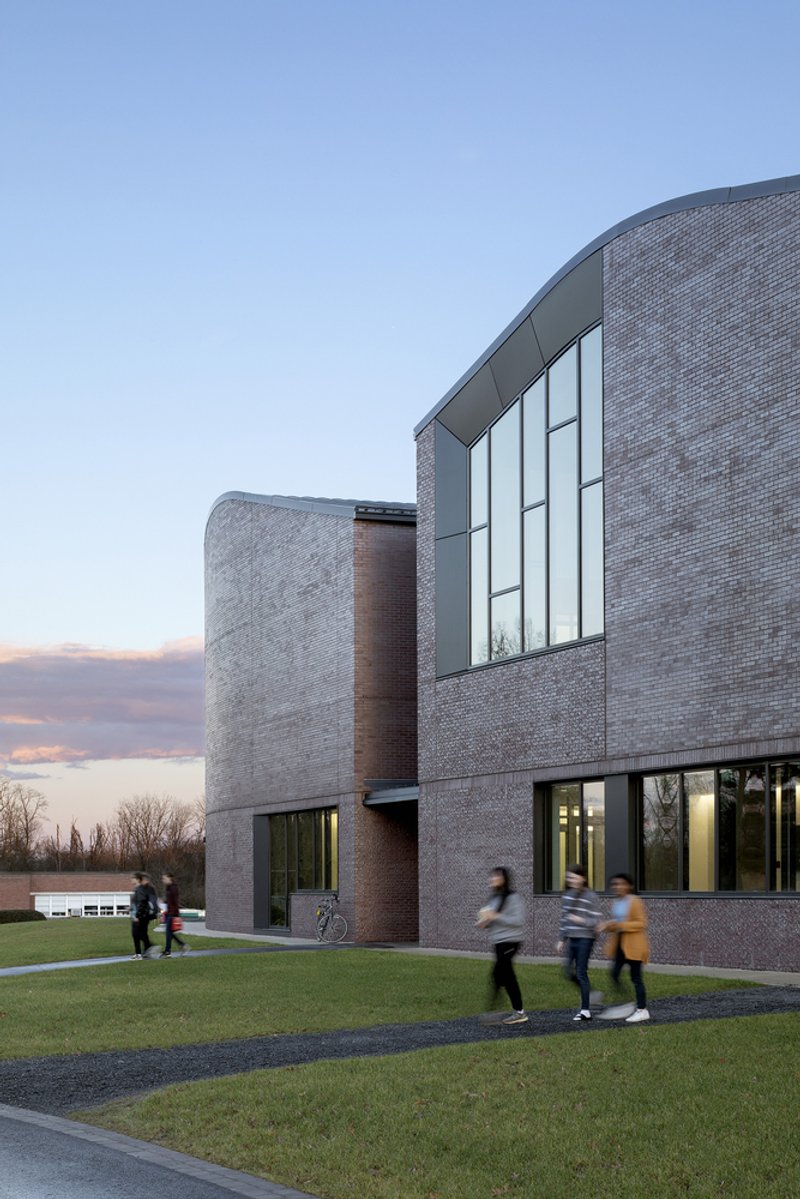
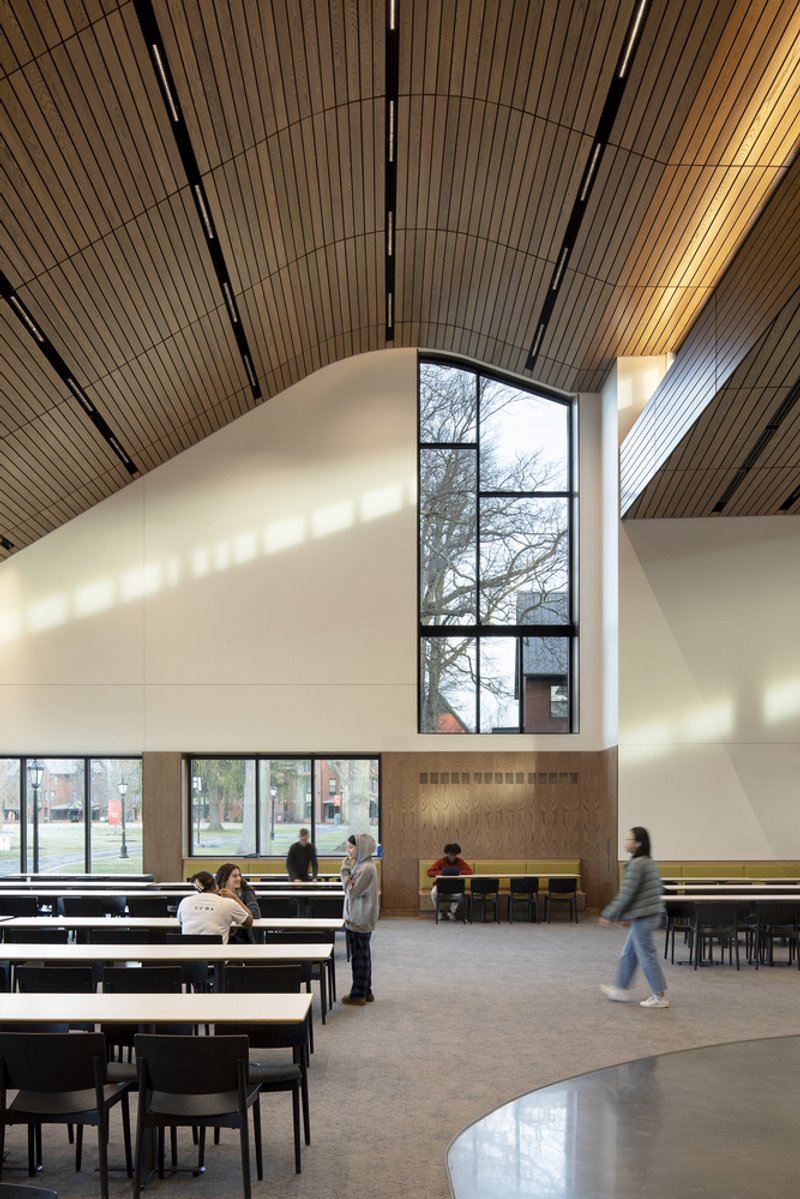
The building’s roofscape reflects a contemporary interpretation of the campus’s architectural character. Inspired by the historic Field House’s curved structural frames, the new Field House features distinctive curved profiles that unify its design. These concave ceilings introduce lateral light through clerestories, enhance the sense of openness, and conceal mechanical systems, ensuring a clean, cohesive aesthetic.
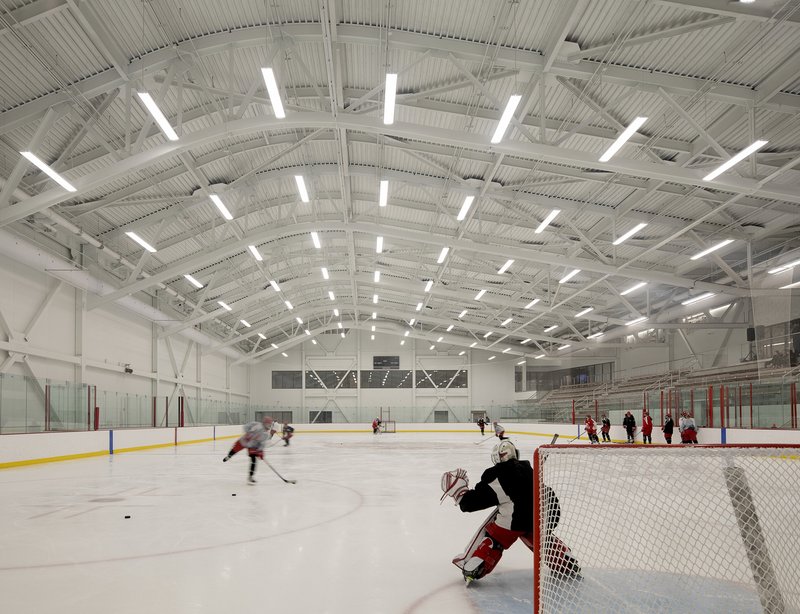
A Center for Connection and Belonging
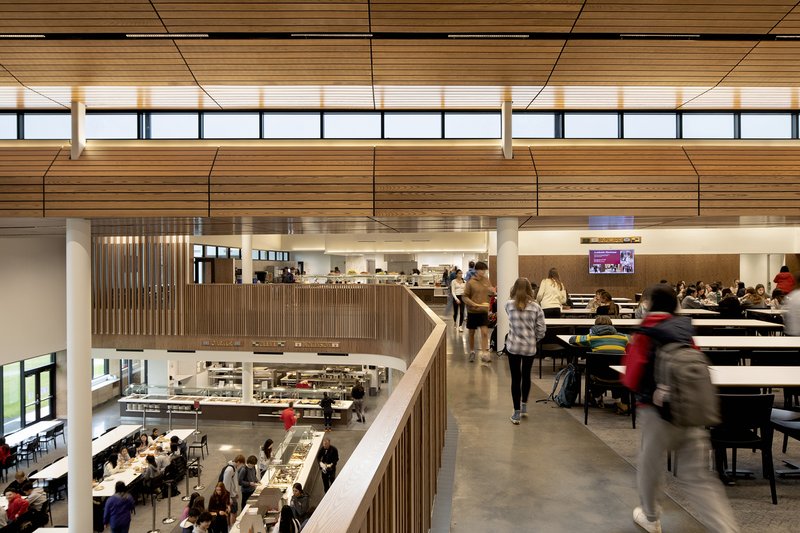
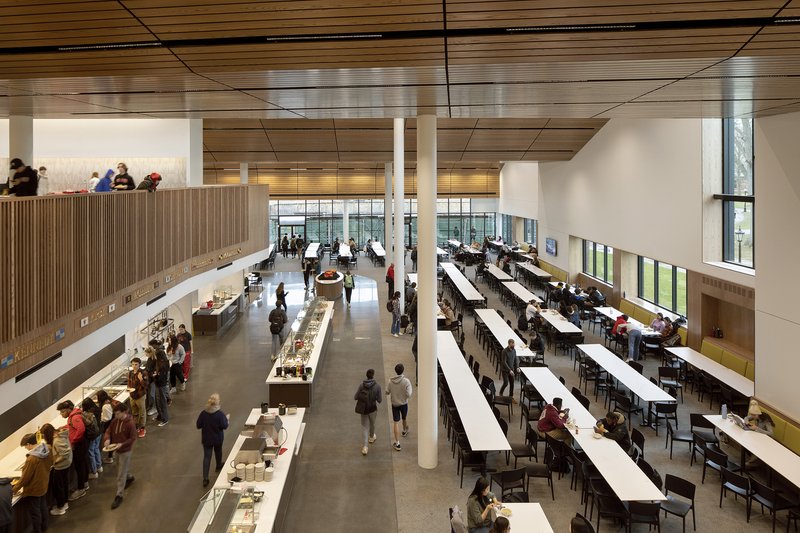
The Tsai Field House is not just a sports facility—it is a space designed to connect students across disciplines and interests. The decision to integrate dining with recreation ensures the building becomes a central hub for daily student life. The dining hall, with a capacity to serve over 500 students, staff, and faculty, fosters interaction and community-building. A mezzanine area is dedicated to first-year students, offering a welcoming space for new members of the Lawrenceville community.
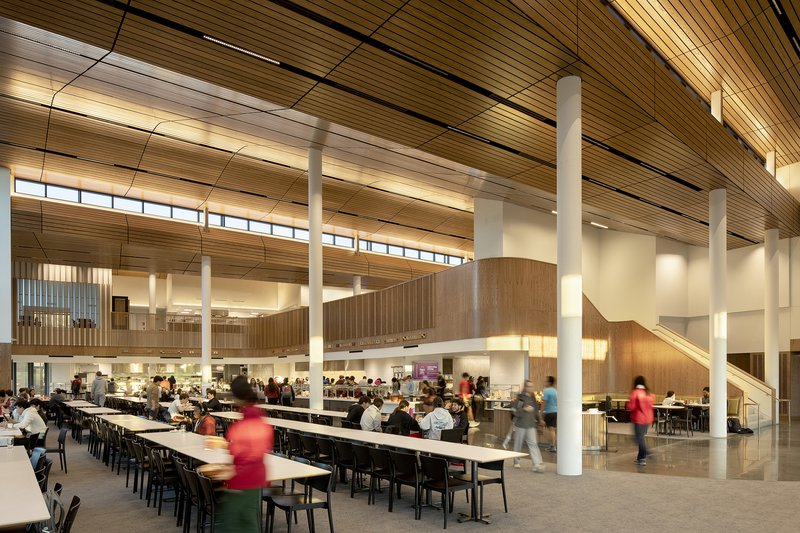
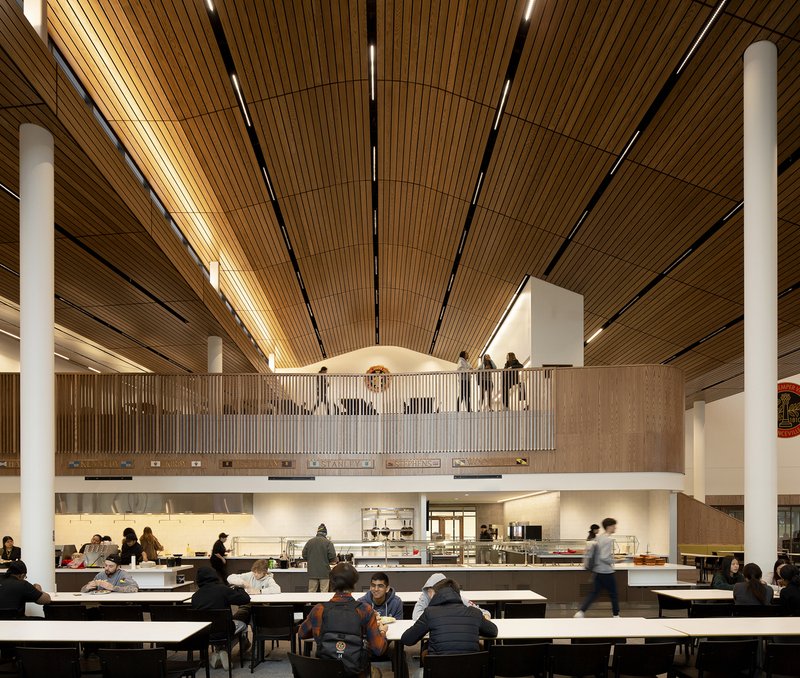
The circulation design further reinforces the sense of connection. The upper floor serves as a concourse level, linking all major spaces and creating a seamless flow for students and visitors. Gathering spaces such as the dining area and the upper lobby act as anchors, bringing together students for meals, socializing, and collaborative activities.
A Purposeful Circulation Strategy
The design achieves a clear separation of spaces while ensuring easy navigation. The upper floor caters to communal and recreational activities, while the lower floor is dedicated to athletic functions. This thoughtful allocation supports the movement of students between the campus and the athletic facilities. Athletes arriving from fields or competitions can access locker rooms and sports venues without disrupting other users.
The building’s strategic placement bridges the divide between the main campus and the athletic fields, creating a seamless connection between academic and athletic pursuits. By integrating these functions, the Tsai Field House embodies the school’s commitment to holistic student development.
Architectural Innovation for Campus Life
The Lawrenceville School Tsai Field House exemplifies how architecture can enhance the student experience. Its design harmonizes with the historic campus, supports a diverse range of activities, and fosters a sense of belonging. From its innovative roofscapes to its community-focused layout, the Field House stands as a model for modern campus architecture.
As Sasaki continues to work on Phase II of the project, which includes renovations to the historic Field House and additional facilities, the Lawrenceville School remains at the forefront of architectural excellence in education.
All Photographs are works of Jeremy Bittermann




Popular Articles
Popular articles from the community

Inverted Architecture Installation by Studio Link-Arc: Exploring the Intersection of Architecture and Living Organisms
Inverted Architecture Installation by Studio Link-Arc blends mycelium, sustainability, inverted design, ecological cycles, and urban adaptive architecture in Shenzhen.
Atelier Macri Concept Store Interior Design by CASE-REAL
Atelier Macri store features a "ko" counter, walnut wood details, cork displays, blending retail, gallery, and seamless customer experiences.
An Miên Lumière Cafe by xưởng xép, Ho Chi Minh City, Vietnam
An industrial-inspired café where layered steel and warm light create a dynamic, immersive environment shaped by reflection, depth, and perception.
Louis Malle Cinema: A Limestone Cultural Landmark Revitalizing Community Life in Prayssac
Limestone cinema extension with public forecourt, blending heritage and modern design to create flexible cultural spaces and strengthen community interaction.


Similar Reads
You might also enjoy these articles


The Ken Roberts Memorial Delineation Competition (Krob)
As the most senior architectural drawing competition currently in operation anywhere in the world, it draws hundreds of entries each year, awarding the very best submissions in a series of medium-based categories.

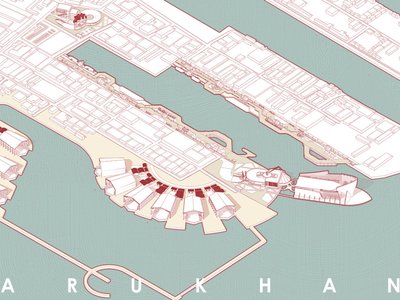
Waterfront Redevelopment and Urban Revitalization in Mumbai: Forging a New Dawn for Darukhana
A transformative waterfront redevelopment project reimagining Darukhana’s shipbreaking heritage into an inclusive urban future.

OUT-OF-MAP: A Call for Postcards on Feminist Narratives of Public Space
Rhizoma Design and Research Lab invites artists, designers, architects, researchers, and students to reflect on how feminist perspectives can reshape public space. Selected works will be exhibited in Barcelona, October 2026. Submissions open until 15 April 2026.


Documentation Work on Buddhist Wooden Temple
Architectural syncretism and cultural hybridity: A comparative study of the Buddhist temples in Chattogram Hill tracks


Explore Architecture Competitions
Discover active competitions in this discipline




The International Standard for Design Portfolios


The Global Benchmark for Architecture Dissertation Awards


The Global Benchmark for Graduation Excellence


Challenge to reimagine the Iron Throne
Comments (0)
Please login or sign up to add comments
No comments yet. Be the first to comment!