
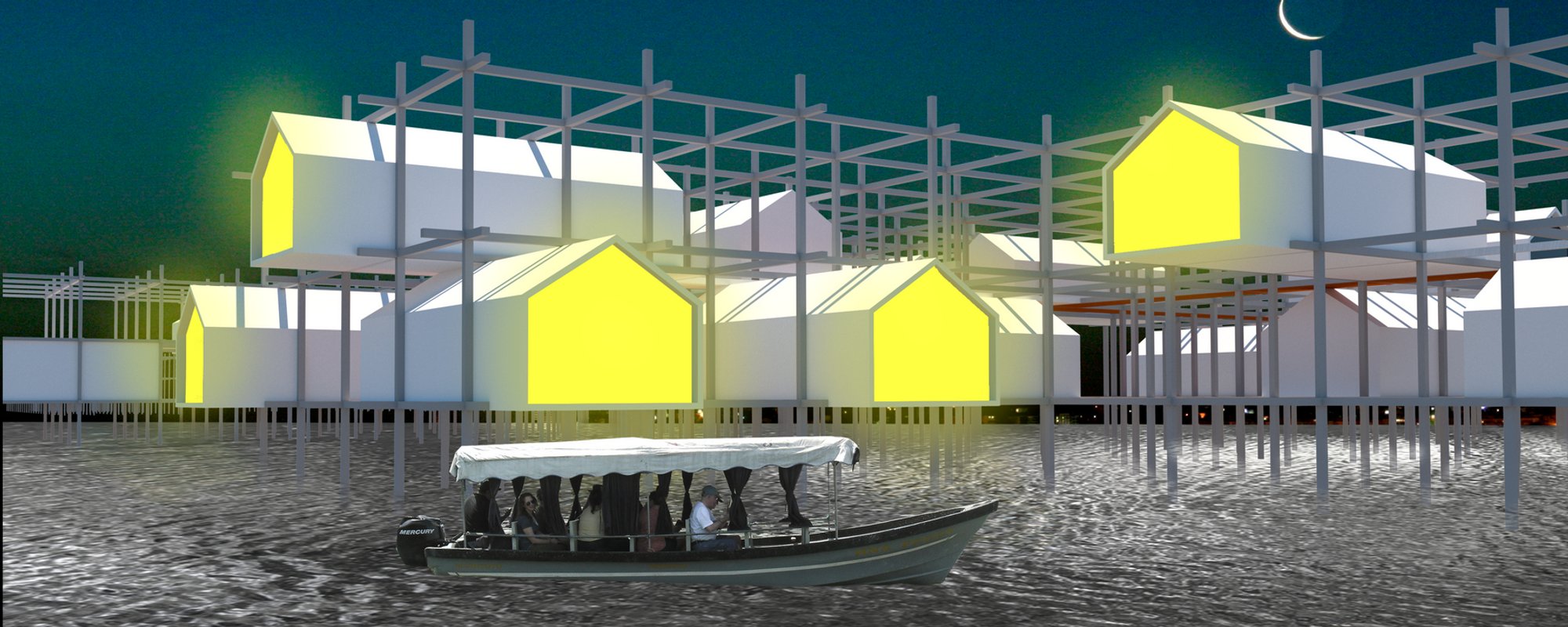
Mangrove Swamp: Flood-Resilient Architecture for a Changing Climate
Flood-Resilient Architecture Inspired by Mangroves: Designing adaptive communities that coexist with water for a safer future

Flooding has long been a persistent challenge for communities worldwide, particularly in low-lying and coastal regions. Traditional houses, when placed in flood-prone zones, often succumb to rising waters, leaving communities vulnerable to disaster. Architecture, however, has always found inspiration in nature—and the mangrove swamp offers valuable lessons for resilience.
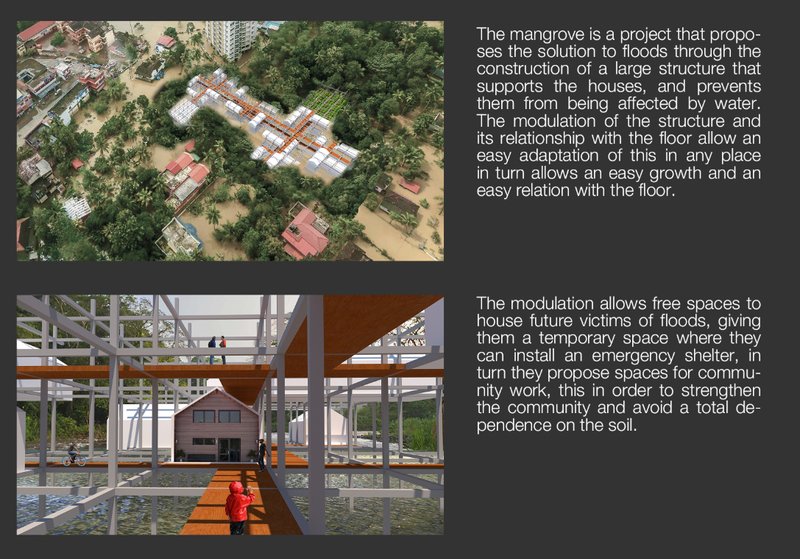
This visionary project, Mangrove Swamp by Julian Castañeda, reimagines the relationship between human settlements and water through adaptive, modular, and nature-inspired design. By embracing the principles of flood-resistant architecture, the project creates a blueprint for sustainable living in vulnerable environments.
Learning from Nature: Architecture that Flows with Water
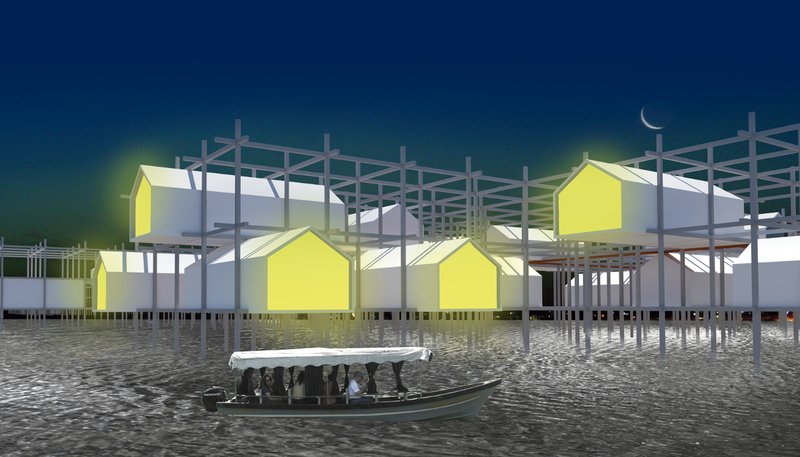
Unlike rigid built forms, nature does not resist water—it adapts to it. Mangrove forests are a prime example of this principle. Their intricate root systems allow water to flow naturally, protecting ecosystems and human settlements alike. Inspired by this, the Mangrove Swamp project integrates pile-dwelling concepts, allowing structures to rise above floodwaters while maintaining harmony with the environment.
This approach shifts architecture away from resisting natural forces and toward coexisting with them, creating settlements that are not only resilient but also deeply ecological.
Modular Design: Growth, Adaptation, and Community Resilience
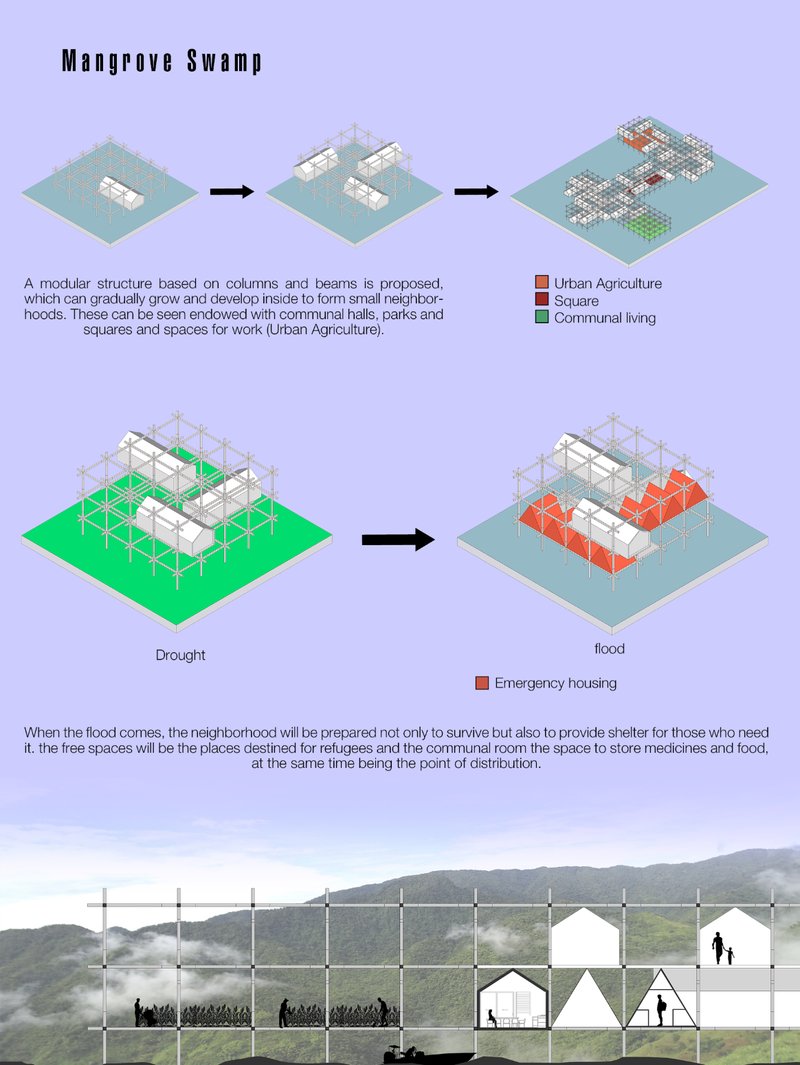
At the heart of the project is a modular structure based on columns and beams, which allows gradual expansion into small neighborhoods. These adaptable frameworks provide space for communal halls, urban agriculture, parks, and shared living environments. The design can grow organically, offering flexibility for both drought and flood conditions.
In times of crisis, the modular system transforms into emergency housing. Free spaces become shelters for refugees, while communal halls double as distribution points for food, medicine, and other essential supplies. This multi-layered adaptability makes the project more than just housing—it becomes a lifeline during disasters.
Building with Climate Adaptation in Mind
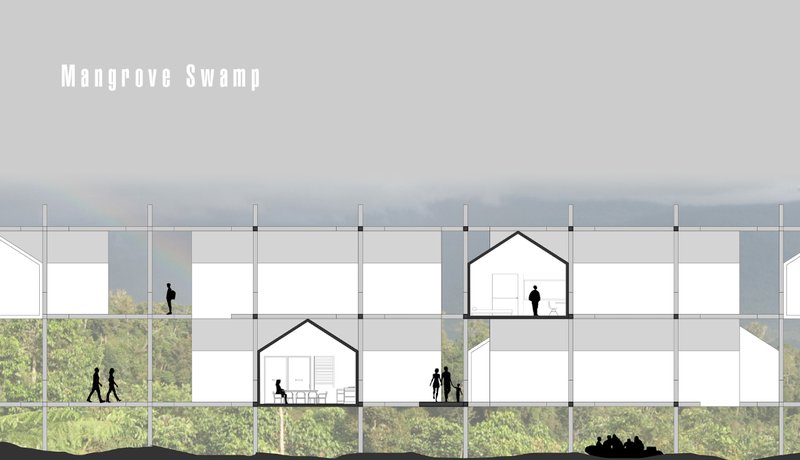
The Mangrove Swamp project demonstrates how climate-adaptive architecture can safeguard communities. Its elevated structures prevent direct contact with floodwaters, while open frameworks allow natural ventilation and daylight to reach every level. The modularity ensures easy adaptation across different geographies, enabling communities to replicate the model globally.
Additionally, the project strengthens social cohesion by embedding communal spaces into its core. By offering areas for gathering, farming, and collective work, it fosters resilience not only in physical terms but also in cultural and social dimensions.
Toward a Sustainable Future
The Mangrove Swamp is more than a flood-prevention strategy—it is a new vision of how architecture can coexist with nature. By integrating resilient design principles, modular growth, and ecological inspiration, it presents a sustainable and scalable solution for future living.
In an era of climate uncertainty, architecture must adapt. Projects like Mangrove Swamp remind us that resilience lies not in resisting water, but in learning to live with it—just as the mangroves have done for centuries.
Project by Julian Castañeda
Shortlisted entry of HEAL+



Popular Articles
Popular articles from the community

On the Brooks House by Monsoon Collective – A Contemporary Kerala Home Rooted in Tradition
Kerala home blending tradition and modernity with water-inspired design, brick architecture, courtyard planning, and sustainable rainwater harvesting strategies.
A Contemporary Take on Iranian Residential Architecture
A modern interior design in Mashhad that reinterprets brick, light, and spatial flow to create a warm, contemporary residential architecture.
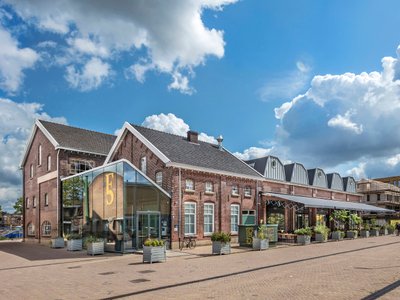
Fifth NRE Jazz Club – De Bever Architecten: Eindhoven’s Revitalized Cultural Hub
Historic gas factory transformed into Fifth NRE Jazz Club blending modern sustainability, jazz culture, dining, and heritage architecture seamlessly.


The Ken Roberts Memorial Delineation Competition (Krob)
As the most senior architectural drawing competition currently in operation anywhere in the world, it draws hundreds of entries each year, awarding the very best submissions in a series of medium-based categories.

Similar Reads
You might also enjoy these articles


Top 15 Architecture Competitions to Enter in 2026
From student-friendly idea competitions to prestigious international awards, here are the best architecture competitions open for entries in 2026. Updated regularly.

DIY & Engineering in Computational Design : Enter the BeeGraphy Design Awards
Showcase Your Creativity with Computational Design and Open Source Projects
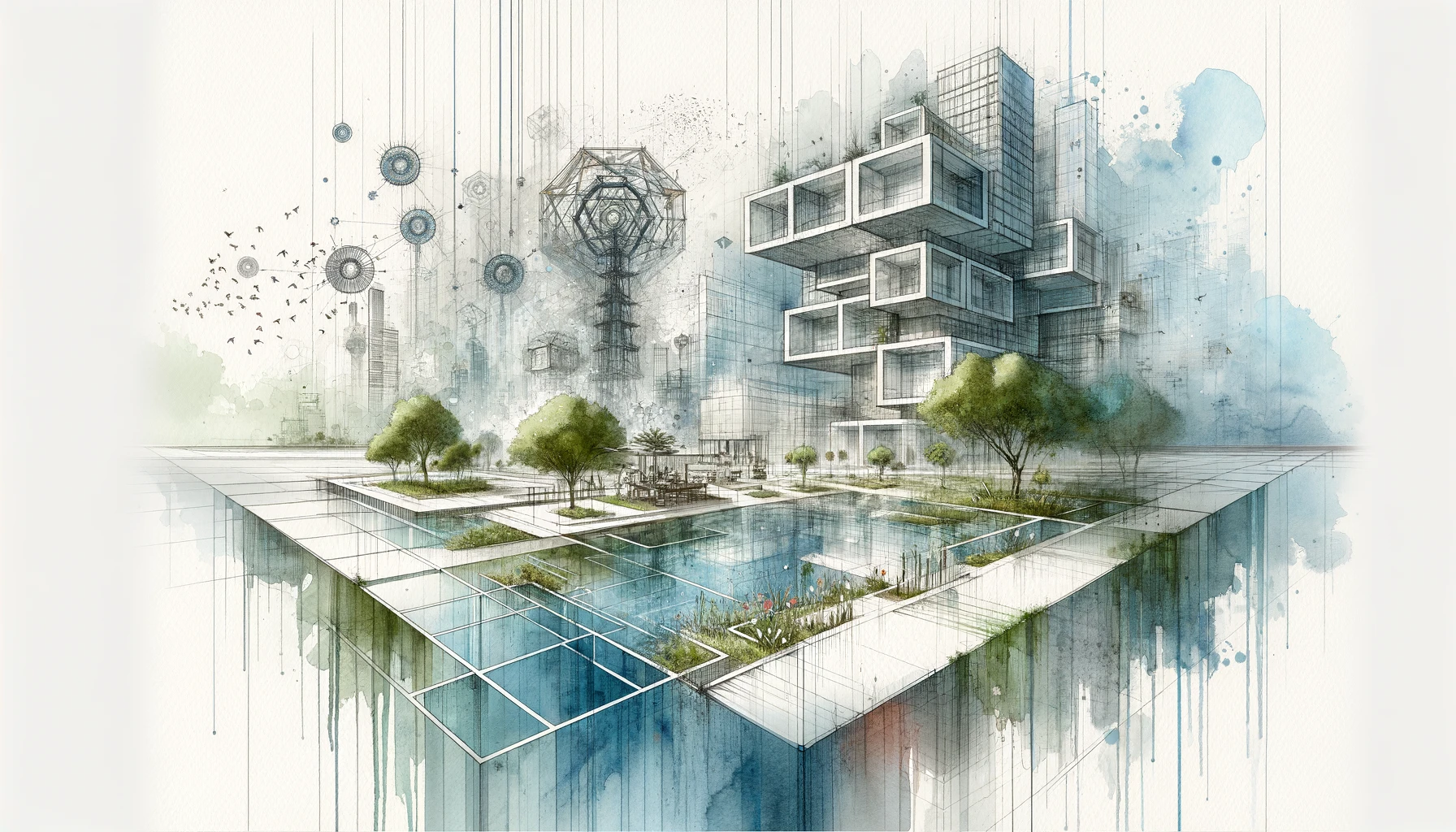
Innovative Design Solutions: Award-Winning Projects from Recent Architecture Competitions
Exploring award-winning architectural projects shaping the future of design, sustainability, and community.


Explore Architecture Competitions
Discover active competitions in this discipline




The International Standard for Design Portfolios


The Global Benchmark for Architecture Dissertation Awards


The Global Benchmark for Graduation Excellence


Challenge to reimagine the Iron Throne
Comments (0)
Please login or sign up to add comments
No comments yet. Be the first to comment!