
MIGIUI by Architect-K: Harmonizing Architecture with Nature in South Korea
Exploring MIGIUI by Architect-K, a South Korean project that harmonizes architecture with nature, fostering ecological restoration and contemplation.

In the serene foothills of Goun Mountain, part of South Korea's Yeongnam Alps, the MIGIUI project by Architect-K stands as a testament to the seamless integration of architecture and nature. This innovative endeavor redefines the relationship between built environments and the natural world, offering a tranquil retreat that invites visitors to reconnect with the landscape.
Site Restoration: Healing the Landscape
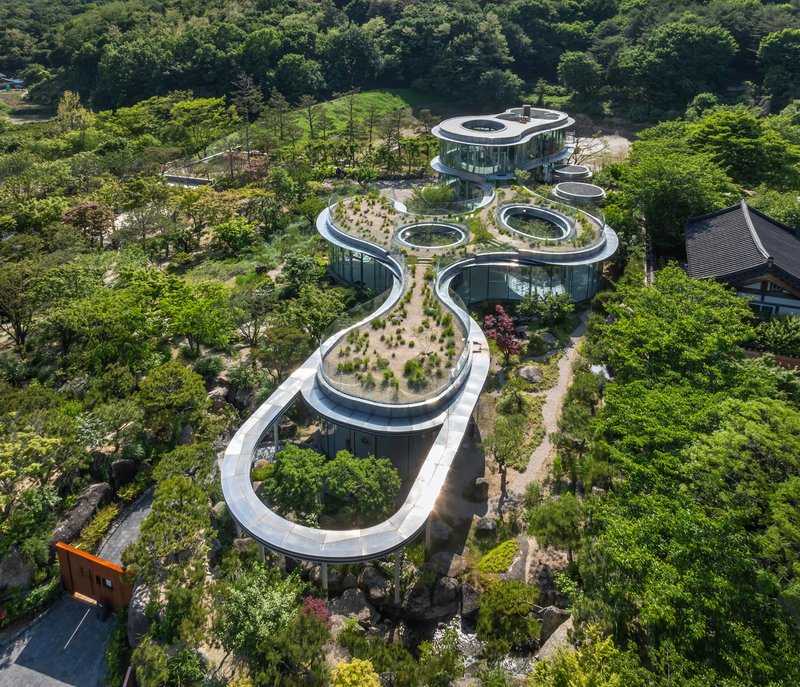
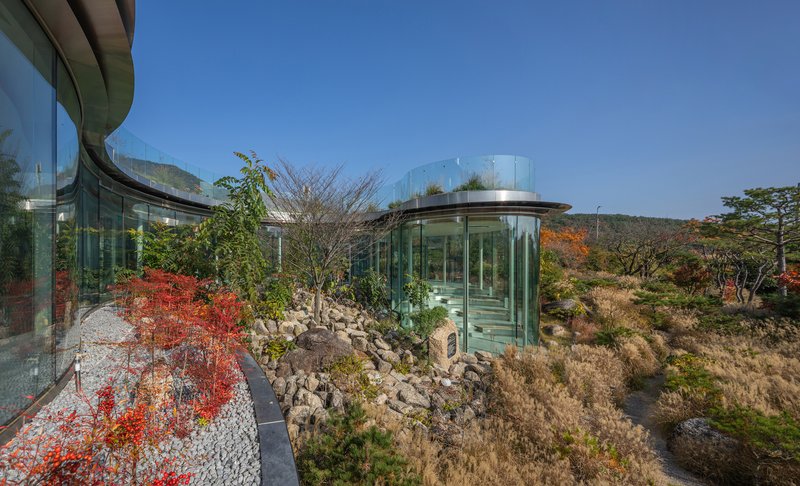
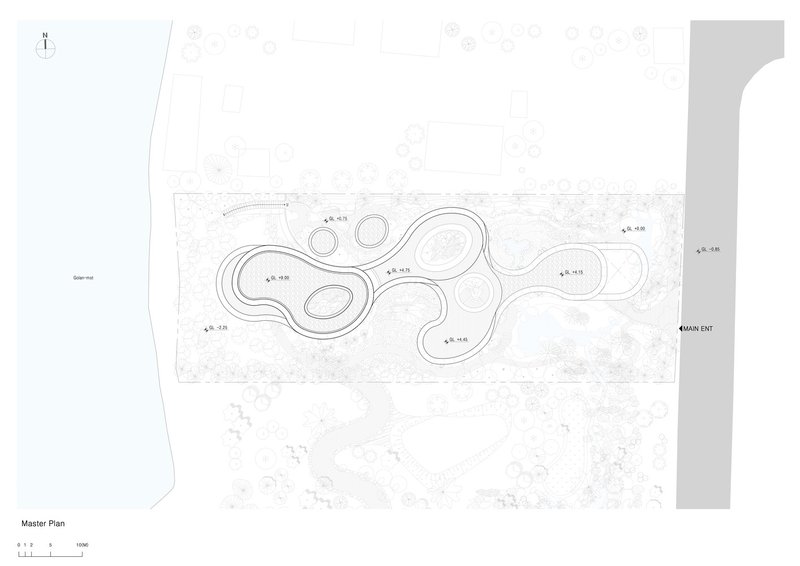
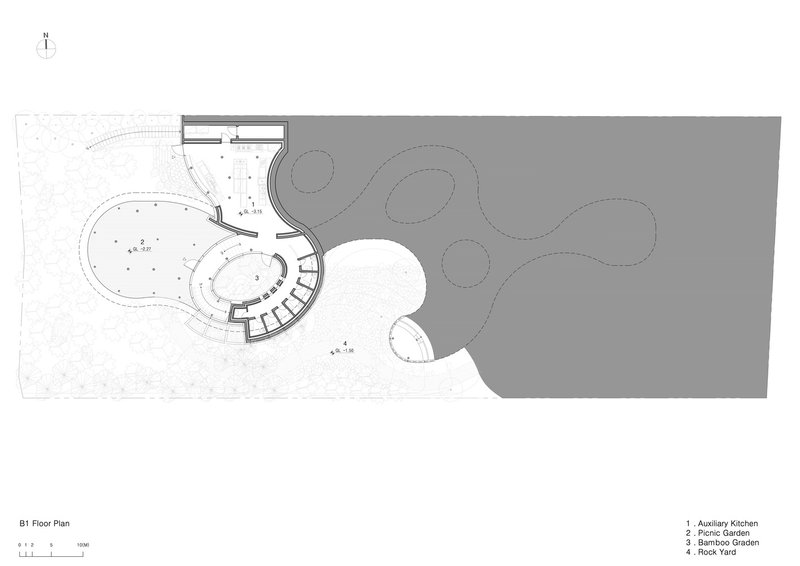
The journey of MIGIUI began with a commitment to restoring a site that had been marred by artificial interventions. Originally untouched, the land underwent significant alterations due to neighboring developments, resulting in flattened terrains and exposed soil. Recognizing the need for ecological healing, the western portion of the site was carefully lowered to reestablish its connection with the adjacent Golan-mot Pond. A gentle slope was introduced towards the eastern road, and indigenous trees, stones, and water features were reintroduced, reviving the memory of the original forested landscape.
Architectural Design: A Subtle Pathway Through Nature
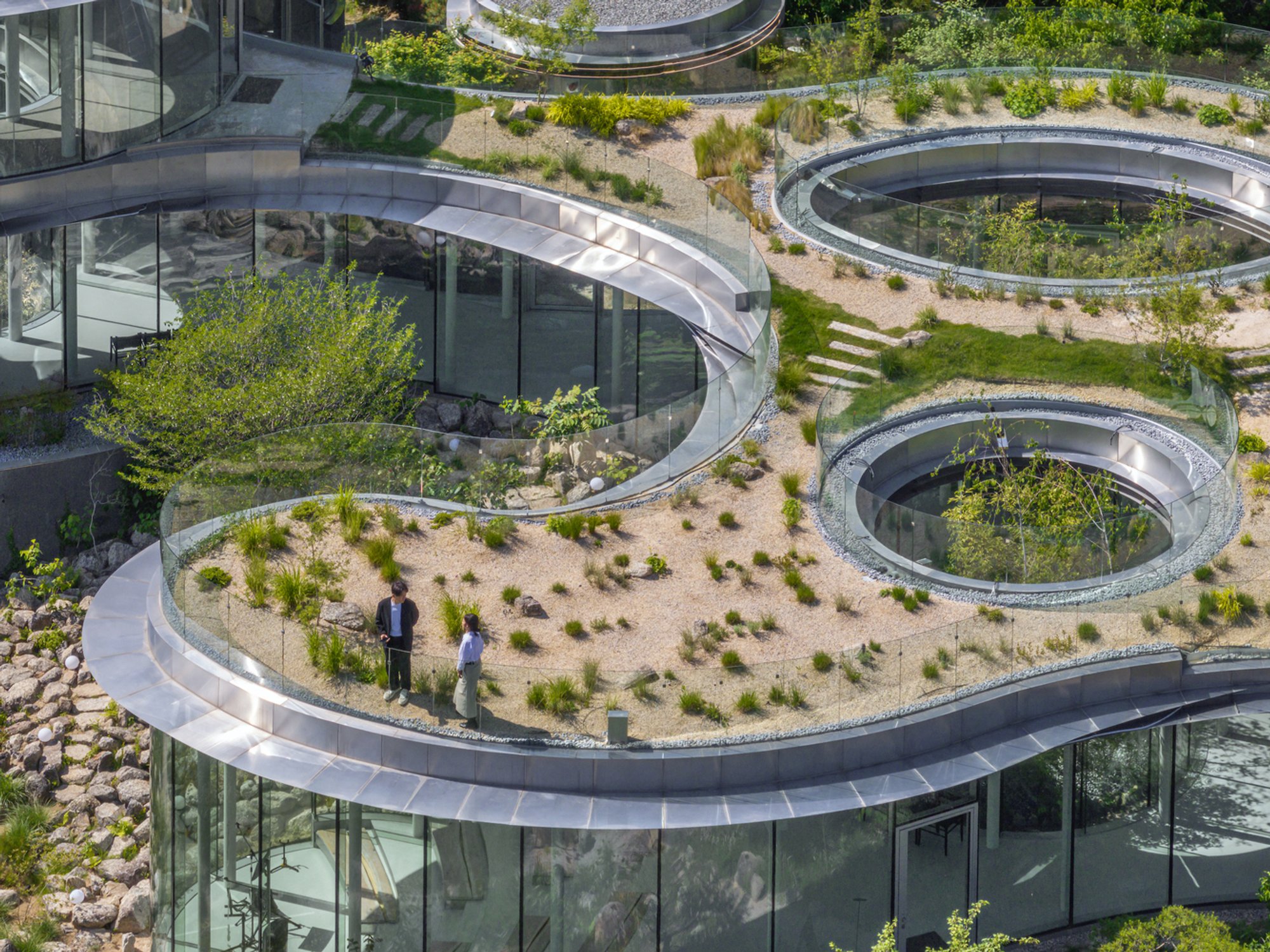
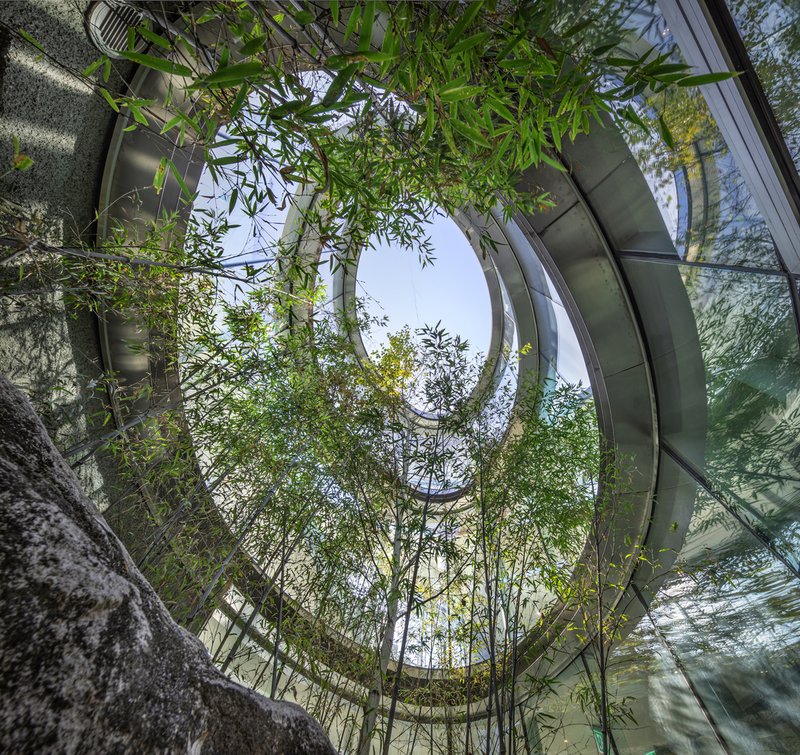
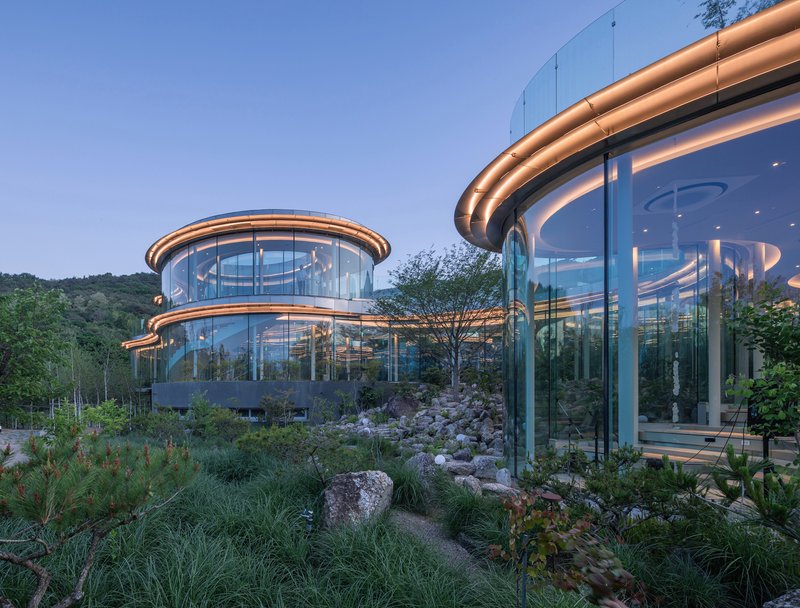
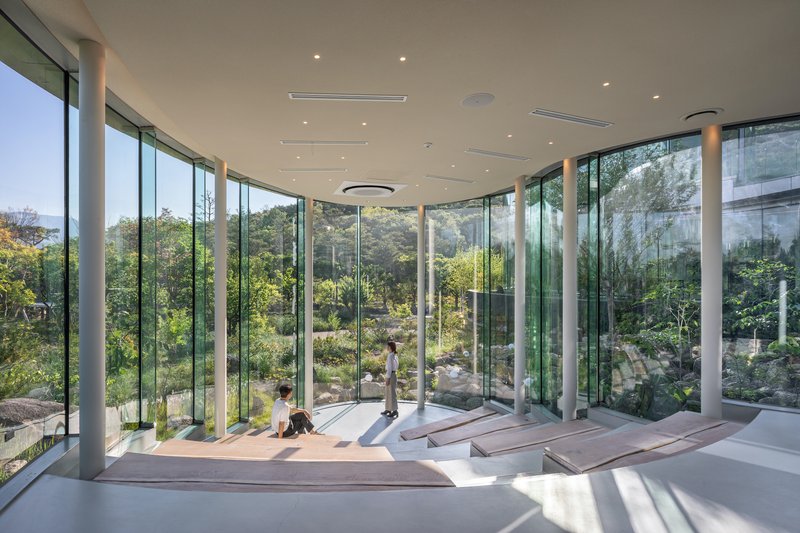
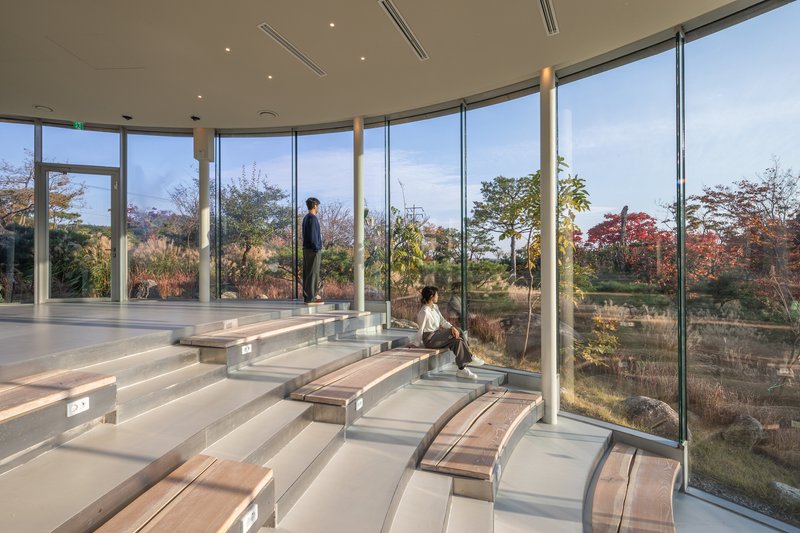
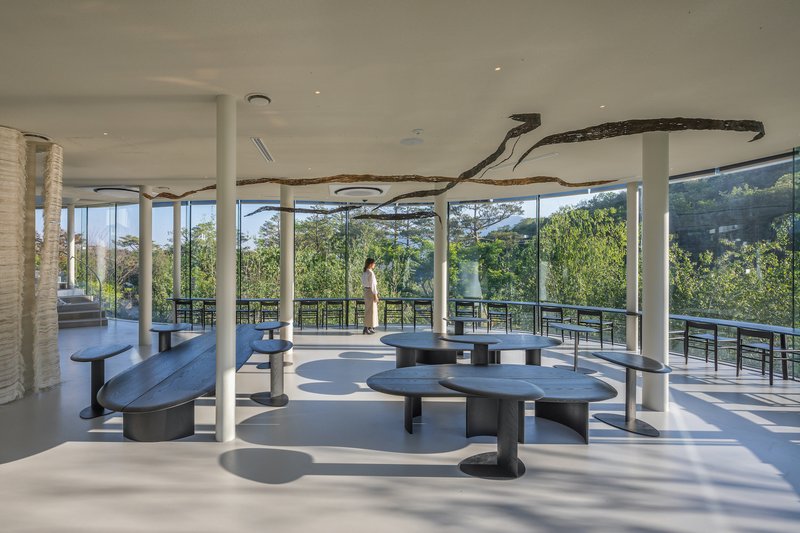
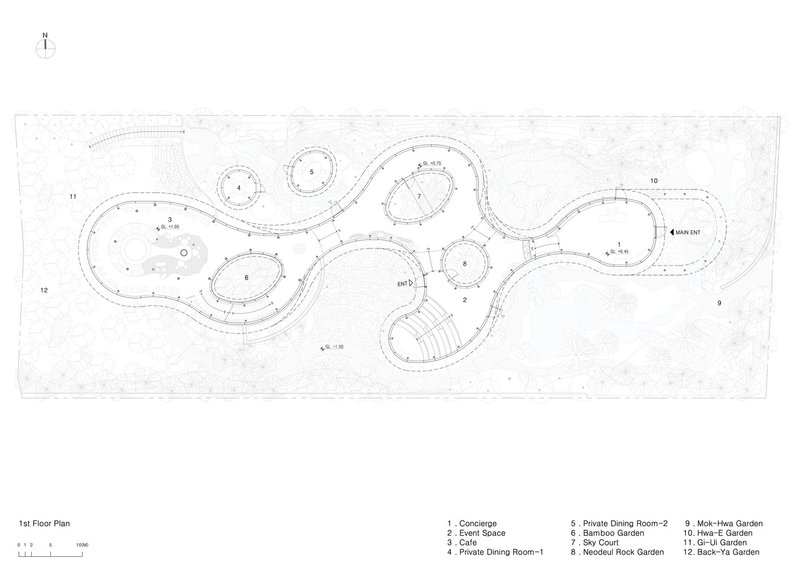
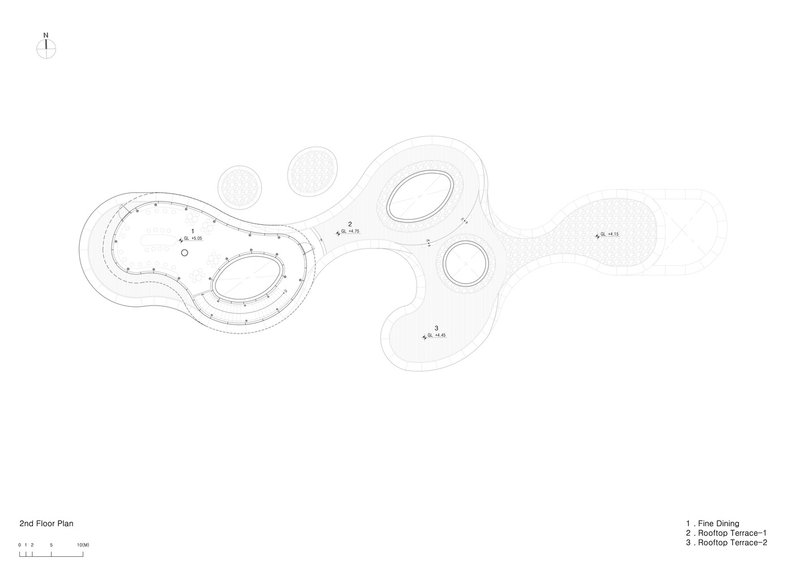
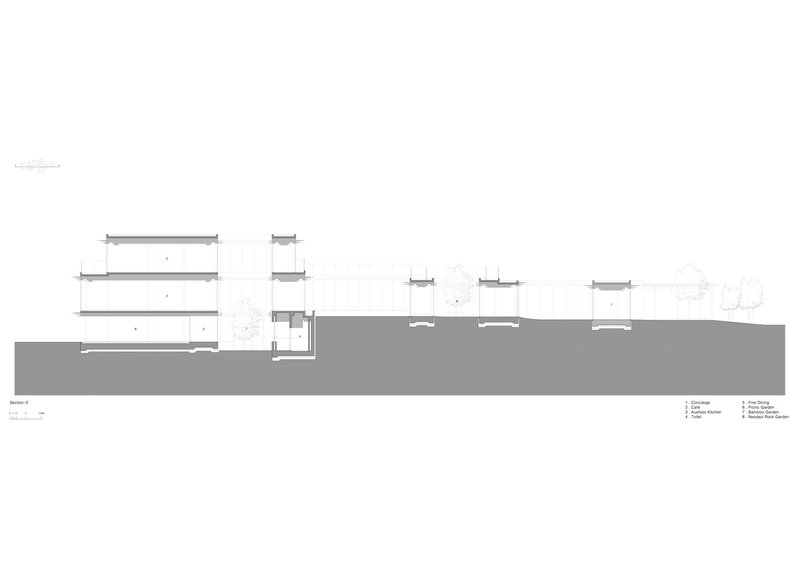
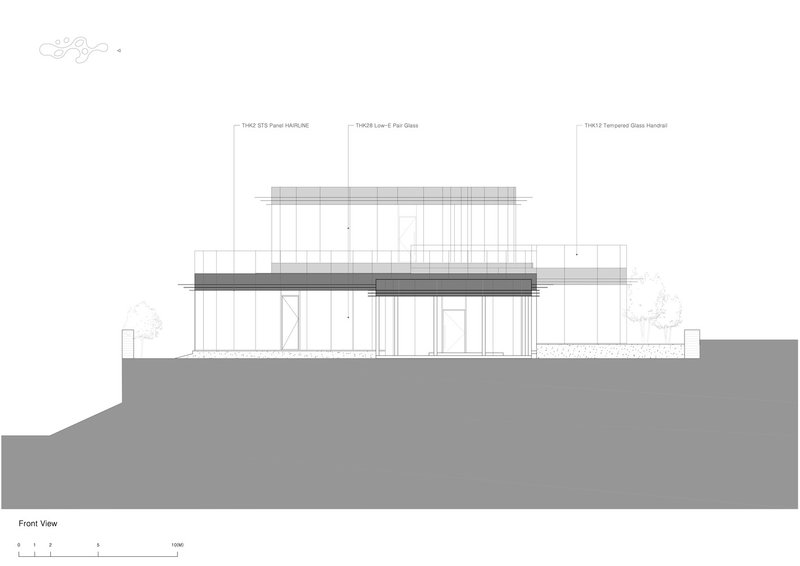
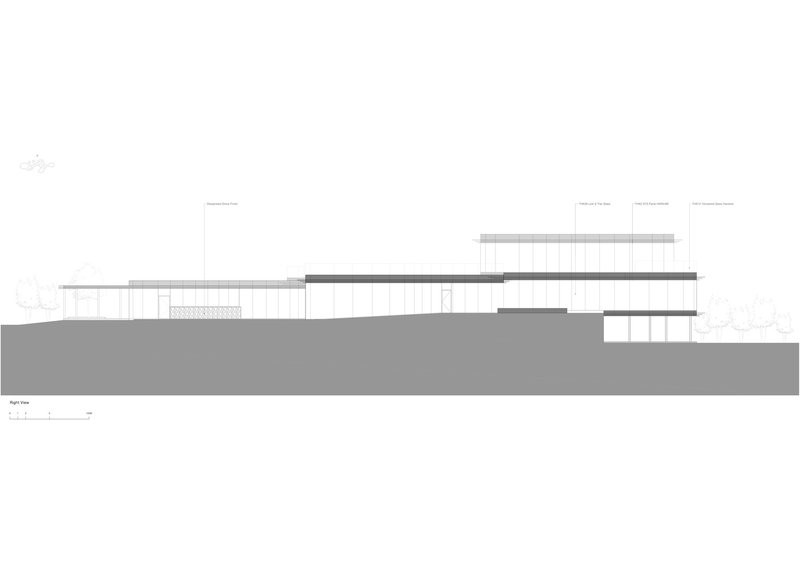
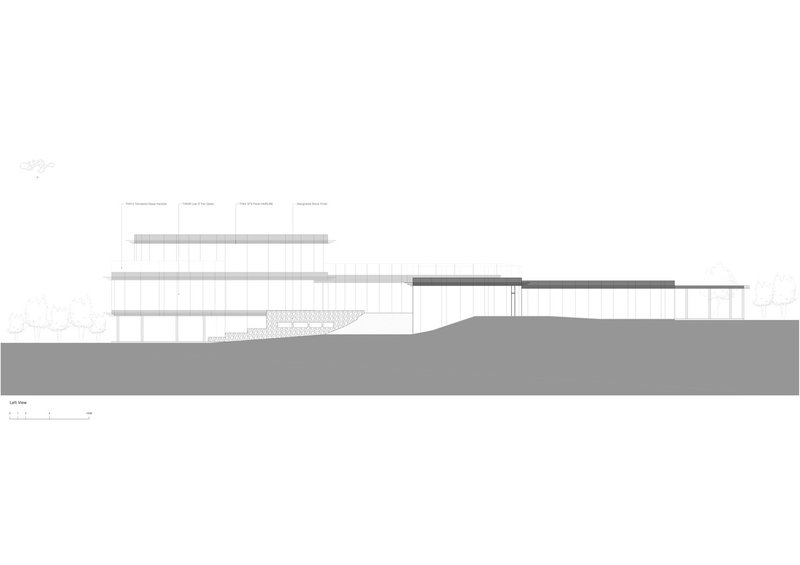
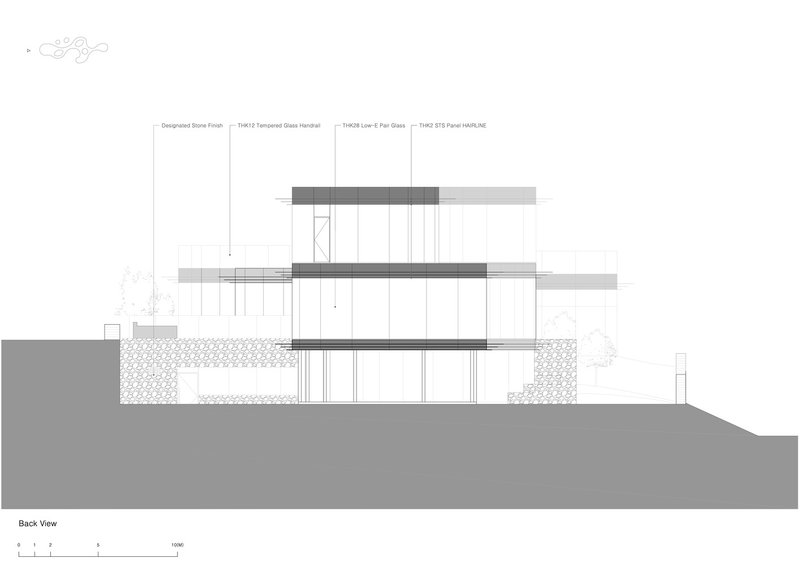
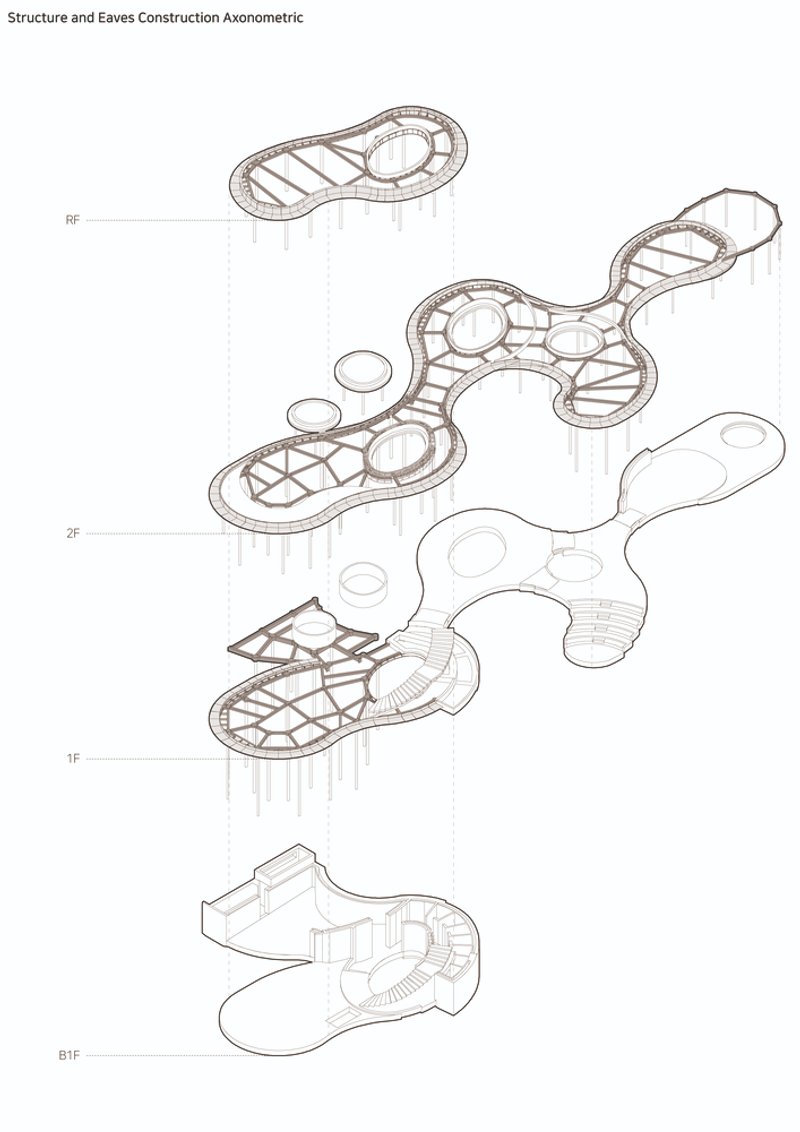
Rather than imposing a dominant structure, Architect-K envisioned MIGIUI as an 80-meter-long forest path that meanders from the entrance to the water's edge. This design philosophy dissolves the boundaries between the built environment and nature, embedding café spaces, rest zones, and courtyards along the route. The architecture serves as a conduit, guiding visitors through a contemplative journey that fosters reflection and a deepened appreciation for the natural surroundings.
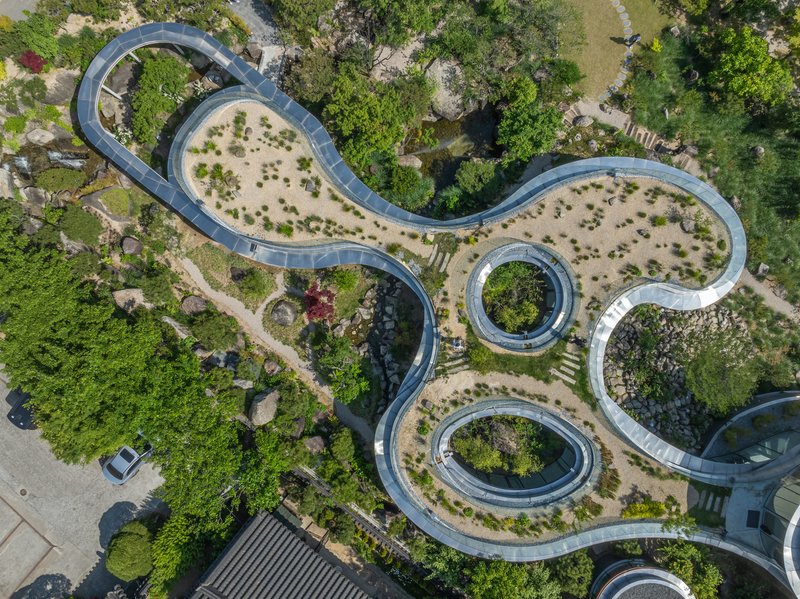
Courtyards: Blurring Indoor and Outdoor Boundaries
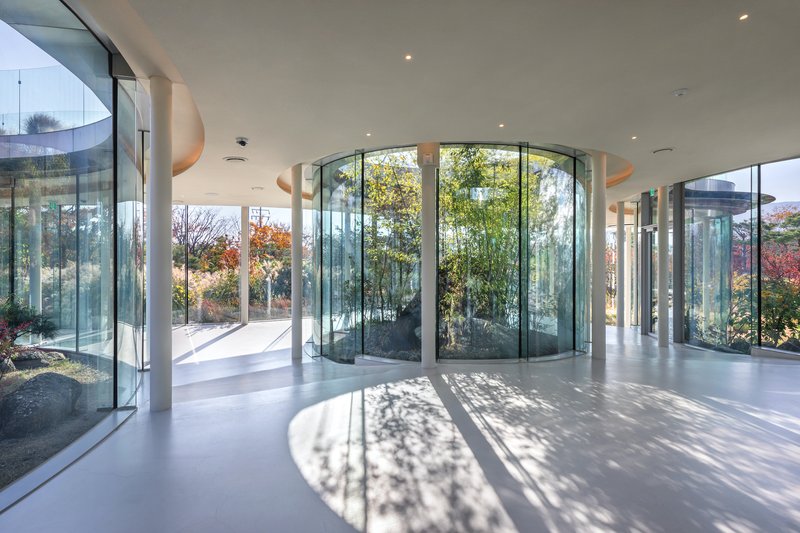
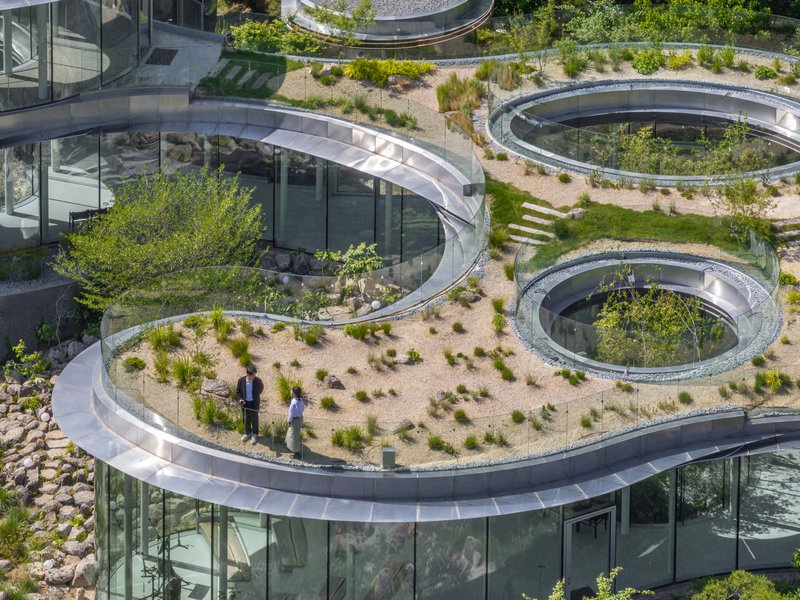
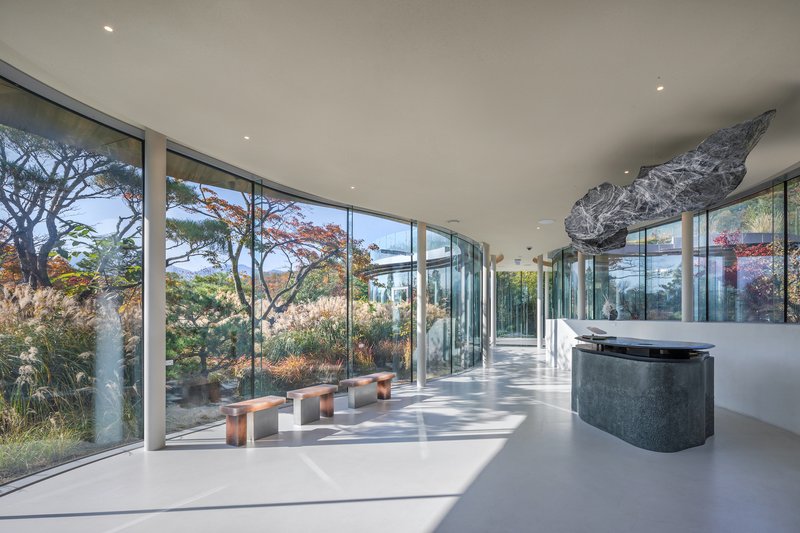
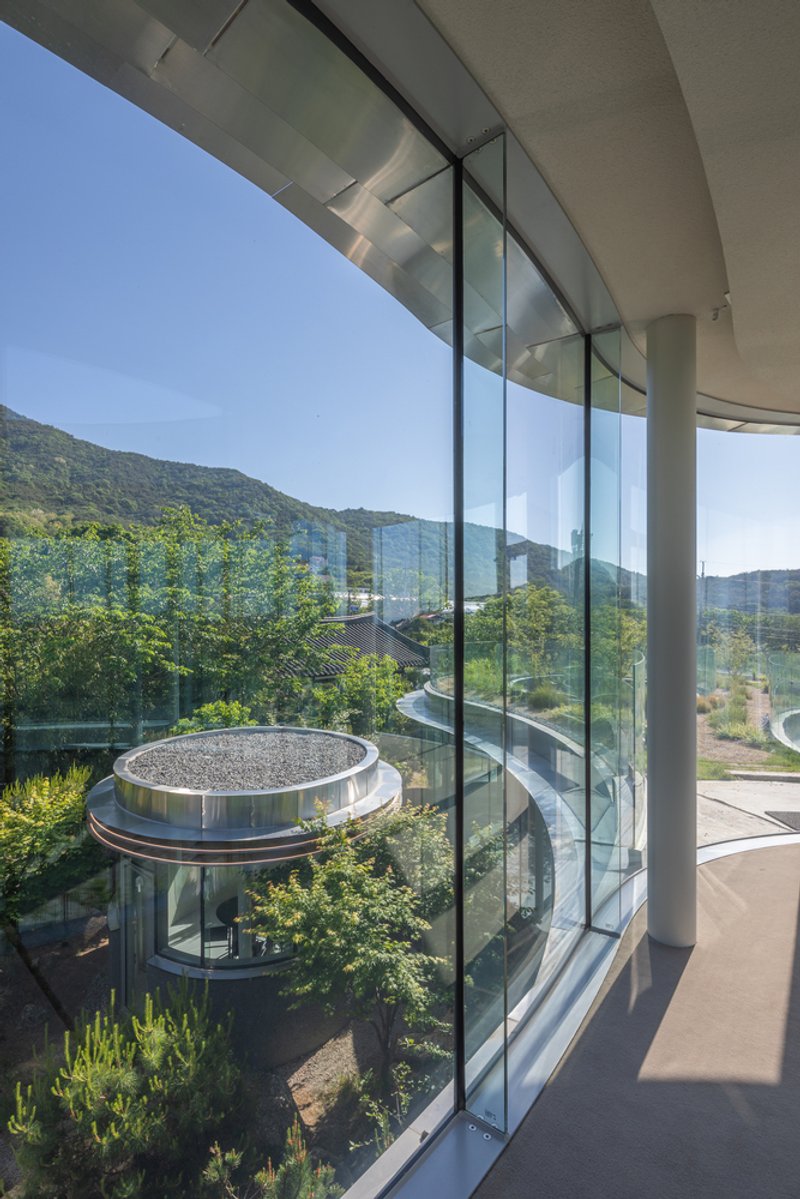
Three open courtyards punctuate the pathway, further blurring the lines between interior and exterior spaces. These thoughtfully designed areas encourage visitors to engage in a slow, immersive experience, promoting mindfulness and a sense of tranquility. The café operates with limited access, ensuring an intimate atmosphere where guests can savor menus inspired by natural elements such as wood, stone, and water, enhancing their sensory connection to the environment.
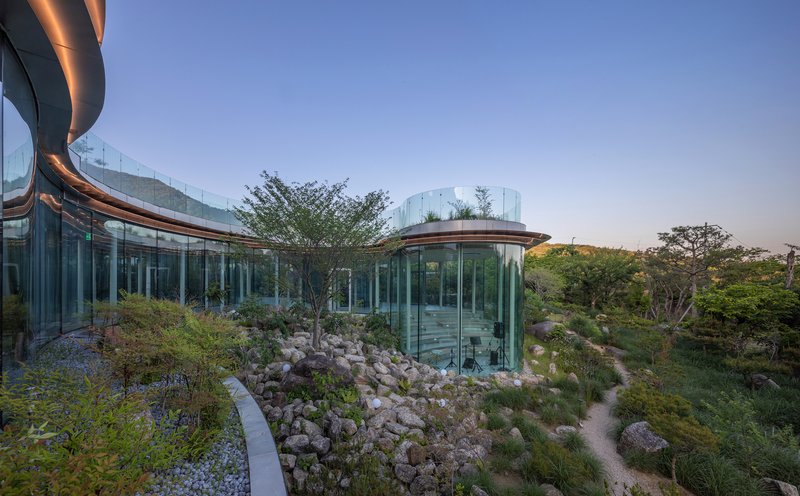
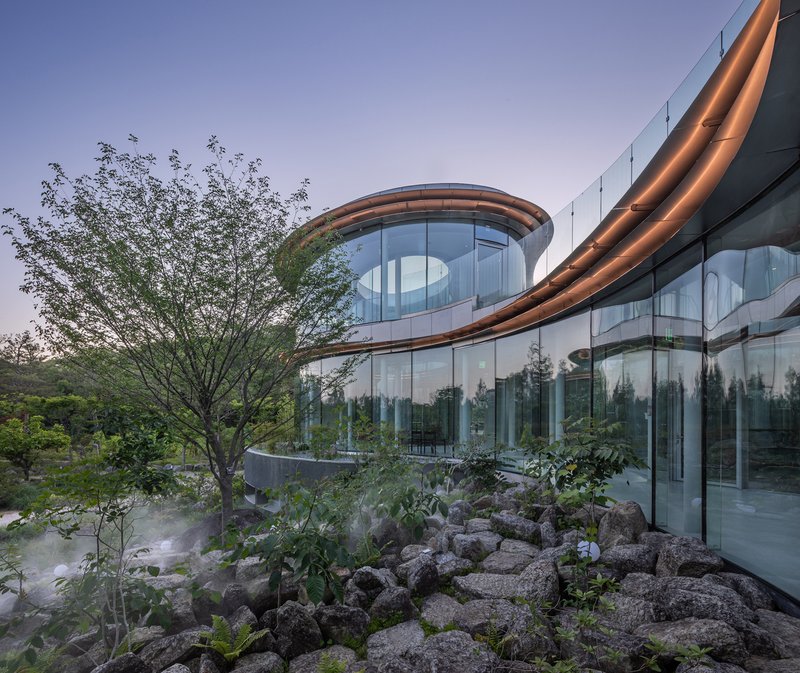
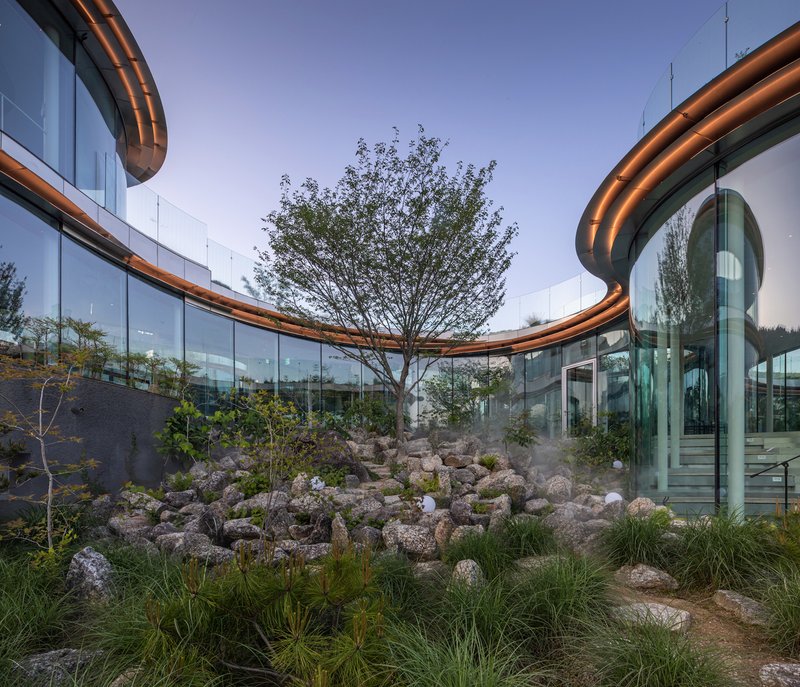
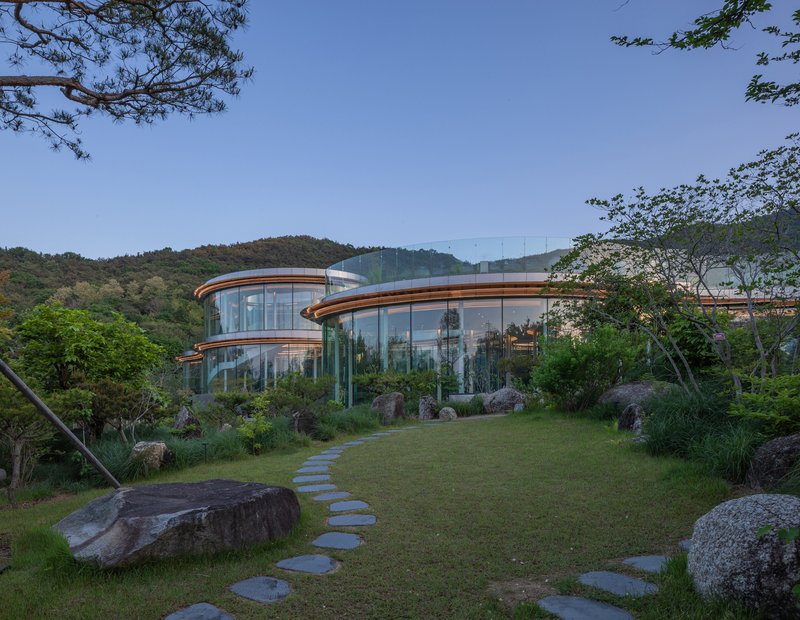
Minimalist Aesthetics: Transparency and Integration
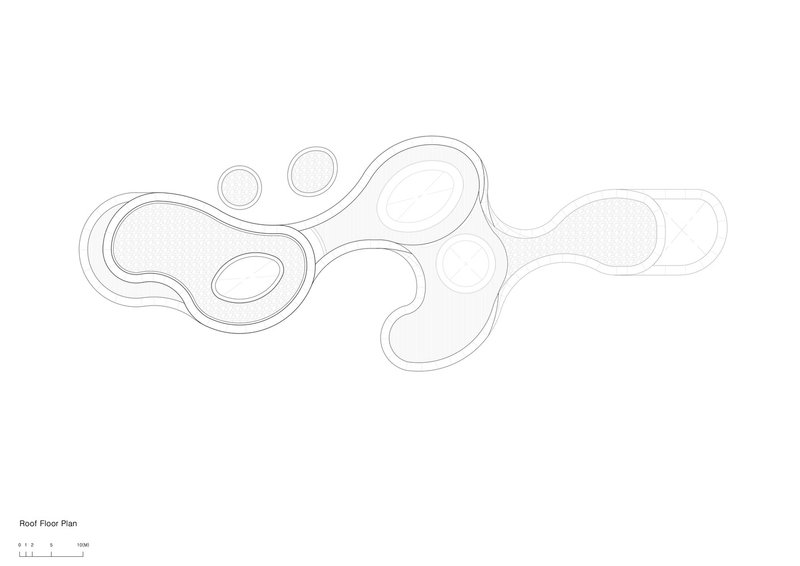
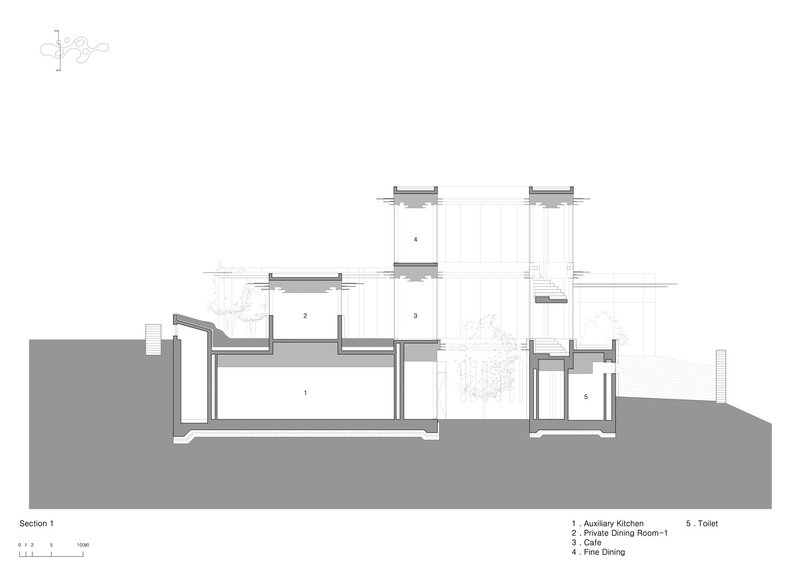
Embracing a minimalist aesthetic, MIGIUI features a 28mm-thick curved glass façade that achieves maximum transparency. This design choice demanded innovative solutions in structural design, insulation, and installation, showcasing the project's commitment to technical excellence. Stainless steel eaves trace the building's curves, regulating sunlight and reinforcing the flowing form. The integration of multi-layered eaves and rooftop landscaping further harmonizes the structure with its ecological context, while prefabricated metal components streamline construction and ensure precision.
MIGIUI: Rediscovering the Interstitial Space
The name "MIGIUI," meaning "unknown" in Korean, encapsulates the project's essence—exploring the interstitial space between architecture and nature, stillness and presence. It invites visitors on a quiet journey of rediscovery, not only of the land's intrinsic beauty but also of their own inner landscapes. Through its thoughtful design and profound respect for the environment, MIGIUI by Architect-K exemplifies how architecture can vanish into the landscape, guiding us back to nature and ourselves.
All photographs are works of Yoon Joonhwan



Popular Articles
Popular articles from the community

Atelier Macri Concept Store Interior Design by CASE-REAL
Atelier Macri store features a "ko" counter, walnut wood details, cork displays, blending retail, gallery, and seamless customer experiences.
An Miên Lumière Cafe by xưởng xép, Ho Chi Minh City, Vietnam
An industrial-inspired café where layered steel and warm light create a dynamic, immersive environment shaped by reflection, depth, and perception.
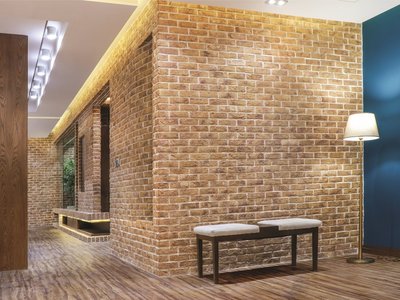
A Contemporary Take on Iranian Residential Architecture
A modern interior design in Mashhad that reinterprets brick, light, and spatial flow to create a warm, contemporary residential architecture.
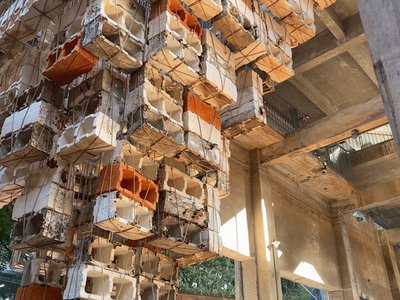
Inverted Architecture Installation by Studio Link-Arc: Exploring the Intersection of Architecture and Living Organisms
Inverted Architecture Installation by Studio Link-Arc blends mycelium, sustainability, inverted design, ecological cycles, and urban adaptive architecture in Shenzhen.

Similar Reads
You might also enjoy these articles


The Ken Roberts Memorial Delineation Competition (Krob)
As the most senior architectural drawing competition currently in operation anywhere in the world, it draws hundreds of entries each year, awarding the very best submissions in a series of medium-based categories.

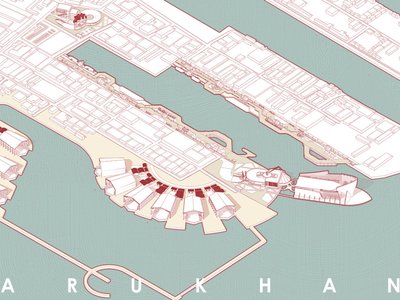
Waterfront Redevelopment and Urban Revitalization in Mumbai: Forging a New Dawn for Darukhana
A transformative waterfront redevelopment project reimagining Darukhana’s shipbreaking heritage into an inclusive urban future.
OUT-OF-MAP: A Call for Postcards on Feminist Narratives of Public Space
Rhizoma Design and Research Lab invites artists, designers, architects, researchers, and students to reflect on how feminist perspectives can reshape public space. Selected works will be exhibited in Barcelona, October 2026. Submissions open until 15 April 2026.

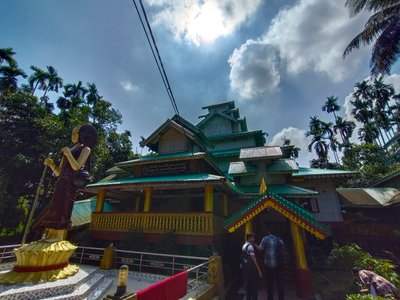
Documentation Work on Buddhist Wooden Temple
Architectural syncretism and cultural hybridity: A comparative study of the Buddhist temples in Chattogram Hill tracks

Explore Architecture Competitions
Discover active competitions in this discipline




The International Standard for Design Portfolios


The Global Benchmark for Architecture Dissertation Awards


The Global Benchmark for Graduation Excellence


Challenge to reimagine the Iron Throne
Comments (0)
Please login or sign up to add comments
No comments yet. Be the first to comment!