
NIO House Amsterdam by MVRDV: A Historic Canal Building Reimagined as a Multi-Functional Brand Experience
MVRDV transforms a historic Amsterdam canal building into NIO’s flagship hub, blending electric vehicle showroom, cultural spaces, co-working areas, and modernist heritage.

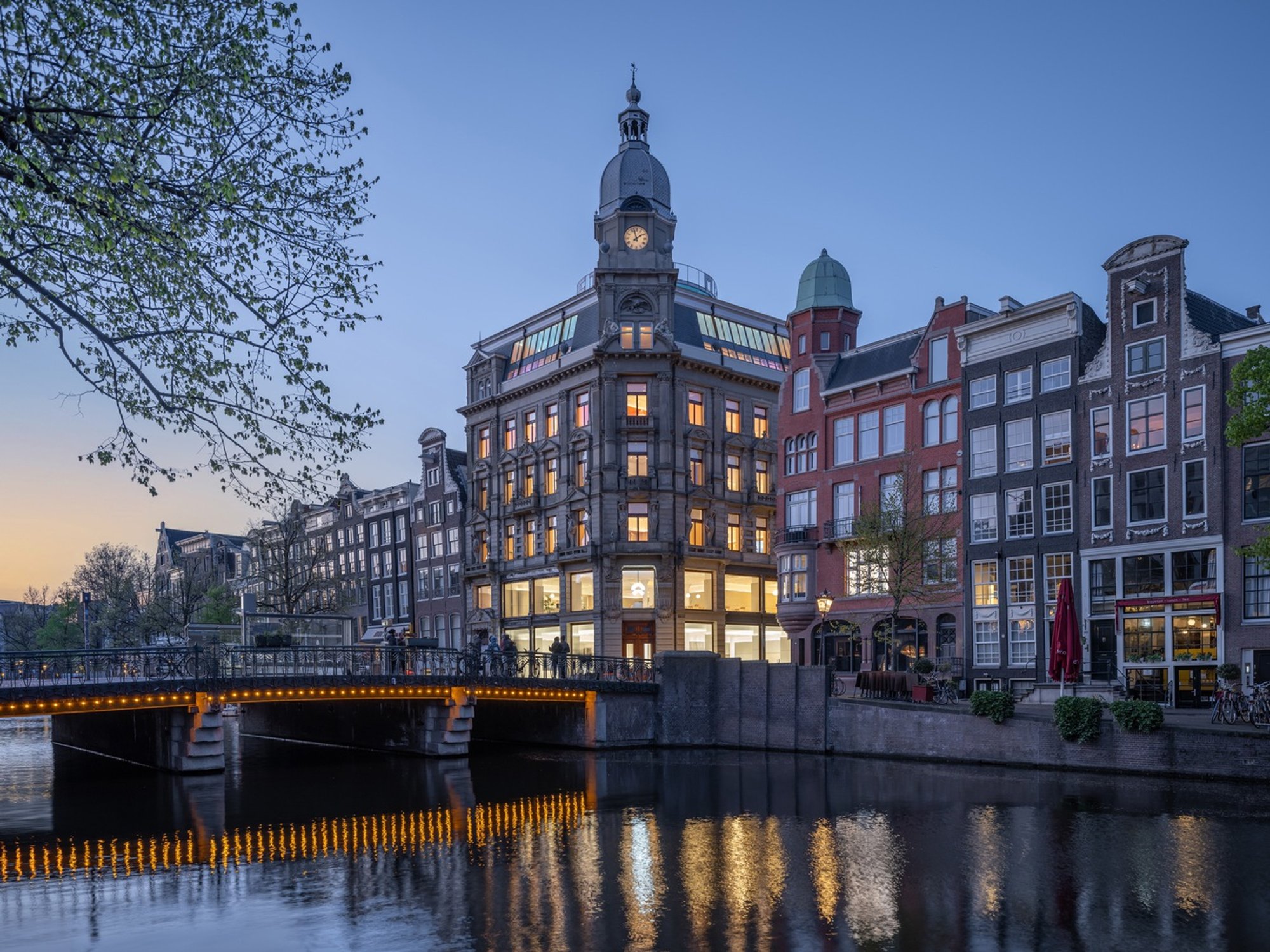
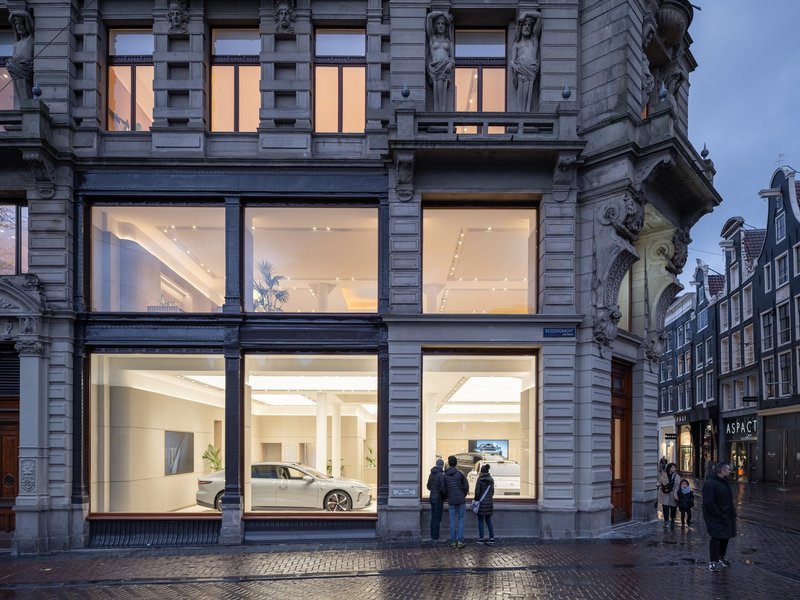
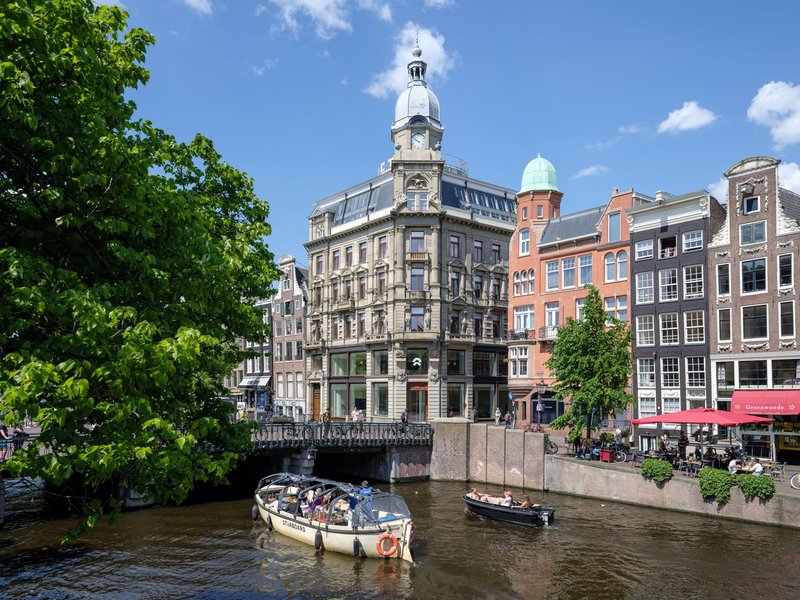
Located along the historic Keizersgracht canal, NIO House Amsterdam represents a remarkable transformation of a late-19th-century building into a contemporary cultural and lifestyle destination. Designed by the renowned architecture studio MVRDV, the project reimagines a historic seven-storey structure as the European flagship location for electric vehicle brand NIO.
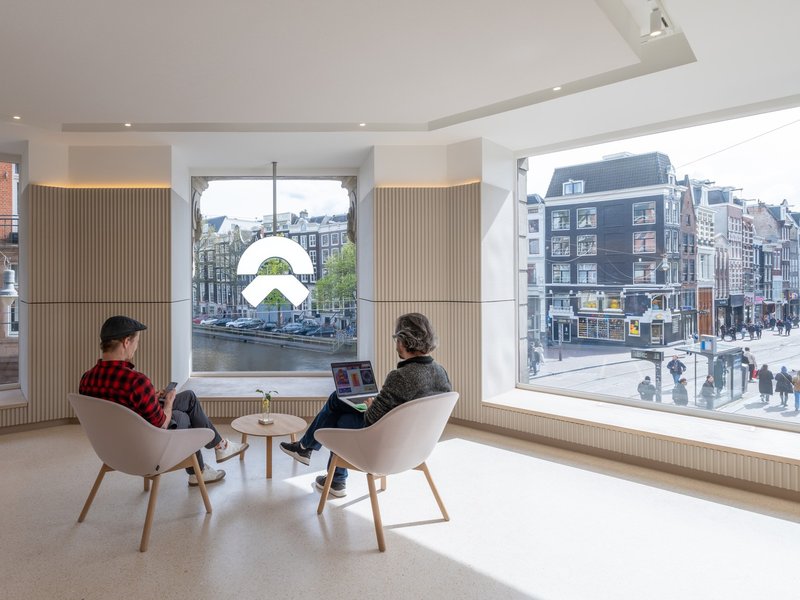
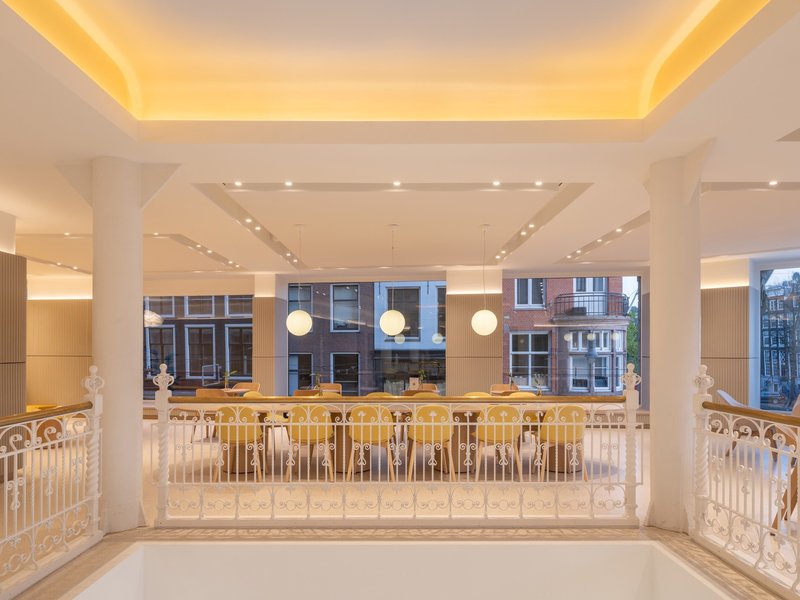
Completed in 2024, the 2,700-square-meter project combines heritage preservation, modern interior design, and sustainable architecture strategies to create an innovative public environment. Rather than functioning solely as a car showroom, NIO House Amsterdam introduces a hybrid space that blends retail, exhibition, co-working, cultural programming, and community engagement within a historically significant building.
The architectural intervention carefully balances respect for historical identity with contemporary design expression, resulting in a dynamic urban hub that reflects both the past and the future of Amsterdam’s architectural landscape.
A Historic Landmark Along Amsterdam’s Keizersgracht
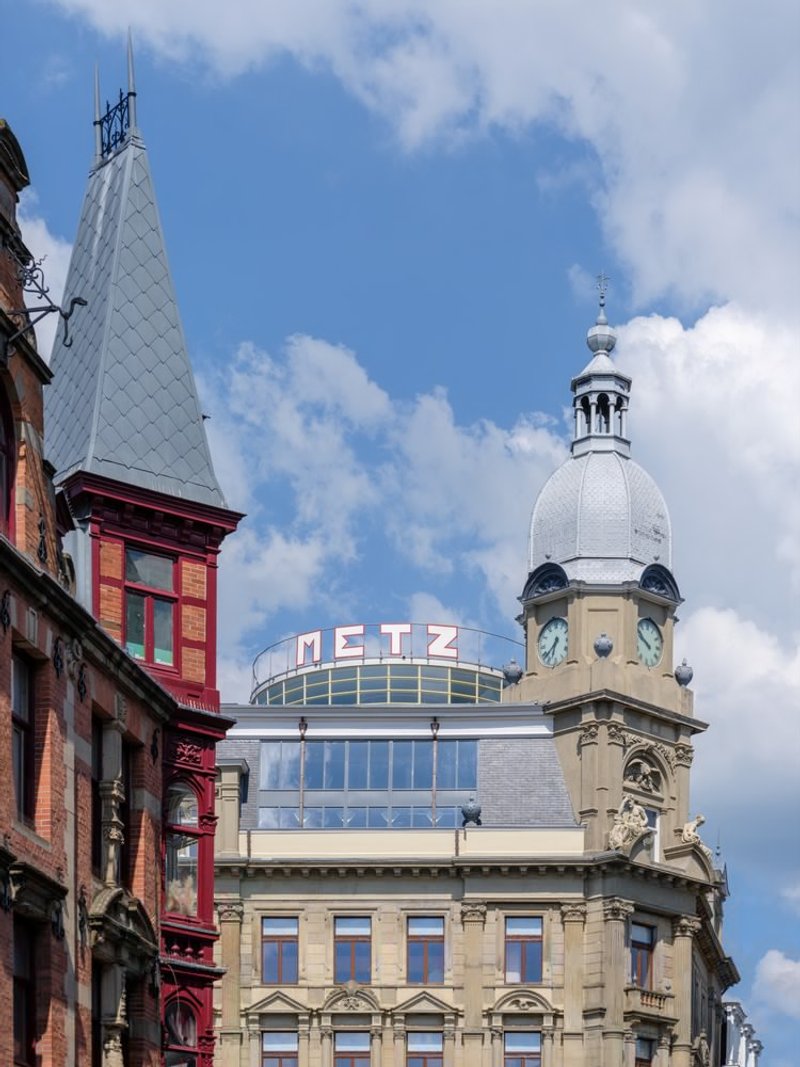
The building housing NIO House Amsterdam carries an impressive architectural legacy. Originally designed by architect Jan van Looy in 1891 for the New York Life Insurance Company, the structure was once among the tallest private buildings in Amsterdam. Its prominent position along the Keizersgracht canal made it an important commercial landmark within the historic city center.
During much of the 20th century, the building served as the home of the renowned Metz & Co department store, a cultural and commercial icon within the Netherlands. In 1933, the structure underwent a significant architectural expansion with the addition of a steel and glass rooftop pavilion designed by Gerrit Rietveld, one of the most influential figures of Dutch modernist architecture and a central member of the De Stijl movement.
However, in more recent years the building’s architectural heritage became partially obscured. When it was converted into a retail store in 2013, several historic interior features were covered, and the upper floors, including Rietveld’s iconic rooftop pavilion, were closed to the public. The transformation into NIO House offered a unique opportunity to restore, reveal, and reinterpret these architectural layers.
Transforming a Car Showroom into a Community Hub
A defining concept of NIO House worldwide is that it functions as more than a typical automotive showroom. Instead, each location is designed as a community-oriented lifestyle space, offering visitors a wide range of activities and environments beyond car displays.
At the Amsterdam location, this philosophy is realized through a carefully organized vertical program that activates each floor with a distinct function.
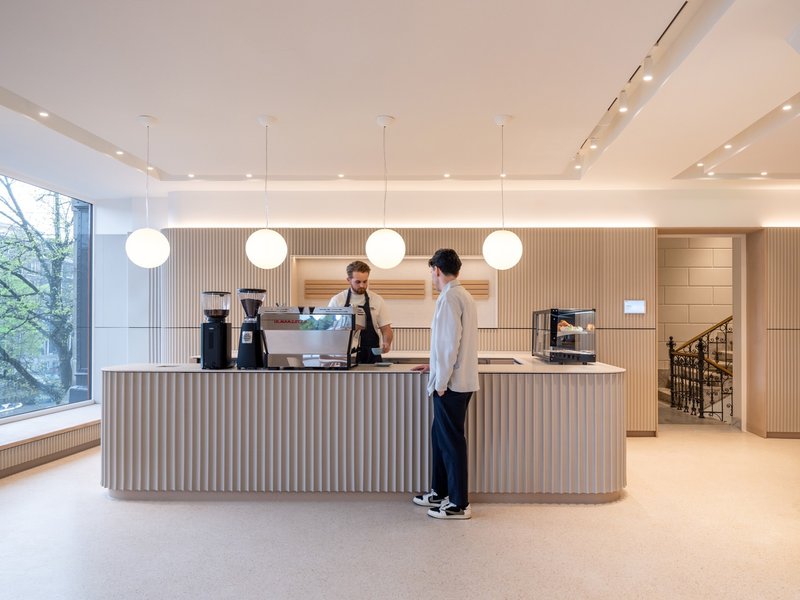
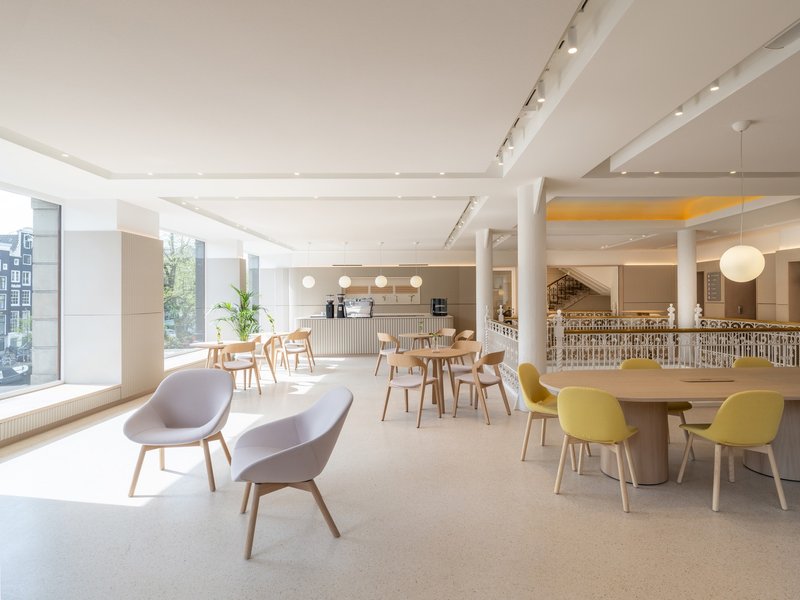
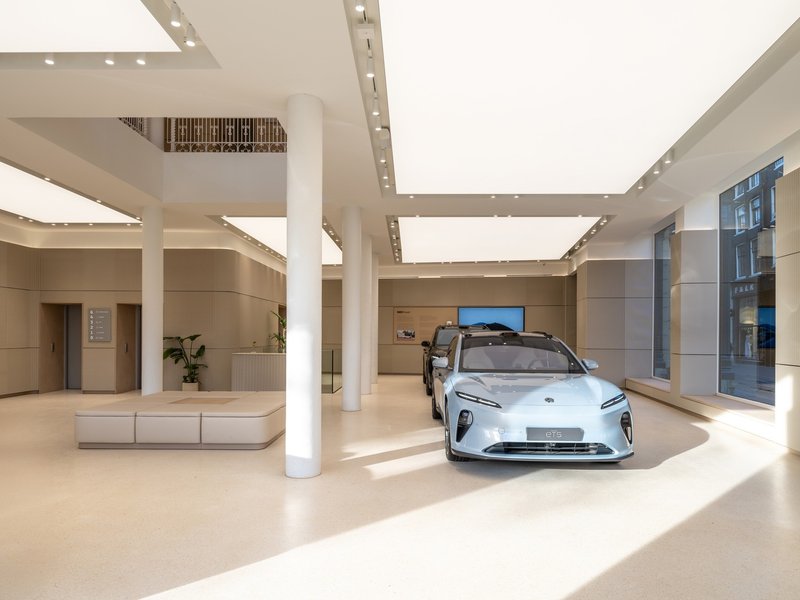
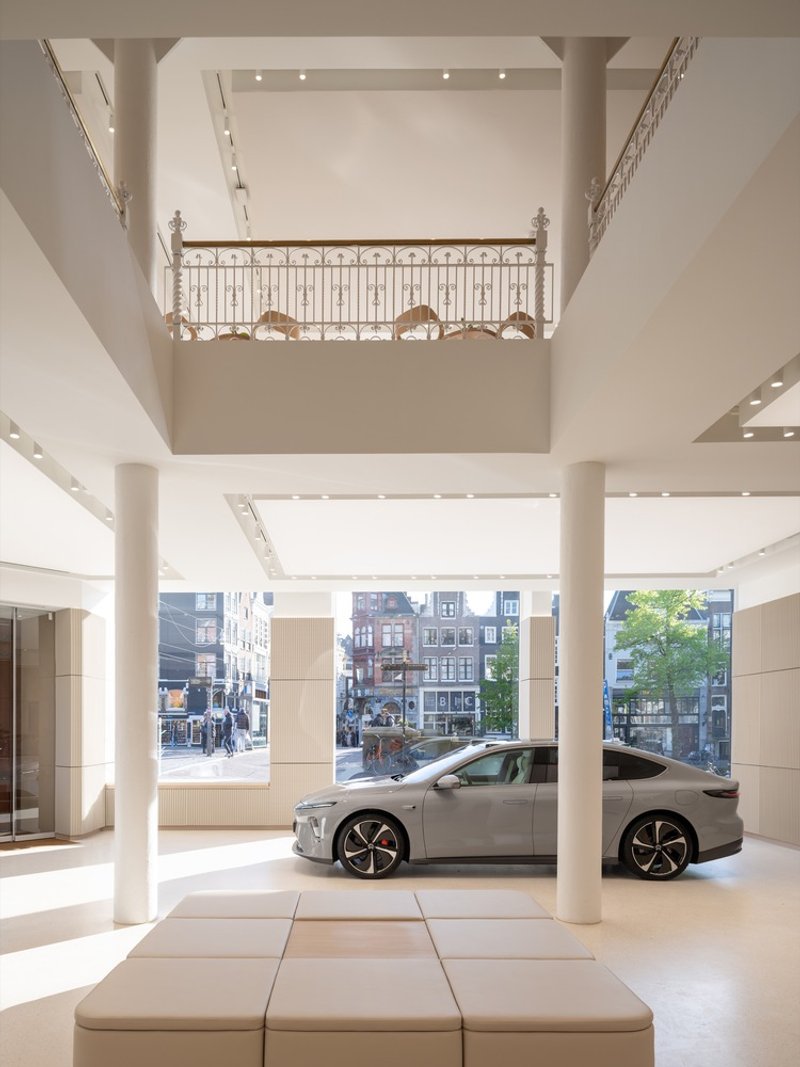
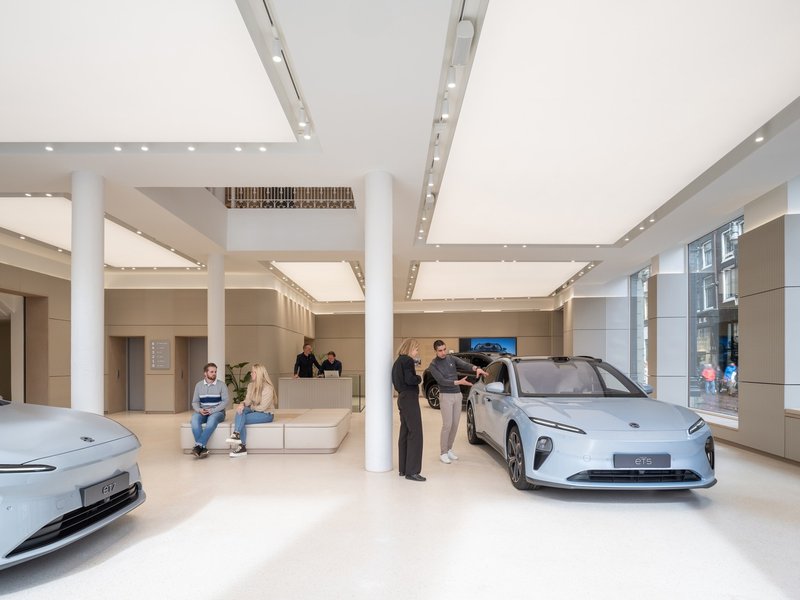
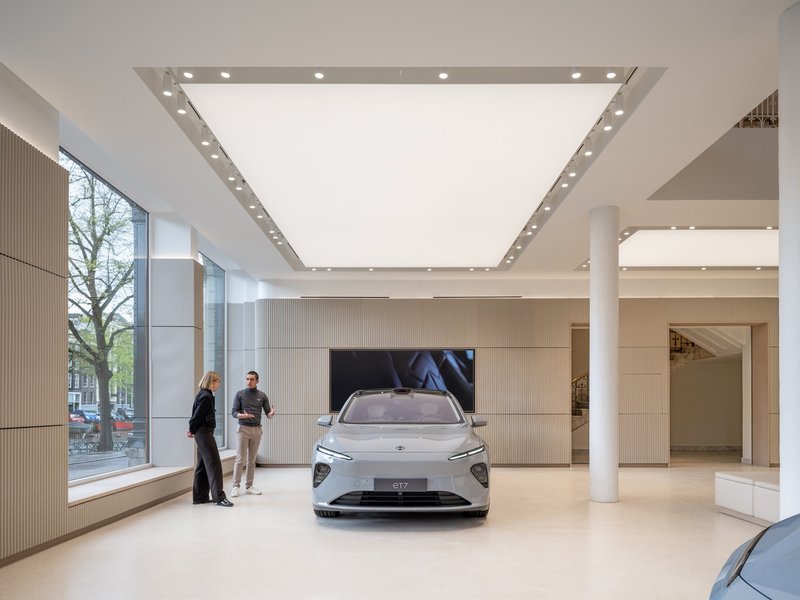
The ground floor welcomes visitors with the display of NIO electric vehicles, providing a modern showcase integrated within the historic building envelope. Directly above, the first floor hosts a café and lounge area, including a playful kids’ corner designed in soft yellow tones, encouraging families and visitors to spend time within the building.
The second floor features the Forum, a flexible space that can be used for workshops, presentations, and lectures by local organizations and businesses. Adjacent to it is the “Joy Camp,” a dedicated area where children can participate in creative and recreational activities.
Moving upward, the third floor introduces bookable co-working spaces, reflecting the growing demand for flexible workplaces in urban environments. The fourth floor houses an art and design gallery, providing a platform for exhibitions that may feature NIO products alongside works by local artists and designers.
Above these public spaces, the fifth floor accommodates NIO’s internal offices, while the sixth floor and rooftop pavilion are dedicated to events and cultural gatherings, including fashion shows, galas, and community celebrations.
Through this layered program, the building becomes a hybrid cultural venue that strengthens connections between technology, design, and the surrounding urban community.
Architectural Strategy: Opening the Building to Light and Movement
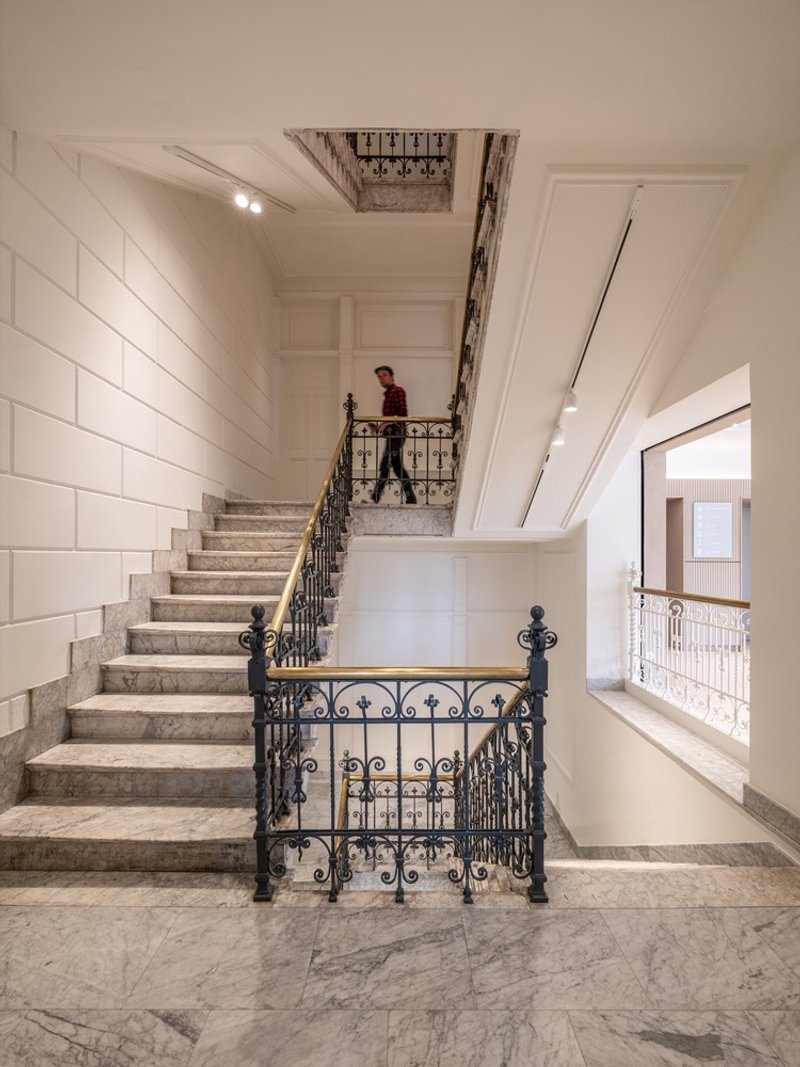
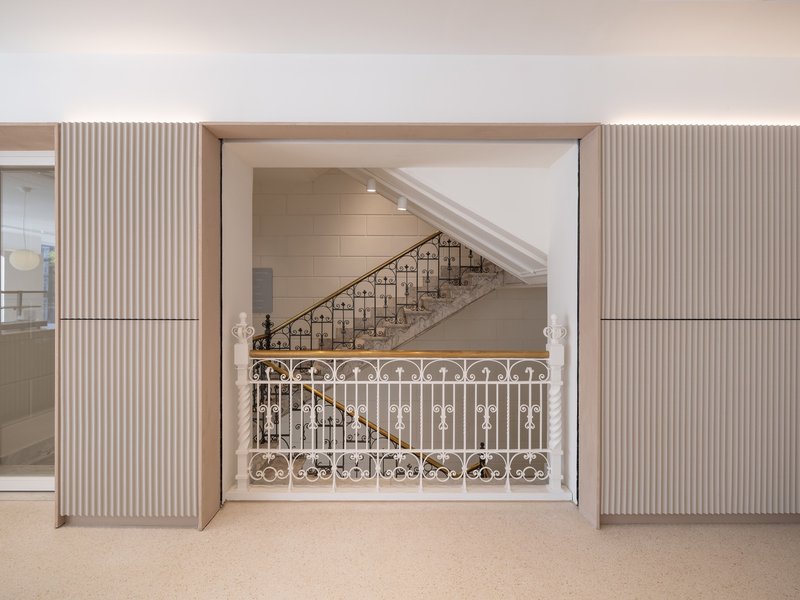
MVRDV’s renovation strategy focused on revealing the building’s spatial qualities while enhancing its sense of openness and connectivity. One of the most important architectural elements within the project is the historic staircase, which has been carefully restored and repositioned as a central orientation point throughout the building.
The staircase remains visible from the primary spaces on each floor, guiding visitors through the vertical journey of the building. This approach reinforces spatial continuity and encourages exploration across different levels.
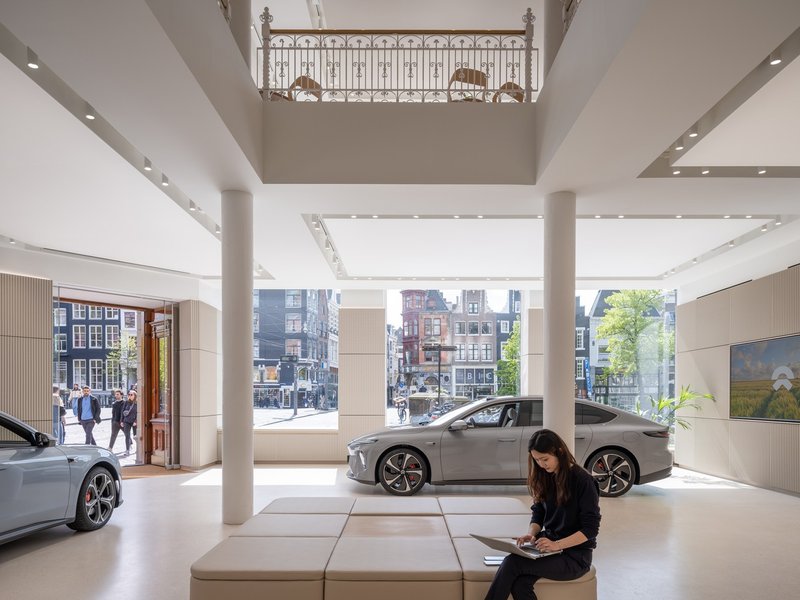
To further enhance the interior environment, the design team removed numerous internal walls, raised ceilings, and emphasized vertical connections. A newly emphasized atrium linking the ground floor with the café above allows daylight to penetrate deeper into the building, creating a bright and welcoming atmosphere.
These interventions help transform the previously compartmentalized structure into an open, fluid spatial experience, while preserving important historic architectural elements.
A Material Palette Inspired by the Journey from Earth to Sky
One of the most distinctive design features of NIO House Amsterdam is the carefully curated material and color gradient that progresses through the building’s floors. Inspired by NIO’s brand philosophy expressed through the slogan “Blue Sky Coming,” the interior design follows a conceptual journey from earthy tones at the lower levels to airy blues at the top.
The ground and first floors feature wall panels created using an innovative 3D-printed material made from recycled drink cartons, developed in collaboration with Amsterdam-based design company Aectual. The textured panels introduce earthy tones and fluted surfaces that establish a tactile, grounded atmosphere.
Complementing these walls is Durabella terrazzo flooring produced by Duracryl, a sustainable material made from renewable resources that enhances the project’s environmental performance.
On the second floor, warm wood finishes dominate the walls and floors, creating a more intimate and comfortable environment suited for collaborative events and workshops.
The third floor combines wooden flooring with eco-friendly paints, reinforcing the sustainable material strategy while maintaining a light and contemporary interior aesthetic.
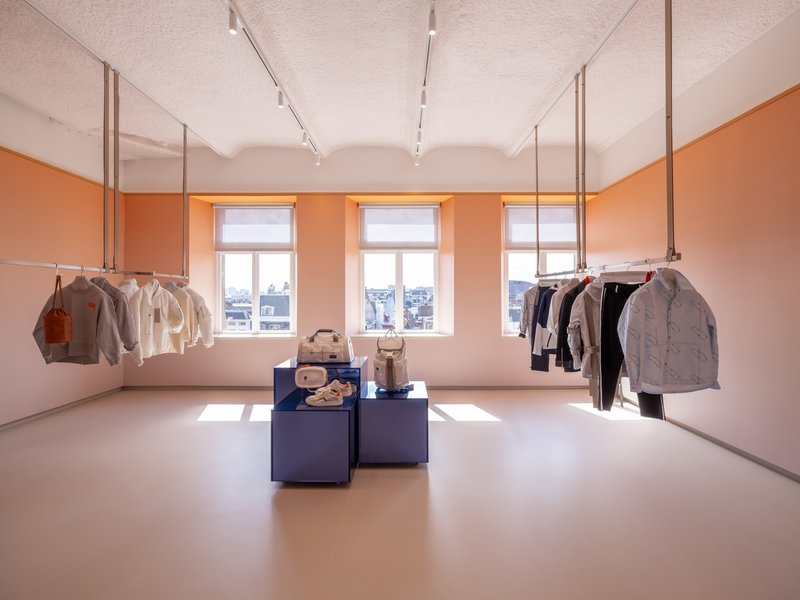
Moving upward, the fourth floor introduces a peach-orange gradient across its walls, drawing visual attention toward the building’s vaulted ceilings and emphasizing the historic architectural structure.
The Modernist Rooftop Pavilion by Gerrit Rietveld
The material and color transformation reaches its climax on the top two floors of the building, where tones gradually transition from warm gold to cool blue.
This chromatic shift leads visitors into the restored Rietveld rooftop pavilion, where sky-blue surfaces dominate the interior environment. Here, MVRDV carefully preserved the essence of the original modernist architecture while introducing refined contemporary finishes.
Soft carpeting and elegant curtains enhance the pavilion’s atmosphere, transforming it into a sophisticated venue suitable for events such as fashion shows, cultural gatherings, and private celebrations.
The pavilion’s glass walls provide panoramic views across the rooftops of Amsterdam, creating a light-filled space that captures the spirit of modernist design while symbolizing optimism for the future.
A Dialogue Between Heritage and Innovation
The renovation of NIO House Amsterdam demonstrates how adaptive reuse architecture can revitalize historic buildings while introducing contemporary functions and sustainable design strategies.
By carefully restoring historic features, integrating innovative materials, and creating a vibrant public program, MVRDV has transformed the building into a multi-layered urban destination. The project not only supports NIO’s brand identity but also contributes to the cultural and social vitality of Amsterdam’s historic canal district.
Through this thoughtful blend of architecture, design, technology, and community engagement, NIO House Amsterdam stands as an inspiring example of how heritage buildings can evolve to meet the demands of modern urban life.
All photographs are works of
Ossip van Duivenbode



Popular Articles
Popular articles from the community

Alton Cliff House: A Harmonious Retreat by f2a Architecture in Lake Country, Canada
Alton Cliff House blends corten steel, prefabrication, and sustainable design, creating a luxurious, energy-efficient retreat perched on Canadian cliffs.

Solar Steam: A Climate-Responsive Architecture That Redefines the Monument
A climate-responsive memorial architecture that transforms heat, decay, and time into a living system reflecting humanity’s ecological impact.
Atelier Macri Concept Store Interior Design by CASE-REAL
Atelier Macri store features a "ko" counter, walnut wood details, cork displays, blending retail, gallery, and seamless customer experiences.

Free Architecture Competitions You Can Enter Right Now
No entry fees, real prizes. Here are the best free architecture competitions open for submissions in 2026.


Similar Reads
You might also enjoy these articles


Bamboo Housing Challenge 2026: Design Affordable, Sustainable Homes Using Bamboo
An international design competition by Bamboo U and IBUKU inviting architects and designers to reimagine affordable housing using bamboo — with the winning design built full-scale in Bali.

Computational Design & Education: Beegraphy Design Awards Introduces 7th Category (Featuring Jiyun's Innovative Approach)
Dive into Beegraphy’s 7th Design Awards category, where computational design meets education to create immersive, interactive learning tools, inspired by Jiyun’s work.

From Parametric Lighting to Urban Furniture: Join the 2nd Workshop in Beegraphy’s Computational Design Series
Dive into Cutting-Edge Design Techniques and Practical Applications with Industry Experts

Explore Architecture Competitions
Discover active competitions in this discipline




The International Standard for Design Portfolios


The Global Benchmark for Architecture Dissertation Awards


The Global Benchmark for Graduation Excellence


Challenge to reimagine the Iron Throne
Comments (0)
Please login or sign up to add comments
No comments yet. Be the first to comment!