
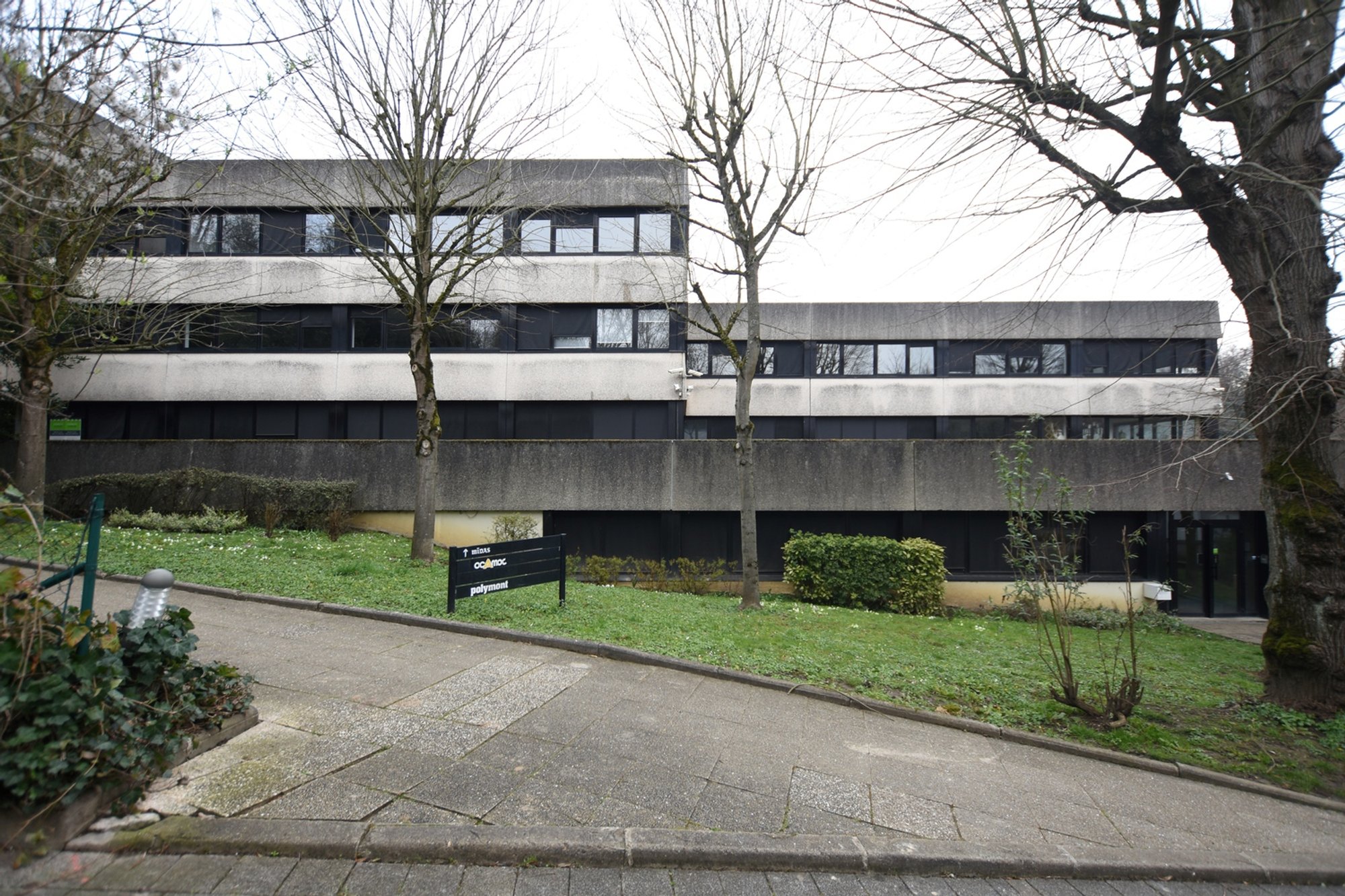
Office Building Conversion to Residential in France: Jean Moulin Building by AZC Architects
Jean Moulin Building by AZC Architects transforms a 1987 office building in France into a modern residential complex.

Transforming a 1987 Office Building into Modern Residences
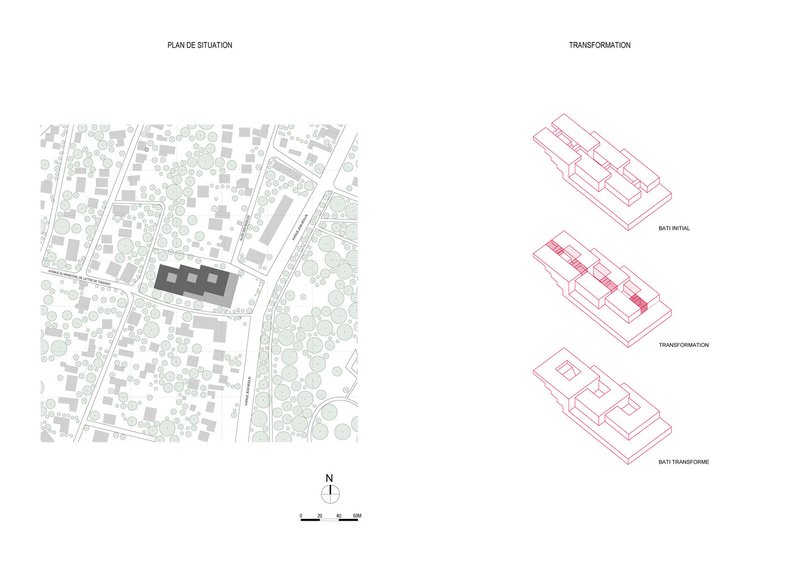
The Jean Moulin Building in La Celle-Saint-Cloud, France, exemplifies the growing trend of office building conversion to residential spaces in France. Designed by AZC Architects, this ambitious project redefines the adaptive reuse of an aging structure into a vibrant social residential complex. Originally constructed in 1987 by architect Jacques Grellier, the building has been reimagined to accommodate 69 modern apartments alongside 1,400 square meters of commercial activity spaces.
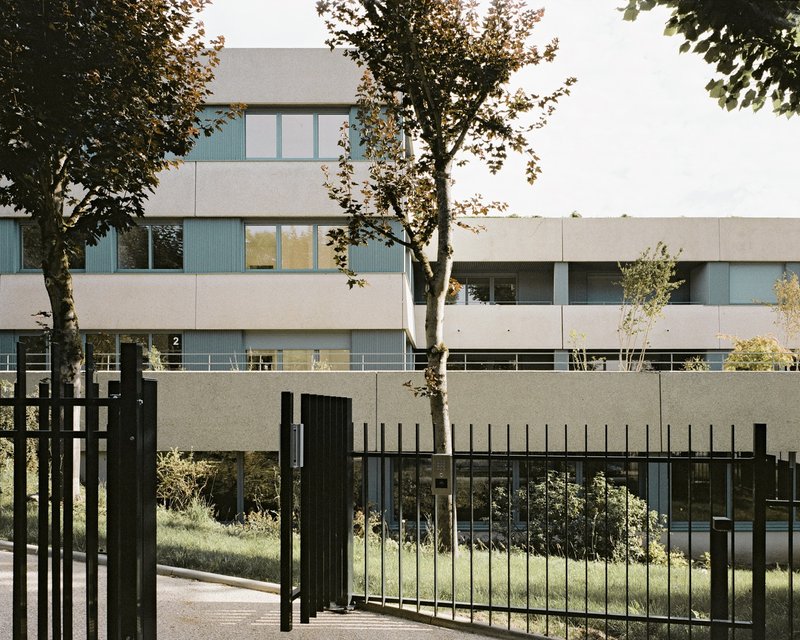
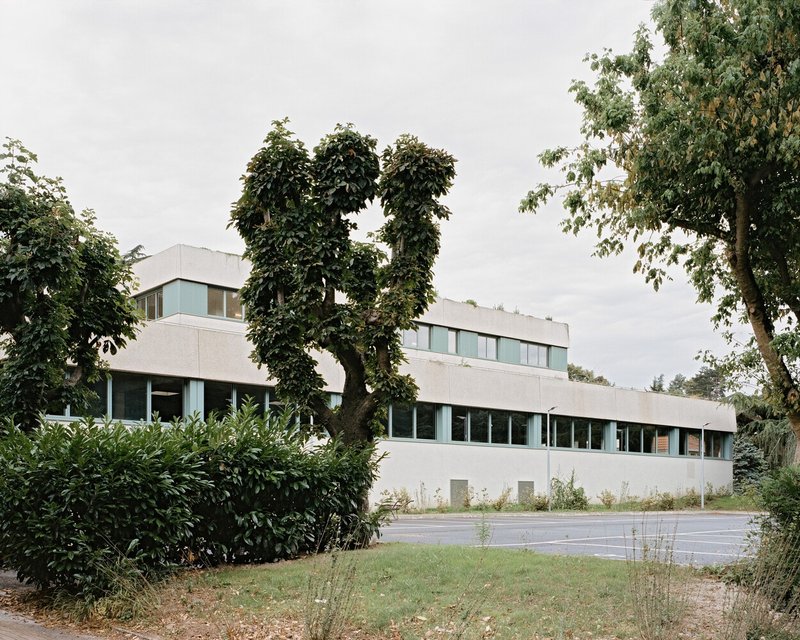
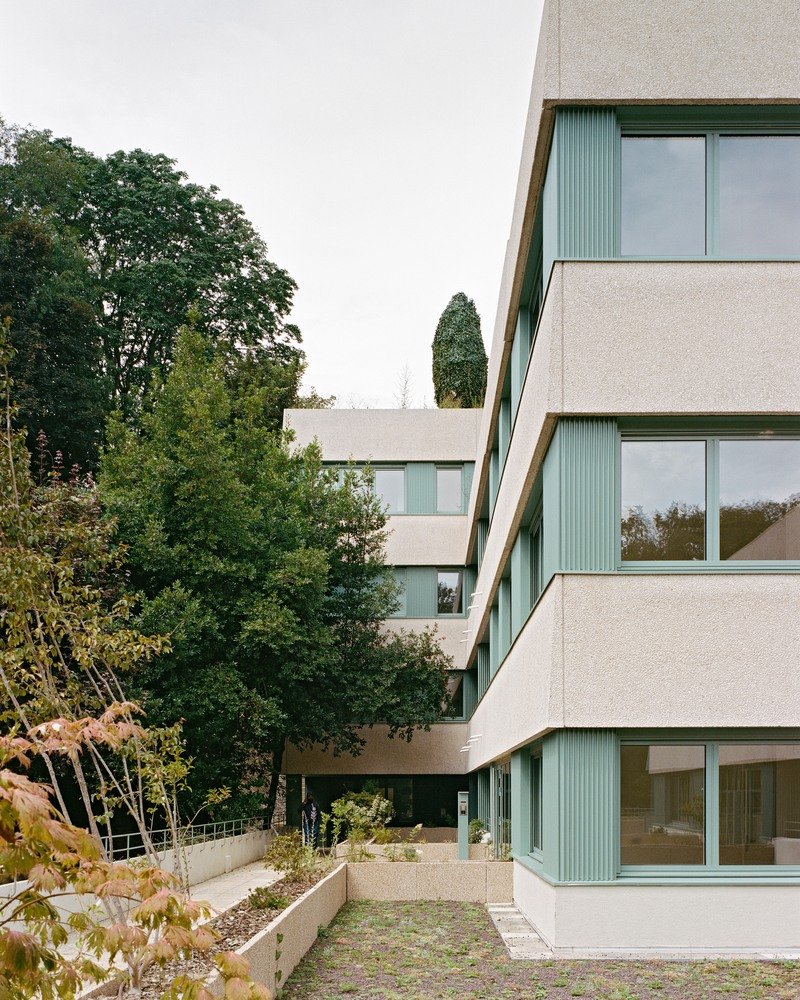
The transformation represents a harmonious balance between architectural preservation and contemporary urban living, reflecting an innovative response to the evolving demands of residential housing near Paris.
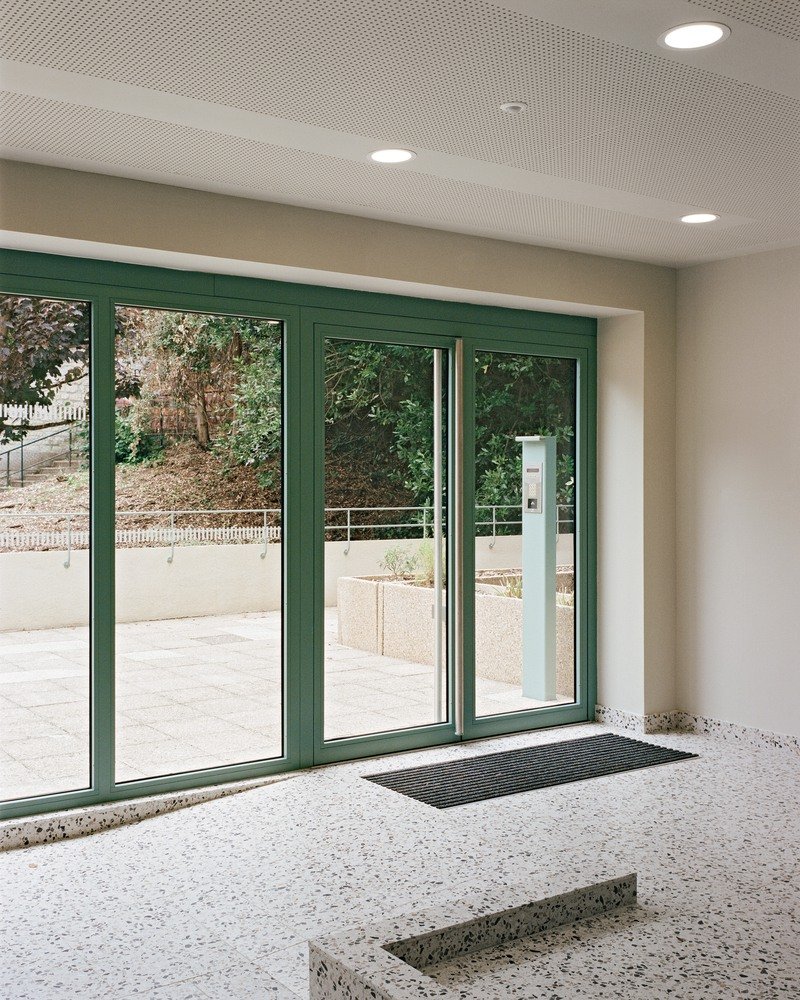
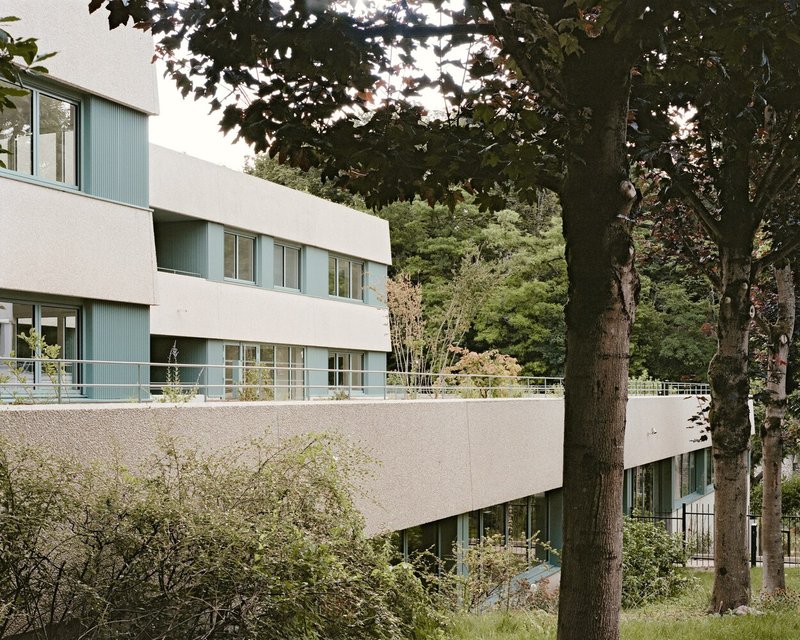
Prime Location in La Celle-Saint-Cloud
The site occupies a strategic position near the Château de la Seine Saint Cloud estate, benefiting from an exceptional natural setting characterized by a sloping hillside landscape. Proximity to the city center and the train station, both within walking distance, enhances the building’s appeal for residents seeking convenience and connectivity to Paris.
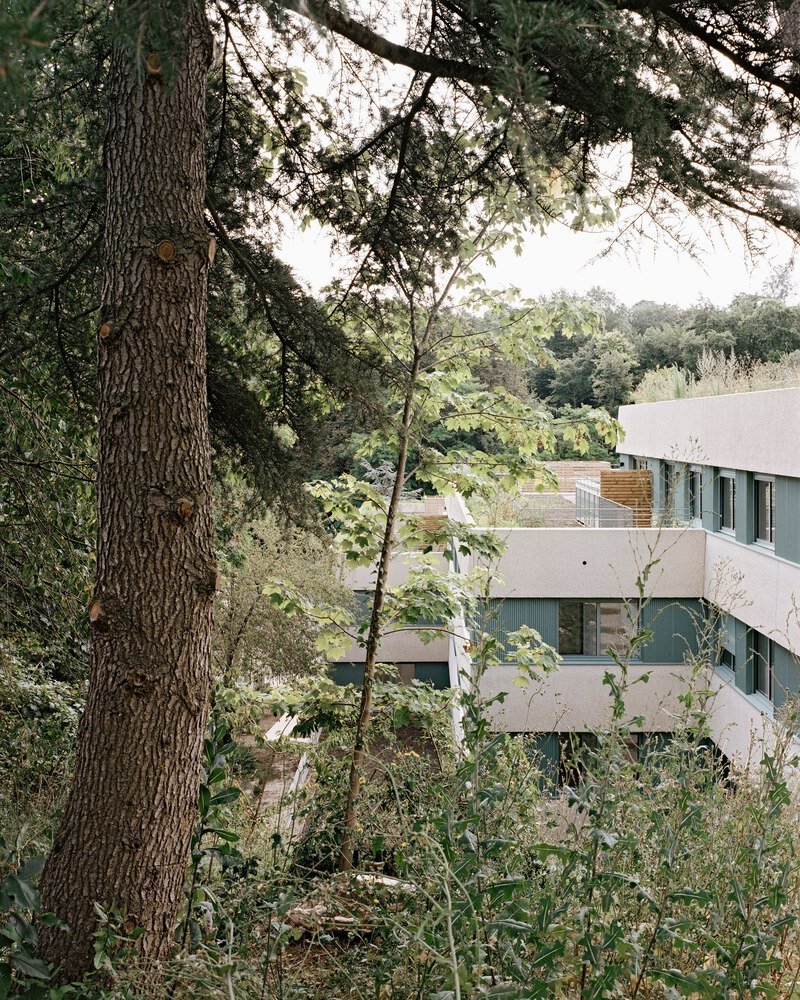
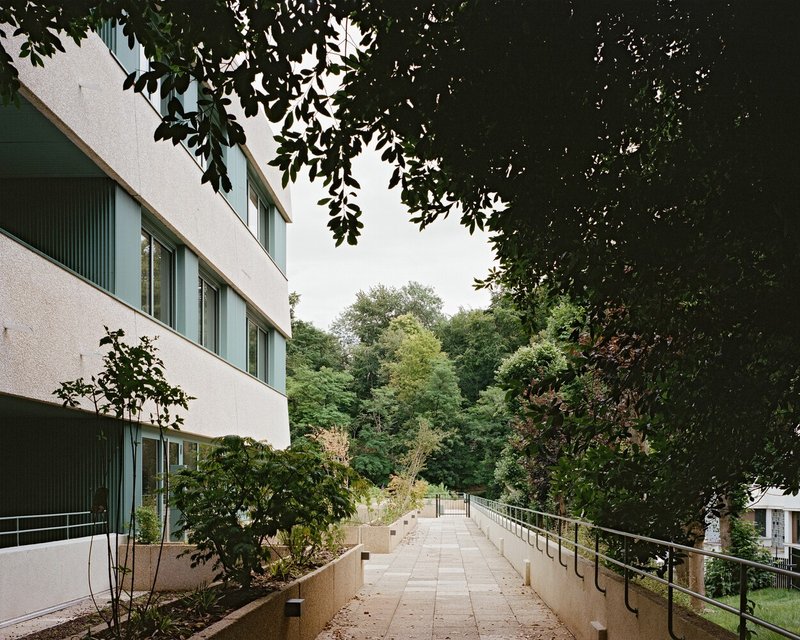
The 5,400-square-meter structure sits within a 6,182-square-meter plot, offering panoramic views over the surrounding landscape. This context inspires the architectural intervention, integrating the existing building into its environment while addressing contemporary housing needs.
Preserving the Structural Integrity
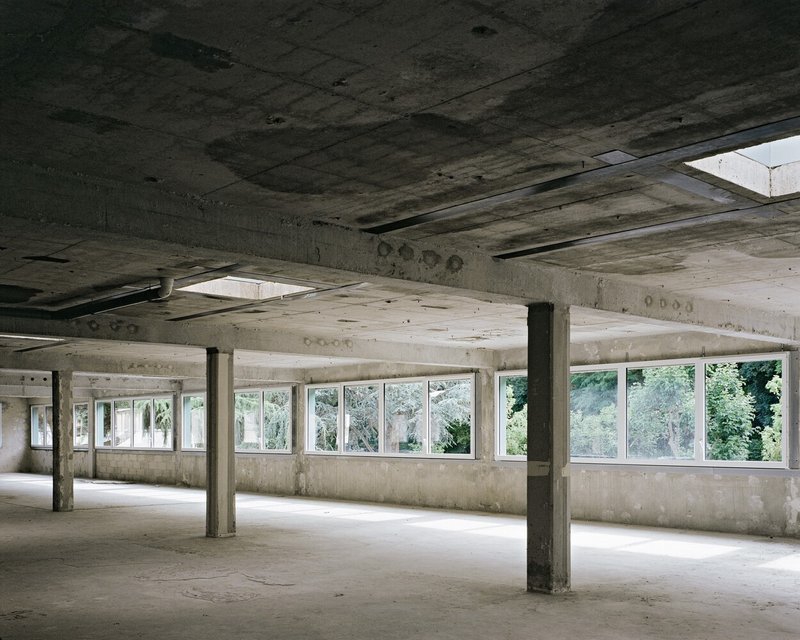
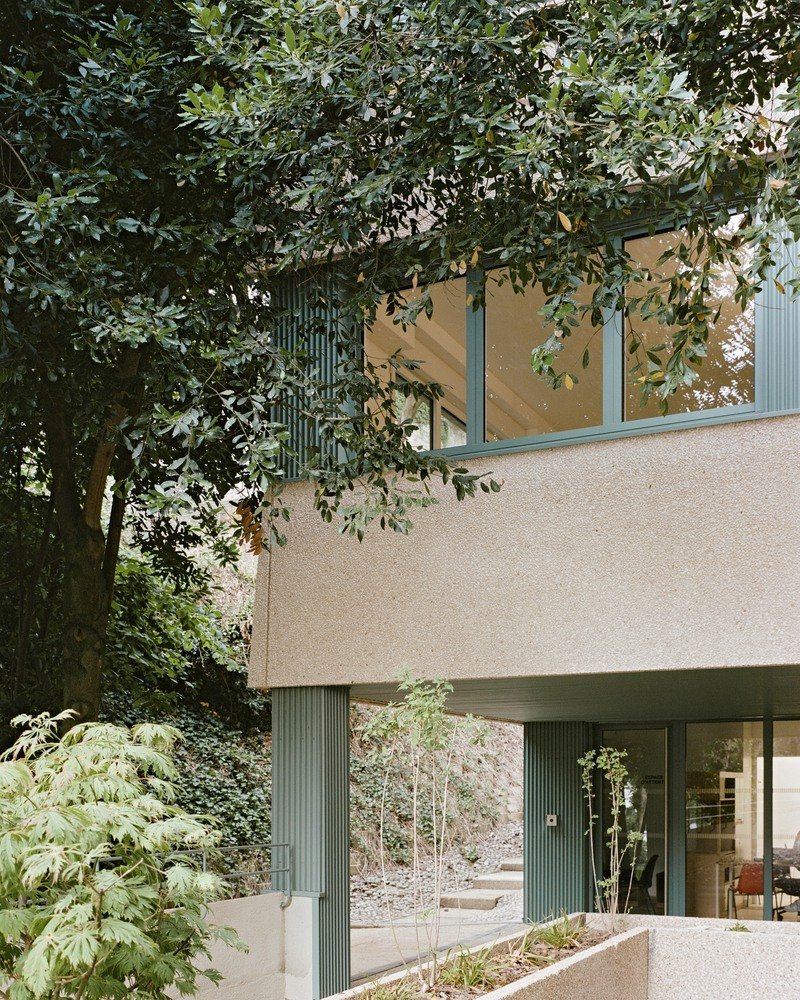
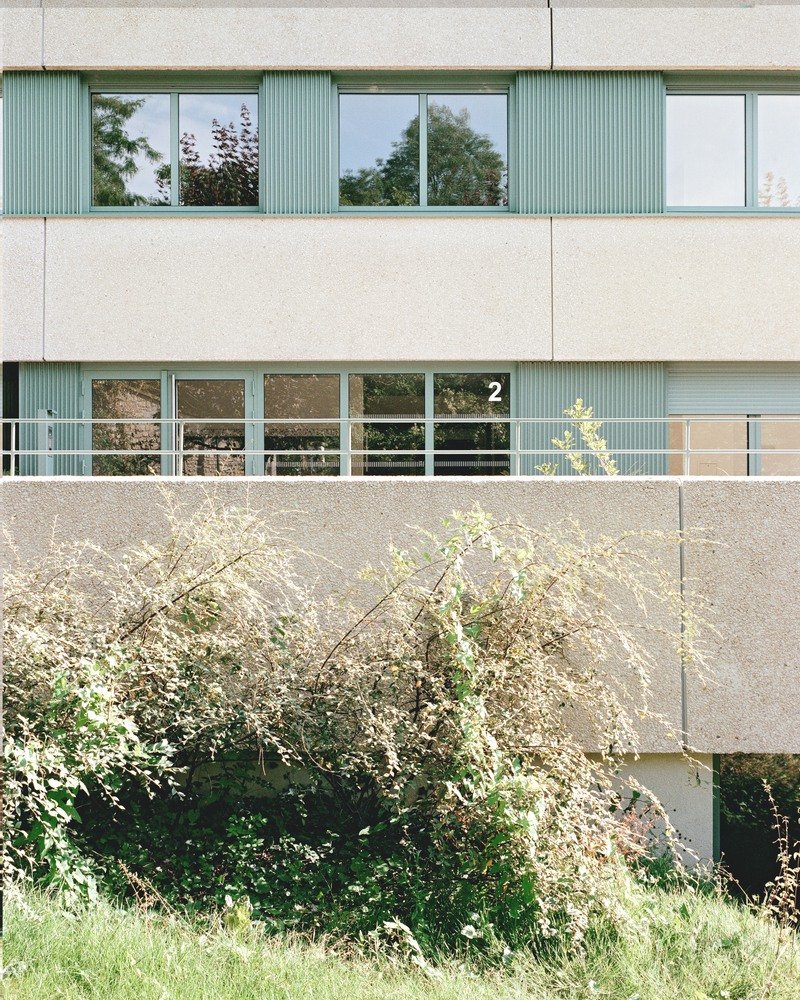
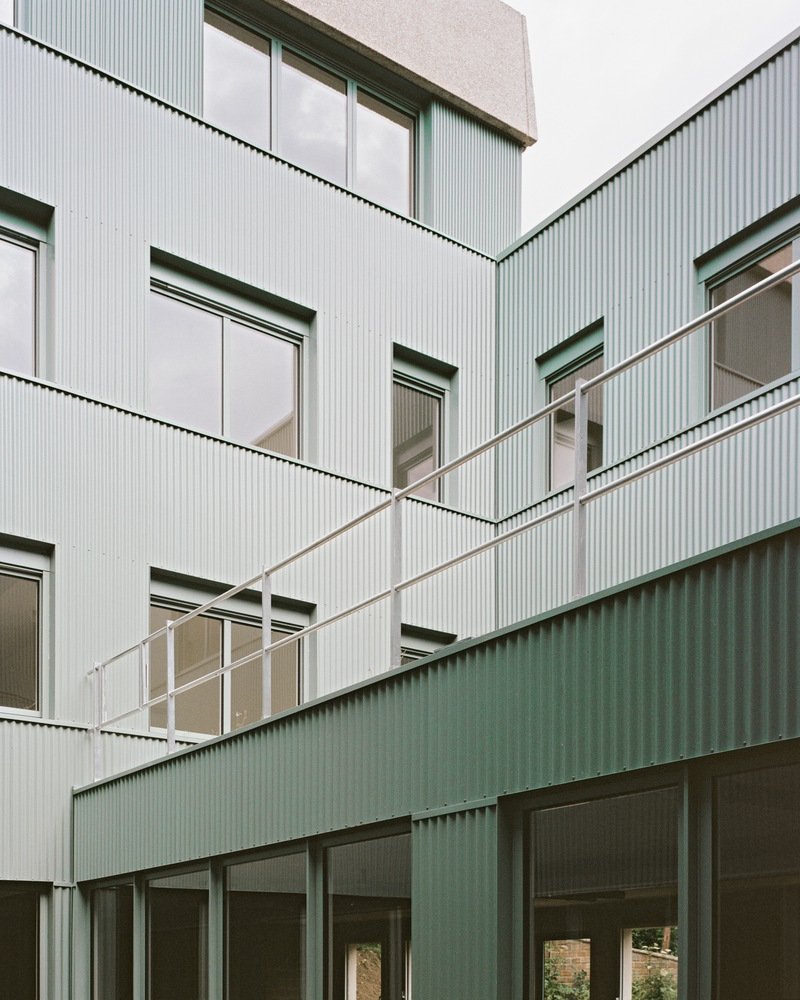
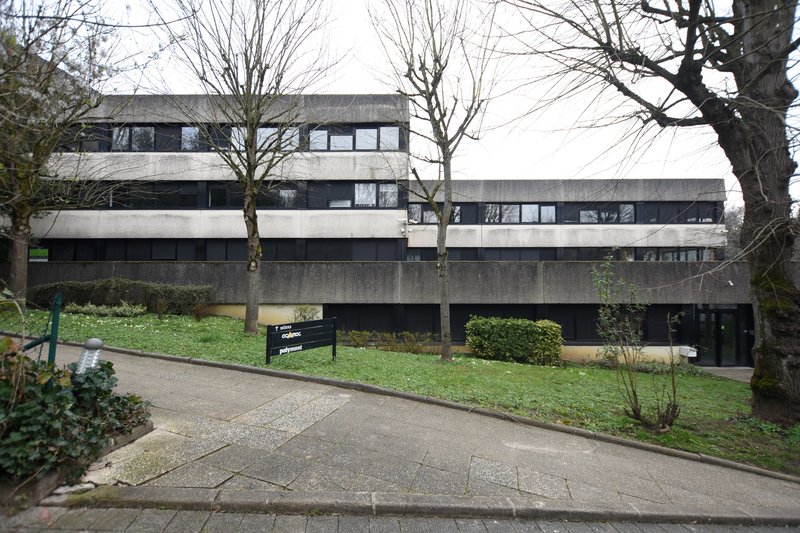
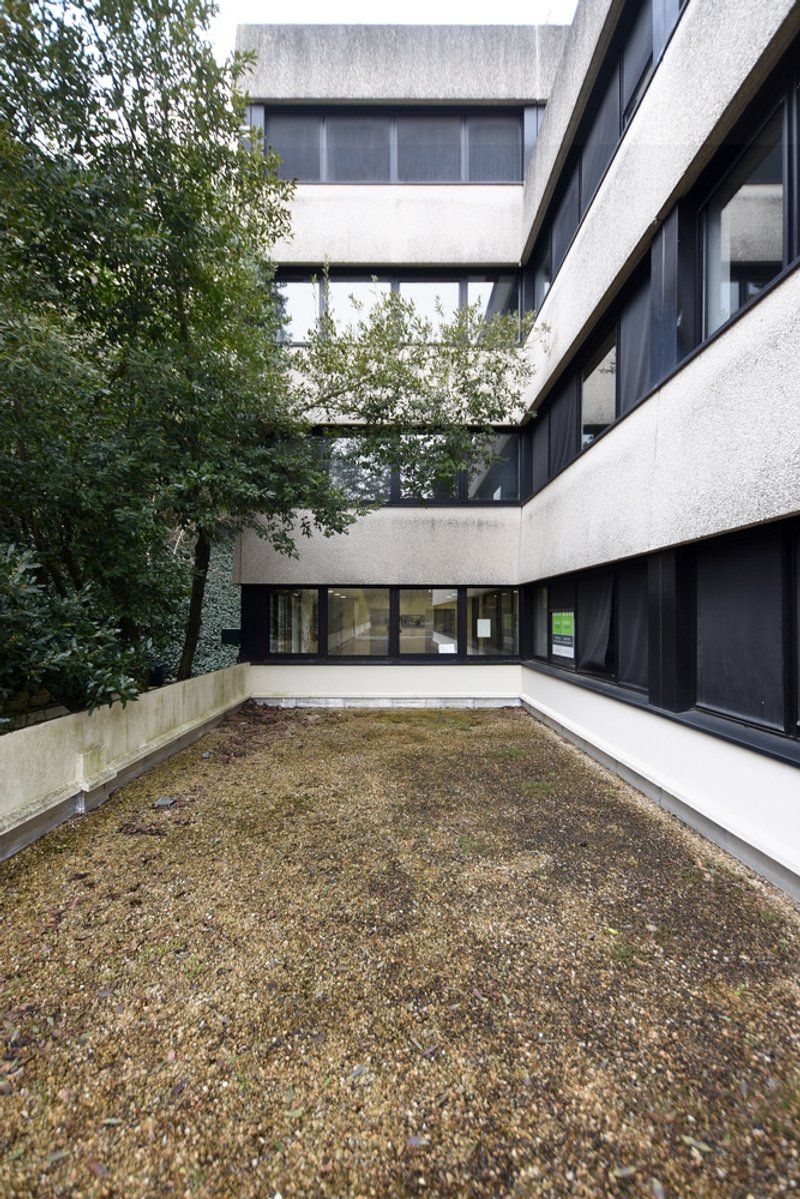
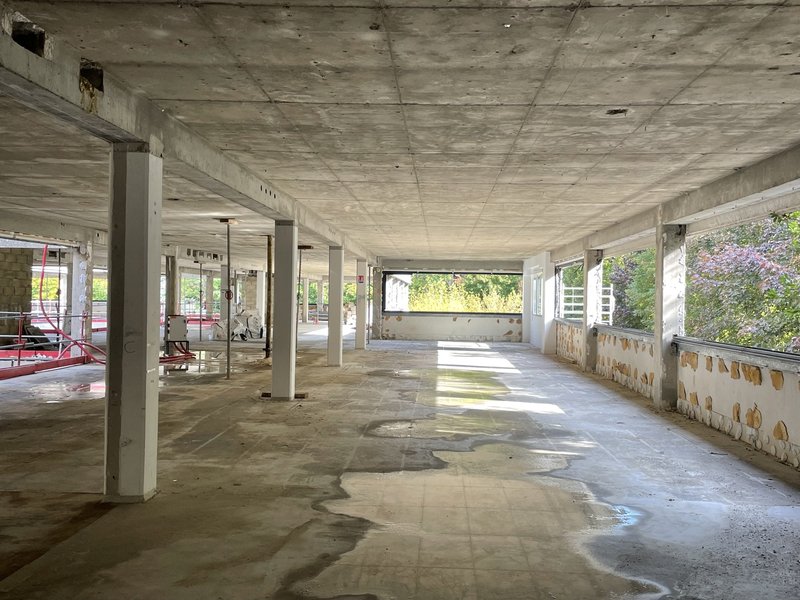
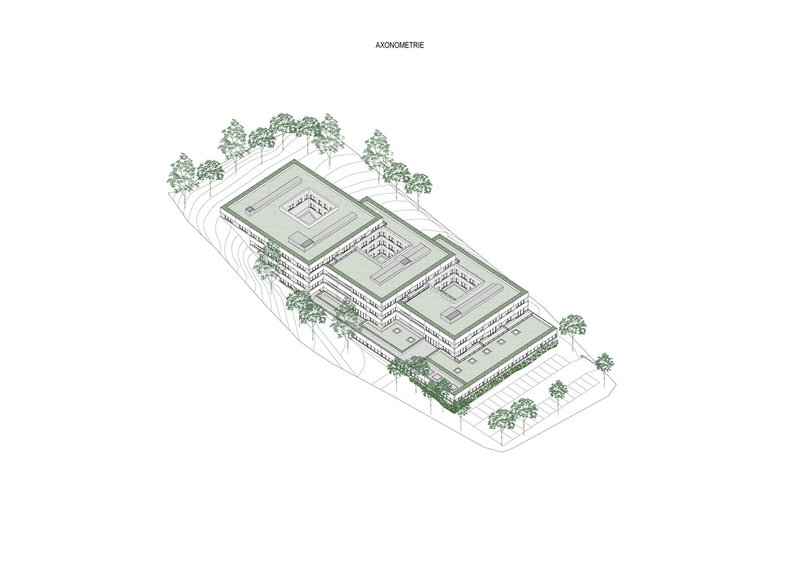
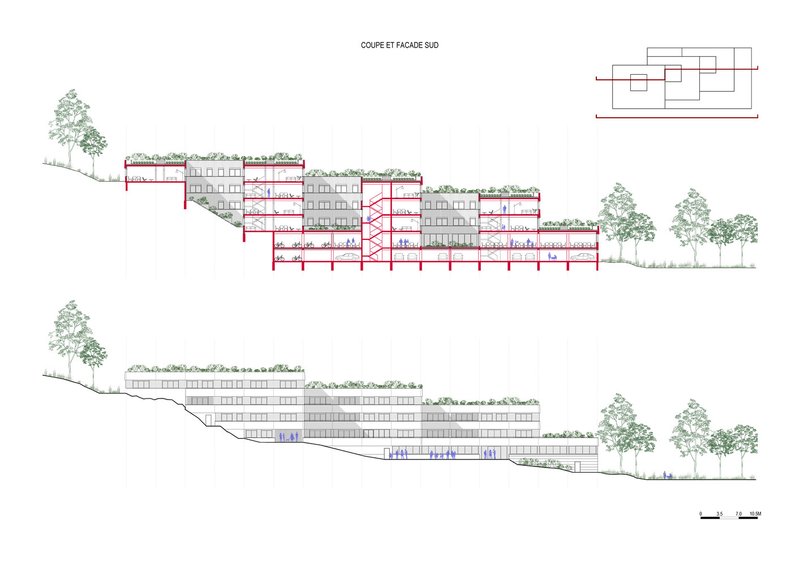
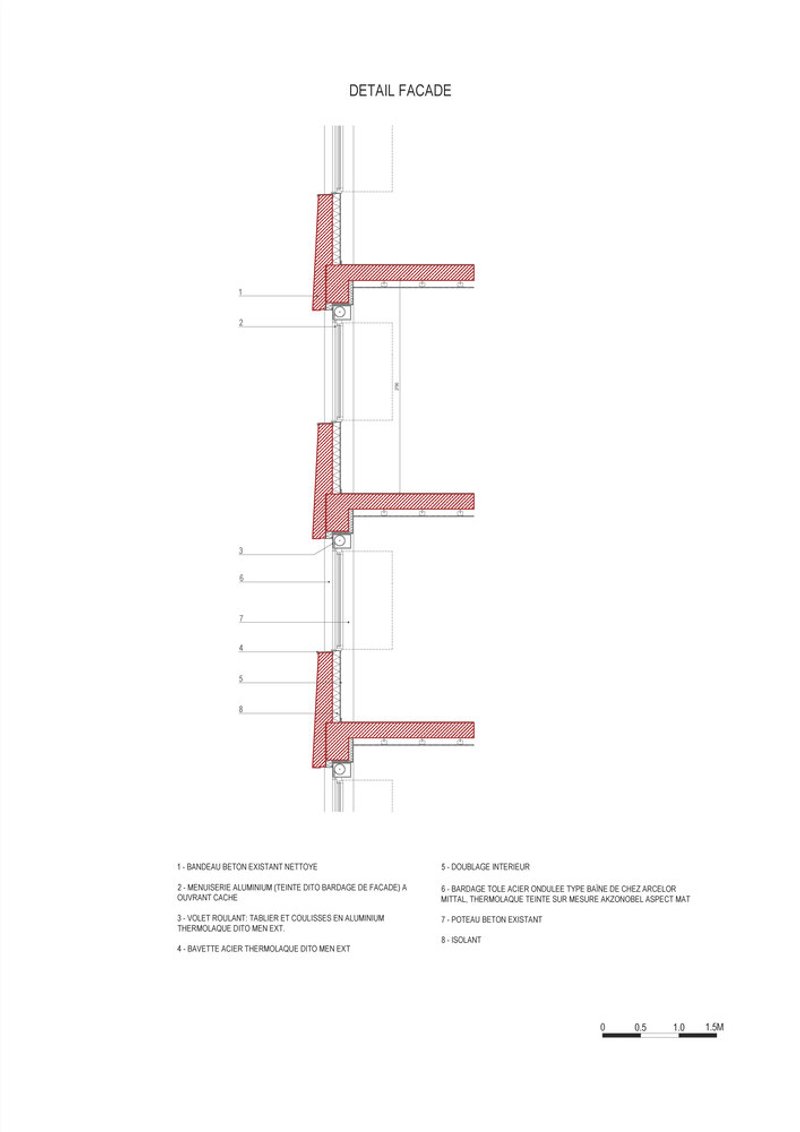
The Jean Moulin Building is defined by its robust post-and-beam concrete structure. Its staggered six-story composition and precast concrete spandrels with an exposed aggregate finish lend the building a distinctive architectural identity. This original structural framework forms the backbone of the conversion, allowing AZC Architects to preserve the integrity of the 1987 design while reconfiguring the interior for residential use.
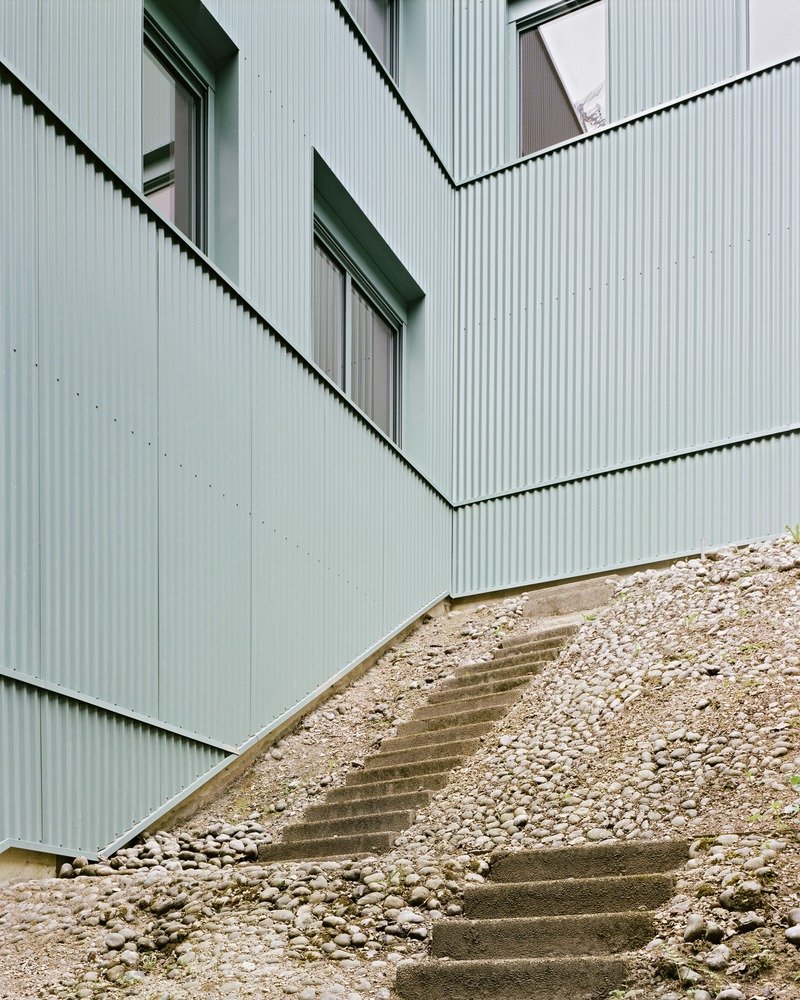
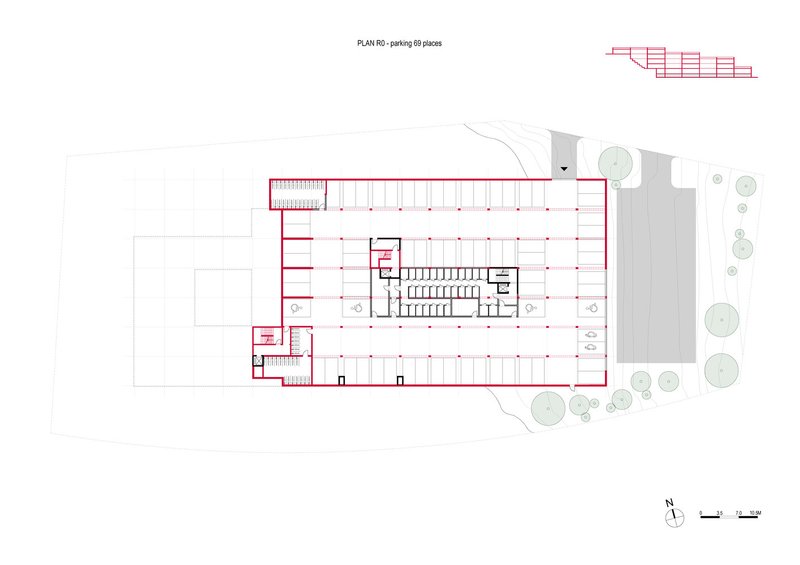
The lower levels of the building, previously dedicated to parking and technical facilities, retain their original functions. The upper levels, which formerly housed office spaces, undergo a thoughtful transformation into residential apartments. This adaptive reuse highlights the flexibility and durability of the post-and-beam system, demonstrating how aging office buildings can be revitalized for contemporary living.
Adaptive Reconfiguration for Residential Use
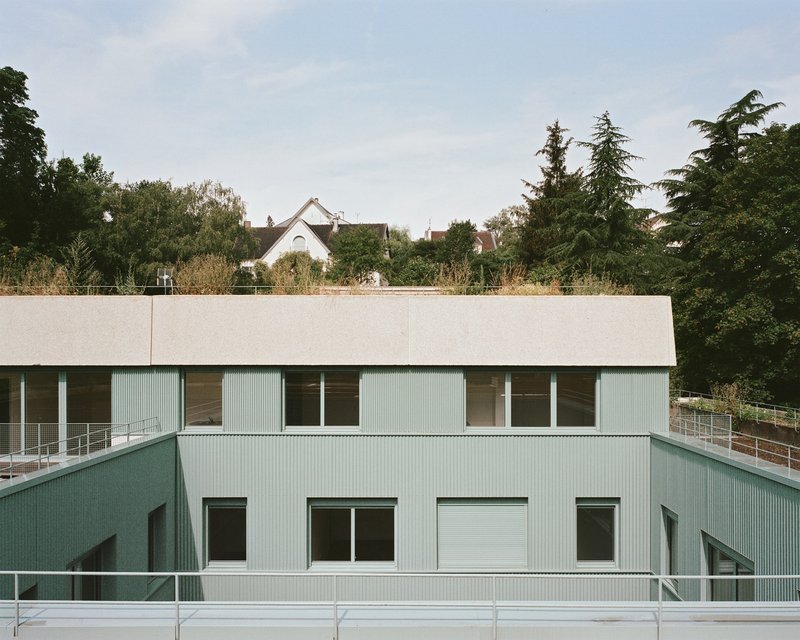
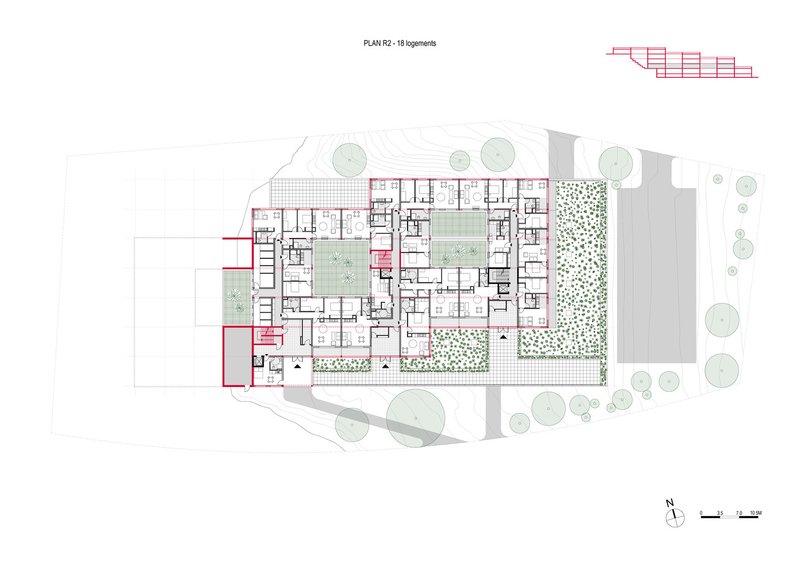
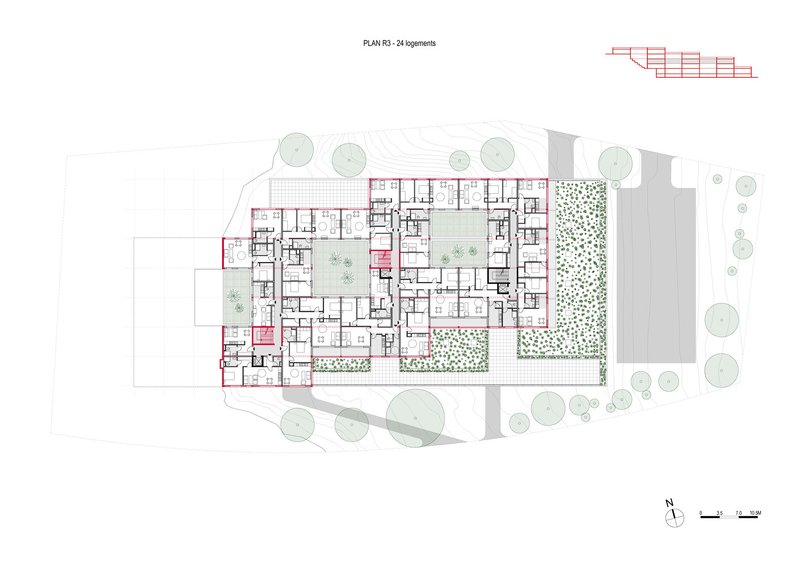
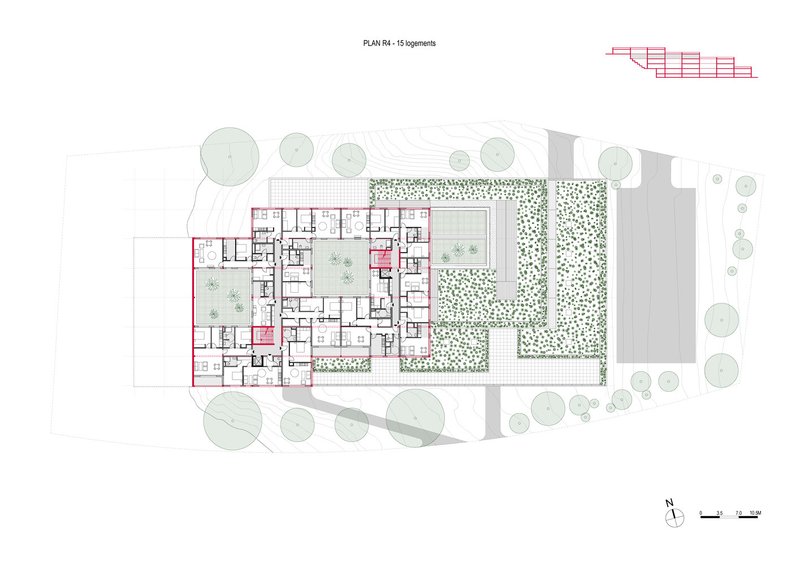
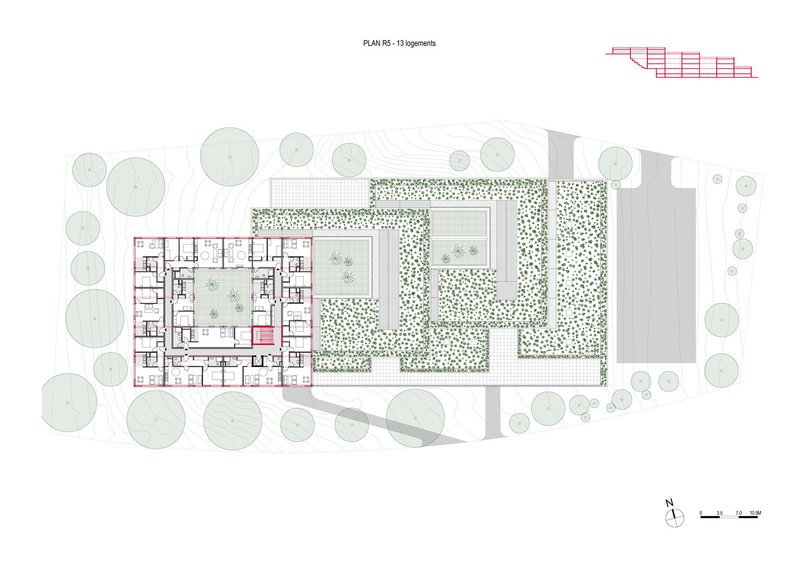
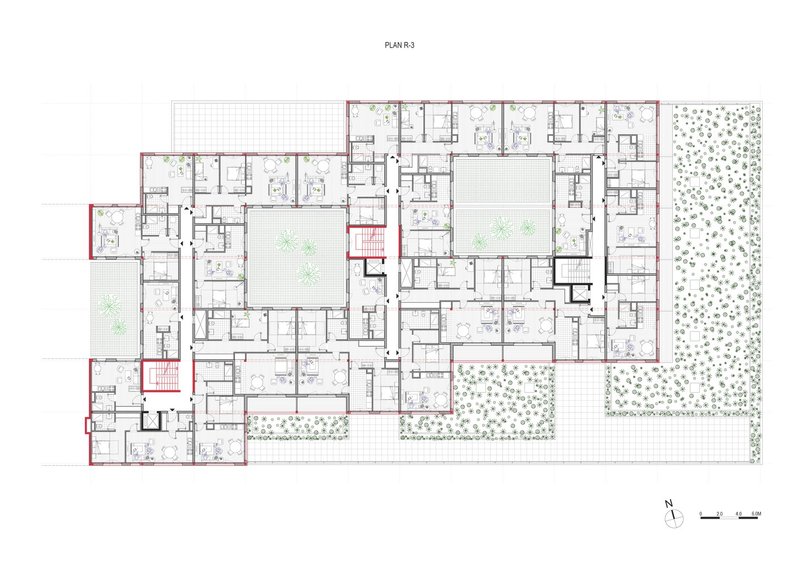
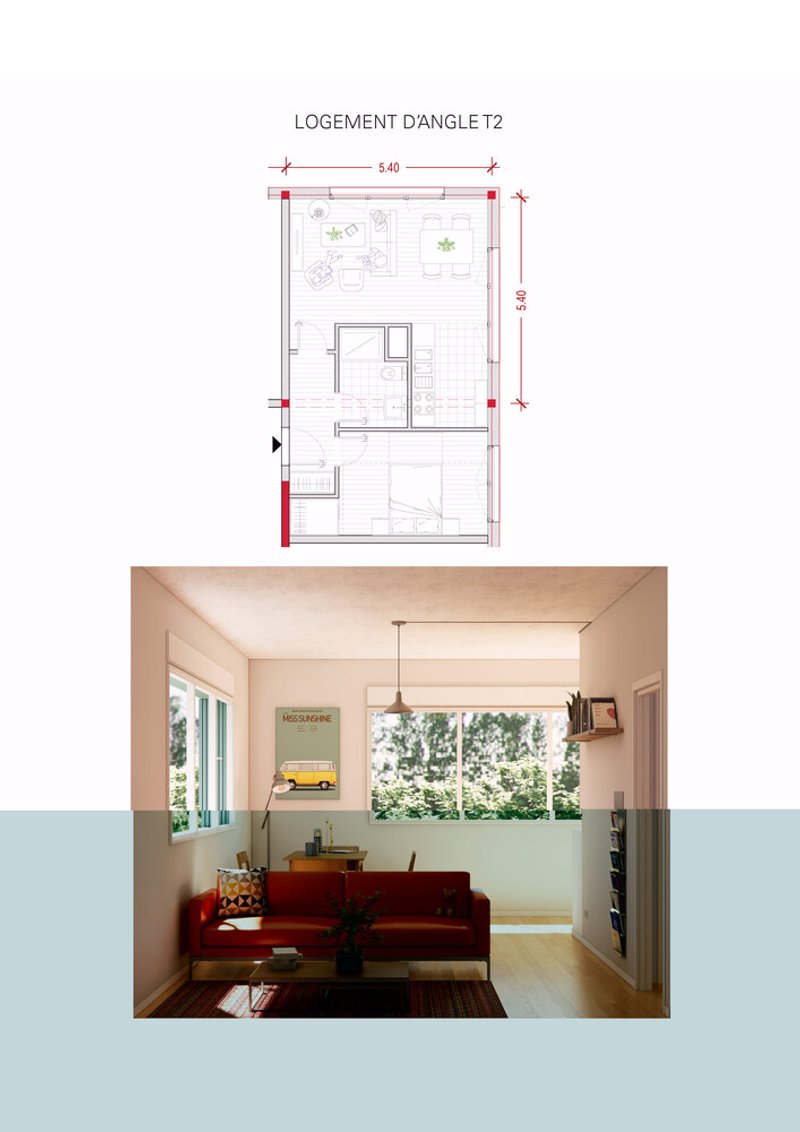
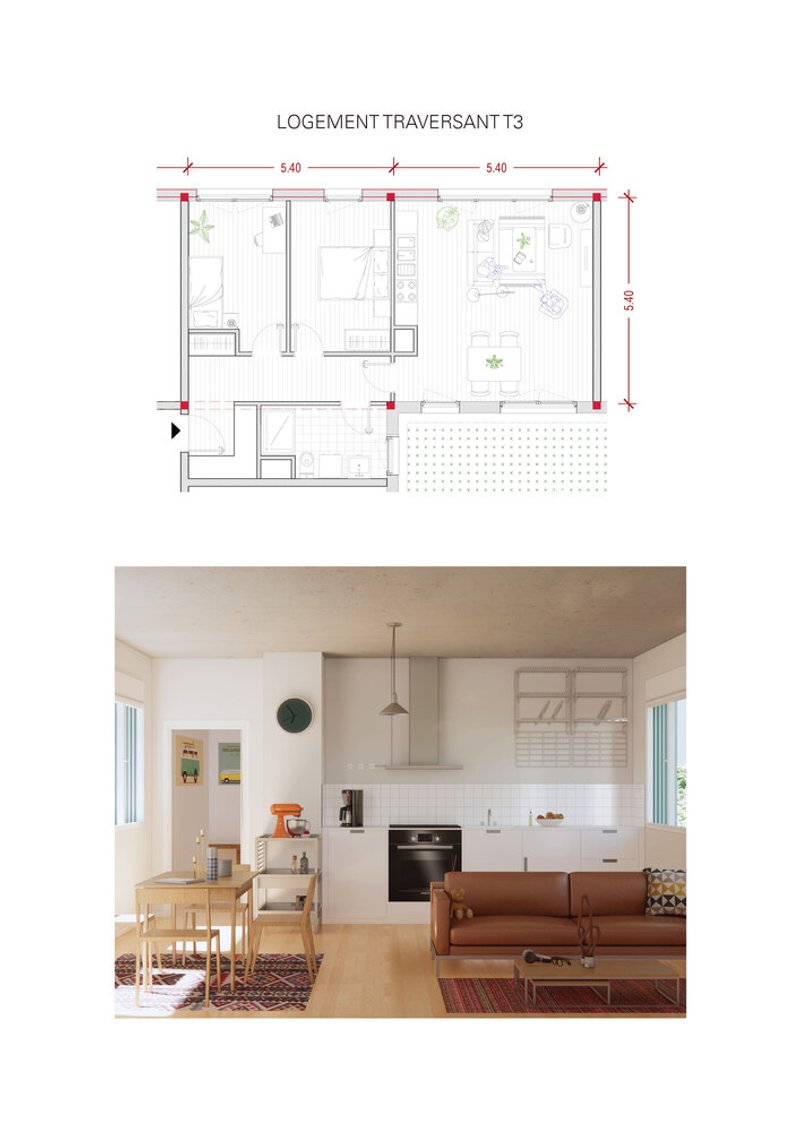
The conversion process requires strategic structural modifications to accommodate the new residential program. Levels R2 to R5 are reconfigured to introduce spacious apartments designed for comfort and efficiency. Central voids within the existing structure are expanded into patios, creating light-filled courtyards that enhance ventilation and foster a sense of openness within the apartments.
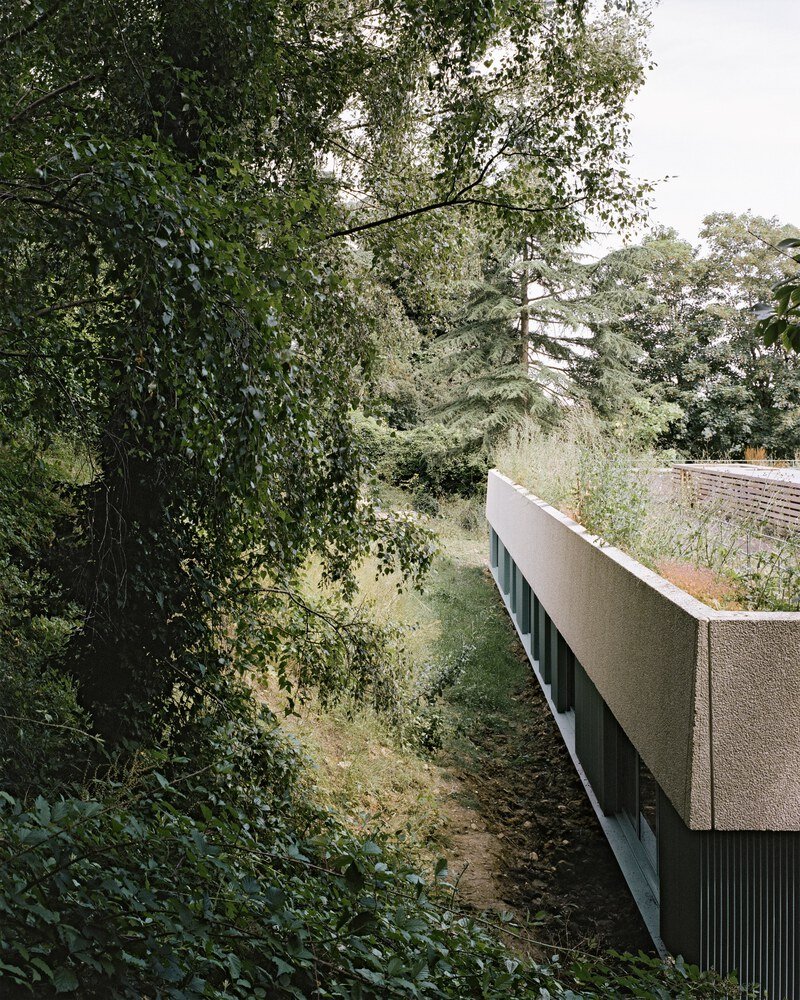
Each patio measures 10.4 meters on each side, serving as a focal point around which the apartments are organized. This layout promotes cross-ventilation, a critical feature for maximizing natural airflow and improving indoor air quality. Smaller residential units are carefully integrated into the design, ensuring that the space is optimized to meet diverse housing needs.
Functional Lower Levels
The ground level (R0) retains its technical functions while offering 69 parking spaces. Accessibility is prioritized, with entrances designed to accommodate individuals with reduced mobility. These accessible entrances seamlessly connect to the building’s vertical circulation core, ensuring smooth movement throughout the structure.
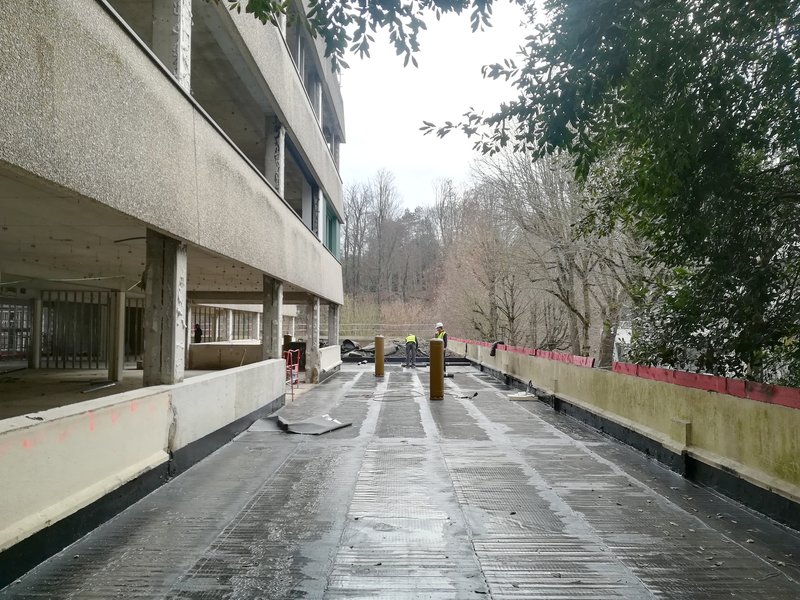
Level R1, formerly divided between parking and office spaces, is repurposed for commercial and activity spaces. This transformation breathes new life into the lower levels, introducing a dynamic interface between residential living and community engagement. A landscaped pedestrian ramp is introduced to improve access, enhancing the transition from the exterior environment into the building.
Emphasis on Vertical Circulation and Natural Light
One of the defining features of the original building is its generously proportioned staircases. Naturally illuminated and spacious, these staircases are retained and celebrated as part of the residential conversion. Their preservation encourages foot traffic, reducing dependence on elevators and fostering an active lifestyle among residents.
The existing elevator shaft is repurposed to meet modern accessibility standards. This approach reflects the project’s commitment to balancing preservation with functionality, showcasing how thoughtful design can enhance the user experience without compromising the building’s architectural legacy.
Architectural Dialogue Between Heritage and Modernity
The Jean Moulin Building conversion is conducted in consultation with heritage authorities, underscoring the importance of preserving the building’s architectural character. The design process emphasizes conservation while embracing necessary changes to meet contemporary residential standards. This dual approach ensures that the building’s historical significance is respected, while residents benefit from modern amenities and spatial comfort.
The precast concrete spandrels, exposed aggregate finishes, and staggered massing remain integral to the building’s visual identity. These elements serve as a reminder of the original design by Jacques Grellier, while the adaptive interior spaces reflect AZC Architects’ forward-thinking vision.
Sustainability and Urban Regeneration
The project aligns with broader urban regeneration efforts in La Celle-Saint-Cloud. Converting underutilized office buildings into residential complexes addresses the housing shortage while reducing the environmental impact associated with new construction. This adaptive reuse strategy extends the lifecycle of the existing structure, minimizing demolition waste and promoting resource efficiency.
Natural ventilation through patios, energy-efficient materials, and the integration of landscaped pedestrian pathways further enhance the building’s sustainability credentials. The project demonstrates how office building conversion to residential spaces in France can contribute to more resilient and sustainable urban development.
Redefining Residential Architecture in France
The Jean Moulin Building stands as a testament to the potential of adaptive reuse in contemporary architecture. AZC Architects’ approach exemplifies how the thoughtful transformation of an office building can yield vibrant residential communities while preserving architectural heritage.
This project serves as a model for future conversions across France, illustrating that office-to-residential transformations can address both housing needs and environmental concerns. It redefines the relationship between past and present, proving that architecture can evolve without erasing its origins.
A Visionary Office Building Conversion to Residential in France
The Jean Moulin Building by AZC Architects represents a pioneering example of office building conversion to residential use in France. Located in La Celle-Saint-Cloud, this project seamlessly merges the robustness of 1980s office architecture with the demands of modern residential living.
Through structural adaptation, preservation of architectural identity, and a focus on sustainability, the building embodies the future of urban development. It is a reminder that the architectural past can serve as a foundation for innovation, offering new possibilities for adaptive reuse across France and beyond.
All Photographs are works of Julien Hourcade



Popular Articles
Popular articles from the community

On the Brooks House by Monsoon Collective – A Contemporary Kerala Home Rooted in Tradition
Kerala home blending tradition and modernity with water-inspired design, brick architecture, courtyard planning, and sustainable rainwater harvesting strategies.
Gads Hill Early Learning Center by JGMA: Adaptive Reuse Shaping Community-Focused Educational Architecture
Adaptive reuse transforms fragmented structure into vibrant early learning center with playful façade, natural light, and community-focused sustainable design.


The Ken Roberts Memorial Delineation Competition (Krob)
As the most senior architectural drawing competition currently in operation anywhere in the world, it draws hundreds of entries each year, awarding the very best submissions in a series of medium-based categories.

Inverted Architecture Installation by Studio Link-Arc: Exploring the Intersection of Architecture and Living Organisms
Inverted Architecture Installation by Studio Link-Arc blends mycelium, sustainability, inverted design, ecological cycles, and urban adaptive architecture in Shenzhen.
Similar Reads
You might also enjoy these articles
The Ken Roberts Memorial Delineation Competition (Krob)
As the most senior architectural drawing competition currently in operation anywhere in the world, it draws hundreds of entries each year, awarding the very best submissions in a series of medium-based categories.


Waterfront Redevelopment and Urban Revitalization in Mumbai: Forging a New Dawn for Darukhana
A transformative waterfront redevelopment project reimagining Darukhana’s shipbreaking heritage into an inclusive urban future.

OUT-OF-MAP: A Call for Postcards on Feminist Narratives of Public Space
Rhizoma Design and Research Lab invites artists, designers, architects, researchers, and students to reflect on how feminist perspectives can reshape public space. Selected works will be exhibited in Barcelona, October 2026. Submissions open until 15 April 2026.


Documentation Work on Buddhist Wooden Temple
Architectural syncretism and cultural hybridity: A comparative study of the Buddhist temples in Chattogram Hill tracks


Explore Architecture Competitions
Discover active competitions in this discipline




The International Standard for Design Portfolios


The Global Benchmark for Architecture Dissertation Awards


The Global Benchmark for Graduation Excellence


Challenge to reimagine the Iron Throne
Comments (0)
Please login or sign up to add comments
No comments yet. Be the first to comment!