
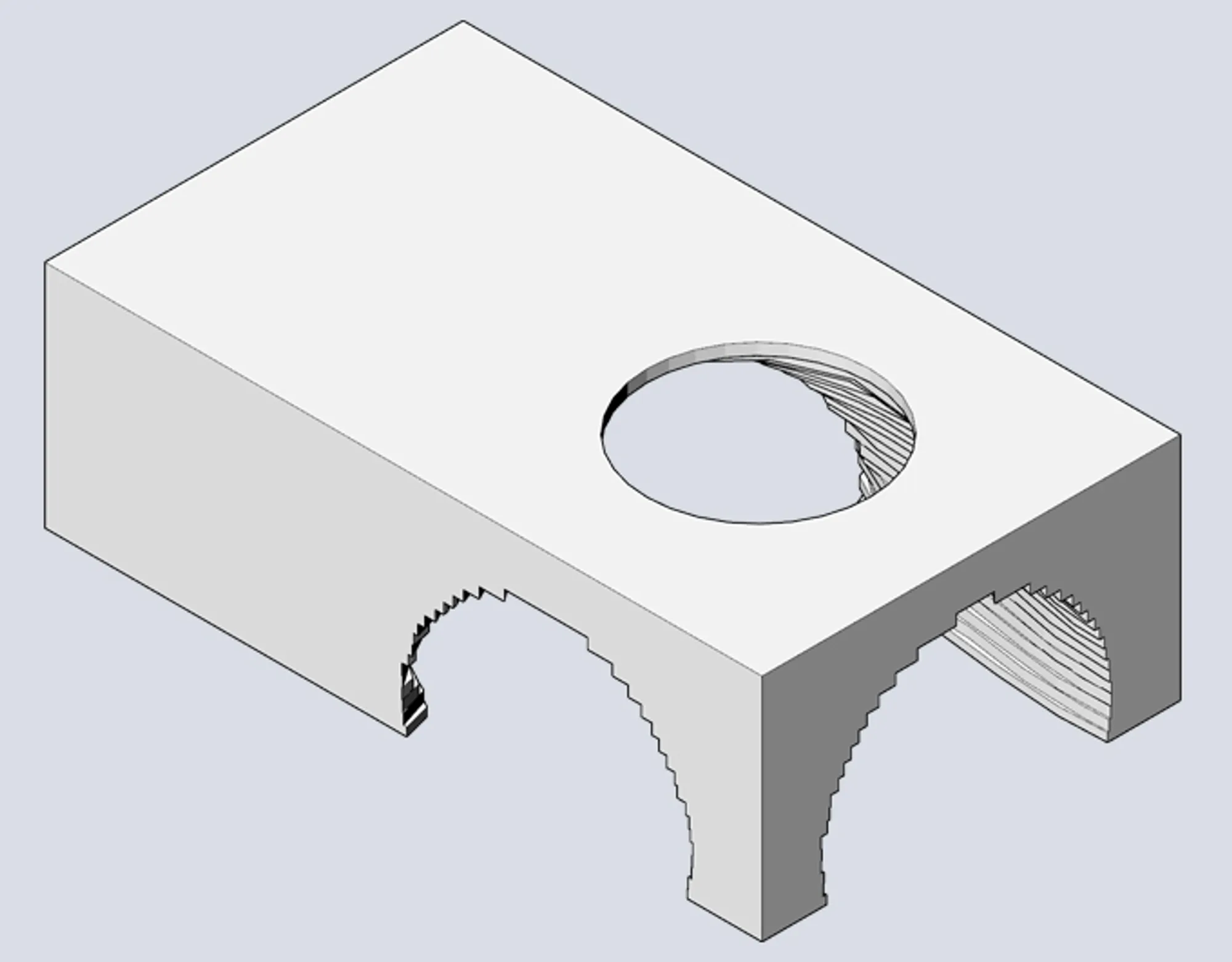
PAVILION "SZANTA"
INFORMATION ABOUT PROJECT
eng. “shanty” - 18th and 19th century work songs grown on sailing ships. They were performed at work in order to synchronize the activities performed by groups of sailors, used when a given labour had to be used by many people at the same time, or helped in the performance of long and monotonous but rhythmic activities.
Since the turn of the 1970s and 1980s, Poland has been one of the leading countries in the world when it comes to shanties in their broadest sense. Polish sailors in foreign ports impress sailors from other countries with their rich repertoire, and the number of shanty festivals held in Poland every year is close to a hundred
The design will be placed on the longest wooden pier in Europe in Sopot. It is located in northern Poland on the Bay of Gdańsk (Baltic Sea).Sopot is a seaside and health resort, known after for the Sopot Festival song competitions organized there since 1961 at the Opera Leśna.
The idea of the project was to create the Pavilion as a local attraction while referring to and highlighting local traditions. The form of pavilion is inspired by sailors tales and historical illustration's mood. Local Baltic Sea weather was an important aspect of esthetic's consideration.
The materials used to create the pavilion are old pallets from nearby yards and restaurants. The choice of materials in addition to upcycling possibilities is also determined by materials which are mostly common for crafting the boats : wood and canvas/ sails.
Pavilion is designed to be built by 3 people and it prepared for using most common DIY tools. Pavilion can be made using proposed instruction.
Each layer of pallets has an algorythm which calculates position of control points of the curves and intersections of those curves with layer grid. All of the points are automatically referred to the grid cell’s corner and therefore it is easy to measure the distance according to x,y axis. After assigning the points, the lines must be connected via pencil or thread and then must be cutted along the path.



Popular Articles
Popular articles from the community


The Ocean Hive: Sustainable Architecture for a Self-Sufficient Civilization at Sea
The Ocean Hive imagines sustainable architecture at sea, where modular habitats, algae, wave power and ocean waste sustain a growing colony.

Co-Life: Senior Housing Design That Reconnects Older Adults With the City
Co-Life reimagines senior housing design through healing gardens, shared streets, workshops, and a sustainable community across generations.

Co-life: Sustainable Architecture for Age-Friendly Community Living
Co-life reimagines sustainable architecture for seniors through courtyards, rammed earth, shared gardens, and spaces designed for belonging.

Play: Fragments of Their World
Familiar architecture becomes modular playground design, creating safe spaces where displaced children can learn, connect, imagine and play.


Similar Reads
You might also enjoy these articles

The Rhythm of Seasons
A Farmers' Market Connecting Nature and the City


More Than a Building-Designing a Living System
More Than a Building-Designing a Living System
Base Beyond
DESERT COMPOUND ARID: TOURISM OF ABSENCE AND ABUNDANCE


Explore Pavilion Competitions
Discover active competitions in this discipline




Challenge to design a portable theatre


Challenge to design a portable music platform


Challenge to design an open learning module for the elderly


Challenge to reimagine the Iron Throne
Comments (0)
Please login or sign up to add comments
No comments yet. Be the first to comment!