
Primitive and Remnant of the Cycle
Transforming cemeteries into living memorials through green burial architecture that reconnects the departed with urban life.

Project by Annie Kwan
Shortlisted entry of Circle of Life
Architecture has long shaped the rituals of life and death, but a new wave of thinking is transforming how we treat the final act of existence. "Primitive and Remnant of the Cycle," a visionary proposal by Annie Kwan, reimagines the cemetery as a dynamic part of the city through the lens of green burial architecture. At its core, the project proposes a sustainable, non-traditional farewell that restores our connection with both nature and memory.
Rather than preserving physical remnants, the design emphasizes the preservation of intangible legacies—memories, values, and emotions. Kwan's architectural concept dismantles the need for tombstones or fixed grave markers, suggesting instead a cyclical, regenerative system where the deceased return to the earth and continue to live through planted trees and city landscapes.
The central idea draws on the philosophy that all things return to their primitive state. The human body, too, decomposes and reintegrates into the ecosystem. Inspired by the biodegradable Capsula Mundi burial method developed by Anna Citelli and Raoul Bretzel, the design replaces coffins with organic, egg-shaped pods that are planted with a tree. These become literal markers of life after death—symbols of memory, renewal, and urban greening.
A Citywide Farewell
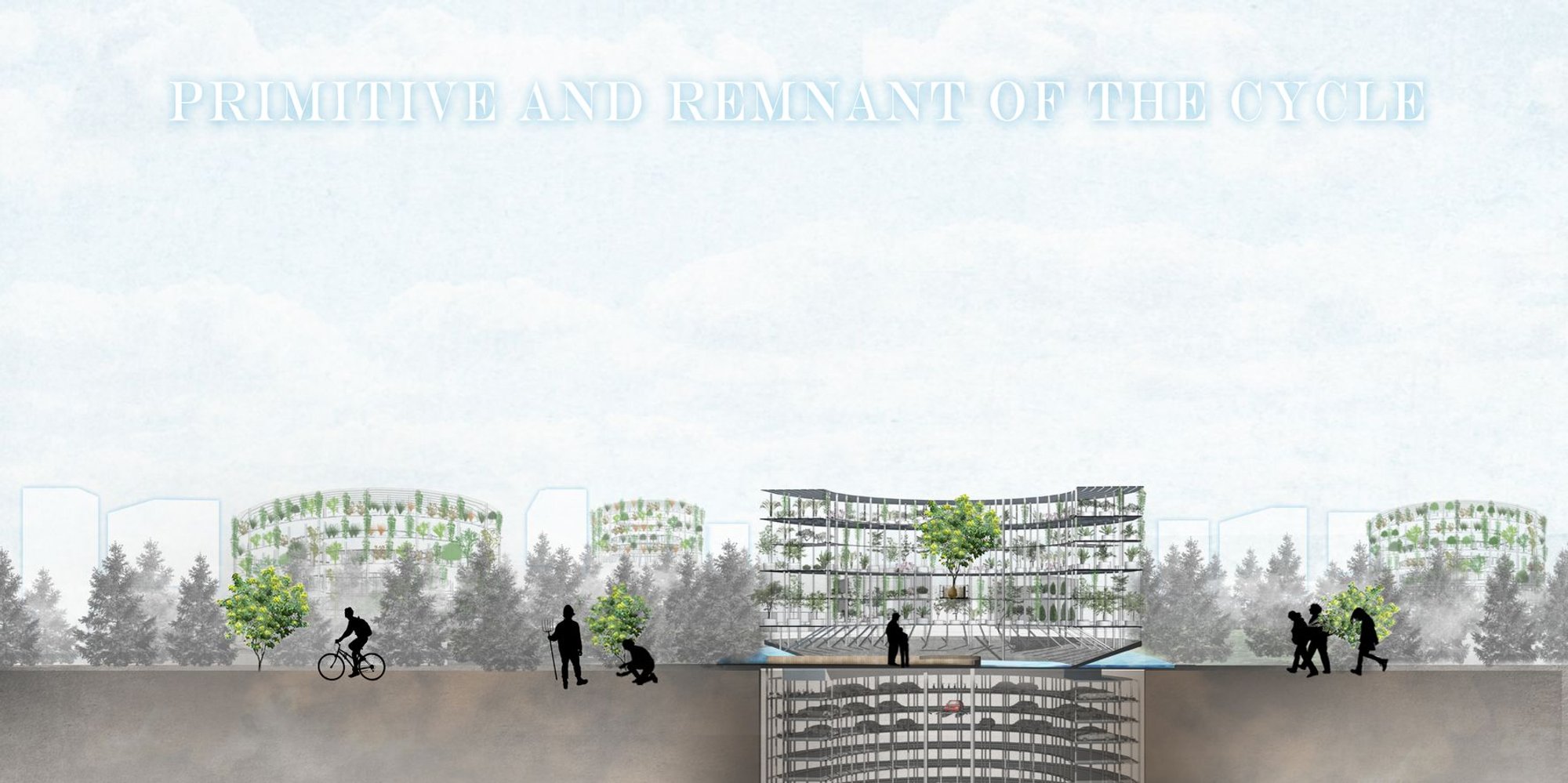
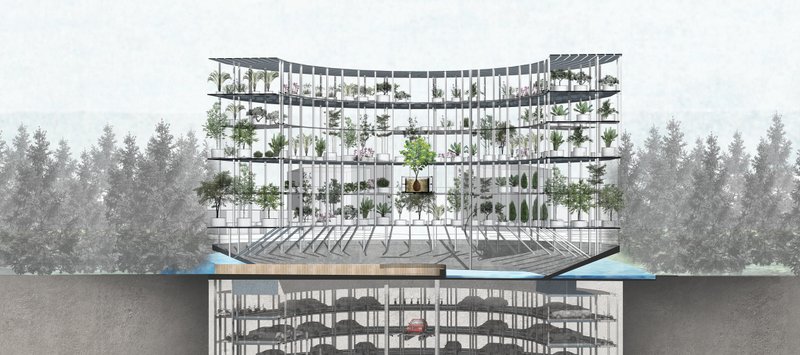
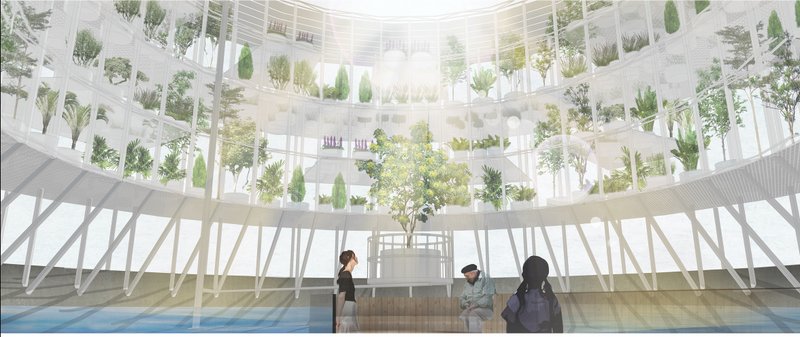
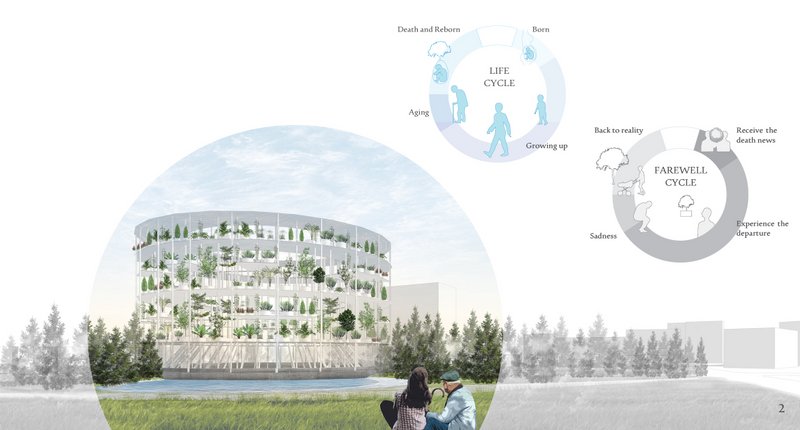
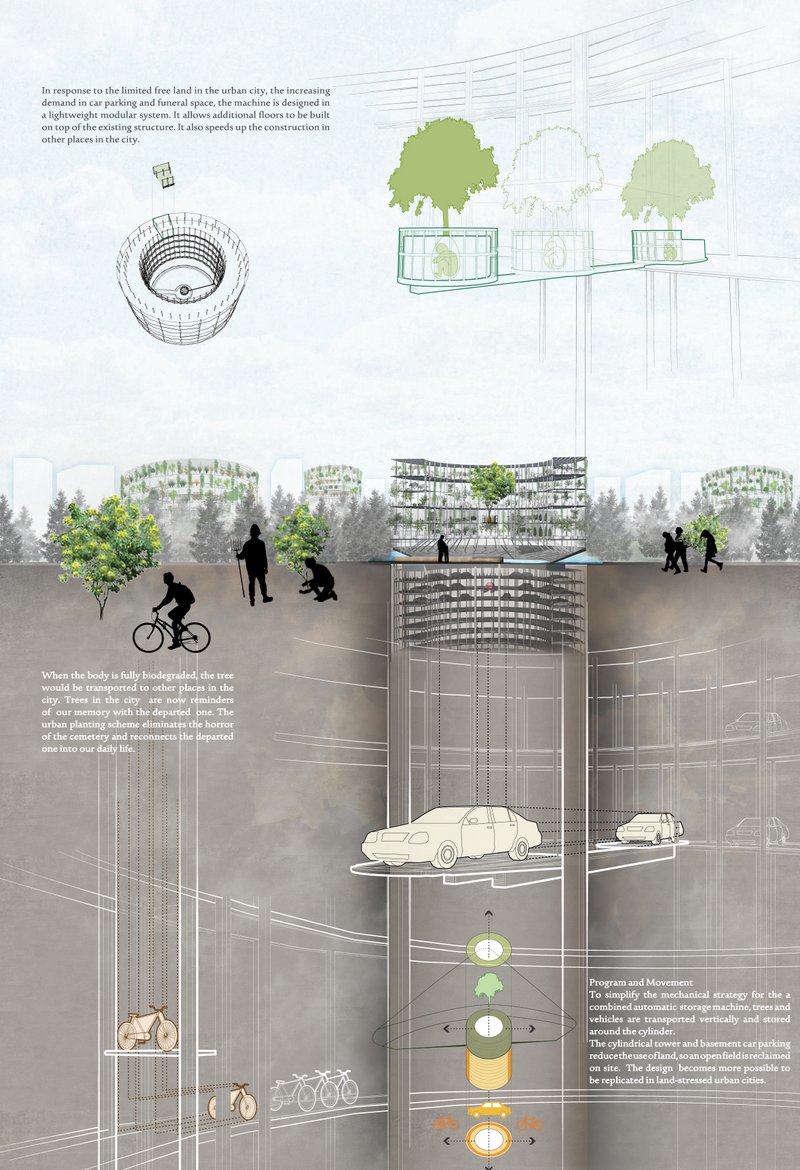
The cemetery is envisioned not as a static plot of land but as an active infrastructure of remembrance integrated into urban life. The project introduces a vertical cylindrical building that functions as both a tree nursery and a mechanical structure for storing the bodies and vehicles. The building operates on an automated lift system, allowing families to witness a final farewell as the tree pod descends. Once the body is fully composted and the tree established, it is relocated to public spaces across the city—parks, roadsides, and other green areas—embedding the memory of the departed into everyday spaces.
As Kwan writes, this method eliminates the "horror of the cemetery," allowing the deceased to re-enter society through the natural landscape. By reconnecting remembrance with urban forestry, the design doesn't isolate grief but invites it to coexist with life.
Urban Sustainability Meets Emotional Healing
Addressing the constraints of dense cities and limited burial land, the proposal layers multiple uses vertically. Vehicle parking and tree pods are stacked underground and within the structure, reclaiming valuable surface land as public park space. This system also encourages biodiversity and ecological enrichment in otherwise sterile city cores.
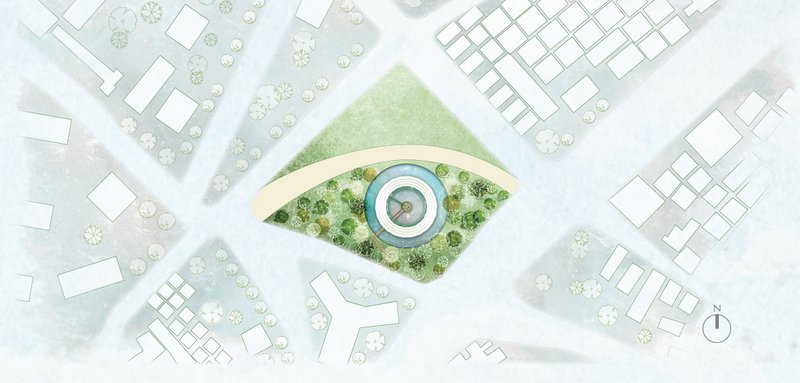
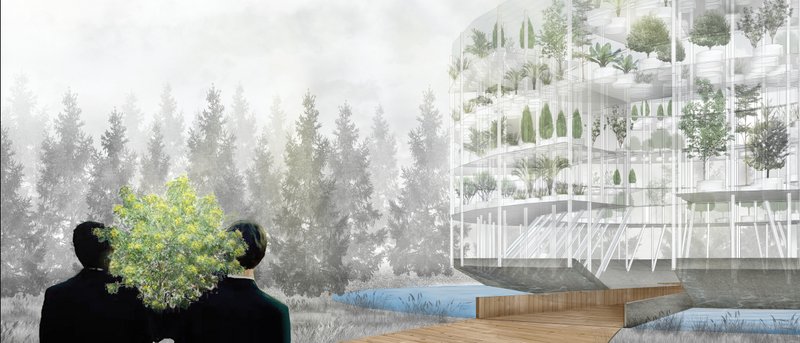
The landscape strategy separates private ceremonial moments from public interaction. The southern end of the site is forested for quiet goodbyes, while the northern section remains open and accessible to the public. A shortcut pathway through the park allows for daily integration and fluidity within the city's movement patterns.
Architecture as Process, Not Monument
Rather than designing for permanence, Kwan embraces impermanence as a design principle. The cylindrical structure is modular and replicable, adaptable to various urban locations. This flexible nature allows it to serve as a scalable solution to the growing need for sustainable end-of-life infrastructure.
The scheme also envisions a time-based experience. From burial to tree relocation, the process acknowledges mourning as cyclical, not linear. Families are offered closure, not by keeping a physical tomb, but by watching their loved one become a lasting part of the environment.
Juror Commentary
Juror Manuel Herrera, Partner and Architect at Taller Diez 05, praised the concept for its emotional strength and clarity of purpose:
"Simple but strong idea; the structural criteria is not that clear, but there are great spaces. I would work probably more with the park, topography, pathways."
His comments reflect the delicate balance between concept and execution. While the proposal may benefit from enhanced structural detailing, its spatial and emotional impact remains powerful and evocative.
Annie Kwan's "Primitive and Remnant of the Cycle" offers more than a burial solution—it redefines how cities can participate in the life-death cycle through green burial architecture. The proposal blurs the lines between cemetery, park, and public space, turning mourning into a communal and ecological act. In doing so, it plants the seeds for a more compassionate and sustainable future.



Popular Articles
Popular articles from the community

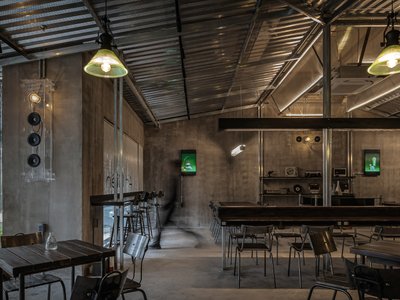
An Miên Lumière Cafe by xưởng xép, Ho Chi Minh City, Vietnam
An industrial-inspired café where layered steel and warm light create a dynamic, immersive environment shaped by reflection, depth, and perception.
On the Brooks House by Monsoon Collective – A Contemporary Kerala Home Rooted in Tradition
Kerala home blending tradition and modernity with water-inspired design, brick architecture, courtyard planning, and sustainable rainwater harvesting strategies.


The Ken Roberts Memorial Delineation Competition (Krob)
As the most senior architectural drawing competition currently in operation anywhere in the world, it draws hundreds of entries each year, awarding the very best submissions in a series of medium-based categories.
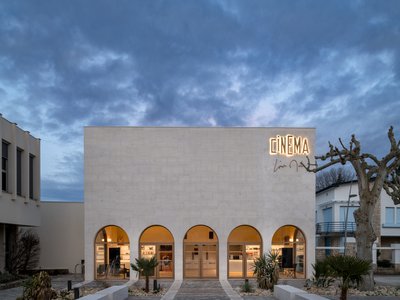
Louis Malle Cinema: A Limestone Cultural Landmark Revitalizing Community Life in Prayssac
Limestone cinema extension with public forecourt, blending heritage and modern design to create flexible cultural spaces and strengthen community interaction.

Similar Reads
You might also enjoy these articles

Top 15 Architecture Competitions to Enter in 2026
From student-friendly idea competitions to prestigious international awards, here are the best architecture competitions open for entries in 2026. Updated regularly.

DIY & Engineering in Computational Design : Enter the BeeGraphy Design Awards
Showcase Your Creativity with Computational Design and Open Source Projects
Innovative Design Solutions: Award-Winning Projects from Recent Architecture Competitions
Exploring award-winning architectural projects shaping the future of design, sustainability, and community.





Comments (0)
Please login or sign up to add comments
No comments yet. Be the first to comment!