
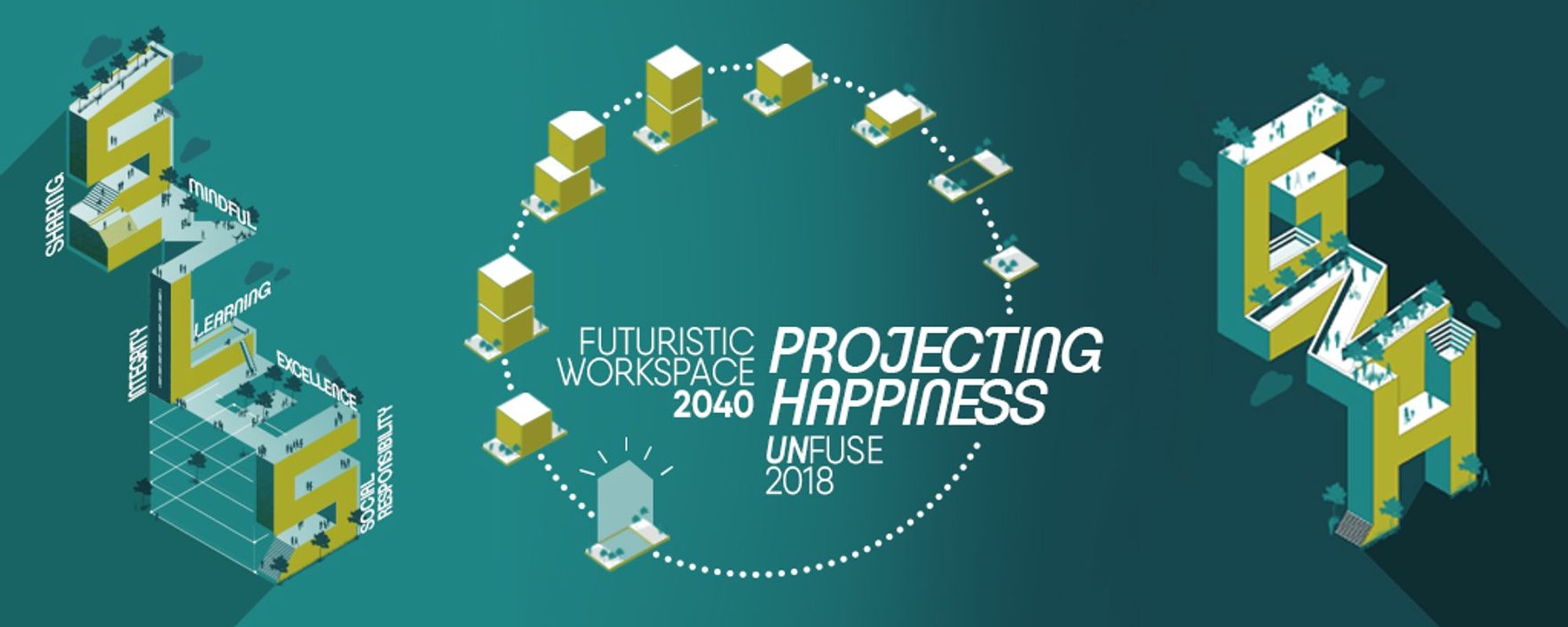
Projecting Happiness: The Future of Workplace Architecture in 2040
Reimagining workplace architecture as adaptive, human-centered spaces where happiness, innovation, and technology coexist.

In a future defined by technological slowdowns and human-centered innovation, workplace architecture is undergoing a radical transformation. Projecting Happiness—a visionary concept developed by Manasa Nandini, Sharon Sabu, Anam, and Aniruddh Sharan, and presented as part of the Breaking Work competition—imagines a new kind of workspace. This project integrates technology, adaptability, and human well-being, emphasizing happiness as the driving force of future office design.
Architecture for Happiness
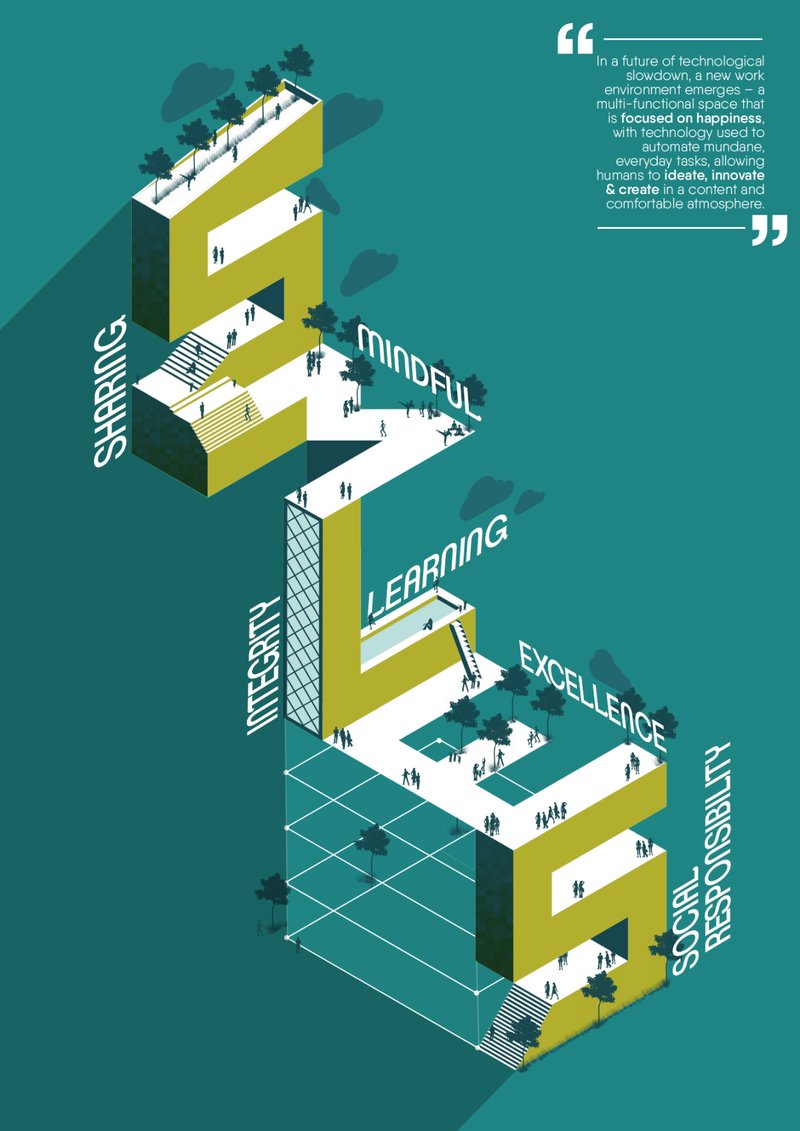
The design envisions adaptive architecture that reshapes itself to suit human needs. Moving beyond rigid office layouts, the project proposes multi-functional spaces that shift seamlessly between collaboration zones, learning hubs, and wellness areas. By focusing on happiness and reducing the friction of mundane tasks through automation, the architecture enables people to ideate, innovate, and create in an environment that nurtures growth.
Technology as a Silent Partner
The workplace of 2040 repositions technology not as a dominant force but as an unobtrusive partner. Predictions highlight that while technological growth will stabilize after its early-century boom, it will continue to serve humans in non-intrusive ways. Smart building systems automate repetitive processes, while digital identities, remote working, and mechanized management systems ensure efficiency without compromising human comfort. This human-centered architecture ensures that technology adapts to people, not the other way around.
Gross National Happiness as a Framework
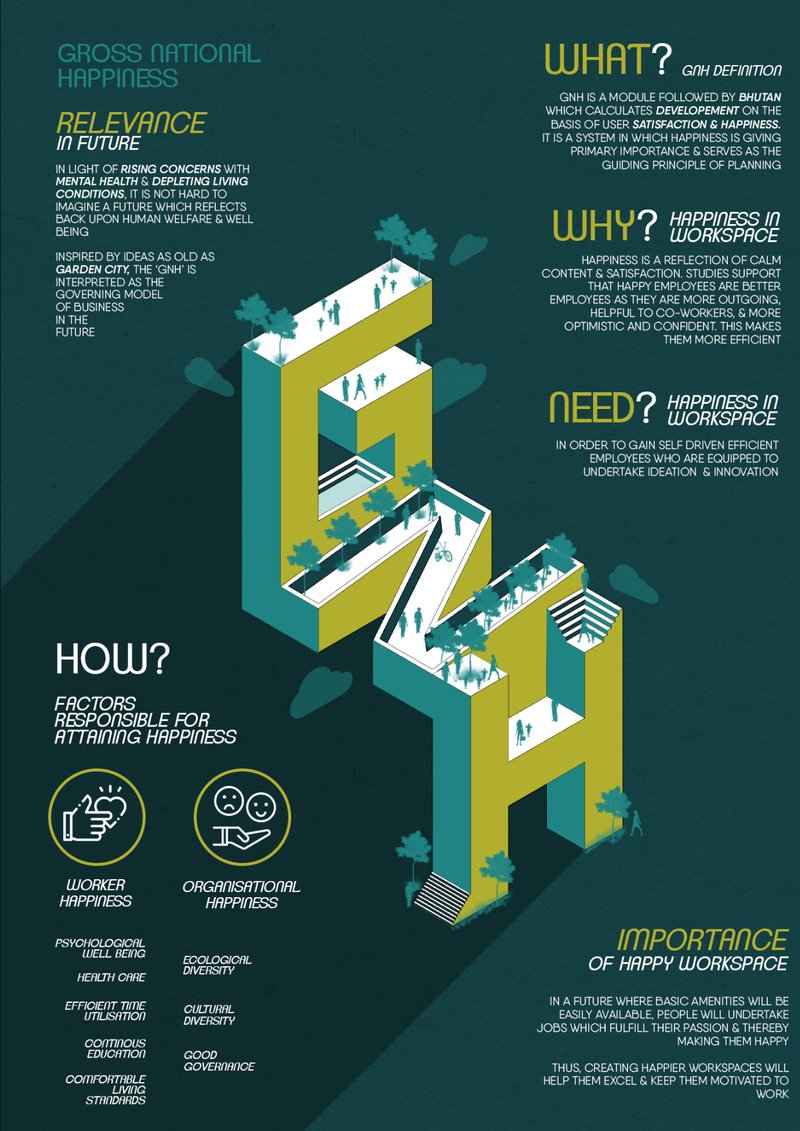
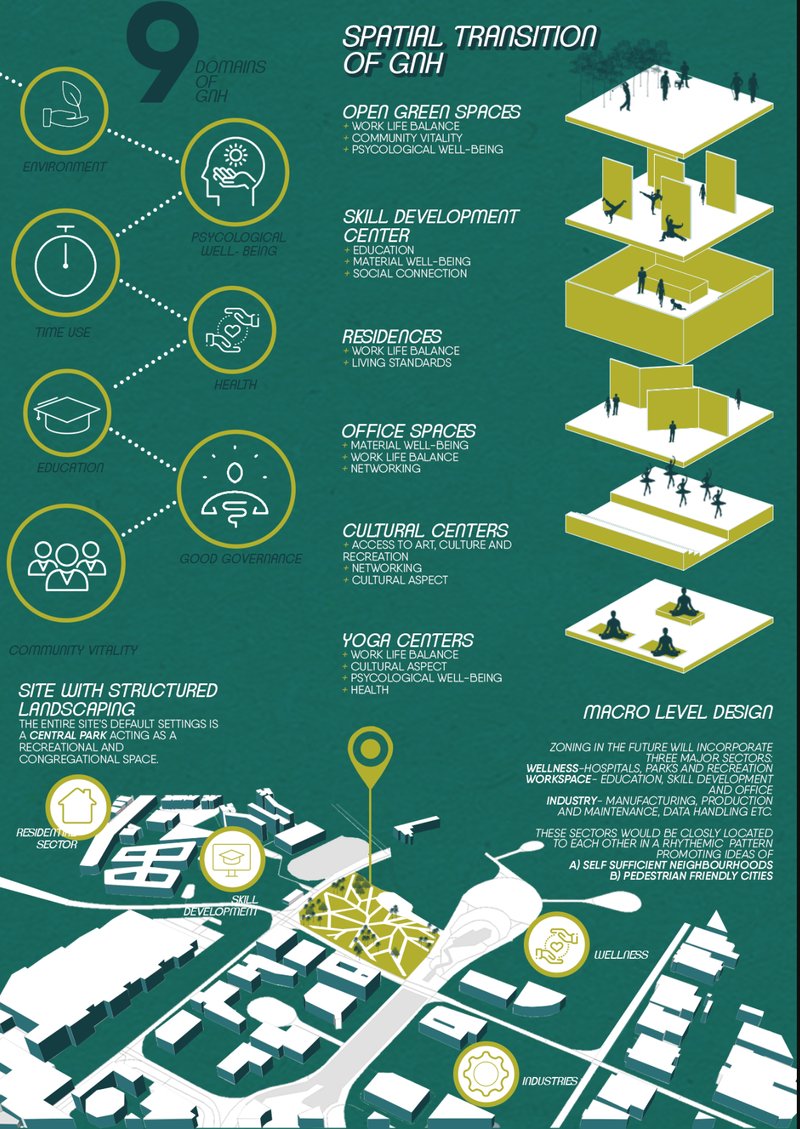
Inspired by Bhutan’s Gross National Happiness (GNH) index, the project uses happiness as the benchmark for workplace design. The architectural framework prioritizes well-being, contentment, and purpose over pure economic gain. Through integrated domains—such as psychological well-being, time use, health, education, environment, cultural vitality, and governance—the design creates a holistic urban ecosystem that measures success by quality of life.
Spatial Design: From Flexibility to Absence
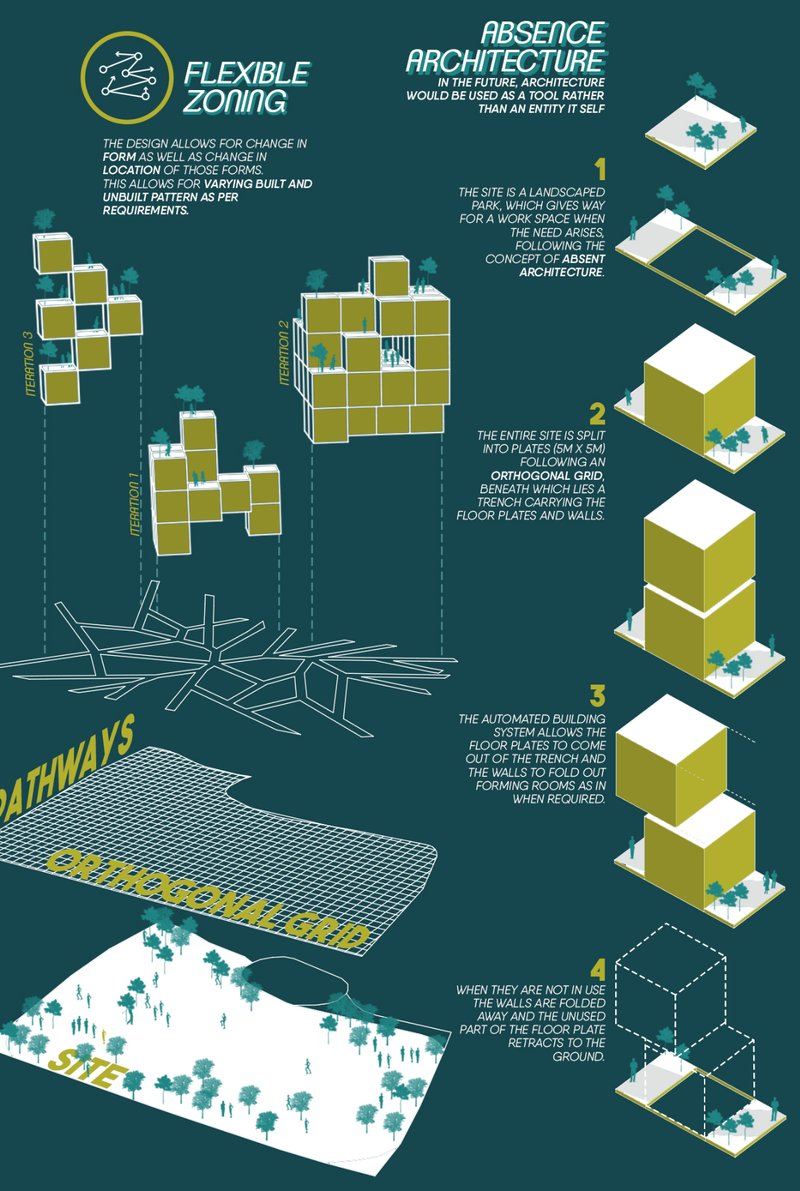
One of the boldest ideas within Projecting Happiness is the concept of Absence Architecture. Here, architecture becomes a flexible tool rather than a permanent entity. Modular floor plates rise from landscaped parks, forming workspaces only when needed. Automated building systems dynamically generate layouts, responding to organizational patterns and individual needs. This radical zoning approach allows built forms to disappear when not in use, giving way to green, open spaces and reducing environmental impact.
Future Workspaces and Well-being
The project identifies collaboration, human interaction, and ideation as the engines of innovation. Instead of workplaces being productivity-driven machines, they evolve into ecosystems that balance professional and personal fulfillment. Features include:
- Open green spaces for psychological well-being and community vitality.
- Skill development centers supporting continuous education.
- Residences and office spaces designed for balance and networking.
- Cultural and yoga centers that enhance diversity, health, and collective well-being.
The Building Process
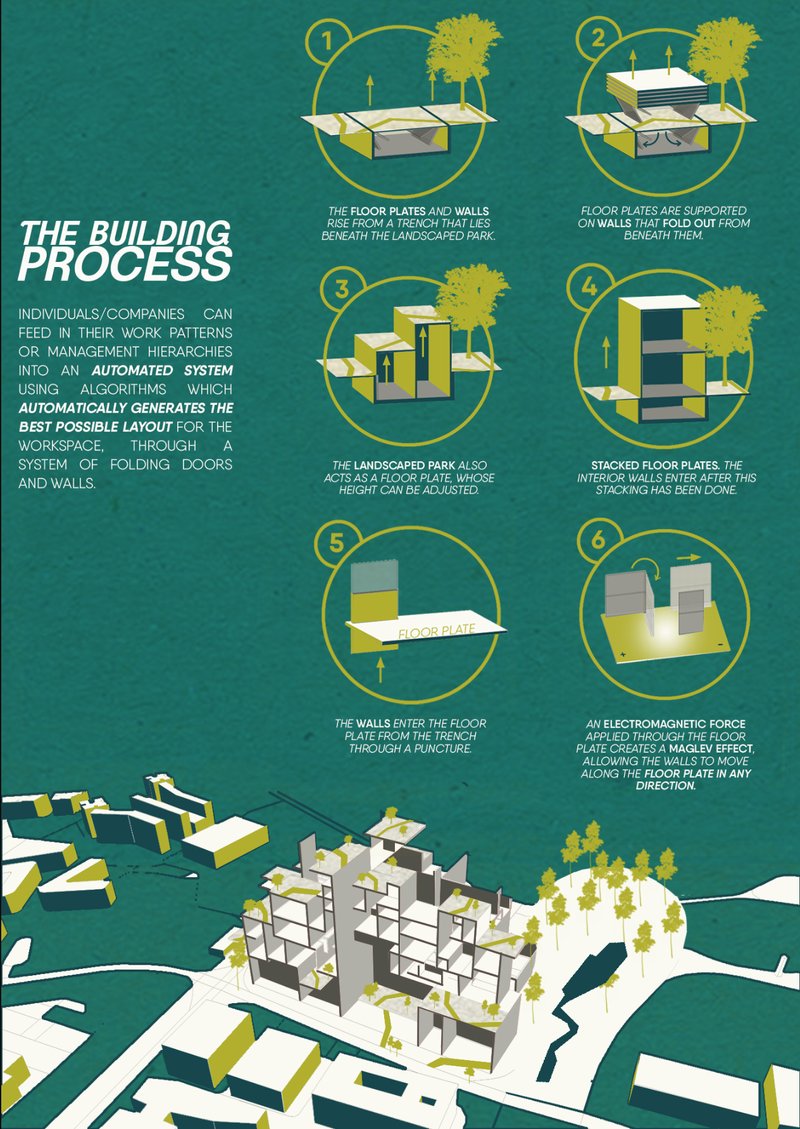
The envisioned construction process leverages automated algorithms and modular design. Floor plates and walls fold out from trenches beneath landscaped parks, creating adaptive work environments. Electromagnetic forces and maglev-inspired systems enable walls to move fluidly, ensuring maximum flexibility and innovation in layout planning.
Projecting Happiness challenges the conventional definition of office architecture by centering it on human happiness, adaptive design, and sustainable living. It presents a vision of 2040 where workspaces act not only as sites of productivity but also as nurturing environments for ideation, interaction, and growth. By merging technological innovation with well-being, this project sets a new benchmark for future workplace architecture.




Popular Articles
Popular articles from the community


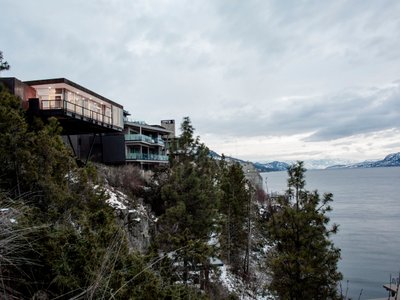
Alton Cliff House: A Harmonious Retreat by f2a Architecture in Lake Country, Canada
Alton Cliff House blends corten steel, prefabrication, and sustainable design, creating a luxurious, energy-efficient retreat perched on Canadian cliffs.

Free Architecture Competitions You Can Enter Right Now
No entry fees, real prizes. Here are the best free architecture competitions open for submissions in 2026.
Atelier Macri Concept Store Interior Design by CASE-REAL
Atelier Macri store features a "ko" counter, walnut wood details, cork displays, blending retail, gallery, and seamless customer experiences.


Similar Reads
You might also enjoy these articles
Digital Façade Design for our cities’ urban fronts
Prima Facie - Result Story
Protecting avian biodiversity: Bird observatories to help spread awareness & save rare bird species.
Results for ‘Fly’ - Landscape design competition out now
Connecting with nature: Forest interpretation center in Australia's Wollemi National Park
‘Asatti’ - Landscape design competition - Result story






Comments (0)
Please login or sign up to add comments
No comments yet. Be the first to comment!