
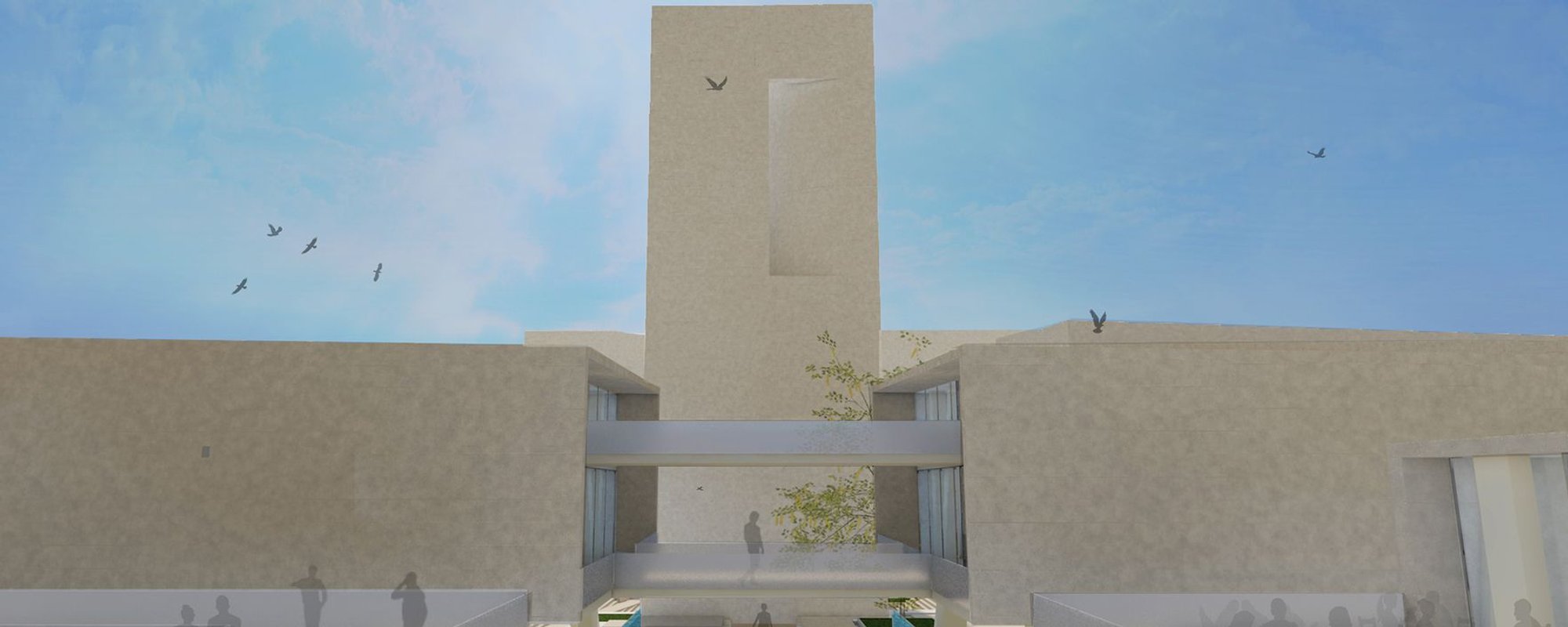
Serail Annas: Rebuilding Identity Through Cultural Architecture
Architecture becomes memory, space heals trauma—Serail Annas is Aleppo’s blueprint for cultural revival and collective hope.

Project by Kawtar Rochd
Shortlisted Entry – Memory Competition
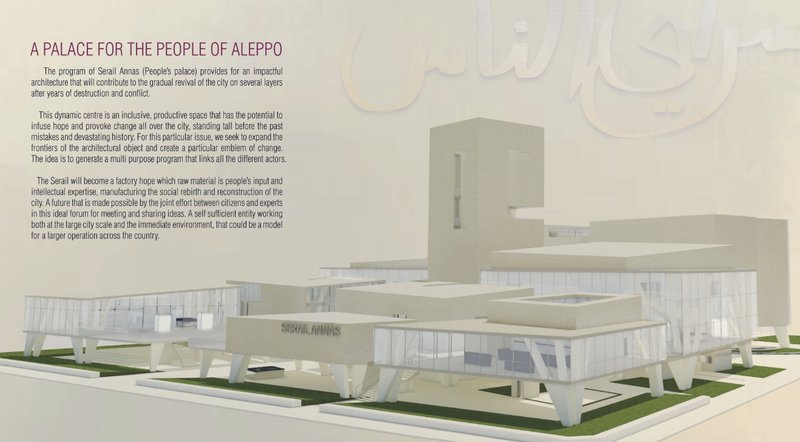
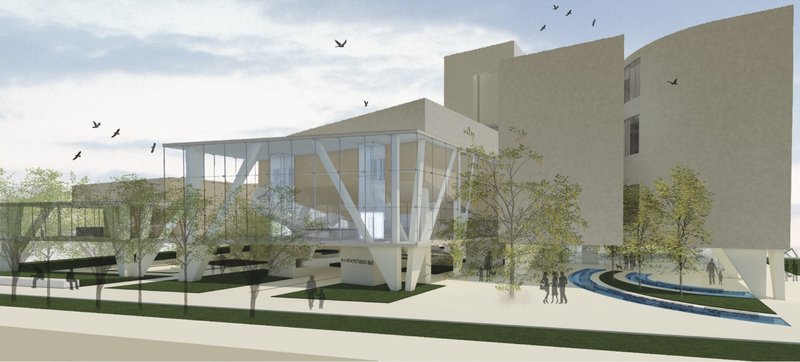
Serail Annas (People’s Palace) is a visionary project in the realm of cultural architecture. It reconceptualizes a historic limestone block — a material deeply embedded in the architectural and cultural identity of Syria — to represent the layered and multifaceted memory of Aleppo. Beyond its architectural form, the project serves as an active civic landmark, catalyzing both physical and emotional reconstruction in a city deeply scarred by war. This design is not only about rebuilding structures; it is about reviving narratives, encouraging healing, and fostering a space where new social and cultural life can take root.
A Symbol of Cultural Architecture in Syria
The architectural philosophy of Serail Annas centers around the belief that architecture has the power to act as a medium of healing and remembrance. This civic complex is envisioned as a multi-use cultural space that supports interaction, expression, and community resilience. Rooted in Aleppo’s history but oriented toward its future, Serail Annas balances nostalgia with innovation. It integrates heritage materials and urban typologies with contemporary spatial strategies to accommodate public participation and knowledge-sharing.
This “factory of hope” is designed to transform individual and collective memories into tools for change. Within its volumes, citizens are invited to engage with exhibitions, participate in training programs, and interact with symbolic architectural elements such as the Memory Tower. These functions are woven into a cohesive, purpose-driven layout that allows space for reflection, learning, debate, and celebration.
Conceptual Process: Memory Materialized
- Limestone Block: The use of a historically significant material anchors the project in local tradition, referencing Aleppo’s ancient building practices.
- Burst and Lift: The form is strategically fragmented to open the monolithic block, giving rise to diverse spatial functions — a move that symbolizes both rupture and opportunity.
- Light and Access: Transparent elements and open circulation strategies reduce visual weight, enhance environmental sustainability, and invite public movement throughout the space.
Through a series of spatial maneuvers — splitting, lifting, layering — the building comes alive as a metaphor for fragmentation and reintegration. Its architectural language mimics the emotional landscape of a post-conflict society seeking cohesion.
Functional Zones
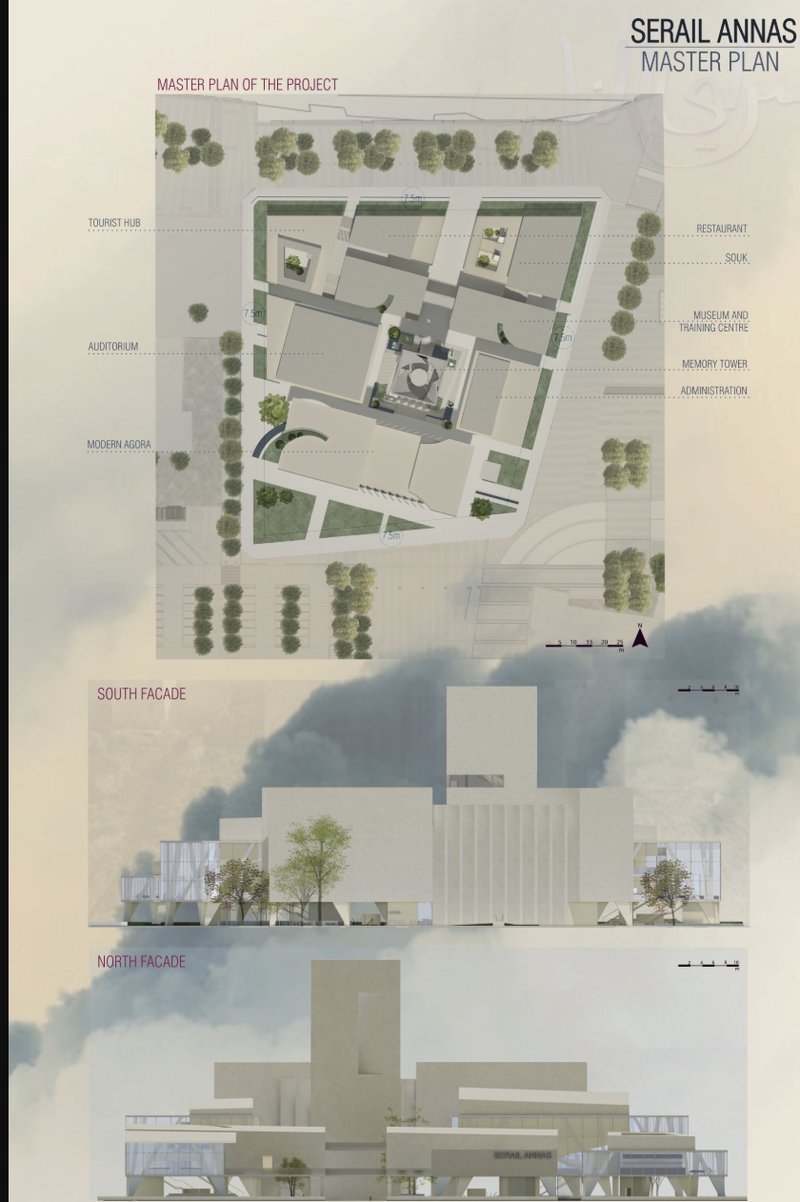
The project is composed of four primary zones, each dedicated to a unique yet interrelated function:
- Cultural Centre – This zone includes a Heritage and Crafts Museum, a vibrant Tourist Hub, a Modern Souk selling local crafts and produce, a panoramic terrace, and a Training and Research Centre to support cultural preservation and innovation. It serves as the public face of the building and creates connections with visitors, tourists, and locals alike.
- Public Space – Designed as a connective tissue between zones, the public space features open platforms, water fountains, and gathering areas that foster informal encounters, performances, and spontaneous expression.
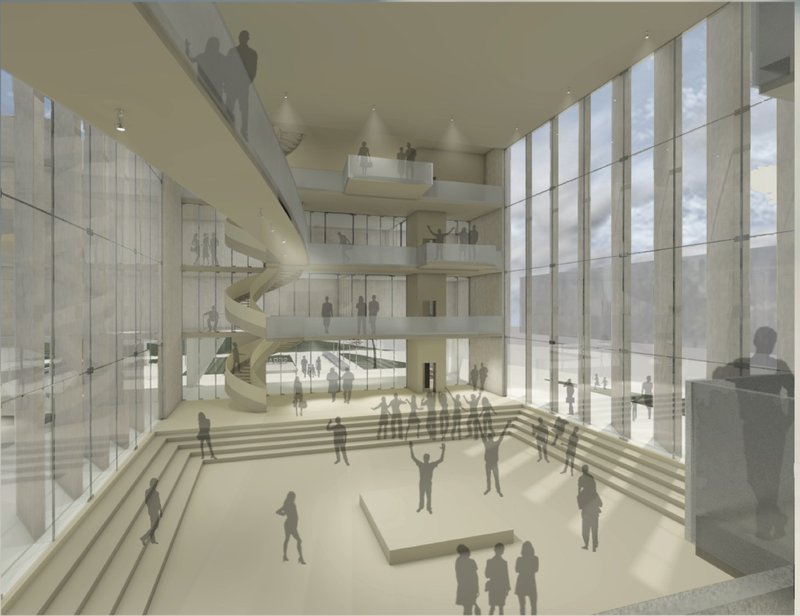
- Modern Agora – Functioning as the civic core, this zone includes an Open Assembly Atrium for large events, a Laboratory of Ideas for collaborative innovation, and facilities for urban forums and civic dialogue. It is an architectural response to the need for social participation.
- Memory Tower – Rising at the heart of the project, the tower offers an emotional journey through vertical spatial storytelling, from darkness and trauma to light and hope. It is a monumental symbol of transition, transformation, and testimony.
Memory Tower: A Journey Through Architectural Symbolism
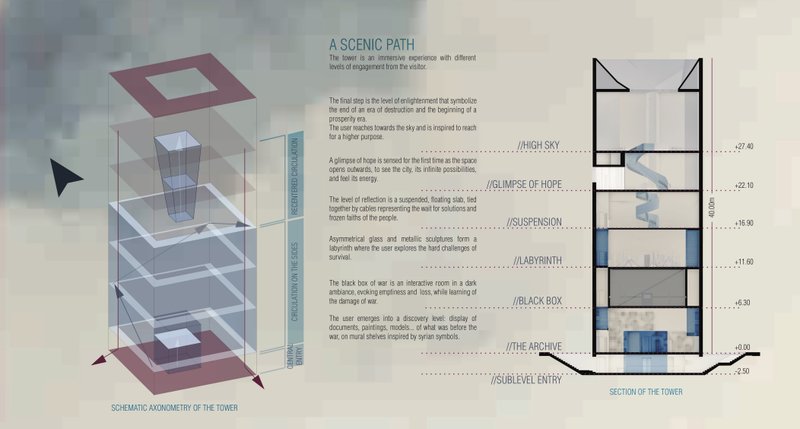
The Memory Tower acts as a spiritual and mnemonic anchor in the entire design. It is an immersive vertical path, guiding visitors through curated spaces that represent distinct emotional stages:
- Sublevel Entry & Archive – Symbolizes what was lost, with dark, immersive environments for reflection and remembrance.
- Black Box – Represents the immediate trauma of war and destruction.
- Labyrinth – A spatial metaphor for disorientation and the nonlinear experience of memory.
- Suspension – Transitional spaces that encourage self-reflection and contemplation.
- Glimpse of Hope – Elevated views and openings to the city suggest the reawakening of possibilities.
- High Sky – The final level, representing transcendence, healing, and the collective aspiration for a brighter future.
Each level is both architectural and symbolic, constructed to evoke sensory experiences that align with emotional phases. The tower’s ascension embodies a civic rite of passage — from mourning to renewal.
Masterplan and Spatial Experience
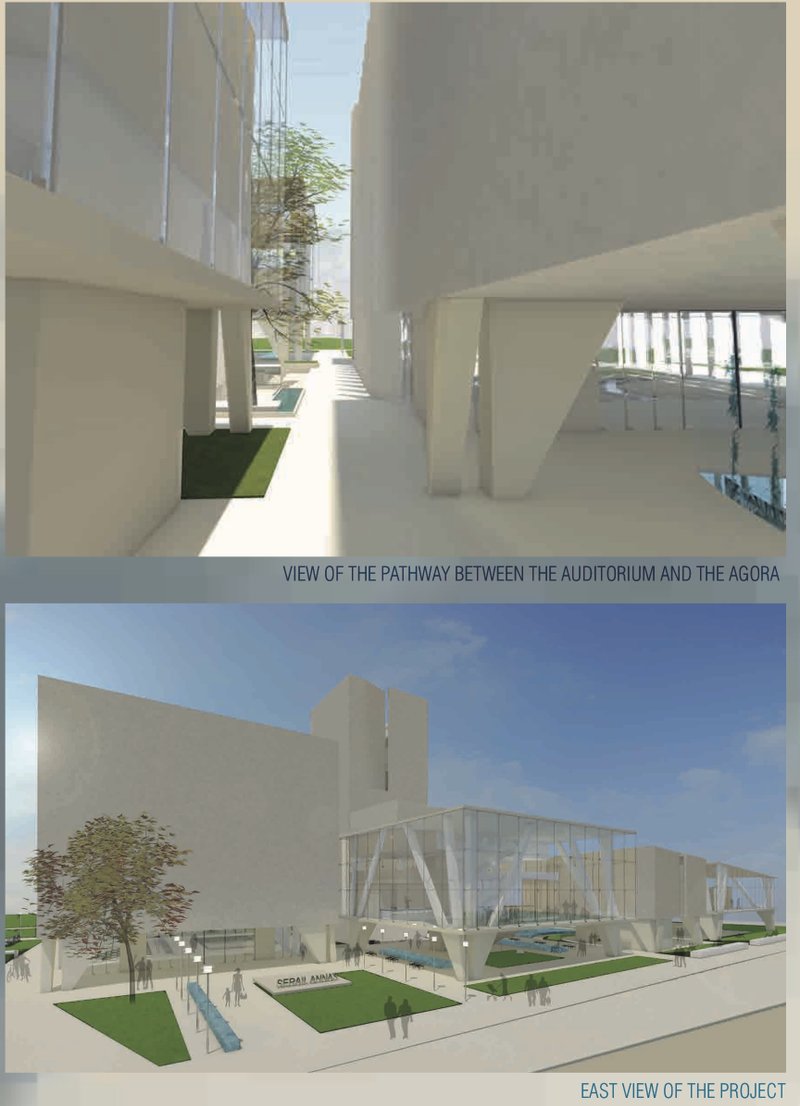
The broader masterplan situates Serail Annas as both a cultural landmark and an active urban center. Its facades are precisely sculpted with curves and incisions that choreograph light and shadow, drawing attention to entry points, gathering zones, and moments of transition. Green courtyards and open promenades surround the complex, enhancing environmental quality and walkability.
Connectivity is central to the masterplan. The layout promotes pedestrian access, universal mobility, and visibility between different programmatic zones. Terraces, platforms, and open-air corridors are integrated into the design to invite movement, pause, and exchange.
The agora and auditorium play critical roles in promoting public discourse. These spaces support participatory planning, civic education, and community-building — essential in post-conflict scenarios where rebuilding trust is as important as rebuilding infrastructure.
Architectural Legacy
Serail Annas stands as a groundbreaking example of cultural architecture used as a medium for storytelling, recovery, and civic empowerment. It showcases how architecture can transcend conventional aesthetics and functions to become a powerful tool for psychological healing and community resilience.
This project does more than reflect memory — it reshapes it. It offers a platform where stories can be told, retold, and reframed through shared experiences. It becomes a pedagogical tool, a ceremonial space, and an urban sanctuary.
As a shortlisted entry in the Memory competition, the work of Kawtar Rochd not only highlights the architectural possibilities for post-conflict cities, but also sets a precedent for how built environments can be tailored to address emotional and cultural restoration. It invites architects worldwide to consider how space can respond to trauma, and how memory can be constructed — not just preserved — through design.


Popular Articles
Popular articles from the community

Atelier Macri Concept Store Interior Design by CASE-REAL
Atelier Macri store features a "ko" counter, walnut wood details, cork displays, blending retail, gallery, and seamless customer experiences.
A Contemporary Take on Iranian Residential Architecture
A modern interior design in Mashhad that reinterprets brick, light, and spatial flow to create a warm, contemporary residential architecture.
Solar Steam: A Climate-Responsive Architecture That Redefines the Monument
A climate-responsive memorial architecture that transforms heat, decay, and time into a living system reflecting humanity’s ecological impact.


The Ken Roberts Memorial Delineation Competition (Krob)
As the most senior architectural drawing competition currently in operation anywhere in the world, it draws hundreds of entries each year, awarding the very best submissions in a series of medium-based categories.
Similar Reads
You might also enjoy these articles
The Ken Roberts Memorial Delineation Competition (Krob)
As the most senior architectural drawing competition currently in operation anywhere in the world, it draws hundreds of entries each year, awarding the very best submissions in a series of medium-based categories.

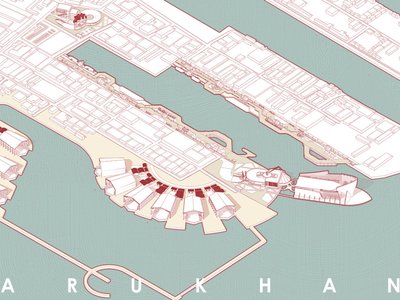
Waterfront Redevelopment and Urban Revitalization in Mumbai: Forging a New Dawn for Darukhana
A transformative waterfront redevelopment project reimagining Darukhana’s shipbreaking heritage into an inclusive urban future.
OUT-OF-MAP: A Call for Postcards on Feminist Narratives of Public Space
Rhizoma Design and Research Lab invites artists, designers, architects, researchers, and students to reflect on how feminist perspectives can reshape public space. Selected works will be exhibited in Barcelona, October 2026. Submissions open until 15 April 2026.

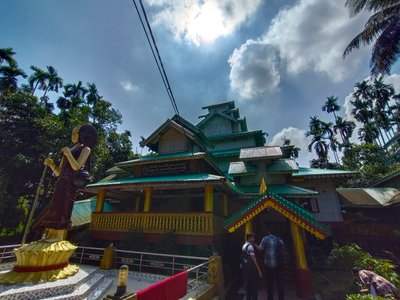
Documentation Work on Buddhist Wooden Temple
Architectural syncretism and cultural hybridity: A comparative study of the Buddhist temples in Chattogram Hill tracks

Explore Conceptual Architecture Competitions
Discover active competitions in this discipline




The Global Benchmark for Architecture Dissertation Awards


The Global Benchmark for Graduation Excellence

Challenge to design an urban locus of culture and heritage


Bring back Drive In's
Comments (0)
Please login or sign up to add comments
No comments yet. Be the first to comment!