
Sustainable Architecture Projects: A Deep Dive into the Bogota Food Vault and Rice Cultural Center
An in-depth look at Bogota's sustainable Food Vault, blending food security, education, and green architecture in Colombia.

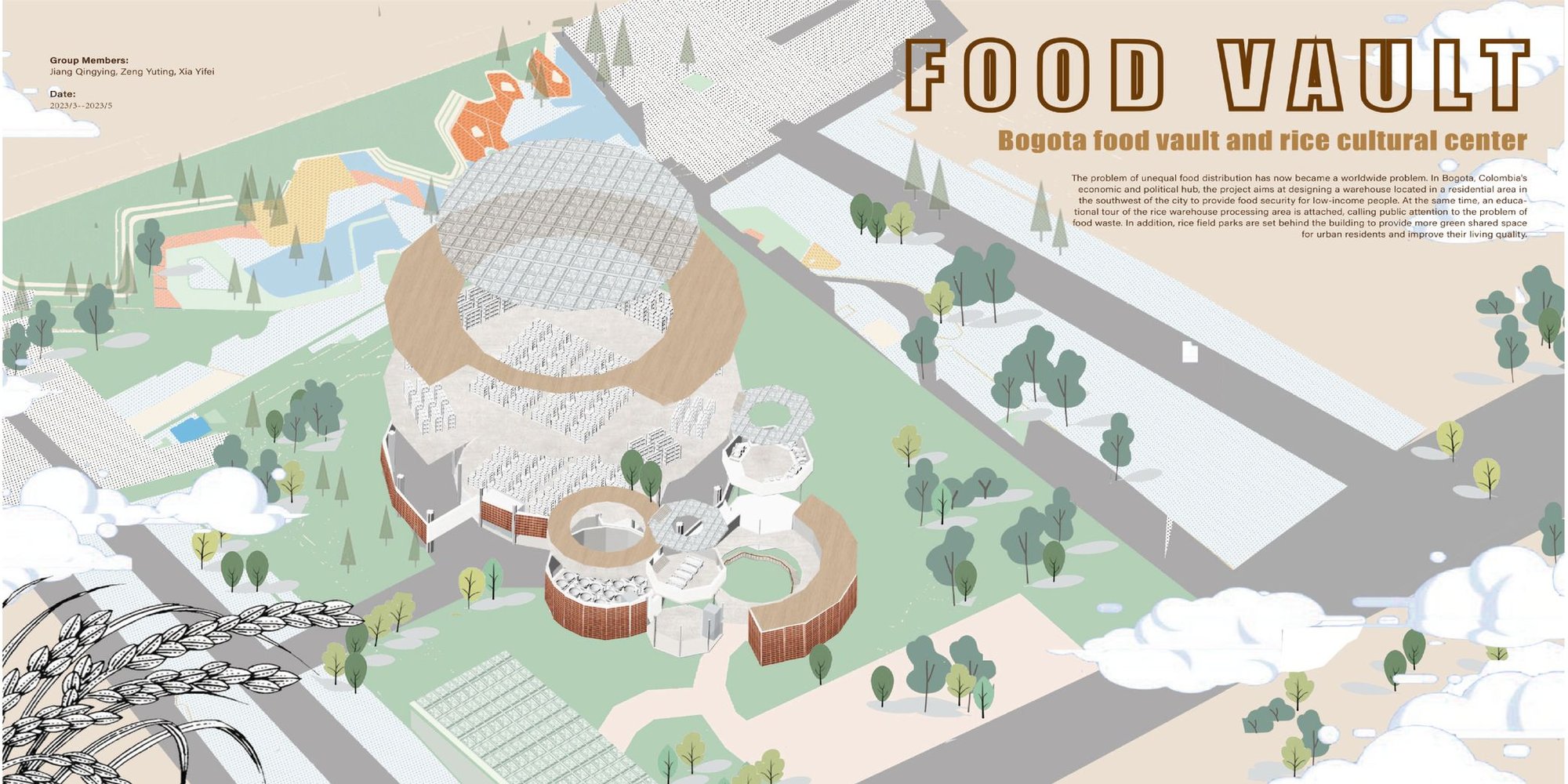
In the heart of Bogota, a city pulsing with life and faced with the dichotomy of growth and socio-economic challenges, stands a testament to what modern sustainable architecture projects can achieve – the Bogota Food Vault and Rice Cultural Center. Conceived and brought to life by Yifei Xia, Zeng yt, and Fang Susu, this project not only bagged the Winner entry at the Food Vault competition but also set a precedent for how architecture can be harnessed to address food security and community engagement.
From Vision to Reality: The Conception of the Bogota Food Vault
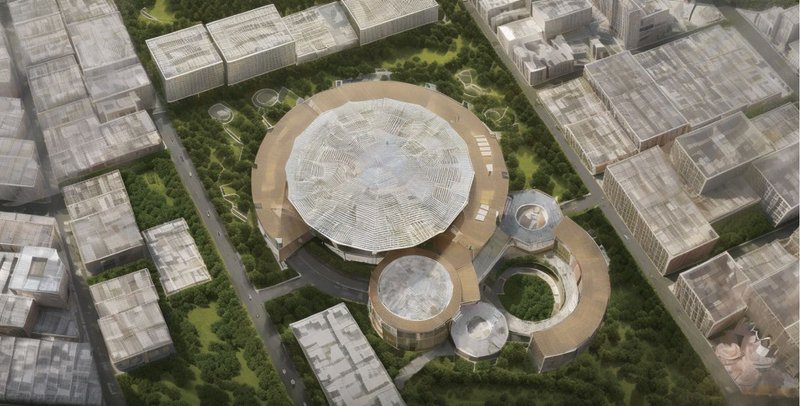
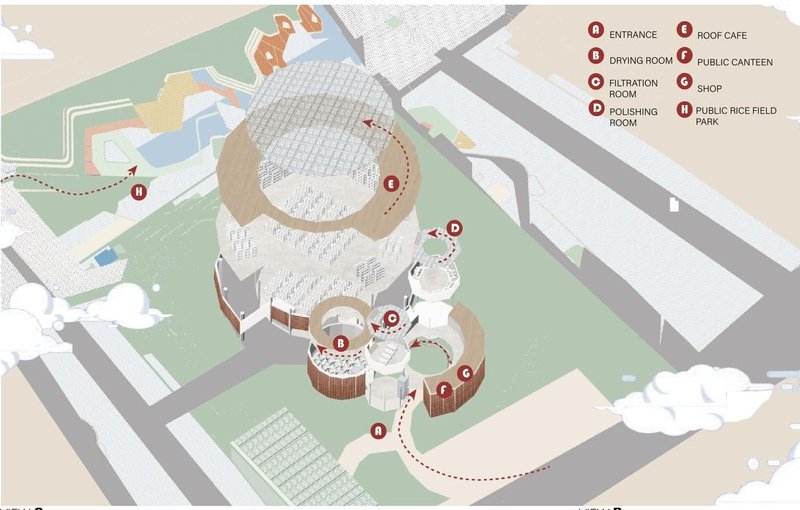
The project emerged from the need to address the global crisis of unequal food distribution. The Bogota Food Vault, strategically situated in a residential area, serves as a bulwark against hunger for the city's low-income residents. The design transcends conventional warehousing; it integrates an educational tour of the rice processing area, spotlighting the oft-overlooked issue of food waste.
Group members Jiang Qingying, Zeng Yuting, and Xia Yifei, who collaborated on the project from March to May 2023, recognized the potential for a more profound impact. By including rice field parks behind the main structure, the project doubles as a verdant retreat for the community, fostering well-being and connection to nature.
The Architectural Splendor of the Food Vault
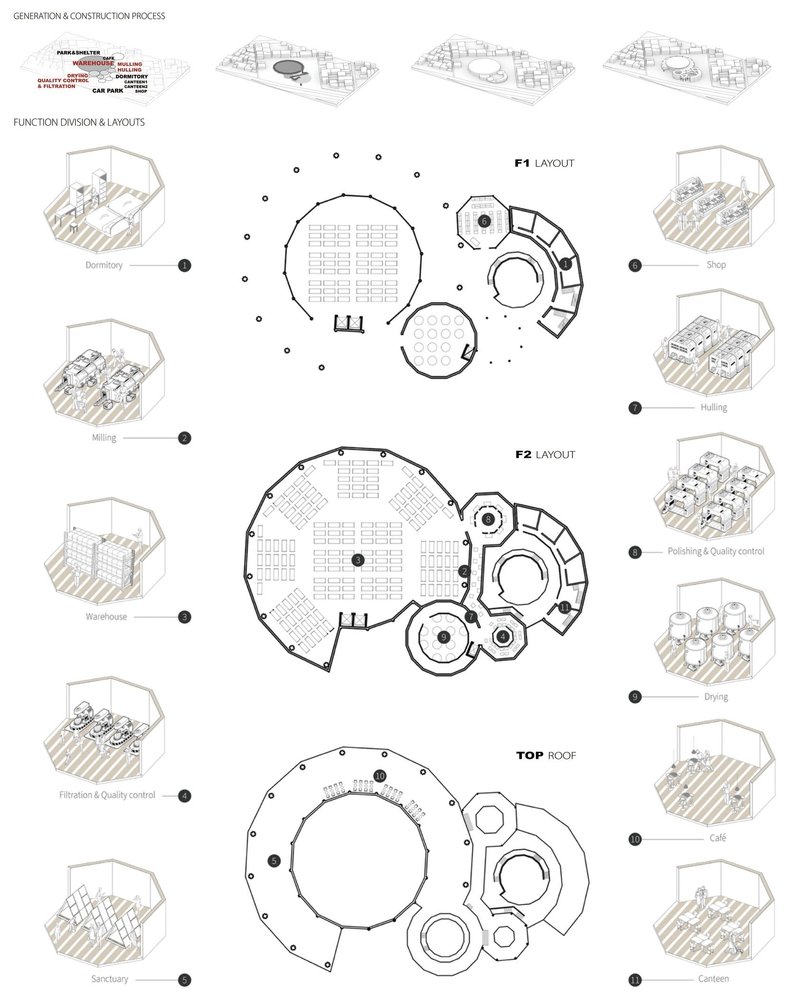
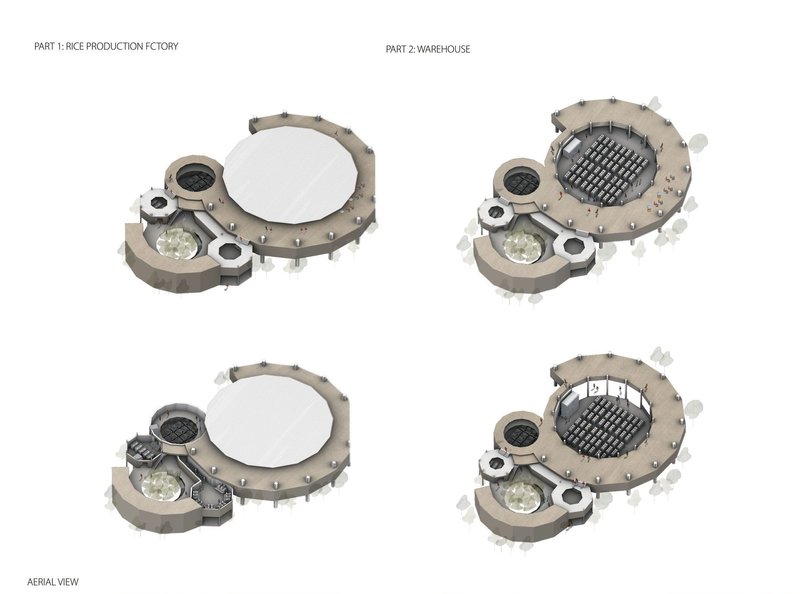
Diving into the architectural elements, the Food Vault is a marvel of function and form. It features a unique circular design, embodying the cyclical nature of food production and sustainability. Each layout, from milling to quality control, is meticulously planned and visually represented in the diagrams provided.
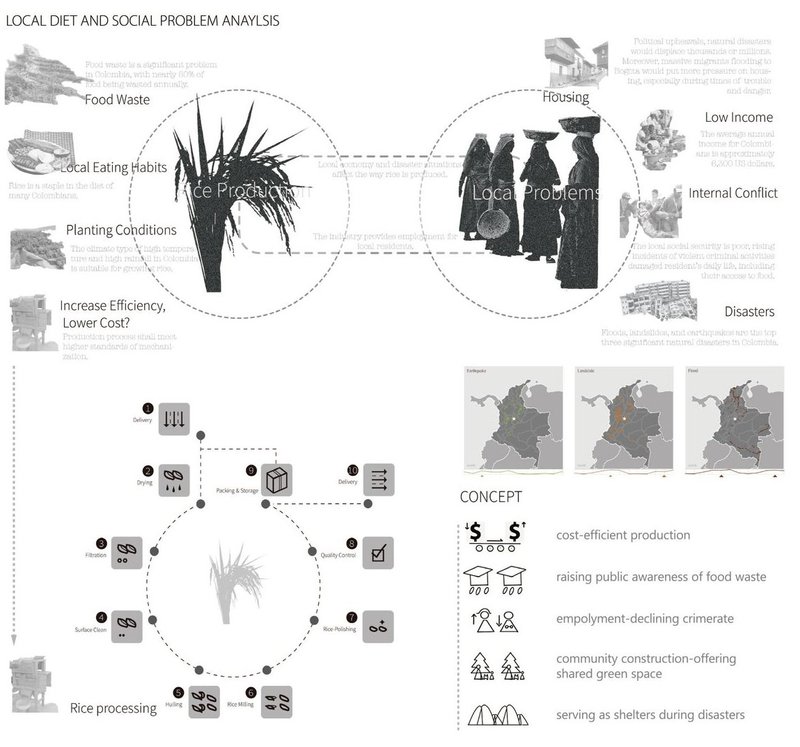
From the aerial views to the detailed floor layouts, the images encapsulate a facility designed not just for efficiency but also for resilience. The structures are planned to serve dual purposes, acting as shelters in the event of disasters – a crucial aspect in the face of climate change-induced calamities.
A Socially-Responsive Design Approach
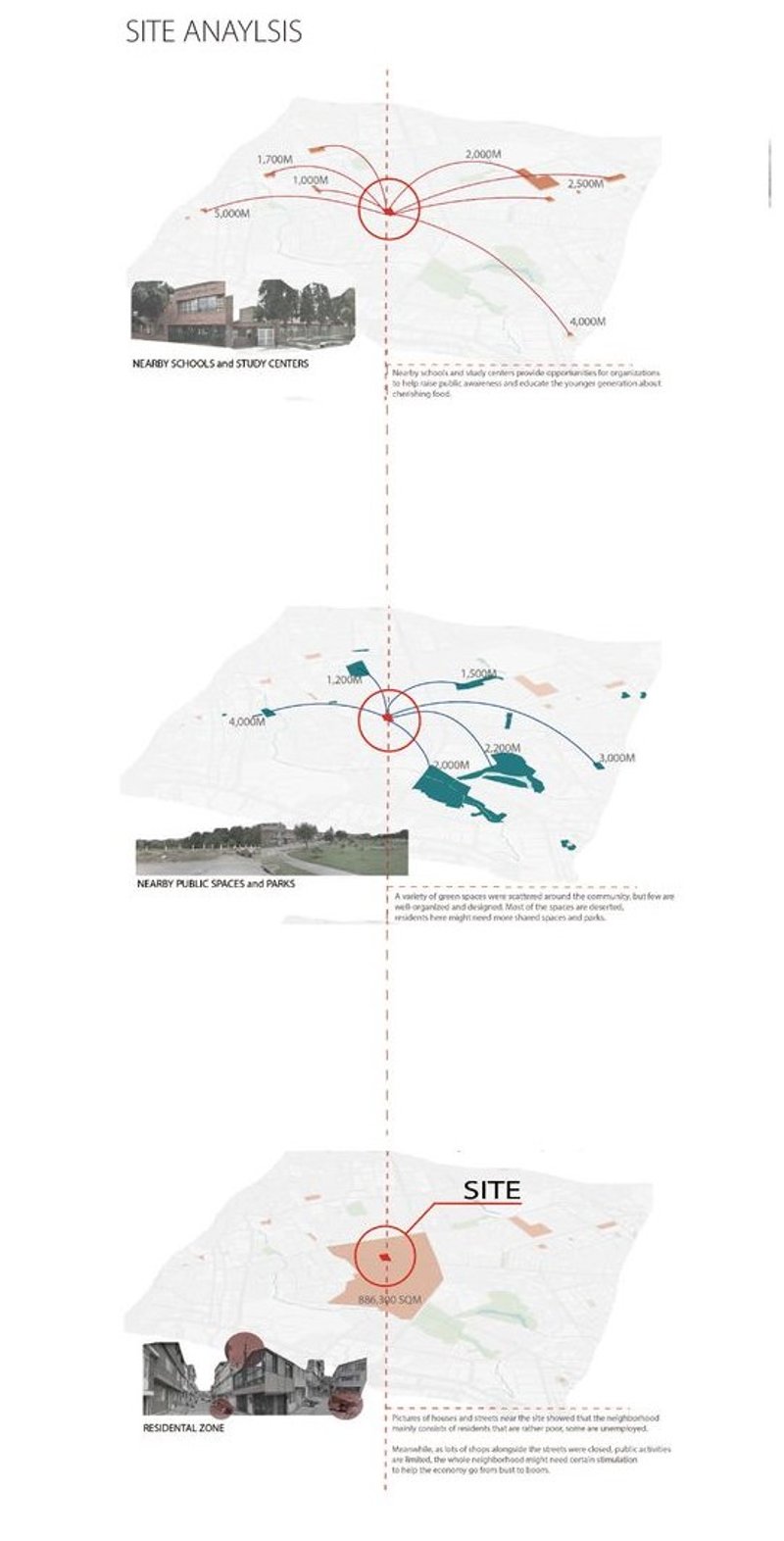
This project exemplifies the intersection of architecture with social responsiveness. The detailed site analysis indicates a keen understanding of local diets and social problems, paving the way for an informed design process. The project's commitment to raising public awareness of food waste and declining crime rates through employment opportunities reflects a deep engagement with the social fabric of Bogota.
Designing for People and Planet
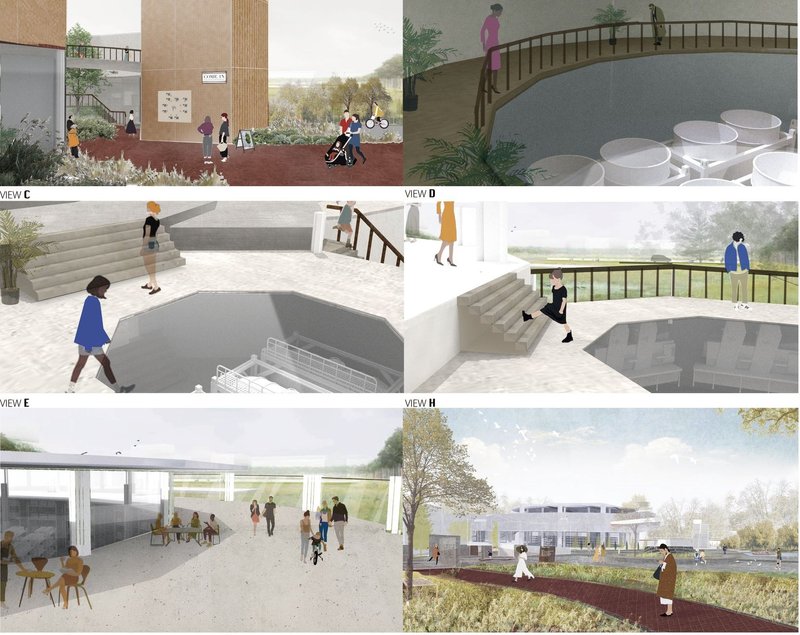
The commitment to sustainable architecture projects like the Food Vault is evident in the energy-conscious design, use of sustainable materials, and the integration of green spaces. The rice cultural center component introduces an educational dimension, fostering knowledge exchange and cultural preservation.
The Bogota Food Vault and Rice Cultural Center sets a high bar for sustainable architecture projects worldwide. It stands as a beacon of innovation, sustainability, and social consciousness, harmonizing the needs of the environment with those of the community.
In essence, the project is more than just a building; it's a microcosm of the future we strive towards – one where architecture is an agent of change, where buildings are not just structures, but solutions to our most pressing societal issues.
To conclude, the Bogota Food Vault exemplifies the promise of sustainable architecture projects, combining practicality with vision, and in doing so, reshapes the skyline and the future of Bogota.
This project is not just a structure but a promise of a better, more resilient future, symbolizing hope, renewal, and a steadfast commitment to the planet and its people.



Popular Articles
Popular articles from the community

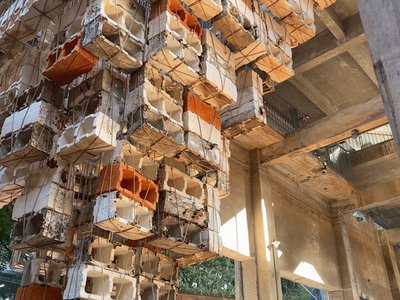
Inverted Architecture Installation by Studio Link-Arc: Exploring the Intersection of Architecture and Living Organisms
Inverted Architecture Installation by Studio Link-Arc blends mycelium, sustainability, inverted design, ecological cycles, and urban adaptive architecture in Shenzhen.
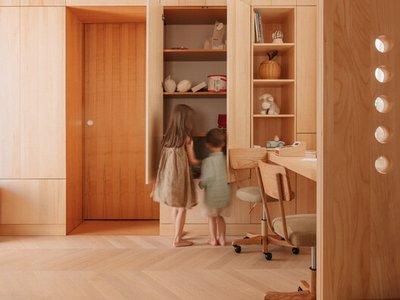
Treehouse Apartment: A Warm Timber Interior Blending Craft, Play, and Contemporary Living
Warm timber apartment with integrated treehouse, combining natural materials, craftsmanship, and playful design to create a flexible, family-oriented living environment.


The Ken Roberts Memorial Delineation Competition (Krob)
As the most senior architectural drawing competition currently in operation anywhere in the world, it draws hundreds of entries each year, awarding the very best submissions in a series of medium-based categories.
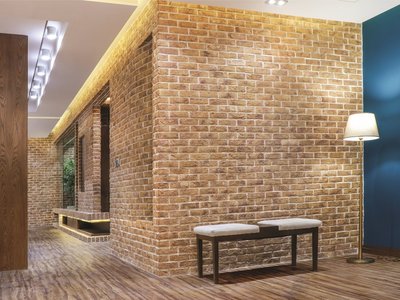
A Contemporary Take on Iranian Residential Architecture
A modern interior design in Mashhad that reinterprets brick, light, and spatial flow to create a warm, contemporary residential architecture.


Similar Reads
You might also enjoy these articles
The Ken Roberts Memorial Delineation Competition (Krob)
As the most senior architectural drawing competition currently in operation anywhere in the world, it draws hundreds of entries each year, awarding the very best submissions in a series of medium-based categories.
A Contemporary Take on Iranian Residential Architecture
A modern interior design in Mashhad that reinterprets brick, light, and spatial flow to create a warm, contemporary residential architecture.
Franche-Comté Advanced School of Engineering by Dominique Coulon & associés, Besançon
A flexible engineering school immersed in woodland, combining concrete minimalism, adaptable spaces, and natural light to support evolving educational environments.


Documentation Work on Buddhist Wooden Temple
Architectural syncretism and cultural hybridity: A comparative study of the Buddhist temples in Chattogram Hill tracks


Explore Cultural Architecture Competitions
Discover active competitions in this discipline




The Global Benchmark for Architecture Dissertation Awards


The Global Benchmark for Graduation Excellence


Challenge to design an urban locus of culture and heritage


Bring back Drive In's
Comments (0)
Please login or sign up to add comments
No comments yet. Be the first to comment!