

Sustainable Social Housing Architecture: 116 Public Housing Units in Madrid by UNIA Arquitectos + FAU Arquitectos
A groundbreaking public housing project in Madrid that redefines sustainable social housing architecture through innovation, flexibility, and community focus.


The 116 Public Housing Units in Madrid, designed by UNIA Arquitectos and FAU Arquitectos, stand as a benchmark in sustainable social housing architecture. Completed in 2024, this 15,379 m² project redefines the balance between urban density, environmental performance, and quality of life. Located in the Spanish capital, the development offers an inspiring example of how thoughtful design can create accessible, flexible, and sustainable living environments for urban communities.


Urban Integration and Site Strategy
The project addresses the unique conditions of its urban site with a carefully articulated design that maximizes buildable area without compromising spatial quality. By adopting a type H block with four vertical cores, the architects managed to achieve the best balance between usable residential space and circulation zones. The decision to use a slightly oversized structural grid of 9.5 meters enhances flexibility, while enclosing the sides creates a compact and efficient volume that integrates harmoniously into the urban fabric.


Architectural Expression and Façade Design
The façade design of this sustainable social housing project challenges the rigidity typical of large housing blocks. A dynamic interplay of opaque and sliding micro-perforated steel panels offers both solar and acoustic protection, while giving residents control over their environment. This design not only improves energy performance but also establishes an iconic architectural identity that resonates within the neighborhood.


Optimizing Living Quality and Flexibility
The ground floor of the building accommodates commercial spaces, adaptable homes, and pedestrian passages that link the rear garden to stairwells and elevators. By reconfiguring several 3-bedroom units into 2-bedroom types on the first and second floors, the architects carved out dramatic triple-height outdoor spaces. This improves natural light and ventilation for the inner courtyard, enhancing residents’ comfort while adhering to maximum buildability regulations.


Blending Work and Home
Anticipating modern lifestyle shifts, the architects incorporated flexible spaces that allow residents to reconcile personal and professional life within their homes. Units with four bedrooms feature a dedicated room near the entrance, ideal for home offices or welcoming clients, thus reflecting a forward-thinking approach to urban living.

Fostering Community Through Outdoor Spaces
The landscape design emphasizes community interaction by creating safe, semi-public spaces where residents can walk, play, and socialize. These “intermediate spaces” form an intuitive transition between private homes and the public realm, encouraging neighborly connections and enhancing the overall social fabric of the development.


Prefabrication and Sustainable Construction
Prefabricated and industrialized construction systems played a crucial role in the project’s sustainability goals. The use of lightweight materials reduced the need for steel in the structural framework and foundations, while minimizing construction waste. Prefabricated stair cores, assembled off-site and installed via the central light well, highlight the efficiency and innovation driving this project.

Energy Performance and Environmental Impact
With a top-tier energy rating, the housing units exemplify excellence in sustainable social housing architecture. High-performance insulation and waterproofing work in tandem with an aerothermal system connected to radiant floor heating, ensuring year-round thermal comfort with minimal environmental impact. These features not only lower operational costs for residents but also demonstrate a scalable model for future housing developments.

The 116 Public Housing Units in Madrid represent a paradigm shift in how cities can address housing shortages while prioritizing sustainability, flexibility, and community well-being. Through architectural innovation, environmental responsibility, and a deep commitment to social value, UNIA Arquitectos and FAU Arquitectos have set a new standard for sustainable social housing architecture.

All the photographs are works of Fernando Alda


Popular Articles
Popular articles from the community

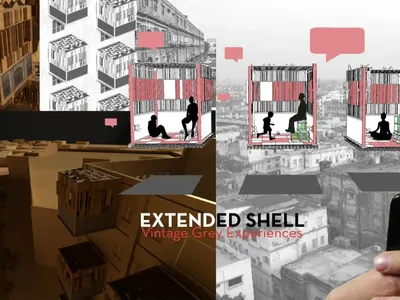
Extended Shell: Retrofitting Kolkata's Balconies as Living Urban Thresholds
A modular retrofit system recovers the social and environmental intelligence of Kolkata's historic verandas for contemporary Park Street residents.
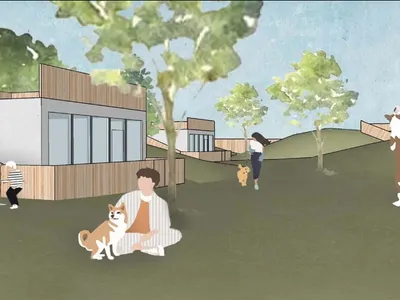
Temporary Home for Dogs: A Reversed Zoo Rethinks Animal Shelter Architecture
In Bucharest, a sinuous corridor and freed landscape flip the logic of containment, designing a shelter that works to make itself unnecessary.
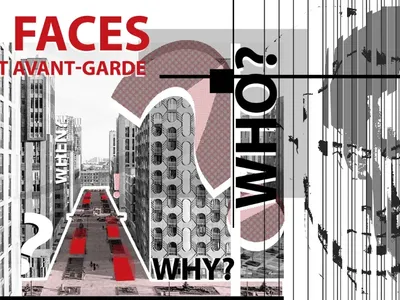
Faces of the Soviet Avant-Garde: Turning Moscow's Street Names into an Open-Air Museum
A network of sculptural installations across a Moscow residential district transforms forgotten architect names into spatial encounters with cultural memor
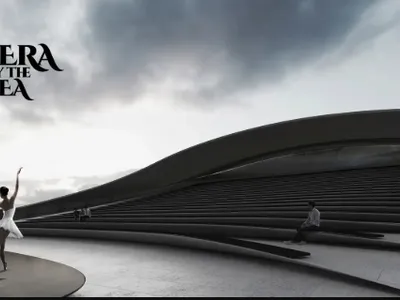
Opera by the Sea Estonia: Three Shells Dissolving Architecture into Tallinn's Coastline
A winning opera house proposal replaces monumental form with interconnected shells that blur the boundary between building, park and Baltic Sea.

Similar Reads
You might also enjoy these articles

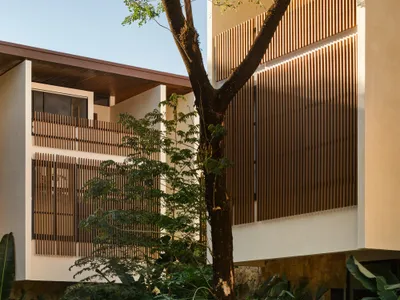
FAMM Arquitectura Organizes Ten Villas Around Courtyards and Jungle in Nosara, Costa Rica
El Molino pairs two elongated volumes with deep overhangs and timber louvers to build a compact coastal community five minutes from the beach.
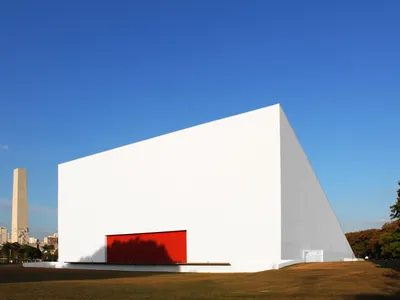
Oscar Niemeyer's Ibirapuera Park Pavilions Define São Paulo's Cultural Identity in Concrete and Curve
A constellation of modernist volumes set within São Paulo's most important urban park, conceived for the city's 400th anniversary in 1954.
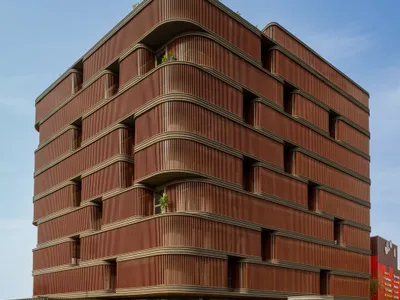
Sanjay Puri Architects Wraps a Jaipur Office Tower in Capsule-Shaped Green Buffers
A nine-level climate-responsive workplace near Jaipur Airport uses stacked planter terraces and aluminium screens to fight 40°C heat.
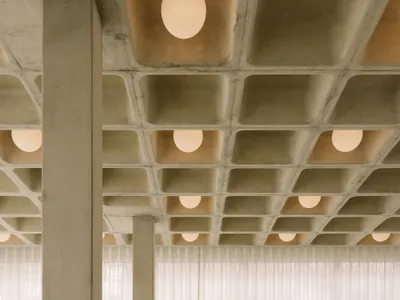
RHO Converts a Berlin Spree-Side Industrial Courtyard into Enkime's 1,000 m² Agency Headquarters
A social media agency's new home in Charlottenburg trades glossy branding for concrete waffle ceilings, glazed tile, and sheer curtains.

Explore Social Housing Competitions
Discover active competitions in this discipline

Challenge to reimagine the Iron Throne

Photograph architecture without architects

Illustrate the lost glory of Angkor Wat - Render Challenge

Design challenge to reuse E-waste
Comments (0)
Please login or sign up to add comments
No comments yet. Be the first to comment!