
TCDD Temporary Offices and Art Galleries: Adaptive Urban Renewal at Haydarpaşa Station
Contemporary steel-framed campus at Haydarpaşa Station, blending heritage traces with flexible offices and future art galleries, linking Kadıköy’s creative urban fabric.

A New Cultural Layer in Istanbul’s Historic Rail District
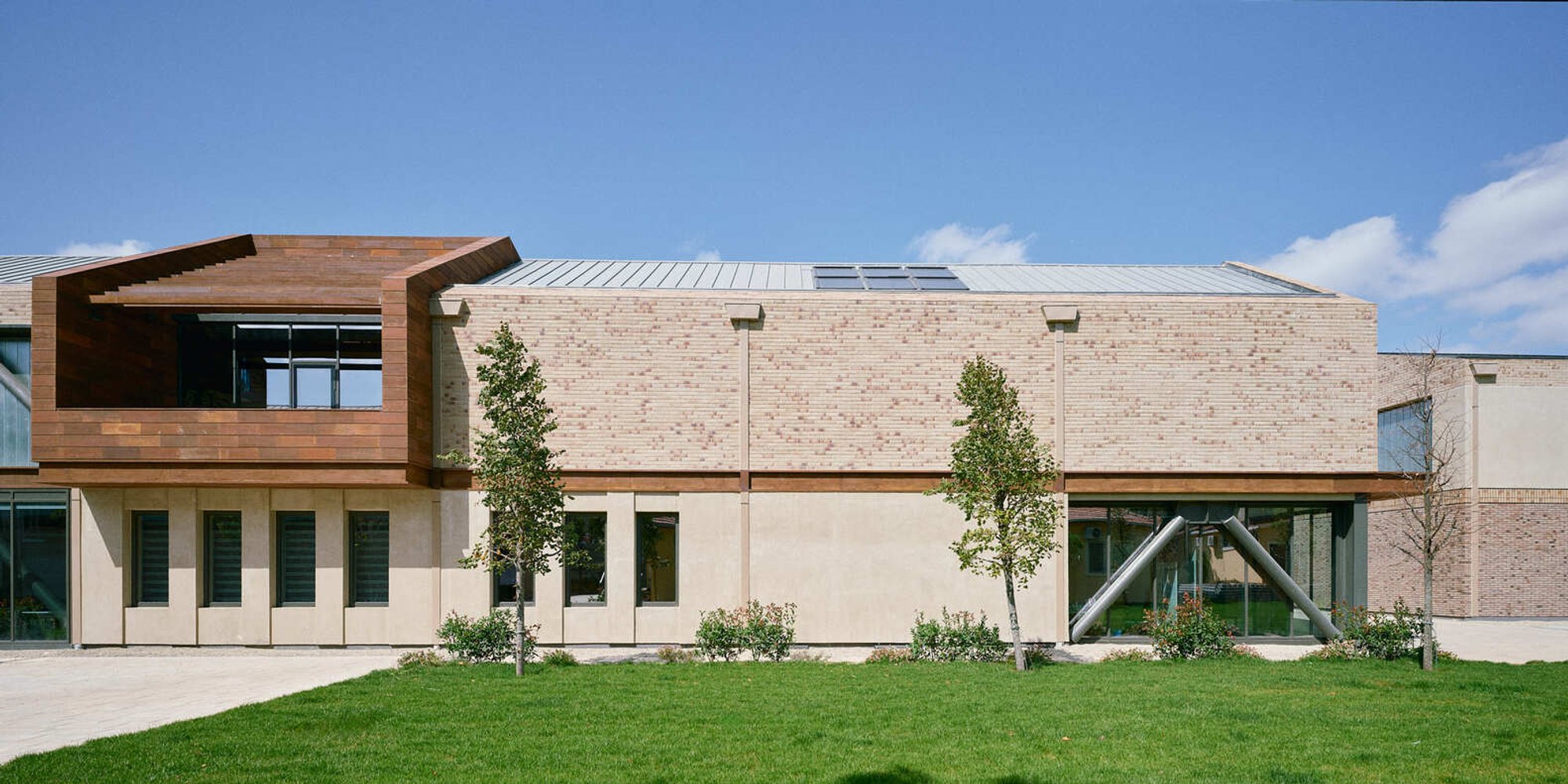
The TCDD Temporary Offices & Art Galleries, designed by Erhan Vural Architecture + Urban Design, reimagines the future of the historic Haydarpaşa Train Station precinct in Istanbul. Completed in 2025, this 6,104 m² cultural and office complex responds to an area steeped in archaeological and industrial significance, transforming a former logistics zone into a flexible, community-oriented urban campus.
Positioned at the edge of one of Türkiye’s most important archaeological sites, the project overlays the traces of ancient civilizations once thriving along the Kalkhedon Stream and historic port. Today, these new structures continue this legacy, offering a contemporary cultural interface between Haydarpaşa and the vibrant neighborhood of Yeldeğirmeni in Kadıköy—a growing hub for creative industries, gastronomy, and public art.
Designing for Transformation: From Temporary Offices to Public Art Galleries
Originally intended as temporary workspaces for TCDD, the buildings are designed to seamlessly transition into public art galleries as part of the larger Haydarpaşa Station Culture and Arts Initiative.
The architectural team initially aimed to refurbish existing buildings on-site, but years of structural deterioration—corrosion, settlement, and temporary industrial framing—necessitated a complete redevelopment. The new solution preserves the footprints and memory traces of the original structures while embracing flexibility and future-proofing.
Key adaptive design strategies include:
- Steel structural frames for durability and fast assembly
- Lightweight, demountable interior partitions to enable future gallery use
- Open-plan layouts supporting co-working today and exhibitions tomorrow
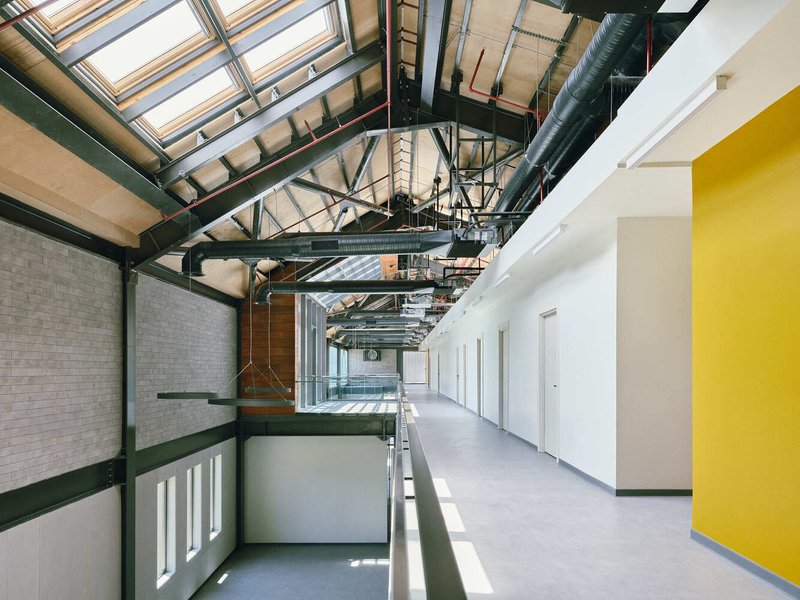
- Integrated mechanical and electrical systems sized for cultural programming
- Color-coded service cores acting as functional anchors and visual identity markers
Architectural Language: Material Memory, Modularity, and Urban Dialogue
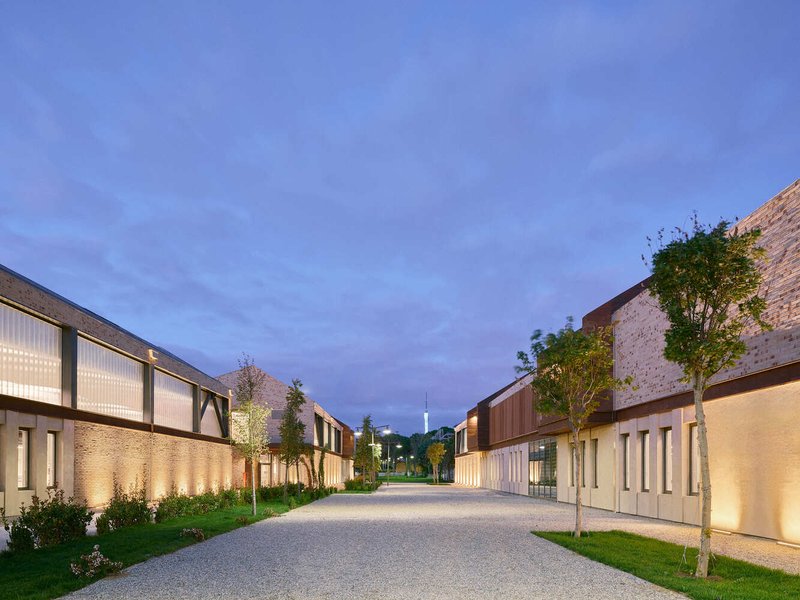
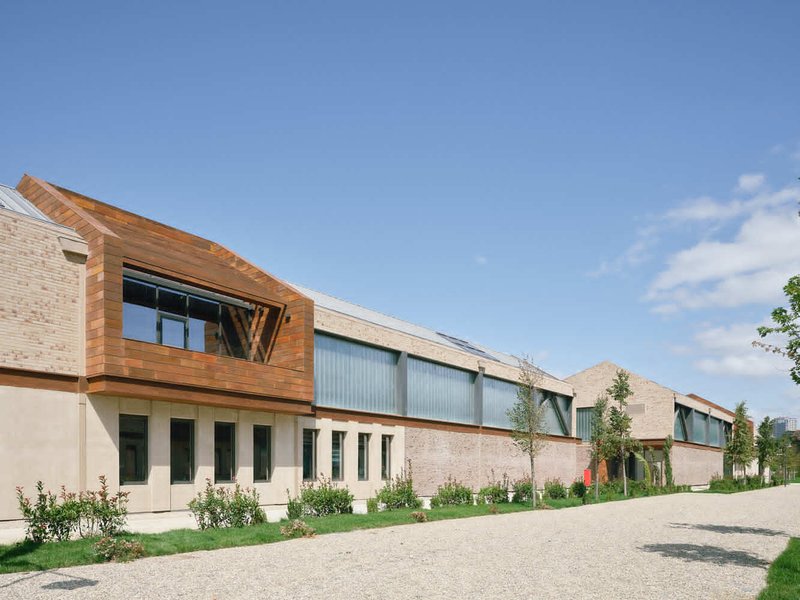
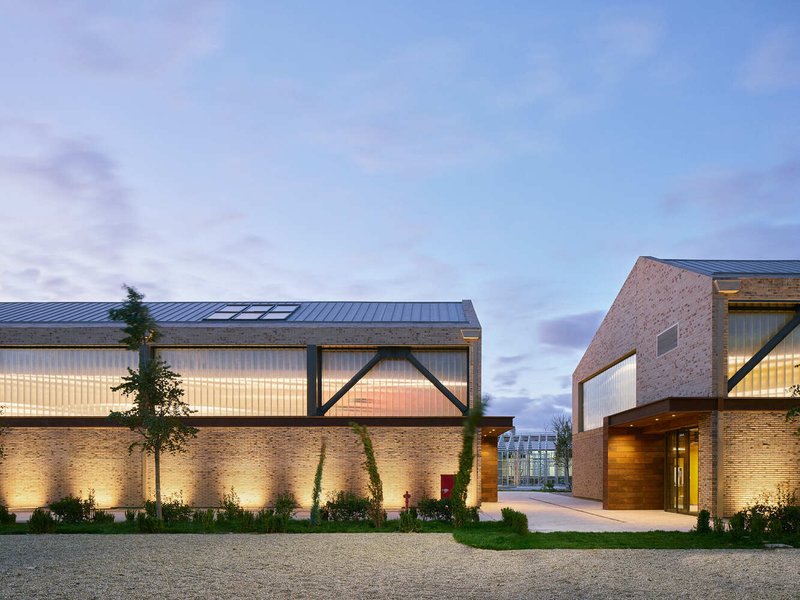
The project comprises five modular buildings, unified by a cohesive yet varied architectural language. Their differing lengths reflect structural rhythm and spatial needs, while the compositions respond sensitively to context and daylight.
Façade Strategy and Materials
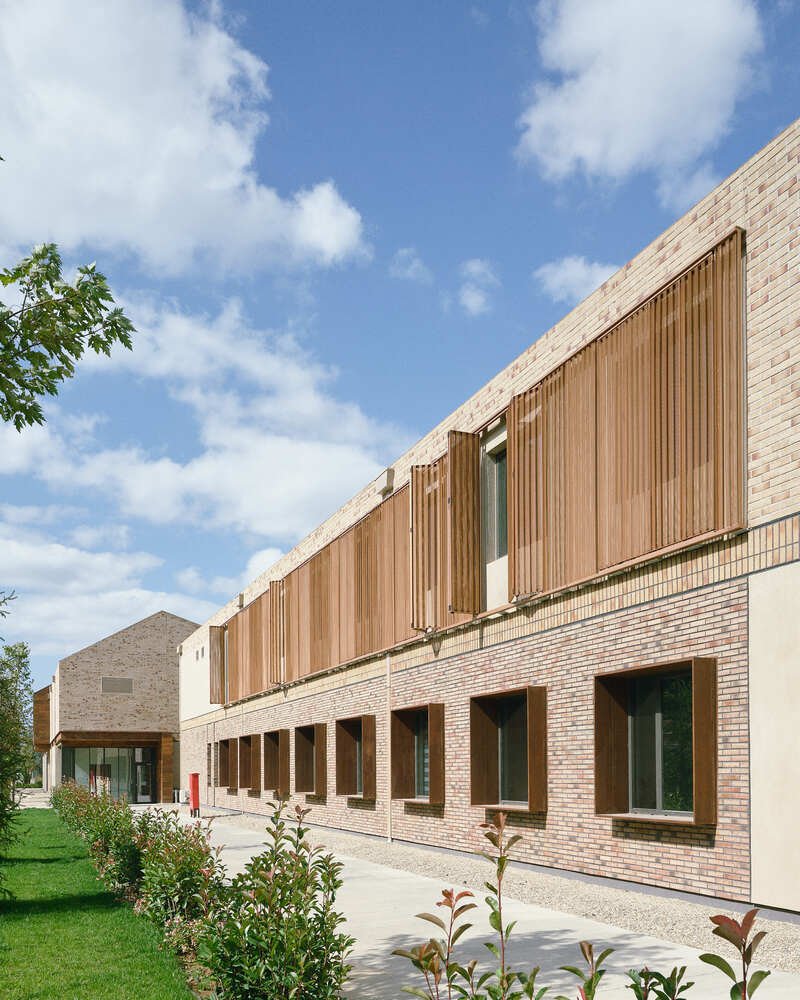
Drawing inspiration from the material memory of Haydarpaşa, the façades combine:
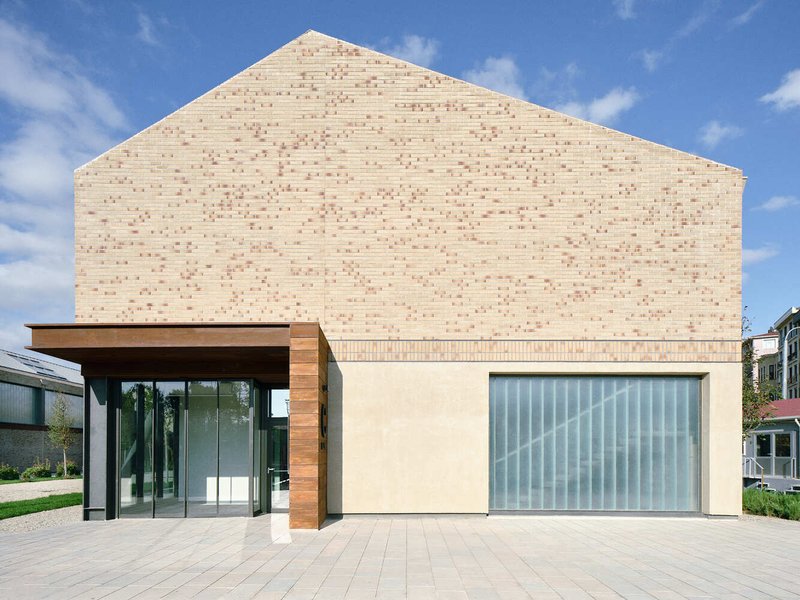
- Brick and textured plaster
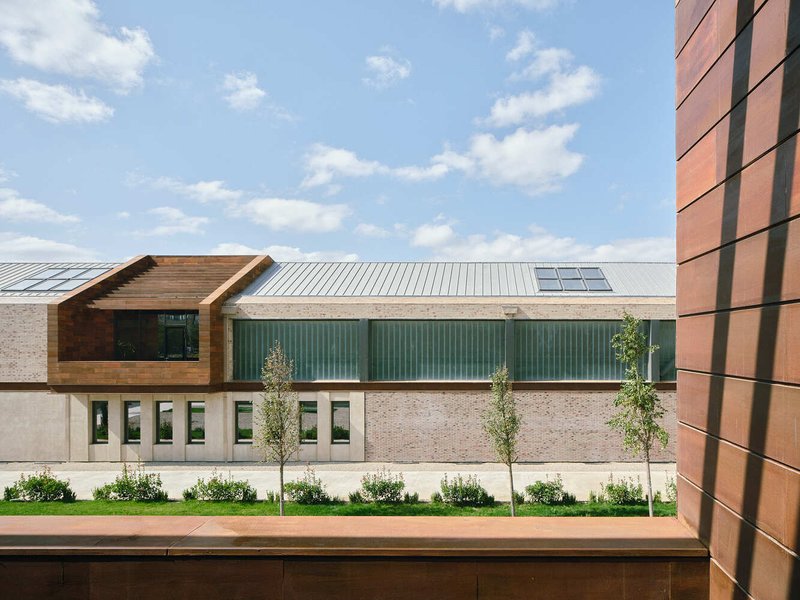
- Corten steel canopies and reveals
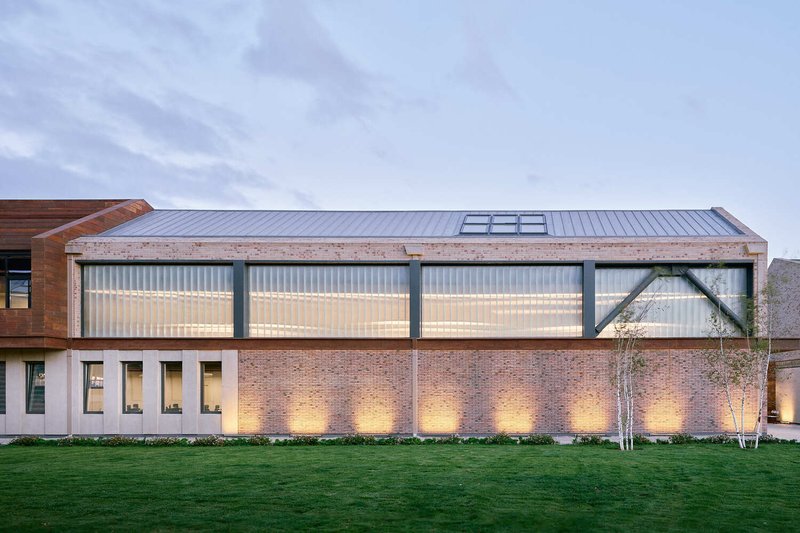
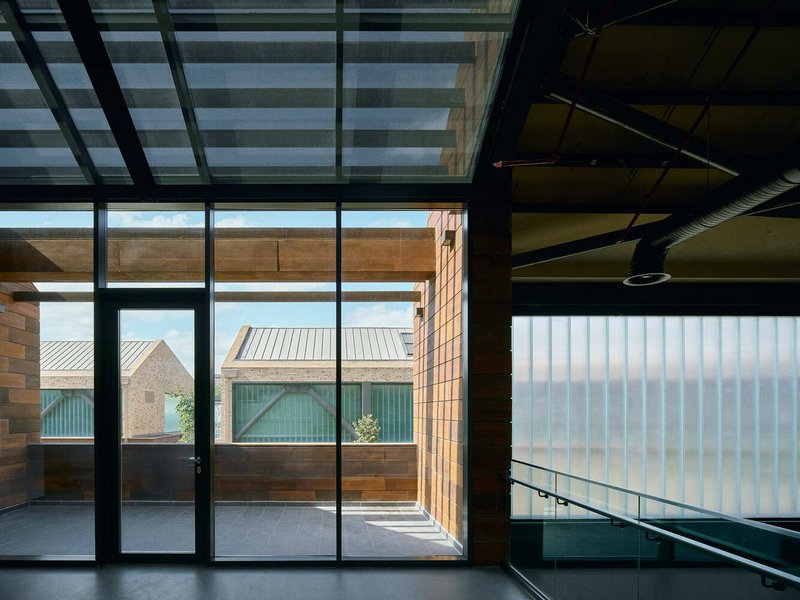
- Profilit (U-glass) vertical panels
- Titanium-zinc cladding
- Expanded metal mesh sun-shading screens
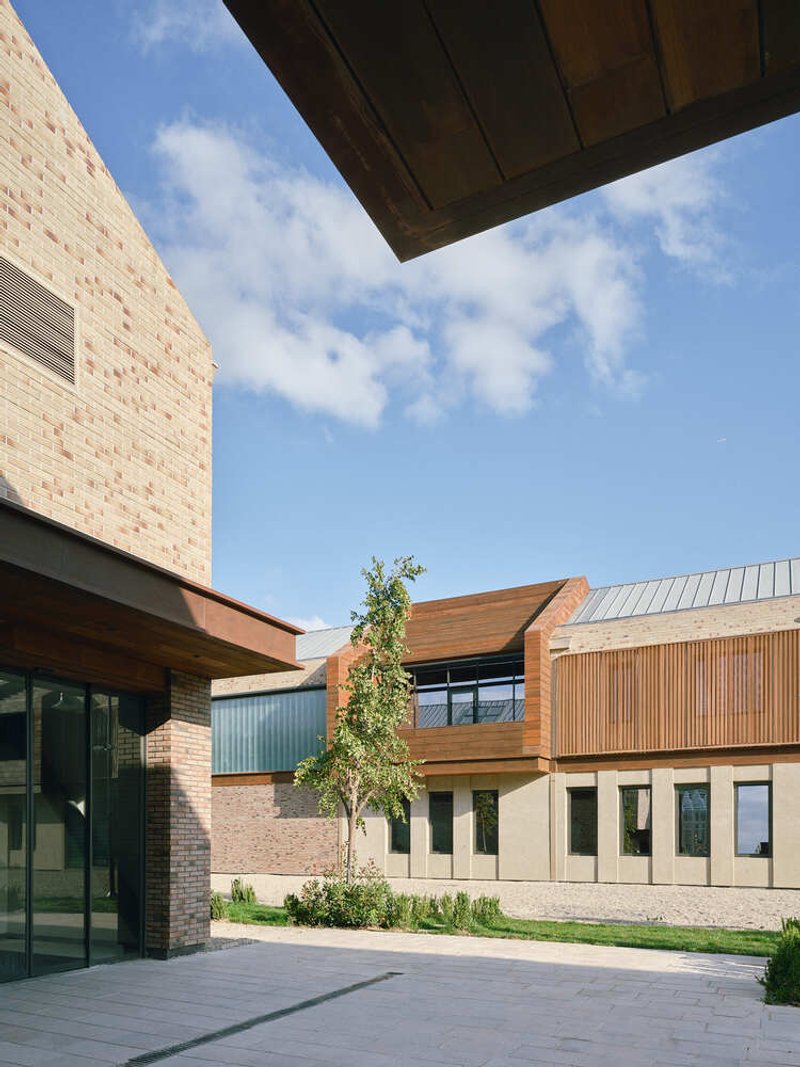
A continuous corten canopy forms a horizontal visual datum, linking volumes and reinforcing campus cohesion. Vertical joints mark the layered character of the site, creating a tactile contemporary interpretation of industrial heritage.
Structural Expression
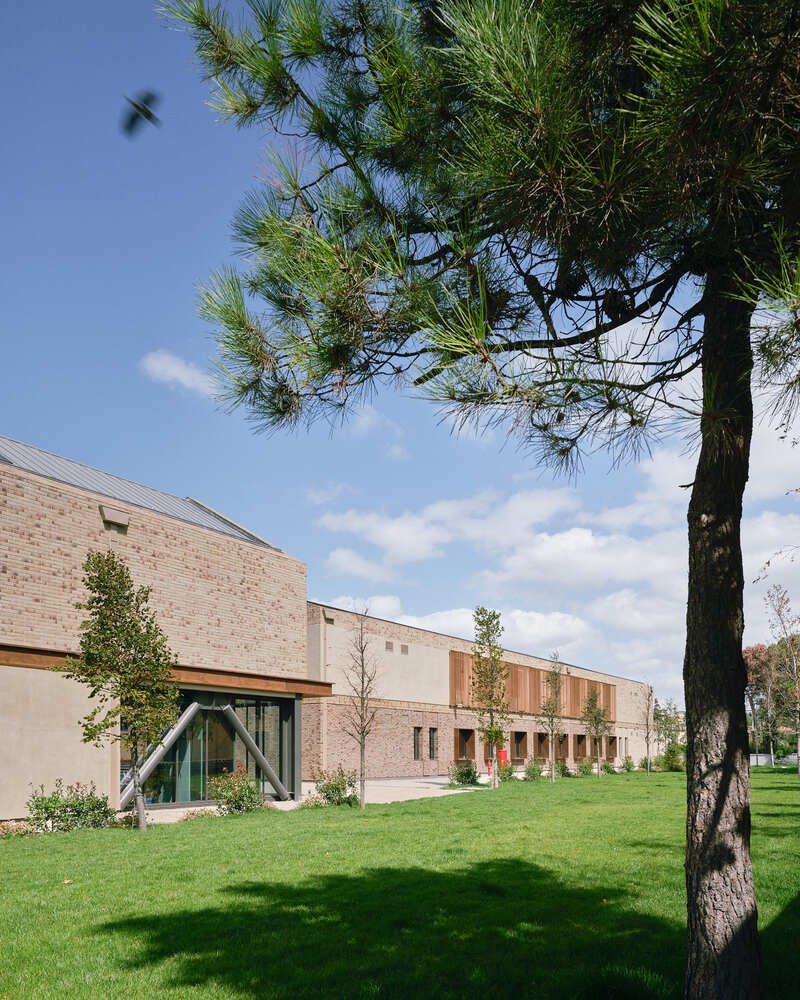
Exposed steel cross-bracing punctuates the façades, transforming structural necessity into architectural expression. On one side, cantilevered balconies, slender windows, and U-glass elements create an urban dialogue with the neighborhood. Opposite façades showcase operable mesh screens and rhythmic square windows framed in corten.
Public Realm and Cultural Activation
Functioning as both an office hub and future arts campus, the project prioritizes public interaction and cultural staging. Semi-open balconies serve as shared social terraces, enhancing cross-building engagement and framing views toward the rail yard and archaeological grounds.
The landscape incorporates sculptural installations and preserves historic suburban train cars, which will be restored and exhibited on-site—bridging past and future narratives of mobility, memory, and culture.
Interior Spatial Logic
Inside, layouts balance enclosed workrooms with open collaborative areas, occasionally punctuated with gallery-like spatial moments. As the complex transitions to cultural use, partitions may be removed, restoring raw spatial continuity suited to contemporary exhibitions and community programming.
Color-coded “service boxes” differentiate each building, supporting way-finding and creating identity within the architectural ensemble.
A Sensitive Urban Intervention Rooted in History and Evolving toward Culture
The TCDD Temporary Offices & Art Galleries project embodies adaptive reuse principles, urban regeneration, and material storytelling. It anchors a new cultural corridor for Istanbul, bridging industrial heritage with contemporary public life and anticipating future shifts in urban program and community needs.
By aligning architectural clarity, contextual sensitivity, and transformative flexibility, the complex becomes a vital prototype for sustainable cultural infrastructure in rapidly evolving cities.
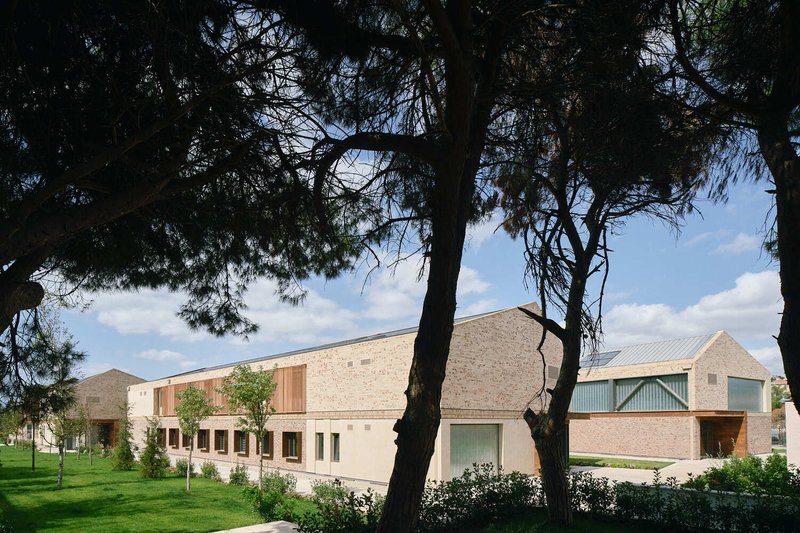
All photographs are works of Egemen Karakaya



Popular Articles
Popular articles from the community

Solar Steam: A Climate-Responsive Architecture That Redefines the Monument
A climate-responsive memorial architecture that transforms heat, decay, and time into a living system reflecting humanity’s ecological impact.
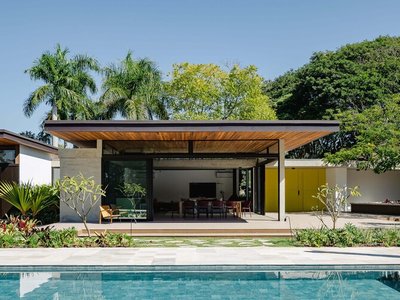
Flamboyant House by Juliana Camargo + Prumo Projetos
Modern Brazilian house integrating existing tree, pool, and volumes with glass, wood, and transitional spaces blending interior, exterior, and landscape seamlessly.

The Ken Roberts Memorial Delineation Competition (Krob)
As the most senior architectural drawing competition currently in operation anywhere in the world, it draws hundreds of entries each year, awarding the very best submissions in a series of medium-based categories.
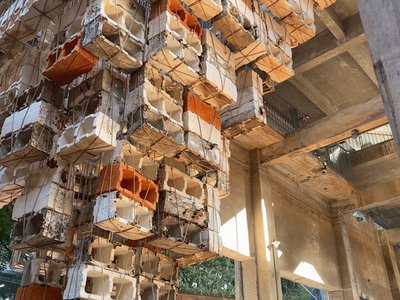
Inverted Architecture Installation by Studio Link-Arc: Exploring the Intersection of Architecture and Living Organisms
Inverted Architecture Installation by Studio Link-Arc blends mycelium, sustainability, inverted design, ecological cycles, and urban adaptive architecture in Shenzhen.


Similar Reads
You might also enjoy these articles
The Ken Roberts Memorial Delineation Competition (Krob)
As the most senior architectural drawing competition currently in operation anywhere in the world, it draws hundreds of entries each year, awarding the very best submissions in a series of medium-based categories.

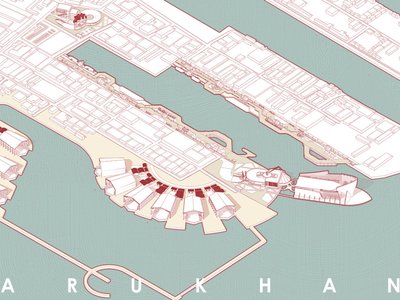
Waterfront Redevelopment and Urban Revitalization in Mumbai: Forging a New Dawn for Darukhana
A transformative waterfront redevelopment project reimagining Darukhana’s shipbreaking heritage into an inclusive urban future.
OUT-OF-MAP: A Call for Postcards on Feminist Narratives of Public Space
Rhizoma Design and Research Lab invites artists, designers, architects, researchers, and students to reflect on how feminist perspectives can reshape public space. Selected works will be exhibited in Barcelona, October 2026. Submissions open until 15 April 2026.

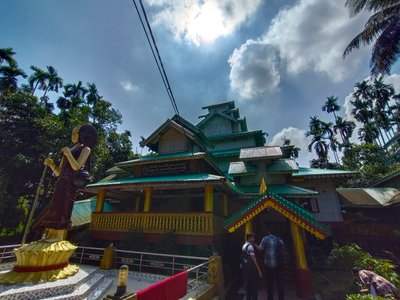
Documentation Work on Buddhist Wooden Temple
Architectural syncretism and cultural hybridity: A comparative study of the Buddhist temples in Chattogram Hill tracks

Explore Architecture Competitions
Discover active competitions in this discipline




The International Standard for Design Portfolios


The Global Benchmark for Architecture Dissertation Awards


The Global Benchmark for Graduation Excellence

Challenge to design an urban locus of culture and heritage
Comments (0)
Please login or sign up to add comments
No comments yet. Be the first to comment!