
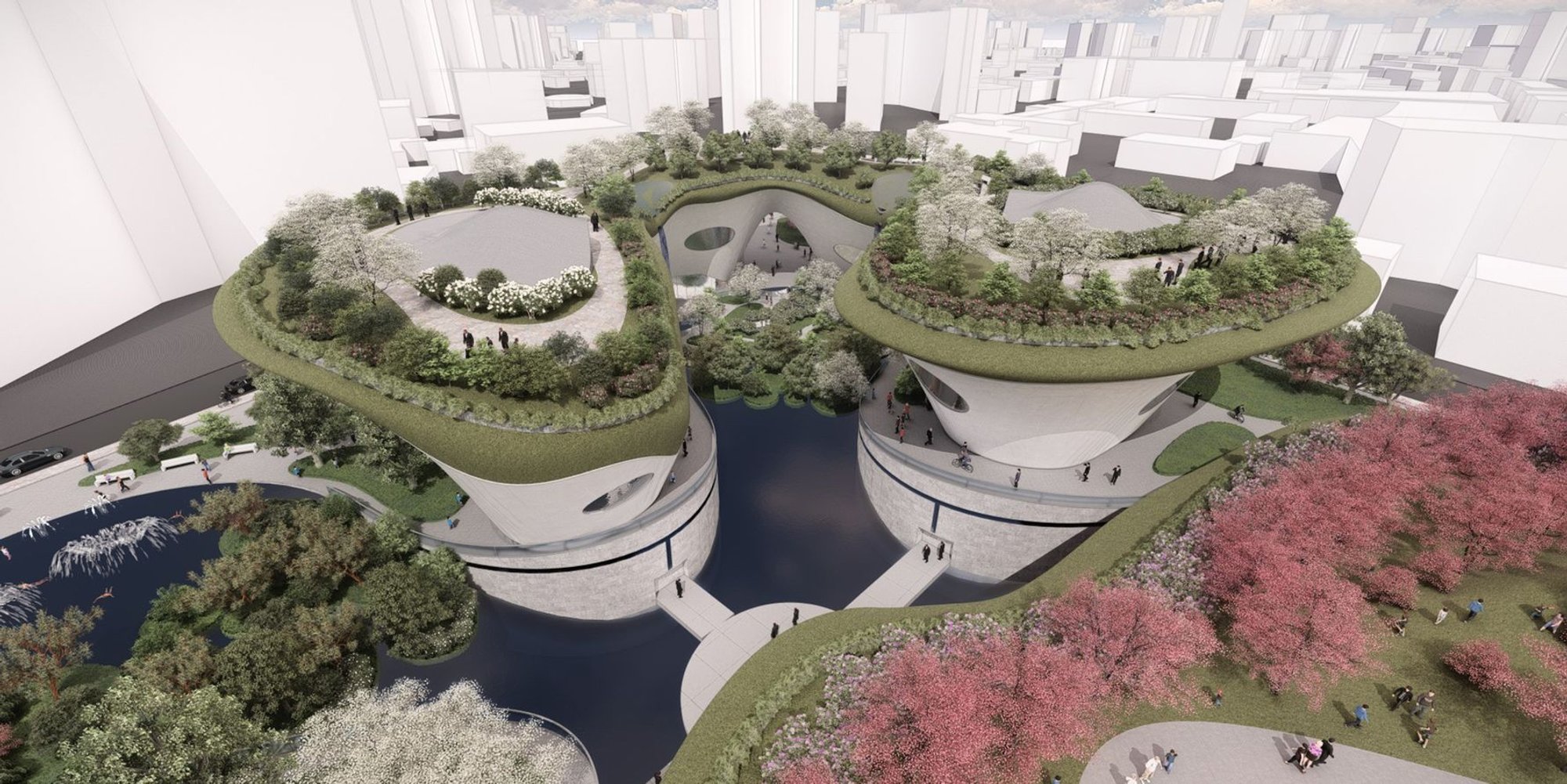
UNderNature :A contemporary cemetery as public architecture for a sustainable future.
A visionary model of urban cemetery architecture blending nature, memory, and daily life into one living civic space.

Human beings are unique in how they separate themselves from 'the untamed.' From the moment we are born, we are nurtured and shaped by cultural norms, social expectations, and constructed environments. But in death, we return to a state of natural simplicity, reconnecting with the earth in a raw and symbolic way. This tension between societal structure and the organic essence of nature lies at the heart of urban cemetery architecture—a design approach that reimagines how cities can accommodate the rituals of death without disconnecting from life.
The project UNderNature, designed by Tao Hung Su and 賢 陳, redefines funerary architecture by weaving together ecology, public utility, and cultural ritual into a coherent and immersive urban form. As an Editor's Choice entry in the Circle of Life competition, it presents a bold architectural vision that proposes a contemporary cemetery capable of integrating into the pulse of the city. Rather than existing on the periphery, the cemetery becomes a central, living component of the urban ecosystem.
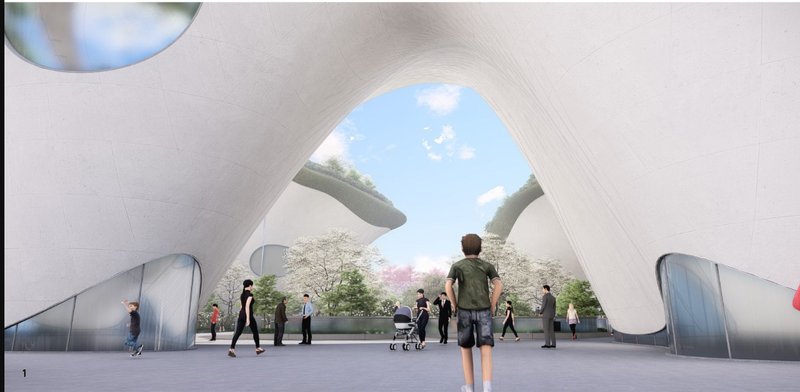
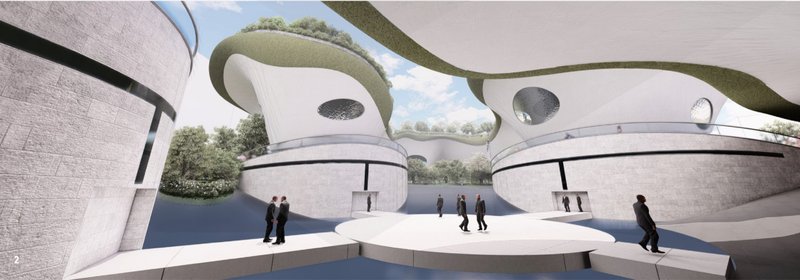
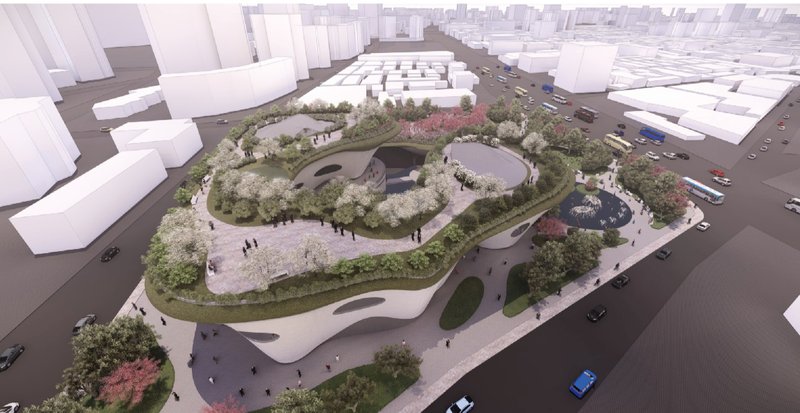
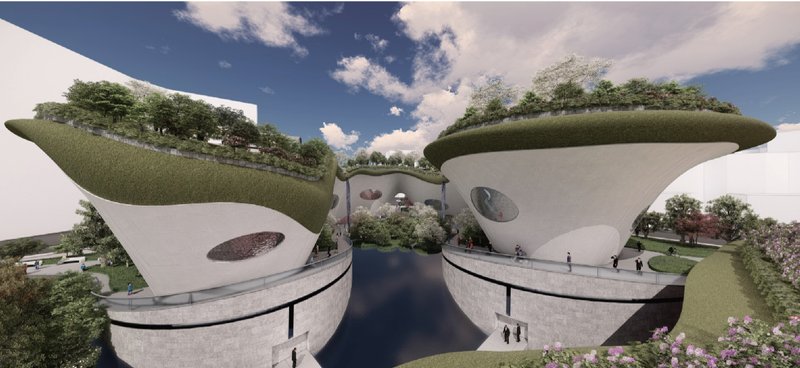
The design concept introduces a hybrid facility that combines an underground cemetery with a library, study center, community park, reading zone, and parking infrastructure. These varied functions create a dynamic environment where memory, contemplation, learning, and everyday life intersect. Undulating paths and fluid water features guide people through spaces of reflection and interaction. These topographic elements also serve as visual and spatial buffers, allowing users with distinct purposes—worshippers, families, children, and commuters—to move fluidly without disturbance. The natural burial zone located on the rooftop highlights the project’s ecological ethos, transforming grief into a green gesture of renewal.
Located in the dense Hongkou District, the project responds to the spatial challenges of contemporary urban life. Traditional suburban cemeteries, often defined by their rigid boundaries and isolation, have become increasingly unsustainable in terms of space and accessibility. UNderNature challenges this outdated model by introducing a scalable and adaptable urban cemetery architecture that embraces multifunctionality and inclusivity. It not only addresses the environmental and spiritual needs of the deceased but also offers meaningful spaces for the living.
Key Features of the Urban Cemetery Architecture Concept:
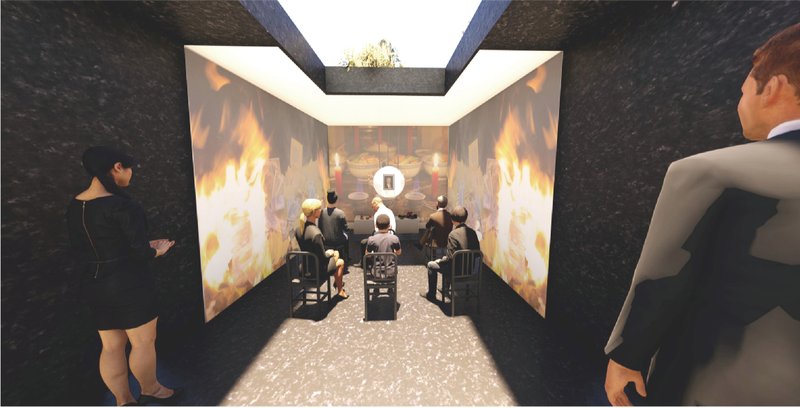
- Spiritual Density: Ashes are placed in intelligent columbarium chambers located in climate-controlled, underground spaces. Each chamber connects to private worship rooms that are accessible through app-based reservations, ensuring privacy and personalization.
- Scalable Rituals: The architecture allows for a time-sharing approach to rituals. Descendants book visits in advance, enabling multiple ceremonies to take place within the same spatial framework without congestion. This system increases capacity without increasing footprint.
- Inclusive Design: The design rethinks religious and cultural rites by abstracting them into three experiential stages—visit, transact, and retrospect—making the space adaptable for multiple belief systems.
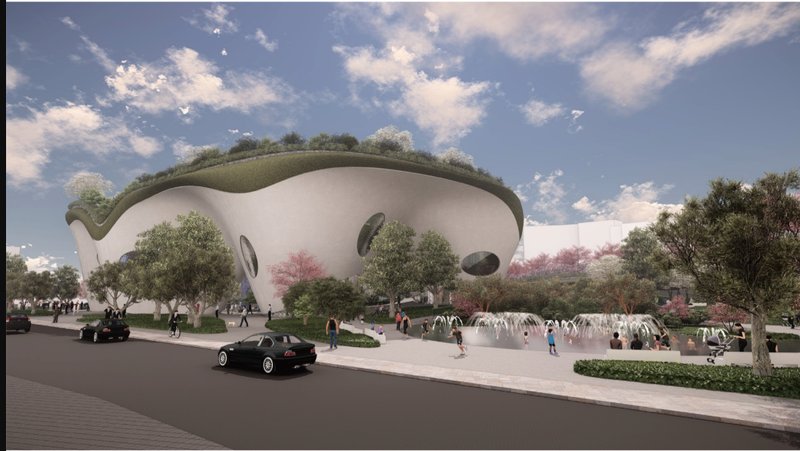
- Biophilic Urbanism: The entire facility is enveloped in vegetation, from rooftop burial gardens to green courtyards and tree-lined paths. This living architecture improves urban biodiversity and creates an atmosphere of calm and renewal.
- Civic Utility: Beyond its funerary role, the project functions as an active civic space. Locals can access libraries, playgrounds, reading areas, and community centers daily. This openness breaks the taboo surrounding death by integrating it with everyday life.
Additionally, water serves as a critical organizing element. Streams, ponds, and fountains are used to divide spaces, redirect flows of people, and enhance the ambiance of rituals. These features serve spiritual, sensory, and social functions simultaneously—turning the site into a place of beauty, tranquility, and healing.
By reframing the cemetery not just as a resting place for the dead but as a sanctuary for the living, UNderNature forges a transformative model of urban cemetery architecture. It is a celebration of continuity, where mourning and memory coexist with learning, leisure, and daily rhythm. In an era where cities are constantly growing and space is at a premium, this design exemplifies how architecture can be both reverent and resilient—offering new ways to connect with loss, culture, and the land itself.


Popular Articles
Popular articles from the community

On the Brooks House by Monsoon Collective – A Contemporary Kerala Home Rooted in Tradition
Kerala home blending tradition and modernity with water-inspired design, brick architecture, courtyard planning, and sustainable rainwater harvesting strategies.
Treehouse Apartment: A Warm Timber Interior Blending Craft, Play, and Contemporary Living
Warm timber apartment with integrated treehouse, combining natural materials, craftsmanship, and playful design to create a flexible, family-oriented living environment.
Atelier Macri Concept Store Interior Design by CASE-REAL
Atelier Macri store features a "ko" counter, walnut wood details, cork displays, blending retail, gallery, and seamless customer experiences.
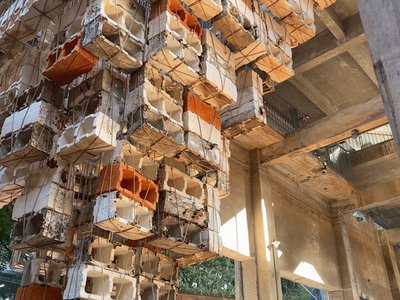
Inverted Architecture Installation by Studio Link-Arc: Exploring the Intersection of Architecture and Living Organisms
Inverted Architecture Installation by Studio Link-Arc blends mycelium, sustainability, inverted design, ecological cycles, and urban adaptive architecture in Shenzhen.

Similar Reads
You might also enjoy these articles

Top 15 Architecture Competitions to Enter in 2026
From student-friendly idea competitions to prestigious international awards, here are the best architecture competitions open for entries in 2026. Updated regularly.

DIY & Engineering in Computational Design : Enter the BeeGraphy Design Awards
Showcase Your Creativity with Computational Design and Open Source Projects
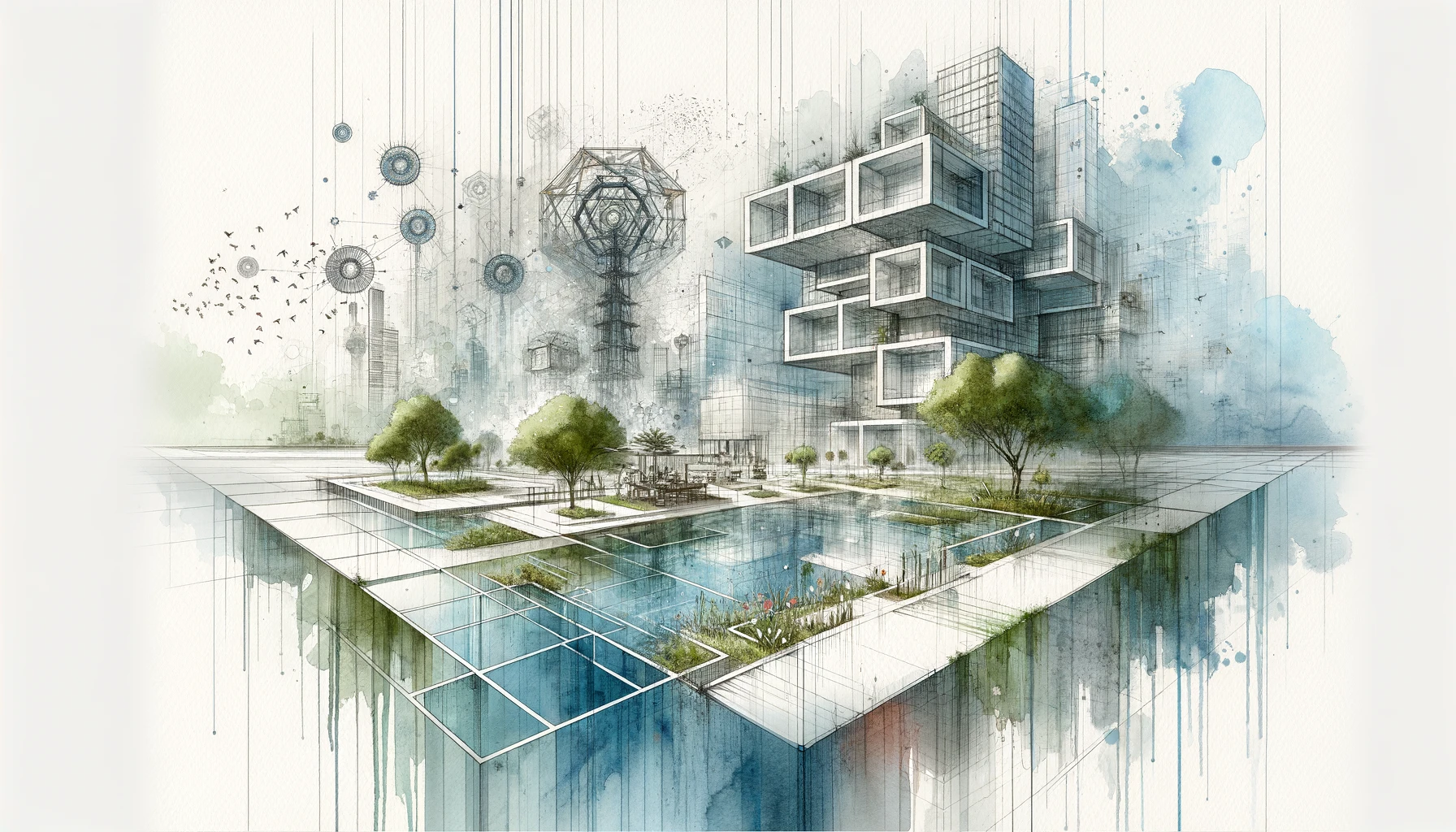
Innovative Design Solutions: Award-Winning Projects from Recent Architecture Competitions
Exploring award-winning architectural projects shaping the future of design, sustainability, and community.
Explore Educational Building Competitions
Discover active competitions in this discipline




The Global Benchmark for Architecture Dissertation Awards


Challenge to design public laboratory
Comments (0)
Please login or sign up to add comments
No comments yet. Be the first to comment!