
Urban Agriculture Architecture: The Urban Meal Mine
Urban agriculture architecture meets sustainability—integrating vertical farming, markets, logistics & community into one vibrant hub.

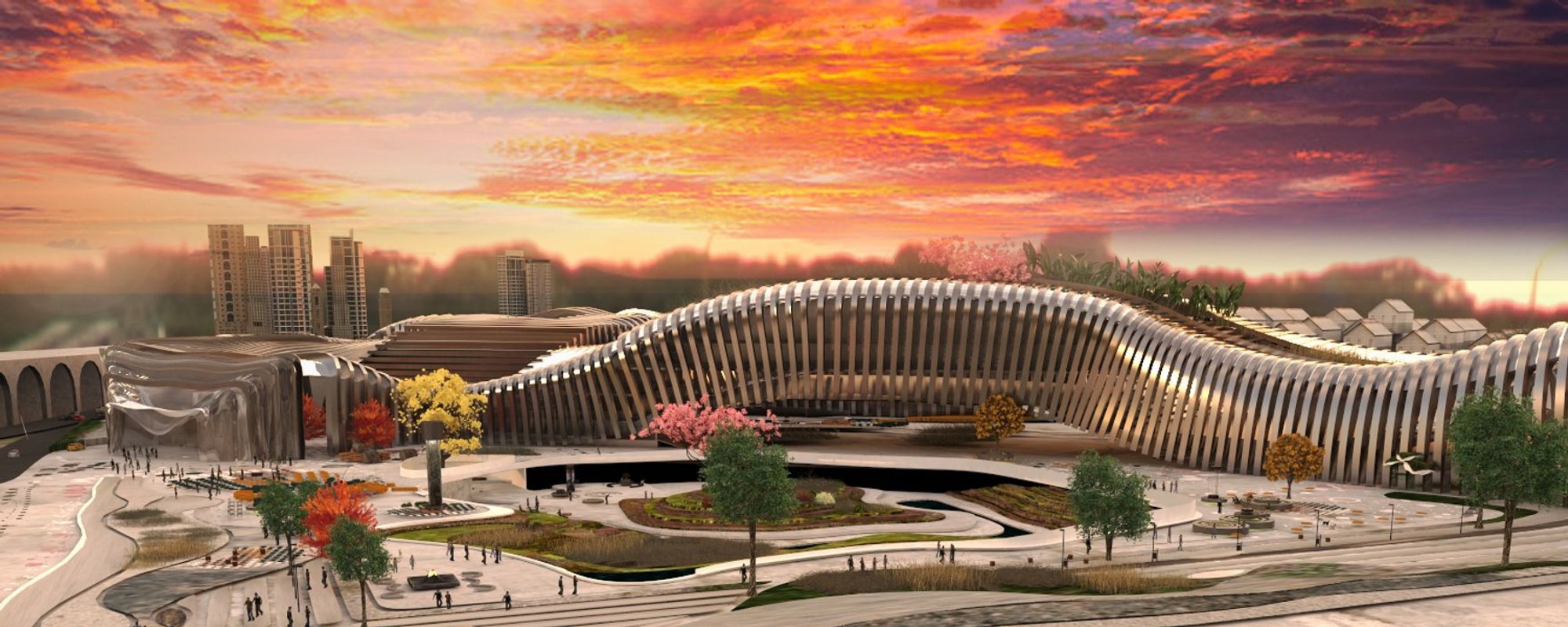
The Urban Meal Mine is a visionary architectural project that integrates urban agriculture architecture with community-driven food systems. Designed by Mona Ali Abdelwahab Emam, this shortlisted entry for the Urban Meal Mine competition redefines how cities can sustainably manage food production, distribution, and education within a single architectural framework.
A Continuous Flow of Spaces
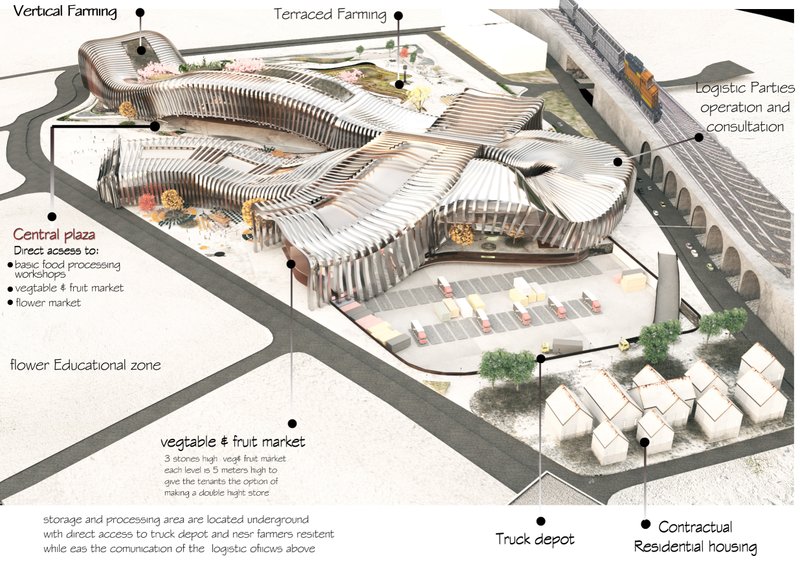
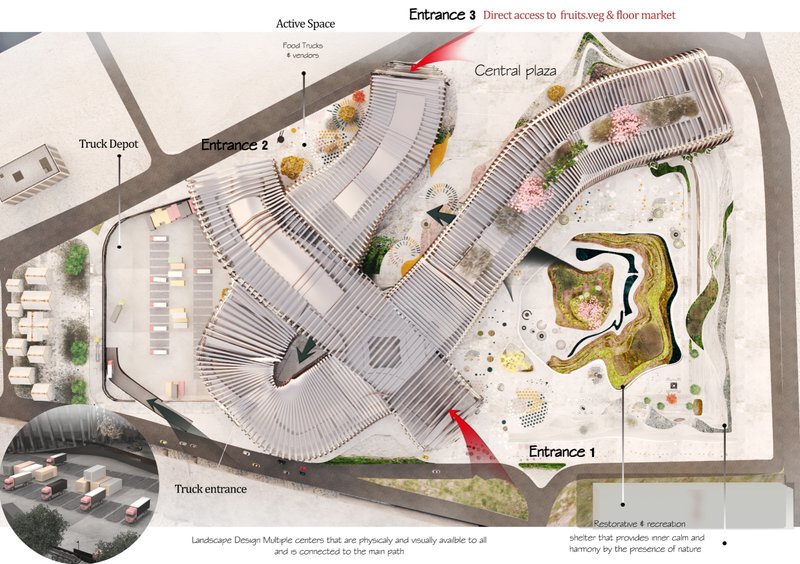
The building is conceived as a continuous, connected space inspired by the rhythmic flow of railway tracks. Its dynamic form creates a natural circulation, guiding people through diverse zones: from informative exhibition halls and educational spaces, to market areas and commercial hubs. This seamless design ensures visitors intuitively engage with food systems—from production to consumption—while fostering awareness of sustainable practices.
Vertical and Terraced Farming
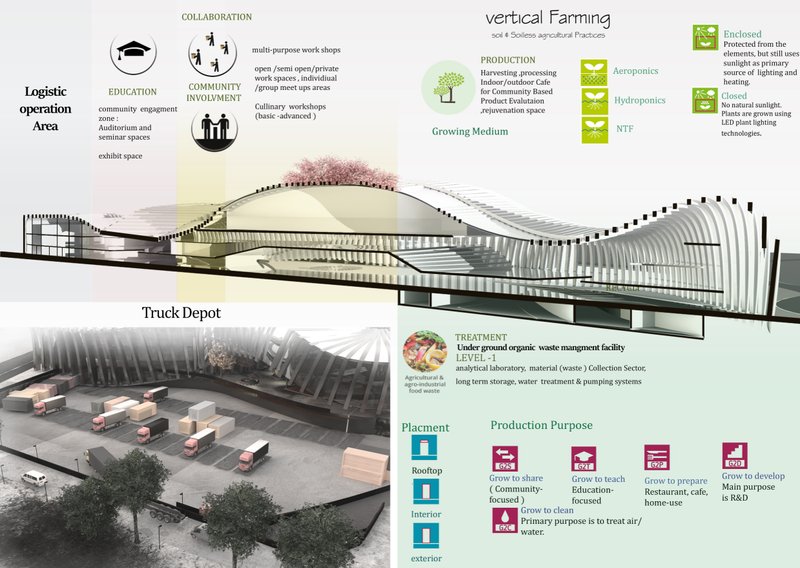
A key highlight of the project is its emphasis on vertical farming and terraced farming. These agricultural systems maximize land use efficiency, bringing fresh produce into the heart of the city. Dedicated spaces for educational and skill-transfer programs allow communities to learn about sustainable farming, while commercial vertical farms ensure year-round food availability.
- Vertical Farming Zones: Include both educational spaces for training and commercial farms for large-scale production.
- Green Roof Gardens: Serve as community gardens, enhancing biodiversity and offering restorative, recreational spaces for urban residents.
Integrated Marketplaces
The Urban Meal Mine combines farming with direct-to-community marketplaces. The central plaza connects a variety of zones including:
- Fruit and Vegetable Market: A three-story market with flexible storage and double-height spaces for vendors.
- Flower Market: A vibrant hub celebrating horticulture and connecting communities through natural beauty.
- Food Processing Workshops: Offering basic food preparation training to empower local entrepreneurs.
This integration reduces food miles, strengthens local economies, and creates a resilient urban food supply chain.
Logistics and Cold Storage
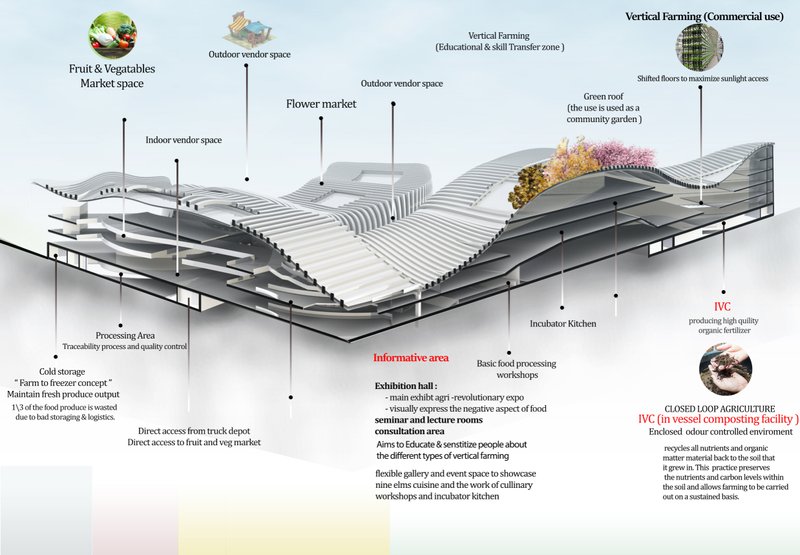
Food wastage due to poor logistics is a major urban challenge. The project addresses this with cold storage facilities based on a "farm to freezer" model. Direct connections to the truck depot streamline supply chain efficiency, while underground storage and processing areas ensure traceability, quality control, and reduced food loss.
Educational and Informative Spaces
At its core, the Urban Meal Mine is not only a marketplace but also an educational hub. Exhibition halls, lecture rooms, and consultation areas raise awareness about:
- Negative aspects of food waste.
- Benefits of vertical farming.
- Culinary innovation through incubator kitchens.
The inclusion of flexible galleries and event spaces ensures that food education remains dynamic and community-driven.
Sustainable Design and Closed-Loop Systems
Sustainability is central to the project. A Closed Loop Agriculture System (IVC – in vessel composting facility) recycles organic waste into high-quality fertilizer, creating a self-sustaining food ecosystem. This circular model preserves soil nutrients and reduces the environmental footprint of food production.
A Model for Future Cities
The Urban Meal Mine demonstrates how urban agriculture architecture can transform future cities. By integrating farming, markets, logistics, and education within one architectural entity, the project creates a blueprint for resilient, sustainable, and community-centered urban living.
Credits: Project by Mona Ali Abdelwahab Emam
Competition: Shortlisted entry of Urban Meal Mine




Popular Articles
Popular articles from the community


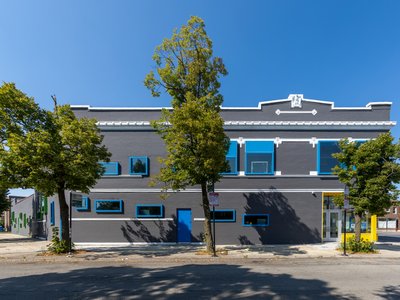
Gads Hill Early Learning Center by JGMA: Adaptive Reuse Shaping Community-Focused Educational Architecture
Adaptive reuse transforms fragmented structure into vibrant early learning center with playful façade, natural light, and community-focused sustainable design.


The Ken Roberts Memorial Delineation Competition (Krob)
As the most senior architectural drawing competition currently in operation anywhere in the world, it draws hundreds of entries each year, awarding the very best submissions in a series of medium-based categories.
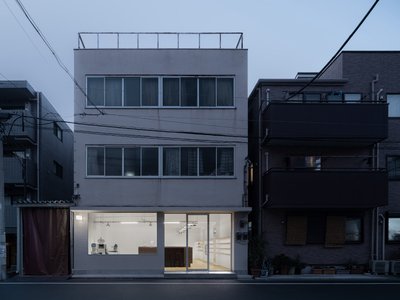
Atelier Macri Concept Store Interior Design by CASE-REAL
Atelier Macri store features a "ko" counter, walnut wood details, cork displays, blending retail, gallery, and seamless customer experiences.

Similar Reads
You might also enjoy these articles

Free Architecture Competitions You Can Enter Right Now
No entry fees, real prizes. Here are the best free architecture competitions open for submissions in 2026.
Top 15 Architecture Competitions to Enter in 2026
From student-friendly idea competitions to prestigious international awards, here are the best architecture competitions open for entries in 2026. Updated regularly.

DIY & Engineering in Computational Design : Enter the BeeGraphy Design Awards
Showcase Your Creativity with Computational Design and Open Source Projects
Innovative Design Solutions: Award-Winning Projects from Recent Architecture Competitions
Exploring award-winning architectural projects shaping the future of design, sustainability, and community.


Explore Sustainable Design Competitions
Discover active competitions in this discipline





Comments (0)
Please login or sign up to add comments
No comments yet. Be the first to comment!