
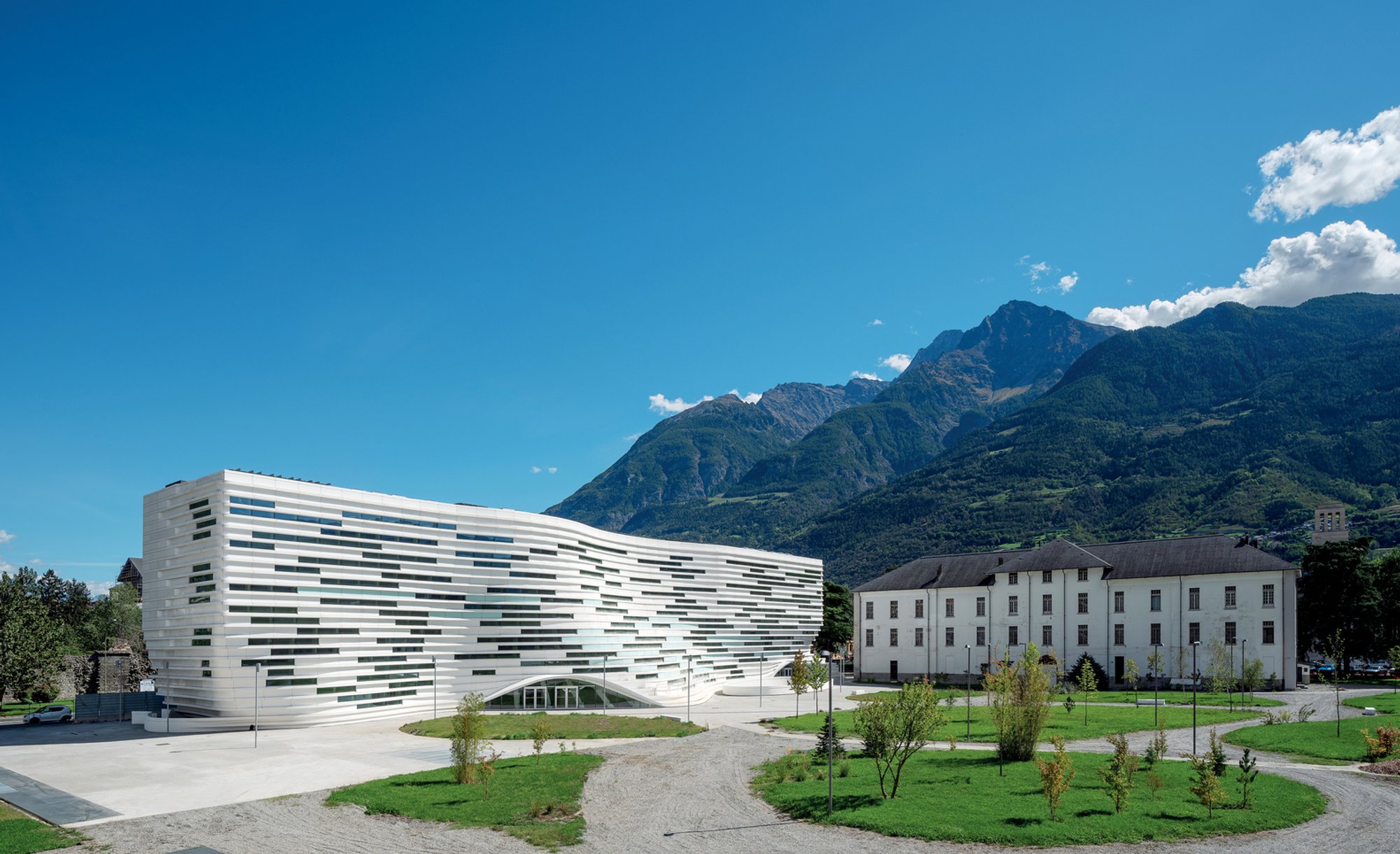
Valle d’Aosta University Campus: A Benchmark in Sustainable University Campus Design by Mario Cucinella Architects
Valle d’Aosta University Campus by Mario Cucinella Architects is a sustainable university campus design merging adaptive reuse and climate-responsive architecture.

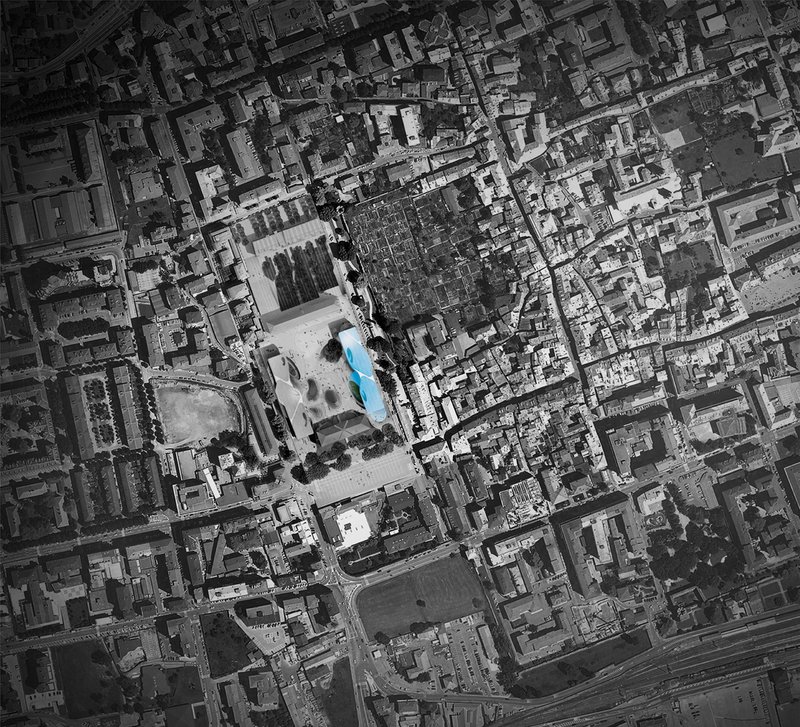
Located near the historic center of Aosta, Italy, the Valle d’Aosta University Campus stands as a landmark of sustainable university campus design. Designed by Mario Cucinella Architects (MCA) and completed in 2023, the 52,000-square-meter campus masterfully integrates contemporary architecture, environmental sensitivity, and urban regeneration.
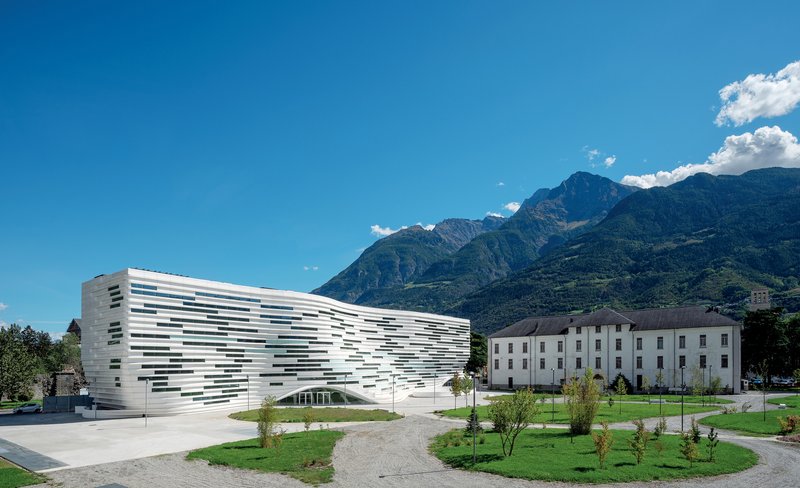
This project redefines the relationship between academic institutions and their surrounding environment, blending the adaptive reuse of a military barracks with forward-thinking sustainability strategies. By balancing functionality, aesthetic appeal, and energy efficiency, the campus has become a model for educational architecture in Europe.
Adaptive Reuse of the Former Testafochi Barracks
The foundation of the Valle d’Aosta University Campus lies in the transformation of the former Testafochi Barracks, a historically significant site in Aosta. MCA preserved the original layout while infusing it with modern elements to create an open and accessible educational hub.
The decision to retain the barracks' structural framework reflects a commitment to reducing material waste and honoring the site’s heritage. This adaptive reuse approach not only breathes new life into the historic fabric but also aligns with the principles of sustainable university campus design by minimizing demolition and new construction.
Integration of Architecture with Landscape
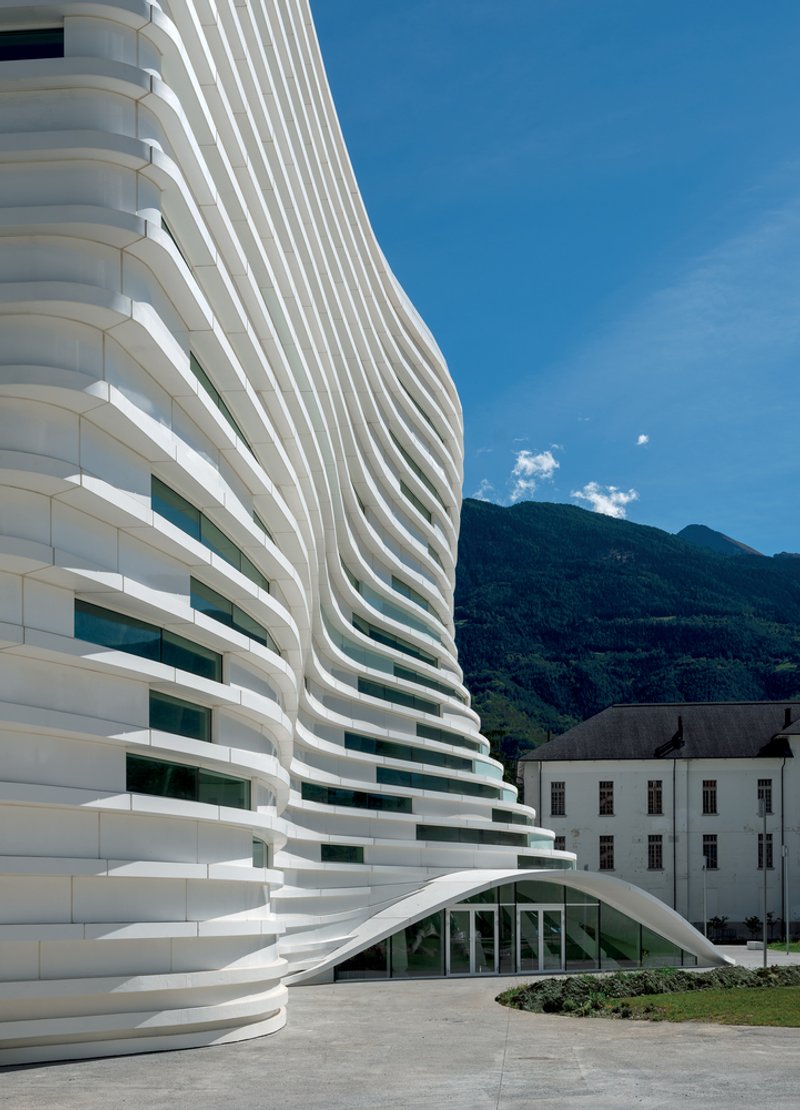
The campus design is deeply influenced by the surrounding Alpine landscape. Drawing inspiration from icebergs and plant structures, MCA crafted a built environment that harmonizes with the snow-covered peaks and natural terrain.
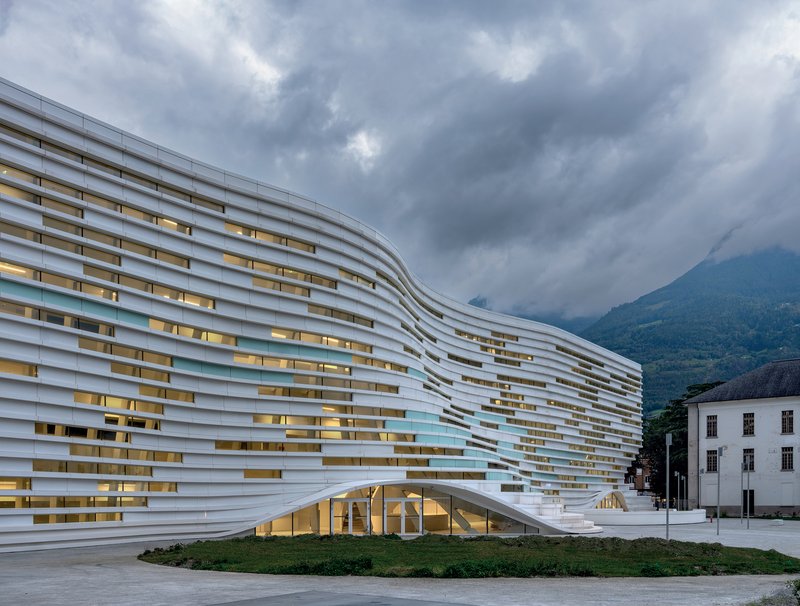
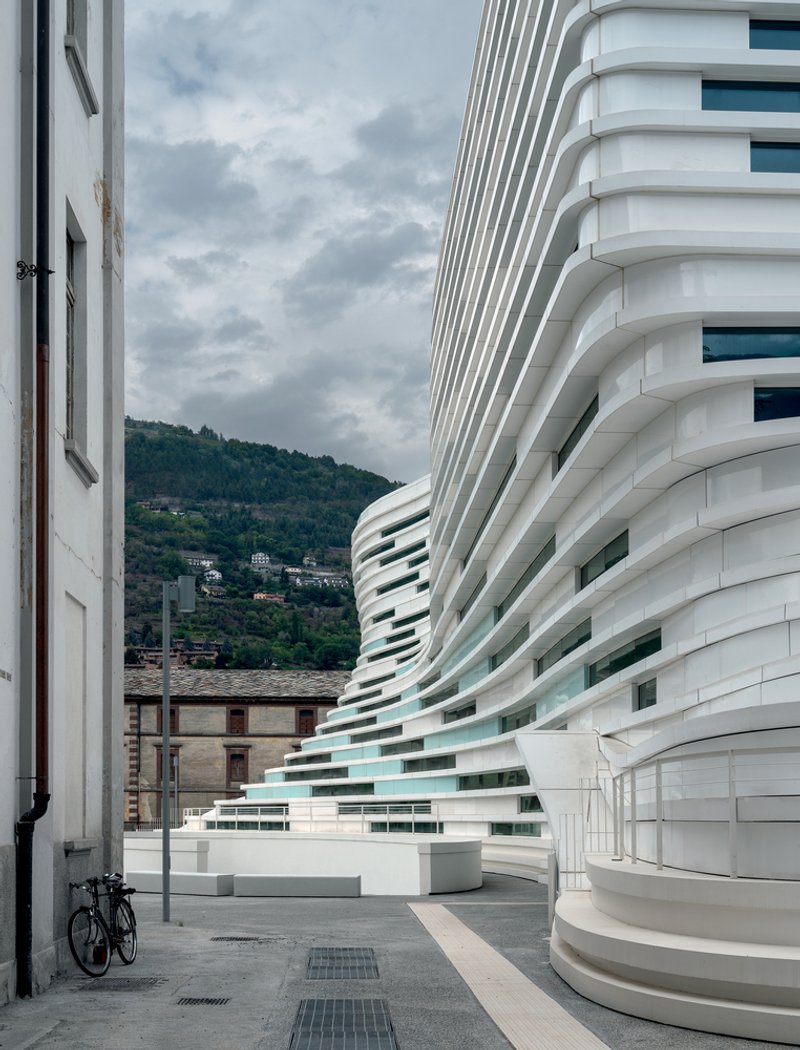
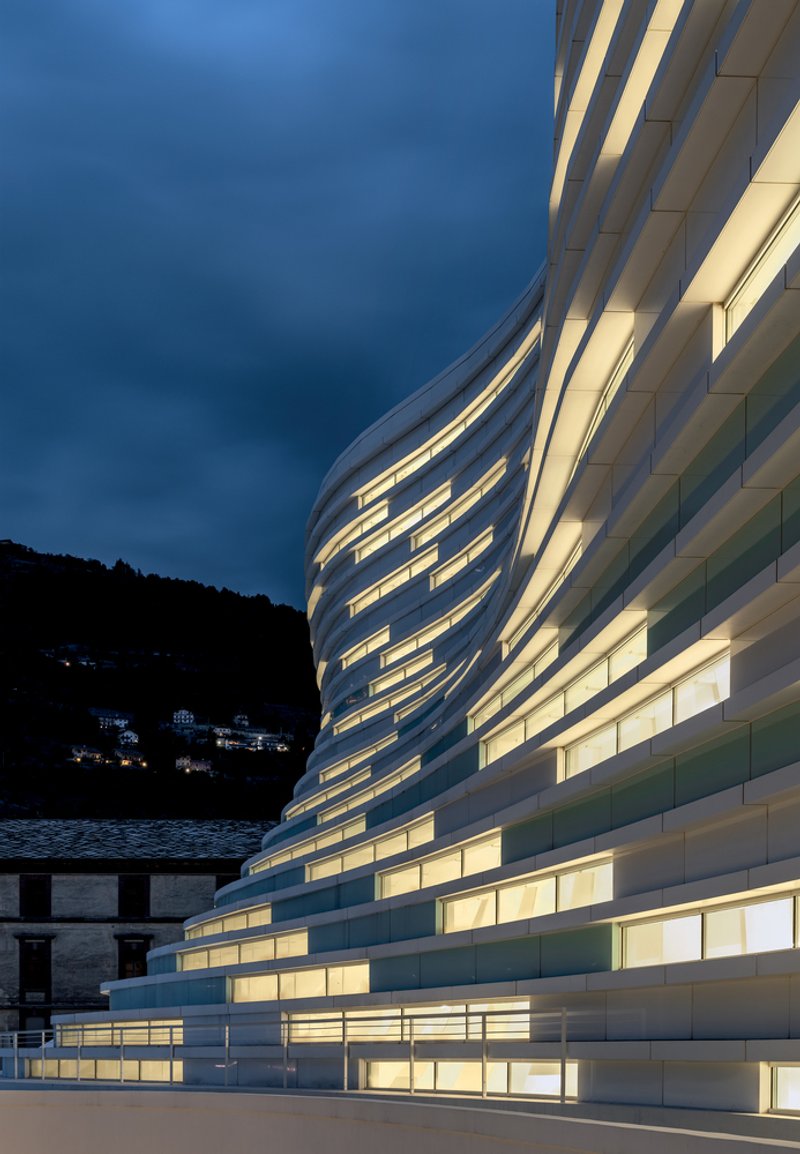
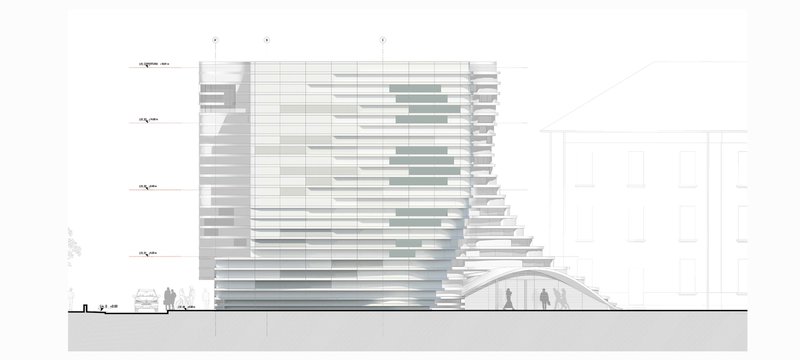
The façade design reflects the changing density of ice formations, with materials and colors evoking the cool tones of the mountainous environment. The architectural form responds to the topography, reducing visual impact while enhancing energy performance. This dialogue between built and natural elements exemplifies a contemporary approach to sustainable university campus design.
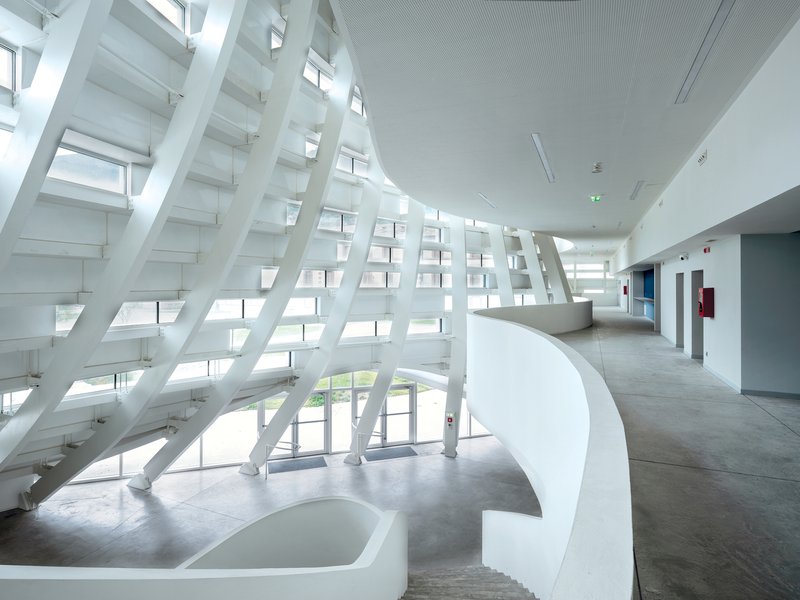
Functional Organization and Spatial Planning
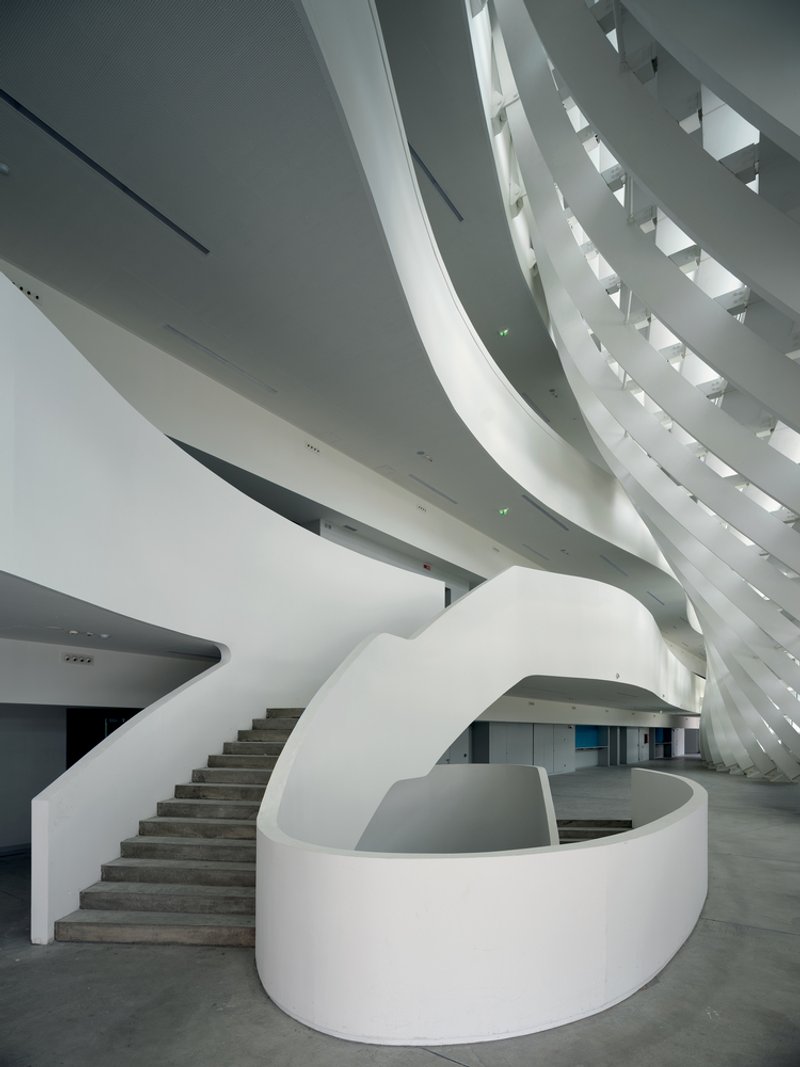
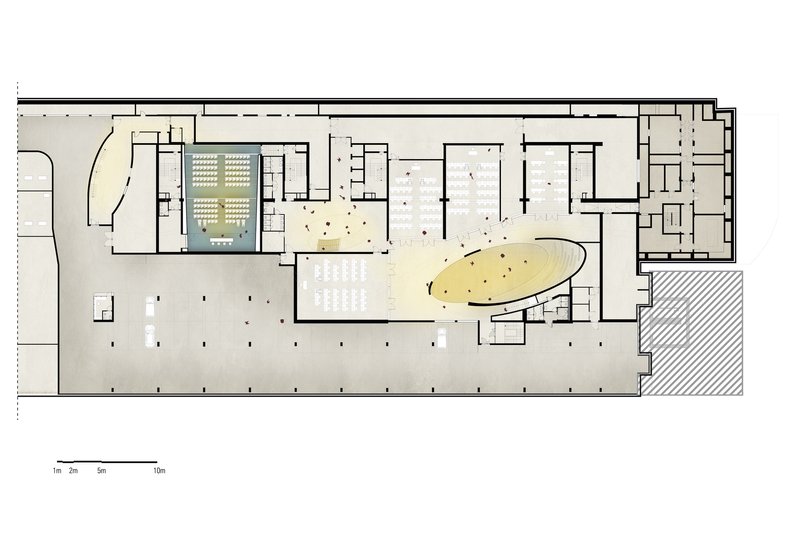
The campus comprises four above-ground levels and two basement levels, accommodating approximately 2,000 students across various faculties. The spatial organization prioritizes flexibility, transparency, and connectivity, fostering an environment conducive to learning and collaboration.
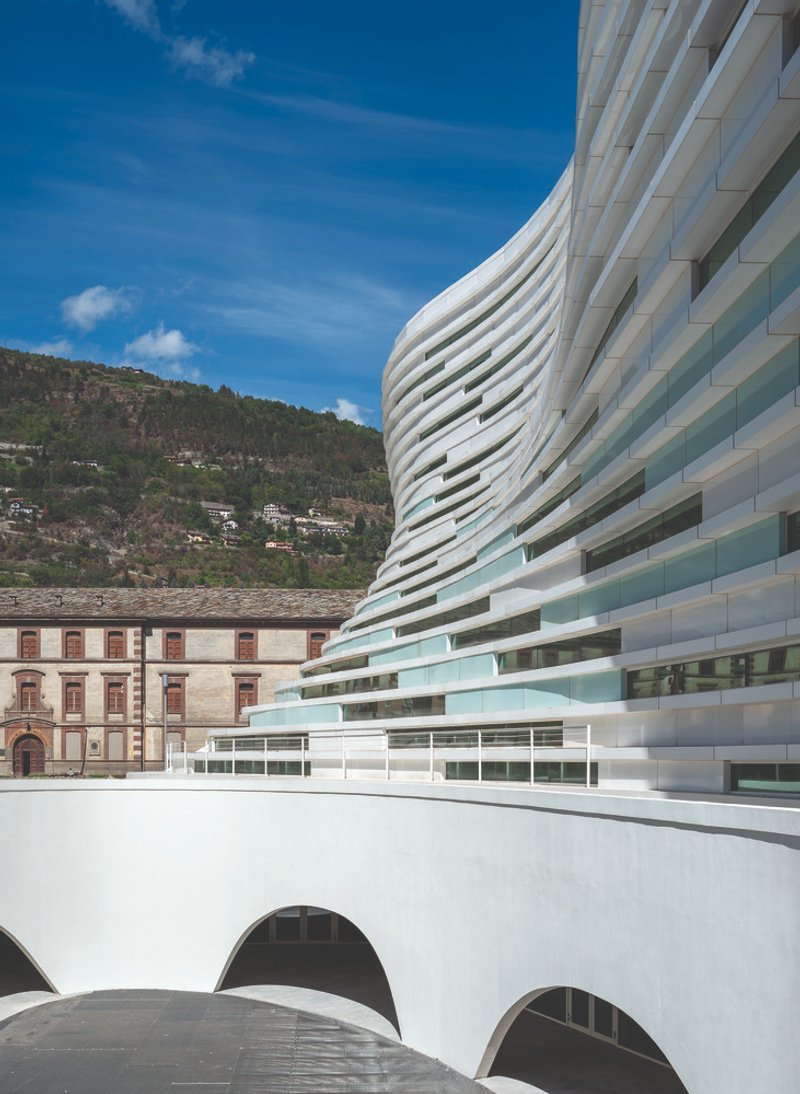
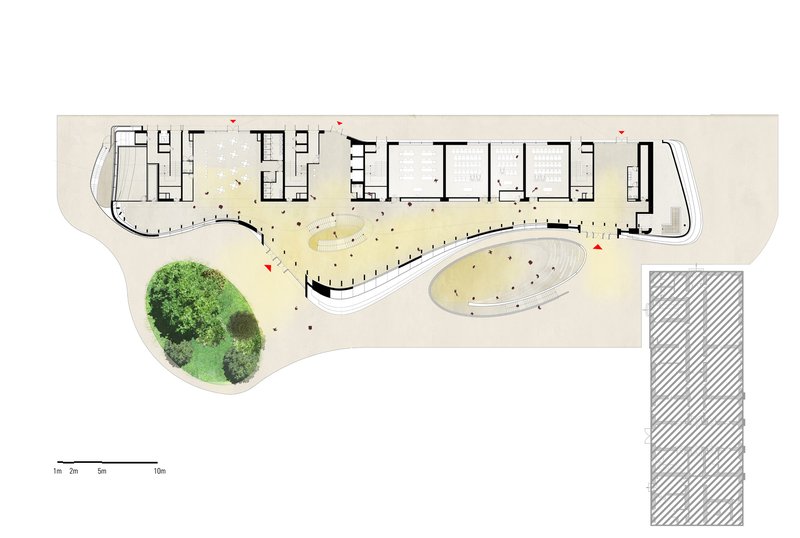
Teaching spaces occupy the upper levels, offering panoramic views of Aosta and maximizing daylight exposure. The ground floor is designed as a permeable zone, housing the cafeteria, entrance to the Main Hall, and public spaces that seamlessly connect with the adjacent university square.
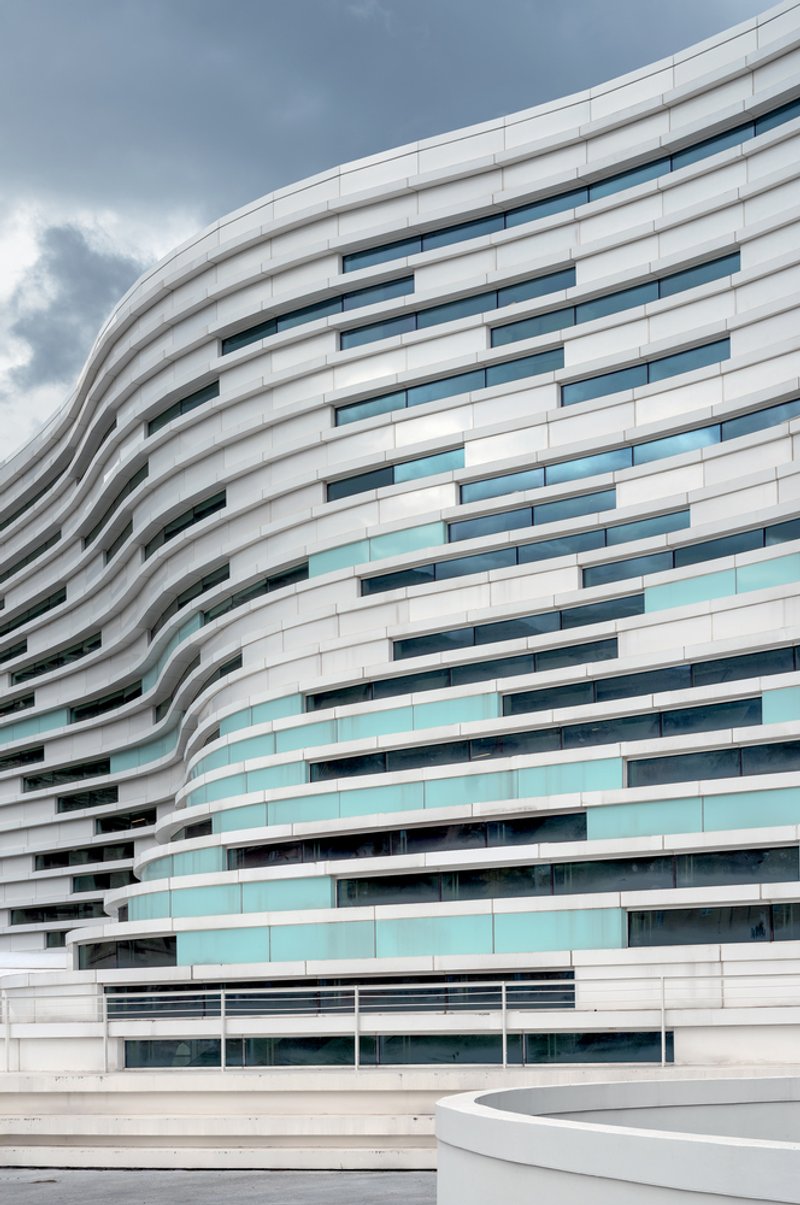
The basement levels accommodate technical facilities, computer laboratories, and the Main Hall, which seats 176 people. These subterranean spaces benefit from natural light and ventilation through strategically excavated courtyards, enhancing user comfort while optimizing the use of underground areas.
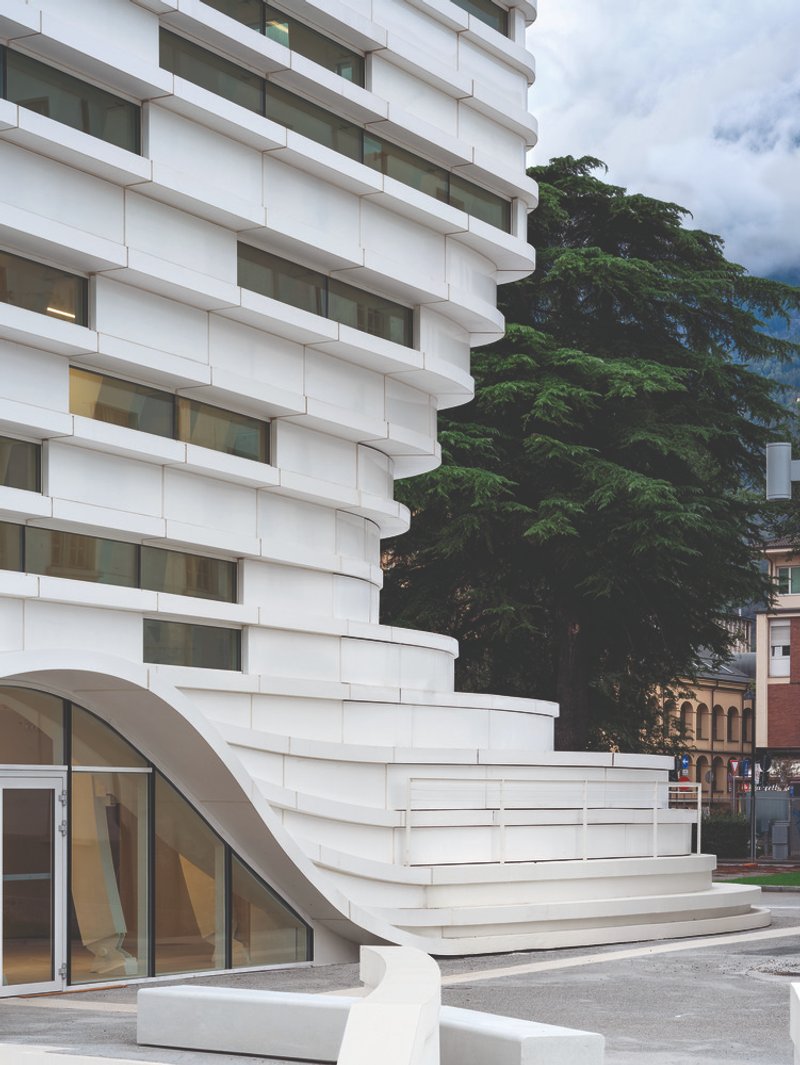
Facade System and Solar Screening
The facade system serves as a defining feature of the Valle d’Aosta University Campus. MCA employed a dual approach to adapt to the varying contextual conditions.
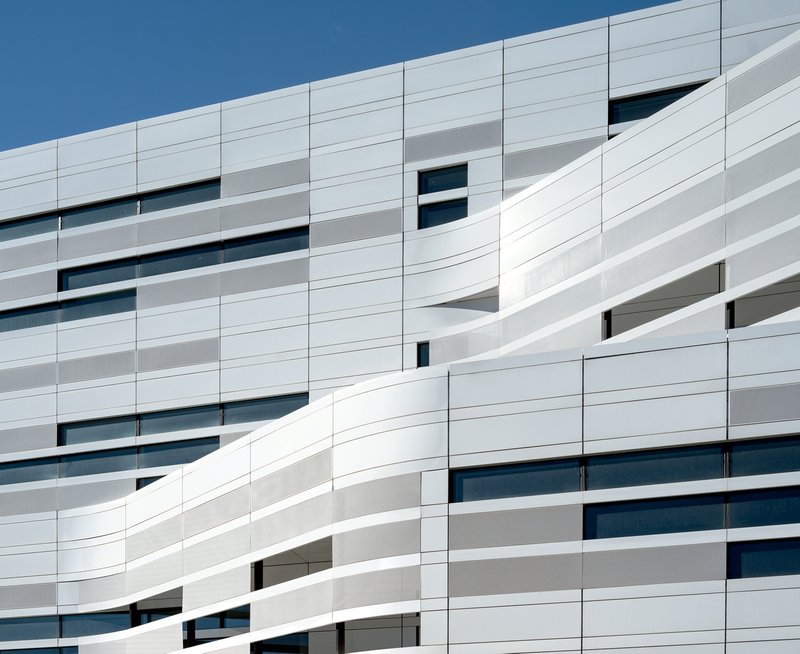
On the city-facing side, the facade is articulated with metal strips and Betacryl acrylic stone panels, creating a dynamic visual effect. This composition enhances the building’s urban identity while ensuring solar protection. On the piazza-facing side, the facade integrates with the circulation spaces, forming a semi-transparent enclosure that balances openness with thermal efficiency.
This adaptive façade strategy exemplifies the principles of sustainable university campus design, reducing heat gain, enhancing daylight control, and contributing to the building’s overall energy performance.
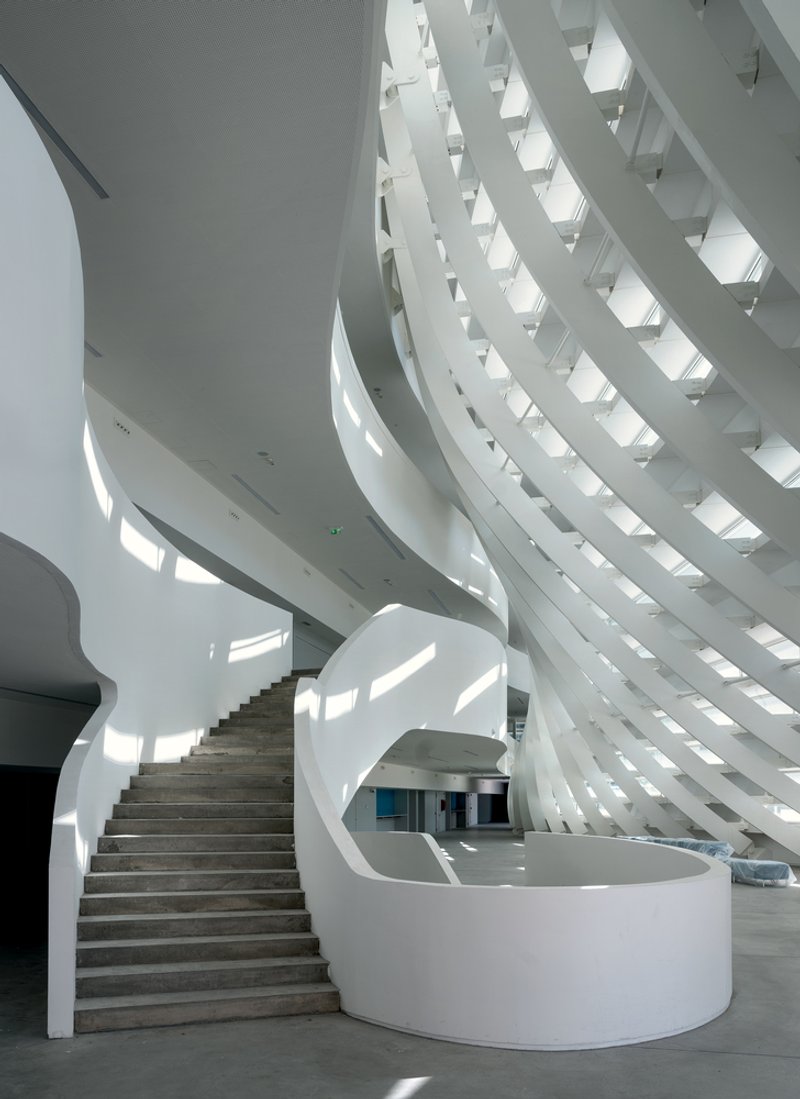
Environmental Strategies and Climate Responsiveness
Climate analysis played a pivotal role in shaping the campus design. Aosta’s location in a valley with southern slopes presented unique challenges related to solar radiation, temperature fluctuations, and wind exposure.
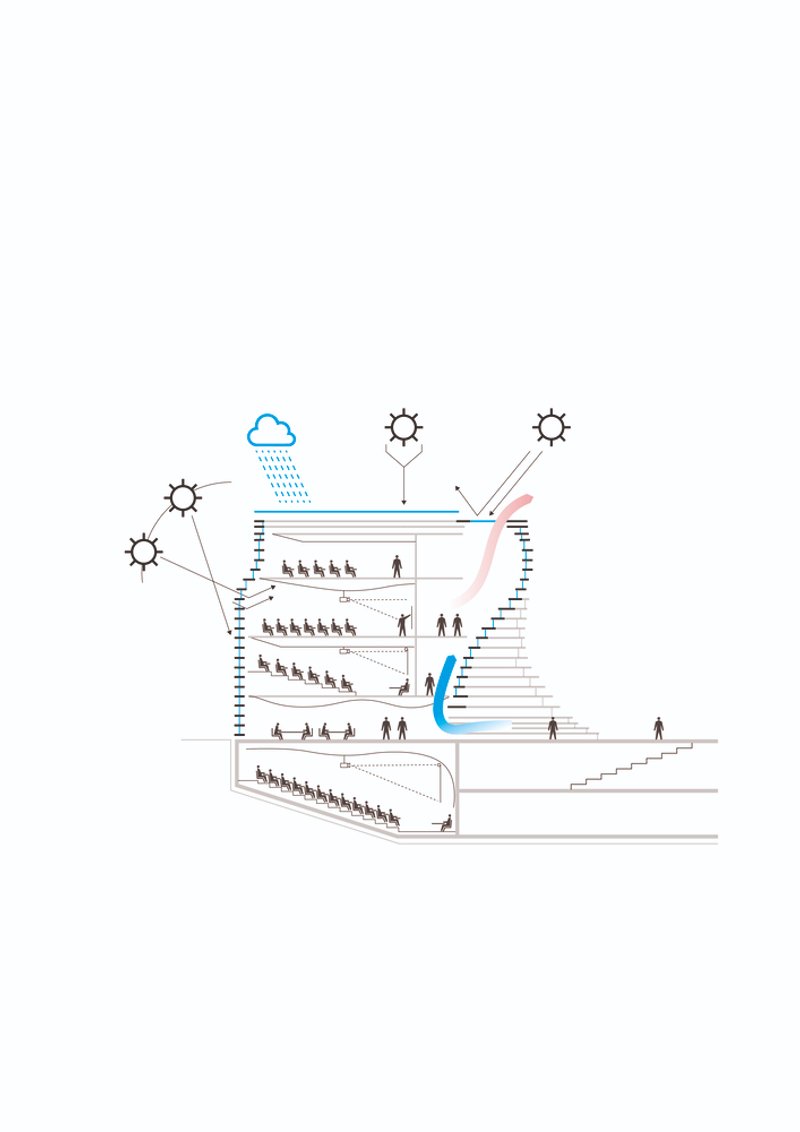
MCA adopted a volumetric composition that maximizes compactness, reducing heat loss during winter and minimizing overheating in summer. The building envelope is highly insulated, while the orientation and facade treatments optimize solar access and shading.
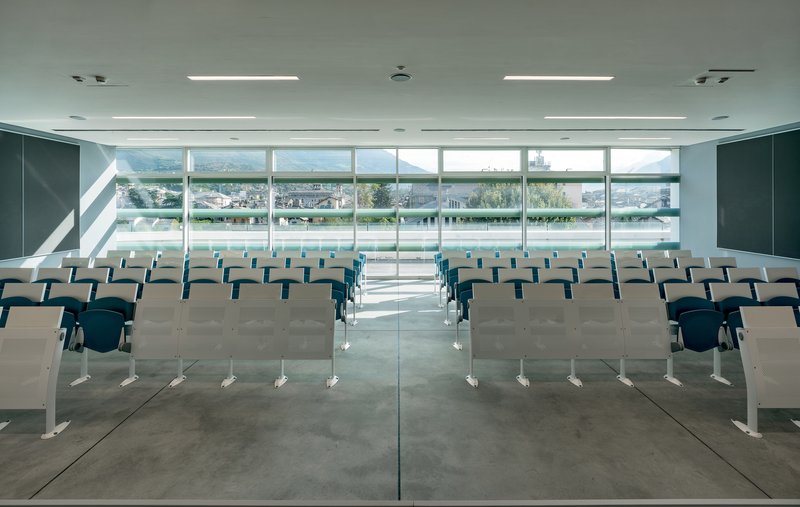
Renewable energy systems, natural ventilation, and passive cooling techniques further reduce the campus’s reliance on artificial heating and cooling. This holistic approach underscores the growing significance of climate-responsive architecture in sustainable university campus design.
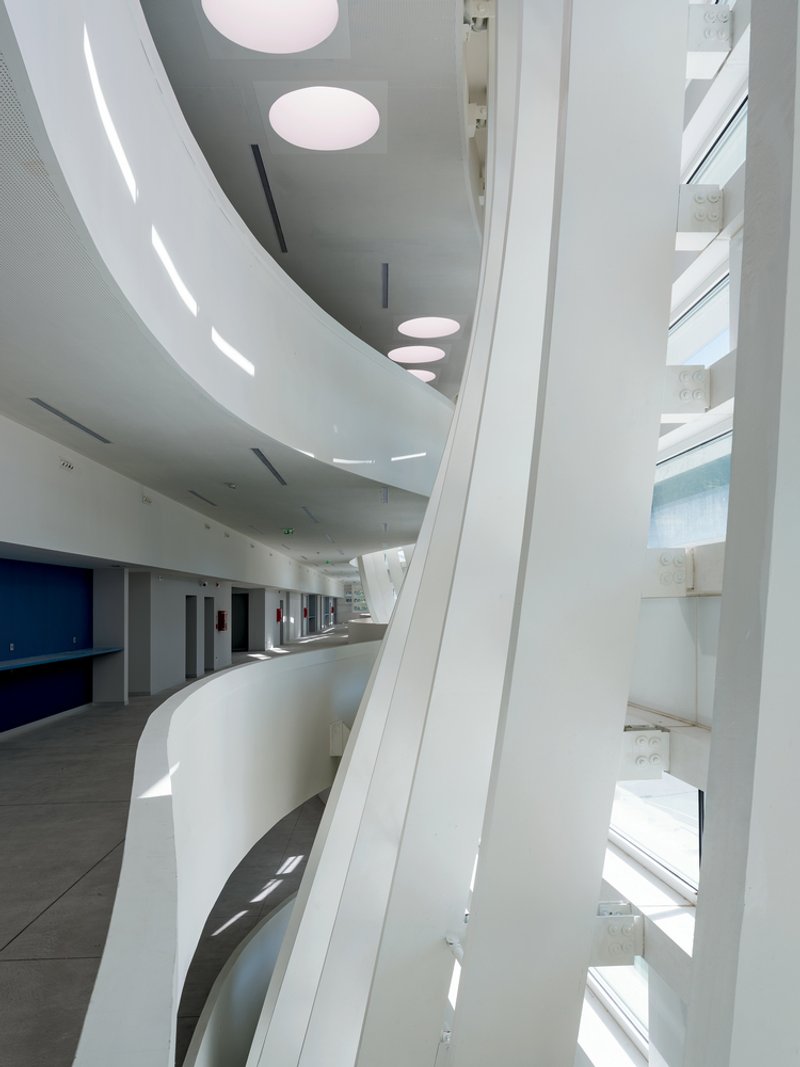
Creating a Vibrant University Square
Central to the project is the creation of a new university square that fosters social interaction and urban connectivity. By opening up the previously enclosed barracks site, MCA transformed the area into a lively public space.
The square acts as a transitional zone between the city and the campus, encouraging students, residents, and visitors to engage with the built environment. The permeable ground floor layout strengthens this connection, allowing educational and cultural activities to extend beyond the classroom walls.
This integration of academic and public spaces represents a progressive model for sustainable university campus design, promoting inclusivity and community participation.
Structural Innovation and Material Selection
The structural system of the campus relies on reinforced concrete walls and large floor slabs, enabling the creation of spacious interiors without intrusive columns. This structural clarity enhances spatial flexibility while ensuring durability and seismic resilience.
MCA prioritized the use of sustainable materials, including low-impact concrete, recycled metals, and eco-friendly finishes. The selection of Betacryl, a non-toxic acrylic stone, for the facade exemplifies the studio’s dedication to reducing the environmental footprint of the construction process.
Energy Efficiency and Low Carbon Footprint
The Valle d’Aosta University Campus achieves exemplary energy efficiency through the integration of passive and active systems. The building’s orientation, insulation, and facade design reduce heating and cooling demands, while photovoltaic panels harness renewable energy.
Natural daylighting strategies minimize artificial lighting consumption, and rainwater harvesting systems support water conservation efforts. These measures collectively contribute to the campus’s low carbon footprint, aligning with global standards for sustainable university campus design.
A Symbol of Educational and Environmental Progress
The Valle d’Aosta University Campus by Mario Cucinella Architects transcends its function as an academic institution. It stands as a symbol of how architecture can address environmental challenges while enhancing the quality of education and urban life.
Through the fusion of adaptive reuse, landscape integration, and climate-responsive design, MCA has set a benchmark for sustainable university campus design in Europe. This project serves as a blueprint for future educational developments, demonstrating that universities can be catalysts for environmental stewardship and social progress.
Redefining the Future of University Architecture
The Valle d’Aosta University Campus exemplifies the transformative potential of sustainable university campus design. Mario Cucinella Architects have reimagined an underutilized military site into a forward-looking educational environment that prioritizes environmental responsibility and community engagement.
As universities worldwide confront the need for climate action, this project offers a compelling vision of how architecture can harmonize with nature, foster academic excellence, and enrich urban landscapes. It reaffirms that the future of education lies in spaces that not only inspire learning but also nurture sustainability.
All Photographs are works of Duccio Malagamba




Popular Articles
Popular articles from the community

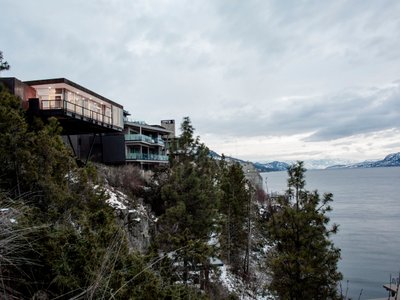
Alton Cliff House: A Harmonious Retreat by f2a Architecture in Lake Country, Canada
Alton Cliff House blends corten steel, prefabrication, and sustainable design, creating a luxurious, energy-efficient retreat perched on Canadian cliffs.
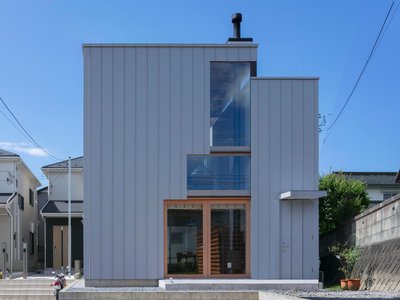
Split House: A Compact Urban Home Blending Privacy, Light, and Flexible Living in Japan
Compact Japanese home featuring DOMA space, flexible café potential, passive lighting, privacy zoning, and sustainable urban living design.

Solar Steam: A Climate-Responsive Architecture That Redefines the Monument
A climate-responsive memorial architecture that transforms heat, decay, and time into a living system reflecting humanity’s ecological impact.
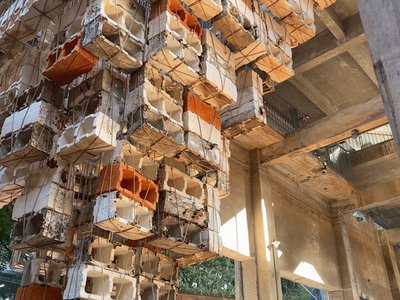
Inverted Architecture Installation by Studio Link-Arc: Exploring the Intersection of Architecture and Living Organisms
Inverted Architecture Installation by Studio Link-Arc blends mycelium, sustainability, inverted design, ecological cycles, and urban adaptive architecture in Shenzhen.


Similar Reads
You might also enjoy these articles


The Ken Roberts Memorial Delineation Competition (Krob)
As the most senior architectural drawing competition currently in operation anywhere in the world, it draws hundreds of entries each year, awarding the very best submissions in a series of medium-based categories.


Waterfront Redevelopment and Urban Revitalization in Mumbai: Forging a New Dawn for Darukhana
A transformative waterfront redevelopment project reimagining Darukhana’s shipbreaking heritage into an inclusive urban future.

OUT-OF-MAP: A Call for Postcards on Feminist Narratives of Public Space
Rhizoma Design and Research Lab invites artists, designers, architects, researchers, and students to reflect on how feminist perspectives can reshape public space. Selected works will be exhibited in Barcelona, October 2026. Submissions open until 15 April 2026.


Documentation Work on Buddhist Wooden Temple
Architectural syncretism and cultural hybridity: A comparative study of the Buddhist temples in Chattogram Hill tracks


Explore Architecture Competitions
Discover active competitions in this discipline




The International Standard for Design Portfolios


The Global Benchmark for Architecture Dissertation Awards


The Global Benchmark for Graduation Excellence


Challenge to reimagine the Iron Throne
Comments (0)
Please login or sign up to add comments
No comments yet. Be the first to comment!