
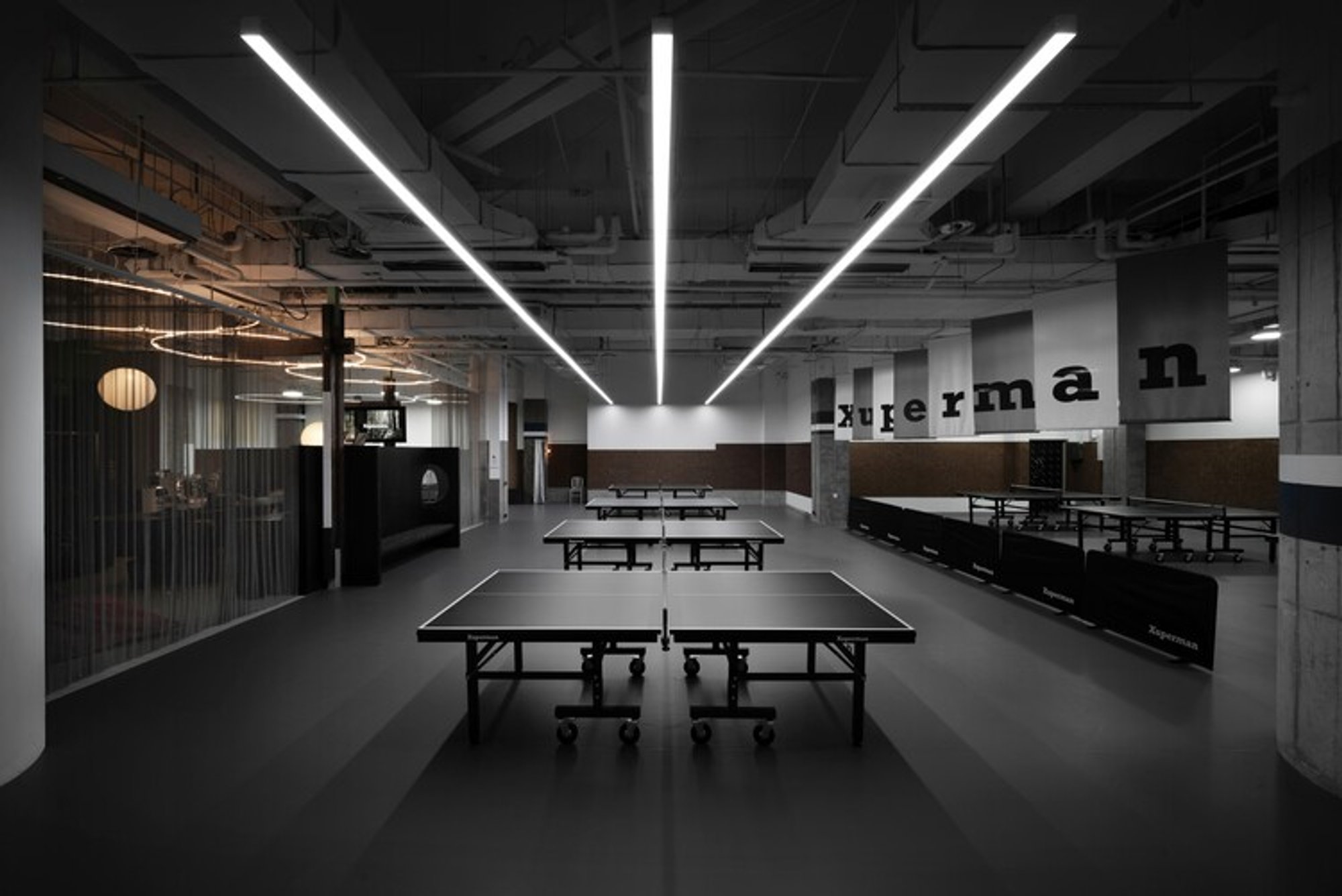
Xuperman Table Tennis Gym – Metrics Architecture Studio
A reclaimed-material table tennis gym transforming a mall interior into a textured landscape of sport, rhythm, community and atmospheric contrast.

Redefining Athletic Space Through Reuse, Material Contrast and Spatial Rhythm
In a city defined by velocity, density and perpetual transformation, leisure spaces play an increasingly critical role in urban culture. Shanghai—electric, layered, and fast—seldom pauses. Yet within this unceasing rhythm, a new architecture emerges not by resisting movement, but by choreographing it. The Xuperman Table Tennis Gym by Metrics Architecture Studio stands as a micro-urban landscape crafted from contrast and continuity. It is sport, but also social ground; repurposed ruin and contemporary interior; kinetic energy and contemplative retreat.
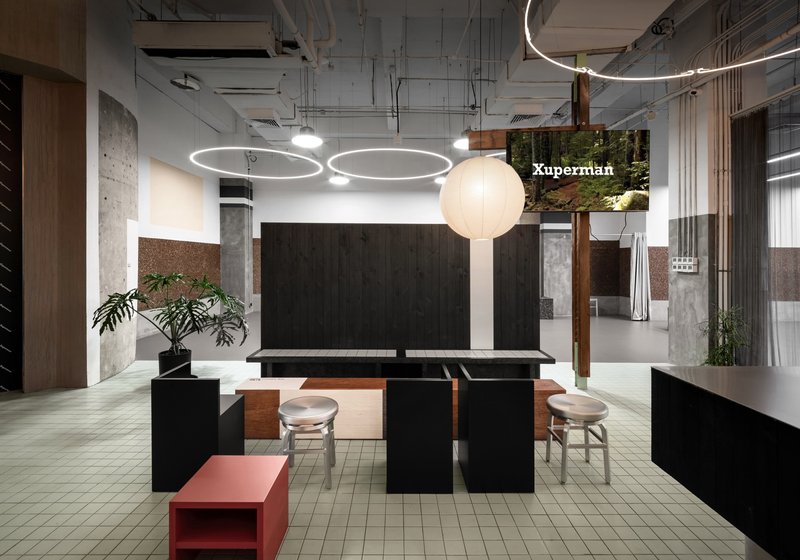
Located inside a commercial mall in central Shanghai, the project transforms a once generic retail floor plate into a highly atmospheric sports interior. Rather than dressing the space with stylistic decoration, the architects took the opposite stance—revealing layers of material history and weaving old fragments into new order. They term this conceptual anchor “mixing patches,” treating reclaimed structure and recovered finishes not as relics, but as design generators. The result is a gym that functions like a living palimpsest: erasing, retaining, annotating, and re-writing space simultaneously.
This is not merely a sports facility. It is an adaptive reuse experiment that reconstructs the relationship between play, memory, and urban interiority.
1. From Mall Unit to Social Sporting Ground
Shanghai’s malls are vertical cities functioning as retail-social ecosystems. Yet many such interior spaces fall into generic sameness—polished, bright, and undifferentiated. Xuperman occupies the opposite pole. Instead of reflecting commercial gloss, it excavates texture, shadow, temperature, and raw structure. The brief was to create a table tennis gym with strong spatial identity—not as a temporary commercial rental, but as a place that feels rooted, atmospheric and memorable.
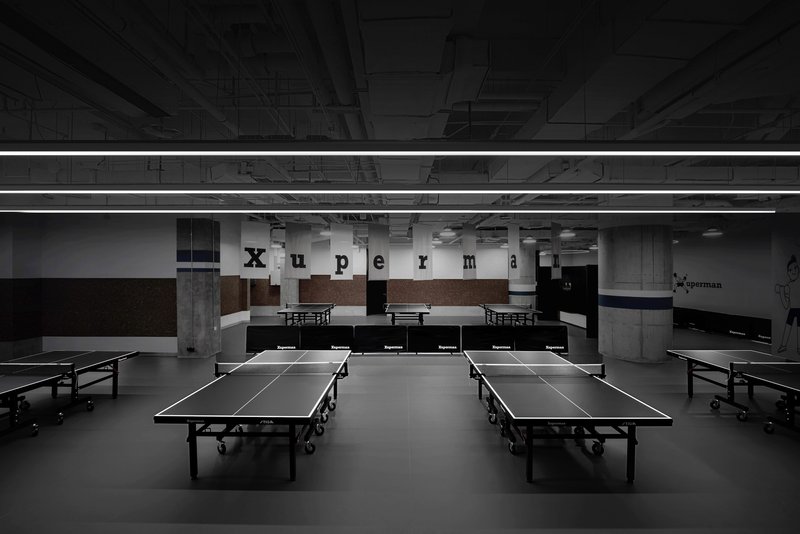
Metrics Architecture Studio recognised that table tennis is not only kinetic recreation but a cultural ritual, especially in China where the sport carries collective significance. Movement here is quick yet rhythmic, competitive yet communal. The gym therefore needed to reflect dynamism, but also provide a softer counter-balance—a place where physical exchange transitions into quiet breath, slower conversation, and reflective pause.
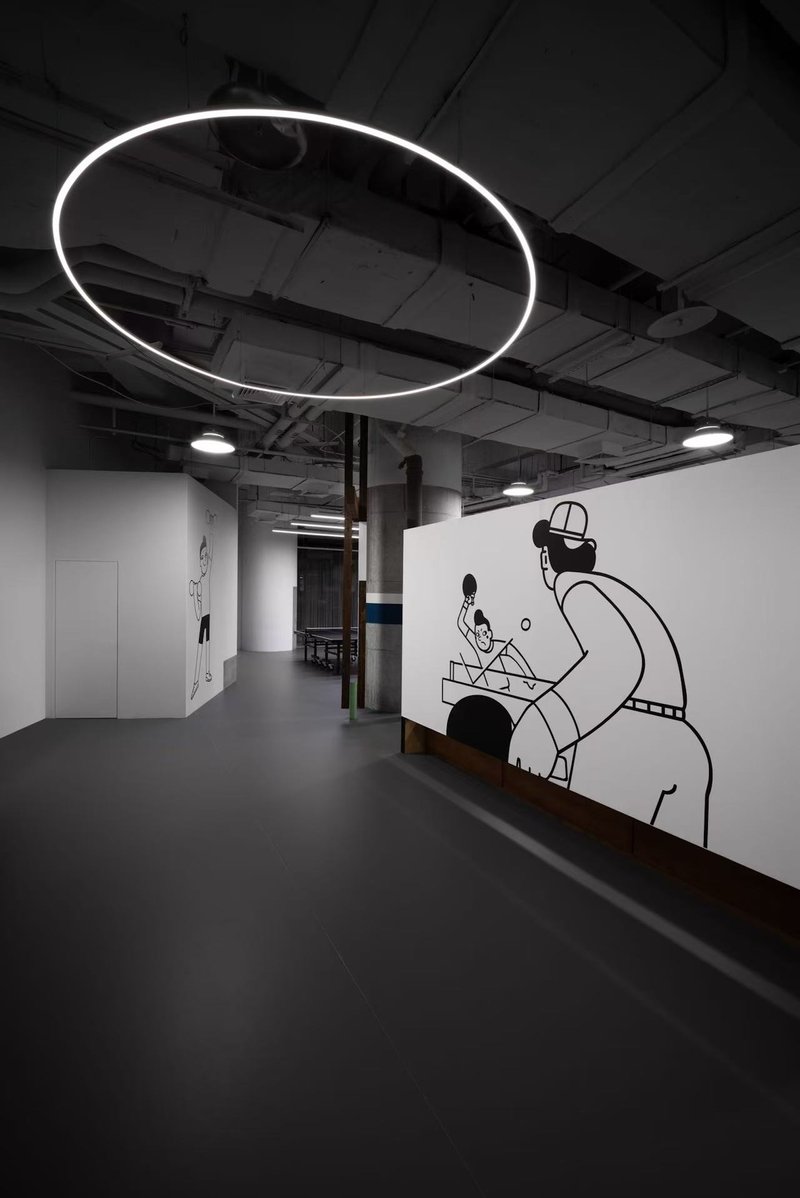
The architects did not hide the gym’s origins as a mall interior, but instead subverted expectations, allowing users to step from commercial brightness into architectural shadow. Upon crossing the threshold, the environment changes—sound dampens, light deepens, textures roughen. The gym becomes an interior landscape distinct from the city, yet folded within it.
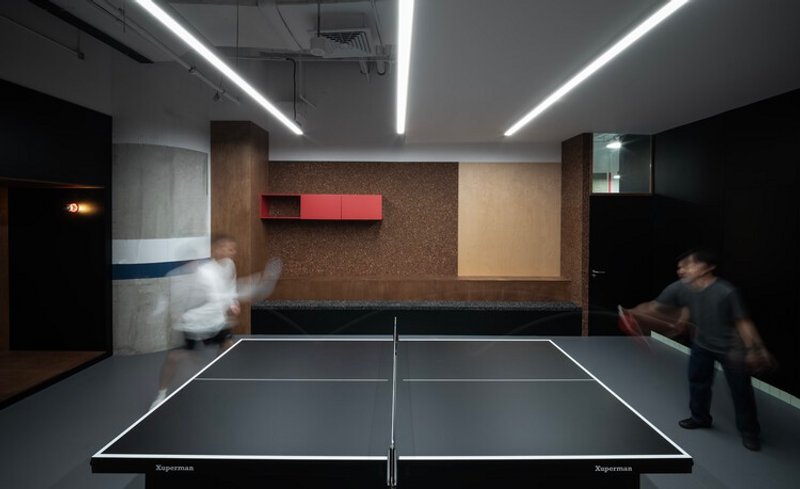
2. The Narrative of Patchwork: Materials Reborn
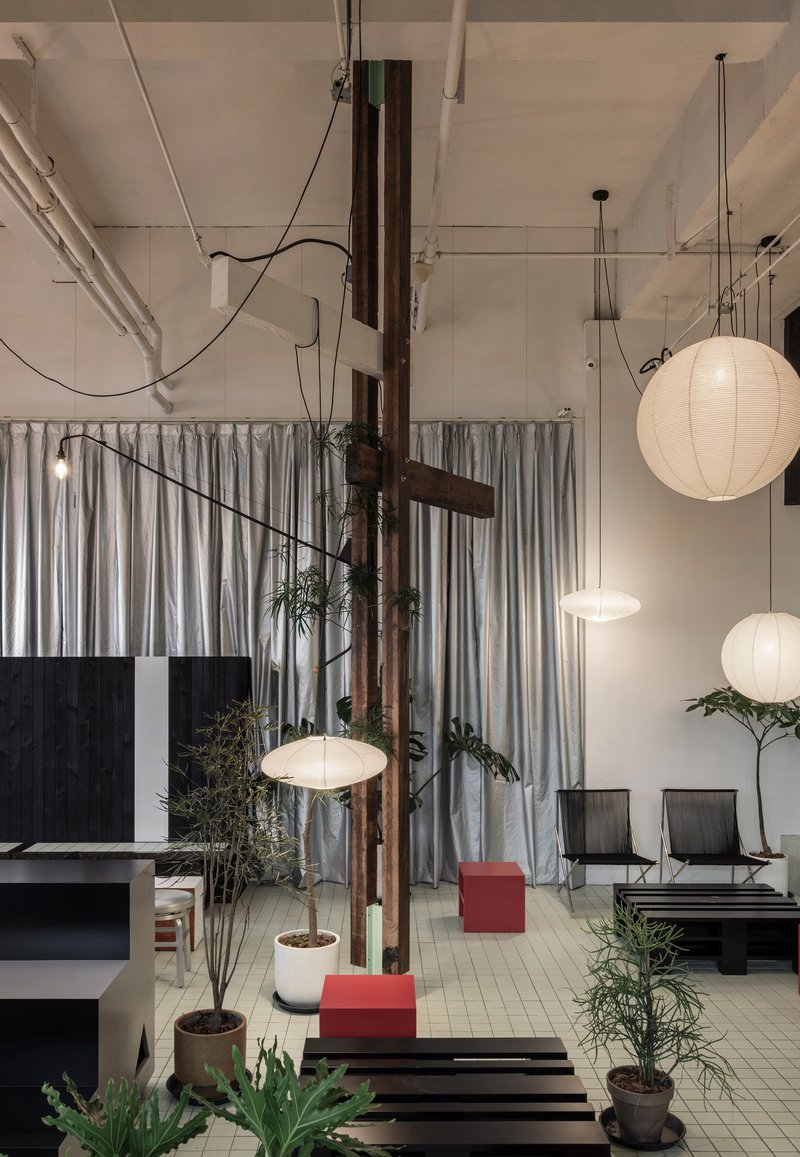
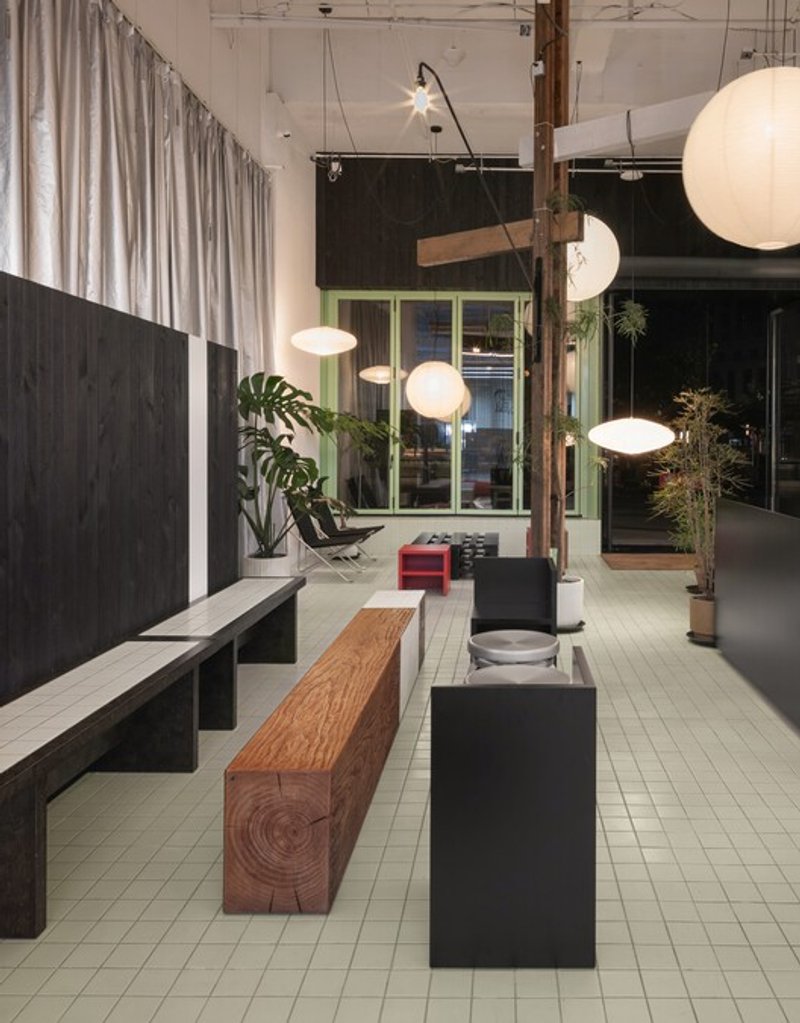
The central architectural gesture is the introduction of new pillars made from recycled trusses salvaged from demolished houses. These reclaimed structural fragments give the gym its skeleton—not decorative, but load-bearing and anchoring. Their weathered bodies, marked by time and use, ground the space with story. Each column retains evidence of previous life—grain, bolt scars, oxidation—yet stands now as part of contemporary interior infrastructure.
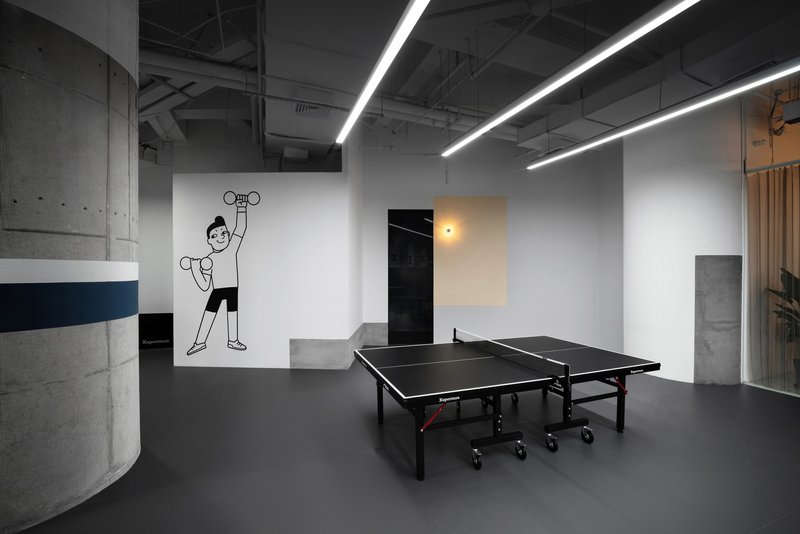
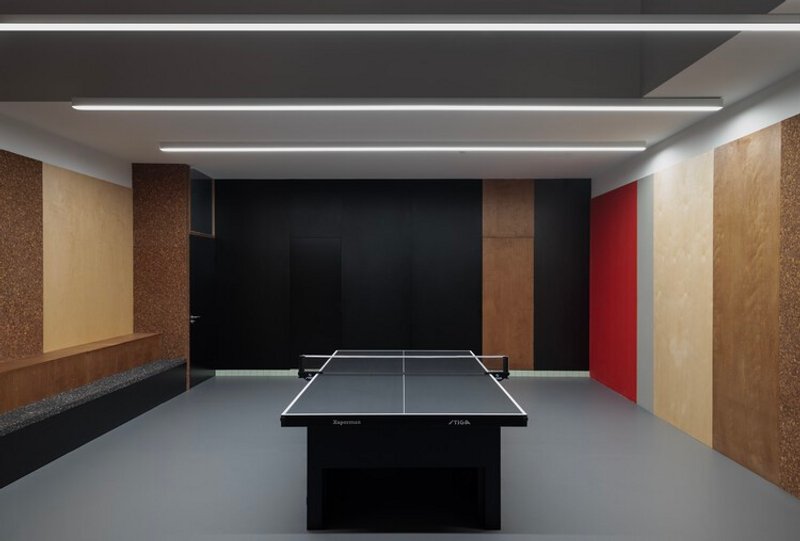
Rather than erasing history, the design curates it. Patches of material form a tactile conversation between eras. Smooth new finishes meet rough aged timber. Concrete surfaces maintain original formwork imprint. Steel elements show weld lines instead of being polished smooth. These imperfections are not corrected—they are celebrated.
The architects reinterpreted the concept of patchwork not as collage, but as spatial philosophy. The gym is a constructed hybrid: a place where old craftsmanship is not romanticised but given new responsibility. Structure becomes heritage; reuse becomes identity; past becomes support for present movement.
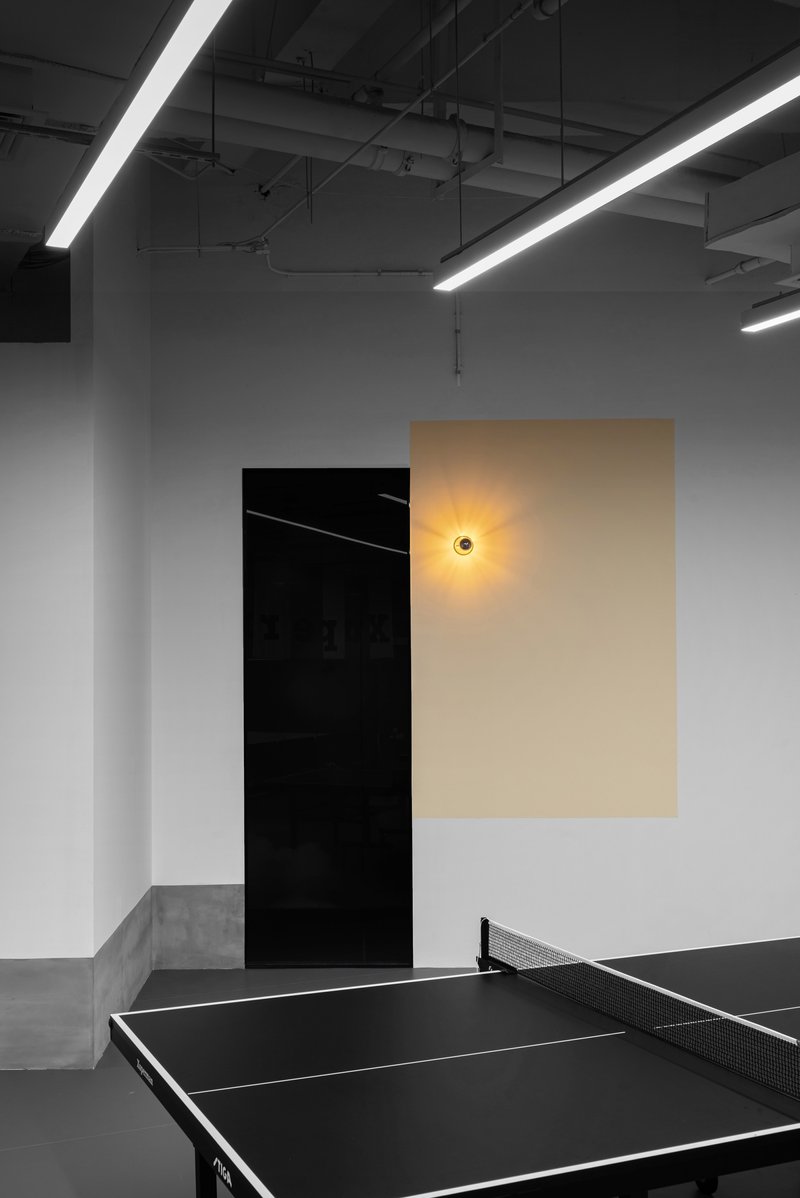
3. Spatial Flow: Movement as Architectural Language
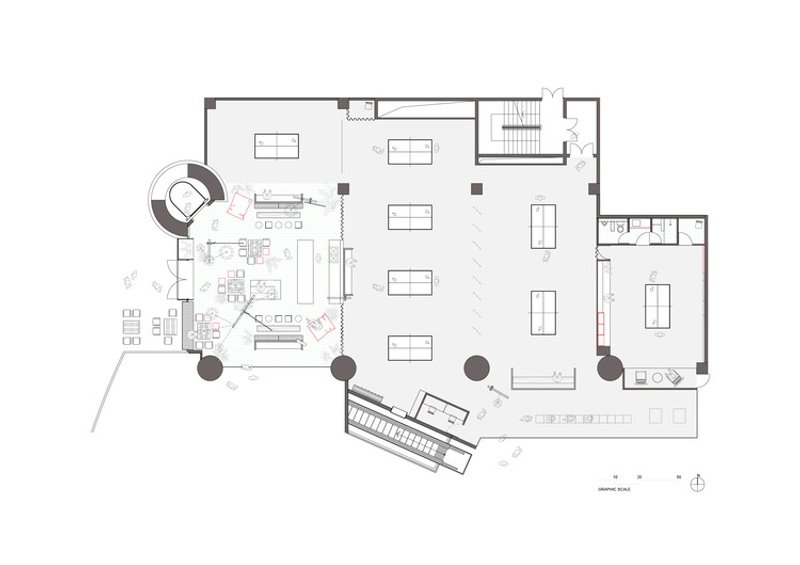
Table tennis is speed. It is vibration, reflex, and constant reorientation. The gym is designed to mirror this kinetic quality through circulation that is fluid rather than axial. Instead of rigid corridor layout, the interior unfolds in waves—spaces widen, compress, bend, and release. No path is singular; sightlines intersect but do not dominate.
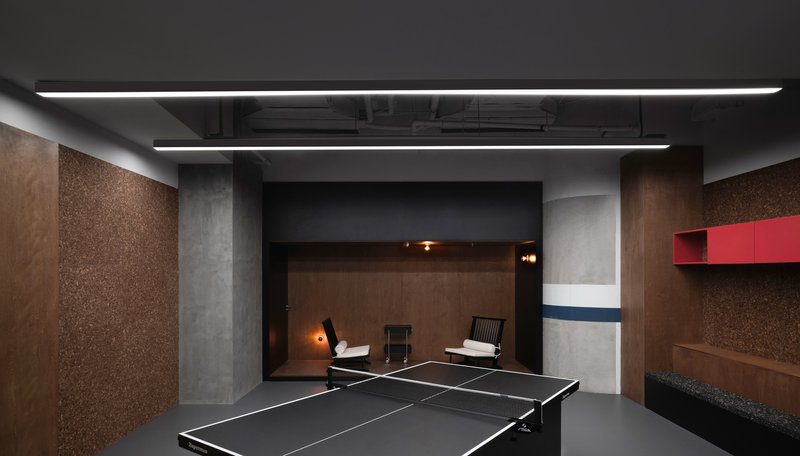
The architects choreograph spatial rhythm by alternating zones of intensity and calm:
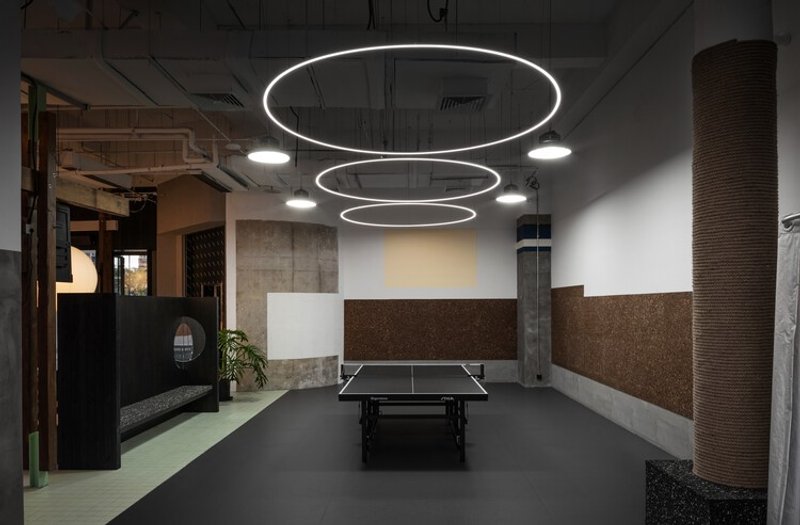
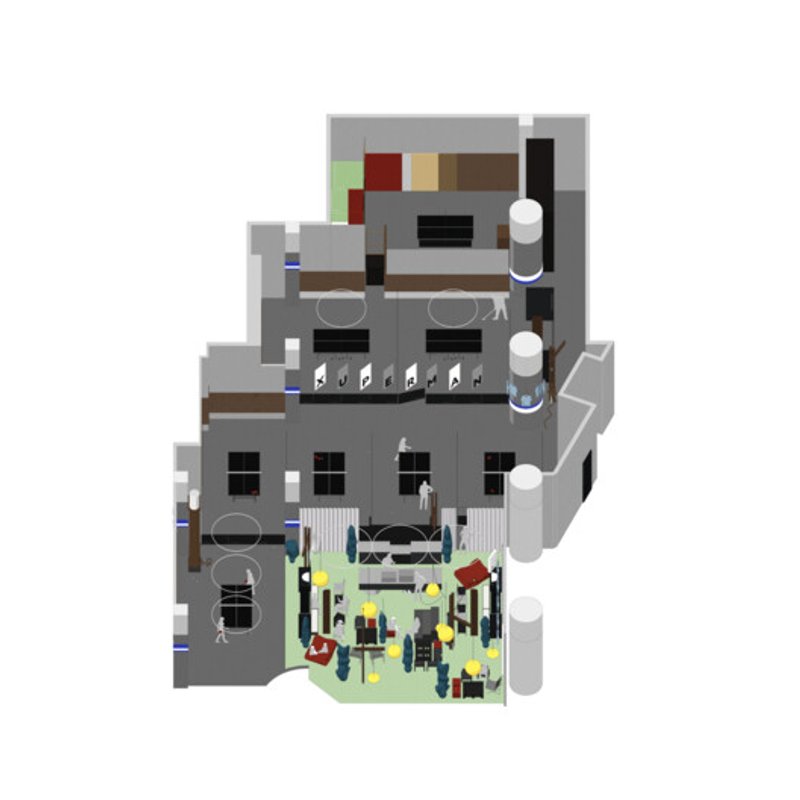
- The main table tennis hallA large open field of motion. Bright, focused lighting highlights playing surfaces while surrounding areas remain visually softer to reduce glare. Acoustic treatment ensures clarity of sound without reverberation fatigue.
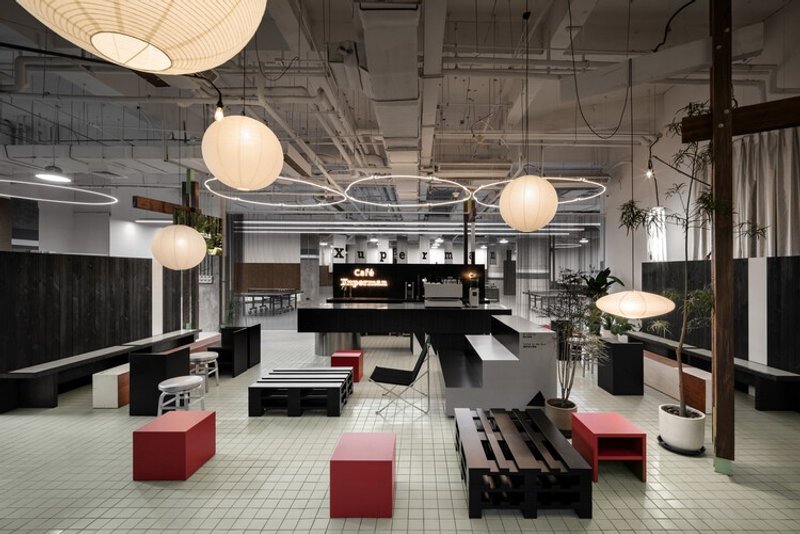
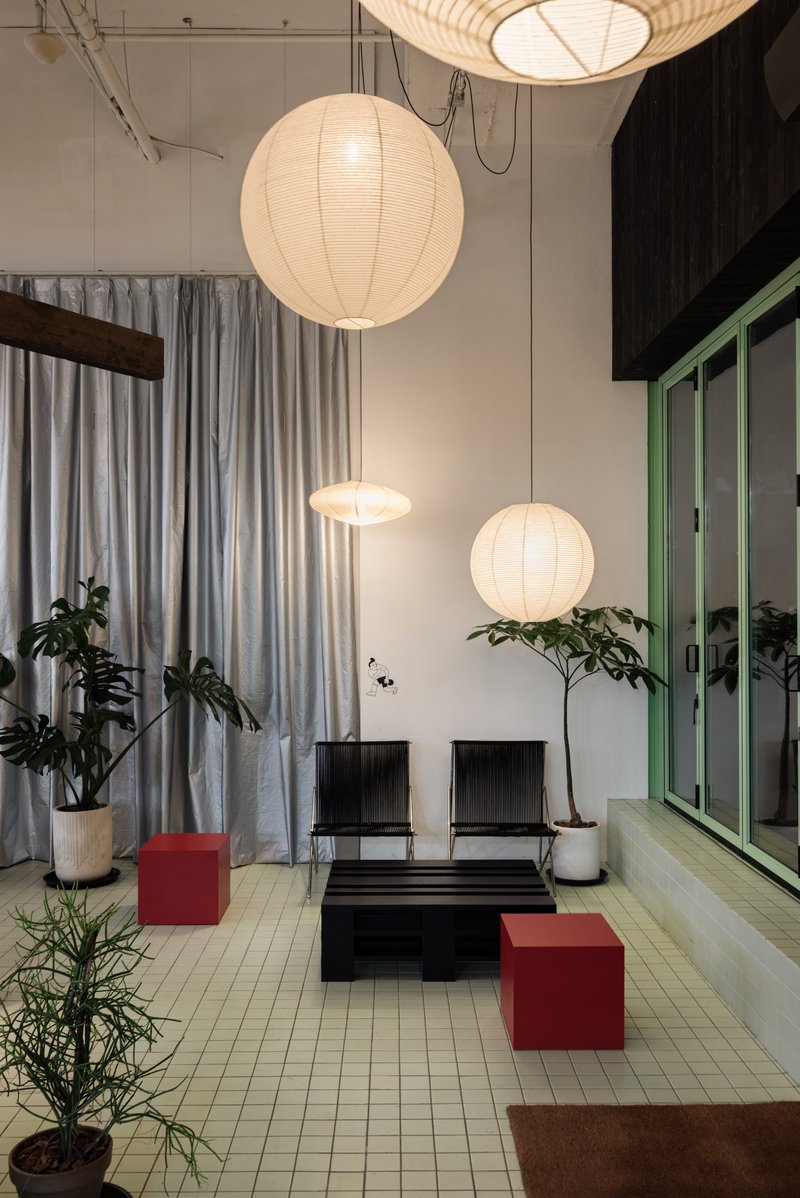
- The coffee and rest areaA quiet counter-landscape inspired by mountain shelter typology. Warm wood, textured upholstery, dimmer light. Stillness after movement.
- Circulation corridorsA series of transitional passages marked by recycled column rhythm. Turning corners reveal views like cinematic cuts.
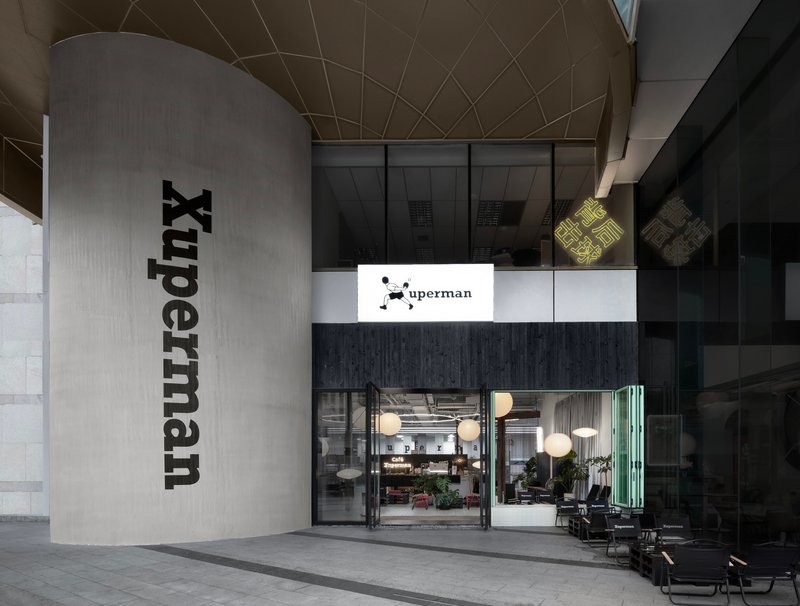
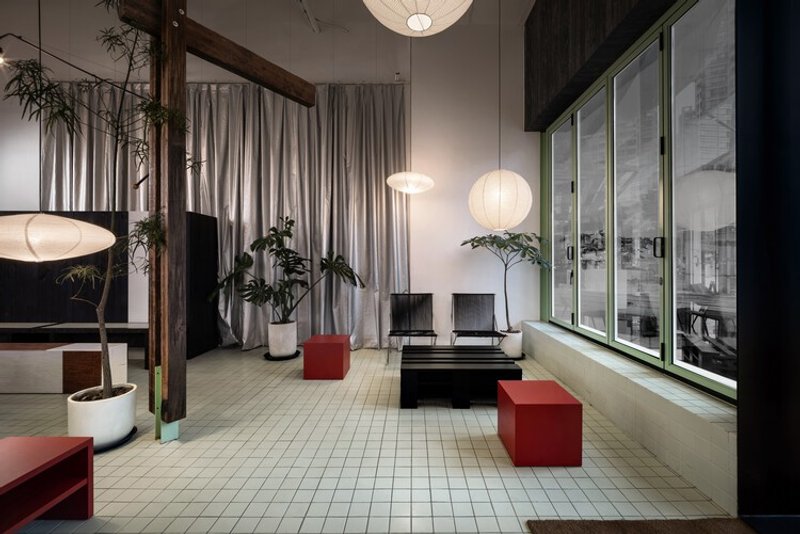
Movement therefore becomes experience—not only functional but spatially expressive. You walk through pulse, into calm, through shadow, into light. The gym does not offer single identity, but multiple atmospheric registers that resonate at different speeds.
4. The Café as Counter-Rhythm: A Mountain Lodge in the City Interior
One of the most meaningful architectural insertions is the café—a space that reframes the gym from purely athletic facility into social and emotional landscape. The architects call this zone a “mountain shelter”—an analogy that feels accurate. Whereas the sports hall vibrates with energy, the café is quiet, warm, timber-lined, intimate. It is the exhale after the rally, the stillness after the sprint.
In materials, wood dominates—raw, matte, tactile. Lighting is soft and directional, designed not to illuminate broadly but to create pockets of glow. Seating encourages lingering rather than quick transition. From here, users observe the gym from slight remove, both connected and detached. The café becomes vantage, threshold, and refuge.
As a result, the facility transcends athletic utility. It becomes community hub, meet-point, post-match conversation zone. Sport here is not isolated action, but social continuum.
5. Contrast as Atmosphere: Light, Texture, Sound
The interior is built on dichotomy: bright and dark, rough and polished, loud and quiet. Illumination is designed with theatrical precision—light is not simply brightness, but spatial direction. Over tables, lighting is intense and shadow-controlled to optimise visibility of fast-moving balls. In resting lounges, light diffuses, slows the eye, and quietens perception.
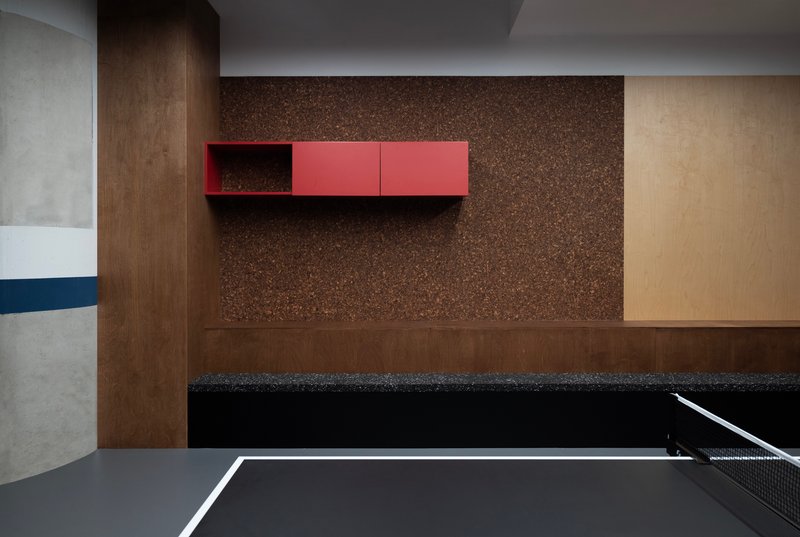
Sound is similarly tuned. Hard concrete and steel meet soft wood and acoustic surfacing in controlled balance. The goal is not silence, but clarity. You hear paddle contact crisply, but ambient noise is kept low. The gym remains active without echo.
Texture deepens experience further. Concrete pillars appear cool and monolithic. Timber columns feel organic and hand-touched. Glass surfaces stretch visual continuity. Metal accents mark threshold moments like punctuation marks in narrative.
6. Responding to Context: A Gym Inside a Mixed-Use Engine
The building sits within a complex programmatic environment: the mall contains retail, office, and food court zones, each with different noise profiles, circulation rhythms, and visibility patterns. The gym would have easily become acoustically overwhelmed or visually diluted. Instead, the architects used reclaimed pillars to reorganise flow, carving out defined boundaries that control movement and preserve experiential cohesion.
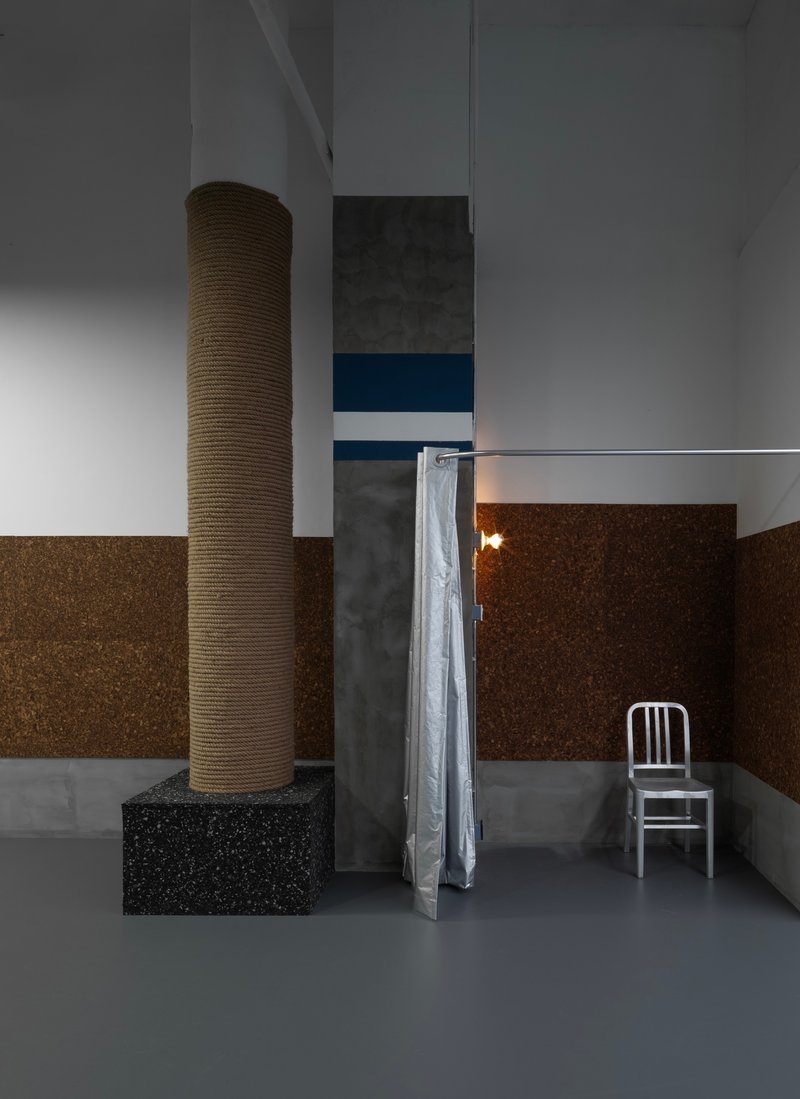
The result is a gym that feels internally focused, yet always aware of the city around it. It becomes a room inside the metropolis—open enough to breathe urban energy, structured enough to maintain its own pulse.
7. A New Typology for Sports Interior Design
Xuperman Table Tennis Gym represents a new direction in recreational architecture—one that refuses glossy superficiality, favouring instead authenticity through reuse and atmosphere through spatial rhythm. It demonstrates that sports interiors do not need to be sterile or neutral. They can have story, shadow, rawness, texture, emotional temperature.
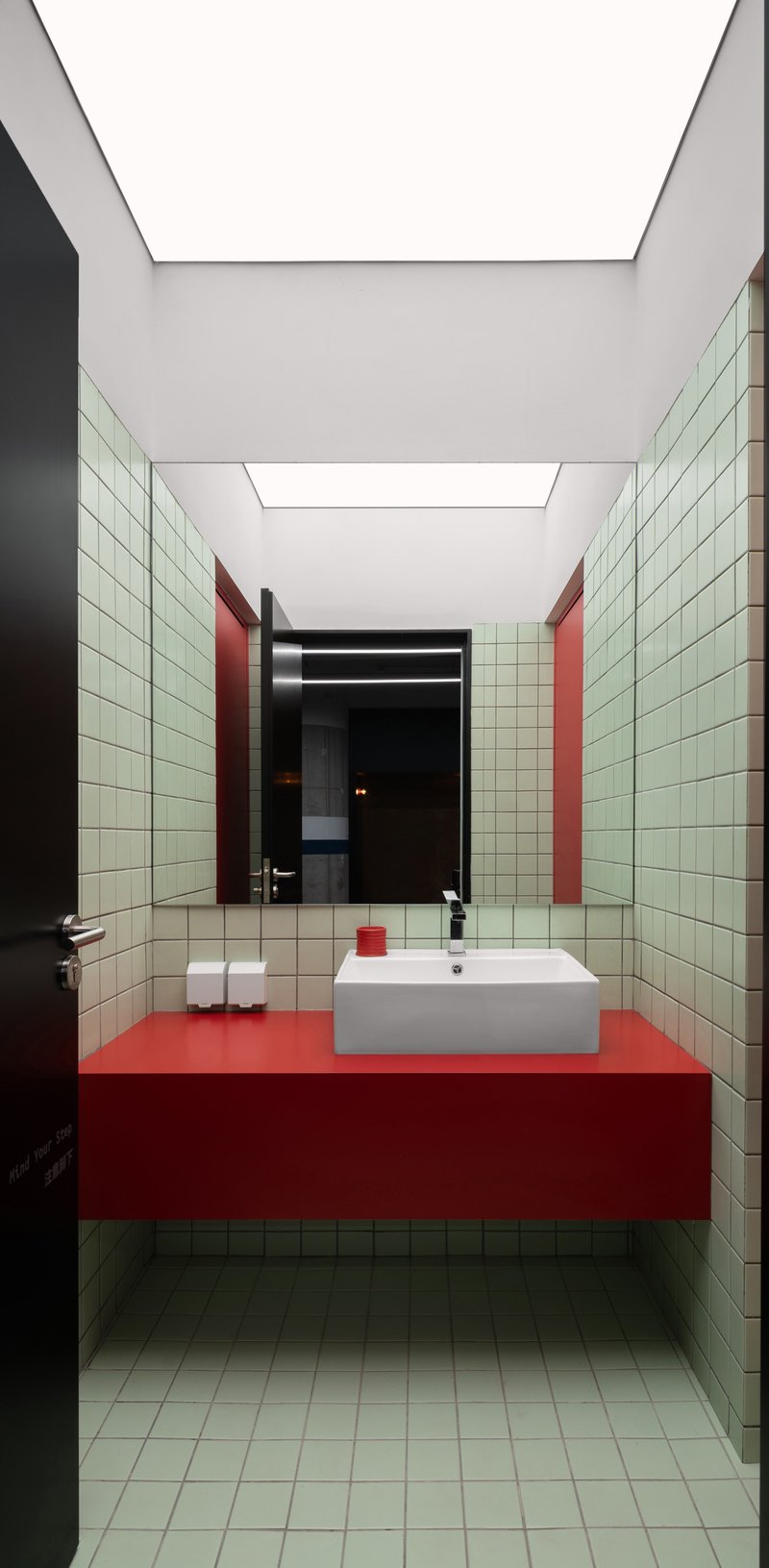
The gym breaks from the flat brightness of typical commercial sports halls. It is an interior landscape with character and memory—part industrial ruin, part contemporary retreat, part social engine.
The project suggests a new model for adaptive reuse in dense cities: instead of demolishing and replacing, designers can transform and amplify. Instead of smoothing every surface, they can reveal origin. Instead of chasing novelty, they can craft identity through continuity.




Popular Articles
Popular articles from the community

Free Architecture Competitions You Can Enter Right Now
No entry fees, real prizes. Here are the best free architecture competitions open for submissions in 2026.


Solar Steam: A Climate-Responsive Architecture That Redefines the Monument
A climate-responsive memorial architecture that transforms heat, decay, and time into a living system reflecting humanity’s ecological impact.
Alton Cliff House: A Harmonious Retreat by f2a Architecture in Lake Country, Canada
Alton Cliff House blends corten steel, prefabrication, and sustainable design, creating a luxurious, energy-efficient retreat perched on Canadian cliffs.
Atelier Macri Concept Store Interior Design by CASE-REAL
Atelier Macri store features a "ko" counter, walnut wood details, cork displays, blending retail, gallery, and seamless customer experiences.


Similar Reads
You might also enjoy these articles


The Ken Roberts Memorial Delineation Competition (Krob)
As the most senior architectural drawing competition currently in operation anywhere in the world, it draws hundreds of entries each year, awarding the very best submissions in a series of medium-based categories.

Waterfront Redevelopment and Urban Revitalization in Mumbai: Forging a New Dawn for Darukhana
A transformative waterfront redevelopment project reimagining Darukhana’s shipbreaking heritage into an inclusive urban future.

OUT-OF-MAP: A Call for Postcards on Feminist Narratives of Public Space
Rhizoma Design and Research Lab invites artists, designers, architects, researchers, and students to reflect on how feminist perspectives can reshape public space. Selected works will be exhibited in Barcelona, October 2026. Submissions open until 15 April 2026.


Documentation Work on Buddhist Wooden Temple
Architectural syncretism and cultural hybridity: A comparative study of the Buddhist temples in Chattogram Hill tracks

Explore Architecture Competitions
Discover active competitions in this discipline




The International Standard for Design Portfolios


The Global Benchmark for Architecture Dissertation Awards


The Global Benchmark for Graduation Excellence


Challenge to design a barrier free sports center
Comments (0)
Please login or sign up to add comments
No comments yet. Be the first to comment!