

Guide to the future
What will the future look like? What can we do to achieve our vision of tomorrow?

For architects, painters, and designers, imagining future cities has long been a favourite pastime. Technology is frequently at the heart of these programmes; it seems as a dynamic, almost unstoppable force that offers a simple answer to society's issues.
However, in light of recent events, we need to reconsider how we envision future cities, shifting our focus away from an overarching technology vision and toward other concerns such as environmental sustainability and the need to address social inequities.
We need to figure out what can be supported and what can't, where cities can be built and where they can't, and how we'll get in and out of them.
Future cities must have the following characteristics:
- A work atmosphere that attracts the top talent from around the world. The ideal city will have a multi-skilled economy fuelled by people with the skills and knowledge needed to adapt to ever-changing employment requirements, as well as flexible work spaces and working hours enabled by technology.
- Environmentally friendly and adaptable. Cities will be net generators of energy and food if they use prefabricated, modular building materials and efficient construction processes.
- Congestion is minimal to non-existent. More active mobility, new approaches to work and working hours, sustainable mobility solutions such as autonomous electric vehicles, an increase in the utilised capacity of vehicles (for example, through ride sharing), and the conscious design of material and goods flows will all contribute to a shift in traffic patterns.
- Pollution-free air, ideal ambient temperatures, and enough sunshine exposure A network of interconnected parks, gardens, and green facades, as well as architecture that makes the best use of wind and shadow, and the rising use of renewable energy, will be essential features of urban design.
- A water supply chain that is clean and waste-free. Desalination and purification will be fuelled by renewable energy, and cutting-edge water management systems will be deployed at the city and user levels.
- Access to affordable, healthy, and fresh food in a timely manner. People will acquire top-quality food thanks to high-yield urban and vertical farming enabled by cutting-edge technologies combined with an optimised supply chain.
- Active lifestyles are encouraged. The city will be built in the shape of a gymnasium, with car-free or car-lite communities connected by walkable and bike able streets and public areas.
- Landscapes and public locations that are inspiring. These places, which are purposely designed and created in part by residents, will foster a strong feeling of community and emotional attachment.
- Service supply and community involvement will be possible 24 hours a day, seven days a week, thanks to layered and instantly available community protocols.
- There will be no physical or virtual crime. Surveillance of physical and virtual networks enabled by artificial intelligence, as well as a comprehensive and accessible public record system, will make it feasible to foresee and prevent illicit activities while respecting privacy concerns.
- Protection against both man-made and natural disasters Climate sensors, core city infrastructure systems, and city agents will all work together to protect cities from natural disasters and infrastructure problems.
- Preventive medicine at its most advanced. Smart wearables, hygiene equipment, smart homes, and cutting-edge emergency response systems will make providing truly effective preventive care possible.
- Government services that are both accountable and efficient. Service performance will be measured against service level agreements, aided by distributed and technology-enabled delivery and a high level of citizen participation.
- Easy access to a wide range of non-work activities. Citizens will have access to entertainment, sports, arts, culture, and spiritual events with ease.
While technological inventions may seem like the only natural route to achieve these goals, it is essential to understand that to shape our future, we need to look at through a social and global lens too. We must think beyond "solutionism" to ensure a safe and sustainable world for current and future populations. Technology will be one of the many tools that enable the growth of city into an ideal living environment. The approach must target the city as a socialogical, political and economically complex system built to cater to the widest diversity of people.
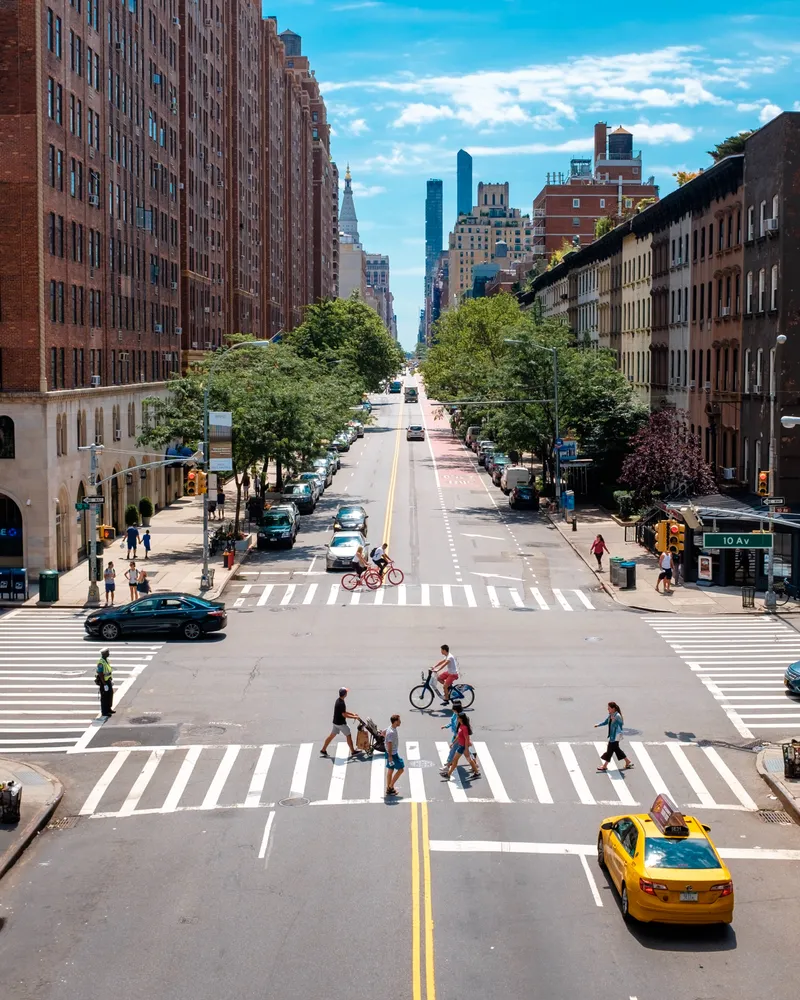
The urban fabric of the city is rich with of people, structures, nature and their interrelations.
Every city will have to map out its own future path, taking into account the limits it faces. City officials, investors, key businesses, citizens, and other stakeholders will take steps based on the city's maturity in a variety of areas, including human centricity, infrastructure, political stability, technology interventions, public involvement, and safety. A three-pronged approach can aid in the beginning of the process:
1. To lead future initiatives in the appropriate manner, understand and amplify citizen sentiment and input. Citizen sentiment can be gathered from a variety of sources and at various granularities. Social media analyses, open data portals that highlight local issues, sensors that track consumption trends, third-party polls, and official studies can all be beneficial.
2. To establish a rationale for change and the momentum needed to achieve it, launch "no-regret" initiatives for districts or neighbourhoods. Although achieving the goal will necessitate a long-term commitment, stakeholder alignment, and patient capital and resource deployment, municipal officials should not be afraid to make incremental changes where they can. Building gardens and parks in densely populated areas, boosting walkability, establishing an e-government portal for certain services, creating a public events calendar, and implementing security technology can all help to bring about positive change.
3. Set the tone for a comprehensive attempt to restructure the city and its governance into a citizen-centric environment. Establishing a dedicated delivery unit focused on fact gathering, option generation, and consensus building will be important. To define targets for global flows of products, services, financials, and people, the unit will need to understand the relative contributions of population and productivity to the city's GDP growth in the past. Understanding domestic and international migration trends, which will have a substantial impact on the future talent pool, will also be crucial.
Every future city will have its own distinct qualities, all of which will contribute to the overall well-being of the city. In the face of increasing global turmoil, city leaders who understand and appreciate each community's particular assets will be the ones who can sustain growth.
References (3)
Future cities: new challenges mean we need to reimagine the look of urban landscapes
ISBN: None

Popular Articles
Popular articles from the community


Co-Life: Senior Housing Design That Reconnects Older Adults With the City
Co-Life reimagines senior housing design through healing gardens, shared streets, workshops, and a sustainable community across generations.

The Musturak Paradise: Senior Living Architecture for a Connected Future in Temara, Morocco
The Musturak Paradise reimagines senior living architecture in Temara via private homes, social spaces, culture, community, and shared care.

Co-life: Sustainable Architecture for Age-Friendly Community Living
Co-life reimagines sustainable architecture for seniors through courtyards, rammed earth, shared gardens, and spaces designed for belonging.

Hill & Cross Opera: Sculptural Opera House Architecture Shaped by Tallinn’s Landscape and Identity
Hill & Cross Opera reimagines opera house architecture in Tallinn through its sculptural hill, civic plaza, glass wave and a luminous cross.

Similar Reads
You might also enjoy these articles

Bao Huynh Watercolor Atelier: A Serene Art Retreat in Hội An
Bao Huynh Watercolor Atelier in Hội An blends multifunctional art spaces, sustainable design, local materials, and family-friendly living in a serene environment.

Atelier Macri Concept Store Interior Design by CASE-REAL
Atelier Macri store features a "ko" counter, walnut wood details, cork displays, blending retail, gallery, and seamless customer experiences.

Manuel Vargas Izquierdo Stadium and High-Performance Sports Center: Architectural Excellence in Jalpa de Méndez
The Manuel Vargas Izquierdo Stadium blends sustainable design, inclusive sports facilities, and cultural-inspired architecture, revitalizing Jalpa de Méndez’s public spaces.

KAKR Buluh Awar Hall: Revitalizing Community and Ecology Through Bamboo Architecture
Community built bamboo hall revitalizes Buluh Awar village, empowering youth, restoring ecology, celebrating vernacular craftsmanship through sustainable architecture and culture.

Comments (0)
Please login or sign up to add comments
No comments yet. Be the first to comment!