
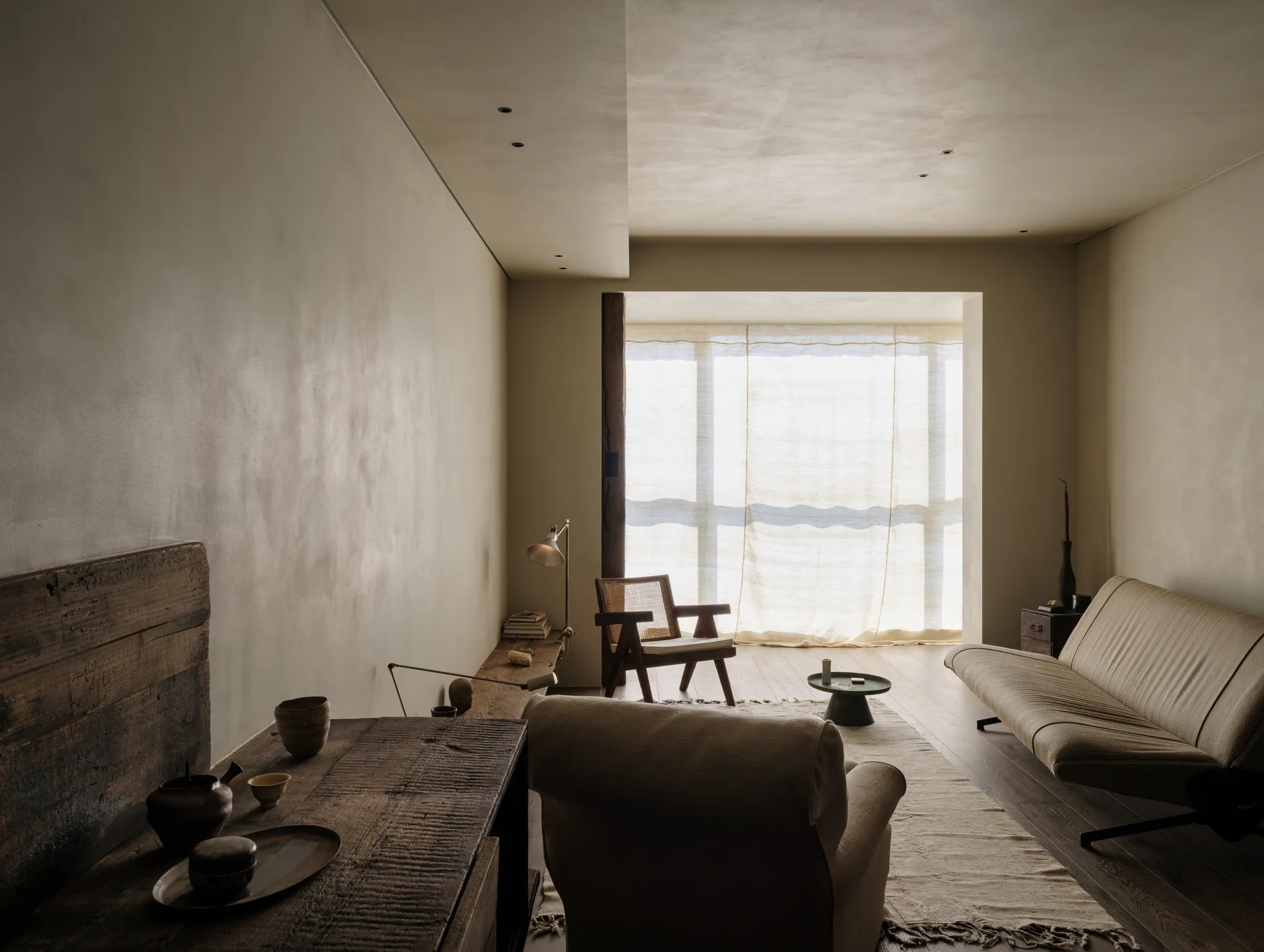
A Young Artist’s Home in Collected Time by Mountain Soil Interior Design
Shanghai apartment renovation blending reclaimed materials, vintage furniture, open-plan living, and artistic collections into warm, sustainable contemporary home.


Located in Shanghai’s Jiading District, A Young Artist’s Home in Collected Time is a 105-square-meter apartment renovation that reimagines contemporary urban living through memory, materiality, and personal expression. Completed in 2025 by Mountain Soil Interior Design, the project transforms a standard three-bedroom layout into a deeply personal artist’s residence: where architecture becomes a vessel for collected objects, lived experience, and creative dialogue.
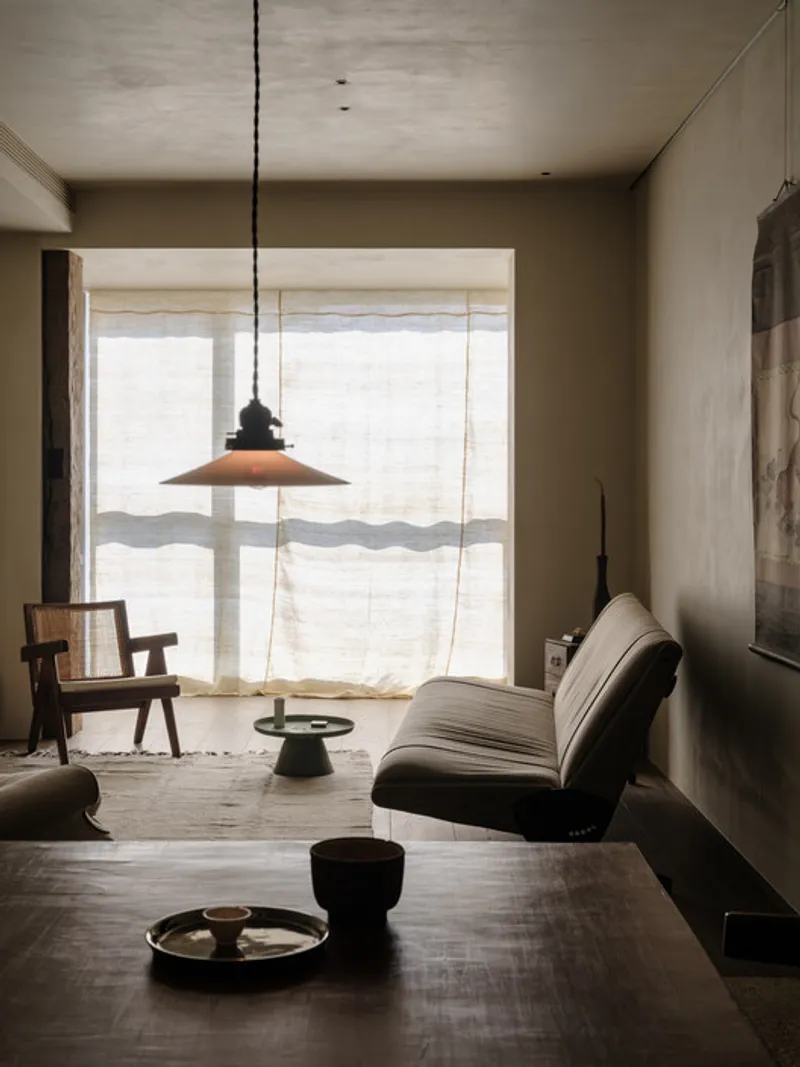
Reimagining Urban Apartment Living in Shanghai
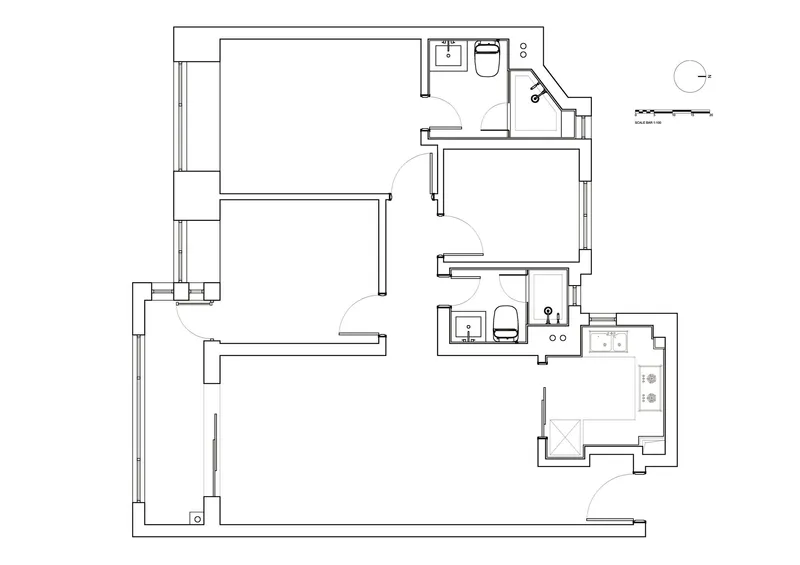
In high-density cities like Shanghai, residential interiors often follow rigid, standardized templates. This apartment was no exception, originally configured as a conventional three-bedroom unit with compartmentalized spaces and limited spatial fluidity.
The client: a young artist: envisioned a home that would preserve the natural texture of the existing structure while integrating his extensive personal collection of furniture, artworks, and design objects. Rather than imposing a new aesthetic, the design approach focused on revealing authenticity and allowing daily life to unfold organically within the space.
Mountain Soil Interior Design responded with a renovation strategy centered on subtraction, spatial reconfiguration, and material storytelling, prioritizing emotional resonance over decorative excess.
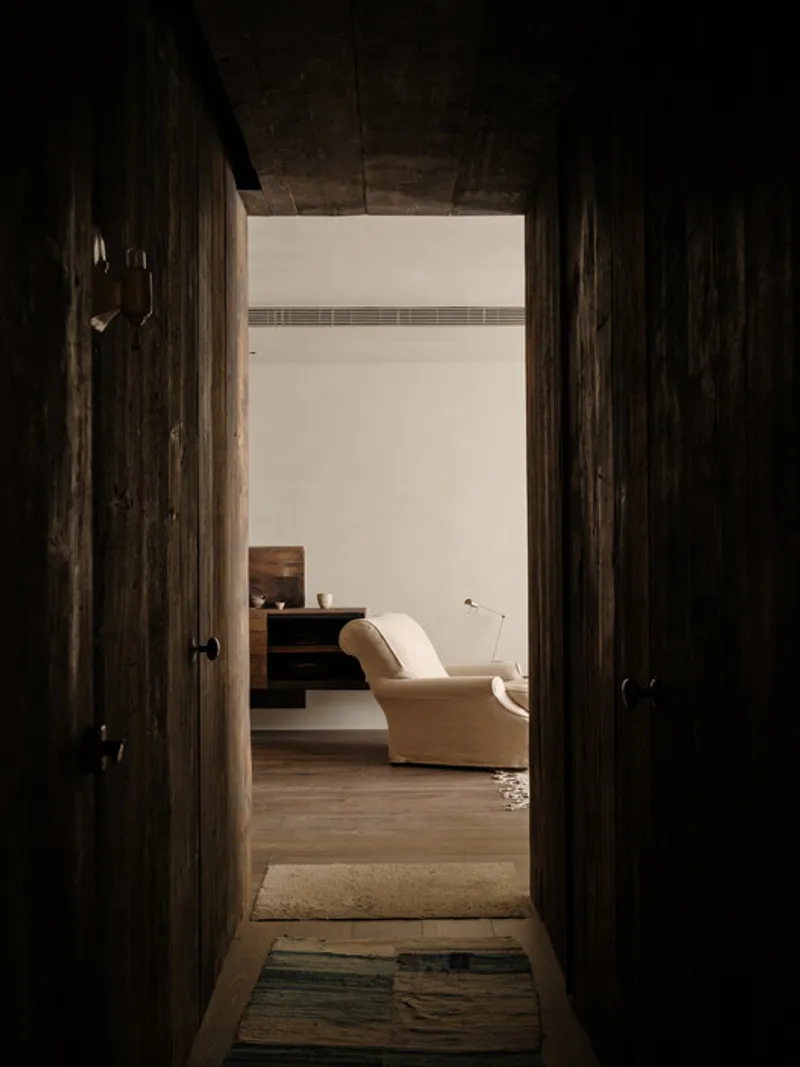
Spatial Transformation: From Standard Layout to Fluid Living
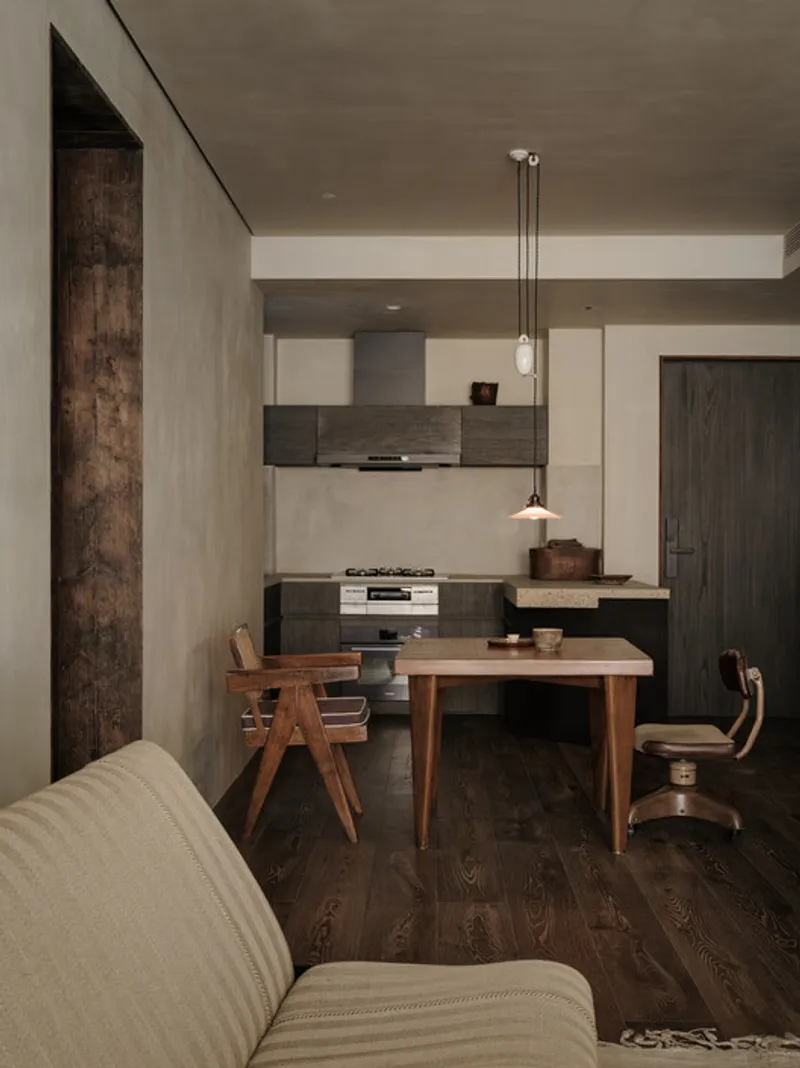
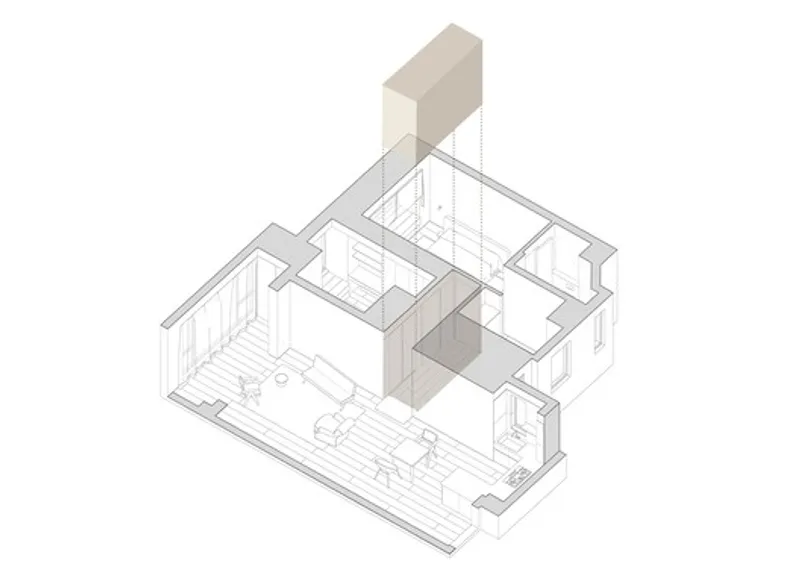
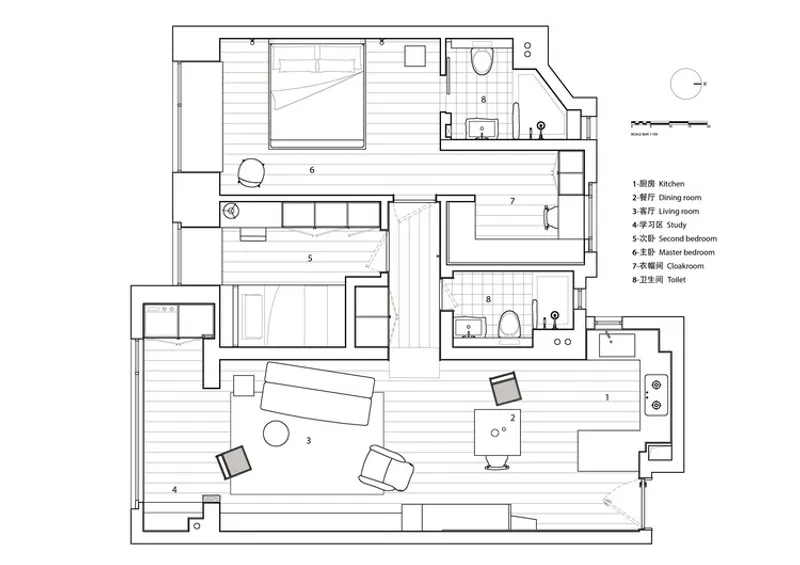
To better suit the client’s lifestyle, the original three-bedroom layout was restructured into two bedrooms, creating more generous living and storage areas. Unnecessary partitions were removed to connect the kitchen, dining, and living spaces into a cohesive open-plan environment.
This spatial fluidity allows the home to function simultaneously as a residence, studio extension, and exhibition backdrop, reflecting the evolving role of domestic interiors in creative urban life.
Bulky household appliances were carefully concealed. The refrigerator, positioned at the front of the hallway, is wrapped in finishes that blend seamlessly with surrounding surfaces, reducing visual clutter and preserving spatial calm.
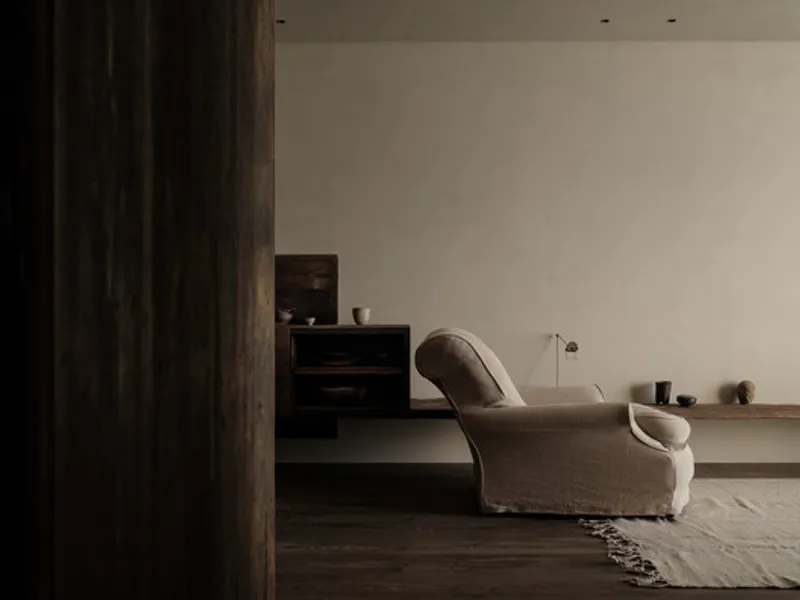
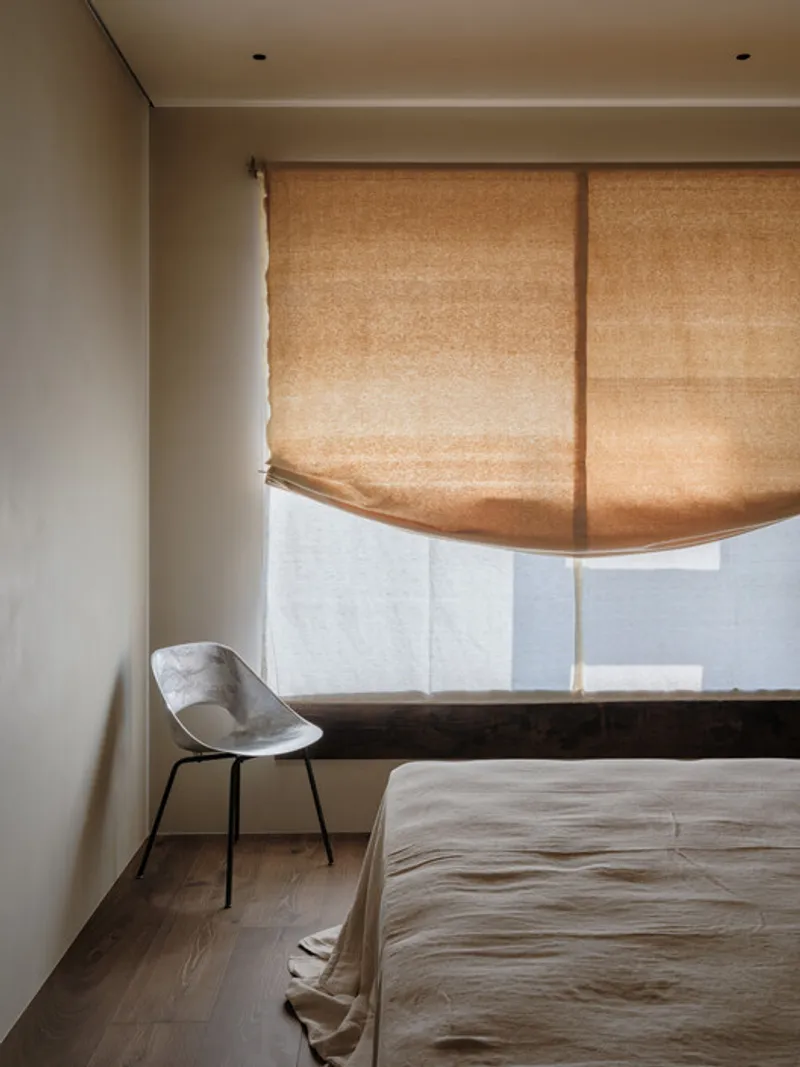
The Corridor as a Transitional Landscape
A defining architectural gesture in the renovation is the treatment of the corridor. In many apartments, hallways are purely functional passages. Here, it becomes a tactile and symbolic transition zone.
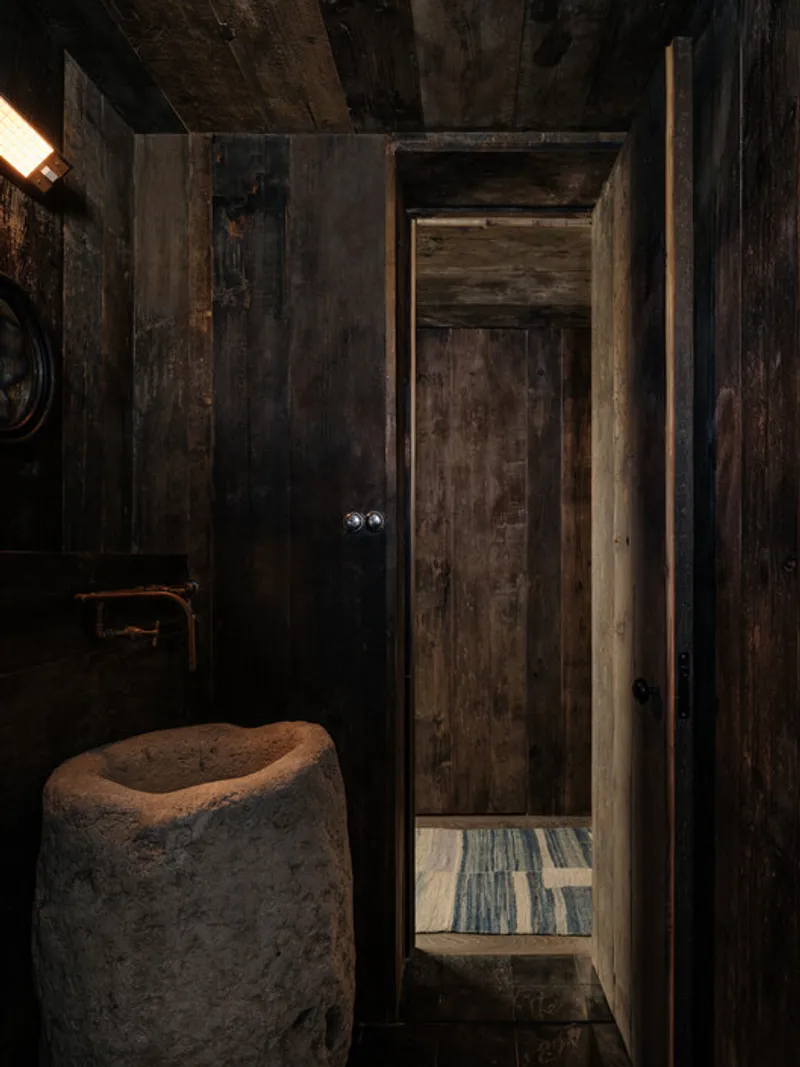
A natural stone slab marks the entrance threshold, subtly elevating the floor plane and signaling movement from public to private space. The corridor is wrapped in timeworn wood, introducing warmth and depth while reinforcing the project’s central theme: collected time.
This interplay between stone and aged timber creates a layered material narrative, echoing Shanghai’s own juxtaposition of history and rapid modernization.
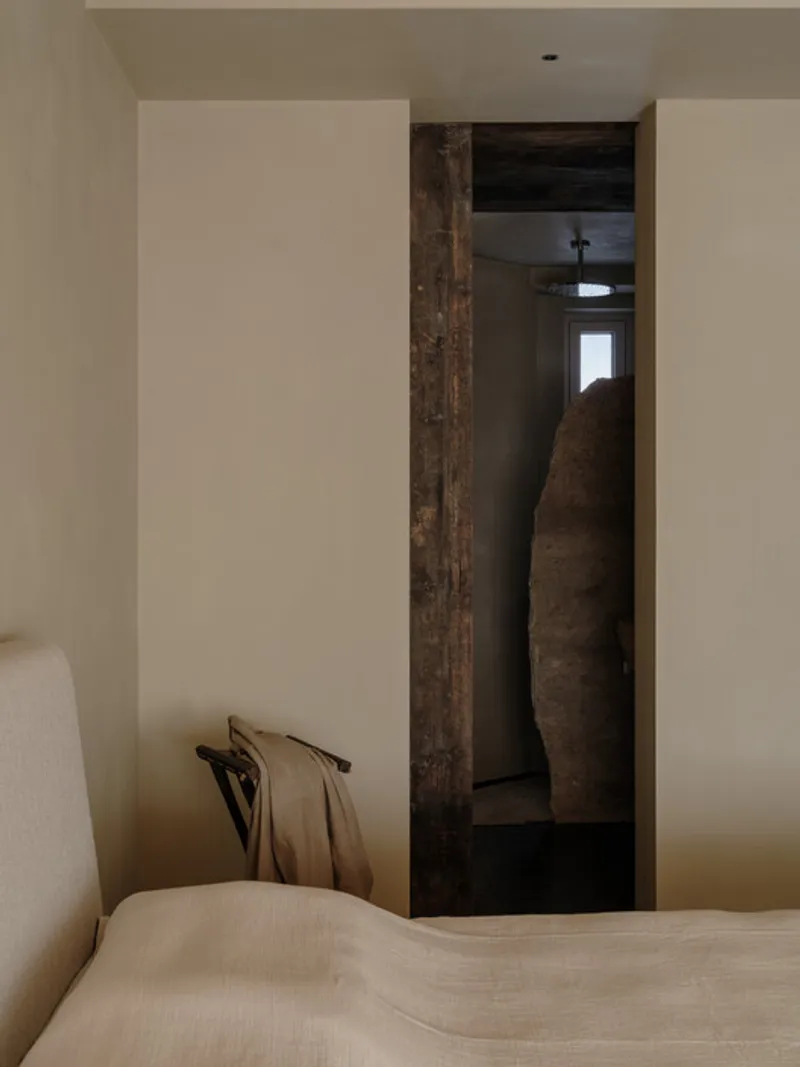
Sustainable Interior Design and Reclaimed Materials
Sustainability plays a central role in the project. The design emphasizes recycled and weathered materials, extending their lifecycle through thoughtful integration.
Wall panels, door handles, bathroom basins, and shower partitions are crafted from oxidized stone slabs aged over decades. Their patina reflects natural processes rather than artificial finishes, reinforcing the home’s quiet authenticity.
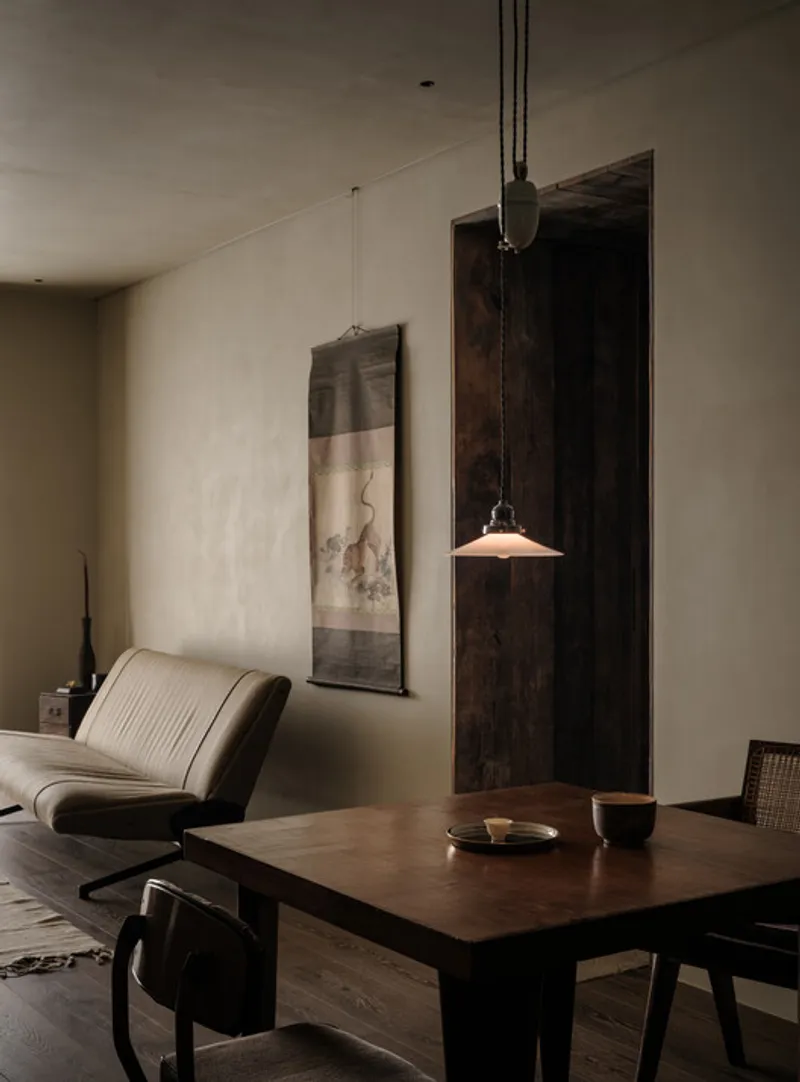
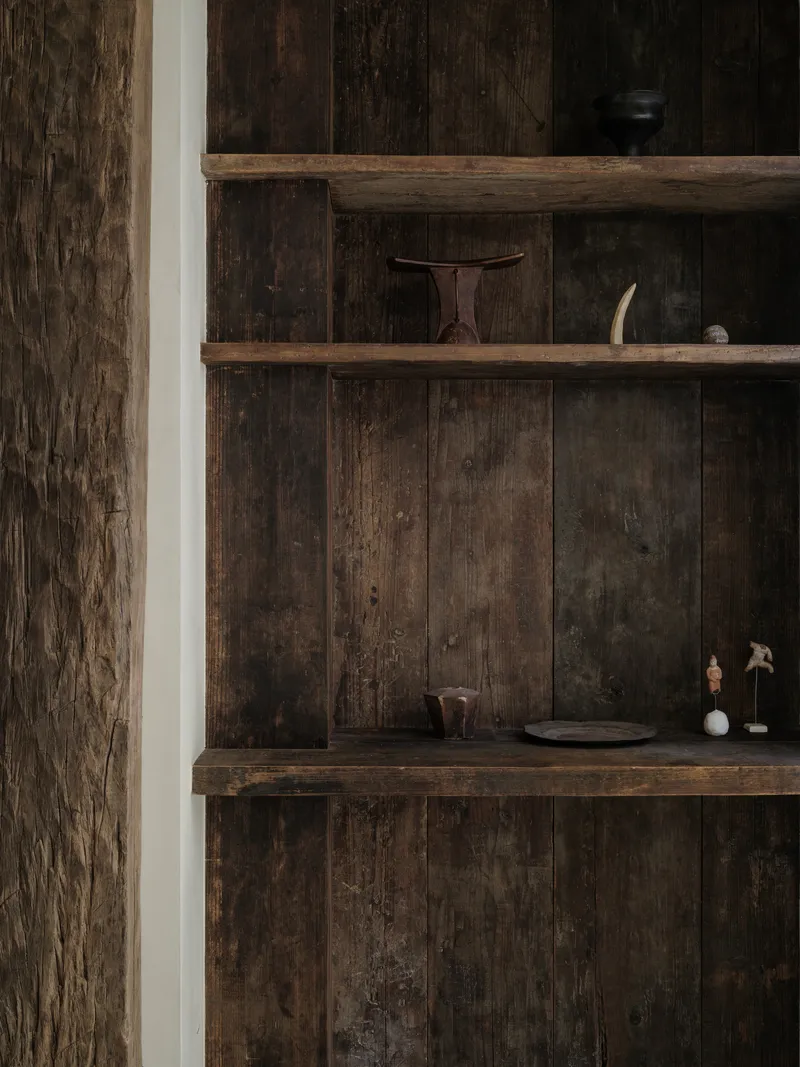
Much of the furniture is vintage or sourced from the client’s personal archive, including collectible pieces by renowned designers such as Osvaldo Borsani, Pierre Guariche, Pierre Jeanneret, and Studio Oliver Gustav. These curated elements coexist with the client’s own creations, forming an interior that feels both intimate and museum-like.
By repurposing materials and incorporating existing furnishings, the renovation reduces material waste while celebrating craftsmanship and historical continuity, an approach aligned with sustainable interior design principles in China’s evolving residential market.
A Home as Dialogue: Art, Memory, and Dwelling
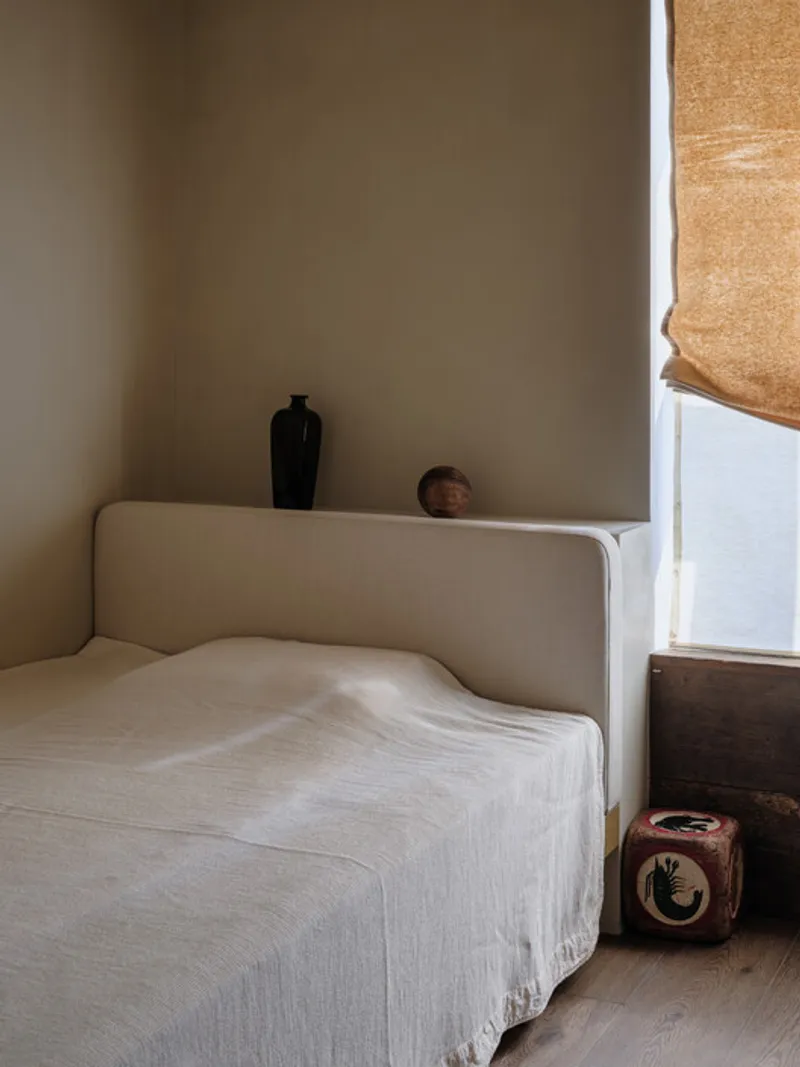
At its core, A Young Artist’s Home in Collected Time explores the idea that a residence is more than a container for daily routines. It is a layered spatial structure shaped by dining, sleeping, working, and making, by gestures both ordinary and creative.
Here, architecture does not compete with objects but frames them. Surfaces remain tactile and understated, allowing artworks and collected furniture to breathe. The home becomes a dialogue between space and inhabitant, past and present, function and emotion.
Through subtle material interventions, spatial subtraction, and curated integration, Mountain Soil Interior Design delivers a refined example of contemporary apartment renovation in Shanghai: one that balances sustainability, craftsmanship, and personal narrative.
A New Model for Creative Urban Homes in China
This project stands as a compelling case study in adaptive residential interiors, demonstrating how small urban apartments can be transformed into deeply meaningful living environments. It reflects broader trends in Chinese interior design: sustainable material reuse, flexible layouts, and homes that merge living and creative production.
By honoring natural textures, integrating vintage furniture, and reshaping spatial flow, the design redefines what it means to dwell in a fast-paced metropolis: proving that even within 105 square meters, time, memory, and artistry can coexist harmoniously.
All the photographs are works of
Wen Studio




Popular Articles
Popular articles from the community


Co-life: Sustainable Architecture for Age-Friendly Community Living
Co-life reimagines sustainable architecture for seniors through courtyards, rammed earth, shared gardens, and spaces designed for belonging.

Hill & Cross Opera: Sculptural Opera House Architecture Shaped by Tallinn’s Landscape and Identity
Hill & Cross Opera reimagines opera house architecture in Tallinn through its sculptural hill, civic plaza, glass wave and a luminous cross.

The Ocean Hive: Sustainable Architecture for a Self-Sufficient Civilization at Sea
The Ocean Hive imagines sustainable architecture at sea, where modular habitats, algae, wave power and ocean waste sustain a growing colony.

Riyadh For All: Intergenerational Urban Design for Active Aging in Rabat
Riyadh For All reimagines urban design in Rabat with intergenerational co-living, adaptive courtyards, and Moroccan cultural exchange today.


Similar Reads
You might also enjoy these articles


FAMM Arquitectura Organizes Ten Villas Around Courtyards and Jungle in Nosara, Costa Rica
El Molino pairs two elongated volumes with deep overhangs and timber louvers to build a compact coastal community five minutes from the beach.

Oscar Niemeyer's Ibirapuera Park Pavilions Define São Paulo's Cultural Identity in Concrete and Curve
A constellation of modernist volumes set within São Paulo's most important urban park, conceived for the city's 400th anniversary in 1954.
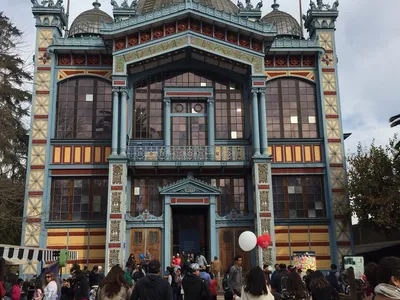
How Henri Picq's 1889 Paris Pavilion Traveled 11,000 Kilometers to Become Santiago's Artequín Museum
A prefabricated iron and glass pavilion built for the Paris Universal Exposition found a second life as a children's art museum in Chile.

Sanjay Puri Architects Wraps a Jaipur Office Tower in Capsule-Shaped Green Buffers
A nine-level climate-responsive workplace near Jaipur Airport uses stacked planter terraces and aluminium screens to fight 40°C heat.


Explore Architecture Competitions
Discover active competitions in this discipline



Challenge to reimagine the Iron Throne


Photograph architecture without architects


Illustrate the lost glory of Angkor Wat - Render Challenge


Design challenge to reuse E-waste
Comments (0)
Please login or sign up to add comments
No comments yet. Be the first to comment!