
Adaptive Reuse Parks in Hangzhou: A Closer Look at Hangzhou Xiaohe Park by Kengo Kuma & Associates
Explore Hangzhou Xiaohe Park, a prime example of adaptive reuse in Hangzhou, transforming an old industrial site into a vibrant park.

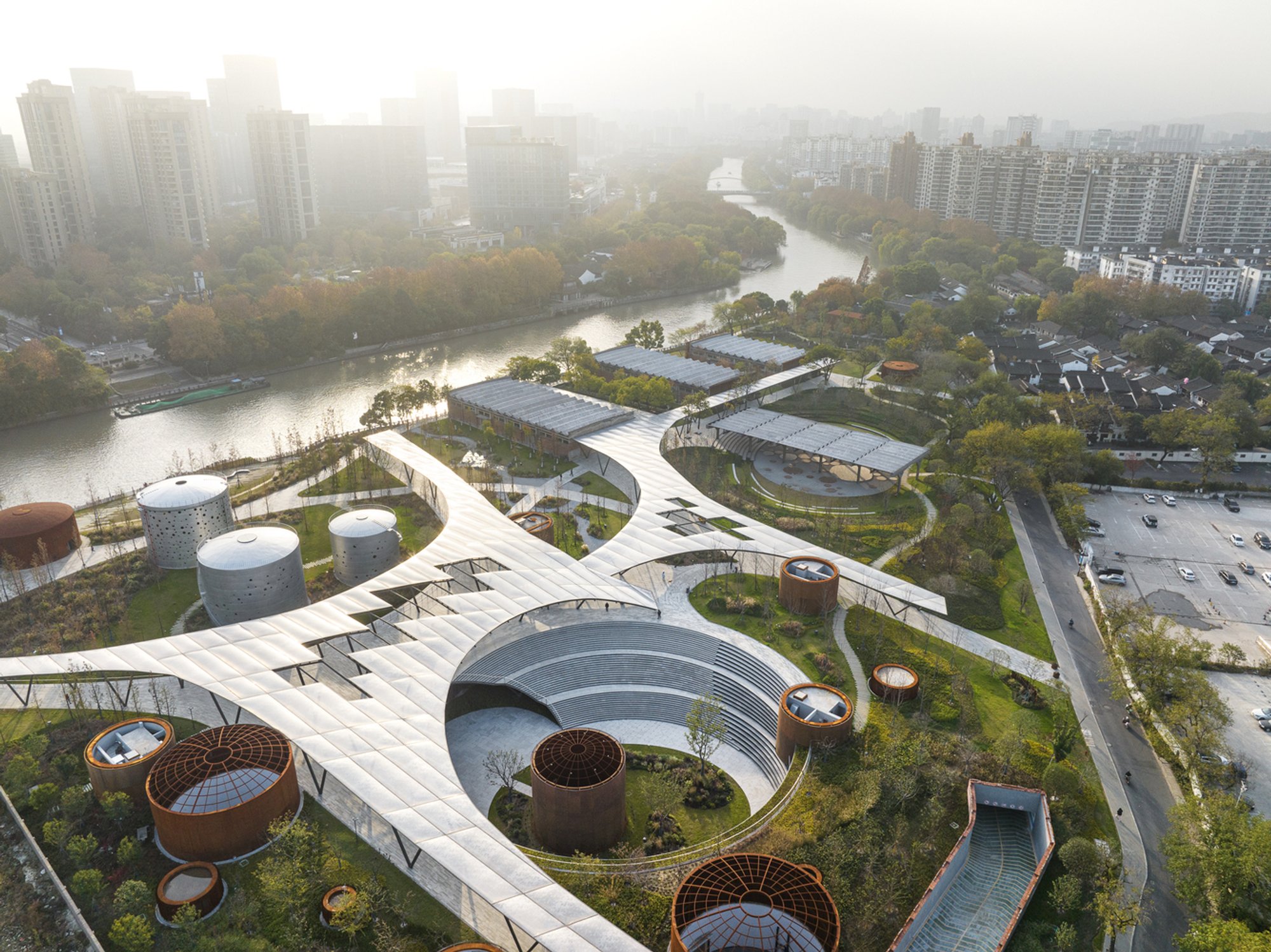
In the vibrant city of Hangzhou, urban renewal projects are increasingly focusing on transforming abandoned industrial sites into lively public spaces. Hangzhou Xiaohe Park, designed by the renowned Kengo Kuma & Associates, stands as a premier example of adaptive reuse parks in Hangzhou, marrying historical preservation with modern urban needs.
Overview of Hangzhou Xiaohe Park
Project Background and Location
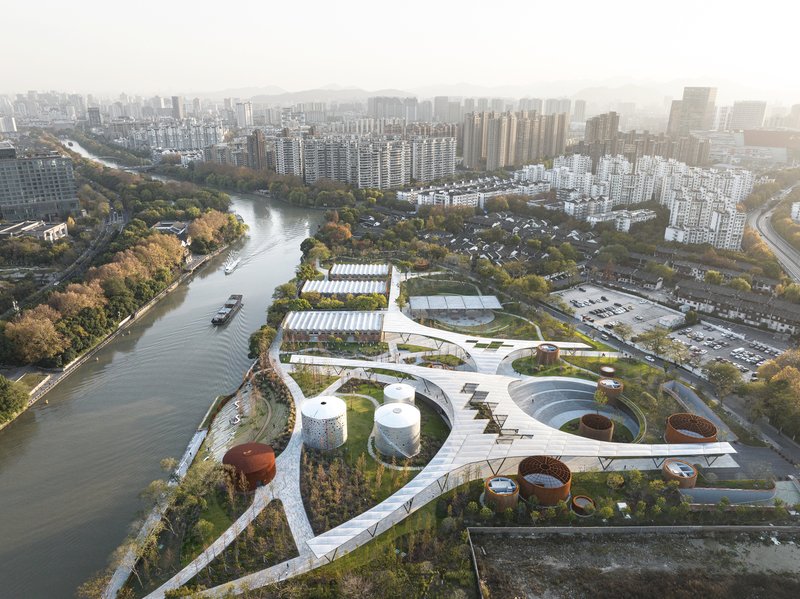
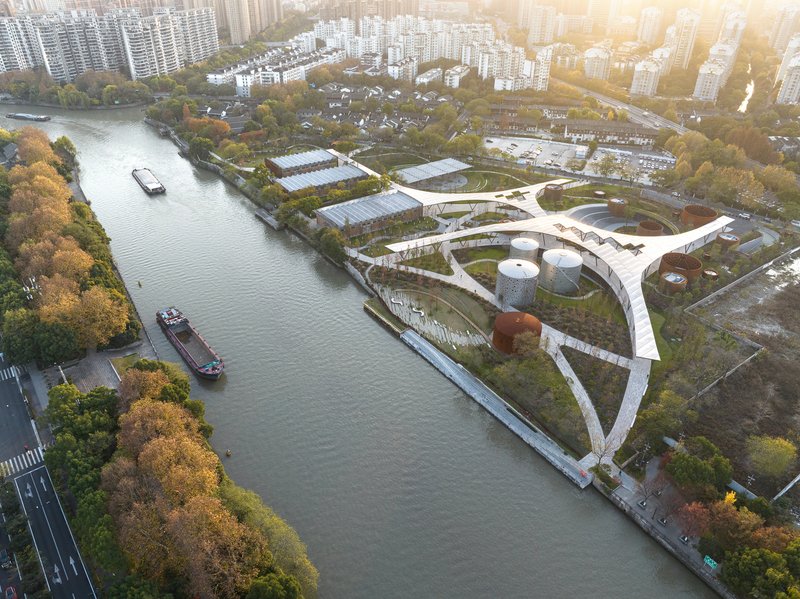
Situated along the historic Grand Canal, Hangzhou Xiaohe Park was once an abandoned oil factory. Covering an area of 51,000 m², the project has been meticulously transformed into a multi-use park that seamlessly integrates into the urban fabric of Hangzhou while respecting its historical significance.
Design Philosophy and Objectives
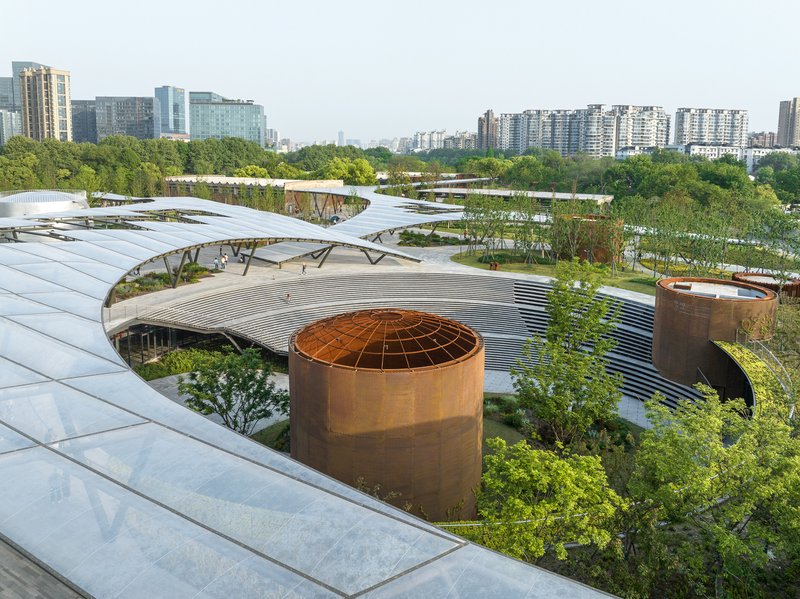
Kengo Kuma & Associates aimed to create a cultural hub that honors the site's industrial past yet invites the community to engage with it in new ways. The design minimizes structural interventions, instead focusing on enhancing the existing landscape and architectural remnants.
Key Architectural Features
The ETFE Canopy
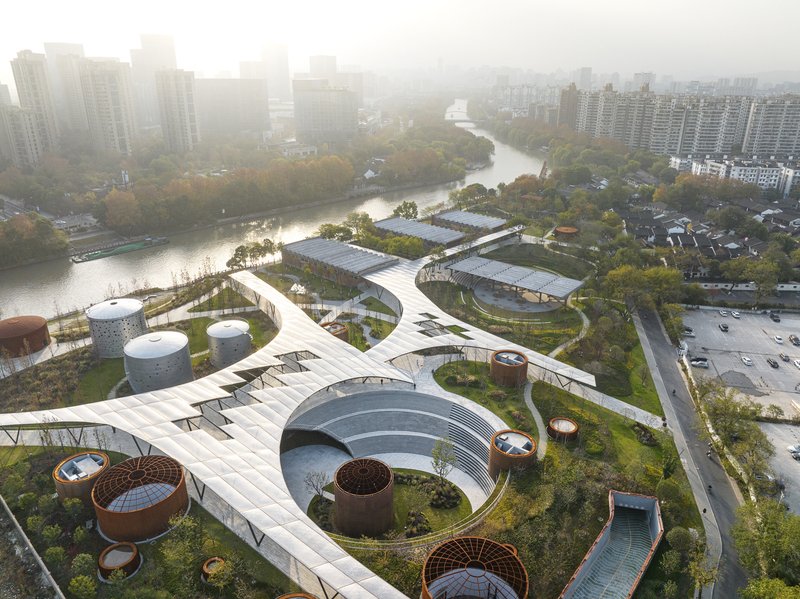
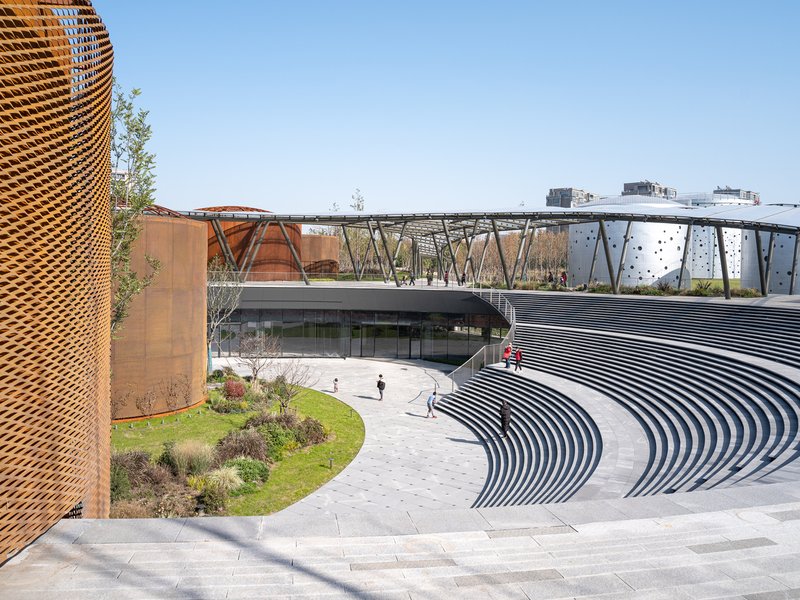
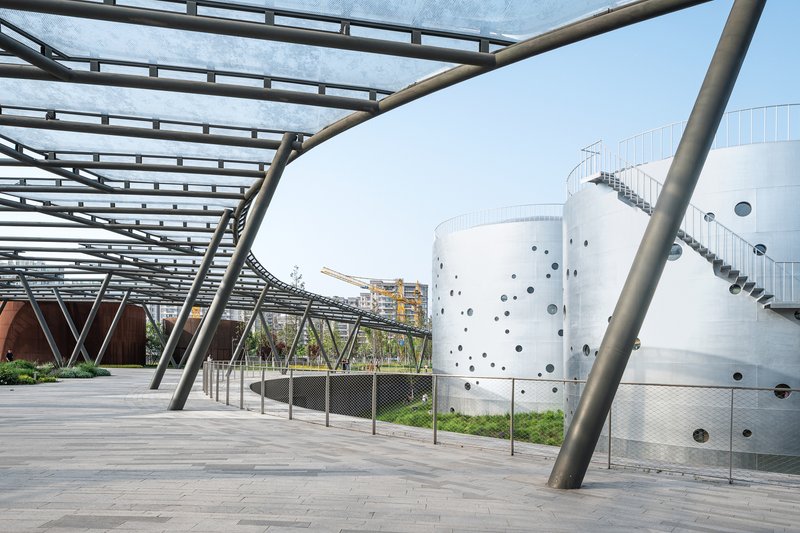
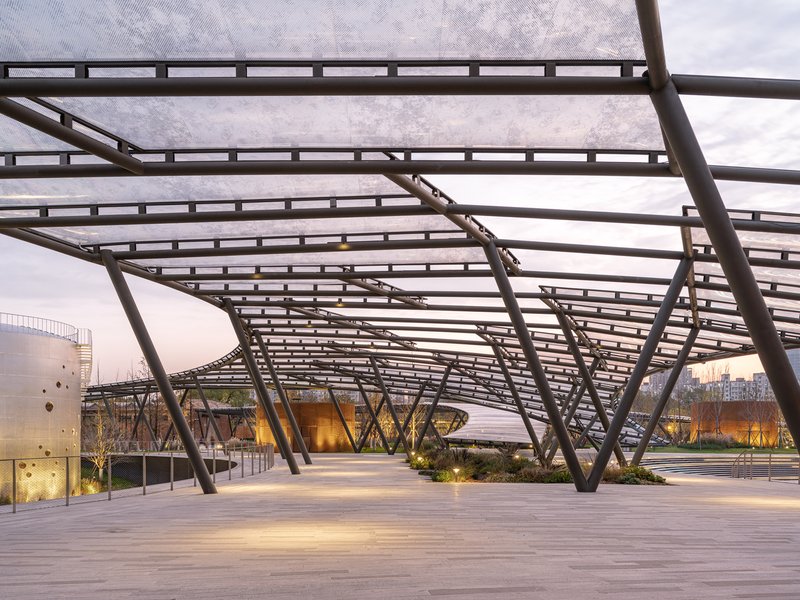
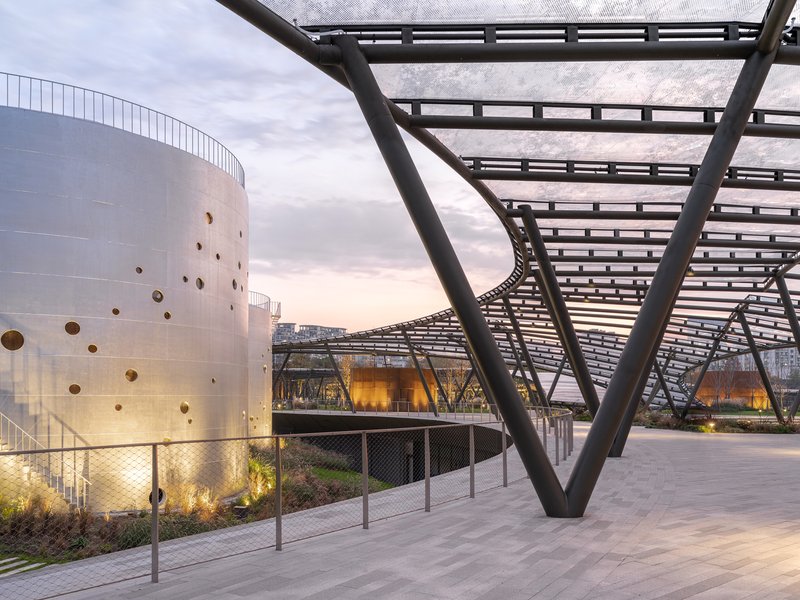
One of the standout features of Hangzhou Xiaohe Park is the ETFE canopy that sprawls across the site. Designed to mimic the dappled light through tree leaves, this canopy connects the preserved buildings and welcomes visitors from multiple directions, providing a soft, translucent shade that is both functional and visually striking.
Preservation and Transformation of Historical Structures
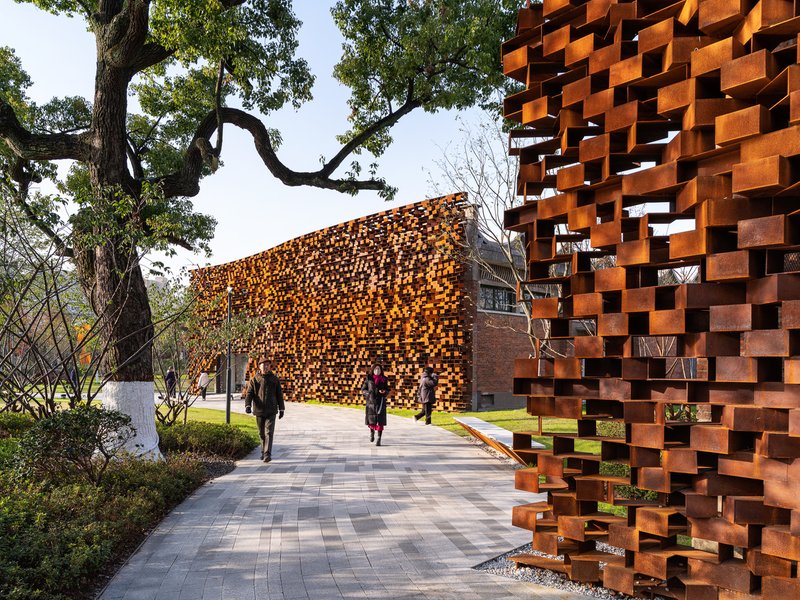
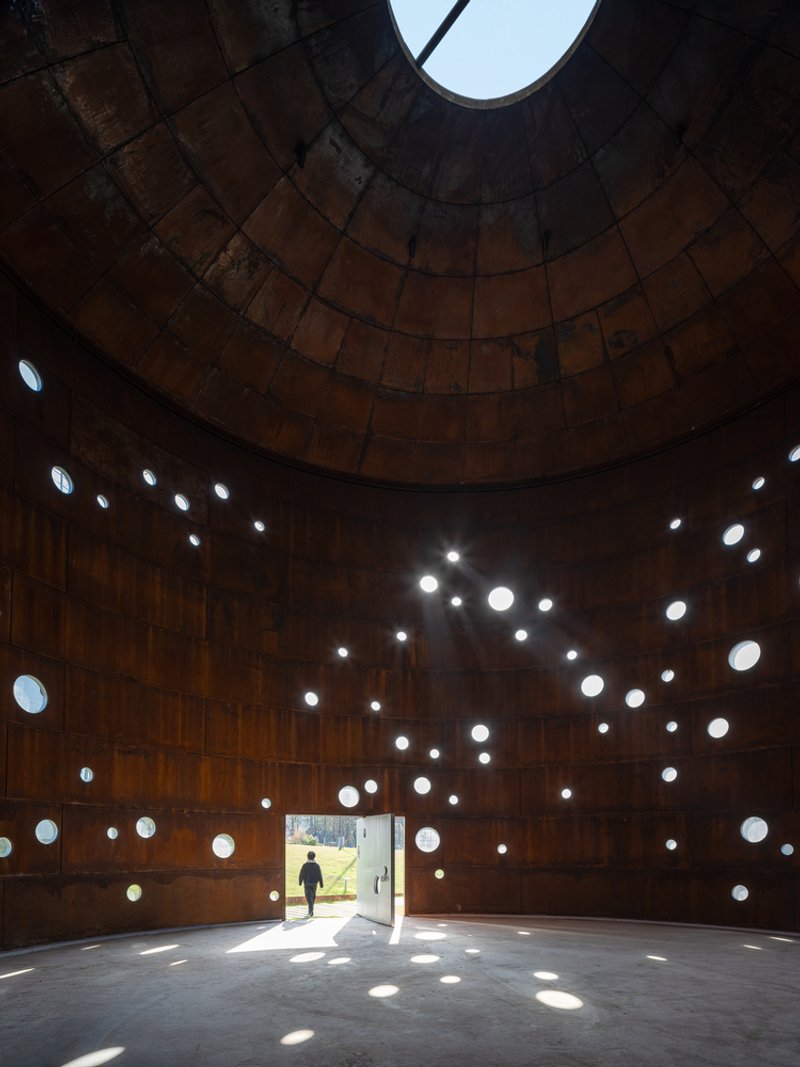
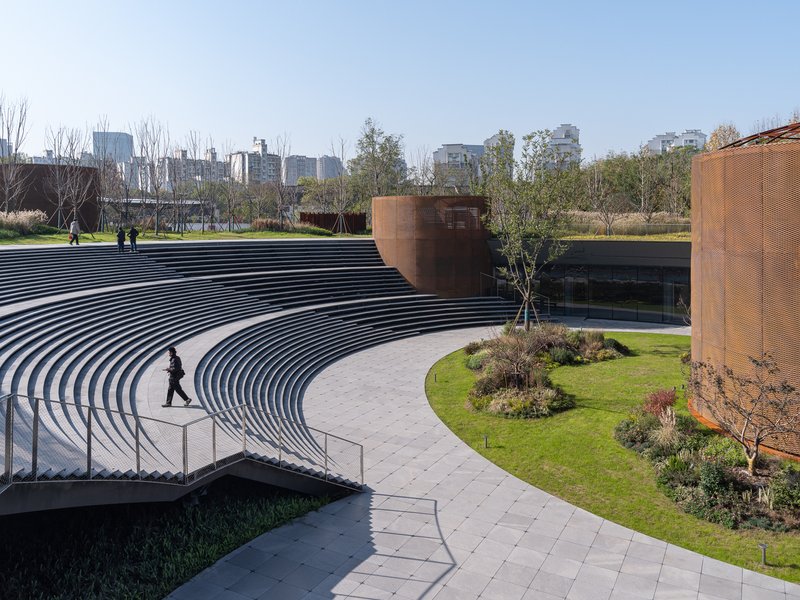
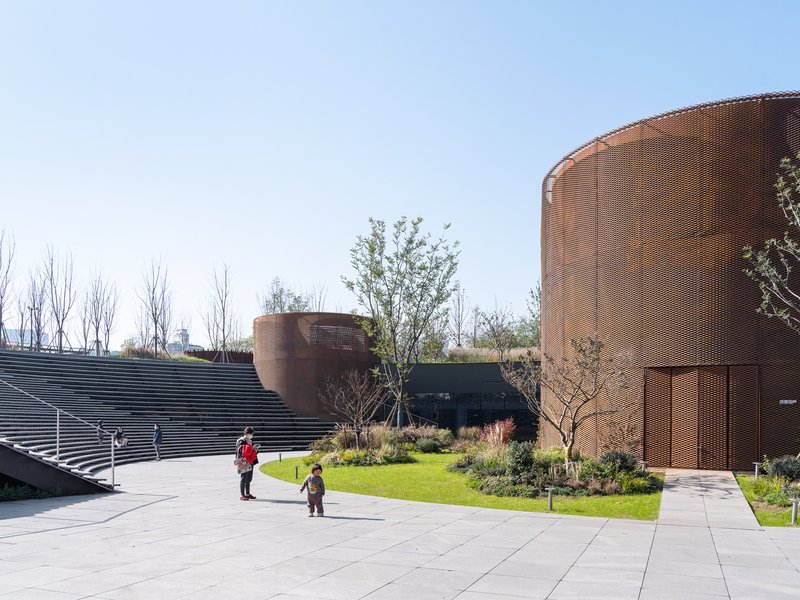
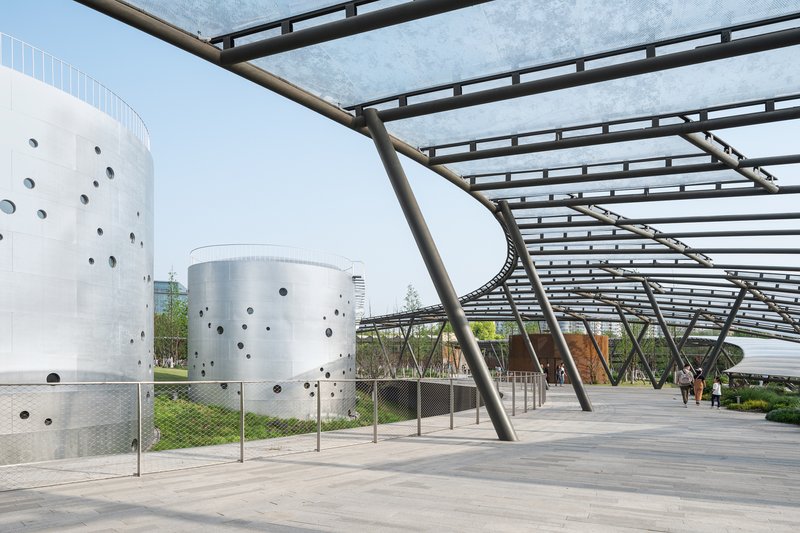
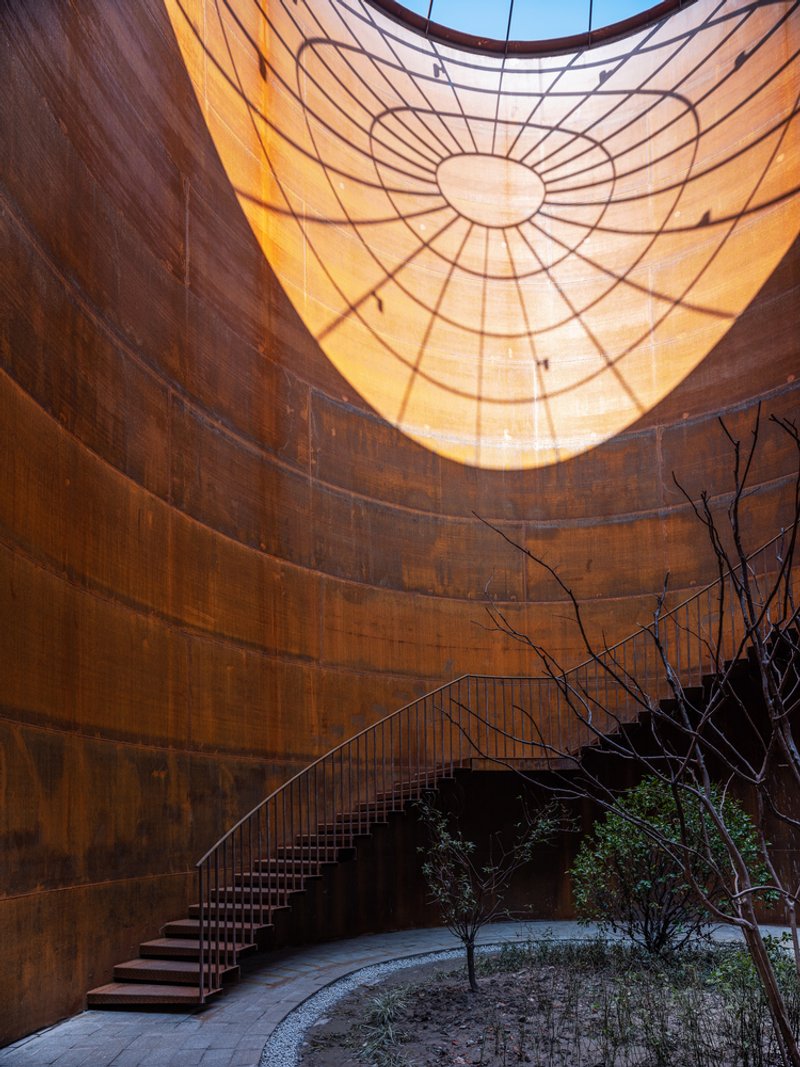
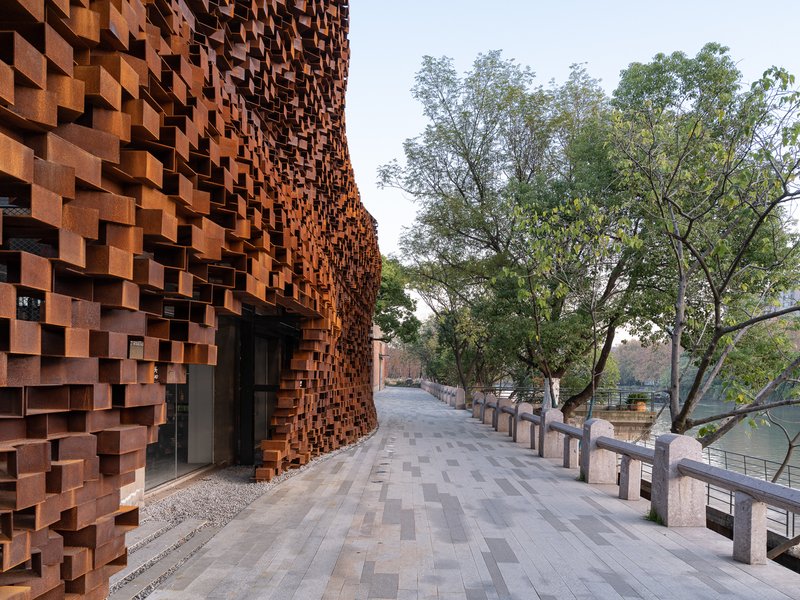
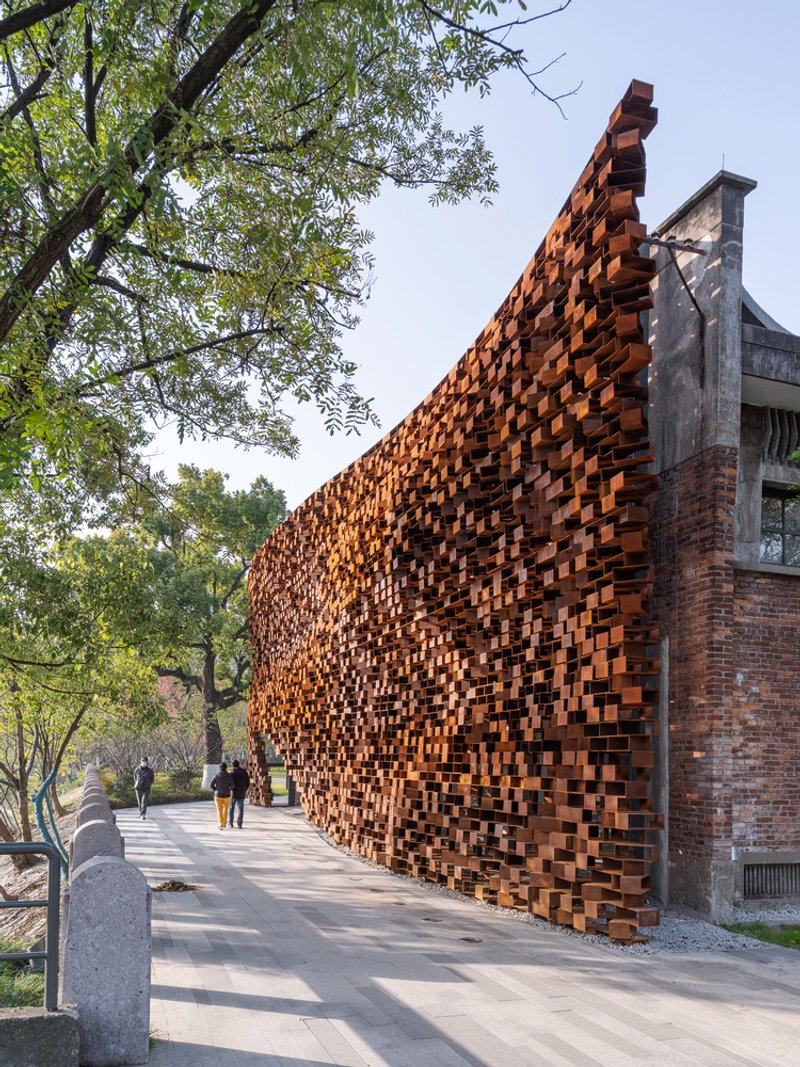
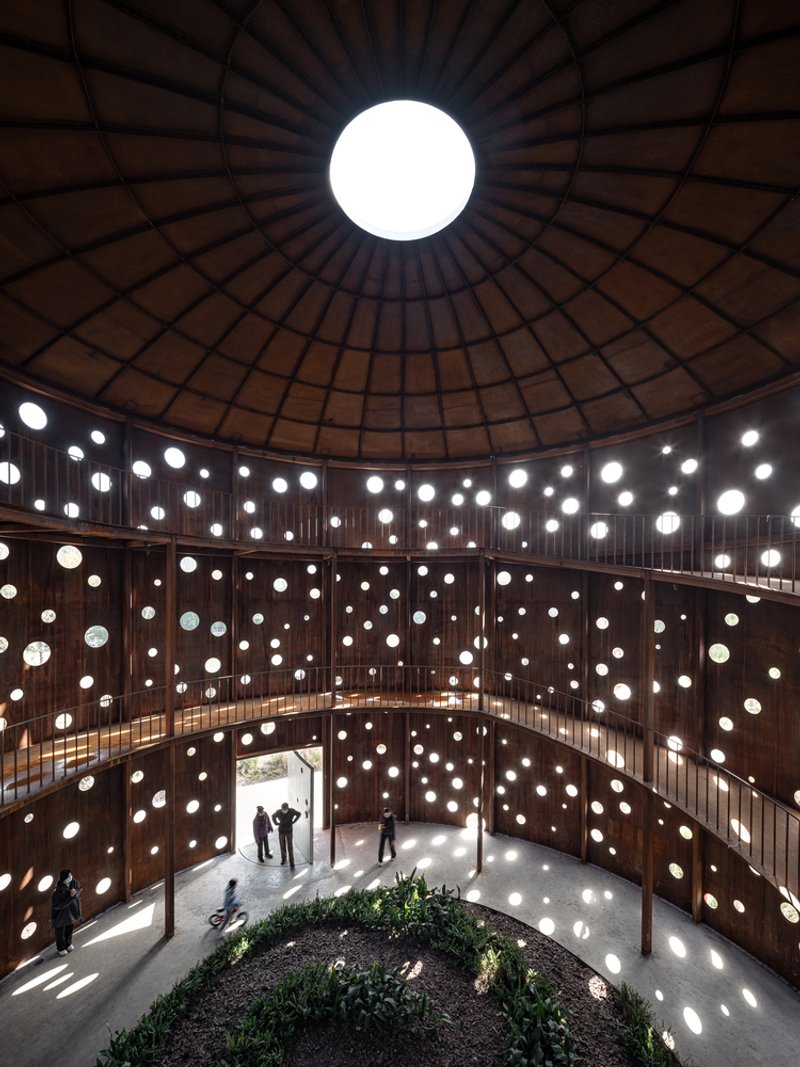
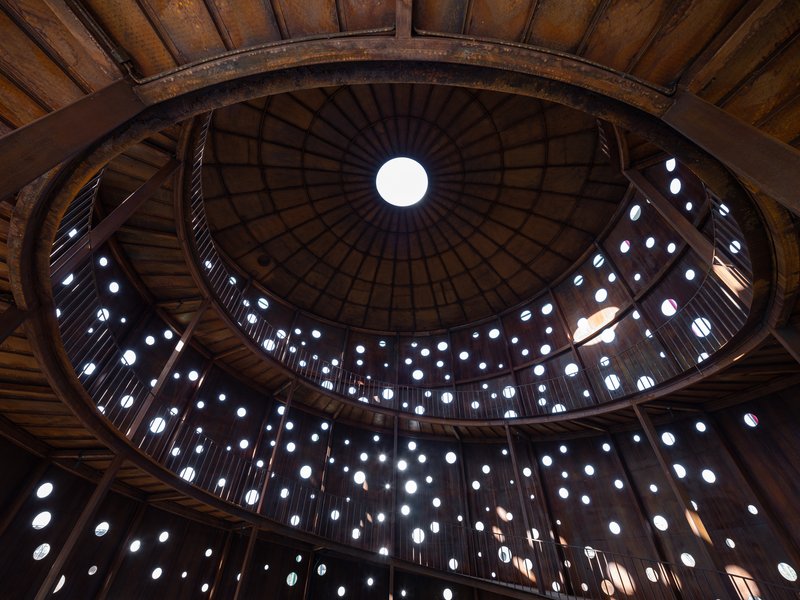
The park retains several key industrial elements, including four historical warehouses and seven oil tanks, which have been converted into venues such as theaters, event spaces, and shops. These adaptations are carefully done using materials like Corten steel to complement the original concrete and brick, maintaining the site’s industrial character.
Sustainable Design and Community Impact
Green Spaces and Public Amenities
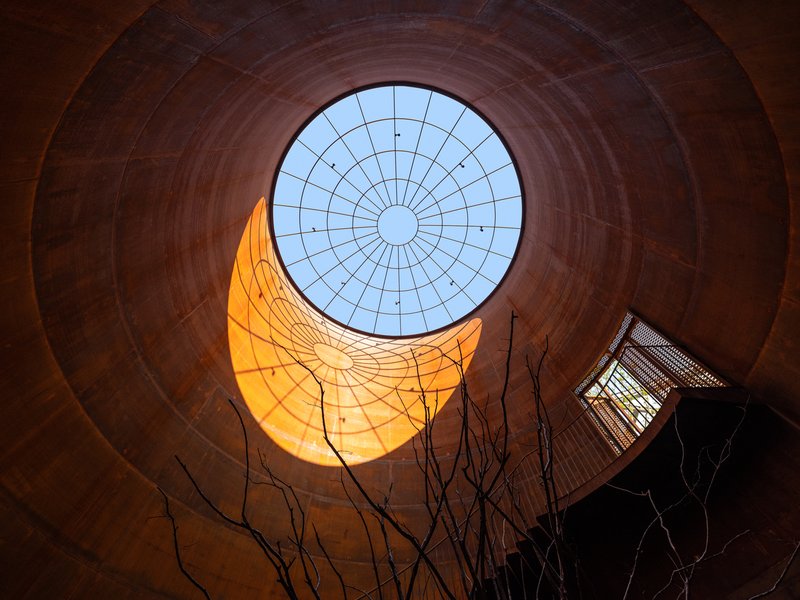
Central to the park’s layout is a large, circular, sunken garden that introduces sunlight and greenery into the underground retail areas, creating a vibrant community space that encourages social interaction and cultural activities.
Enhancing Local Identity and Economic Growth
By repurposing the old industrial site, Hangzhou Xiaohe Park not only preserves an important piece of the city's heritage but also stimulates local economic growth by attracting tourists and providing spaces for businesses and cultural events.
A Model for Adaptive Reuse in Urban Landscapes
Hangzhou Xiaohe Park by Kengo Kuma & Associates is a model of how adaptive reuse parks in Hangzhou can successfully transform disused industrial areas into thriving public spaces. This project highlights the potential of adaptive reuse in urban planning, offering a blueprint for other cities to follow. It stands as a testament to the power of architecture to revitalize cities, preserve history, and create vibrant new community hubs.
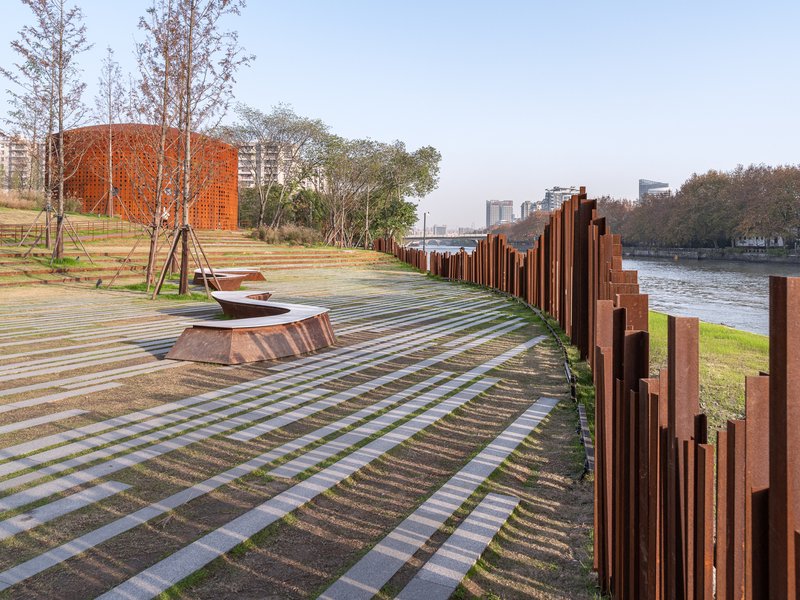
All photographs are work of Fangfang Tian



Popular Articles
Popular articles from the community


The Ken Roberts Memorial Delineation Competition (Krob)
As the most senior architectural drawing competition currently in operation anywhere in the world, it draws hundreds of entries each year, awarding the very best submissions in a series of medium-based categories.

Inverted Architecture Installation by Studio Link-Arc: Exploring the Intersection of Architecture and Living Organisms
Inverted Architecture Installation by Studio Link-Arc blends mycelium, sustainability, inverted design, ecological cycles, and urban adaptive architecture in Shenzhen.
An Miên Lumière Cafe by xưởng xép, Ho Chi Minh City, Vietnam
An industrial-inspired café where layered steel and warm light create a dynamic, immersive environment shaped by reflection, depth, and perception.
A Contemporary Take on Iranian Residential Architecture
A modern interior design in Mashhad that reinterprets brick, light, and spatial flow to create a warm, contemporary residential architecture.

Similar Reads
You might also enjoy these articles
The Ken Roberts Memorial Delineation Competition (Krob)
As the most senior architectural drawing competition currently in operation anywhere in the world, it draws hundreds of entries each year, awarding the very best submissions in a series of medium-based categories.


Waterfront Redevelopment and Urban Revitalization in Mumbai: Forging a New Dawn for Darukhana
A transformative waterfront redevelopment project reimagining Darukhana’s shipbreaking heritage into an inclusive urban future.

OUT-OF-MAP: A Call for Postcards on Feminist Narratives of Public Space
Rhizoma Design and Research Lab invites artists, designers, architects, researchers, and students to reflect on how feminist perspectives can reshape public space. Selected works will be exhibited in Barcelona, October 2026. Submissions open until 15 April 2026.


Documentation Work on Buddhist Wooden Temple
Architectural syncretism and cultural hybridity: A comparative study of the Buddhist temples in Chattogram Hill tracks

Explore Architecture Competitions
Discover active competitions in this discipline




The International Standard for Design Portfolios


The Global Benchmark for Architecture Dissertation Awards


The Global Benchmark for Graduation Excellence


Challenge to reimagine the Iron Throne
Comments (0)
Please login or sign up to add comments
No comments yet. Be the first to comment!