
Adaptive Reuse School Architecture in Montpellier: Pierre and Colette Soulages Primary School by NAS Architecture and GTA
A heritage-rich convent in Montpellier is reborn as a luminous primary school through subtractive, adaptive reuse school architecture.


A Historical Complex Reimagined as a Modern Learning Environment
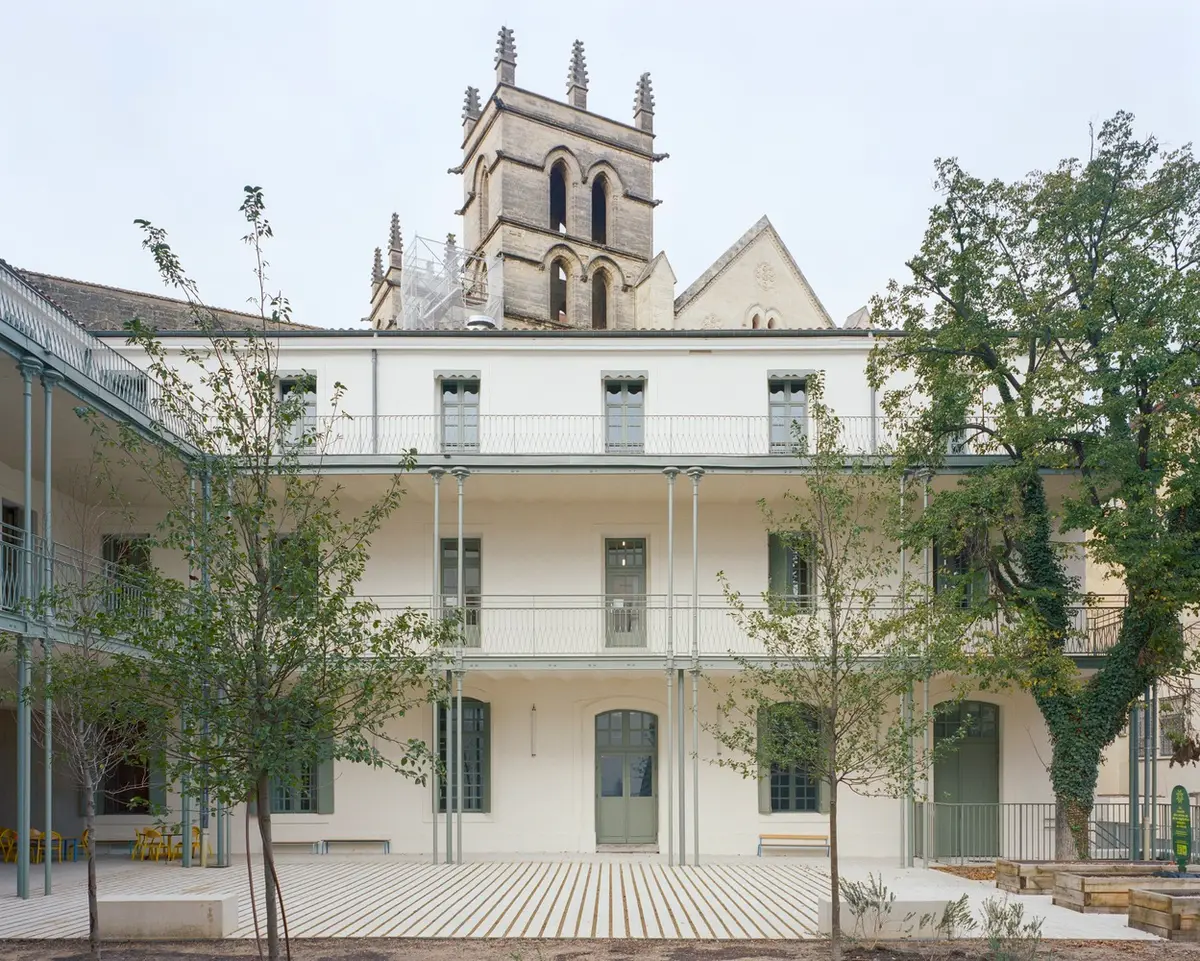
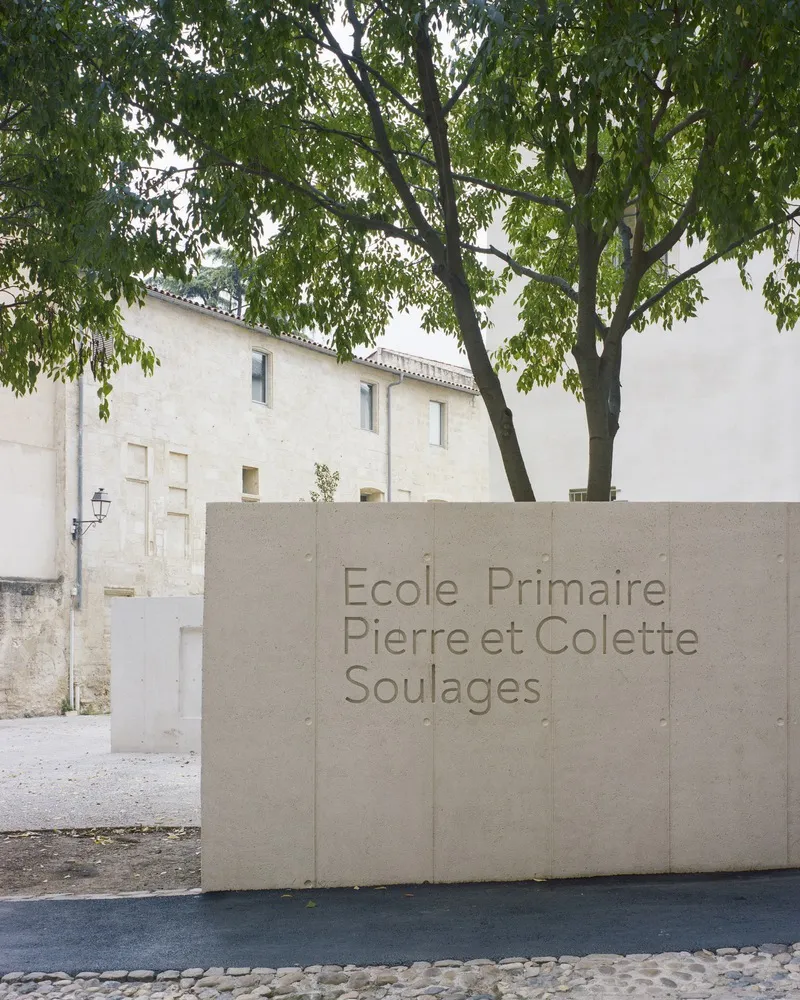
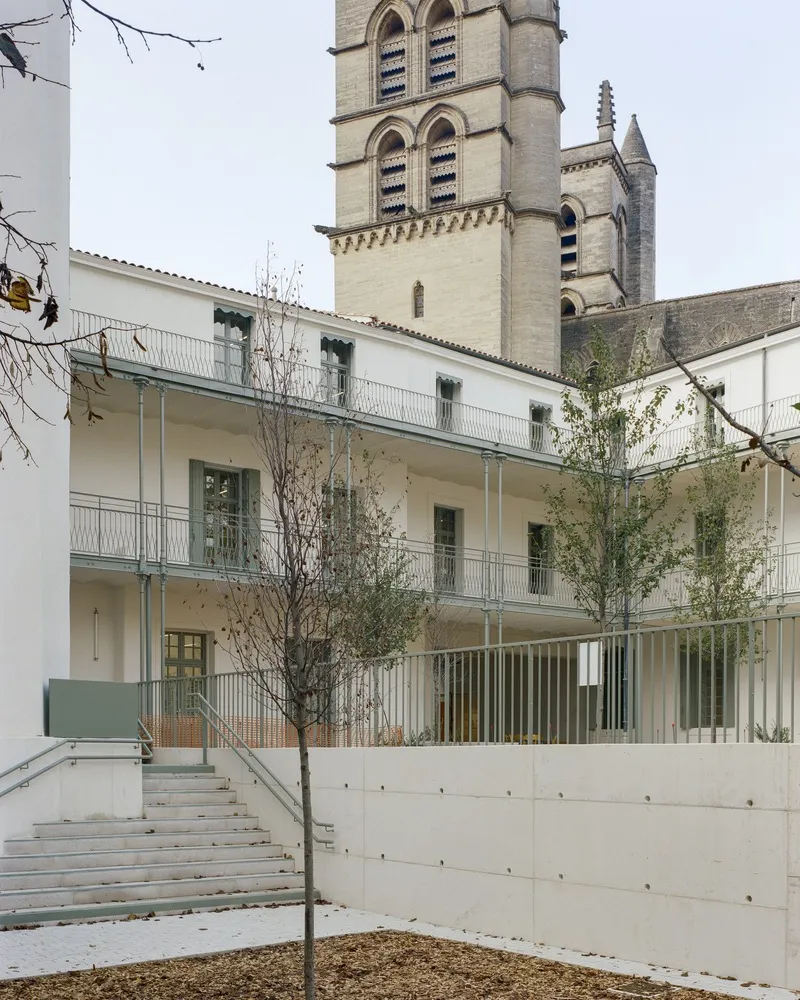
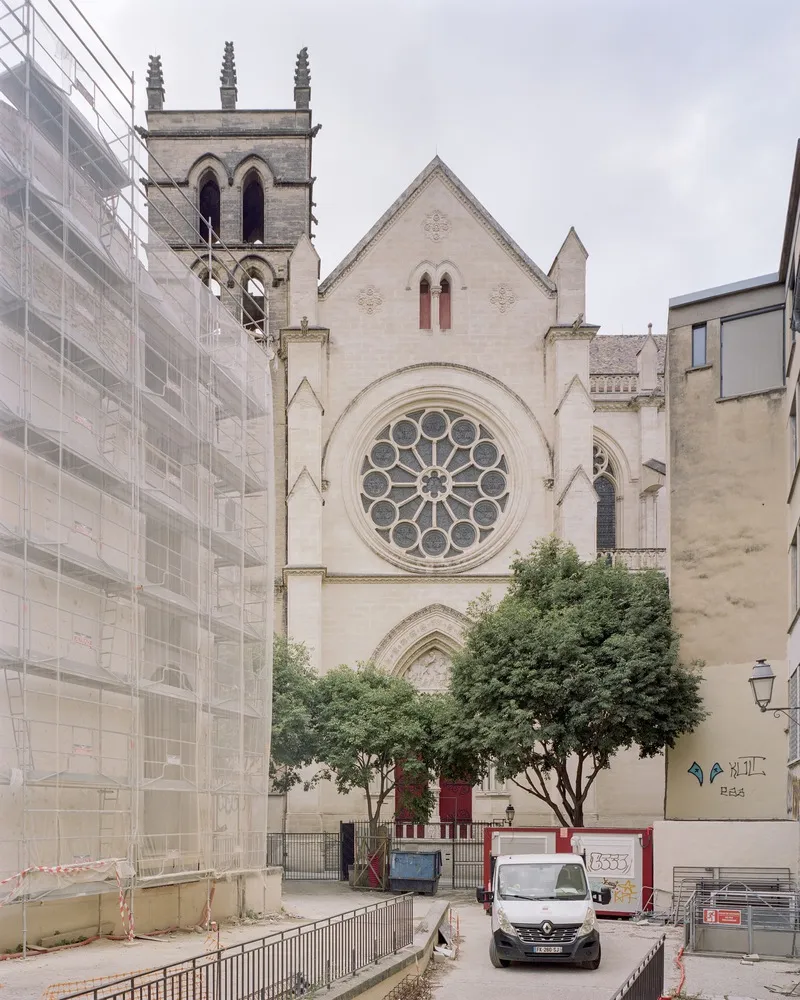
In the heart of Montpellier’s Écusson district, the Pierre and Colette Soulages Primary School stands as a powerful example of adaptive reuse school architecture. Designed by NAS Architecture in collaboration with GTA and landscape architects Eskis Paysagistes, this 3,500 m² project breathes new life into the former annex of the Montpellier Music Conservatory. Located near the iconic Saint-Pierre Cathedral, the site’s rich heritage—dating back to its acquisition by the Ursulines in 1679—sets the foundation for a transformative architectural intervention focused on preservation, subtraction, and educational renewal.
Subtractive Architecture to Recover Historical Essence
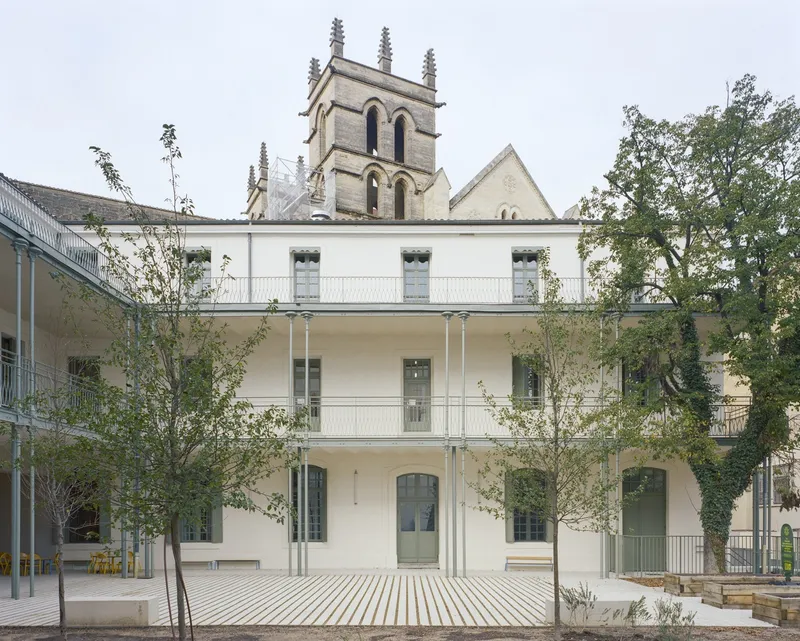
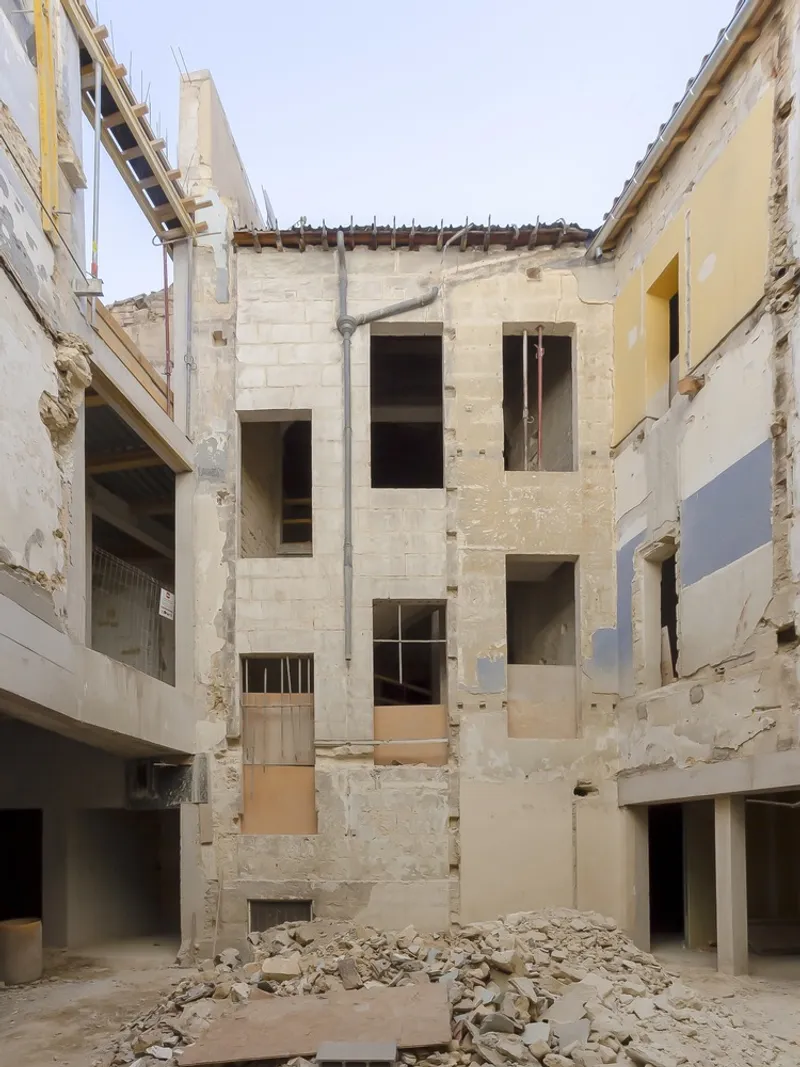
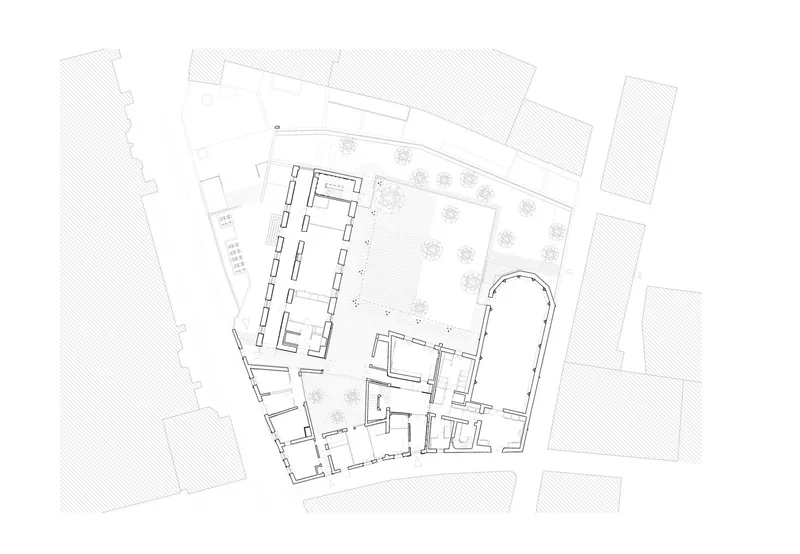
The design strategy embraced a subtractive methodology. Rather than layering over the building’s history, the architects meticulously peeled back structural additions to uncover its authentic identity. Through archaeological assessments and preservation efforts, key architectural elements were safeguarded while incongruent 20th-century structures were removed. This sensitive approach restored spatial clarity and brought porosity back to the dense urban site, allowing daylight and air to penetrate its core once again.
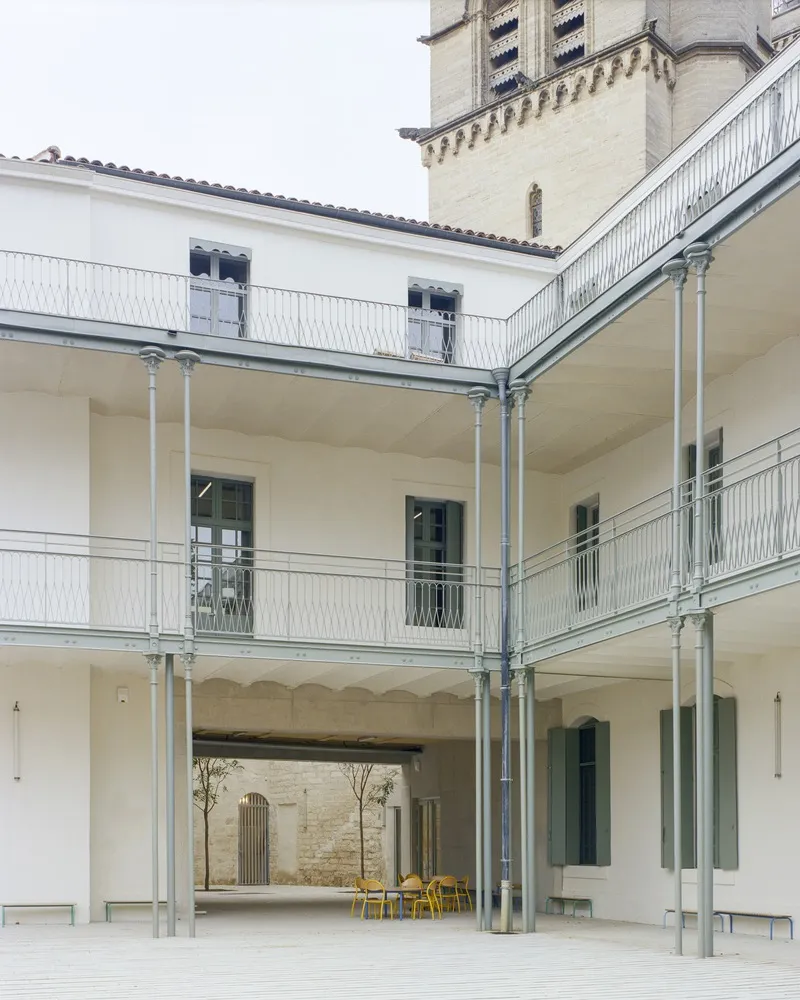
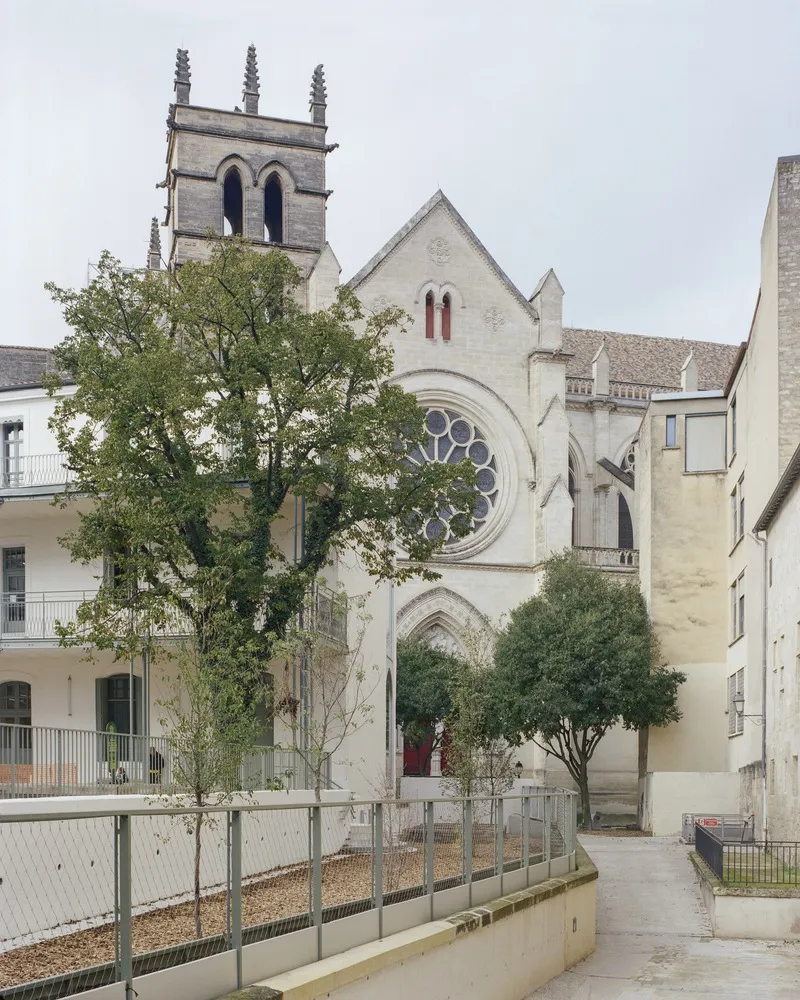
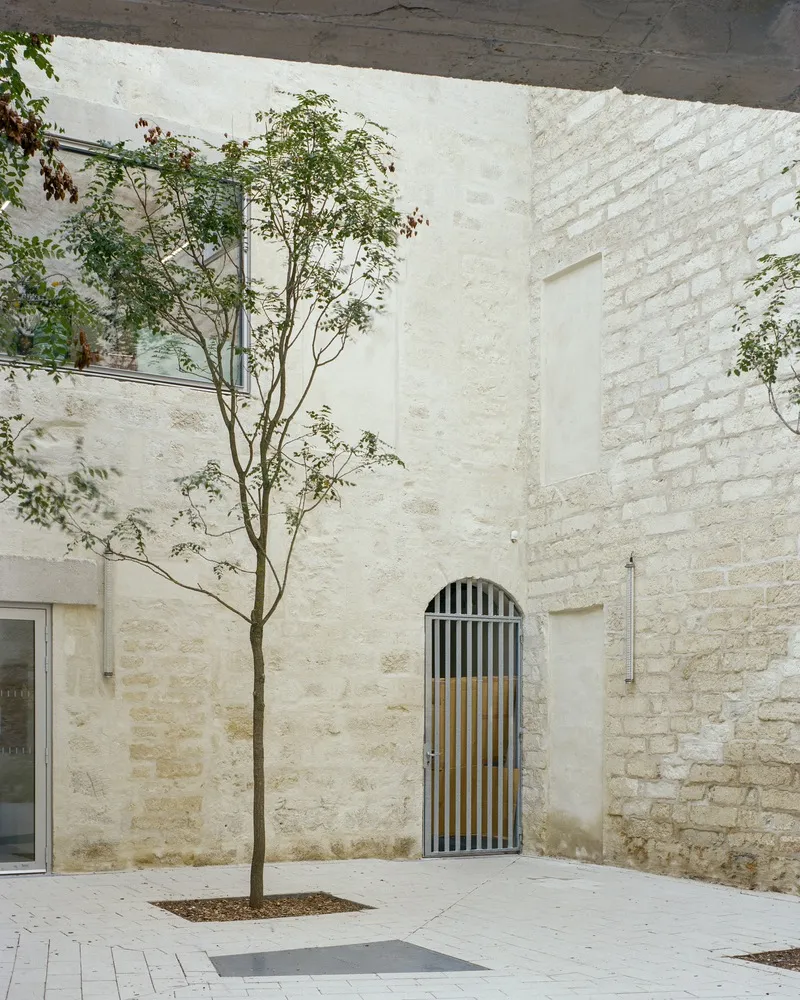
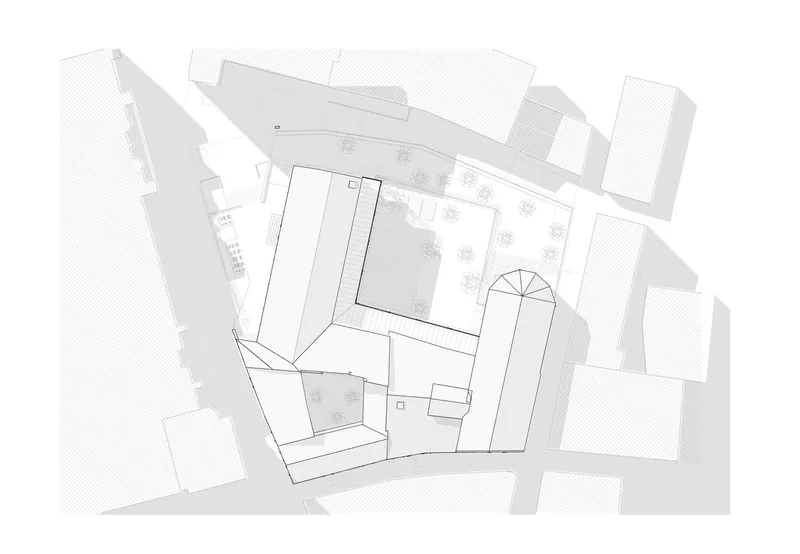
A newly revealed courtyard now anchors the primary school, referencing the original layout of the Hôtel de Brissac and the Grand Courtyard of the Ursuline convent. This spatial reconfiguration does more than celebrate history—it directly enhances the children’s daily experience through improved natural ventilation and a serene, light-filled environment.
A Living Dialogue Between Past and Present
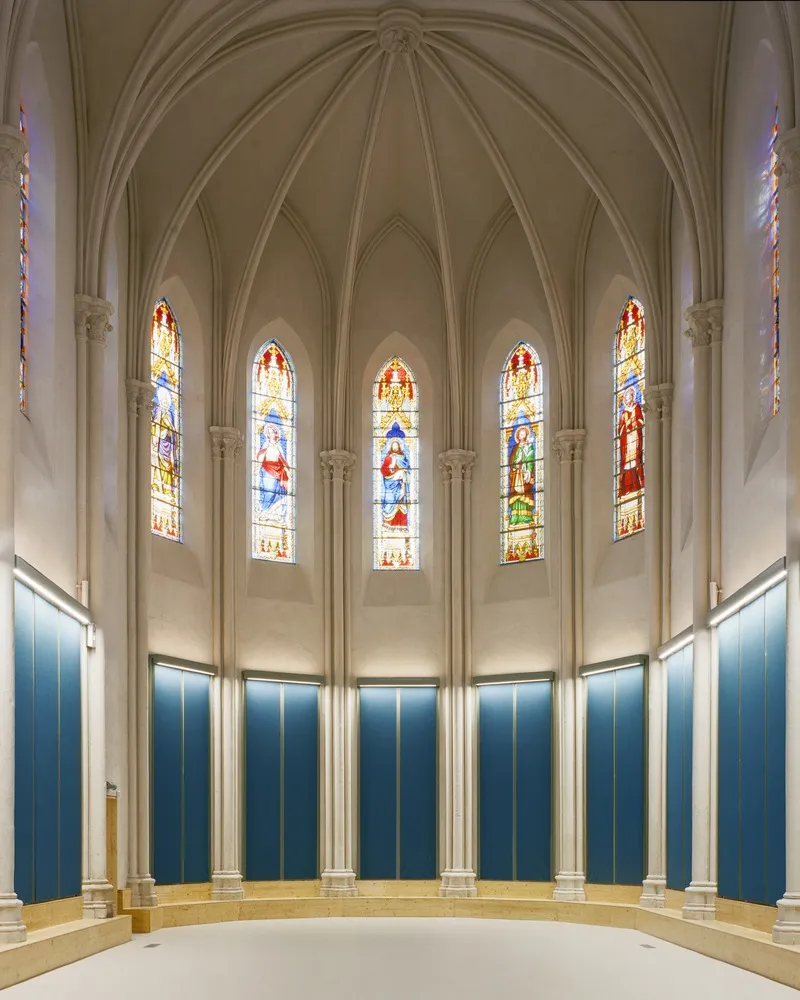
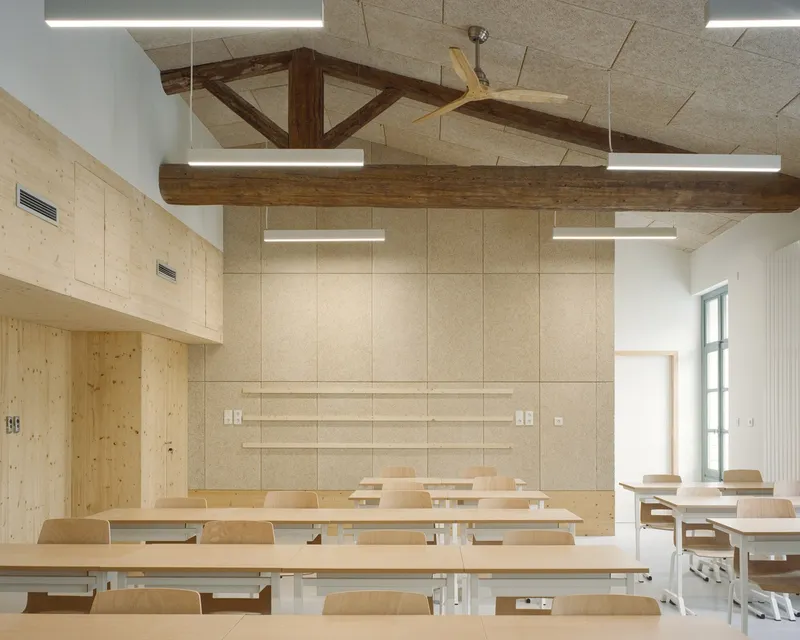
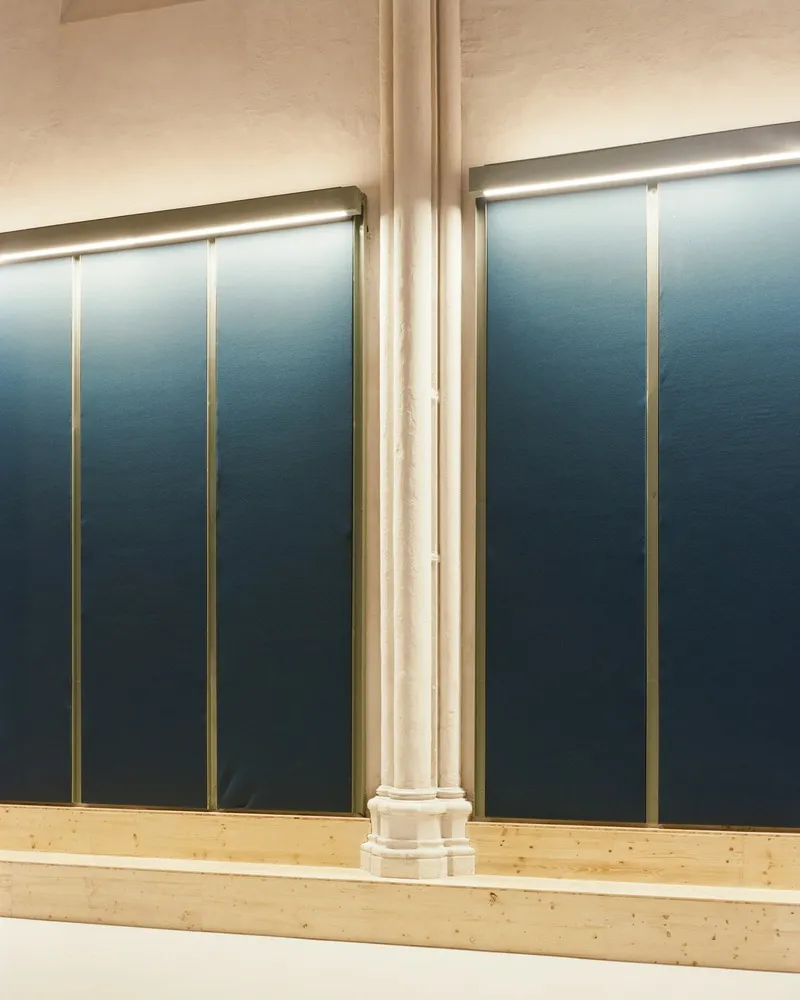
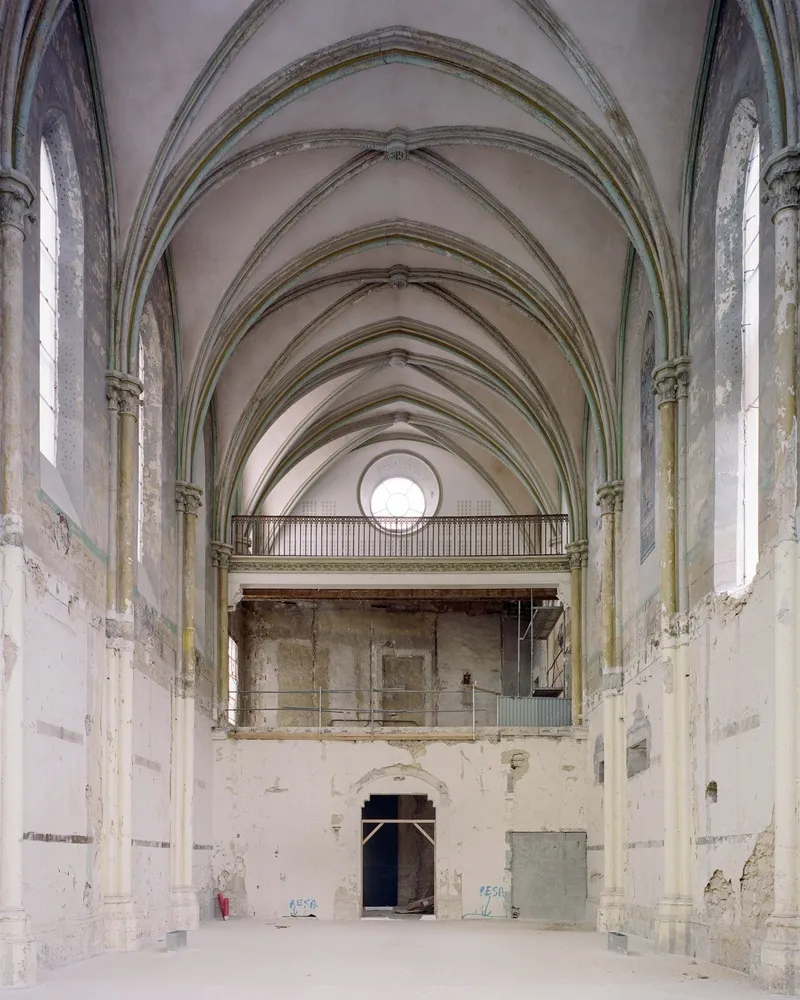
The chapel, originally built in 1857 in a neo-Gothic style by architect Nulma Polge, had been compromised by insensitive alterations during the 1990s. The rehabilitation removed intrusive mezzanines and restored the chapel’s volume. Instead of concealing the building’s layered history, the architects treated the space uniformly with lime-coated fabrics and restored stained-glass windows using traditional methods. The former sacred space now serves as a multipurpose activity room—blending secular educational functions with historical reverence.
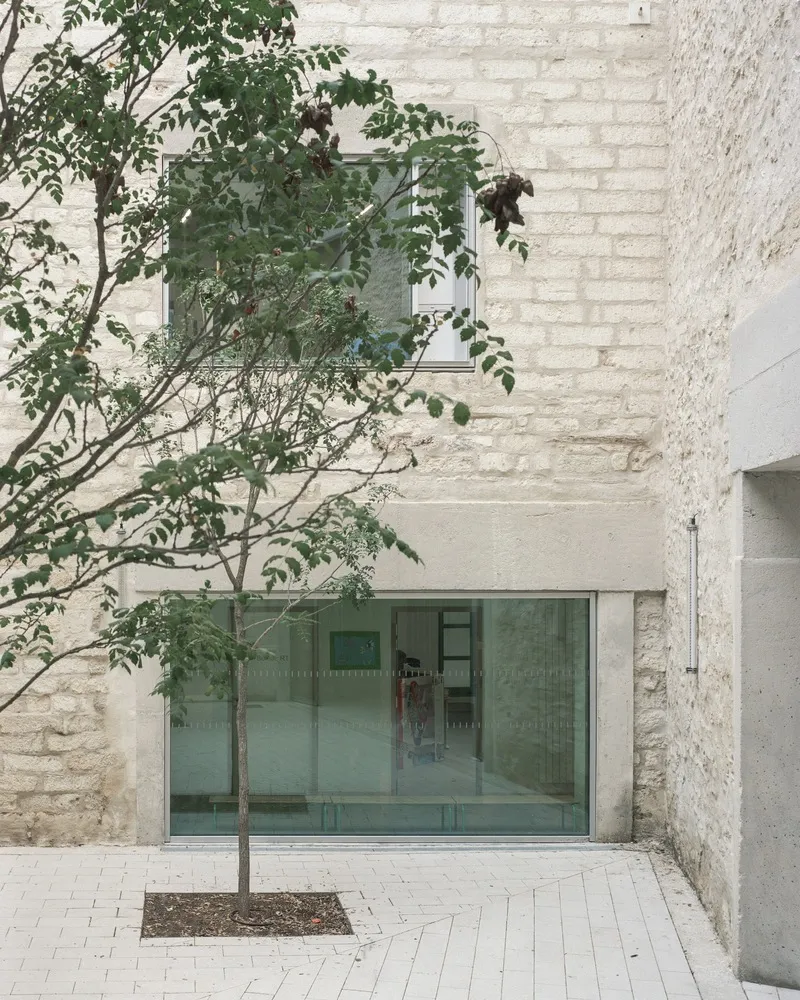
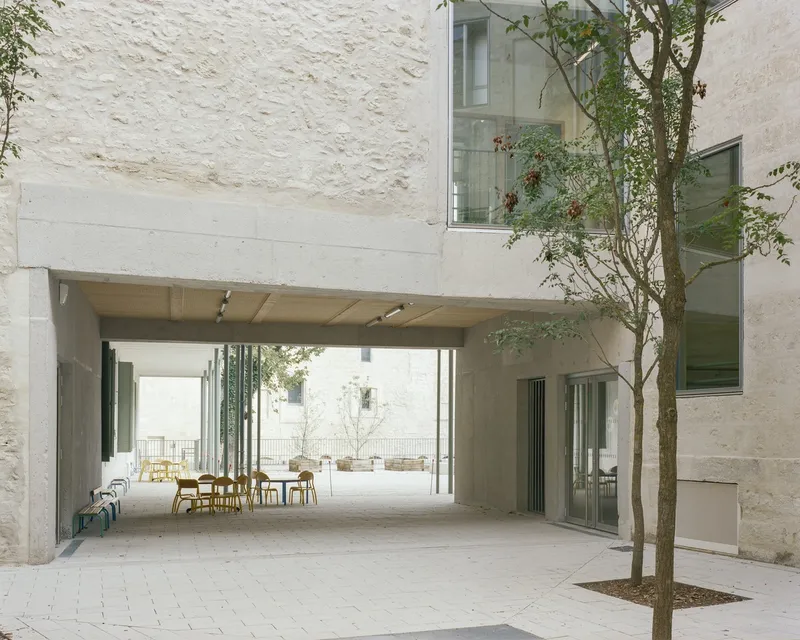
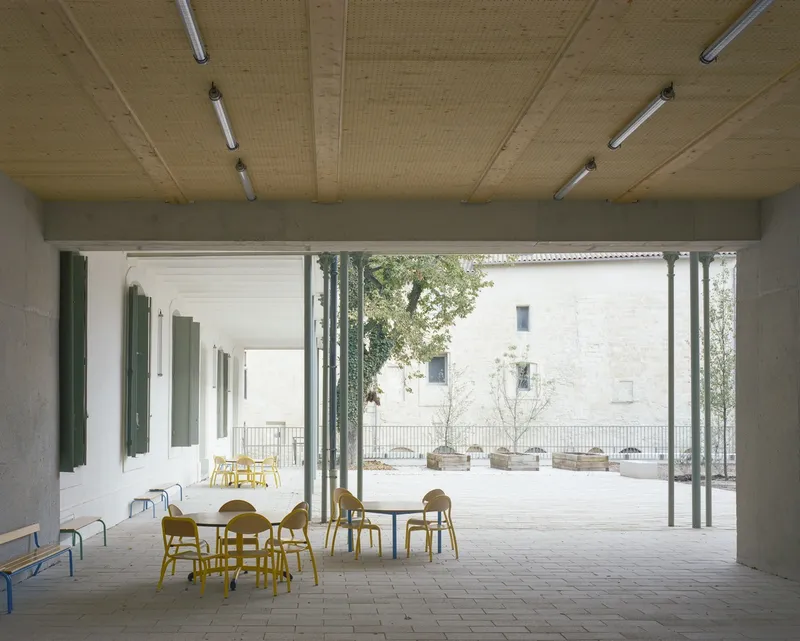
Contemporary interventions were intentionally restrained. Technical systems for heating, ventilation, and acoustics were subtly integrated using floor installations and freestanding frames with stretched fabrics. These solutions preserve the building's massing and rhythm, allowing its heritage character to remain visually dominant while supporting modern school requirements.
Architectural Voids as Historical Markers
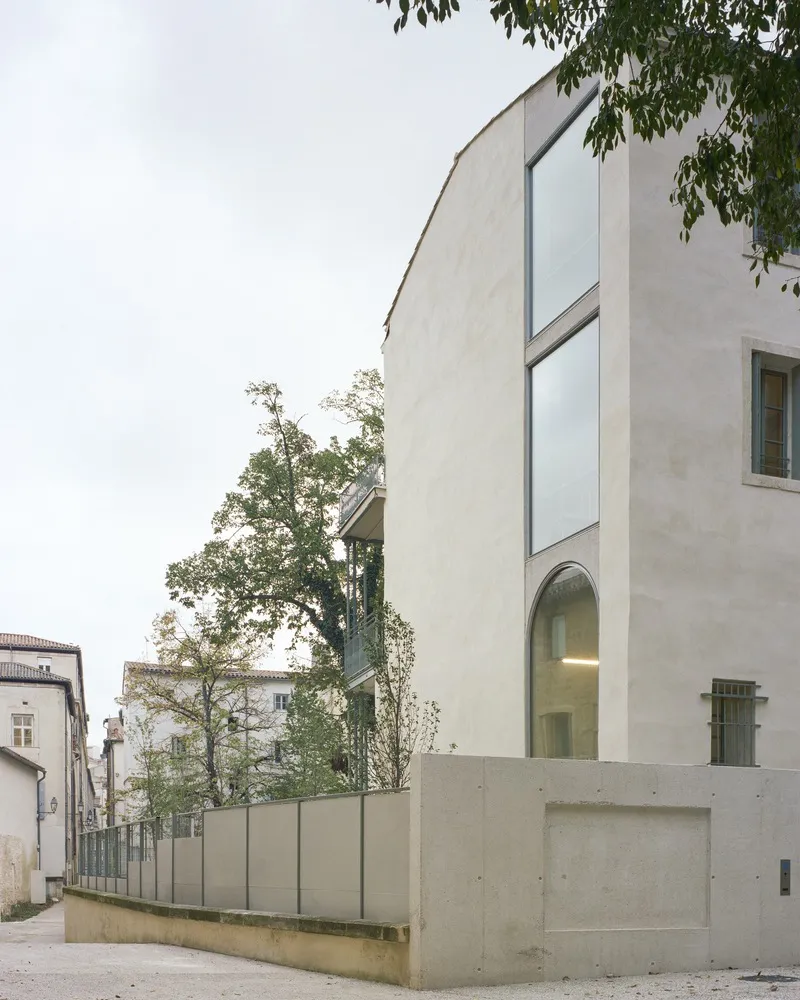
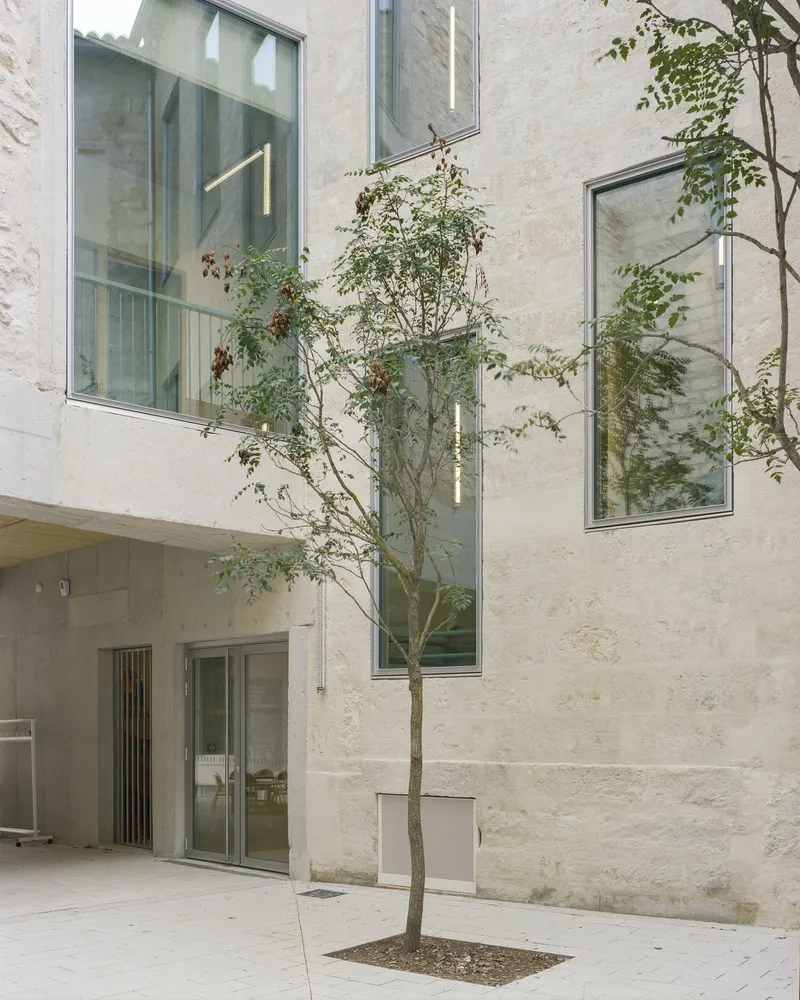
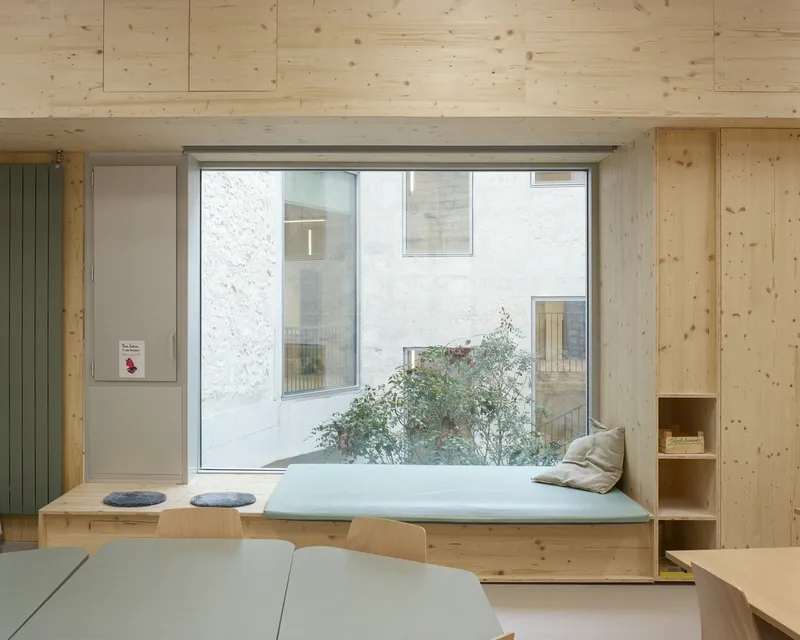
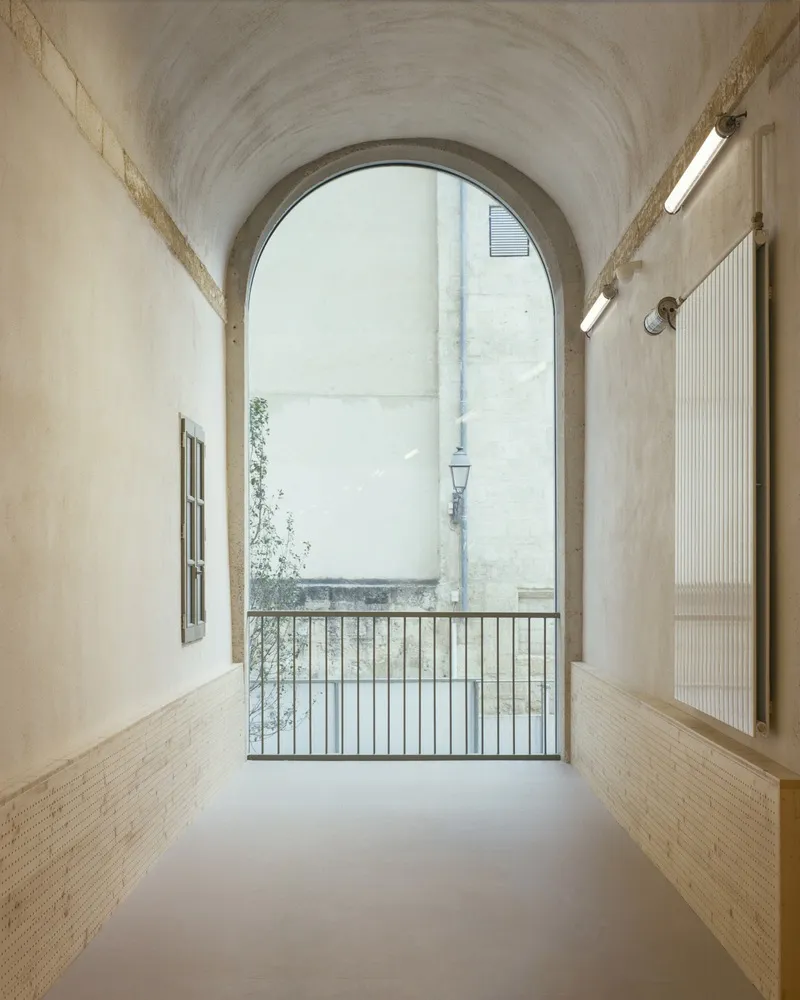
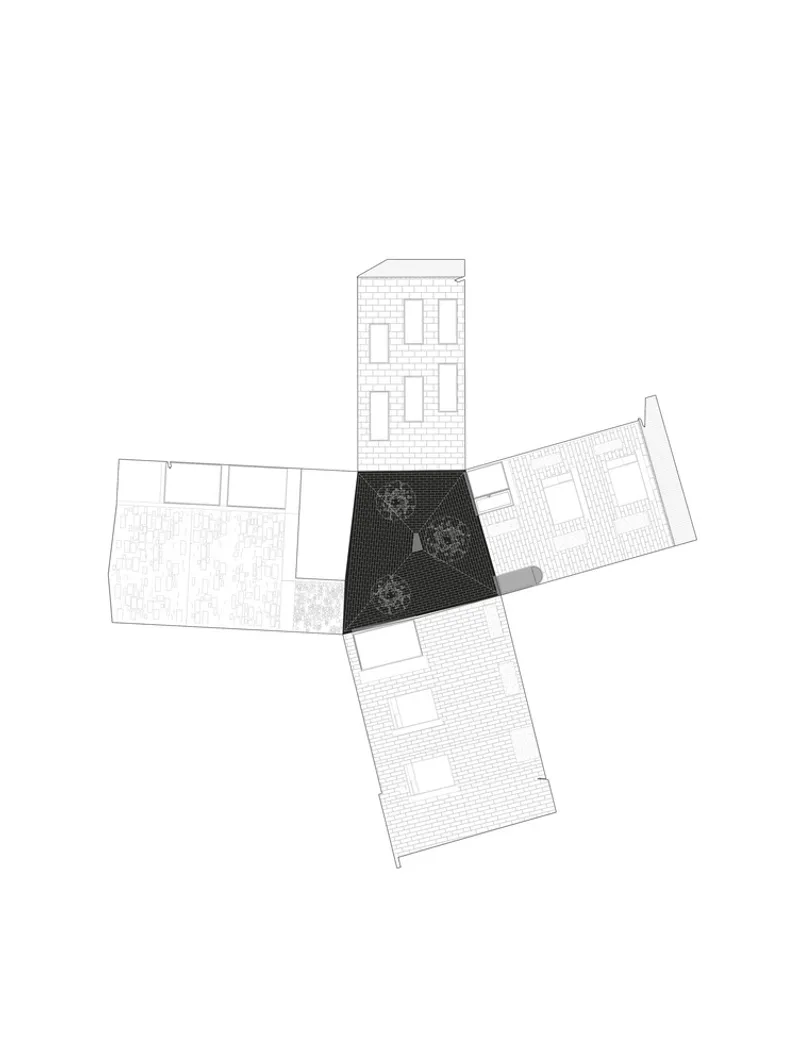
Key historical transitions were interpreted through three monumental vertical openings. Each void narrates a different chapter in the building’s evolution—from the 1792 sale of the convent during the French Revolution to the 1857 connection of structural elements. These voids serve both symbolic and practical roles, providing light, access, and contextual insight into the structure’s transformation over centuries.
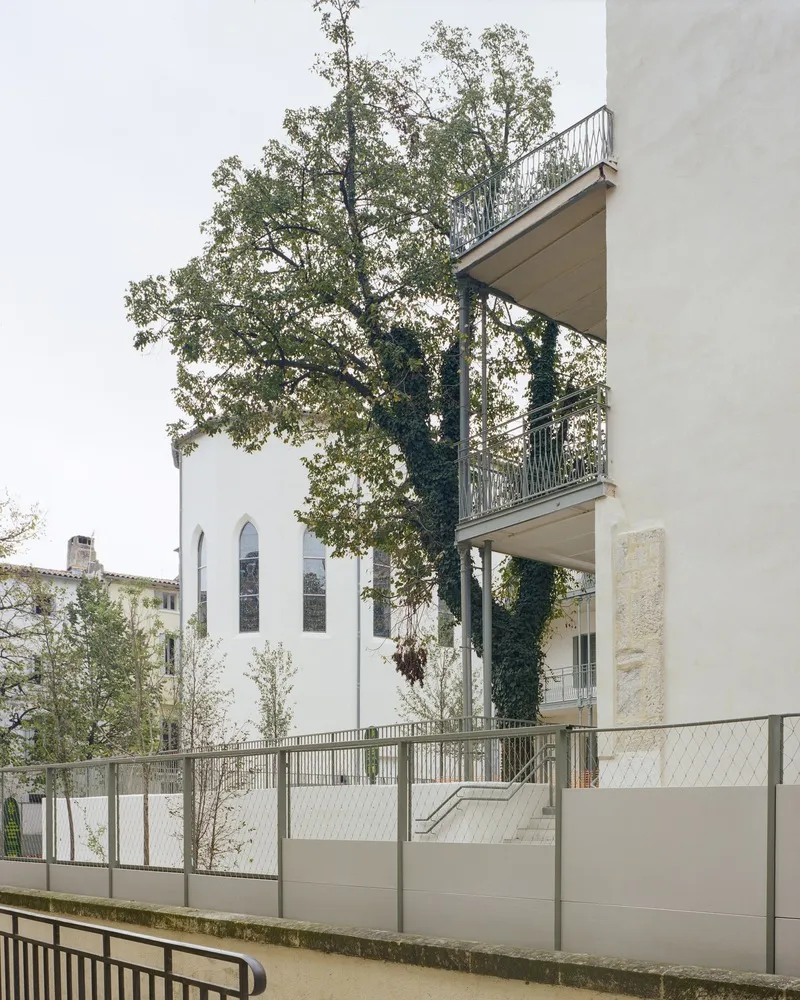
Framing views of Montpellier’s historic cityscape and neighboring institutions like the National School of Dramatic Arts, these openings also position the school as an integrated part of the urban fabric. Large-scale aluminum windows provide generous illumination while maintaining the architectural integrity of the heritage walls.
Outdoor Learning Environments and Material Simplicity
The redesign extends beyond interiors. The landscape was restructured into multi-level outdoor areas tailored for interaction, learning, and biodiversity. The upper courtyard continues the cobblestone language of the patio, while the lower playground introduces a wood chip surface and new trees, creating a developing urban forest that fosters a natural connection for children.
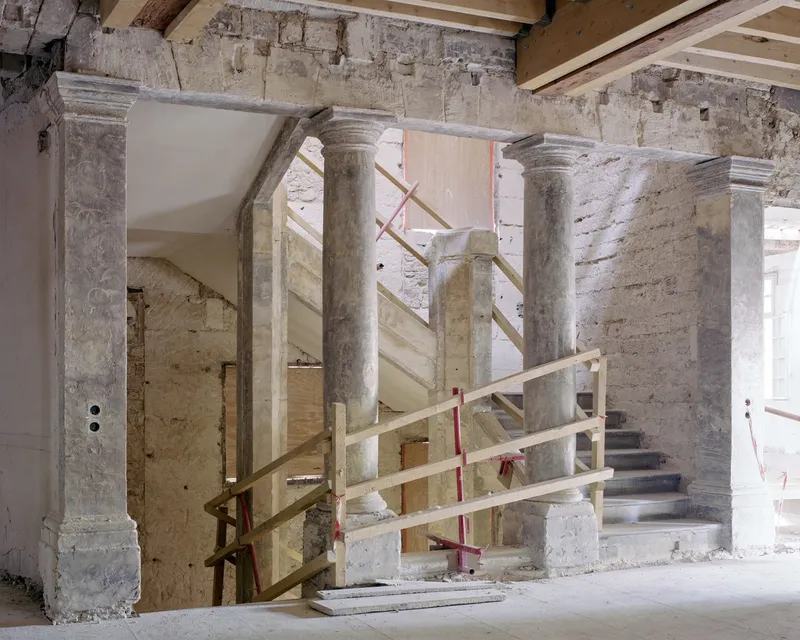
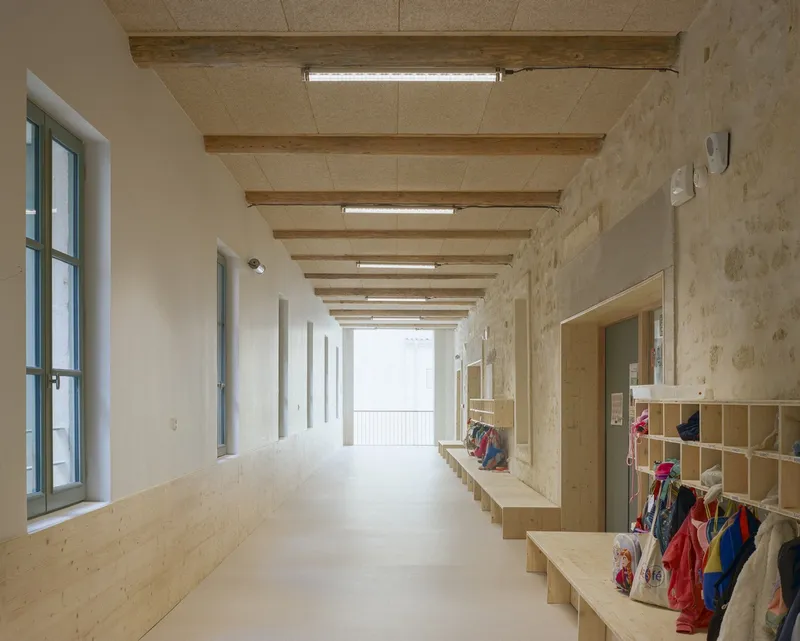
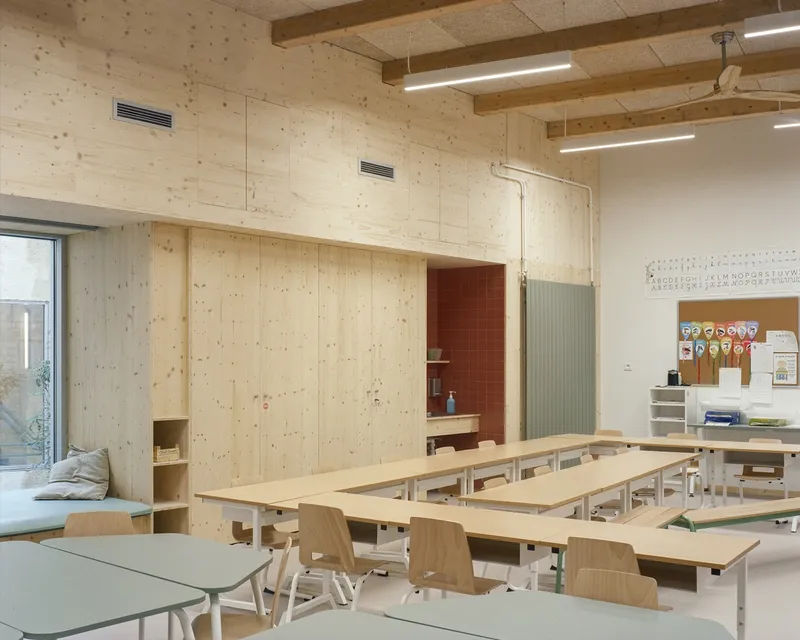
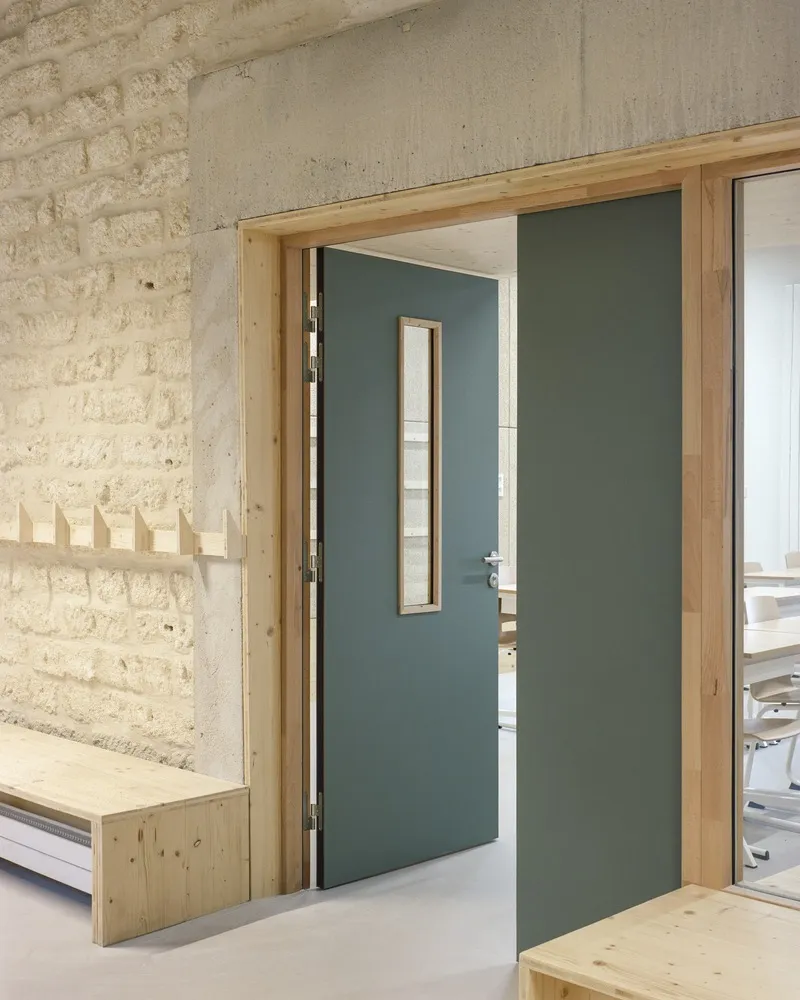
Interior materiality was handled with humility and purpose. Original stonework was uncovered to showcase craftsmanship, while concrete and wood elements were introduced to unify new learning spaces. Concrete, left raw and sandblasted, establishes clear boundaries between classrooms and circulation areas. Wood is omnipresent—used in cladding, furniture, ceilings, and flooring—offering warmth and tactile quality essential for a primary school environment.
Adaptive Reuse as an Educational Tool
Pierre and Colette Soulages Primary School is not just a place of learning—it is an educational artifact in itself. The visible layering of past uses, structural scars, and preserved voids engage children with their built environment, encouraging curiosity and awareness. It exemplifies how adaptive reuse school architecture can elevate educational design while safeguarding urban memory.
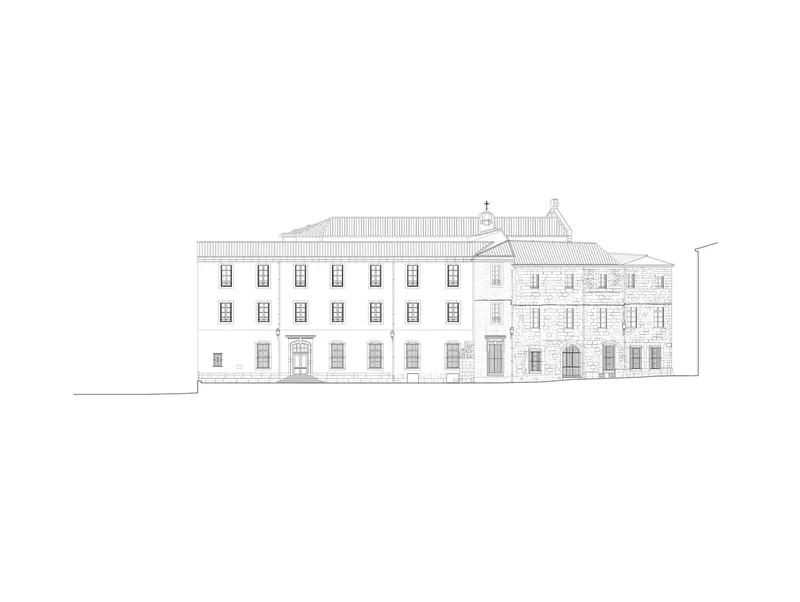
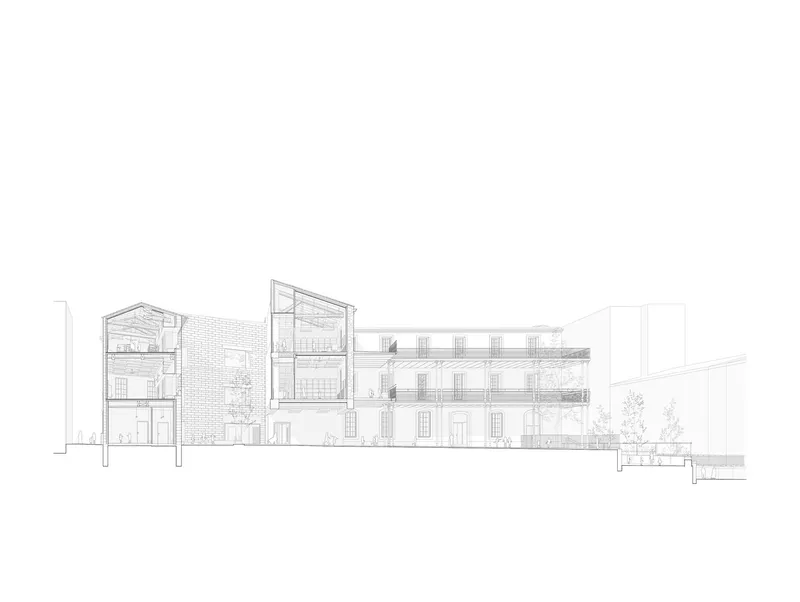

By embracing historical traces and orchestrating thoughtful subtraction, NAS Architecture and GTA have created a luminous, breathable, and inspiring school in the heart of Montpellier. This project demonstrates the profound potential of adaptive reuse in educational architecture—one that respects the past while shaping spaces for the future.
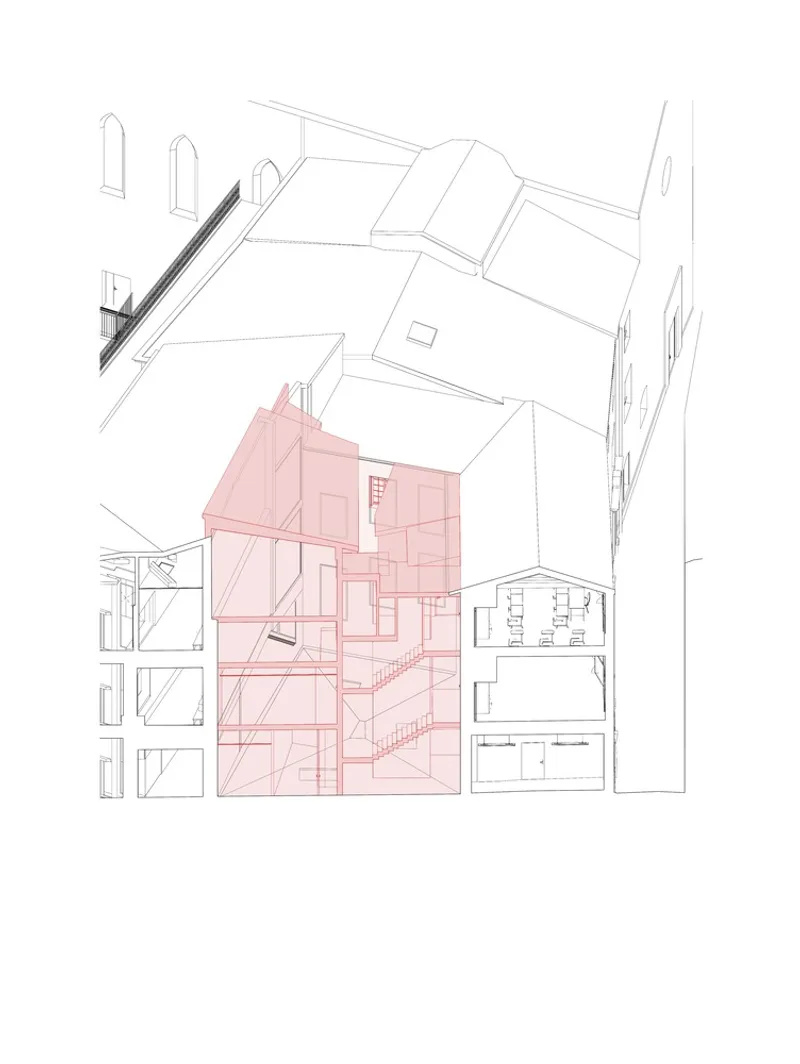
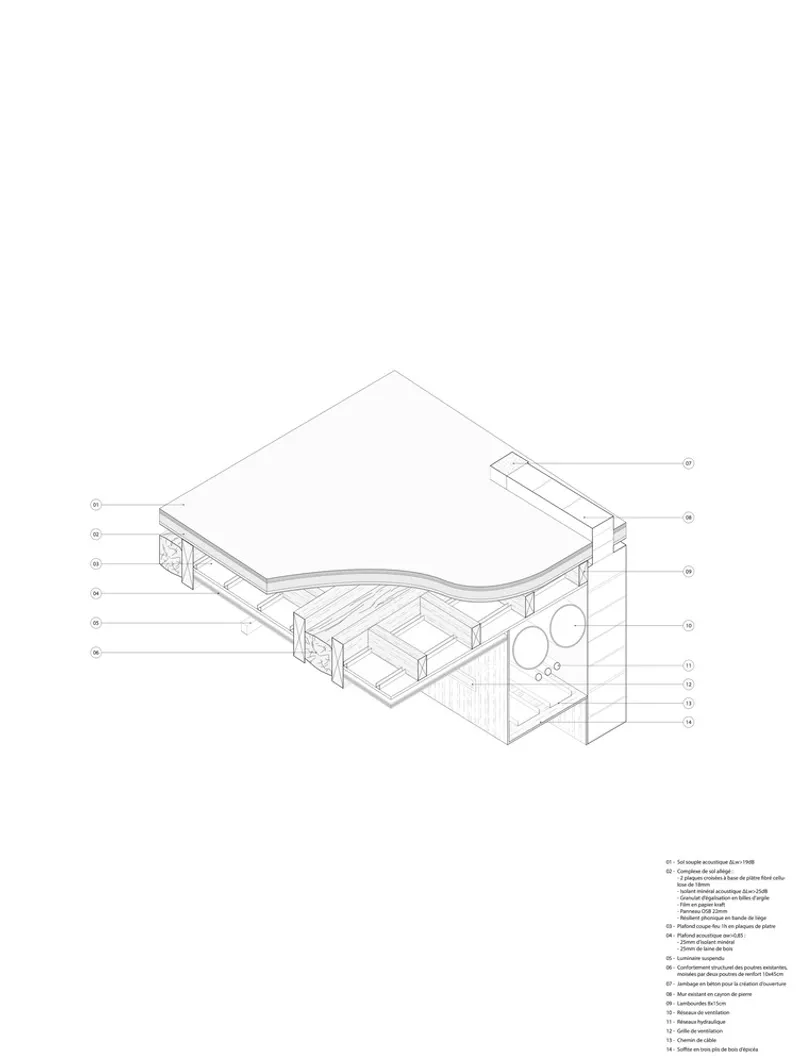
All photographs are works of Severin Malaud, Mary Gaudin


Popular Articles
Popular articles from the community


David Macias Steps a Doorless Stone and Plaster House Down a Tropical Colombian Hillside
In the humid hills of Colombia, Threshold House replaces the front door with an open void and terraces its 850 m² down the slope instead of fighting it.

Cube Design Draws an Ecological Corridor Between Two Shenzhen Hills with the Nankai Building
Beside Shenzhen's container docks, the Nankai Building pairs stacked balconies with a climbing green screen to connect two hillsides across its height.

longwave studio Reorganizes a 112 m² Tainan Apartment Around the Daily Routines of a Family and Two Cats
In Tainan, Taiwan, birch plywood, rust-red furniture and a freestanding plaster wall link arrival, storage, work and family life in one apartment.

David Ortega Stacks a Two-Story Mexico City Penthouse Around a Steel Stair and a Pergola-Shaded Roof Terrace
In Colonia Roma, a 300 m² penthouse uses oak joinery, a planted steel stair and a slatted roof pergola to make a new-build apartment feel like a house.

Similar Reads
You might also enjoy these articles

Gil Mello Arquitetura Tilts a Single Roof Toward the Waterfalls on a Plateau Above Aiuruoca, Brazil
In Aiuruoca, Minas Gerais, a 200 m² house of local labor and reclaimed poles pairs a low valley veranda with a tall mountain one.

U.GA Architects Wraps an Oval Rooftop Pool in Curved Board-Formed Concrete on Busan's Jeollidan-gil
In Busan's Jeonpo-dong, a 454 m² mixed-use block stacks a neighborhood facility, guest rooms and an oval rooftop pool inside spiraling concrete walls.

Felipe Hess Arquitetos Turns a Blind Stone Wall to the Street and Opens a Brazilian House onto a Courtyard and Canal
A canal-front house in Brazil hides behind painted stone and planting, then opens to an olive-tree courtyard, a reed-ceilinged porch and a curving pool.
David Macias Steps a Doorless Stone and Plaster House Down a Tropical Colombian Hillside
In the humid hills of Colombia, Threshold House replaces the front door with an open void and terraces its 850 m² down the slope instead of fighting it.

Explore Pont-Aven School Competitions
Discover active competitions in this discipline

Challenge to design public laboratory

Challenge to reimagine the Iron Throne

Photograph architecture without architects

Illustrate the lost glory of Angkor Wat - Render Challenge
Comments (0)
Please login or sign up to add comments
No comments yet. Be the first to comment!