

An Innovative Pedestrian Bridge at the Baoying Railway Station: Blending Functionality and Aesthetic Appeal
Discover the Lotus-Inspired Pedestrian Bridge: A Fusion of Nature, Functionality, and Urban Memory at Yangzhou's Baoying Railway Station


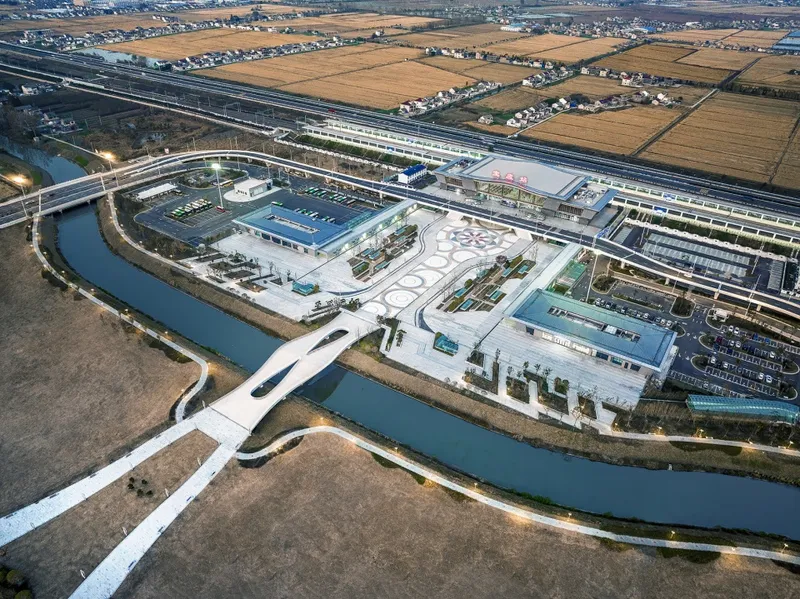
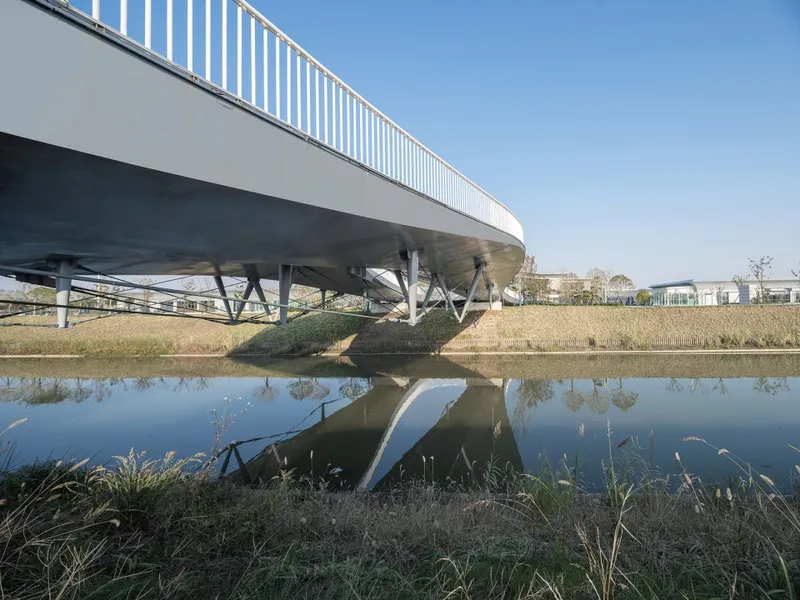
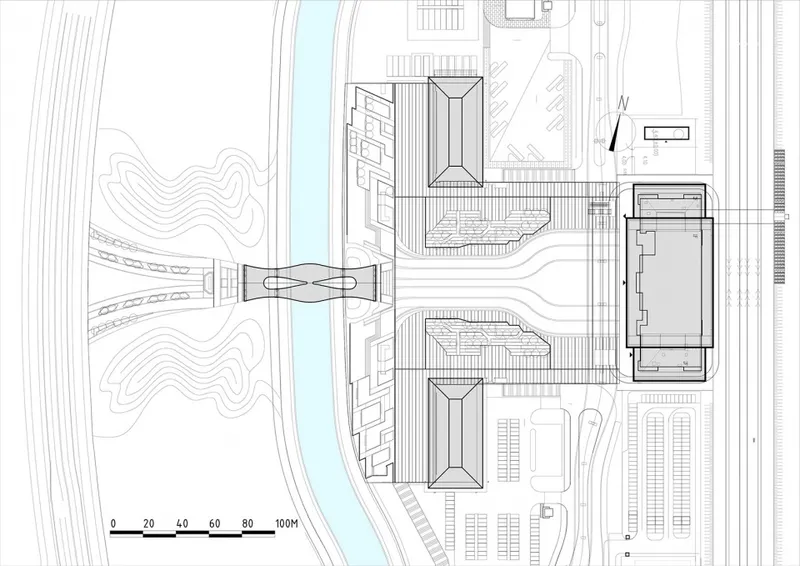
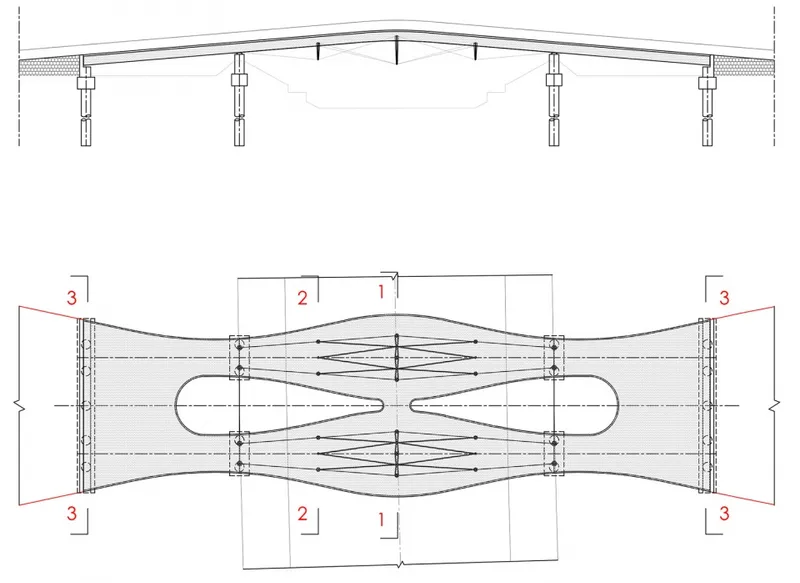
The Baoying Railway Station in Yangzhou has recently welcomed an innovative pedestrian bridge, gracefully spanning the river that flows nearby. This 86-meter-long structure features a deck that varies in width from 17 to 23 meters, making it a truly unique and eye-catching addition to the entrance of the station. The bridge uses a three-span cable-strengthened steel box girder (23+40+23m) and boasts two long openings through the walking deck, offering a picturesque view of the river below. The gentle 1:12 slope of the bridge deck ensures easy accessibility for all users.

Architectural Vision: Lotus Leaf-Inspired Elegance
Inspired by the rich cultural symbolism of the lotus root, which is prevalent in Baoying's art history, the pedestrian bridge's design mimics the gentle curves and contours of a lotus leaf. The result is a structure that appears to float delicately above the river, embodying the essence of natural beauty and grace. This organic form complements the surrounding landscape and seamlessly integrates with the Baoying Railway Station's entrance square.

Functional Form: Bridging the Gap with Style
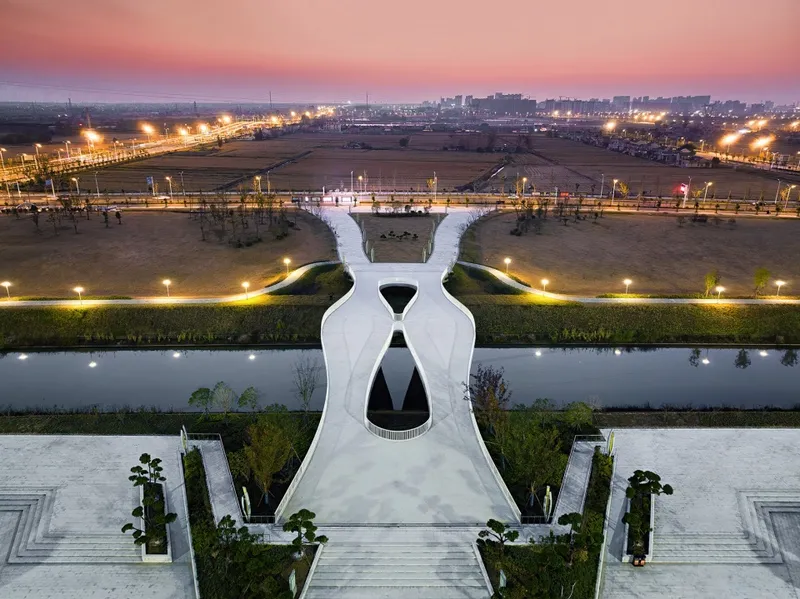
Designed to provide a safe and convenient passage for pedestrians, the bridge connects the two sides of the river, enhancing the flow of foot traffic between the station and the surrounding areas. However, the architects went beyond this primary function, incorporating thoughtful design elements that create a visually engaging and enjoyable experience for users. The varying widths of the walking deck, for instance, offer a larger resting space in the center, transforming the bridge into an extension of the station's front square.


Dynamic Viewing Experiences
The pedestrian bridge's design also emphasizes the importance of creating visually stimulating experiences for users. The long openings through the deck provide a striking contrast between light and shade, while offering different perspectives of the surrounding landscape. These varying viewpoints, both on and around the bridge, contribute to a multi-layered visual experience that enriches users' time spent traversing the structure.

Precision and Clarity in Structure
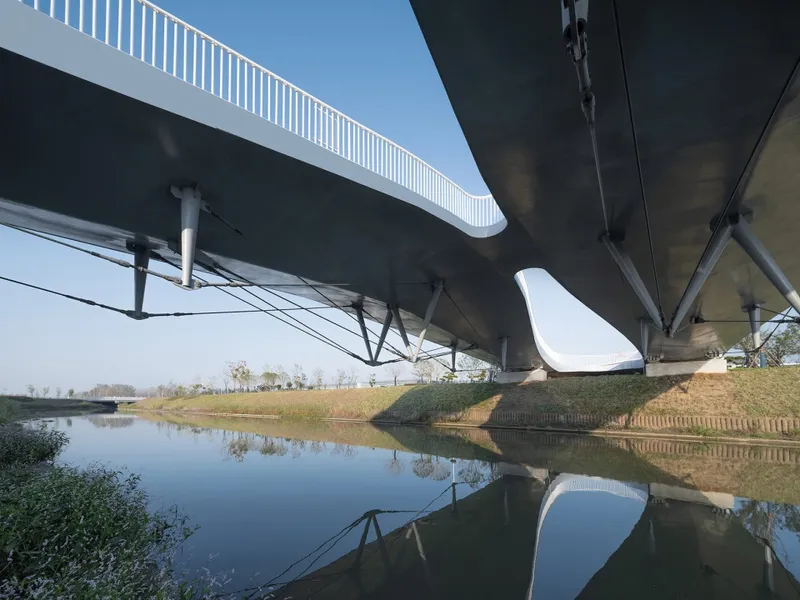
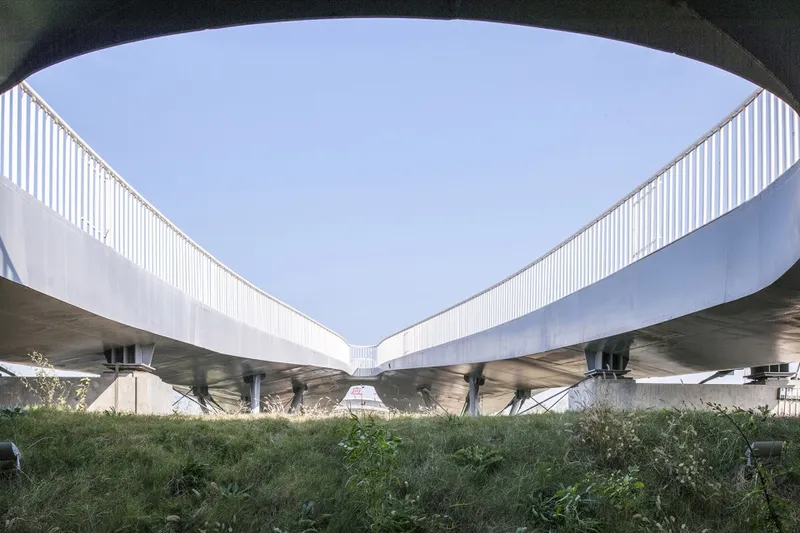
The bridge's design showcases an elegant structure achieved through precision and clarity. By transforming the singly supporting beam bridge into a continuous one, the architects were able to redistribute internal stresses and reshape the form to achieve a harmonious balance. The slim, reverse-triangle outline of the deck section is supported by tension cables and compression bars, creating a visually lightweight and graceful appearance that complements the railway station's surroundings.

A New Landmark Rooted in Urban Memory
This innovative pedestrian bridge not only serves a practical function but also establishes itself as a new landmark in the area. Its design is deeply rooted in the local culture and environment, and through its delicate balance of form and function, it offers a memorable experience for all who traverse it. The bridge is poised to leave a lasting impression on the urban landscape and become an enduring part of the city's collective memory.
The Baoying Railway Station pedestrian bridge in Yangzhou is an exceptional example of how architecture can seamlessly blend functionality with aesthetic appeal. By drawing inspiration from local art history and the natural form of the lotus leaf, the architects have created a landmark structure that is both visually stunning and practical. This innovative bridge stands as a testament to the power of creative design and the potential for architecture to enrich the urban landscape and enhance the everyday experiences of its users.


Project details:
Project name: Baoying High Speed Railway Station Pedestrian Bridge(Lotus Leaf Bridge)
Client: Yangzhou Baoying County Transportation Bureau
Location: Yangzhou Baoying
Span (length): 23+40+23m (total length: 86m)
Width: 23m max, 17m min
Structural form: Steel Box Girder
Design year: 2019
Completion year: 2021
Architect in charge:Zhang Bing & Atelier Groundwork Architecture ( Institute Of Architecture Design And Planning Co., Ltd, Nanjing University);
Design General Contractor: China Design Group Co., Ltd
Design Creation Team:Zhang Bing, Wang Xinghong (Atelier Groundwork Architecture), Dai Hang (School of Architecture, Southeast University); Yuan Aimin (College of Civil and Transportation Engineering, Hohai University), Sun Pengcheng, Wu Lijun, Zhao Muran, Zhu Kewei (China Design Group Co., Ltd)
Photo credits: Cui Xufeng


Popular Articles
Popular articles from the community


David Ortega Stacks a Two-Story Mexico City Penthouse Around a Steel Stair and a Pergola-Shaded Roof Terrace
In Colonia Roma, a 300 m² penthouse uses oak joinery, a planted steel stair and a slatted roof pergola to make a new-build apartment feel like a house.


Singing Woman: An Opera House That Performs Before the Curtain Rises
Ovidiu Cristian Pavel's conceptual opera house translates Estonia's choral identity into a sculpted waterfront landmark facing the Baltic Sea.

FCC Arquitectura Expands a Portuguese Granite House with a Board-Marked Concrete Wing
In Portugal, JV House pairs a cleaned-up whitewashed and granite dwelling with a timber-shuttered concrete extension, courtyards and a garden pool.

Juan García Correa, John González and Claudia Rueda Sink a Circular Amphitheater into a Manizales Engineering Building
On the La Nubia campus in Manizales, Colombia, the S1 Building folds labs and offices into a hillside of ramped lawns that double as a campus route.

Similar Reads
You might also enjoy these articles

Rede Arquitetos Turns Circulation into Civic Space at the Educar II SESC School in Fortaleza
In Fortaleza, Brazil, Educar II SESC-CE trades a signature form for mesh screens, yellow thresholds and courtyard walkways built for equatorial heat.
116 Rokeby Building, Collingwood
Sustainable Collingwood office building featuring double-skin façade, natural ventilation, rooftop amenities, and carbon-neutral design focused on wellbeing and longevity.
Contemporary Apartment Renovation in Spain: RV House by BIAN Opens Up to the Sea
A minimalist 1930s apartment in Santander is transformed into a flexible, sea-facing home through contemporary Spanish renovation.
3 Marías House: A Contemporary Mediterranean Courtyard Retreat by Bajet Giramé + Burckhardt
Mediterranean courtyard home blending traditional architecture with modern design, terracotta flooring, flexible interiors, sustainable climate strategies, and garden integration.

Comments (0)
Please login or sign up to add comments
No comments yet. Be the first to comment!