

MRD Arquitectos Turns a Polanco Townhouse into a Restaurant That Feels Like a Rural Homestead
AÚNA Restaurant in Mexico City strips fine dining back to raw materials, courtyard greenery, and the warmth of Mexican craft.


Polanco is one of Mexico City's most polished neighborhoods, a district of luxury boutiques, embassy residences, and restaurants that compete on spectacle. AÚNA, designed by MRD Arquitectos, takes a deliberate step in the opposite direction. Housed in a converted townhouse, the project trades theatrical finishes for exposed brick, volcanic stone, and pine wood, building a dining space around the logic of a traditional Mexican courtyard home rather than a sleek commercial box.
What makes the project worth studying is how directly it ties its architectural argument to a culinary one. AÚNA operates as two venues in a single shell: a café for daytime service and a restaurant for dinner. The architects, working alongside a full roster of Mexican artisans, ceramists, landscapers, and chefs, designed the space so that material honesty and seasonal change are not just talking points but lived conditions. Ferns crowd the central courtyard. Skylights dapple the corridors. The open kitchen is not hidden but staged as part of the experience. Architecture here is not backdrop; it is a co-author of the meal.
Arrival Through the Green
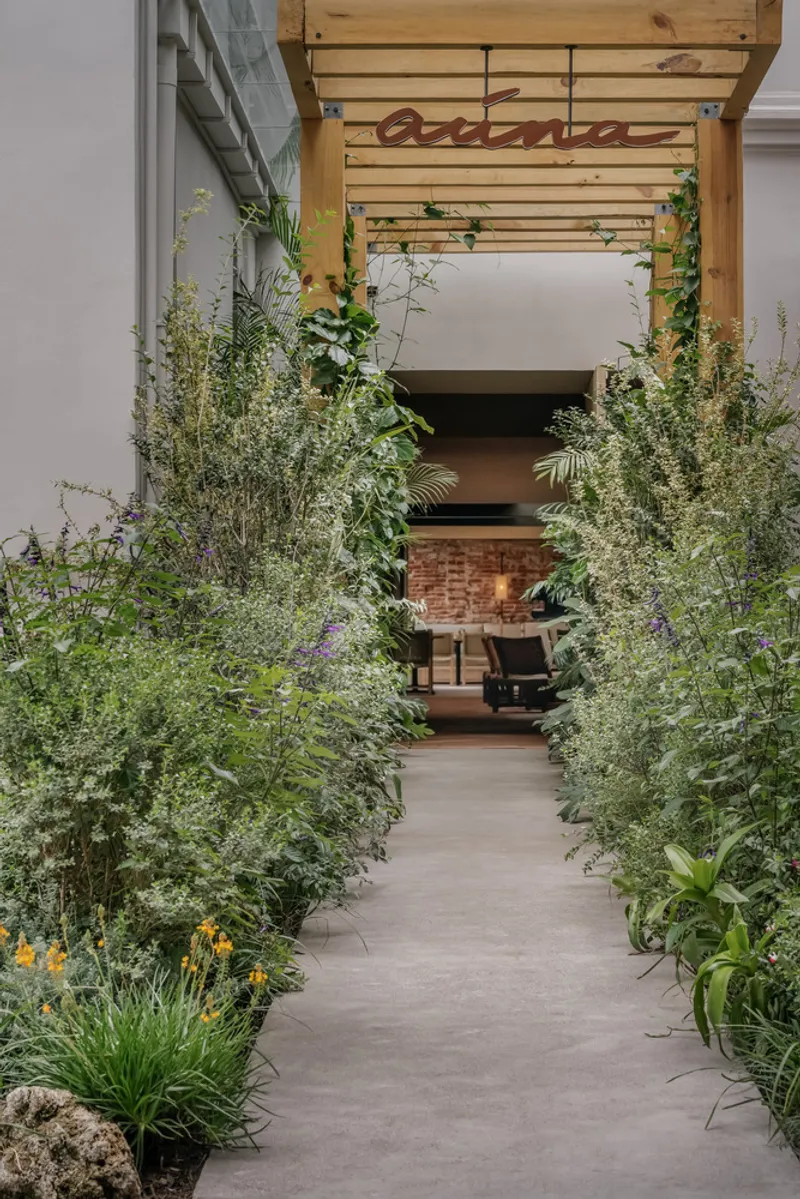

Entering AÚNA feels like stepping off a busy Polanco street and into a hacienda corridor. A timber pergola shelters a narrow pathway flanked by planted beds, compressing the view and slowing the pace before the interior opens up. It is a decompression sequence, one that signals to the visitor that the noise of CDMX has been left at the threshold.
The top-down view of the courtyard reveals just how central planting is to the spatial plan. Terracotta-tiled walls and ceilings frame a dense pocket of greenery, locking the landscape into the section of the building rather than pushing it to the perimeter. The courtyard is not ornamental; it is the organizing spine that separates café from restaurant and channels light down into the deepest rooms.
The Courtyard as Architectural Engine
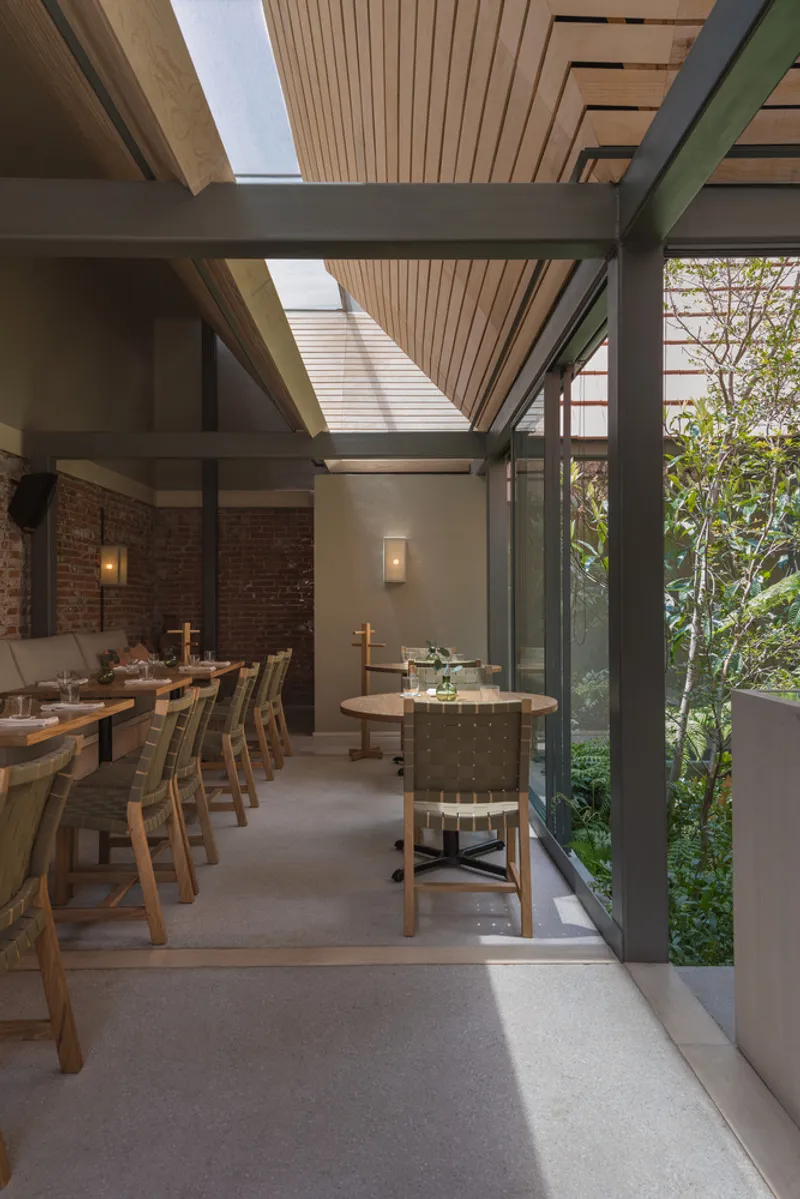
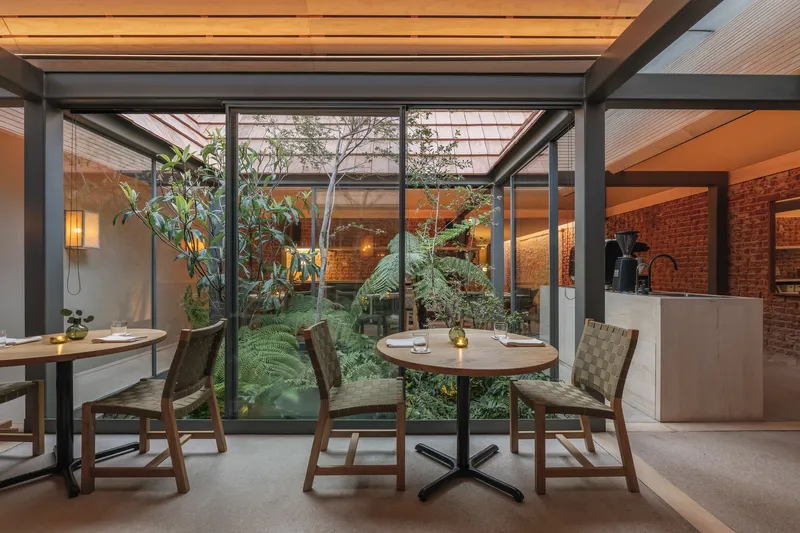
Traditional Mexican residential architecture uses the patio as a thermal regulator, a social anchor, and a light well. MRD Arquitectos imports that logic wholesale. The main dining area wraps around an interior courtyard garden thick with ferns and small trees, its boundary defined by steel columns and generous glazing. At dusk, the garden glows inward, turning greenery into a lantern for the surrounding tables.
Inside the dining room, a slatted timber ceiling floats beneath exposed steel beams, filtering zenithal light during the day and softening artificial light at night. The glazed wall between the dining room and the courtyard can be read as a seasonal screen: iron and glass replace the solid masonry of the original house, connecting diners to weather, time of day, and the life cycle of the plants just beyond the table. It is a strategy that keeps the space from ever feeling static.
Raw Materials, No Coatings
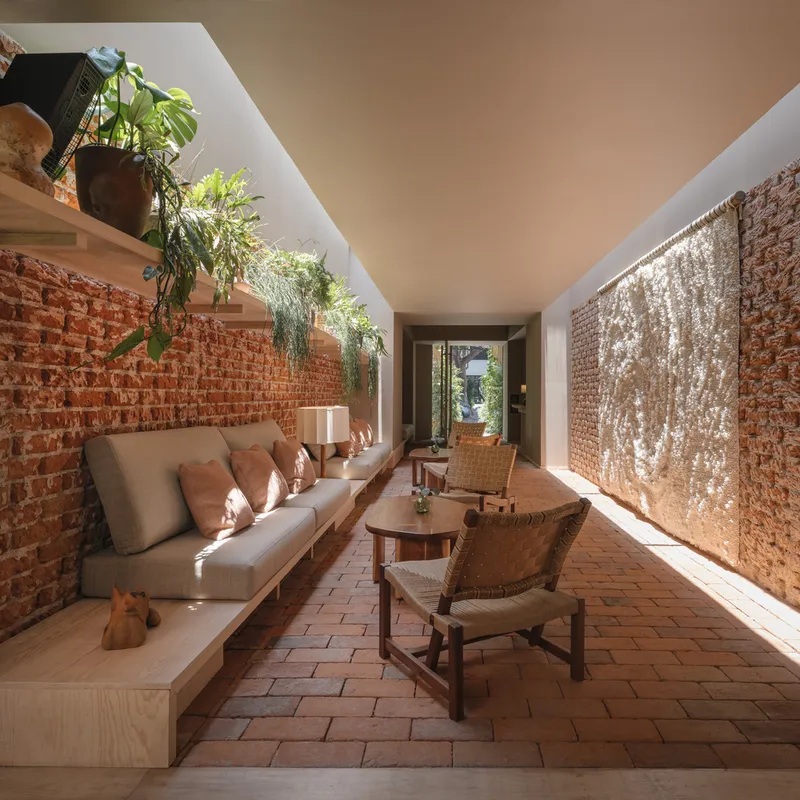
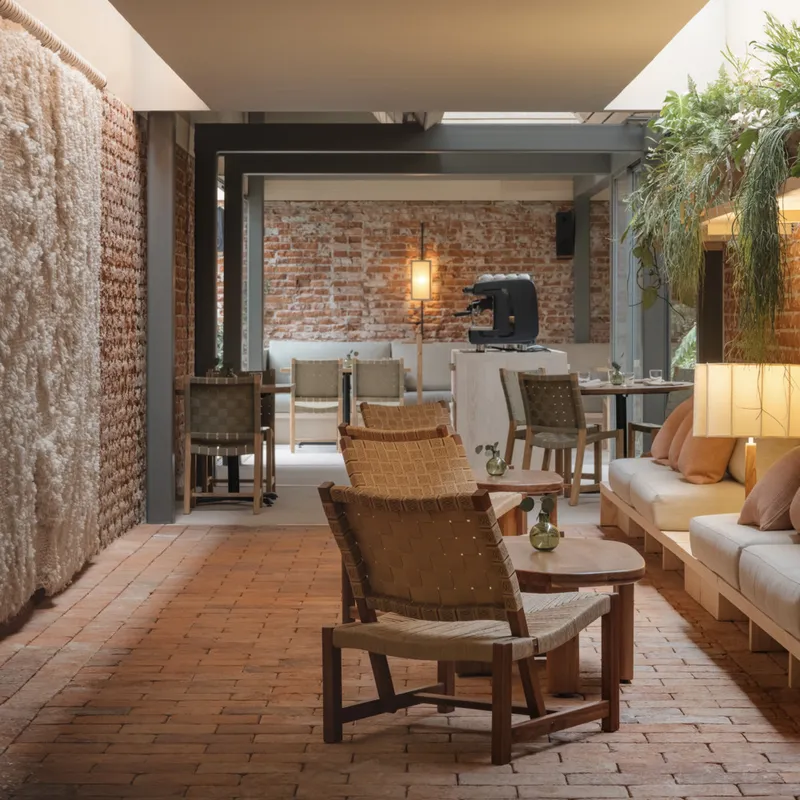
The material palette is intentionally restrained: exposed brick, terracotta tile, volcanic stone, and pine. There is no plaster overlay, no paint, no veneer. Walk down the main corridor and you see the project's conviction laid bare. Brick walls catch patches of dappled sunlight from overhead skylights, producing a moving texture that no applied finish could replicate. The terracotta floor underfoot is warm in tone and cool to the touch, a quiet thermal gesture in a city that oscillates between heat and chill.
Viewed from the brick-paved terrace looking back through the steel frame into the dining area, the layering of materials becomes legible. Brick transitions to steel, steel to glass, glass to garden. Every joint is honest. MRD Arquitectos describes the project's values as honesty, humility, and the simplicity of raw materials, and the built result backs up the claim without needing a manifesto pinned to the wall.
Intimate Rooms and Controlled Light
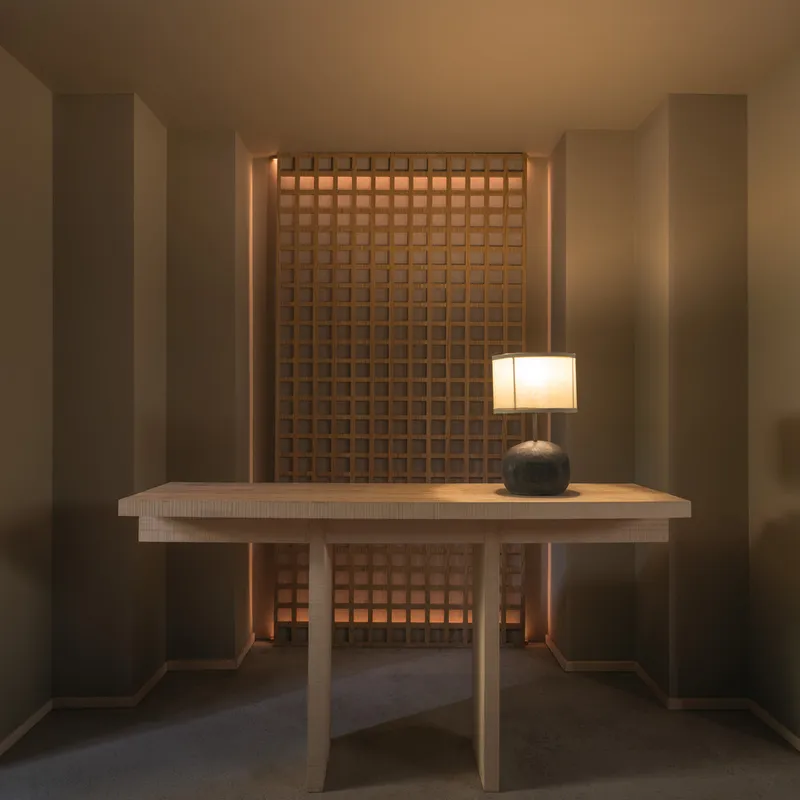
Not every meal at AÚNA happens in the main hall. A small private room features a backlit grid wall of terracotta tiles, turning a humble building material into a luminous screen. A heavy timber table anchors the center, and the ambient lighting is tuned low, creating a space that feels more like a farmhouse study than a private dining room. The effect is intimate without being precious.
Across the project, light is treated as the most important finish. Zenithal skylights, backlit tile screens, and the open courtyard all modulate how much daylight reaches each zone. The café side receives generous morning sun; the restaurant side darkens for evening service. Rather than relying on curtains or dimmers alone, MRD Arquitectos designed the architecture itself to shift mood between the two programs that share the building.
Why This Project Matters
AÚNA is a reminder that the most effective hospitality architecture often subtracts rather than adds. In a city saturated with restaurant openings that lean on imported marble and Instagram-ready neon, MRD Arquitectos built a space from the same materials a rural Mexican mason would recognize: brick, stone, tile, wood. The restraint is not minimalism for its own sake; it is a design argument that the experience of a meal is shaped more by light, air, and craft than by expensive surfaces.
The project also demonstrates a genuinely collaborative model. Every contributor, from ceramist to chef to landscape designer, is Mexican. The result is a space where the architecture does not merely house a culinary concept but co-produces it. Courtyard planting responds to the seasons. The open kitchen invites diners into the cooking process. Even the corridor sequence from street to table is choreographed like a course. For architects interested in how spatial design can intensify the rituals of gathering and eating, AÚNA offers a compelling, grounded case study.
AÚNA Restaurant by MRD Arquitectos, Polanco, Mexico City, Mexico.
About the Studio
Share Your Own Work on uni.xyz
If projects like this are the kind of work you want to make, uni.xyz is a place to publish your own, find collaborators, and enter design competitions.


Popular Articles
Popular articles from the community


Juan García Correa, John González and Claudia Rueda Sink a Circular Amphitheater into a Manizales Engineering Building
On the La Nubia campus in Manizales, Colombia, the S1 Building folds labs and offices into a hillside of ramped lawns that double as a campus route.

Jaramillo Van Sluys Arquitectura and Urbanismo Turn a Demolished Registry Lot in Quito into an Orchard Plaza
In Quito's Centro Histórico, a 2,800 m² plaza exposes the San Agustín convent wall and redraws its lost Augustinian orchard in volcanic stone.

U.GA Architects Wraps an Oval Rooftop Pool in Curved Board-Formed Concrete on Busan's Jeollidan-gil
In Busan's Jeonpo-dong, a 454 m² mixed-use block stacks a neighborhood facility, guest rooms and an oval rooftop pool inside spiraling concrete walls.

LT2A and OPEN Architectes Thread a Brick and Glass High School Through a Wooded Belgian Campus
In Braine-l'Alleud, a 3,000 m² wing for Collège Cardinal Mercier pairs pale brick with a glazed colonnade, deferring to a small chapel and a dense wood.

Similar Reads
You might also enjoy these articles


Hodi-Mandai Geram
Project Function: Preservation and revitalization of the Intangible heritage and socio-spatial identity of the Hodi by Housing, Cultural Memory Center, Sacred Grove, landscape, local tourism economy


Olio Towers: A Mid-Rise for Performers That Fuses Housing, Rehearsal, and Stage
Located blocks from Houston's Theater District, this modular tower stacks living units around a central performance atrium.

Oasis: Modular Green Housing Carved into Dhaka's Urban Fabric
A shortlisted Plugin Housing entry reclaims unauthorized settlements in Dhaka with stepped concrete volumes, green roofs, and ventilation-driven design.

Black Hole: A Floating Megastructure for the Post-Physical Era
Emiliano Mazzarotto envisions a spherical, self-scaling arena where e-sports, digital hotels, and holographic stadiums replace traditional public space.

Explore Hospitality Building Competitions
Discover active competitions in this discipline

Challenge to reimagine the Iron Throne

Photograph architecture without architects

Illustrate the lost glory of Angkor Wat - Render Challenge

Design challenge to reuse E-waste
Comments (0)
Please login or sign up to add comments
No comments yet. Be the first to comment!