
Hospitality Building
Designing spaces for hospitality, wellness, and community gathering that balance human needs with environmental context.

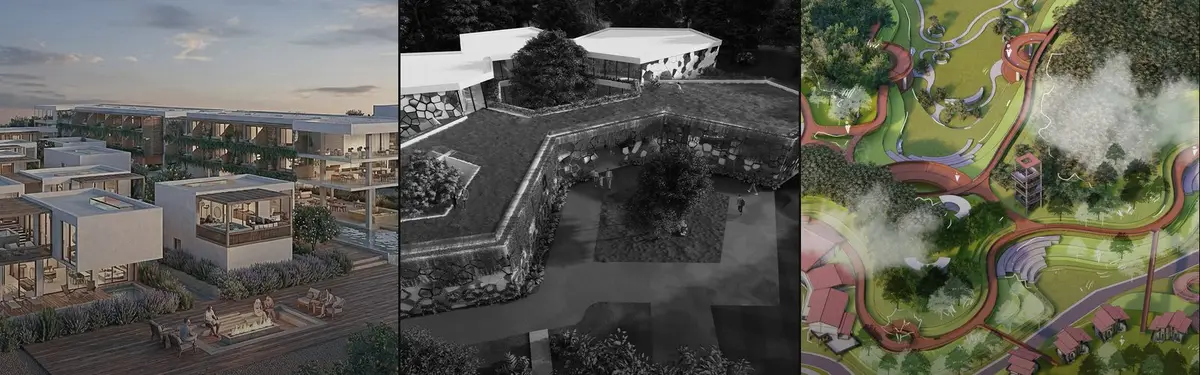
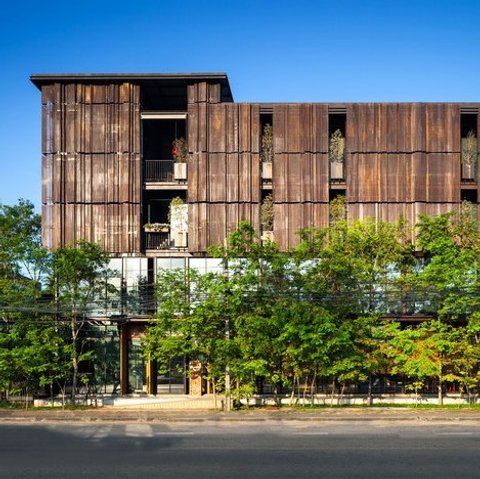
Hospitality refers to behavior extended towards guests and visitors. It is characterized by creating comfortable environments for a short or long period of time. A hospitality building thus encompasses a wide range of such environments, from guest houses, resorts, restaurants/cafes to hotels and other amusement and leisure facilities. These buildings act as a major element of the hospitality industry in terms of creating an impression and offering varying levels of comfort to a guest/visitor. Diverse cultures and subcultures define hospitality through varied traditions, foods/beverages, and environments. Architecture thus plays an important part in not only giving a hospitable environment but also in preserving culture and traditional methodologies. A well-designed hospitality building is intended to enable guests to truly experience space while maintaining the right balance between its features. Work or pleasure, adventure or relaxation, party or unplug –a hospitality building leaves an impression long after the visit has ended. Img 1: Cafe design-Melange, Editor’s Choice (Credits-Manasi Talkar)What is hospitality? Hospitality is a relationship between guests and hosts. Hospitable behaviors are often defined by the care that the hosts extend to the guests, strangers, and visitors within their surroundings by helping them feel welcomed, comfortable, and well taken care of. Hospitality can take on different forms and may include activities such as hosting someone in your own home, offering a visitor some food or beverage without any requests being made; thanking people when they help you with a task or errand, even an informal gesture such as giving directions or answering basic questions. Img 2: A namaste serves as a sign of respect and welcomes to the guests in India (Credits-nicepng.com)The nature of hospitality has evolved with time, for instance in Ancient Greece one was expected to make sure the needs of all guests were met – but only those who abided by a set code of behavior were deemed worthy, defining social position in Greek society. In India and Nepal, the philosophy of Atithi Devo Bhava is paramount - meaning “the guest is god”. Jewish tradition often says that this includes extending hospitality to strangers, offering food, comfort, and entertainment during their time of entrance into our territory and space. In Christianity, hospitality was not only extended to strangers but also to those who were considered enemies. This expectation was particularly evident during war, which played an important role in the formation of early Irish identity. Individuals went to great lengths to ensure that their enemy received good hospitality prior to battle, providing their guests with food, wine, and fuel.Img 3: In Japan, “Omotenashi’ is an elaborate tea ceremony for guests and is a part of looking after a guest wholeheartedly (Credits Motenas Japan)Thus various cultures define hospitality in their own ways with a common link for welcoming and providing distinct food/drinks to visitors. Cultures and subcultures vary in the extent to which one is expected to show hospitality to strangers, as opposed to personal friends or members of one's ingroup. Today it is associated with the same elements of food, beverages, and stay but on a global scale with diplomacy and art/education of engaging guests, providing for their needs and making them feel welcome. The hospitality industry is a vital sector of the economy, with job opportunities growing at a rapid rate. The industry continues to thrive and provide economic opportunities as its annual growth forecasts soar. According to the hospitality research firm STR in its projections for U.S hotels, job availability is expected to increase by 230/year through 2020, very promising numbers indeed. Hospitality is one of the most resilient, adaptable, and dynamic industries on the planet. It changes rapidly and is full of innovation, so factors such as technology are constantly being implemented to improve client experience. Img 4: The hospitality industry is now an important economic and social construct of society (Credits Hotelogix)What is hospitality architecture? Hospitality and leisure environments are becoming more popular and continue to generate excellent guest experiences in their facilities. As a result, hospitality architecture is the need of the hour, it provides solutions such that they offer long-term value to owners while welcoming guests with exceptional experiences. It can achieve aesthetics through creative space planning ideas, proven sustainable strategies, and security and technology innovations. The architectural design of a hospitality structure adds personal touches, amenities, and richer experiences, creating places to serve guests while achieving cost-effective solutions for owners and operators. Img 5: Hospitality serves a numerous range of people (Credits-Dad Hotel Photo: @saharbashi) Hospitality architecture has a tremendous impact on the people who visit. Great hospitality architecture enables guests to immerse themselves in your business for their purpose (be it business, pleasure, party, etc.) and at the same time consider their needs. Architecture that works for people will ensure a satisfied visitor or client who wants to return again in the future.Why are hospitality buildings important? The need to unwind and relax in recent times is much needed due to increased stress, imbalance in work-life, and global political pressure on cities/lifestyles. Vacation is a recent invention that has become more of an essential necessity in modern times. The past couple of centuries have seen people taking time off from their usual routine lives as a way to rejuvenate themselves with regards to the wear and tear work can put them through.Hospitality architecture thus seeks to make these vacations and breaks better and responsible. It also works with hotel owners and operators to create experiences that reinforce business guests’ loyalty to brands. With today's hospitality industry focusing on exceptional guest service, the architecture enables properties to adapt and match changing traveller needs. While architecture is a powerful tool for creating distinctive stays, it's also a way of communicating the culture of the region/company/business. Thus enabling them to tell a tale of the place and become an integral part of people's travel experience. Moreover, due to issues such as rising climate change and increasing risks of global diseases like COVID-19, a flexible design for hospitality buildings that is sustainable and energy-efficient is critical for the future of the hospitality industry. What are the building categories under hospitality architecture? A hospitality building serves as a gateway to the city, providing visitors with an introduction to the best that the city/region has to offer. They also act as a "living room" of the city, a gathering spot for a meal, a drink, a meeting, or a celebration. Buildings that come under hospitality architecture are given below:Img 6: Building categories for hospitality building Architecture Competitions Architecture contests have a long history, dating back over 2,500 years. Several cathedrals throughout the Middle Ages, as well as the Acropolis in Athens, were built as a result of design competitions around 448 B.C. Many of the Church's efforts during the Renaissance were decided through design competitions in which all kinds of artists brought their varied talents to build up something grand in every sense of that word. In recent times an architectural competition form has taken on many forms. One form is a design challenge in which a company or the government planning to build a new structure invites architects to submit designs and plans.Architectural competitions are a great way to find creative design enthusiasts who not only have the relevant skills for designing and developing your project but who also share your vision regarding the problems affecting our society today. Types of the architecture competitions are:-Competitions that are open to all (international, national, or regional) -Competitions for projects or for ideas: based on whether the intention is to build the project or to generate new ideas. -Anonymous or cooperative procedures: anonymity supports greater objectivity during the evaluation and award-granting deliberations. -Student or institute design competitions (held on university/state/country level for individual or group of students only) Which were/are the popular competitions for hospitality architecture?• LIV Hospitality Design Awards• Seo Micro Hotel• Alps Wellness Resort Img 7: 3rd winner for Alps Retreat - Stefani Fariawati Hasan, Muhammad Agus Ali Ridho, Gregorio Eben Heizer (Indonesia) • Youth House Complex- Iraq• Travel Unravel (rest stops)• Eating-Alternative designs for restaurants • COOK8 International Design Competition• Rest and Service Area (RSA)" Design Competition• Opportunity Space• Ostend Beach• Walk CompetitionImg 8: Eating – Alternative design for restaurants Winner: “Le Gourmet Errant” / Alberto Bovo, Giulia Elizabeth MalleyImg 9: Runner up for We Australia: Oasis of Kakadu• Brewed• We Australia• Thermal Bath• Tropical House• Symbiotecture• Green Retreat• Jack and Giant Hotel• Pour• FootprintsImg 10: Verge geopark: Editor’s choice for symboitecture (Credits- Mark Manrique)Explore more projects in hospitality and architecture:UNI Design competitionsUNI is a global network of architects and designers who are solving some of the most challenging problems around the globe. UNI brings together the world's largest pool of design challenges that are curated by the finest architecture academicians and professionals globally. Since 2017, UNI has hosted more than 200+ architecture competitions for various idea level to realization level briefs. In the past, UNI has helped 50+ organizations, universities, and government bodies to use our platform to generate architecture and design solutions through competitions.Explore current challenges that explore the relationship between hospitality and architecture:Discover other competitions: https://uni.xyz/competitions