
Australian Embassy in Washington D.C. by Bates Smart
A contemporary Australian embassy in Washington D.C., blending landscape-inspired form, cultural identity, transparency, and sustainable diplomatic architecture.

A Contemporary Diplomatic Landmark Expressing Australian Identity, Culture, and Sustainability
A Civic Presence on Embassy Row
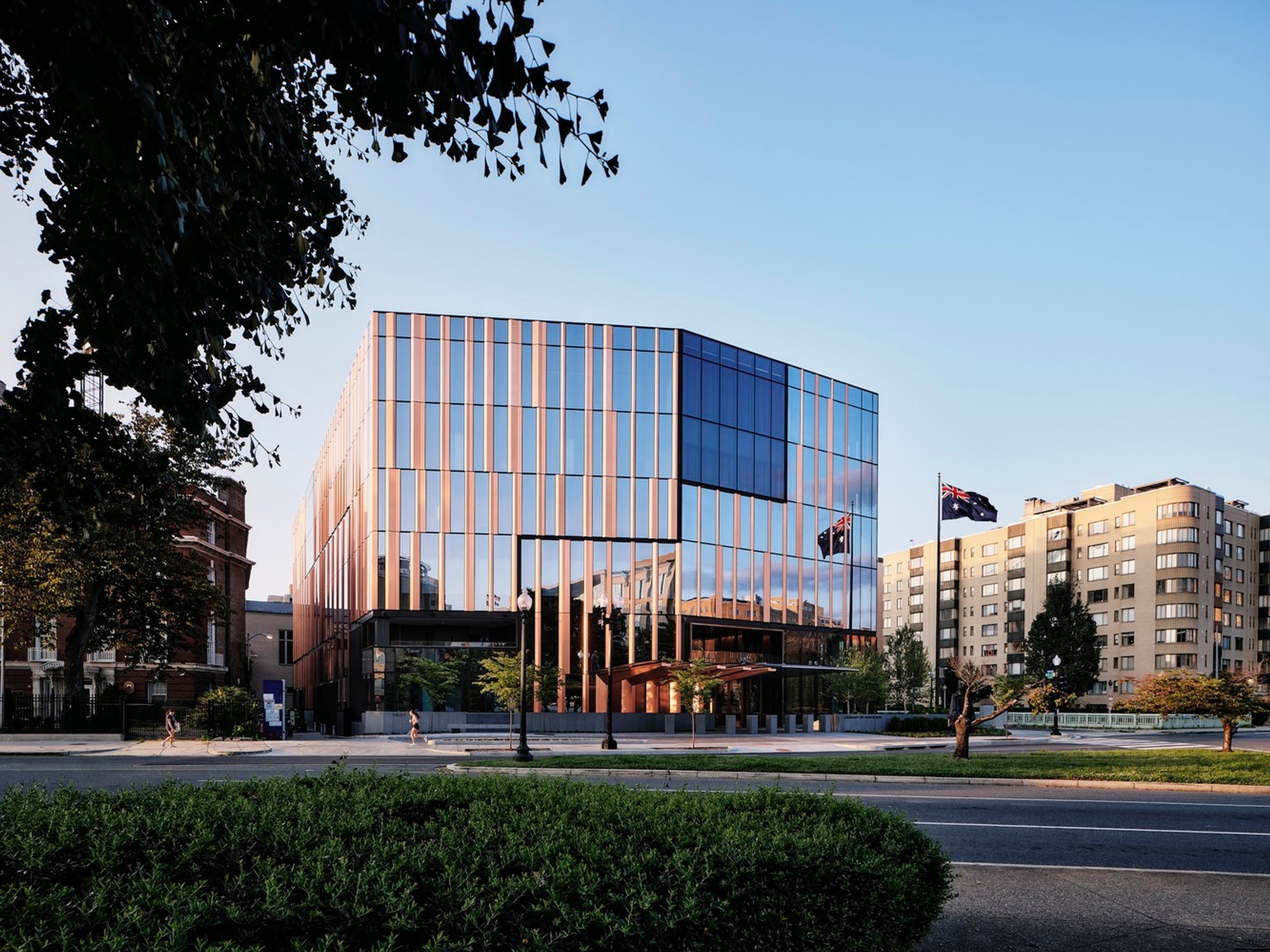
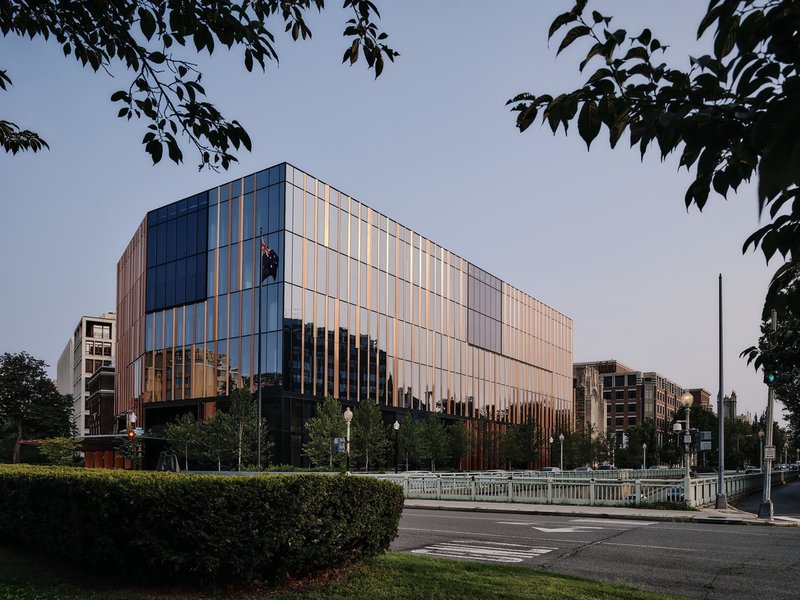
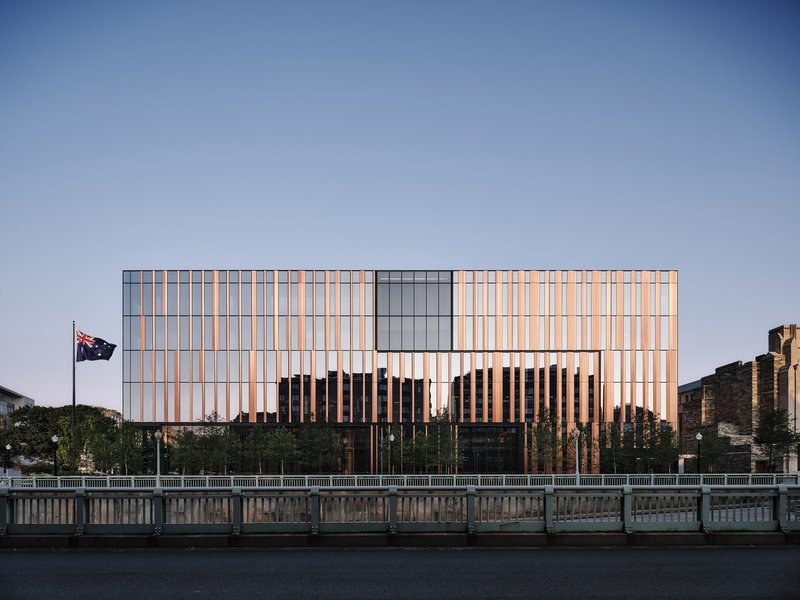
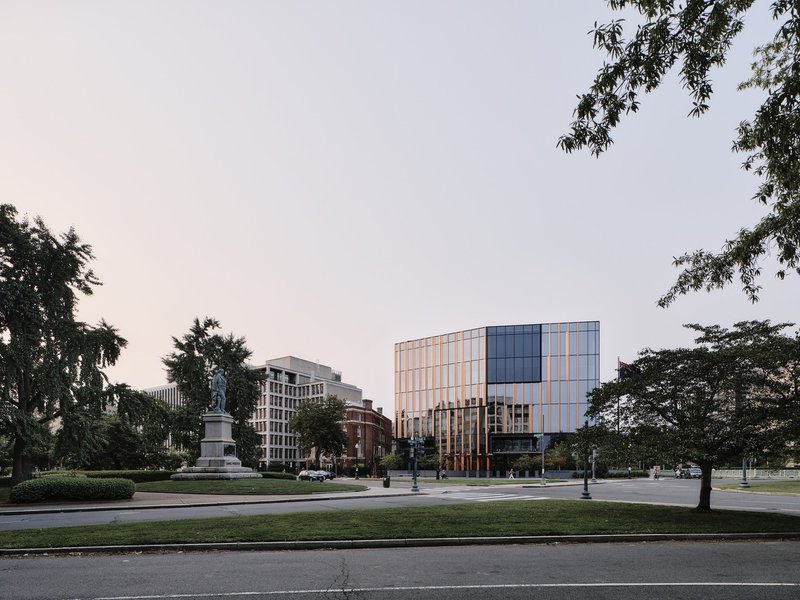
The Australian Embassy in Washington D.C., designed by Bates Smart and completed in 2023, represents one of Australia’s most significant diplomatic presences abroad. Located at Scott Circle, where 16th Street meets Massachusetts Avenue on the renowned Embassy Row, the project completes a prominent urban junction while reinforcing the long-standing political and cultural relationship between Australia and the United States. With a total area of 19,890 square metres, the embassy functions not only as a secure diplomatic facility but also as an important civic and cultural destination within the capital city.
The architectural approach carefully respects Washington D.C.’s historic urban fabric while asserting a distinct national identity. The embassy addresses multiple urban axes, including direct visual and symbolic connections to the White House, and negotiates a transition between the residential character of the northern precinct and the more commercial context to the south. This sensitivity to site, scale, and civic responsibility positions the embassy as both a dignified institutional building and a welcoming public presence.
Architectural Form Inspired by the Australian Landscape
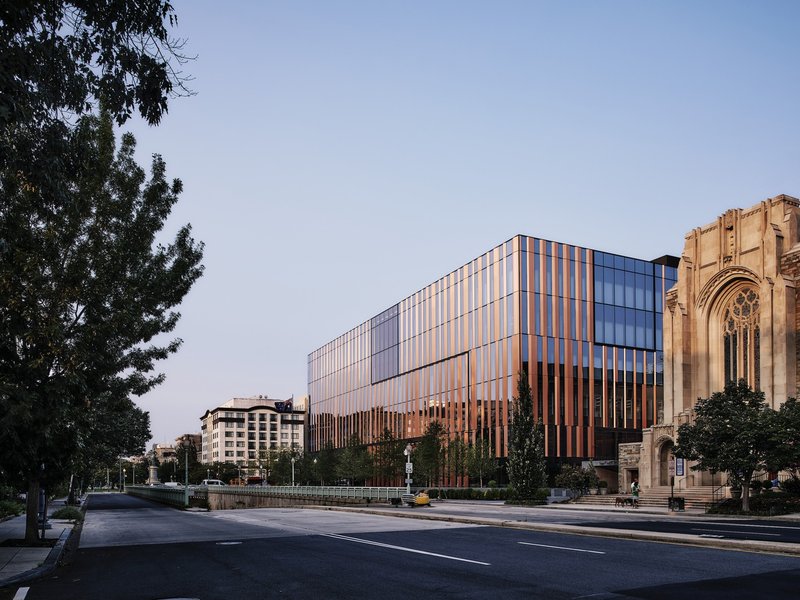
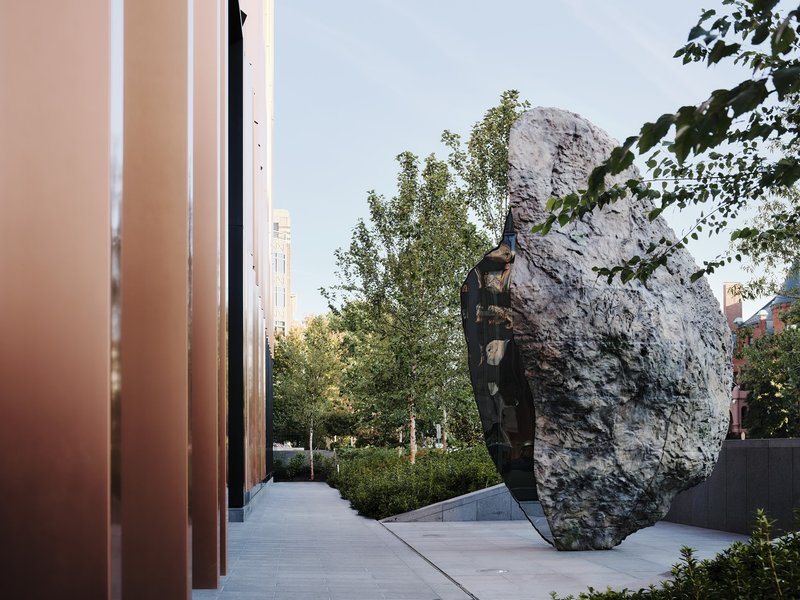
The building’s monolithic form draws inspiration from Australia’s vast and ancient landscape, reflecting the enduring presence of the world’s oldest continuous living culture. Bates Smart translated this conceptual foundation into a contemporary architectural language defined by solidity, openness, and material expression. The folded copper and glass façade responds to orientation and context, varying in transparency to articulate different degrees of privacy, formality, and engagement.
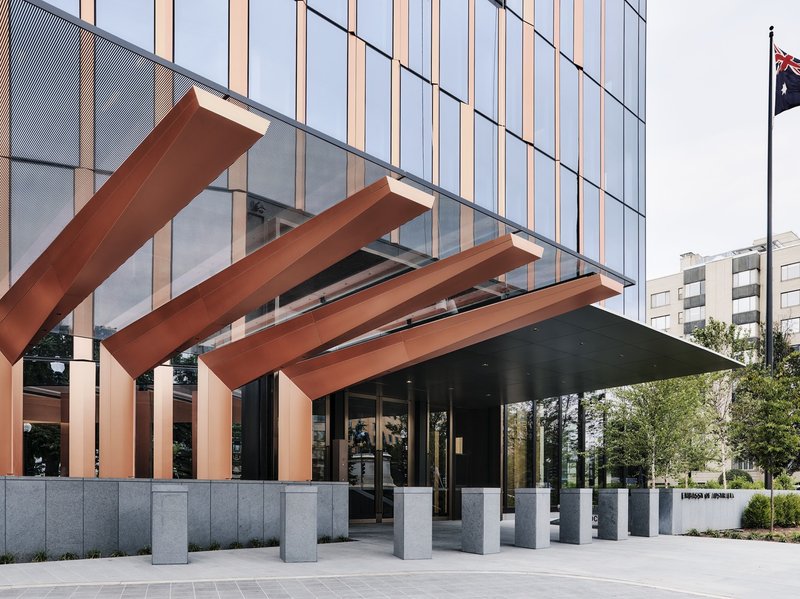
To the south, a formal entrance acknowledges the symbolic alignment with the White House, while the northern elevation opens toward Scott Circle as a landscaped garden face. Toward the 16th Street Historic District, the façade becomes more solid and grounded, reinforcing a sense of permanence and respect for its surroundings. The copper cladding, articulated with deep shadow lines and angular folds, creates a tectonic composition of aggregated forms that shift in appearance throughout the day as light conditions change.
Transparency, Security, and Public Engagement
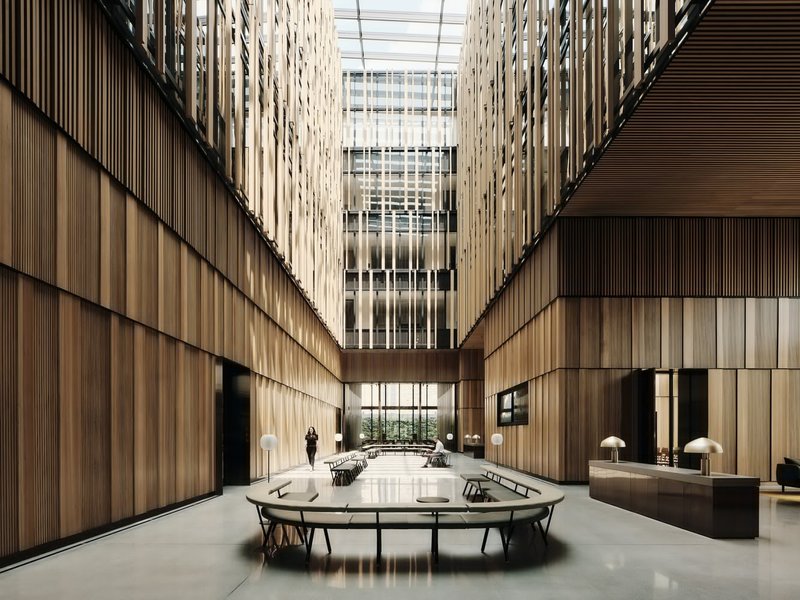
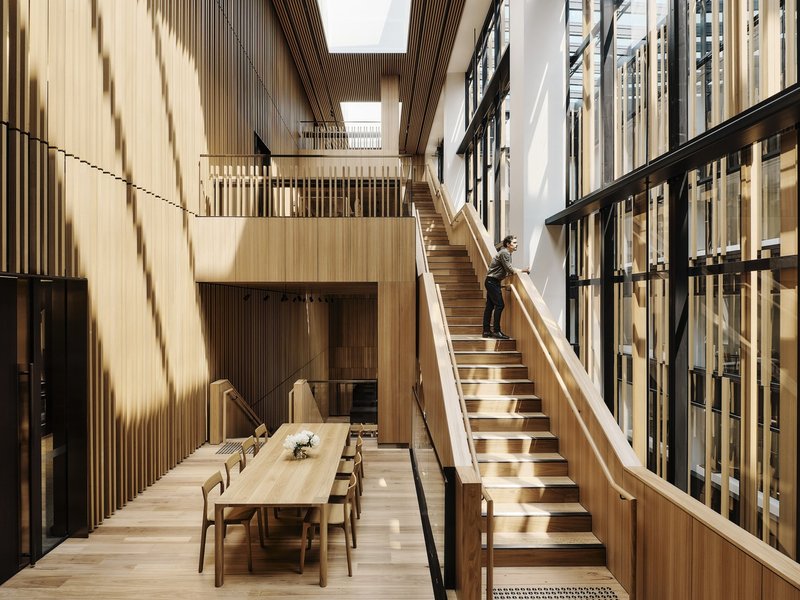
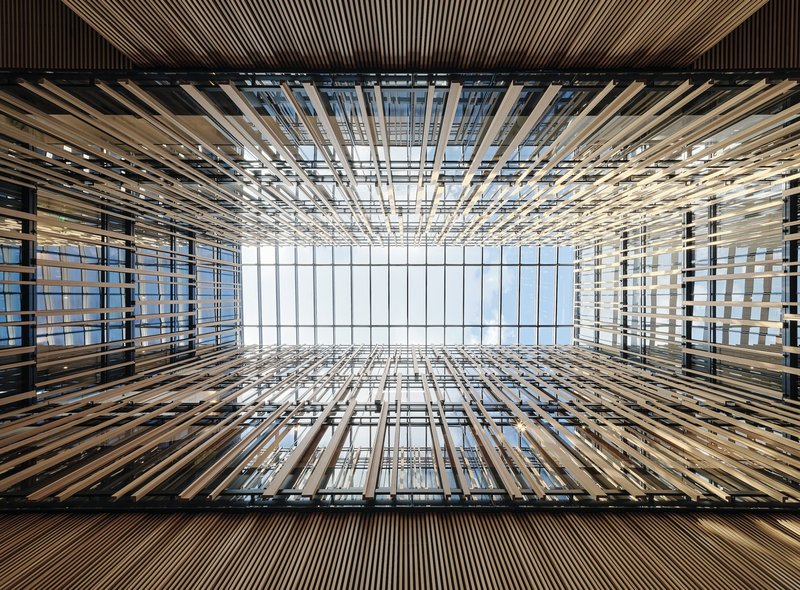
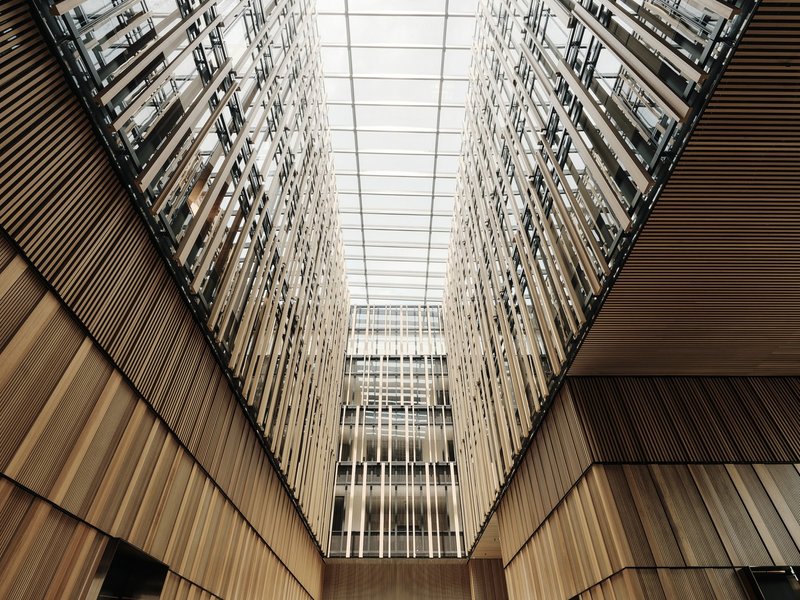
Balancing openness with security is a defining challenge for contemporary embassy architecture, and the Australian Embassy addresses this through spatial clarity and layered thresholds. A celebrated gateway entry and visually open ground plane invite public engagement while maintaining necessary diplomatic security. The building is organized along a strong north–south civic axis, culminating in a large central atrium that connects the ground plane to the sky and serves as the symbolic and spatial heart of the embassy.
This central atrium establishes visual continuity across floors, reinforcing transparency and orientation while embodying Australian values of trust, openness, and connection. It allows daylight to penetrate deep into the building and creates moments of visual exchange between public, ceremonial, and staff spaces.
Interior Architecture Rooted in Materiality and Cultural Narrative
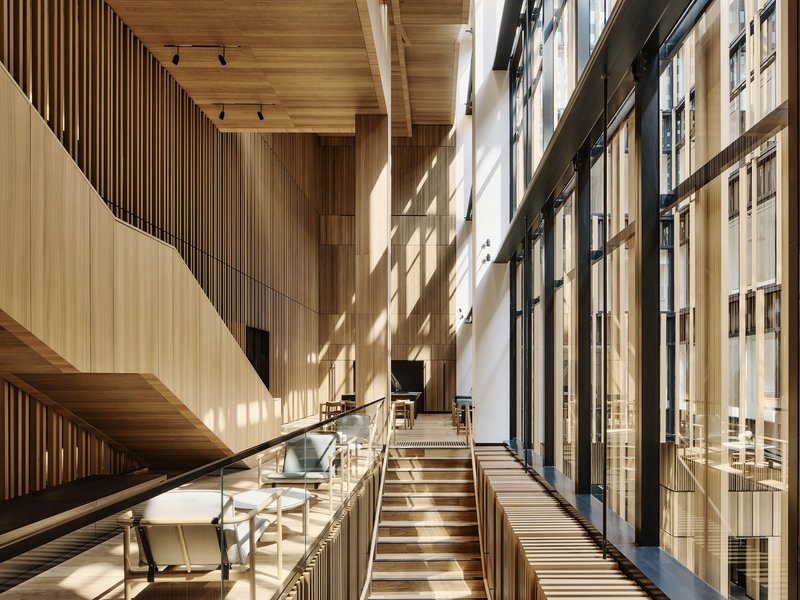
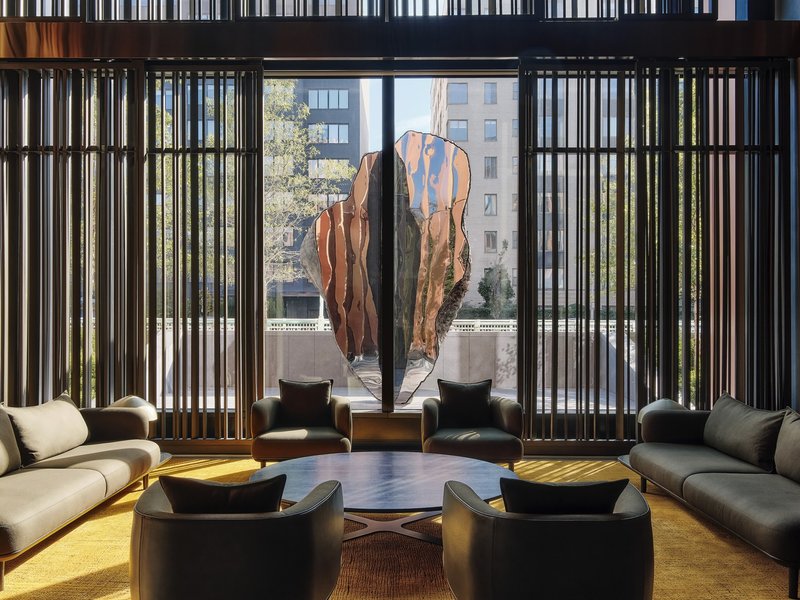
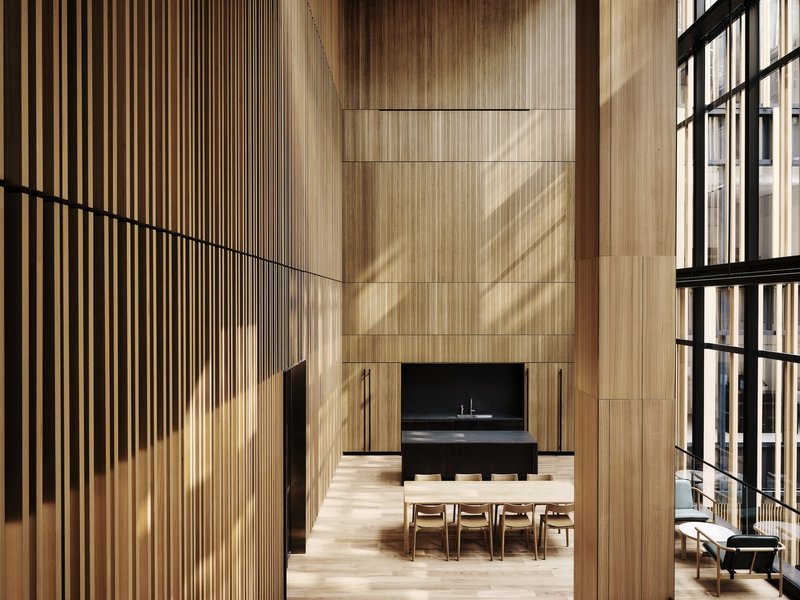
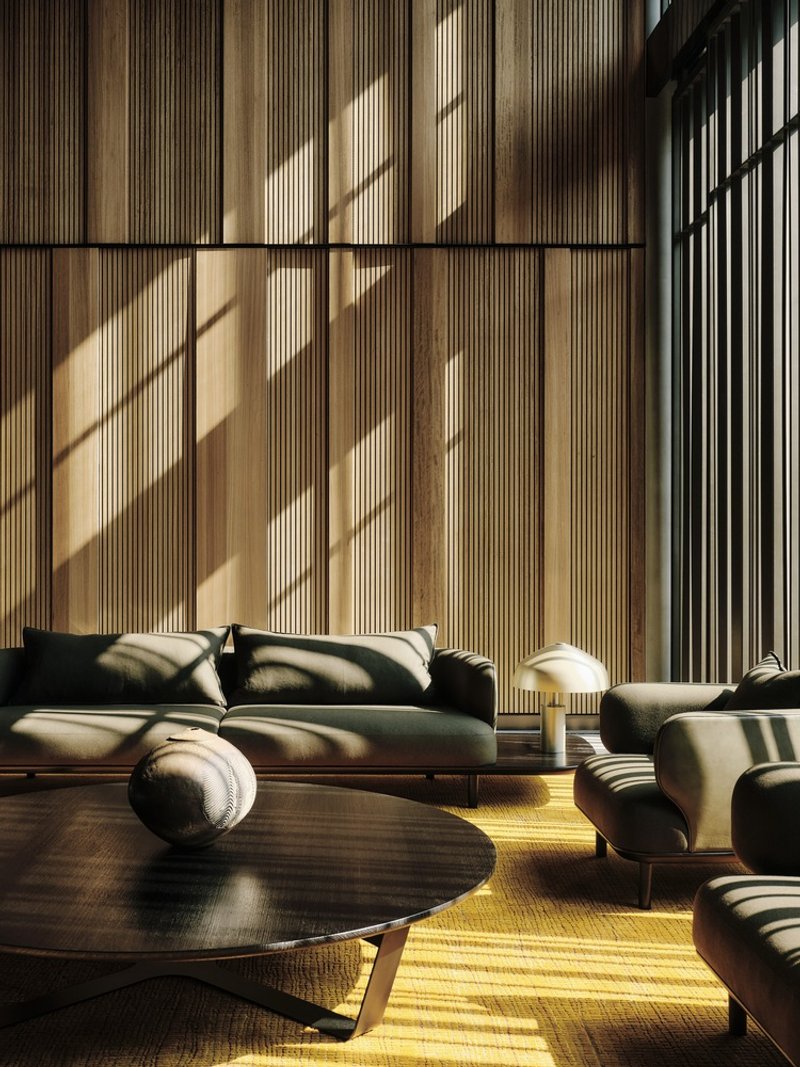
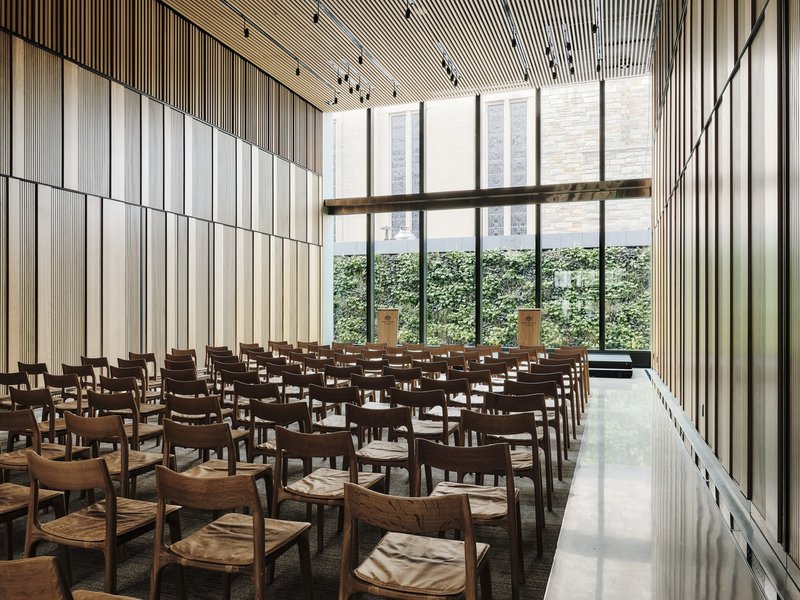
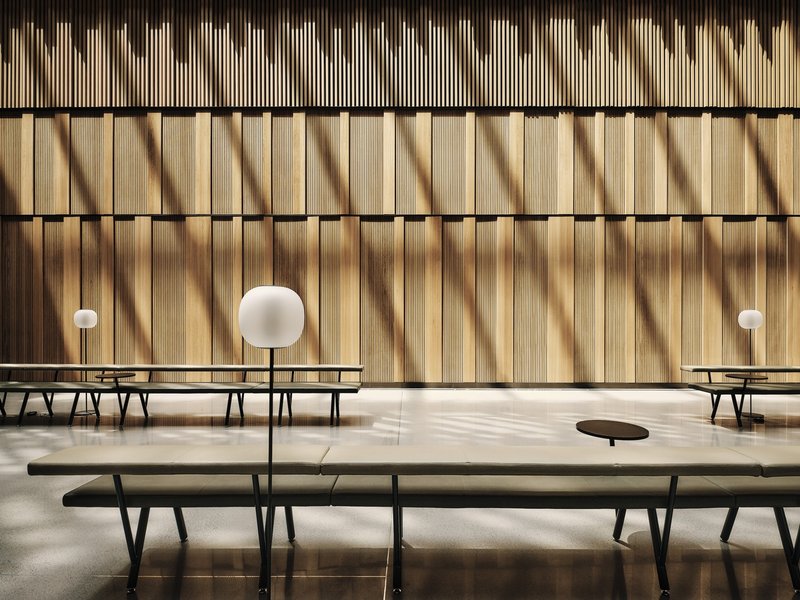
Inside, the embassy’s interiors reflect the expansive scale and material richness of the Australian landscape. Australian timber plays a central role, forming textured horizontal bands that transition from rough to smooth surfaces. This material narrative draws inspiration from the lifecycle of eucalyptus bark, referencing growth, fire, protection, and regeneration. The use of timber establishes warmth and tactility while reinforcing a strong sense of place.
Intricate metallic filigree screens filter light and shadow across social breakout spaces and offices, creating a dynamic interior atmosphere that evolves throughout the day. These elements provide visual depth while mediating privacy and connection in a refined and contemporary manner.
Ceremonial Spaces and Cultural Exchange
The security screening area is carefully planned to separate staff, consular, and visitor flows while maintaining a dignified arrival sequence. Beyond this threshold, waiting and ceremonial spaces are enriched with bespoke rugs and handcrafted Australian-designed furniture. Specialty rugs inspired by Australian First Nations artworks establish spatial hierarchy and define key breakout zones, transforming circulation spaces into places for cultural exchange and dialogue.
These design gestures reinforce the embassy’s role as a cultural ambassador, where architecture, interior design, and art work together to communicate Australian identity beyond diplomacy.
Collaborative Staff Environments and Flexible Workspaces
Within the controlled access zones, the staff hub forms a vital social and professional core. A series of interconnected breakout spaces linked by a feature stair encourages movement, interaction, and collaboration across departments. The primary social space on level two functions as both a staff gathering area and an events venue, strengthening connections between embassy personnel and invited guests.
The bar and social interiors adopt a deliberately informal character, constructed from robust materials that convey a raw and distinctly Australian sensibility. Australian art and design are prominently featured, reinforcing national identity within everyday working environments.
Workspaces are designed with equity and adaptability in mind. Open-plan offices benefit from abundant daylight, promoting calm and focus, while a U-shaped plan and side-core arrangement ensure efficient floorplates. This spatial strategy allows departments to evolve in response to changing diplomatic and operational needs.
Australian Design, Furniture, and Craftsmanship
Furniture throughout the embassy results from a collaboration with the Design Institute of Australia, showcasing leading Australian designers whose work embodies sustainability, innovation, and informality. Highlights include reinterpretations of Robyn Boyd’s iconic 1960s sofas, a custom executive boardroom table by Simon Ancher crafted from reclaimed Tasmanian hydro timbers, and refined seating by Franco Crea, Bassam Fellows, Justin Hutchinson, Kett, and Adam Goodrum.
These carefully curated pieces reinforce the embassy’s commitment to sustainable materials, contemporary Australian design, and artisanal craftsmanship.
Art, Identity, and Representation
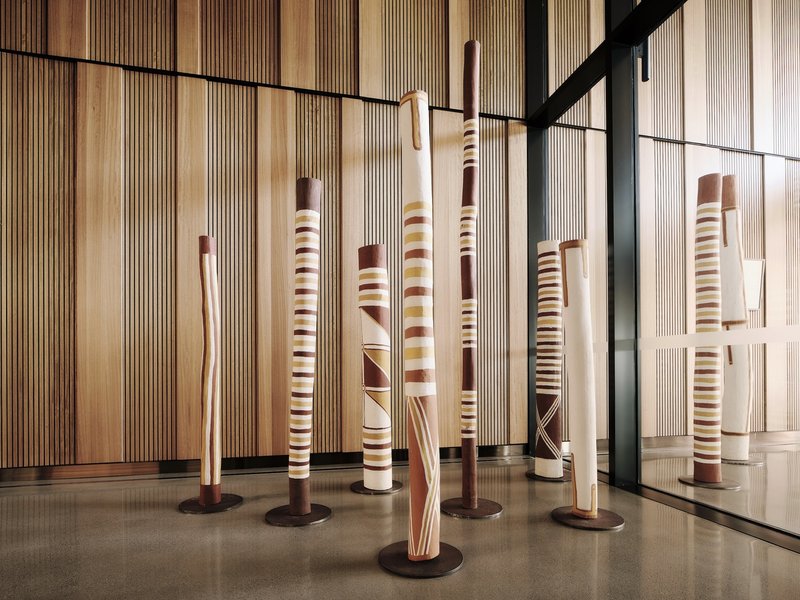
Australian artworks are integrated throughout the embassy to celebrate the nation’s artistic excellence and diverse cultural narratives. Guided by the Australian Government’s cultural policy, the art strategy prioritizes First Nations representation, supports contemporary artists, and creates space for diverse voices. Together, the artworks communicate stories of landscape, diaspora, and cultural continuity, enriching the visitor experience and reinforcing the embassy’s role as a cultural institution.
Sustainability and Environmental Leadership
Sustainability is embedded across the project’s design, construction, and performance strategies. The Australian Embassy in Washington D.C. is targeting LEED Gold certification and is planned to pursue a Green Star rating from the Green Building Council of Australia, positioning it as the first Australian overseas diplomatic building to achieve this distinction. The project demonstrates Australia’s global leadership in environmentally responsible architecture, sustainable products, and high-performance building systems.
A Contemporary Expression of Diplomacy Through Architecture
The Australian Embassy in Washington D.C. by Bates Smart stands as a powerful example of contemporary diplomatic architecture. Through its integration of landscape-inspired form, material expression, cultural storytelling, and sustainable design, the building transcends its functional requirements to become a lasting symbol of Australia’s values, identity, and international presence.
All photographs are works of
Joe Fletcher




Popular Articles
Popular articles from the community




The Ken Roberts Memorial Delineation Competition (Krob)
As the most senior architectural drawing competition currently in operation anywhere in the world, it draws hundreds of entries each year, awarding the very best submissions in a series of medium-based categories.

Fifth NRE Jazz Club – De Bever Architecten: Eindhoven’s Revitalized Cultural Hub
Historic gas factory transformed into Fifth NRE Jazz Club blending modern sustainability, jazz culture, dining, and heritage architecture seamlessly.

Free Architecture Competitions You Can Enter Right Now
No entry fees, real prizes. Here are the best free architecture competitions open for submissions in 2026.


Similar Reads
You might also enjoy these articles
The Ken Roberts Memorial Delineation Competition (Krob)
As the most senior architectural drawing competition currently in operation anywhere in the world, it draws hundreds of entries each year, awarding the very best submissions in a series of medium-based categories.
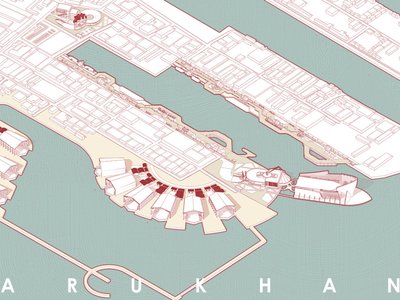
Waterfront Redevelopment and Urban Revitalization in Mumbai: Forging a New Dawn for Darukhana
A transformative waterfront redevelopment project reimagining Darukhana’s shipbreaking heritage into an inclusive urban future.

OUT-OF-MAP: A Call for Postcards on Feminist Narratives of Public Space
Rhizoma Design and Research Lab invites artists, designers, architects, researchers, and students to reflect on how feminist perspectives can reshape public space. Selected works will be exhibited in Barcelona, October 2026. Submissions open until 15 April 2026.


Documentation Work on Buddhist Wooden Temple
Architectural syncretism and cultural hybridity: A comparative study of the Buddhist temples in Chattogram Hill tracks


Explore Architecture Competitions
Discover active competitions in this discipline




The International Standard for Design Portfolios


The Global Benchmark for Architecture Dissertation Awards


The Global Benchmark for Graduation Excellence


Challenge to reimagine the Iron Throne
Comments (0)
Please login or sign up to add comments
No comments yet. Be the first to comment!