

Blue Bottle Coffee Pop-Up Café in Shibuya by Schemata Architects: A Minimalist Beehive for Contactless Coffee Culture
Minimalist beehive-inspired café in Shibuya with glowing wood-acrylic interiors, designed for contactless coffee service by Schemata Architects.


Located in the heart of Shibuya City, Tokyo, the Blue Bottle Coffee Pop-Up Café designed by Schemata Architects redefines coffee retail architecture in the post-pandemic era. Completed in 2022, this compact 60 m² space was born out of a collaboration between James Freeman, founder of Blue Bottle Coffee, and architect Jo Nagasaka of Schemata Architects. The project is a direct response to the shifting dynamics of customer interaction brought on by the COVID-19 pandemic, where indirect and contactless service became a vital necessity.
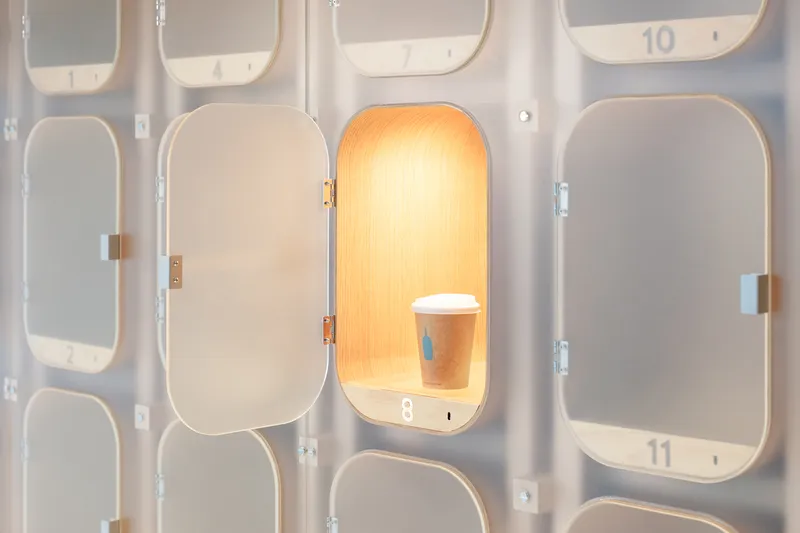
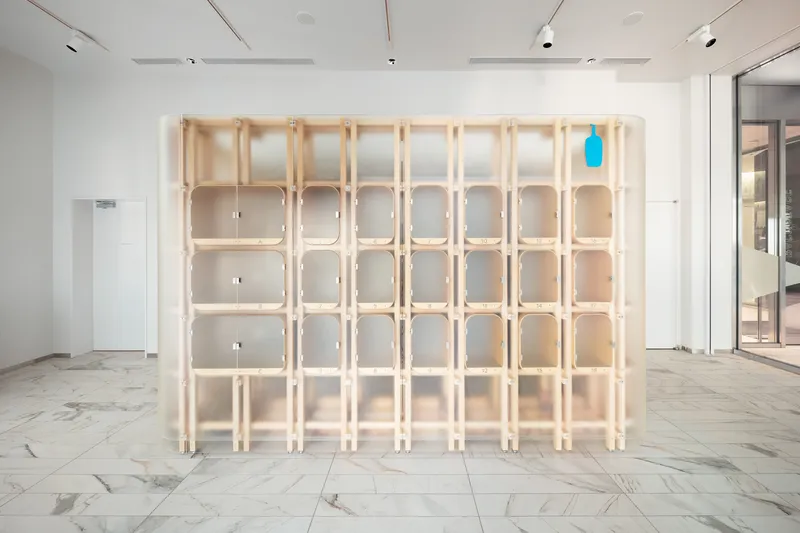
Beehive-Inspired Spatial Concept
Schemata Architects drew inspiration from the natural structure of a beehive—a metaphor for order, connectivity, and subtle community interactions. This conceptual foundation shaped the design of a locker-style sales fixture, which now functions as the café’s central design element. Unlike traditional cafés that invite guests in with an open counter facing the entrance, this pop-up embraces a new model of spatial interaction—warmth through materiality and light, not physical proximity.
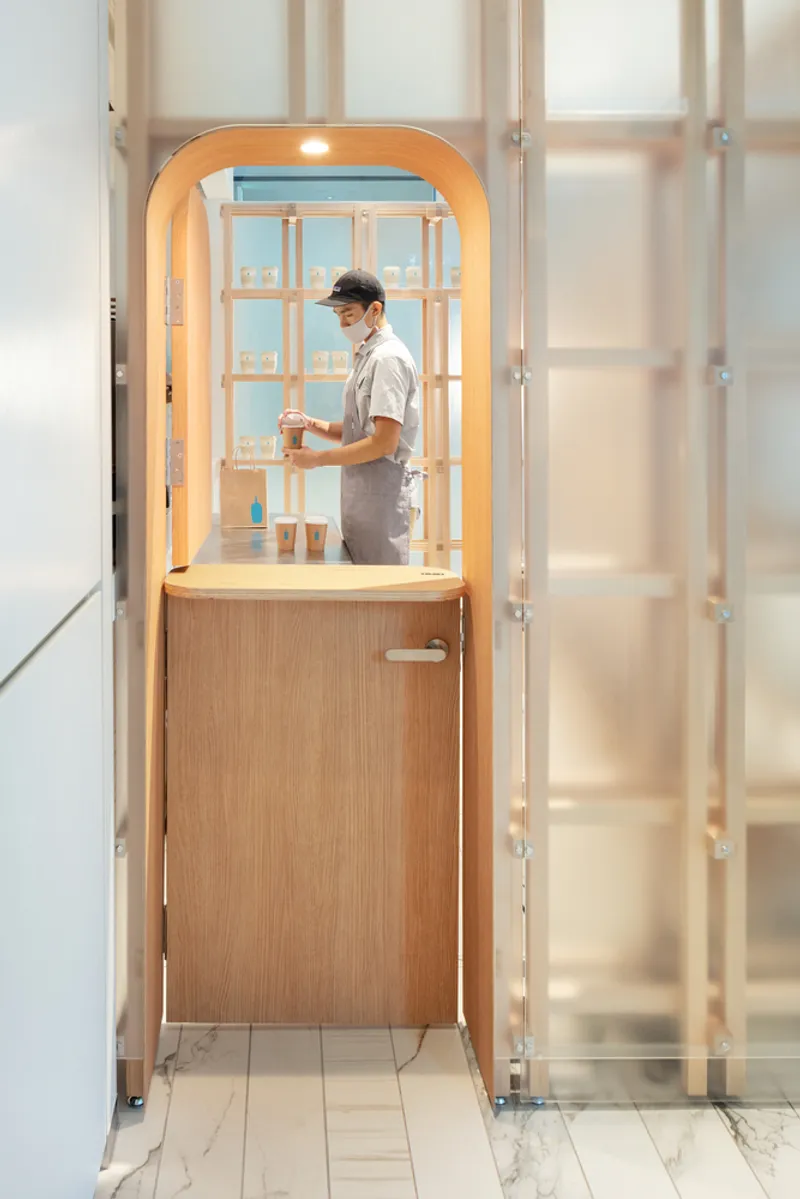
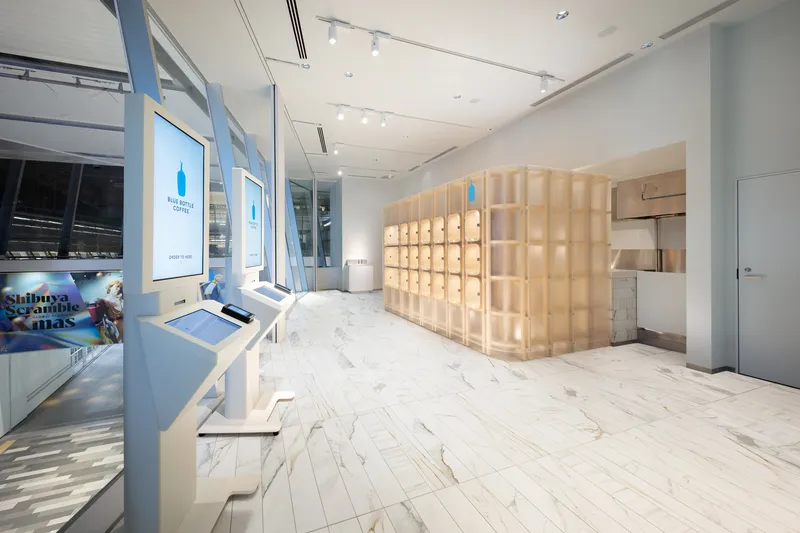
Architecture That Glows with Indirect Warmth
In response to the loss of face-to-face hospitality, the architects focused on creating an emotive spatial experience through material tactility and ambient light. The interior features a wooden framework enveloped in frosted acrylic panels. This design choice allows light to glow softly outward as the door opens and closes, subtly replicating the welcoming atmosphere once delivered through human interaction.
The space is minimal yet emotionally resonant—a honeycomb of light and texture that quietly acknowledges customers while prioritizing efficiency and safety.


A Future-Forward Model of Coffee Service
The front of the store features a streamlined digital ordering terminal, replacing the traditional barista counter. Customers can place orders via this terminal and collect their drinks from the adjacent locker unit. This setup reduces direct contact, shortens wait times, and opens the path to full mobile app-based ordering, aligning with the growing trend toward seamless, tech-integrated retail.
Schemata Architects anticipate that this locker-based system will be further adopted across other Blue Bottle locations as part of a broader shift toward decentralized, low-contact service models.
The Blue Bottle Coffee Pop-Up Café in Shibuya is a powerful example of adaptive design responding to social and environmental shifts. Through material innovation, spatial reconfiguration, and digital integration, the project successfully creates a modern coffee experience rooted in intimacy, even at a distance.
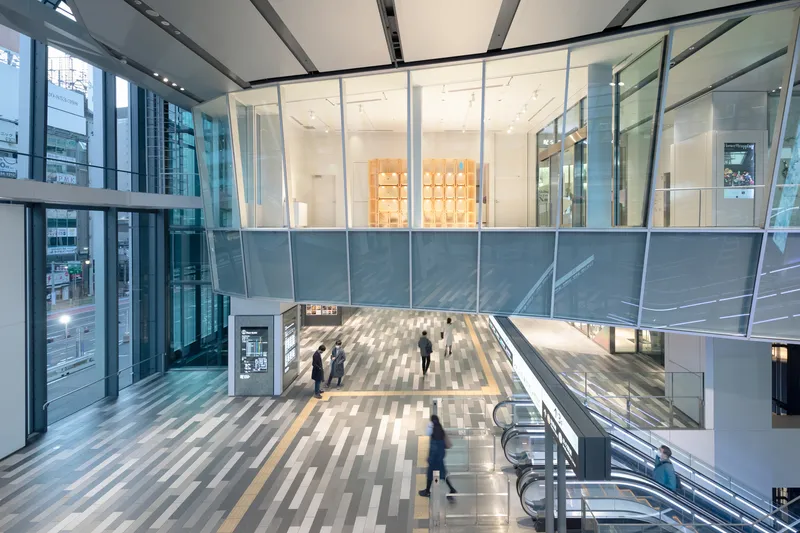
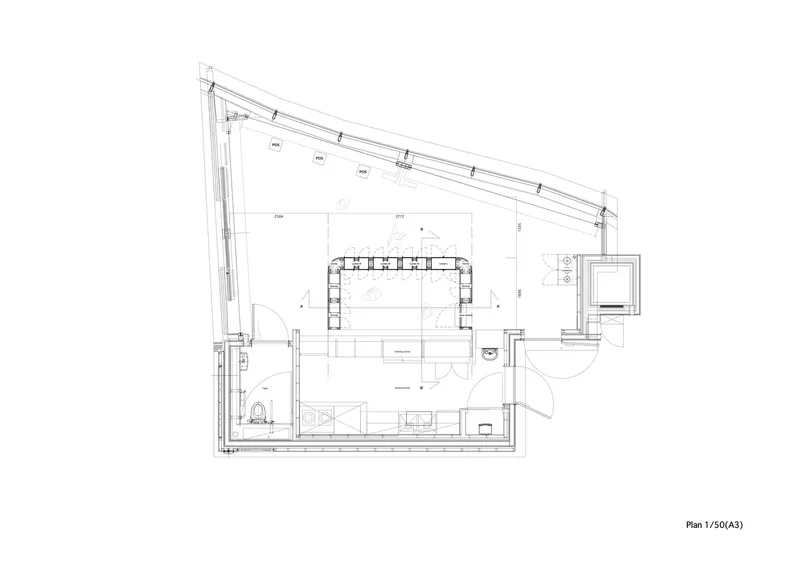
All Photographs are works of Takumi Ota


Popular Articles
Popular articles from the community


longwave studio Reorganizes a 112 m² Tainan Apartment Around the Daily Routines of a Family and Two Cats
In Tainan, Taiwan, birch plywood, rust-red furniture and a freestanding plaster wall link arrival, storage, work and family life in one apartment.

GROUP A Strips a 1969 Rotterdam Harbor Headquarters to Its Frame and Wraps It in Timber Louvers
In Rotterdam's M4H harbor district, Ferro Offices reuses a 1969 frame, adds one timber storey and reaches BREEAM-NL Outstanding.

Cube Design Draws an Ecological Corridor Between Two Shenzhen Hills with the Nankai Building
Beside Shenzhen's container docks, the Nankai Building pairs stacked balconies with a climbing green screen to connect two hillsides across its height.

David Ortega Stacks a Two-Story Mexico City Penthouse Around a Steel Stair and a Pergola-Shaded Roof Terrace
In Colonia Roma, a 300 m² penthouse uses oak joinery, a planted steel stair and a slatted roof pergola to make a new-build apartment feel like a house.

Similar Reads
You might also enjoy these articles


Hodi-Mandai Geram
Project Function: Preservation and revitalization of the Intangible heritage and socio-spatial identity of the Hodi by Housing, Cultural Memory Center, Sacred Grove, landscape, local tourism economy


Olio Towers: A Mid-Rise for Performers That Fuses Housing, Rehearsal, and Stage
Located blocks from Houston's Theater District, this modular tower stacks living units around a central performance atrium.

Oasis: Modular Green Housing Carved into Dhaka's Urban Fabric
A shortlisted Plugin Housing entry reclaims unauthorized settlements in Dhaka with stepped concrete volumes, green roofs, and ventilation-driven design.

Black Hole: A Floating Megastructure for the Post-Physical Era
Emiliano Mazzarotto envisions a spherical, self-scaling arena where e-sports, digital hotels, and holographic stadiums replace traditional public space.

Explore Coffee Shop Competitions
Discover active competitions in this discipline

Design challenge to equip cities with modern furniture

Challenge to reimagine the Iron Throne

Photograph architecture without architects

VR headsets Storefront design competition
Comments (0)
Please login or sign up to add comments
No comments yet. Be the first to comment!