
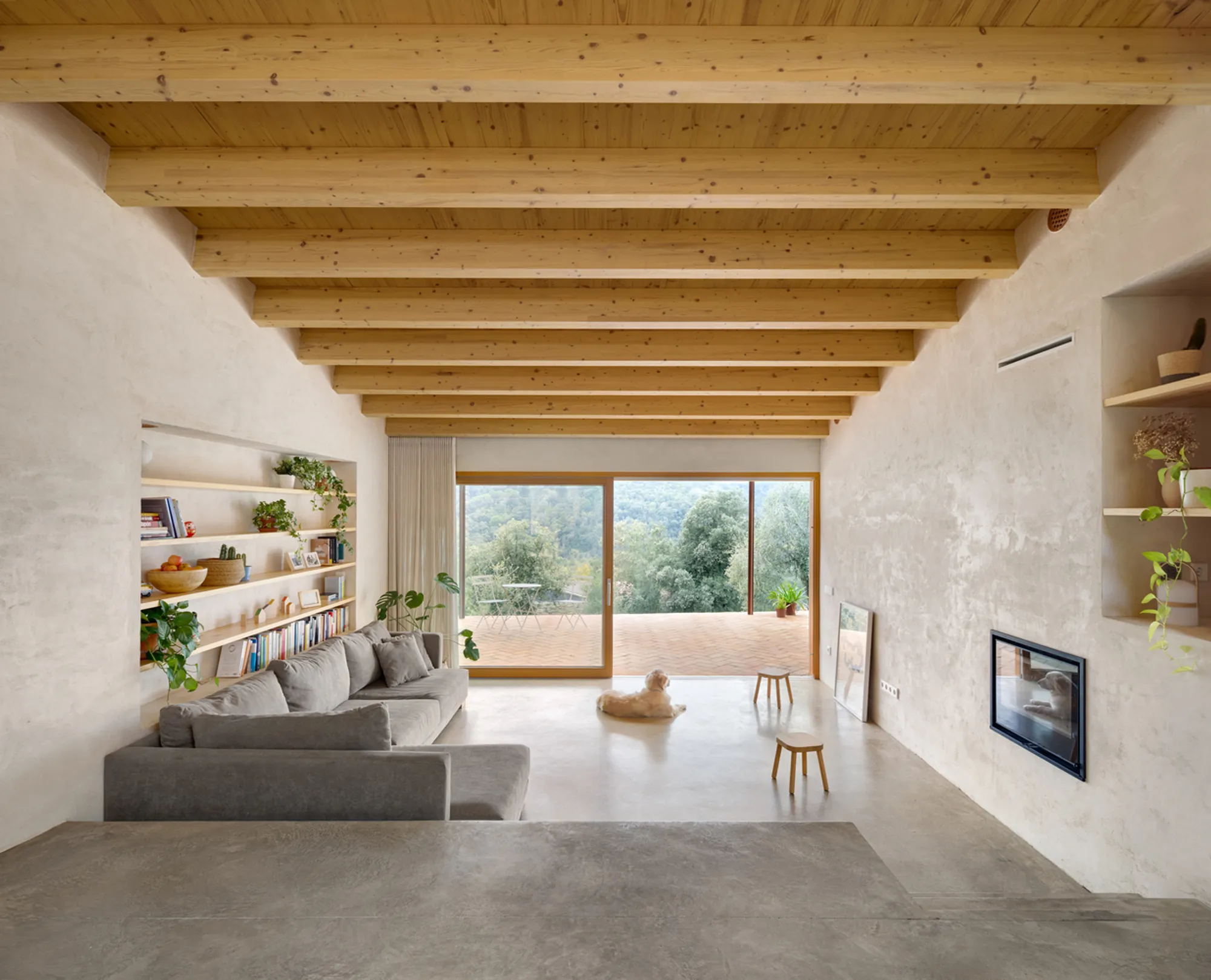
Boratuna House: Lime, Timber, and Concrete in Girona
Bouman Arquitectura built a compact house on a Catalan terrace using three materials: lime plaster, timber beams, and polished concrete. Nothing more.


The Vall del Llémena is a green valley northwest of Girona, in Catalonia. It is agricultural, quiet, and full of stone terraces that have been shaped by farmers for centuries. Boratuna House, designed by Bouman Arquitectura, sits on one of these terraces in Sant Gregori. It is a small, single-storey house built from lime plaster, timber beams, and polished concrete, and it is one of the most convincing recent examples of how to build simply and well in a Mediterranean landscape.
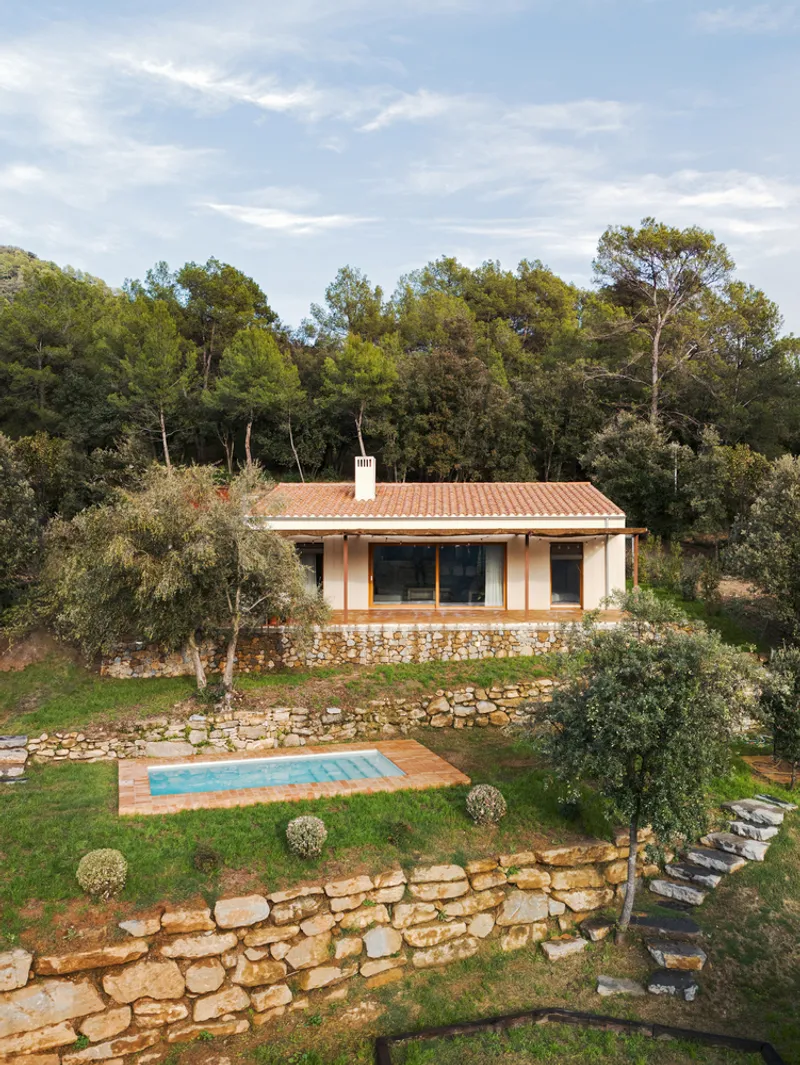
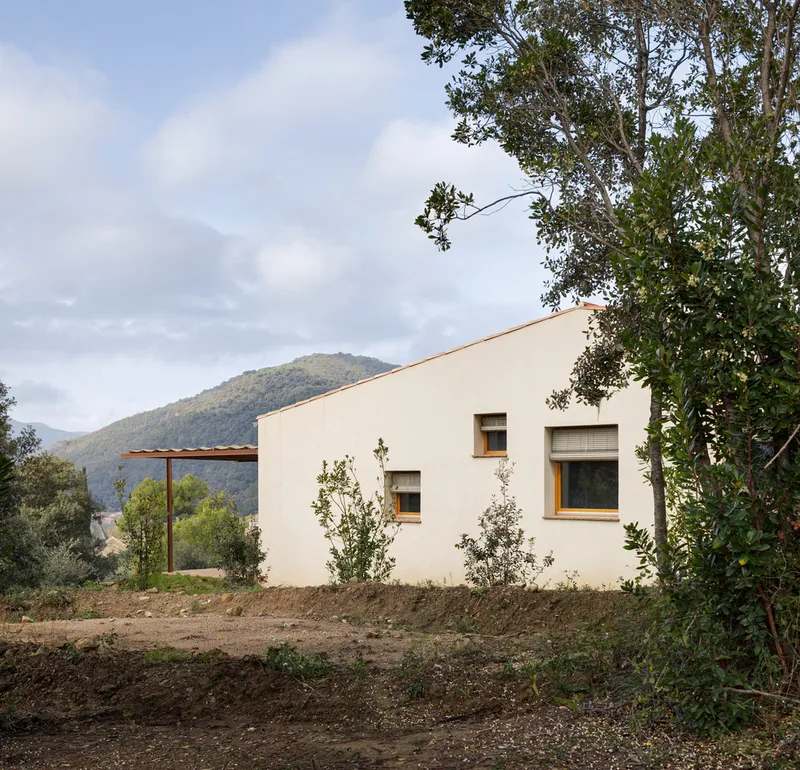
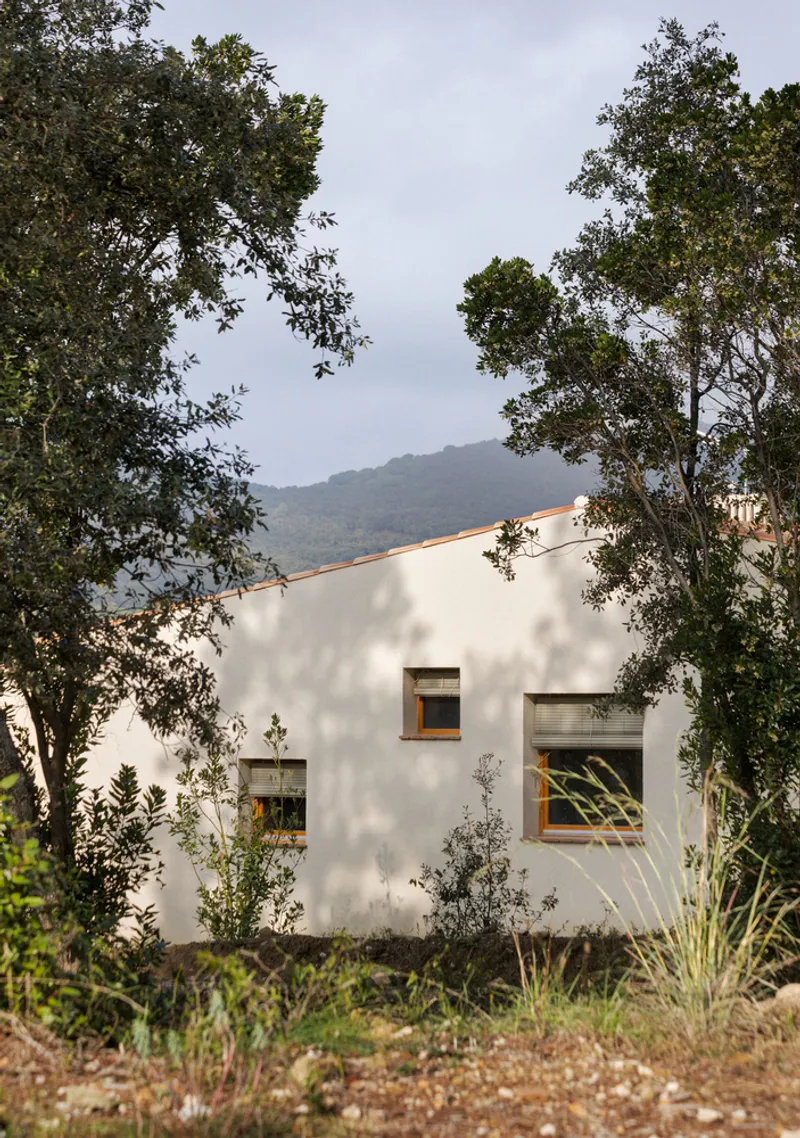
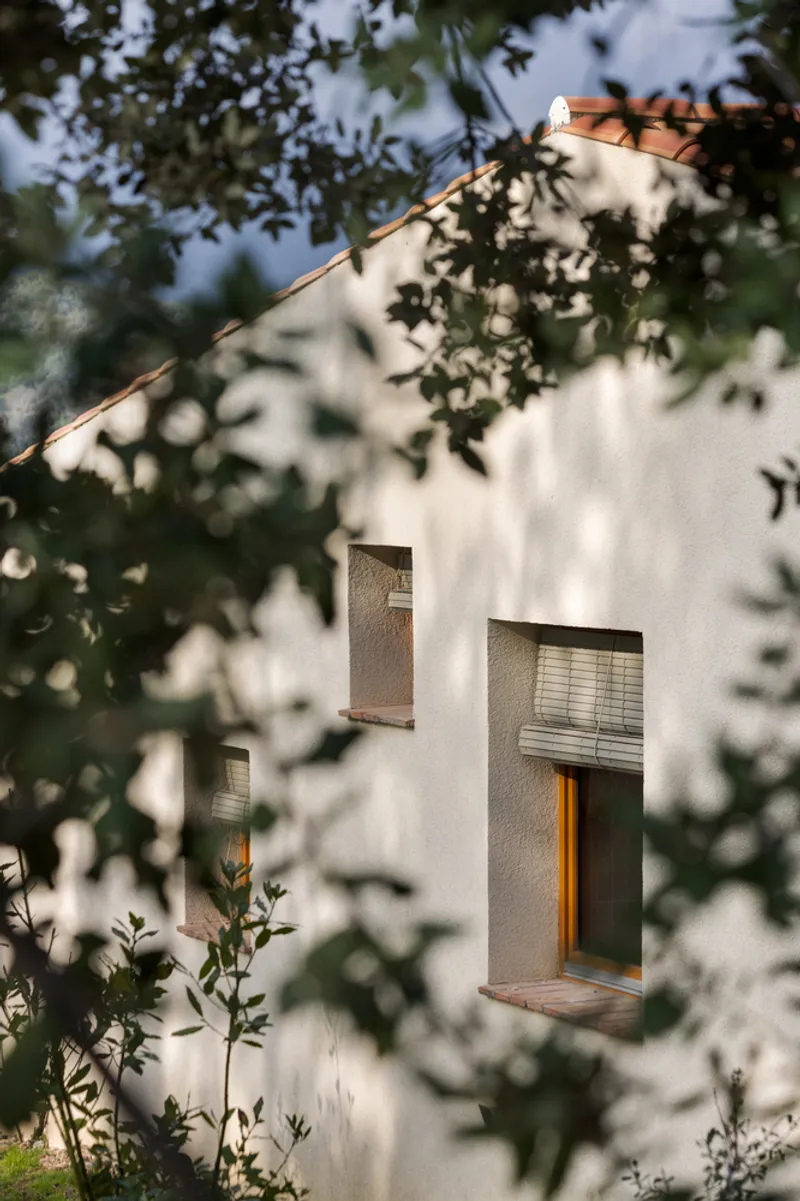
The house is compact: a square plan under a pitched timber roof, placed on an upper terrace to maximise views of the valley and the mountains beyond. Below it, a stone retaining wall holds a plunge pool and an olive grove. The material palette is three things: white lime plaster for the walls, timber for the structure and joinery, and concrete for the floor. That is the entire project.
The Site: Terraces, Olives, and Mountains
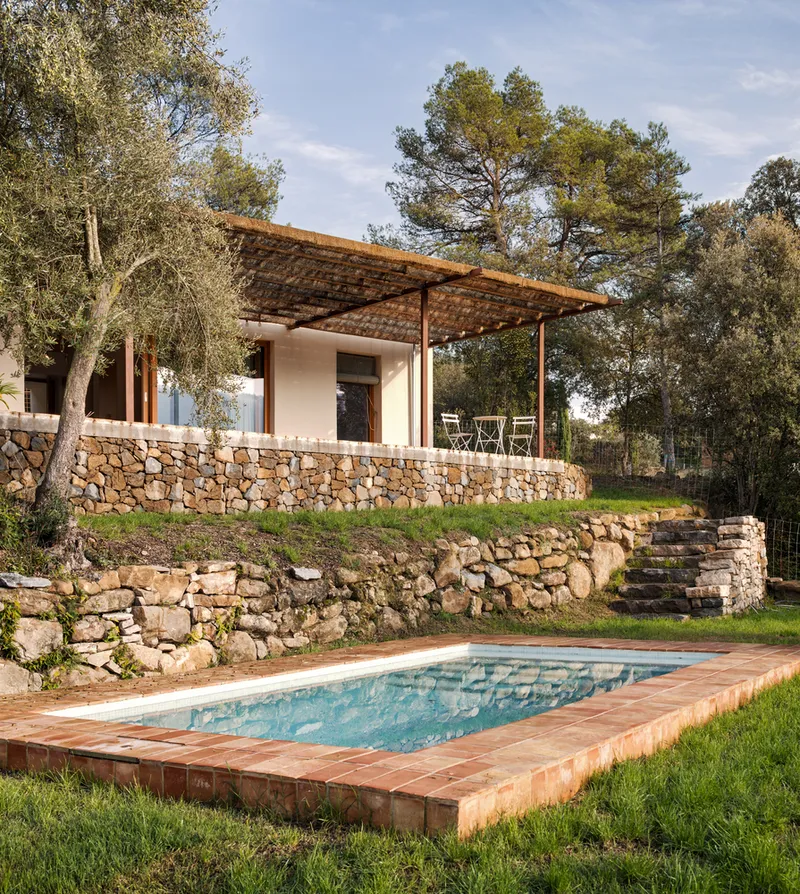
The aerial photograph shows the strategy. The house occupies the top terrace of a sloped plot. The stone walls that define the terraces are existing agricultural structures, retained and incorporated into the landscape design. The plunge pool sits on the terrace below the house, framed by the retaining wall and shaded by olive trees. The forest closes in on three sides.
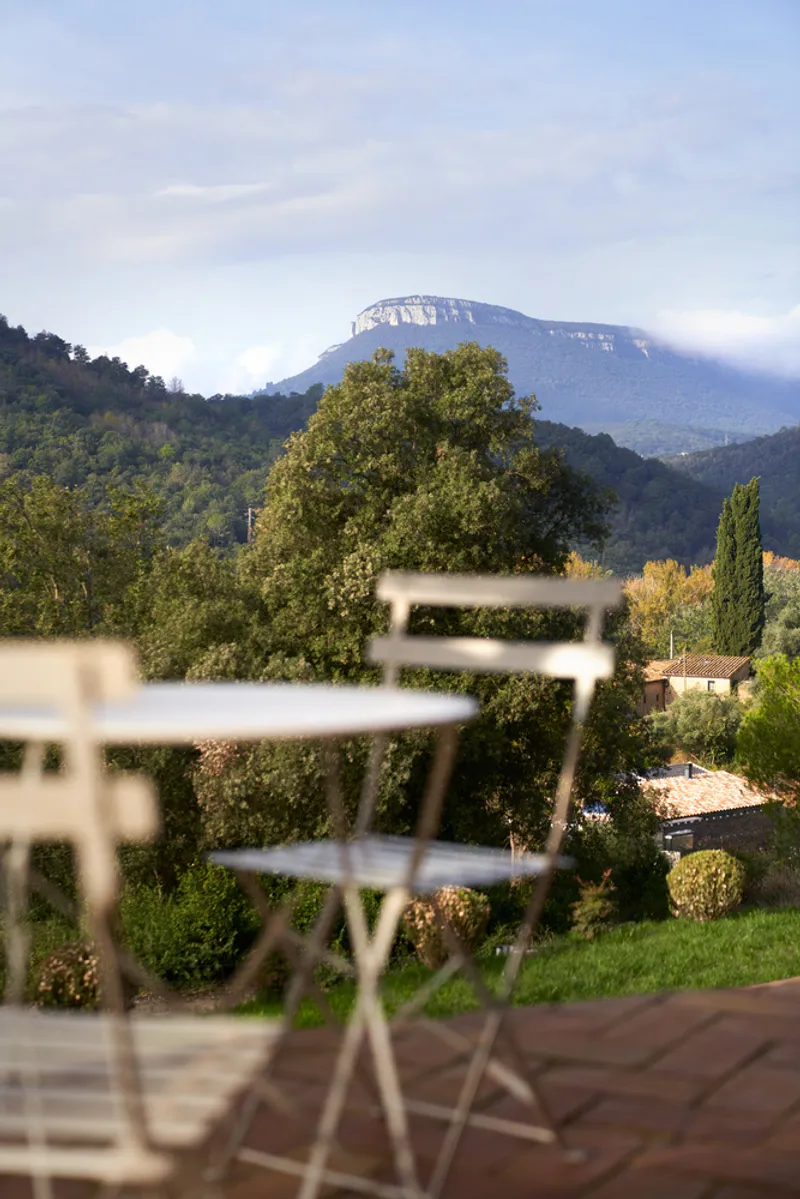
The house is oriented toward the valley. Every living space faces the view. The bedrooms face the hillside. This is a simple move, but it determines the quality of every room.
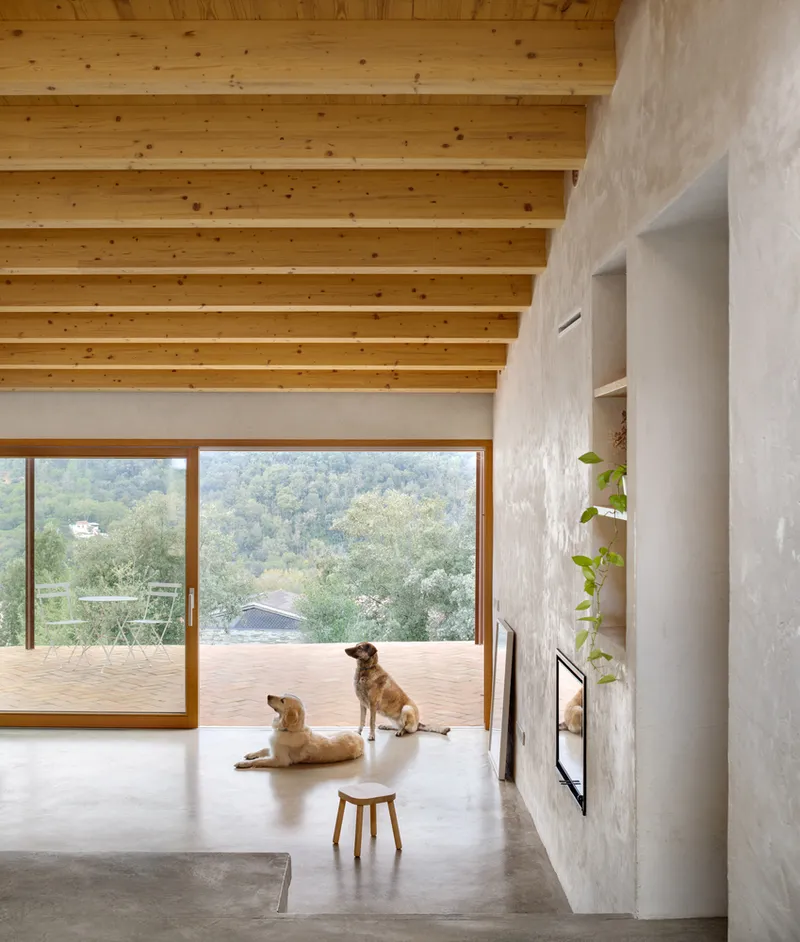
The Living Room: Timber, Lime, and Light
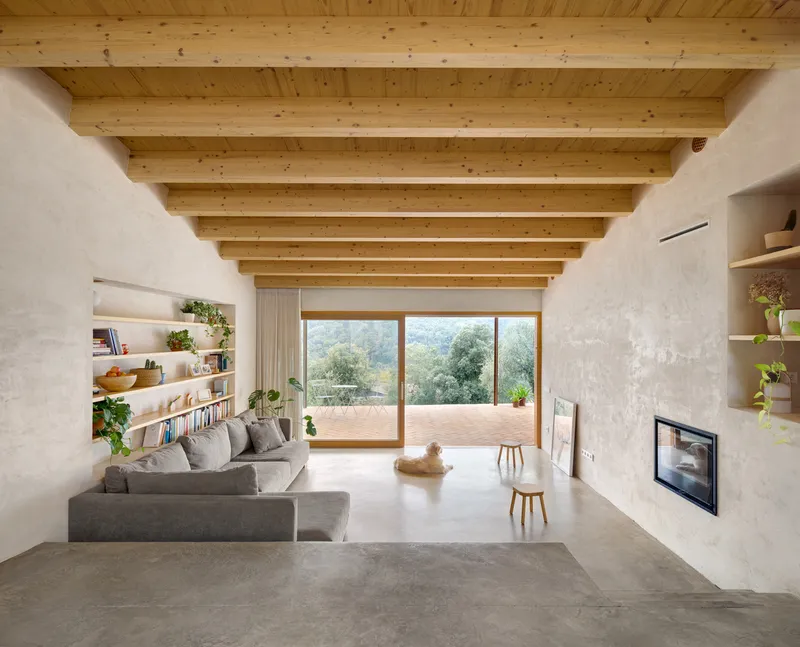
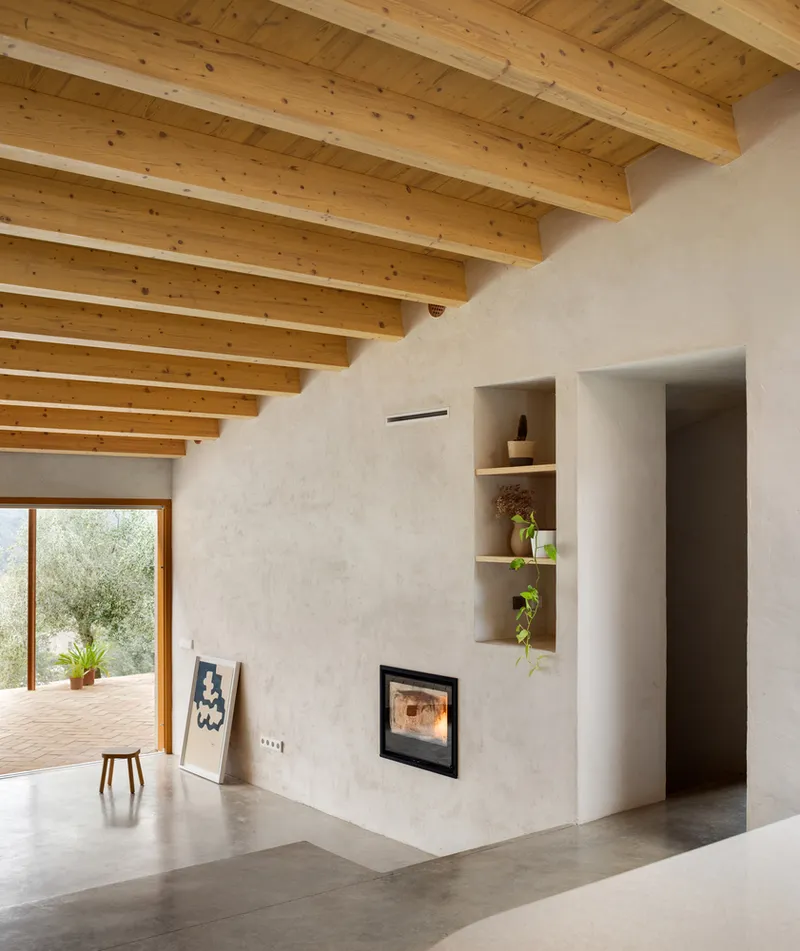
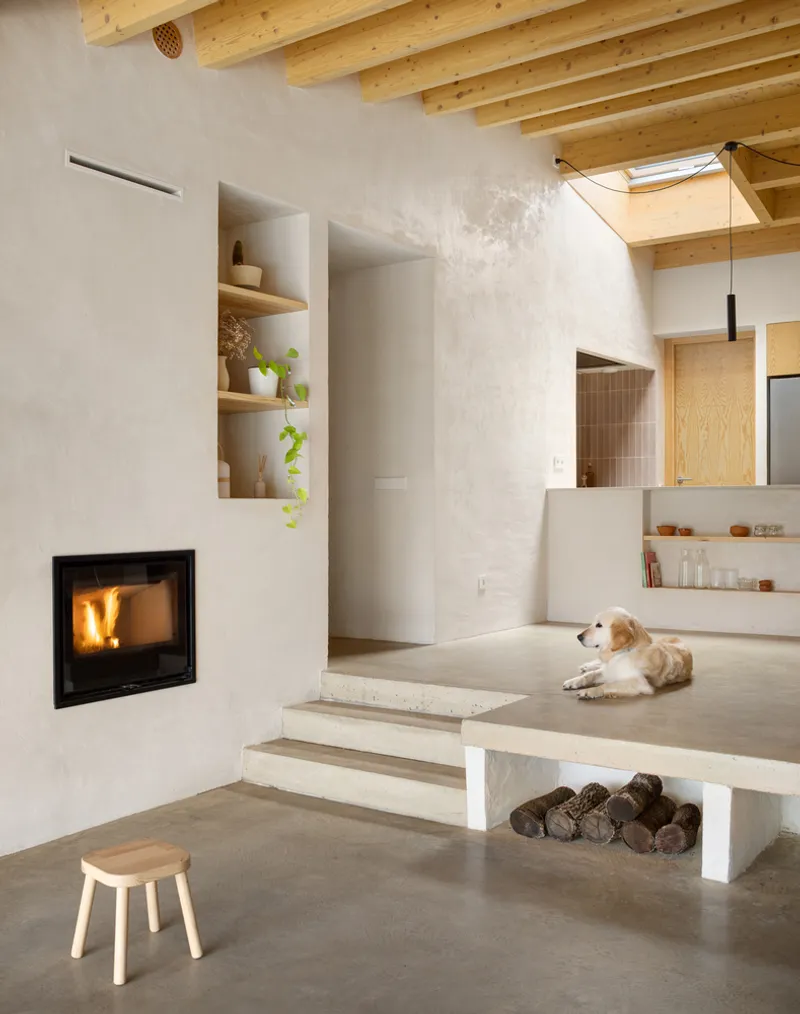
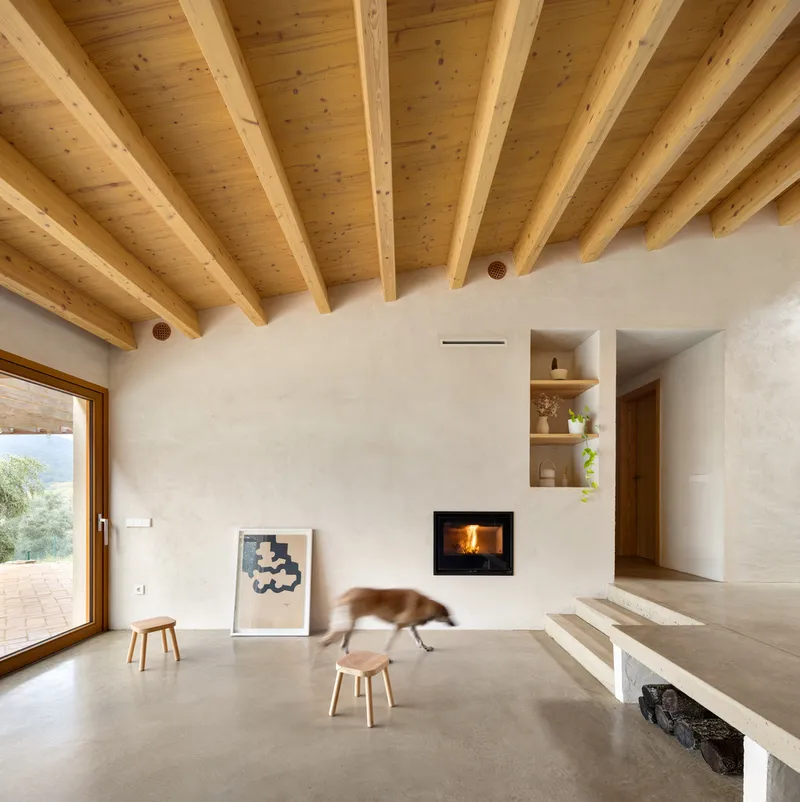
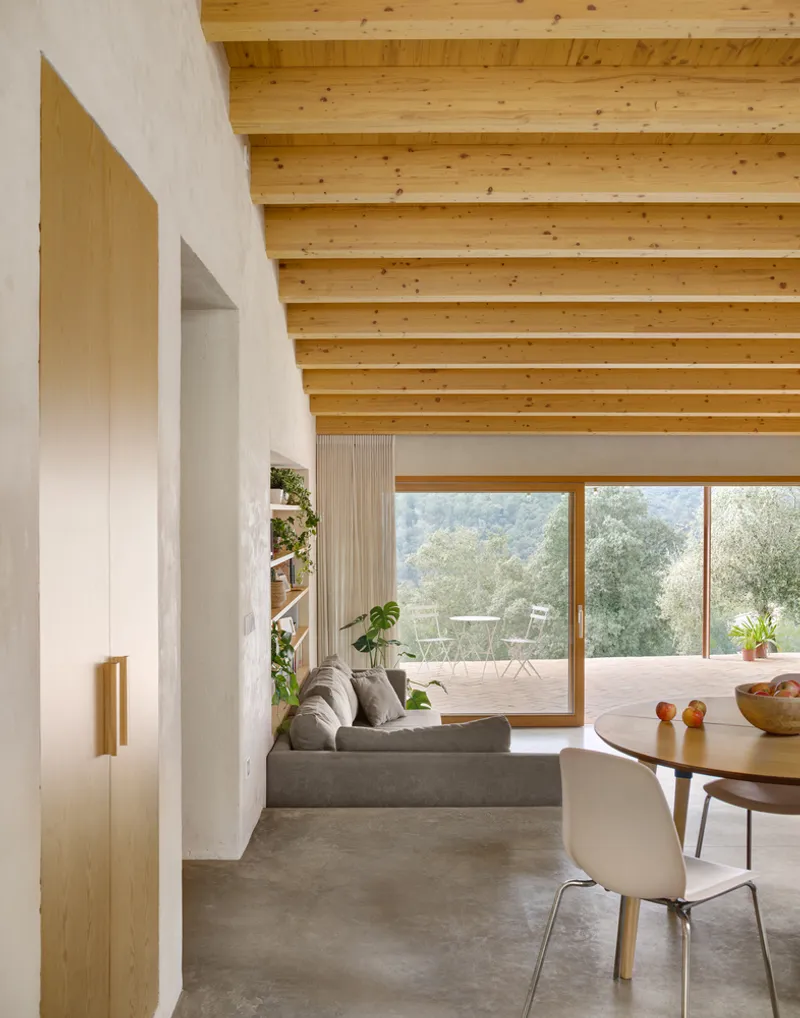
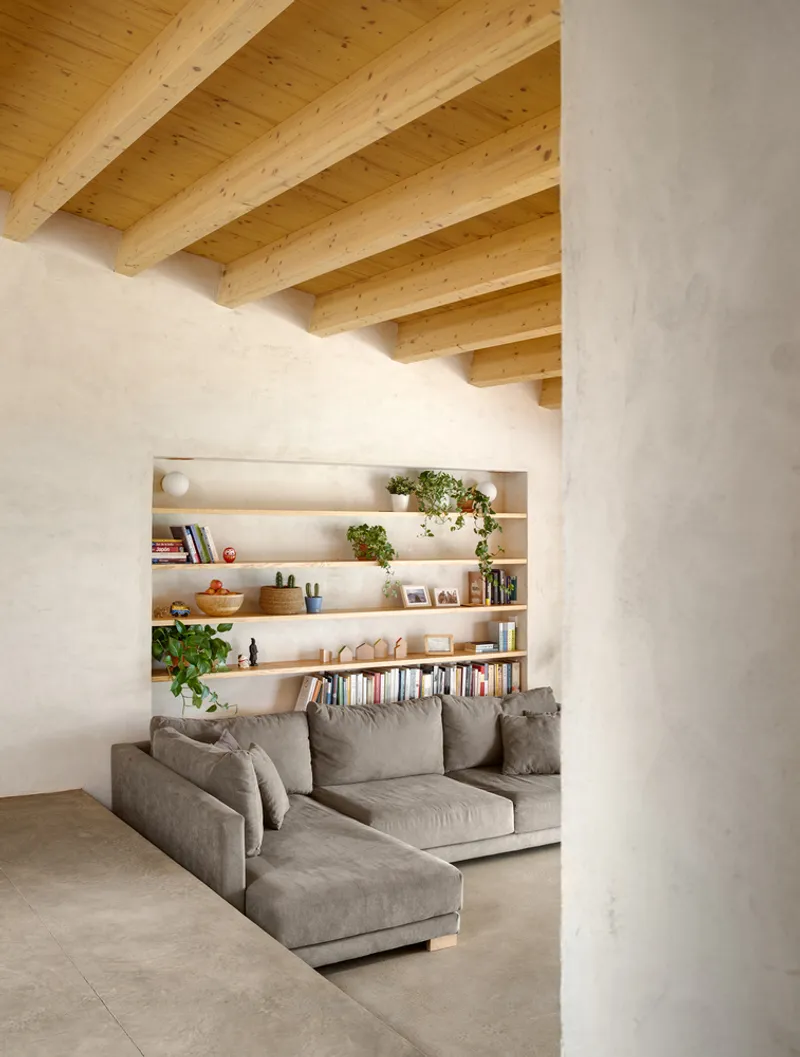
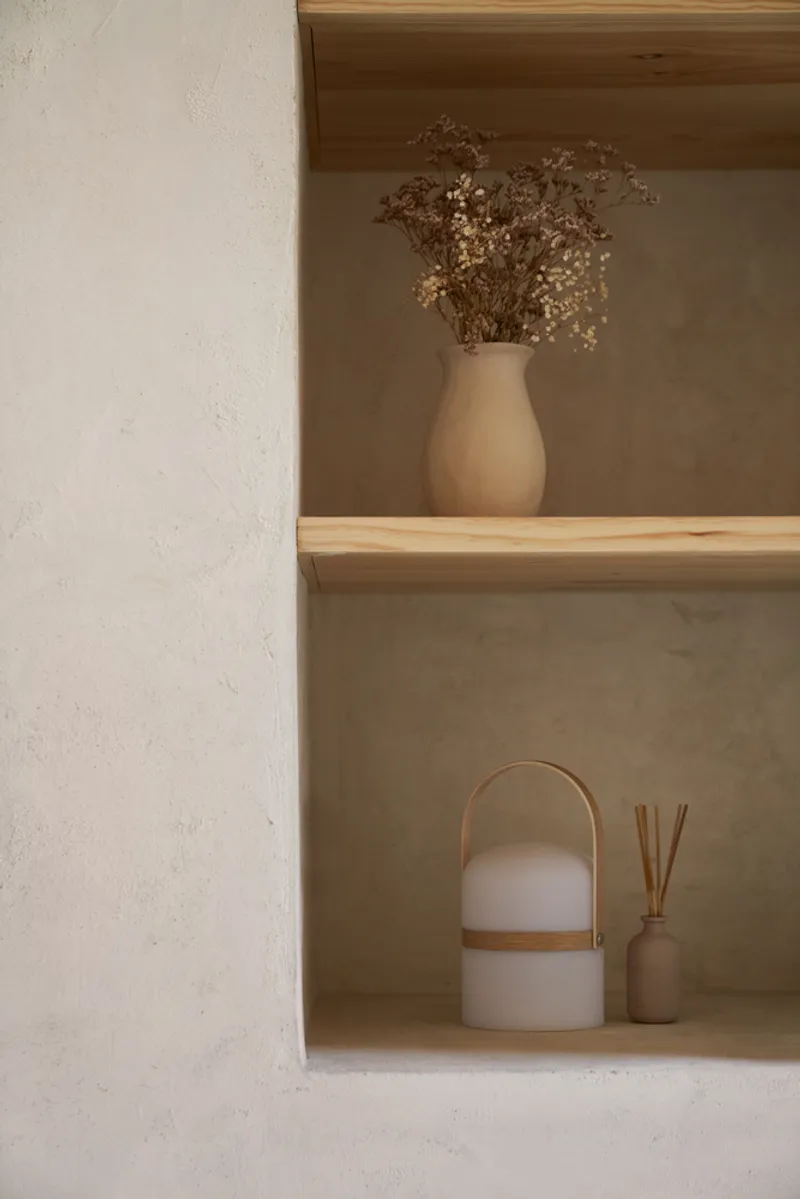
The living room is the heart of the house. Exposed timber beams run the full width of the ceiling. The walls are lime plaster, left unfinished with a soft, chalky texture. A wood stove is inset into a thick plaster wall with built-in timber shelf niches on either side. The floor is polished concrete. A full-height timber-framed window opens to the valley.
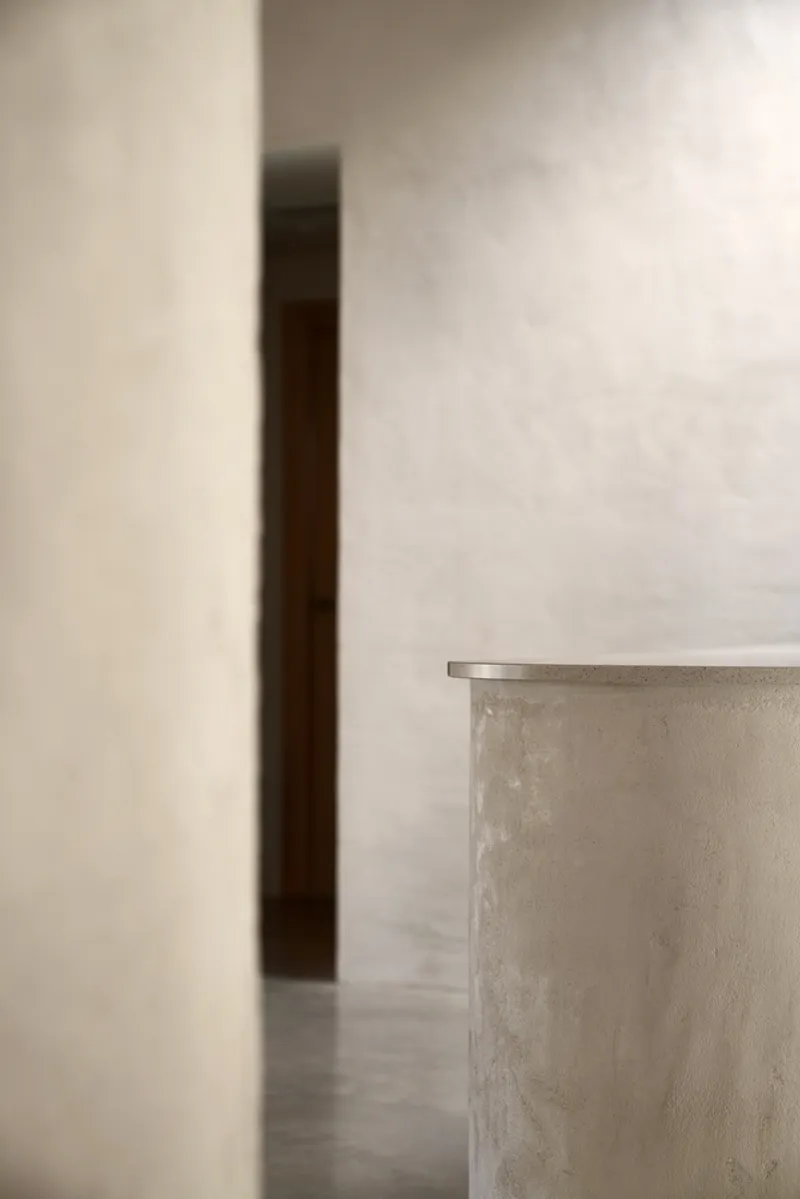
The room is warm without being decorated. The materials do the work. The lime plaster absorbs and reflects light in a way that paint cannot. The timber beams give the ceiling scale and rhythm. The concrete floor is cool underfoot in summer and stores heat from the stove in winter. Every surface is passive. Nothing is cosmetic.
The Kitchen: A Curved Island Under a Skylight
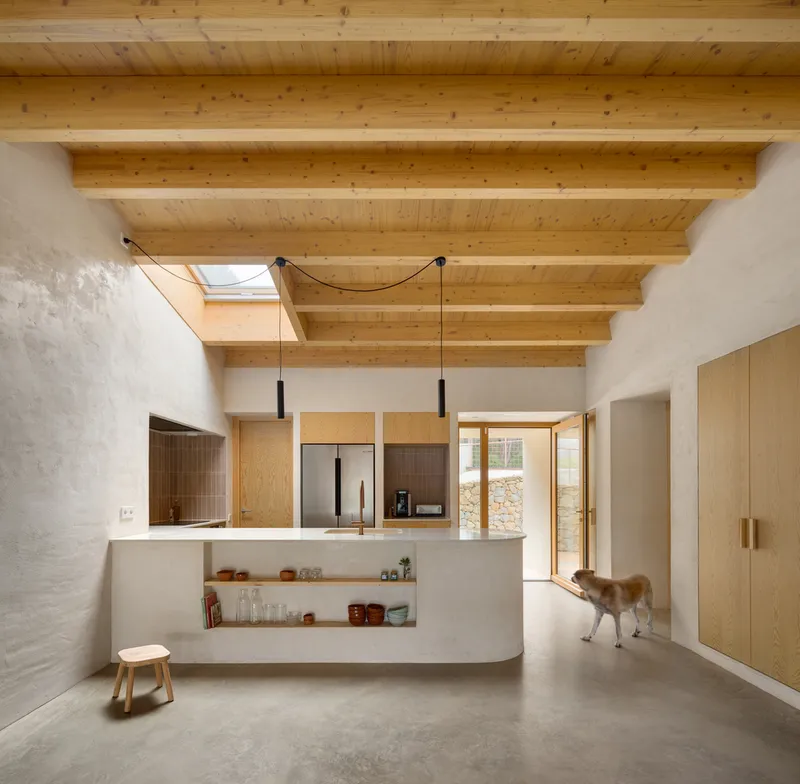
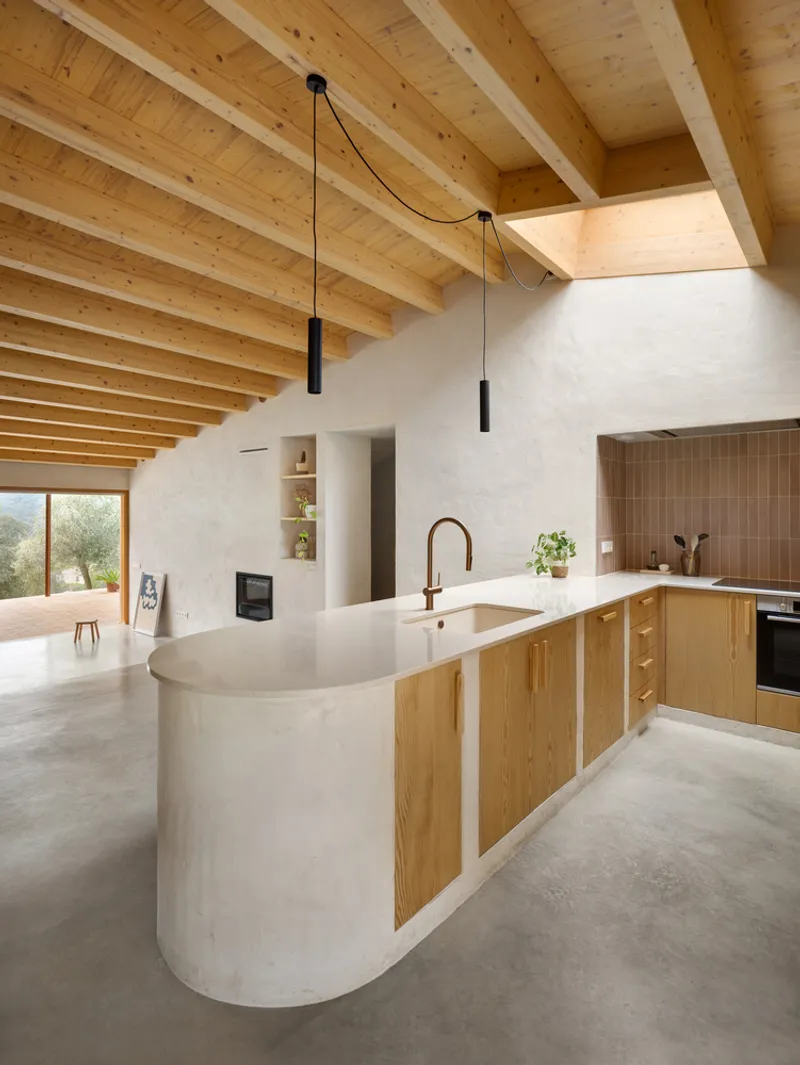
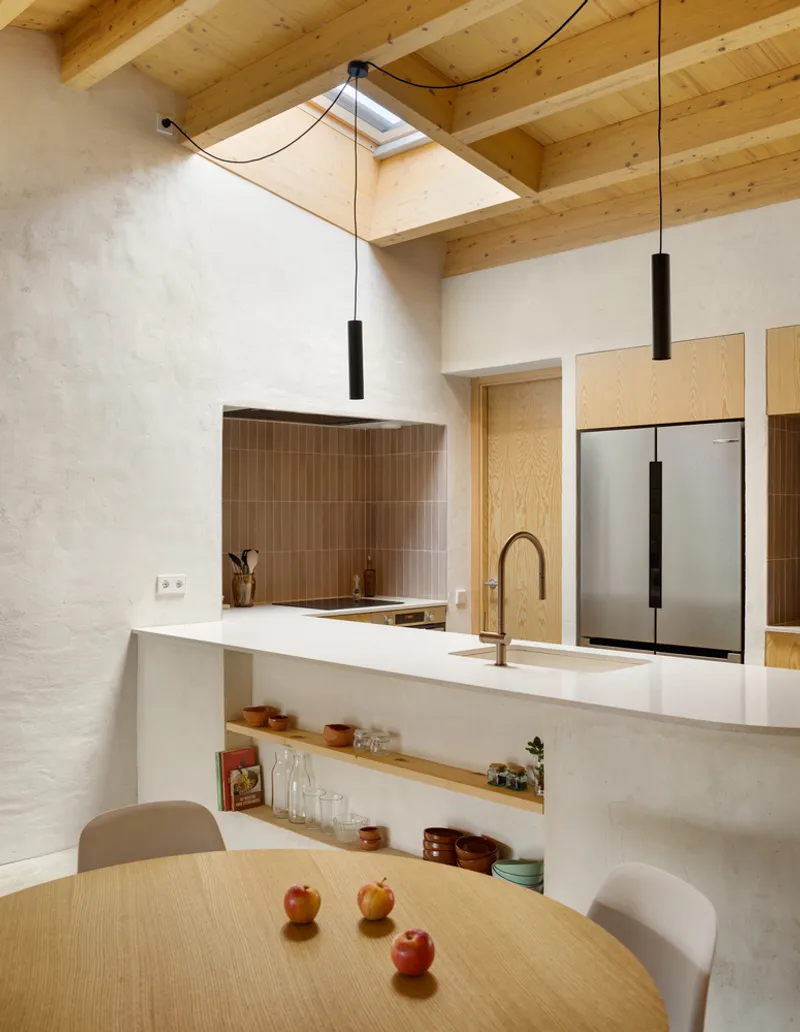
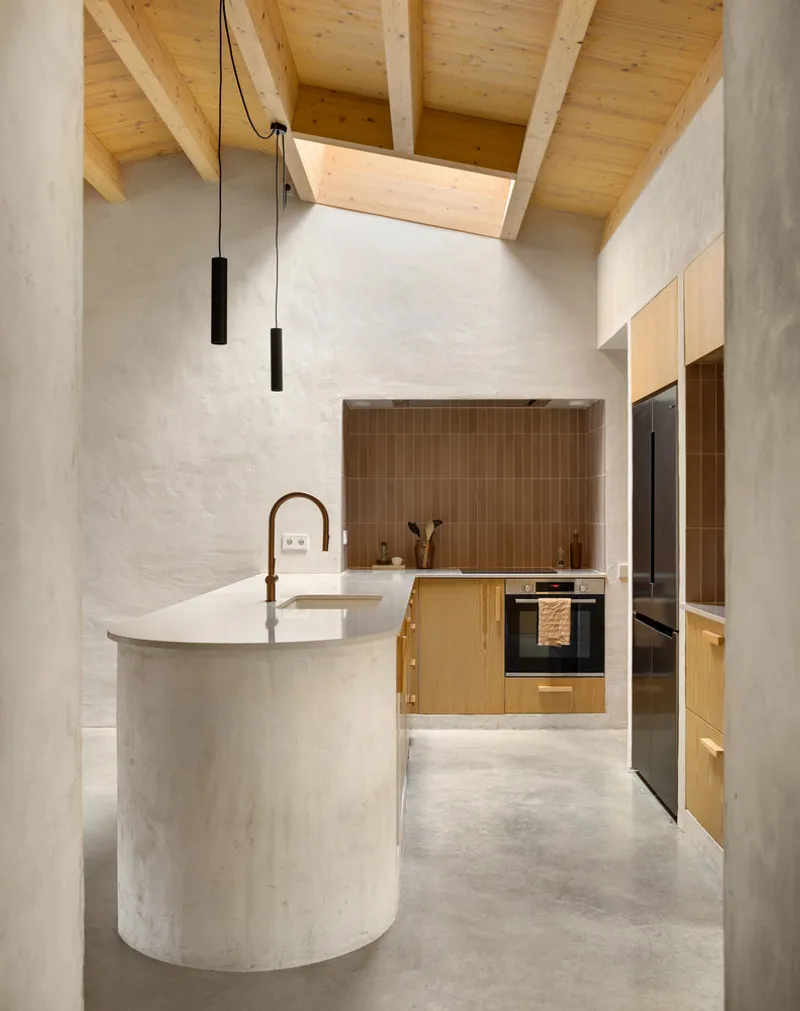
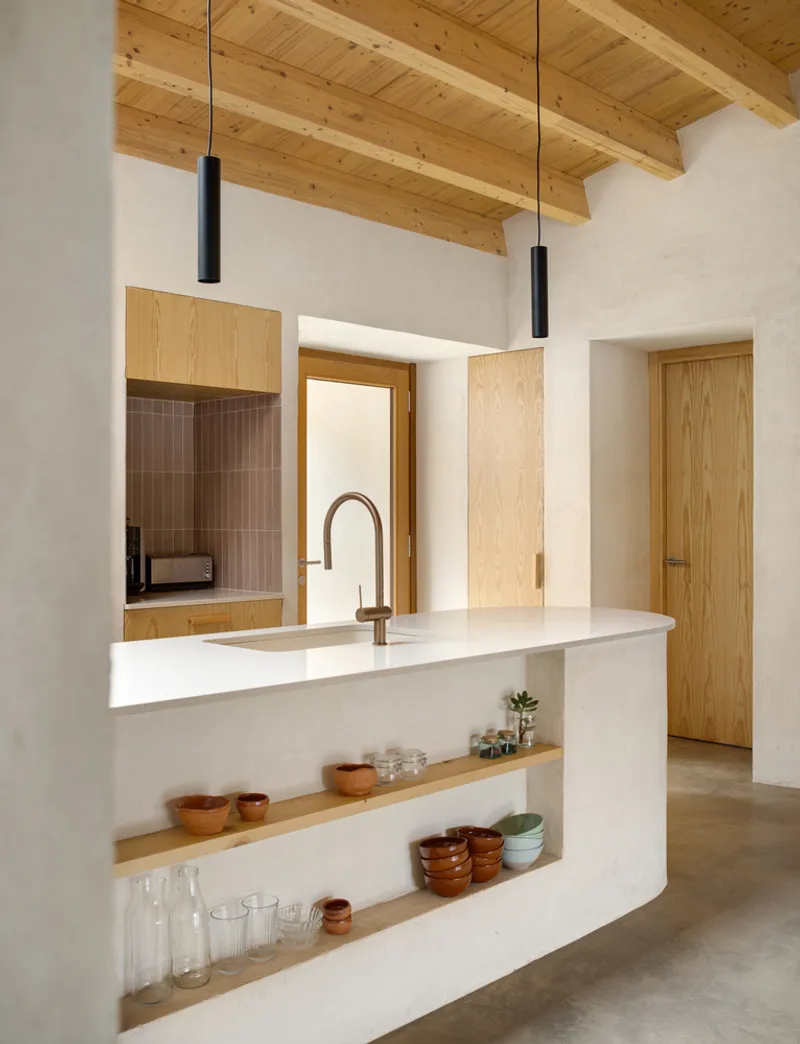
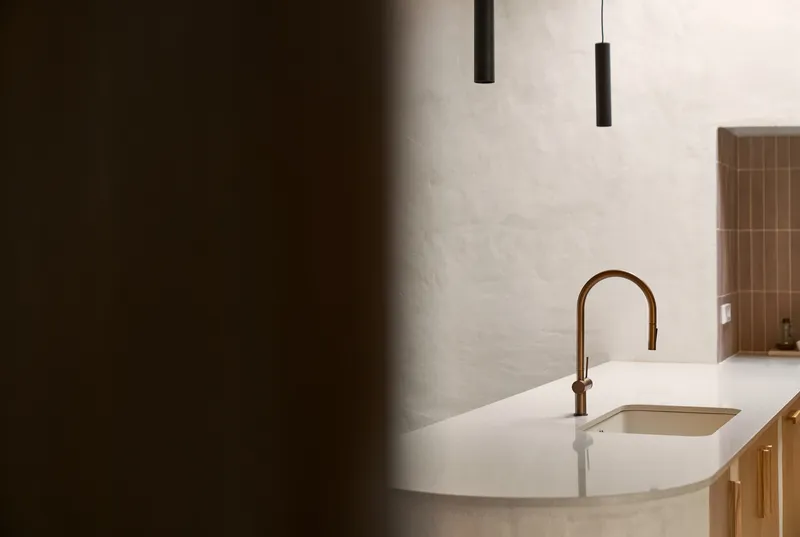
The kitchen is defined by a curved white plaster island with a brass tap and open shelving below. The curve is not decorative. It softens the transition between the kitchen and the living area in a compact open plan. Birch plywood cabinets line the back wall. Black pendant lights hang from the timber ceiling. A skylight directly above the island brings daylight into the centre of the plan, where a window would not reach.
Bedrooms and Corridor
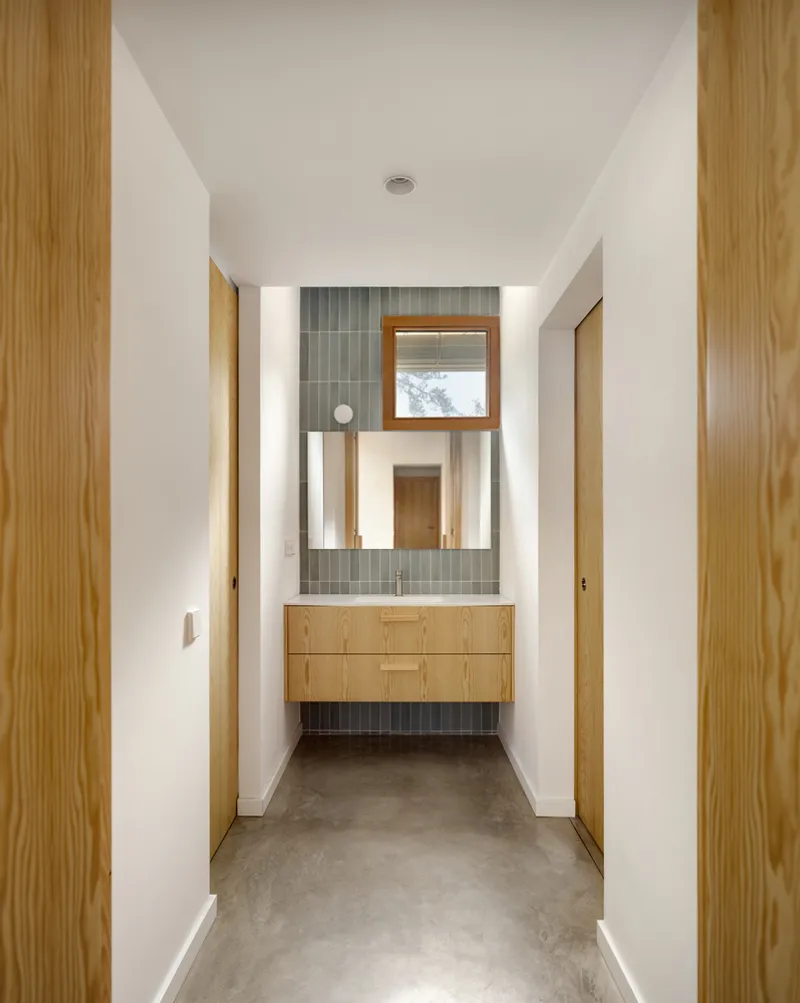
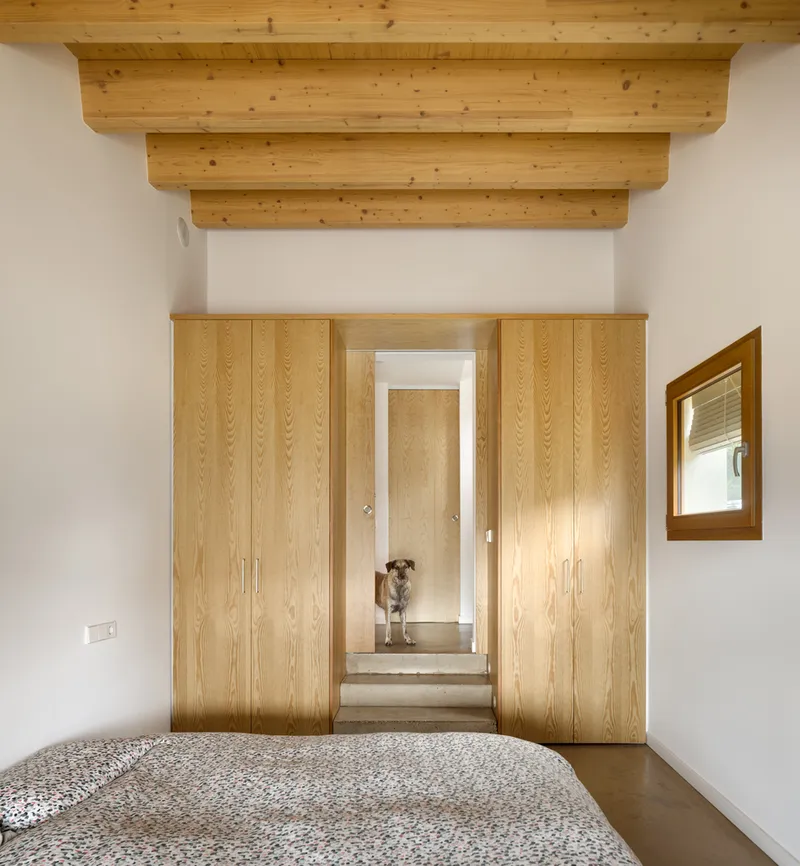
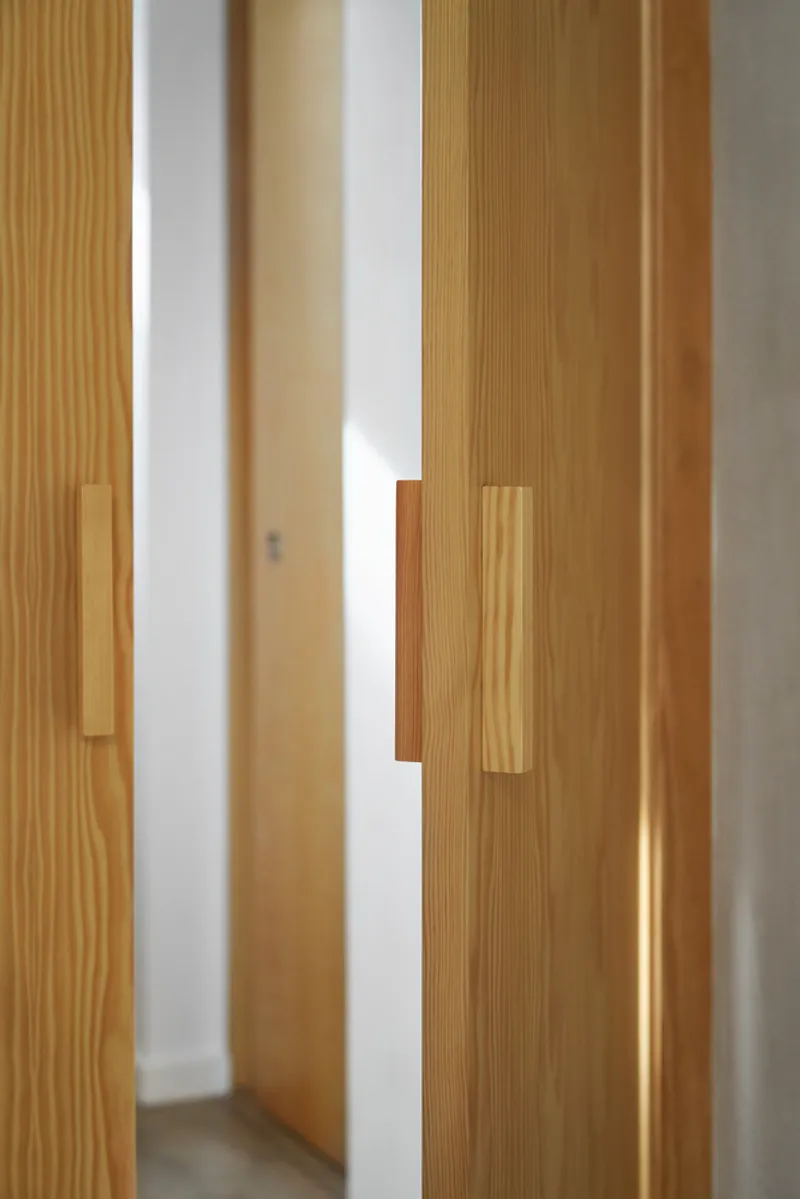
The bedrooms are simple, quiet rooms with timber beam ceilings, oak sliding doors, and lime plaster walls. The corridor that connects them has a grey tile floor, a timber vanity, and a small window. The door handles are carved timber pulls. These are small details, but they signal the level of care throughout. Nothing in this house was specified from a catalogue. Every element was chosen.
The Plunge Pool and Terrace
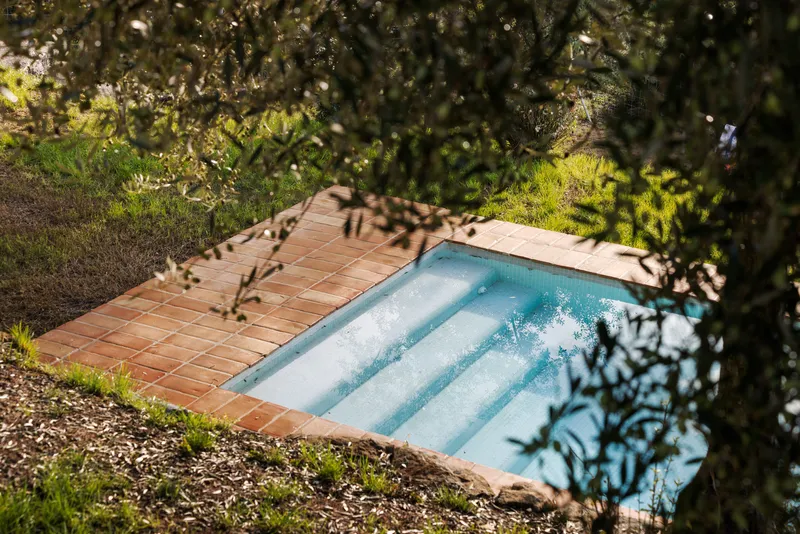
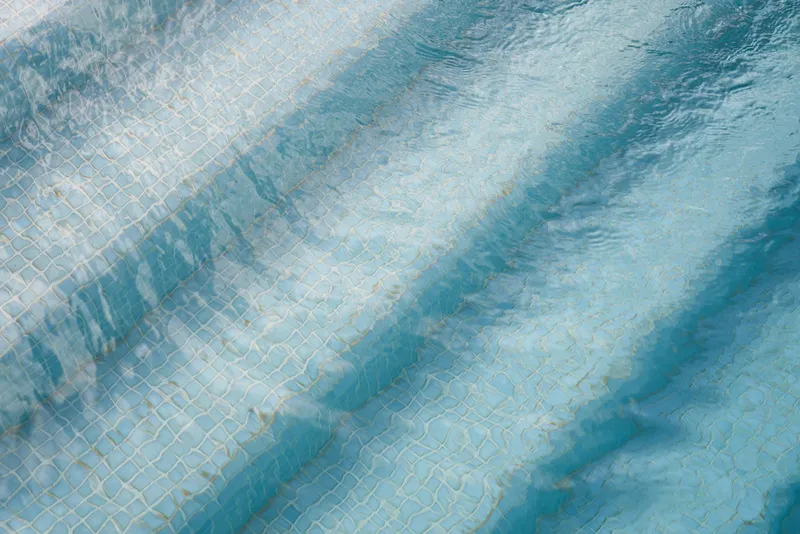
The plunge pool is small: terracotta-tiled surround, turquoise mosaic interior, stepped entry. It sits on the lower terrace, shaded by olive trees, with the stone retaining wall behind it and the valley dropping away below. It is not a swimming pool. It is a place to cool down in the Catalan summer. The scale is right for the house and the site.
Section and Plan
The section shows the house on its terrace: timber roof structure, stone retaining wall below, plunge pool at the lower level, trees on the slope. The floor plan reveals the compact square layout: living and kitchen in the front half facing the valley, two bedrooms and a bathroom in the back half facing the hill, with a timber pergola extending the living space outdoors.
Why This Project Matters
Mediterranean residential architecture is full of houses that imitate traditional forms without understanding them. Boratuna House does the opposite. It uses traditional materials (lime, timber, stone, terracotta) and traditional strategies (terrace siting, passive cooling, compact plan, deep eaves) but assembles them with contemporary precision. The curved kitchen island, the skylight, the polished concrete floor: these are not traditional elements. They are modern interventions that make the house work better without breaking the language.
If you are designing a small house in a warm climate with a limited palette, this project is worth studying for how much atmosphere three materials can produce when they are used honestly.
About the Studio
Share Your Own Work on uni.xyz
If you are working on rural residential architecture, passive design, or Mediterranean building, uni.xyz is a place to publish your work and connect with a global design community.
Project credits: Boratuna House by Bouman Arquitectura. Sant Gregori, Girona, Spain. Photographs: Pol Viladoms.




Popular Articles
Popular articles from the community


Lunar Spiral: Space Architecture Shaped by the Mathematics of the Universe
Lunar Spiral reimagines space architecture through Fibonacci geometry, lunar regolith, levitating habitats, and self-sustaining Moon living.

Co-Life: Senior Housing Design That Reconnects Older Adults With the City
Co-Life reimagines senior housing design through healing gardens, shared streets, workshops, and a sustainable community across generations.

The Earth Pod: 3D Printed Homes for Resilient Refugee Communities
The Earth Pod reimagines refugee housing through 3D printed homes made from clay, combining resilience, self-sufficiency, and rapid shelter.

Co-life: Sustainable Architecture for Age-Friendly Community Living
Co-life reimagines sustainable architecture for seniors through courtyards, rammed earth, shared gardens, and spaces designed for belonging.
Similar Reads
You might also enjoy these articles


Hodi-Mandai Geram
Project Function: Preservation and revitalization of the Intangible heritage and socio-spatial identity of the Hodi by Housing, Cultural Memory Center, Sacred Grove, landscape, local tourism economy


Olio Towers: A Mid-Rise for Performers That Fuses Housing, Rehearsal, and Stage
Located blocks from Houston's Theater District, this modular tower stacks living units around a central performance atrium.

Oasis: Modular Green Housing Carved into Dhaka's Urban Fabric
A shortlisted Plugin Housing entry reclaims unauthorized settlements in Dhaka with stepped concrete volumes, green roofs, and ventilation-driven design.

Black Hole: A Floating Megastructure for the Post-Physical Era
Emiliano Mazzarotto envisions a spherical, self-scaling arena where e-sports, digital hotels, and holographic stadiums replace traditional public space.

Explore Architecture Competitions
Discover active competitions in this discipline



Challenge to reimagine the Iron Throne


Photograph architecture without architects


Illustrate the lost glory of Angkor Wat - Render Challenge


Design challenge to reuse E-waste
Comments (0)
Please login or sign up to add comments
No comments yet. Be the first to comment!