
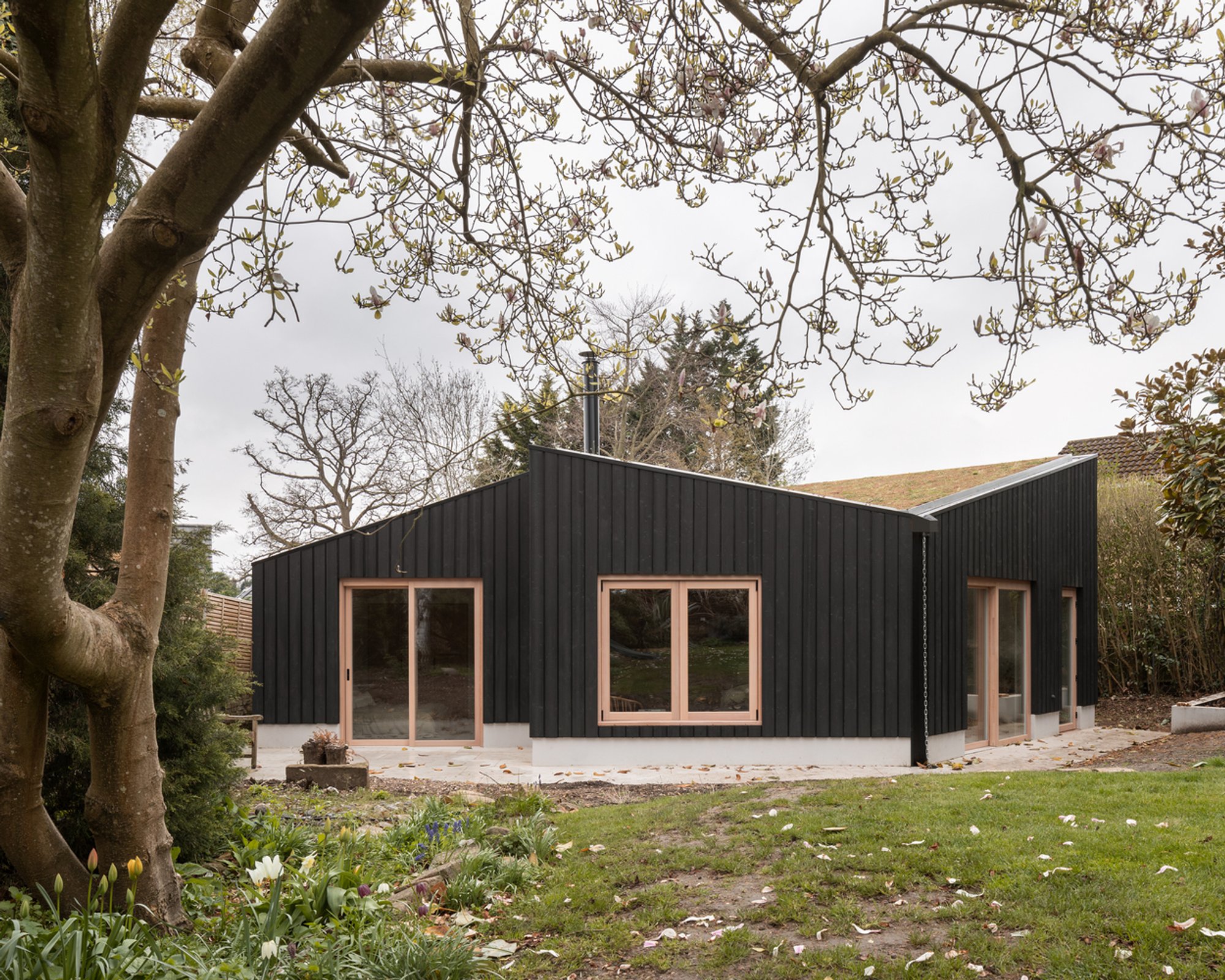
Butterfly House by Oliver Leech Architects: A Contemporary Model for Multigenerational Living
Butterfly House is a compact, sustainable home designed for multigenerational living with accessible design and a striking butterfly roof.

Nestled in the quiet suburban landscape of Esher, Surrey, Butterfly House by Oliver Leech Architects exemplifies a refined approach to compact residential architecture and multigenerational living. Designed as a self-contained, future-proof home for an elderly parent within the grounds of an existing family property, this 94-square-meter residence redefines how accessibility, privacy, and sustainable architecture can coexist.
Architecture Rooted in Function and Form
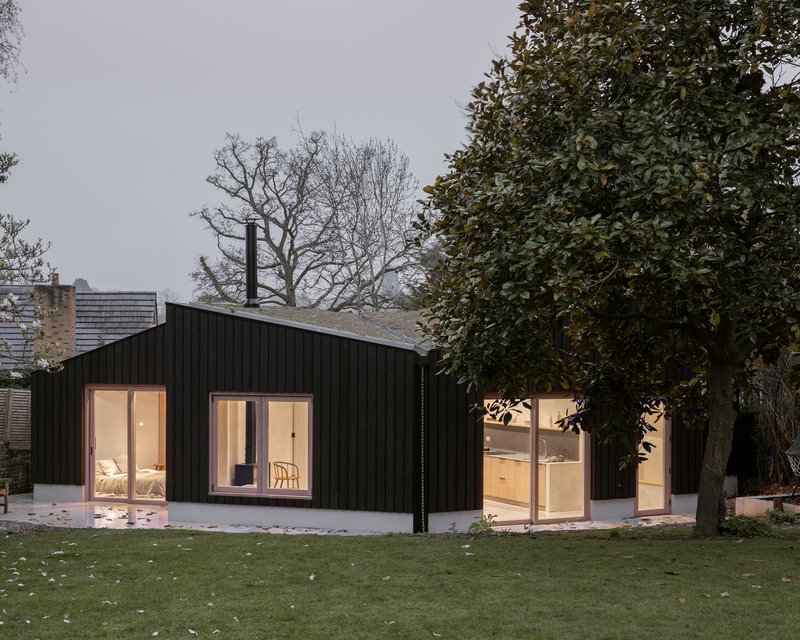
Positioned in the southern corner of a triangular plot, Butterfly House responds directly to its tight site constraints. The architectural form—comprised of four distinct, pitched volumes—fans outward to maximize light, maintain privacy, and frame views of the mature surrounding trees. The sculptural rooflines create an inverted butterfly roof, which gives the house both its name and unique silhouette.
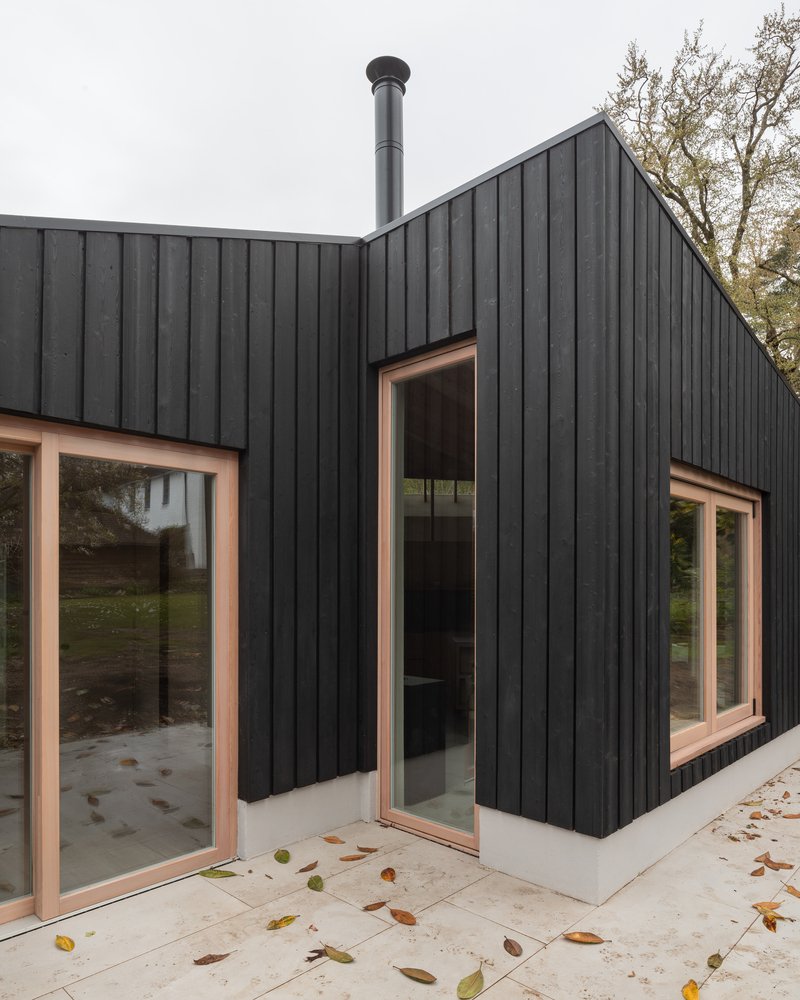
Clad in burnt Japanese timber, the exterior harmonizes with the woodland edge setting, casting shifting shadows across the dark facade. This charred timber not only enhances the building's aesthetic but also provides a durable, low-maintenance envelope.
Interior Design That Celebrates Light, Space, and Accessibility
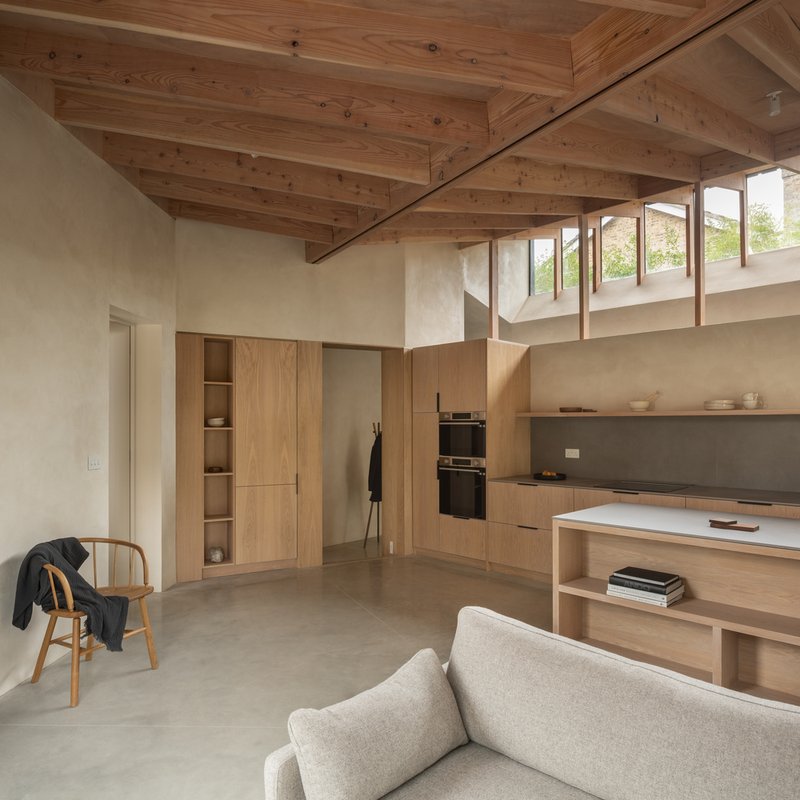
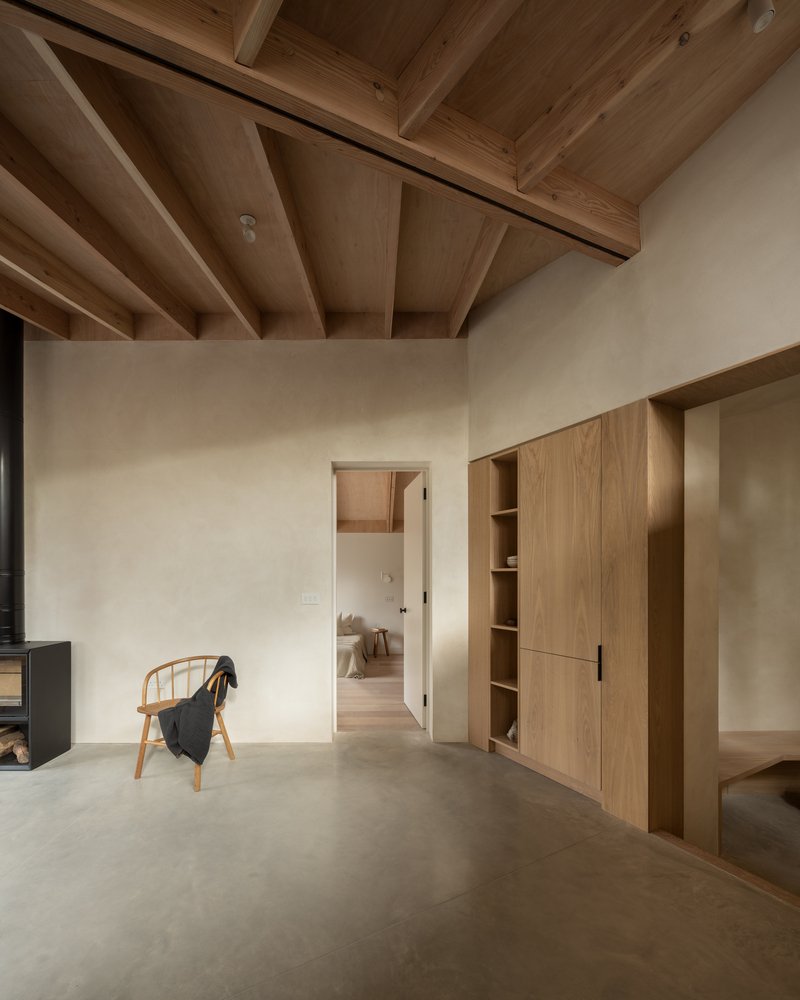
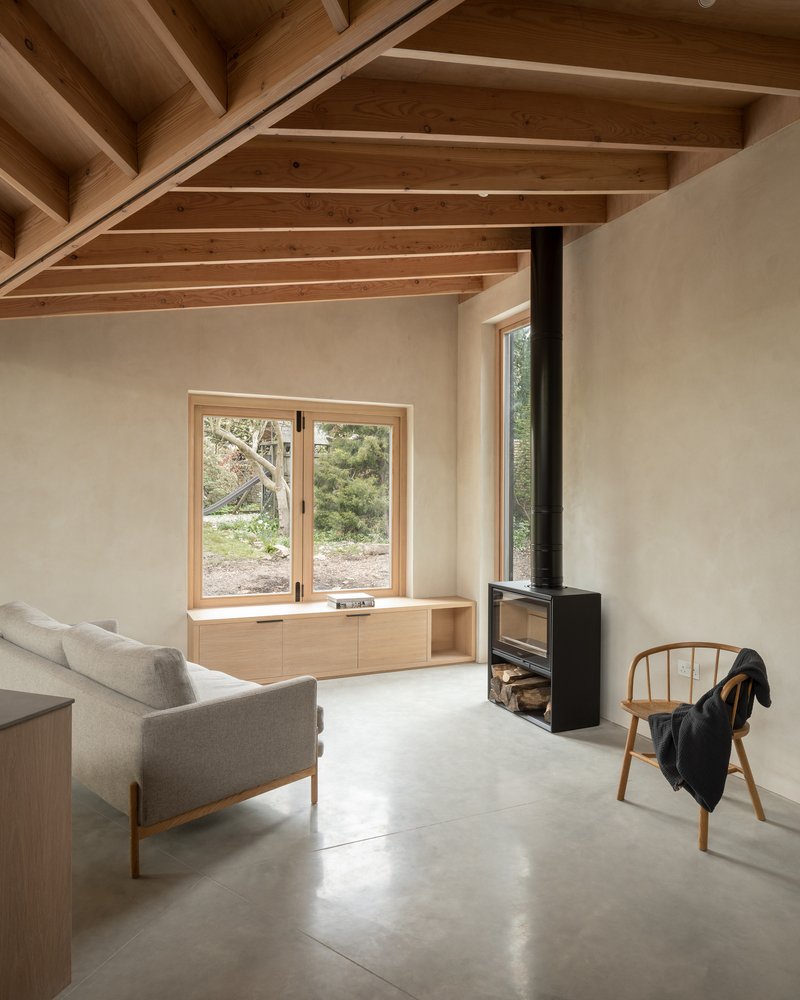
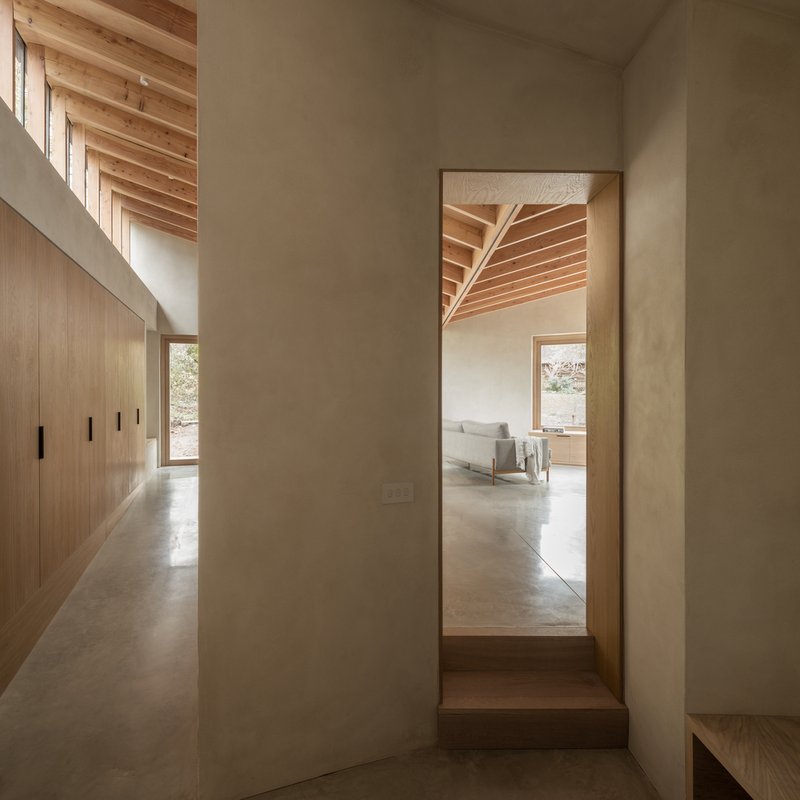
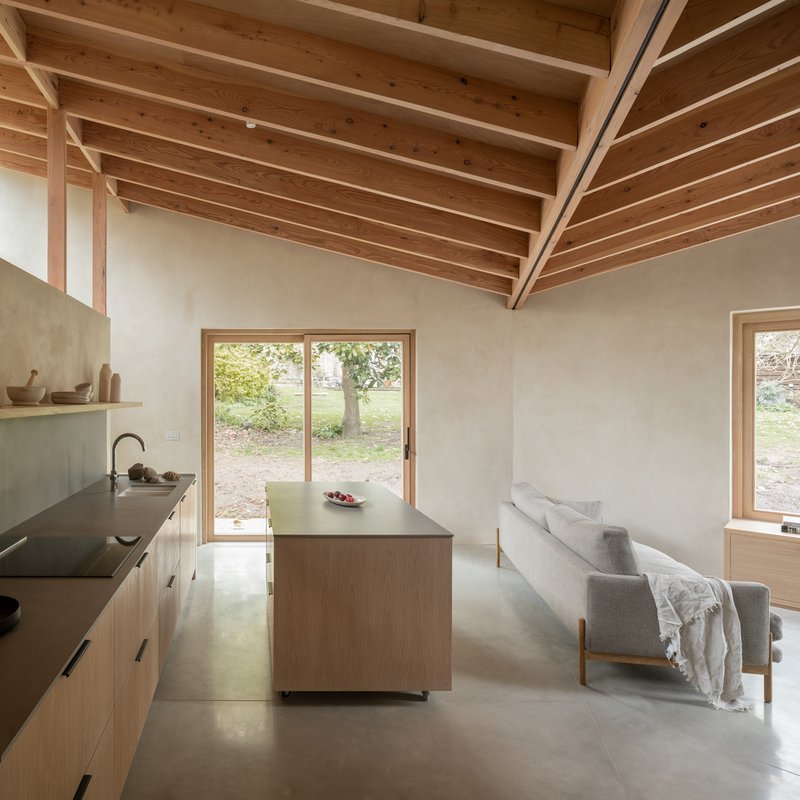
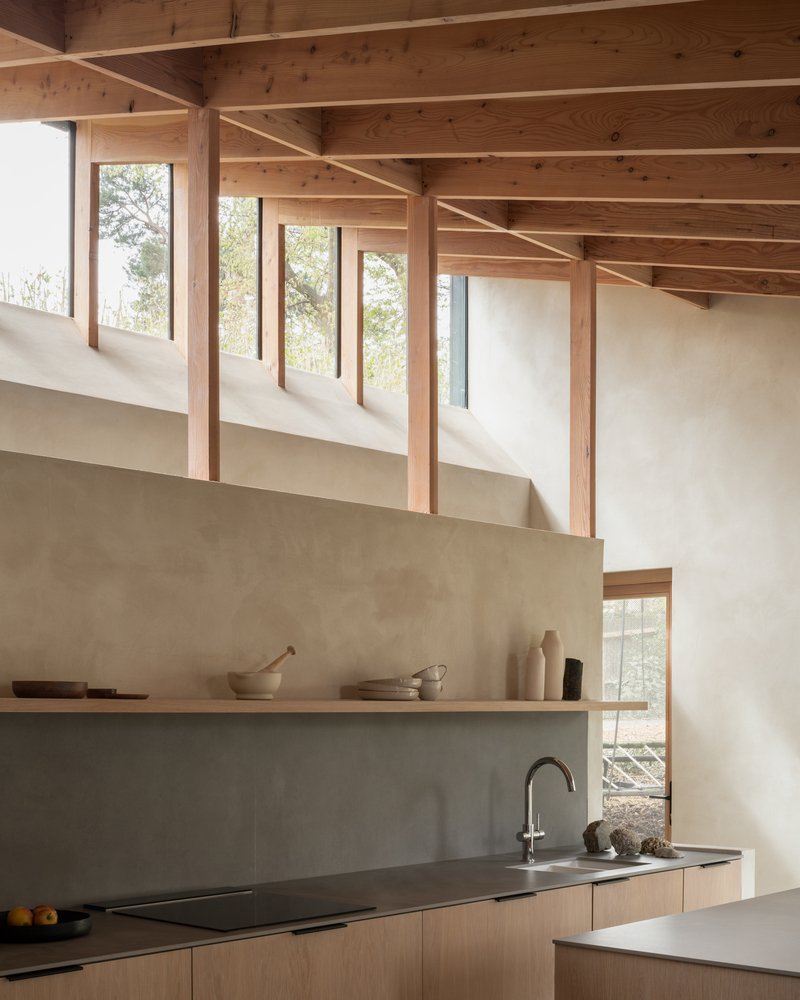
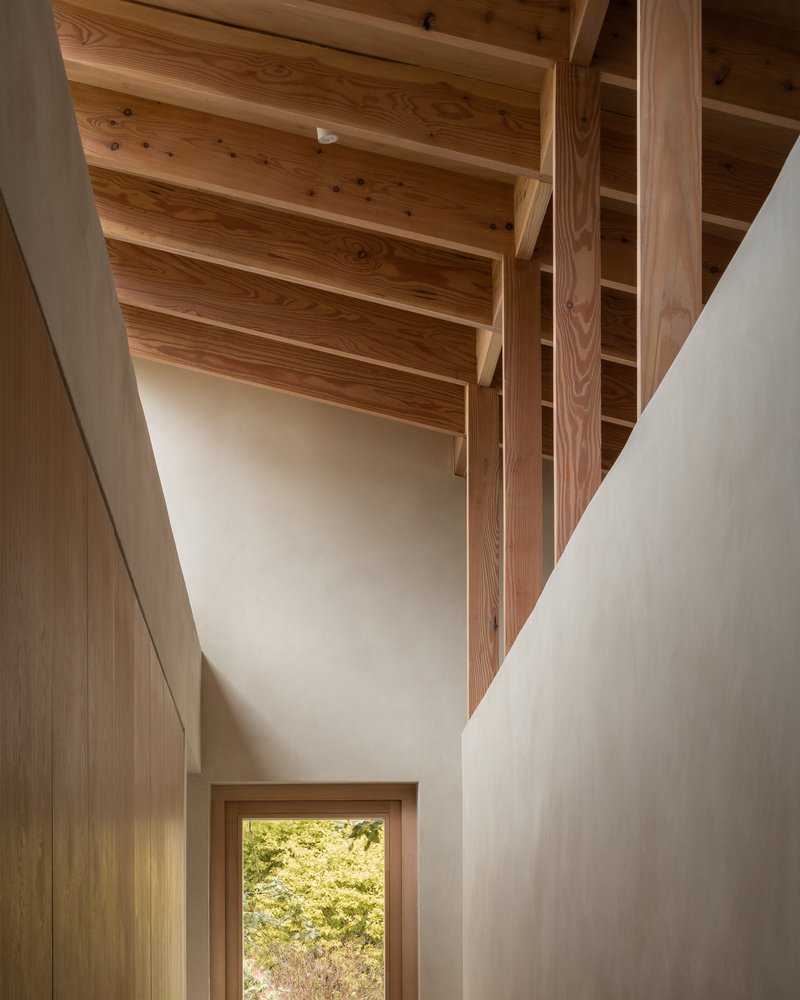
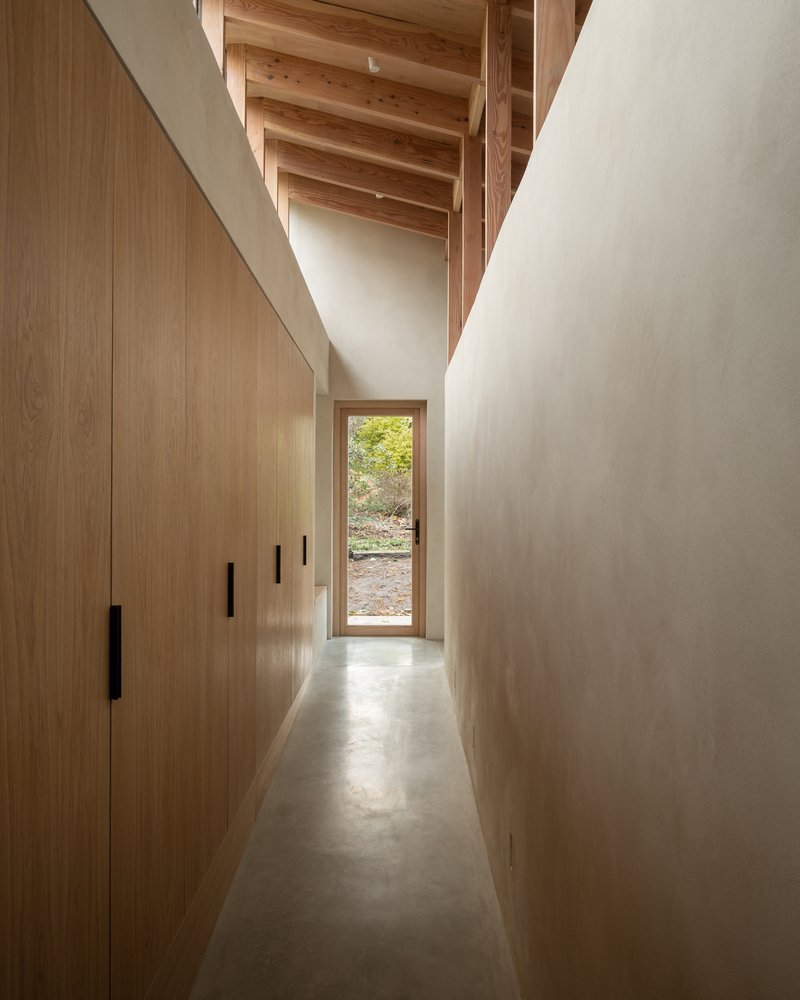
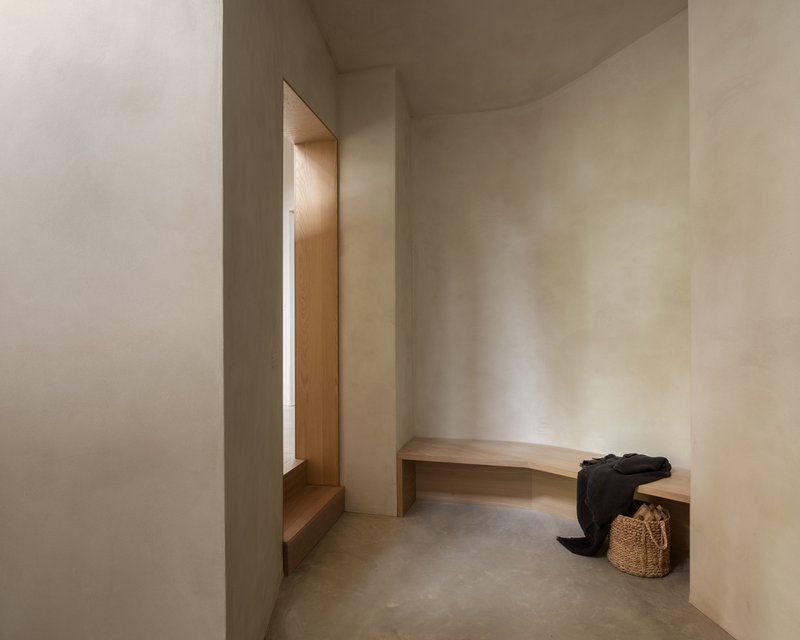
Inside, the architecture opens up to reveal a sequence of calm, light-filled spaces. Exposed larch beams rise and fall with the angular roofline, while clerestory glazing pours daylight deep into the interior. The home is unified by a minimalist material palette—polished concrete floors, pale clay plaster walls, and oak joinery—designed to emphasize the spatial geometry and bring warmth to the interior.
A sunken entrance leads into the home through a ramped lobby—an inclusive design gesture that seamlessly transitions into the main open-plan living space. The accessible kitchen features low-drawer storage and a movable island on casters, allowing for flexibility and independence for users with limited mobility. The absence of upper cabinets ensures ease of access while maintaining a clean visual flow.
Designed for Dignity, Built for the Future
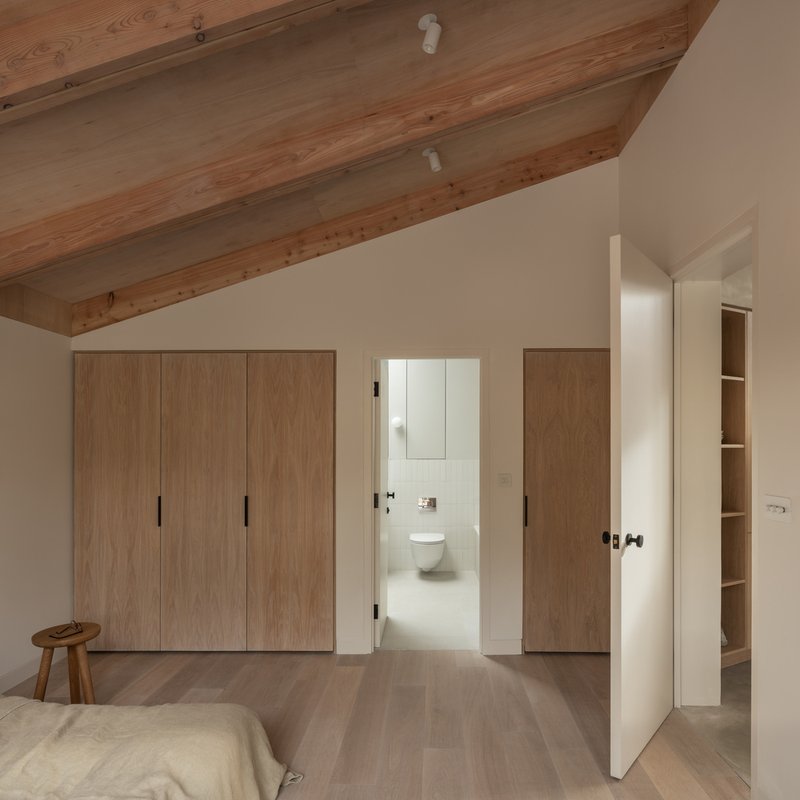
The program includes two bedrooms and two bathrooms, designed to accommodate a live-in carer and support assisted independent living. The primary bedroom opens to a private patio and features wide doorways and flush thresholds for wheelchair access. Subtle design strategies—such as double-spaced rafters and clerestory views of the sky—create a heightened sense of space in an otherwise compact layout.
The two bathrooms, illuminated by openable Velux skylights, contrast the dark exterior with light-reflecting white tiles and mirrored surfaces, pulling in the surrounding greenery and emphasizing the transition from public to private space.
Sustainable, Low-Energy Construction
Sustainability lies at the heart of Butterfly House. Built on-site using a larch timber frame and tightly insulated panels, the home features triple glazing, an airtight envelope, and has been future-proofed for the installation of a heat pump system. These decisions result in a high-performance, low-energy building that requires minimal heating and is designed for long-term thermal efficiency.
A New Model for Multigenerational Architecture
More than just a compact house, Butterfly House is a thoughtful response to aging in place, family proximity, and dignified design for elderly residents. By steering away from conventional notions of elderly accommodation, Oliver Leech Architects have created a contemporary, empowering model of accessible architecture—one that supports independent living without compromise.
After five years of development, Butterfly House stands as an exemplar of sensitive residential design, blending form, function, and emotion in equal measure.
All Photographs are works of Ståle Eriksen


Popular Articles
Popular articles from the community


The Ken Roberts Memorial Delineation Competition (Krob)
As the most senior architectural drawing competition currently in operation anywhere in the world, it draws hundreds of entries each year, awarding the very best submissions in a series of medium-based categories.

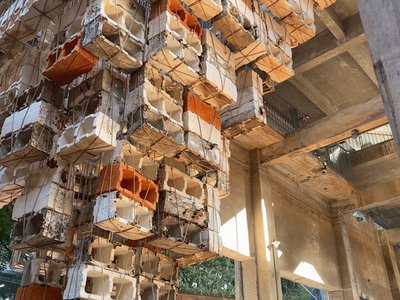
Inverted Architecture Installation by Studio Link-Arc: Exploring the Intersection of Architecture and Living Organisms
Inverted Architecture Installation by Studio Link-Arc blends mycelium, sustainability, inverted design, ecological cycles, and urban adaptive architecture in Shenzhen.

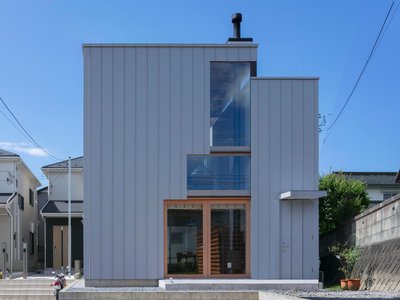
Split House: A Compact Urban Home Blending Privacy, Light, and Flexible Living in Japan
Compact Japanese home featuring DOMA space, flexible café potential, passive lighting, privacy zoning, and sustainable urban living design.


Similar Reads
You might also enjoy these articles
The Ken Roberts Memorial Delineation Competition (Krob)
As the most senior architectural drawing competition currently in operation anywhere in the world, it draws hundreds of entries each year, awarding the very best submissions in a series of medium-based categories.

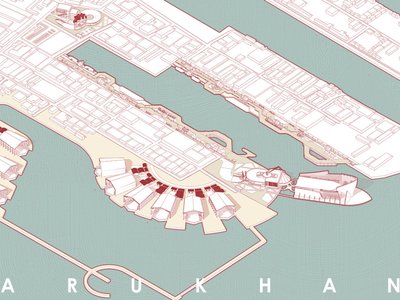
Waterfront Redevelopment and Urban Revitalization in Mumbai: Forging a New Dawn for Darukhana
A transformative waterfront redevelopment project reimagining Darukhana’s shipbreaking heritage into an inclusive urban future.

OUT-OF-MAP: A Call for Postcards on Feminist Narratives of Public Space
Rhizoma Design and Research Lab invites artists, designers, architects, researchers, and students to reflect on how feminist perspectives can reshape public space. Selected works will be exhibited in Barcelona, October 2026. Submissions open until 15 April 2026.


Documentation Work on Buddhist Wooden Temple
Architectural syncretism and cultural hybridity: A comparative study of the Buddhist temples in Chattogram Hill tracks


Explore Architecture Competitions
Discover active competitions in this discipline




The International Standard for Design Portfolios


The Global Benchmark for Architecture Dissertation Awards


The Global Benchmark for Graduation Excellence


Challenge to reimagine the Iron Throne
Comments (0)
Please login or sign up to add comments
No comments yet. Be the first to comment!