

Cave-Inspired Architecture: The Sculptural Design of Gruta House in Yucatán
Gruta House in Yucatán embodies cave-inspired architecture, using organic forms and natural materials to create a sculptural, immersive living experience.


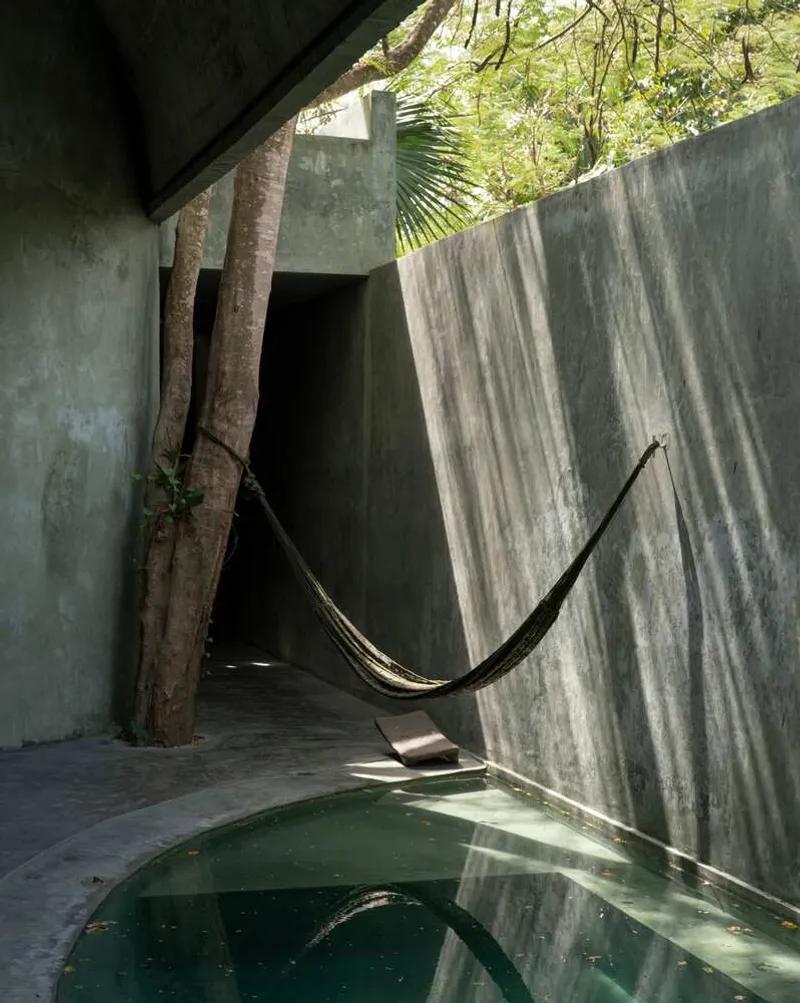
Cave-inspired architecture is redefining modern residential design by blending organic forms, natural materials, and immersive spatial experiences. Gruta House, designed by Salvador Román Hernández and Adela Mortéra Villarreal, embodies this philosophy, drawing inspiration from the geological formations of the Yucatán Peninsula. Located in the Sisal neighborhood of Valladolid, the residence functions as a habitable sculpture, merging contemporary aesthetics with timeless natural elements.


A Home Rooted in Geological Inspiration
The concept of Gruta House is deeply influenced by the cenotes and caves found in Yucatán. These natural underground formations, created over thousands of years, have served as sacred spaces for the Mayan civilization. The house replicates their spatial dynamics through tunnels, vaults, and open courtyards, offering an experiential journey that evokes both discovery and refuge. The design fosters a seamless interaction between built structures and natural elements, creating a profound sense of place.


Materiality and Light Play
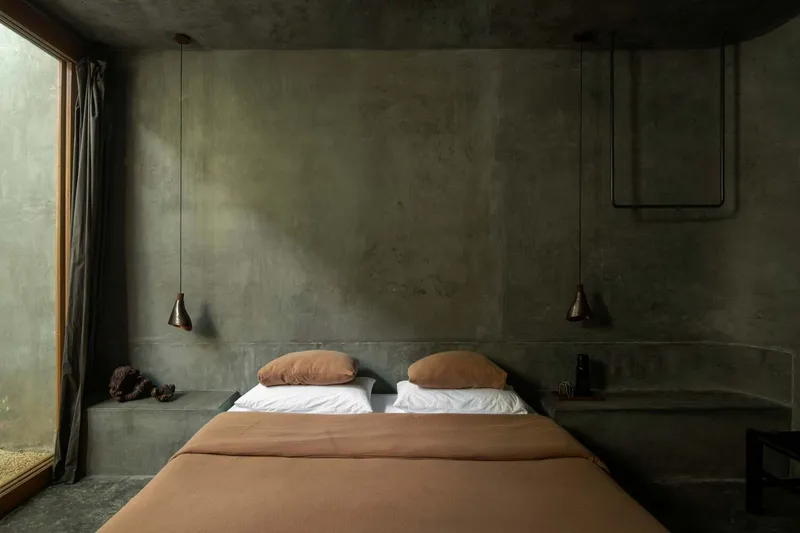
The use of materials in Gruta House reflects the organic textures and hues of its surroundings. Pigmented concrete, in a gray-green shade, mirrors the ever-changing tones of limestone caves as sunlight shifts throughout the day. The contrast of natural cedar wood introduces warmth, referencing the rich vegetation of the region, while golden hardware accents symbolize the minerals embedded in the land. These materials not only establish an aesthetic connection to nature but also contribute to the house’s atmospheric dynamism.


Light and shadow play a fundamental role in shaping the experience of the house. The architecture is designed to respond to the movement of the sun, casting shifting shadows that emphasize the sculptural qualities of the space. The strategic positioning of courtyards and openings enhances natural illumination while maintaining an intimate, cave-like ambiance.

A Spatial Journey Through Organic Forms
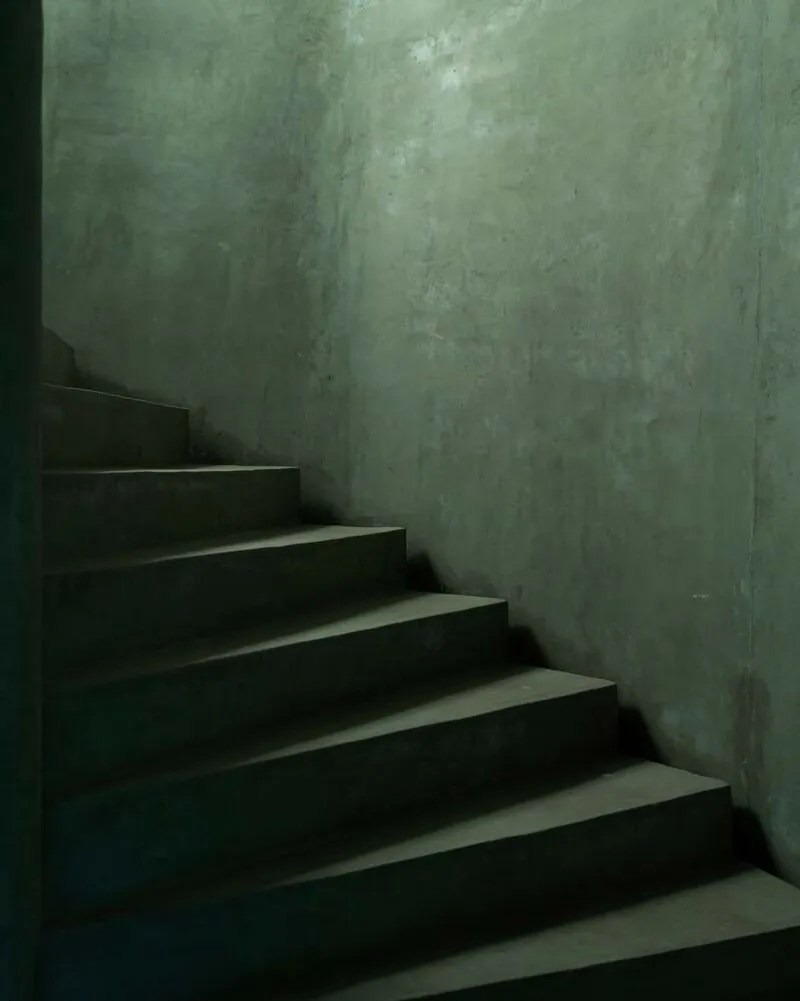
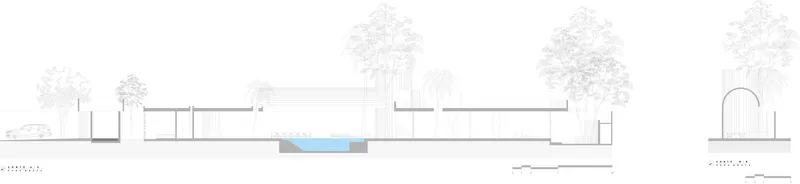
The spatial configuration of Gruta House invites inhabitants to embark on a journey reminiscent of exploring a grotto. The entrance, marked by a poplar tree—an indicator of underground water formations in Mayan traditions—leads to an outdoor vestibule featuring a reflective body of water designed by artist Andrés Briceño. This element pays homage to Mayan purification rituals before entering cenotes, reinforcing the home’s spiritual connection to its site.


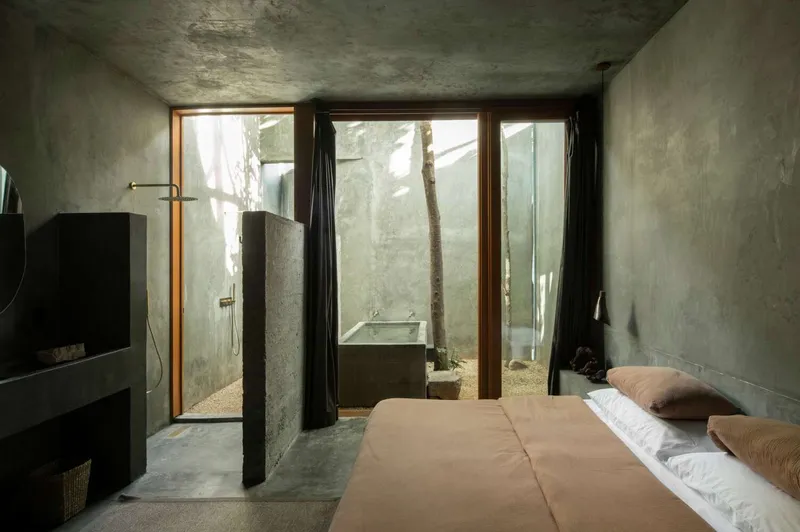
A tunnel-like passage guides visitors through the home, opening gradually into different living spaces. The first stop is a secluded room with a private patio, an outdoor shower, and a water feature that enhances the cooling microclimate. As the tunnel extends, it leads into the main living area, a vast communal space under a hammered concrete vault that amplifies the cave-like atmosphere. The journey culminates in a cylindrical volume that houses the staircase, leading to a rooftop terrace with panoramic views of the landscape.

Emphasizing Contemplation and Nature
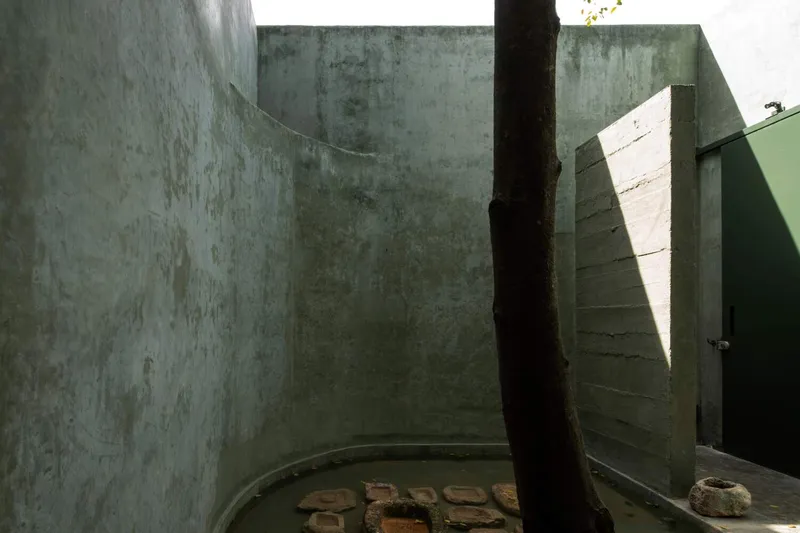
Gruta House integrates contemplative spaces that promote a deep connection with time and nature. The ground floor includes two additional rooms, one of which opens to a sculptural courtyard where vegetation and artwork create a tranquil retreat. The master bedroom embraces an indoor patio with a circular water element, reinforcing the interplay between light, shadow, and reflection. A pre-existing flamboyant tree further enhances the dynamic interaction between architecture and its environment.


Beyond its aesthetic and sensory qualities, Gruta House serves as a refuge from the fast-paced rhythms of contemporary life. By drawing on cave-inspired architecture, it offers a timeless sanctuary that encourages introspection, mindfulness, and appreciation of natural cycles.
A Testament to Organic Architecture
Gruta House stands as an exceptional example of cave-inspired architecture, demonstrating how organic forms and natural materials can shape meaningful living environments. By respecting the geological and cultural heritage of its site, the design seamlessly integrates with its surroundings, creating a home that feels both ancient and contemporary. As architecture continues to evolve, projects like this remind us of the power of nature-driven design in fostering harmony between humans and their environment.


All Photographs are works of Fabian Martinez


Popular Articles
Popular articles from the community


The Amber Palace Opera: A Geological Fiction Surfaces on Tallinn's Baltic Waterfront
Pierre Brillard reimagines a Baltic legend as a public landscape, opera house, and waterfront promenade rooted in Tallinn's coastal identity.
Faces of the Soviet Avant-Garde: Turning Moscow's Street Names into an Open-Air Museum
A network of sculptural installations across a Moscow residential district transforms forgotten architect names into spatial encounters with cultural memor
Opera by the Sea Estonia: Three Shells Dissolving Architecture into Tallinn's Coastline
A winning opera house proposal replaces monumental form with interconnected shells that blur the boundary between building, park and Baltic Sea.

Manzana Morphosis: Stretching Barcelona's Grid into a Living Landscape for 2050
A radical reworking of the Eixample manzana turns density into a tool for generous public space, vertical ecology, and environmental performance.

Similar Reads
You might also enjoy these articles


Hodi-Mandai Geram
Project Function: Preservation and revitalization of the Intangible heritage and socio-spatial identity of the Hodi by Housing, Cultural Memory Center, Sacred Grove, landscape, local tourism economy


Olio Towers: A Mid-Rise for Performers That Fuses Housing, Rehearsal, and Stage
Located blocks from Houston's Theater District, this modular tower stacks living units around a central performance atrium.

Oasis: Modular Green Housing Carved into Dhaka's Urban Fabric
A shortlisted Plugin Housing entry reclaims unauthorized settlements in Dhaka with stepped concrete volumes, green roofs, and ventilation-driven design.

Black Hole: A Floating Megastructure for the Post-Physical Era
Emiliano Mazzarotto envisions a spherical, self-scaling arena where e-sports, digital hotels, and holographic stadiums replace traditional public space.

Explore Sacralized Architecture Competitions
Discover active competitions in this discipline

Challenge to reimagine the Iron Throne

Photograph architecture without architects

Illustrate the lost glory of Angkor Wat - Render Challenge

Design challenge to reuse E-waste
Comments (0)
Please login or sign up to add comments
No comments yet. Be the first to comment!