

Charcoal Haus by moc architects
A minimal commercial project in Yangsan where thickened boundaries, shifting landscapes, and restrained architecture redefine an ambiguous hillside site.


Set halfway up a quiet hillside in Yangsan-si, South Korea, Charcoal Haus by moc architects is a small but deeply reflective commercial architecture project that explores how architecture can redefine an uncertain landscape. Completed in 2024 with a total area of 247 m², the project does not impose a strong formal gesture onto its surroundings. Instead, it works with restraint, minimal elements, and subtle spatial shifts to transform an awkward, unfinished site into a place of calm inhabitation.
Defining Place Through Minimal Boundaries and Ambiguous Landscapes
Charcoal Haus is less about creating an object and more about reframing perception: of land, boundary, and atmosphere.
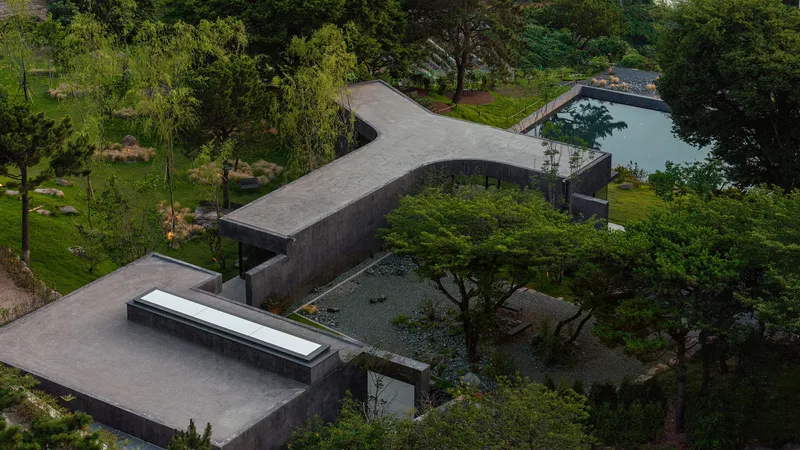
An Ambiguous Site Between Forest and Industry
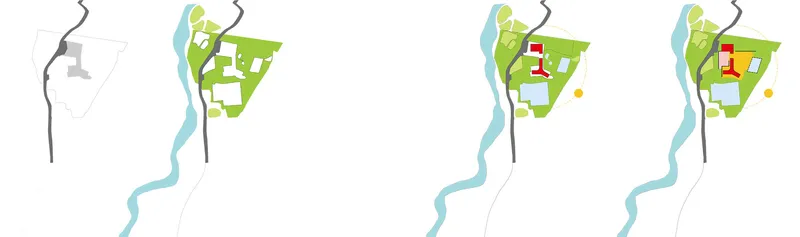
The site occupies a peculiar position. Located within a greenbelt zone, it is densely surrounded by pine trees and largely free of neighboring buildings. At the same time, an industrial complex is planned below, opening up an unexpectedly expansive view. Rather than feeling naturally serene, the land carries a sense of incompletion.
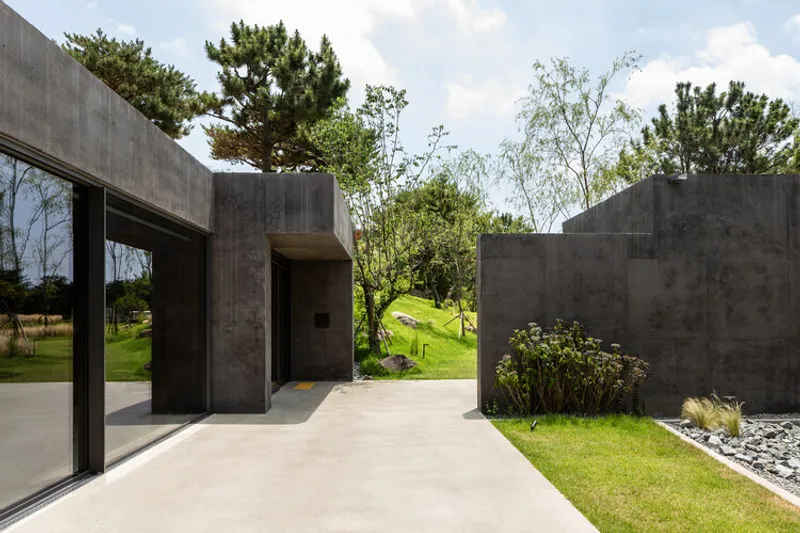
Remnants of a former business remain: a half-finished garden and a fish pond, elements that disrupt the natural continuity of the forest. These traces create an atmosphere that is neither abandoned nor resolved, an uneasy in-between condition.
For moc architects, the first question was not architectural form, but how to define the place itself. Before shaping space, the project sought to understand how architecture could give meaning to an otherwise vague landscape.
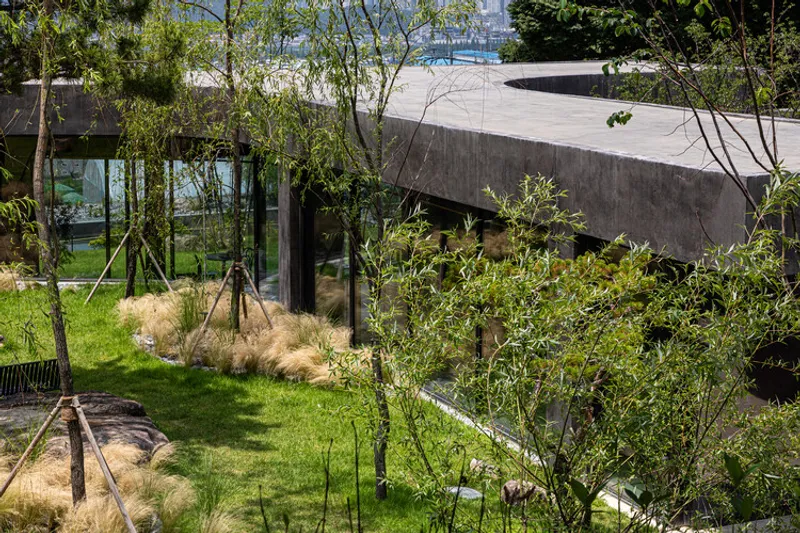
Architecture as a Tool for Reframing Place
Charcoal Haus approaches architecture as an act of clarification rather than domination. The intervention acknowledges that even an ordinary or awkward site can gain significance when spatial relationships are carefully restructured.
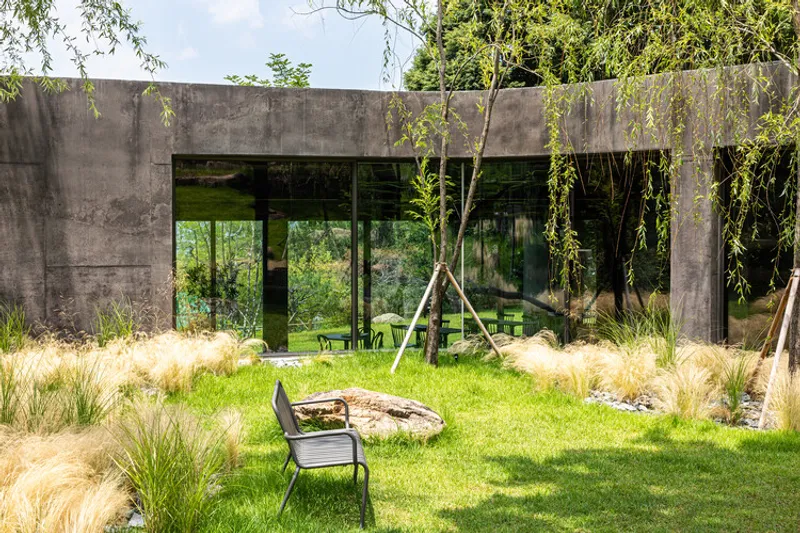
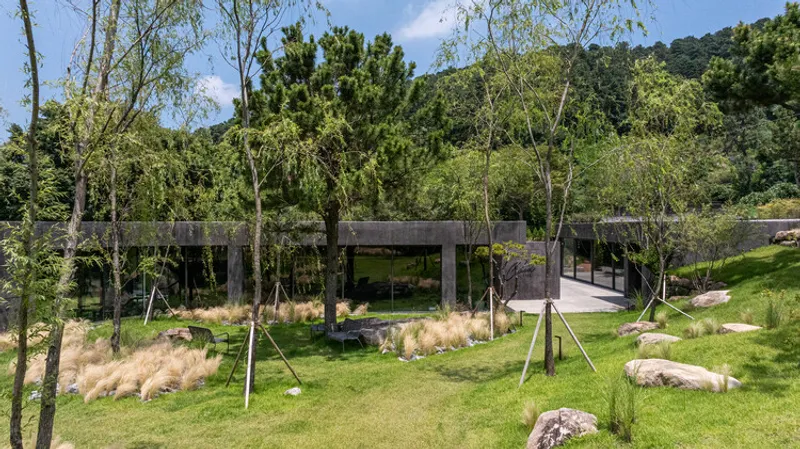
Rather than erasing the site’s ambiguity, the project embraces it. The architecture does not attempt to “correct” the land but instead offers a framework that allows the environment to settle into a new equilibrium. In this sense, Charcoal Haus becomes an instrument for quiet transformation, a way to shift perception through minimal means.
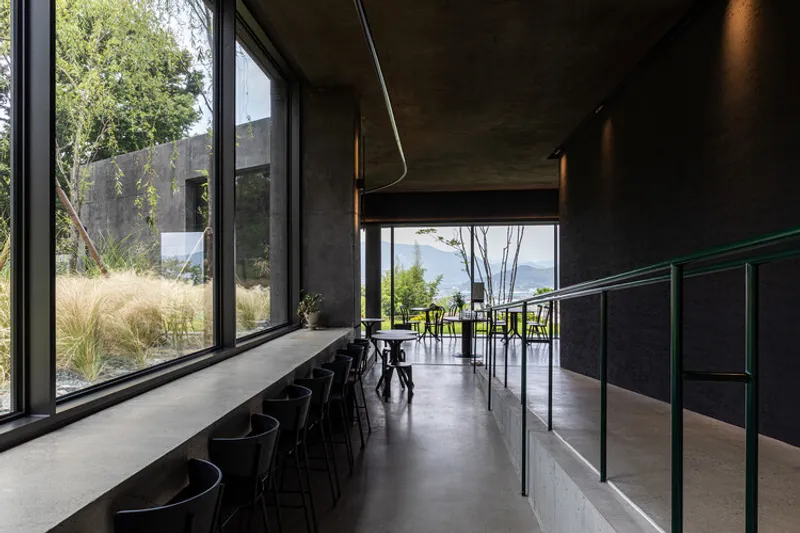
Two Buildings, One Continuous Logic
The project consists of two buildings on adjacent plots, each following the natural slope of the land. A one-meter height difference between the sites becomes a key design driver rather than an obstacle.
Construction is deliberately reduced to four basic architectural elements:
- Wall
- Column
- Floor
- Roof

By limiting the vocabulary, moc architects create clarity and coherence. Each element carries spatial responsibility, and nothing is decorative or redundant.
A long wall running along the slope anchors the composition. This wall does more than divide the land, it gives scale to the openness of the site. It establishes a horizontal datum that organizes movement, sightlines, and spatial sequence.
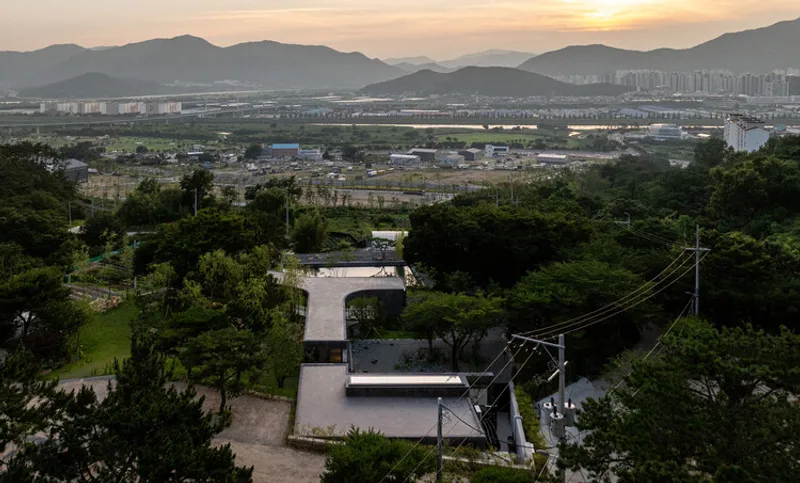
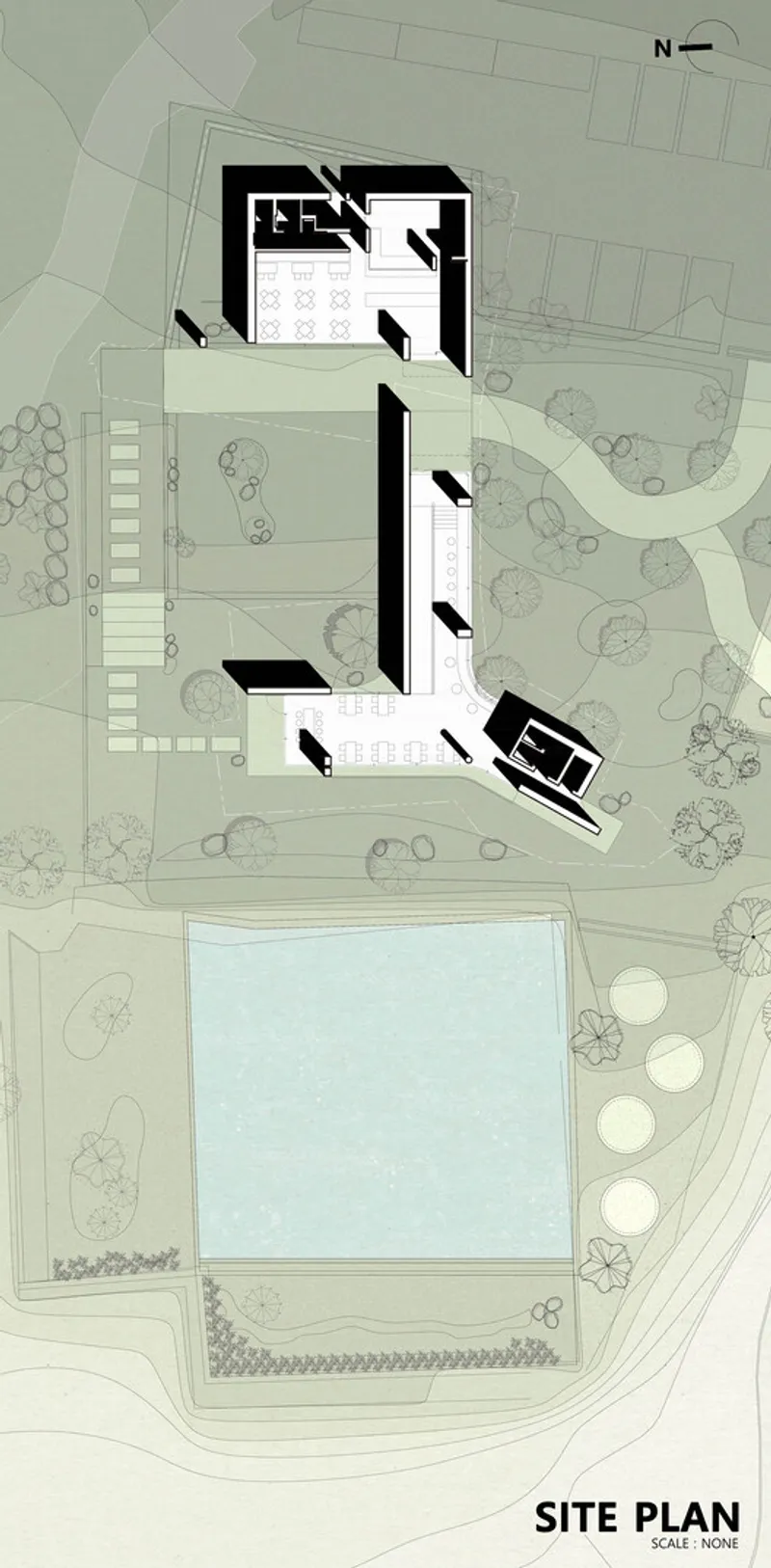
Courtyard and Garden: Order and Wildness
On one side of the wall, visitors encounter a clean, controlled courtyard. This space offers a moment of calm and clarity, a threshold between architecture and landscape.
On the other side, a messy, revived garden reintroduces a sense of nature that feels less curated and more alive. Instead of maintaining the existing pine trees, willows were planted, chosen for their ability to express seasonal change. Their flexible branches move at eye level, replacing rigid landscaping with softness and motion.
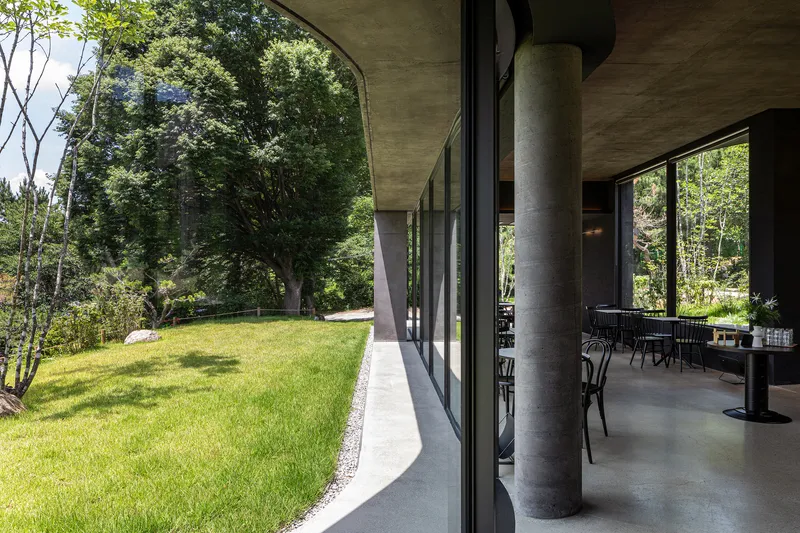
This contrast, between order and looseness, control and growth, creates a dynamic spatial dialogue. The architecture does not sit apart from the landscape; it actively participates in its transformation.
Sectional Experience and Ground-Level Shifts
The floor plane absorbs the site’s one-meter level difference, allowing movement along the slope to feel gradual rather than abrupt. As visitors walk through the project, the garden below slowly rises into view, creating a more intimate encounter with the forest.
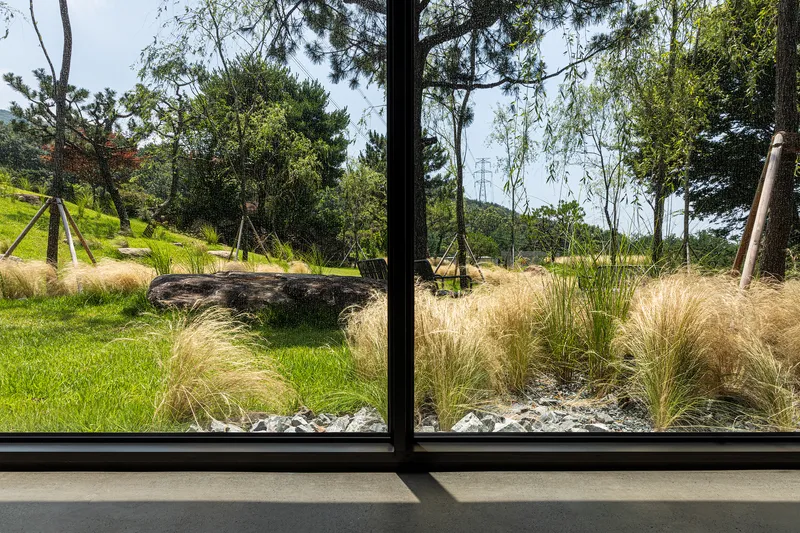
This sectional strategy enhances spatial depth without increasing building size. Although the interiors are compact, they feel protected and inwardly focused, offering a sense of enclosure without isolation.
The architecture responds not only to plan but to movement, height, and perspective, making the experience richer than the modest footprint might suggest.
Interior Atmosphere: Variation Within Continuity
Inside Charcoal Haus, spatial variety is achieved through subtle shifts rather than formal complexity. The roof maintains a continuous horizontal line, but ceiling heights vary across different rooms. This variation creates changing spatial moods, from compressed and intimate to open and expansive.
Columns and walls are positioned with precision. Some extend outward to create additional breathing room, while others frame carefully selected views of the surrounding landscape. These gestures generate a diverse series of facades, including:
- Curved openings
- Straight-edged windows
- Bold triple sliding doors
Each opening offers a different relationship to light, garden, and sky, ensuring that the interior remains visually connected to its environment.
Architecture in the Gray Zone
The name Charcoal reflects both material sensibility and philosophical stance. Like charcoal, the project exists in a gray zone: between black and white, natural and artificial, defined and undefined.
Light shifts throughout the day, vegetation grows and moves, and boundaries soften over time. The architecture does not assert permanence through monumentality but through quiet adaptability.
In this way, Charcoal Haus demonstrates that architecture does not need to be loud to be meaningful. Through restraint, precision, and sensitivity to context, it transforms ambiguity into atmosphere.
All the Photographs are works of texture on texture



Popular Articles
Popular articles from the community


Co-life: Sustainable Architecture for Age-Friendly Community Living
Co-life reimagines sustainable architecture for seniors through courtyards, rammed earth, shared gardens, and spaces designed for belonging.

Co-Life: Senior Housing Design That Reconnects Older Adults With the City
Co-Life reimagines senior housing design through healing gardens, shared streets, workshops, and a sustainable community across generations.

Riyadh For All: Intergenerational Urban Design for Active Aging in Rabat
Riyadh For All reimagines urban design in Rabat with intergenerational co-living, adaptive courtyards, and Moroccan cultural exchange today.

Lunar Spiral: Space Architecture Shaped by the Mathematics of the Universe
Lunar Spiral reimagines space architecture through Fibonacci geometry, lunar regolith, levitating habitats, and self-sustaining Moon living.


Similar Reads
You might also enjoy these articles


Hodi-Mandai Geram
Project Function: Preservation and revitalization of the Intangible heritage and socio-spatial identity of the Hodi by Housing, Cultural Memory Center, Sacred Grove, landscape, local tourism economy


Olio Towers: A Mid-Rise for Performers That Fuses Housing, Rehearsal, and Stage
Located blocks from Houston's Theater District, this modular tower stacks living units around a central performance atrium.

Oasis: Modular Green Housing Carved into Dhaka's Urban Fabric
A shortlisted Plugin Housing entry reclaims unauthorized settlements in Dhaka with stepped concrete volumes, green roofs, and ventilation-driven design.

Black Hole: A Floating Megastructure for the Post-Physical Era
Emiliano Mazzarotto envisions a spherical, self-scaling arena where e-sports, digital hotels, and holographic stadiums replace traditional public space.

Explore Architecture Competitions
Discover active competitions in this discipline



Challenge to reimagine the Iron Throne


Photograph architecture without architects


Illustrate the lost glory of Angkor Wat - Render Challenge


Design challenge to reuse E-waste
Comments (0)
Please login or sign up to add comments
No comments yet. Be the first to comment!