

Coastal Modern Architecture: SP House by Karina Duque
SP House by Karina Duque embodies coastal modern architecture, integrating open spaces, natural materials, and breathtaking ocean views for sustainable living.


A Harmonious Retreat by the Sea
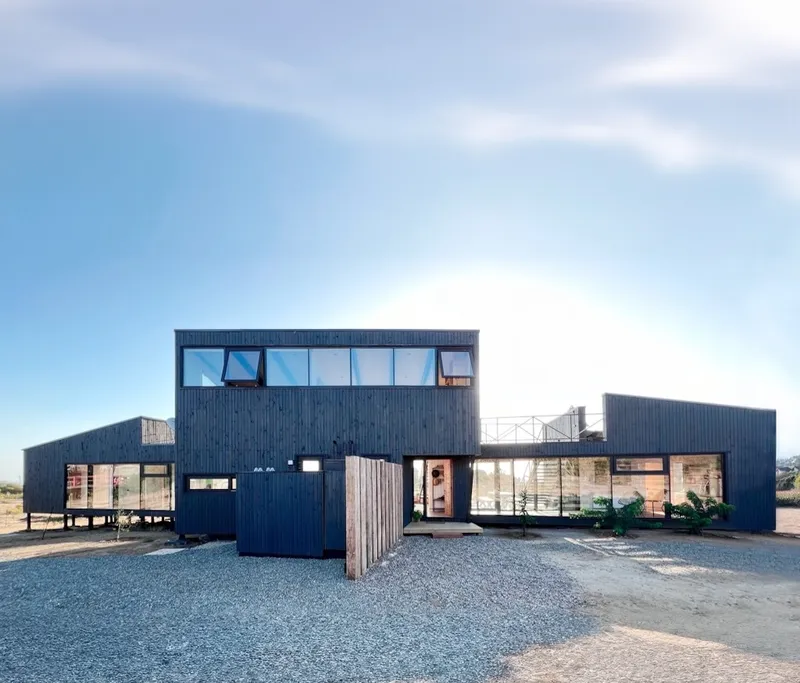
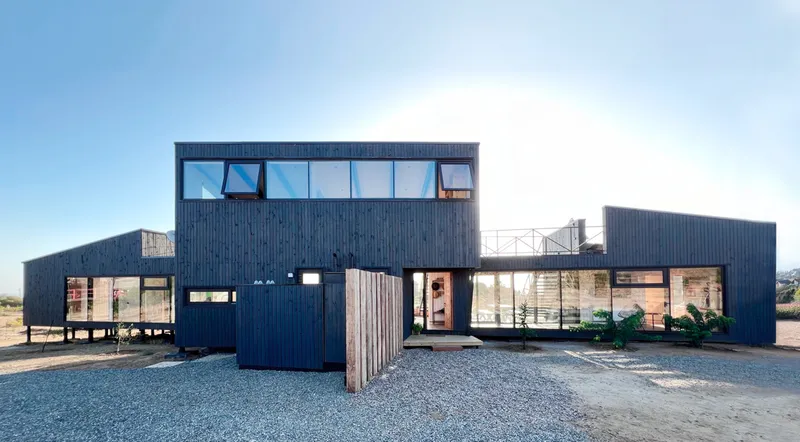
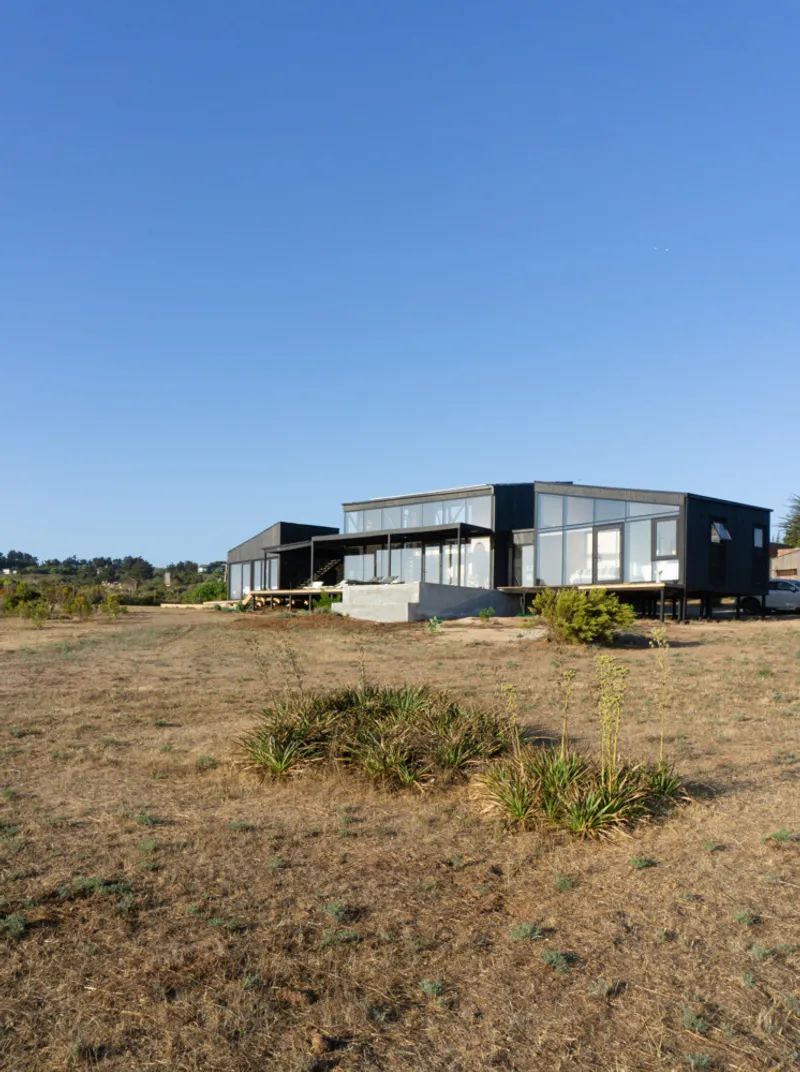
SP House, designed by Karina Duque, is a stunning example of coastal modern architecture that seamlessly integrates with its natural surroundings. Located on Chile’s central coast in Tunquén, the residence is positioned to maximize panoramic ocean views while embracing the rugged beauty of the ravines filled with native vegetation. The design prioritizes natural light, open spaces, and a fluid connection between the indoors and outdoors, creating a home that feels both expansive and intimate.

A Concept Rooted in Nature and Views
The architectural approach for SP House centers on capturing sunlight and framing the surrounding landscape. With an unobstructed view of the Pacific Ocean to the west and lush ravines to the northeast, the house is designed to enhance its relationship with nature. The concept embraces an open spatial organization that encourages social interaction while maintaining privacy where needed.
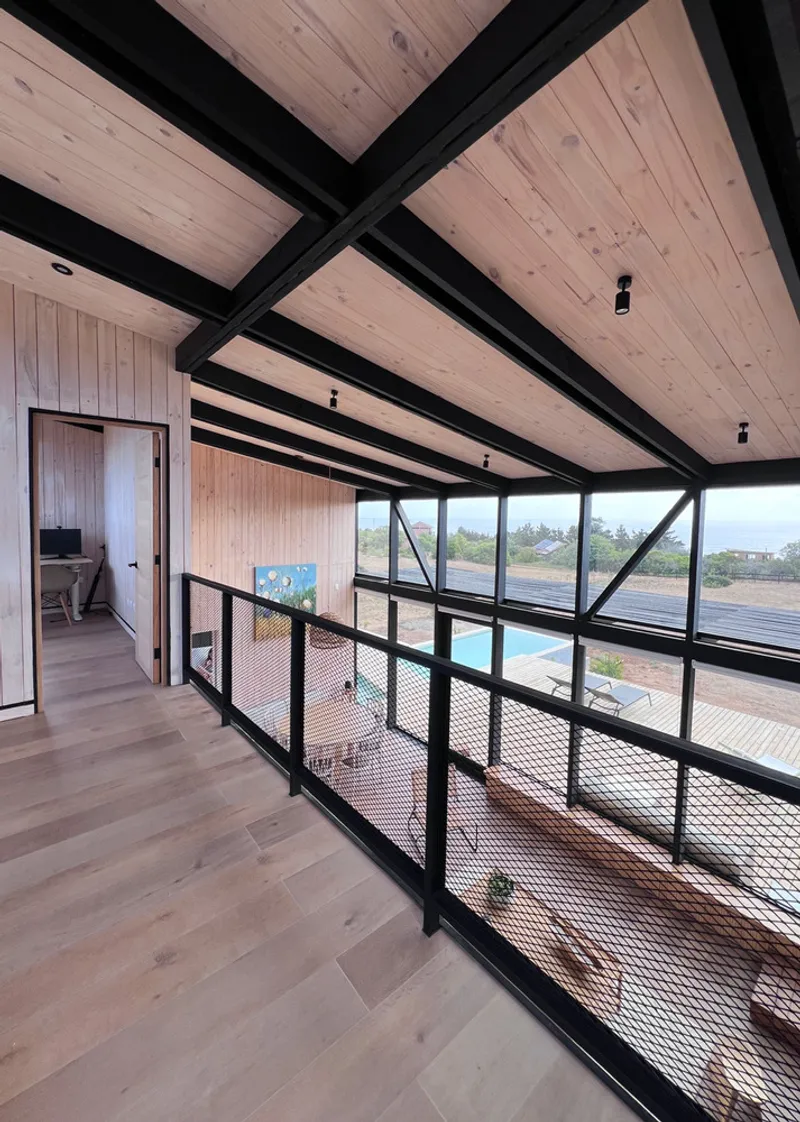
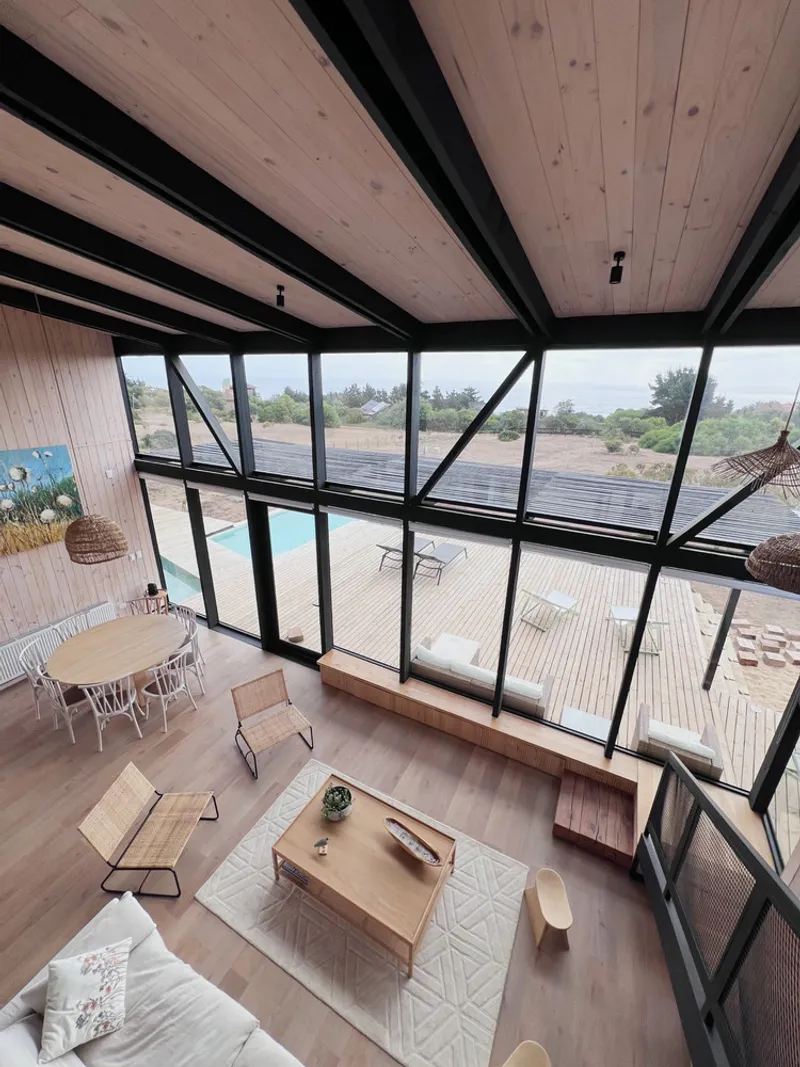
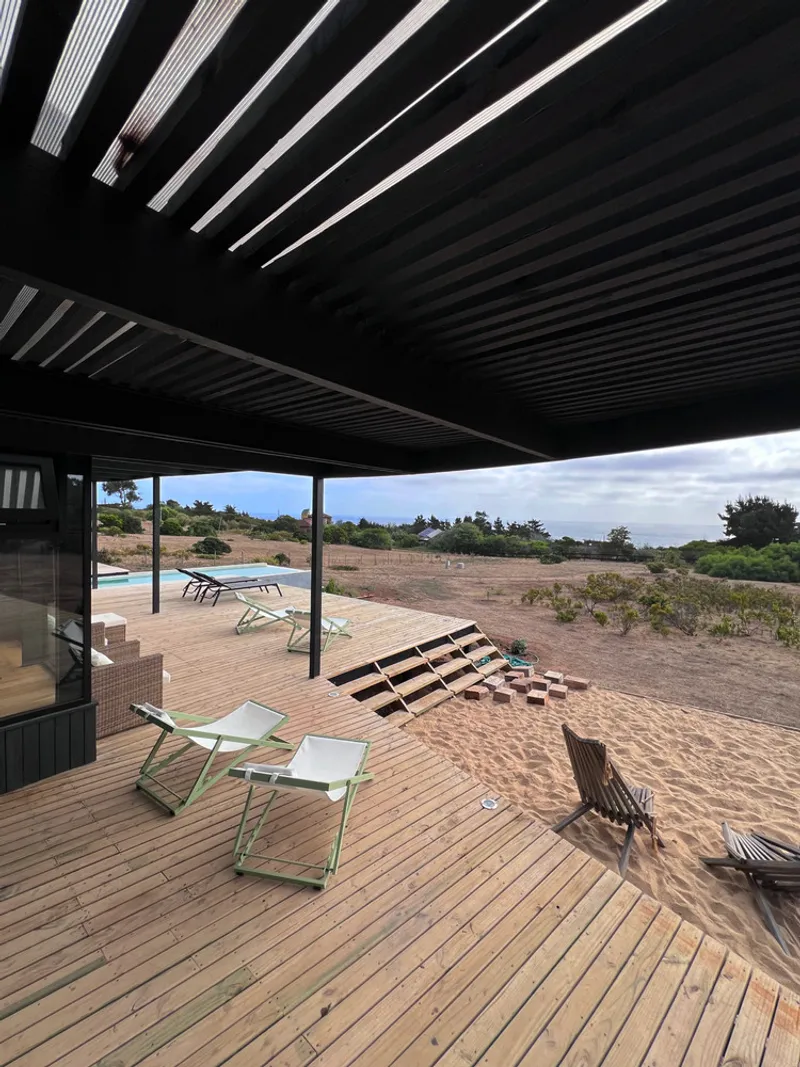
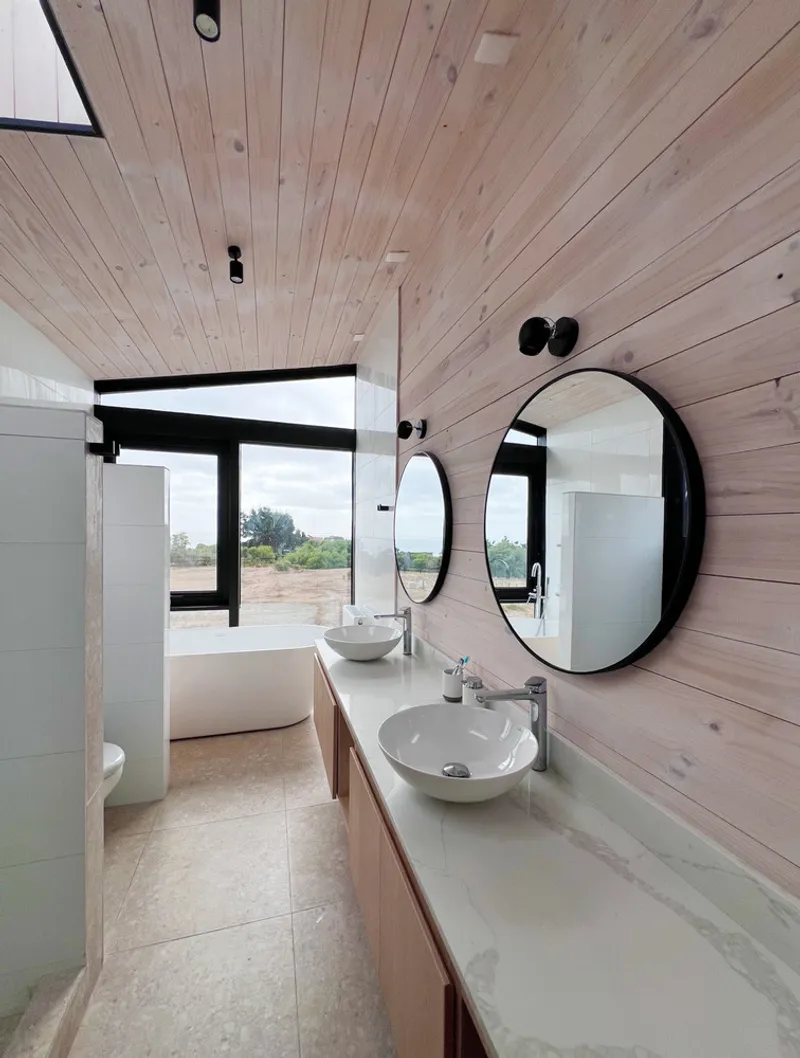
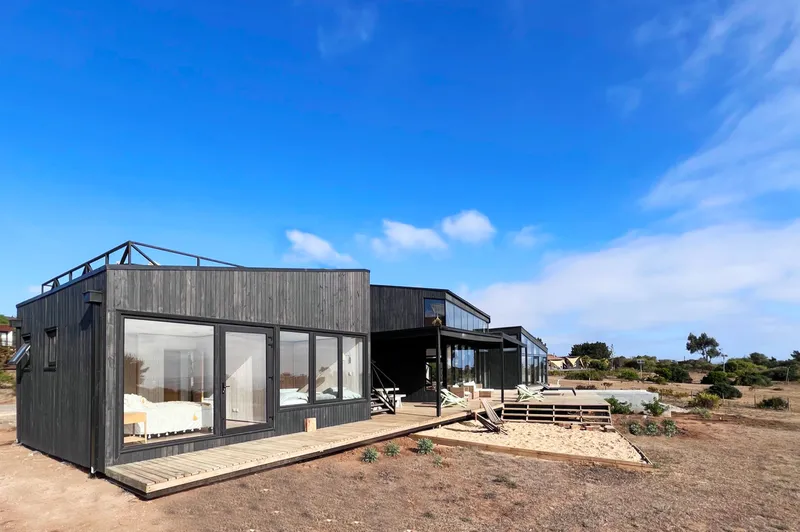
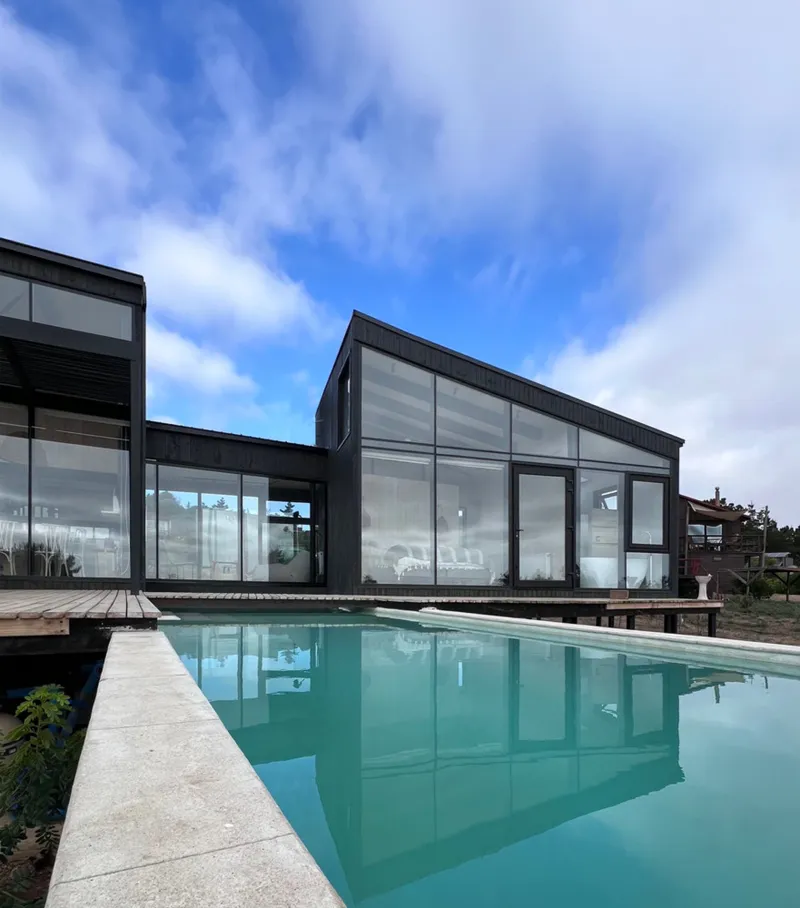
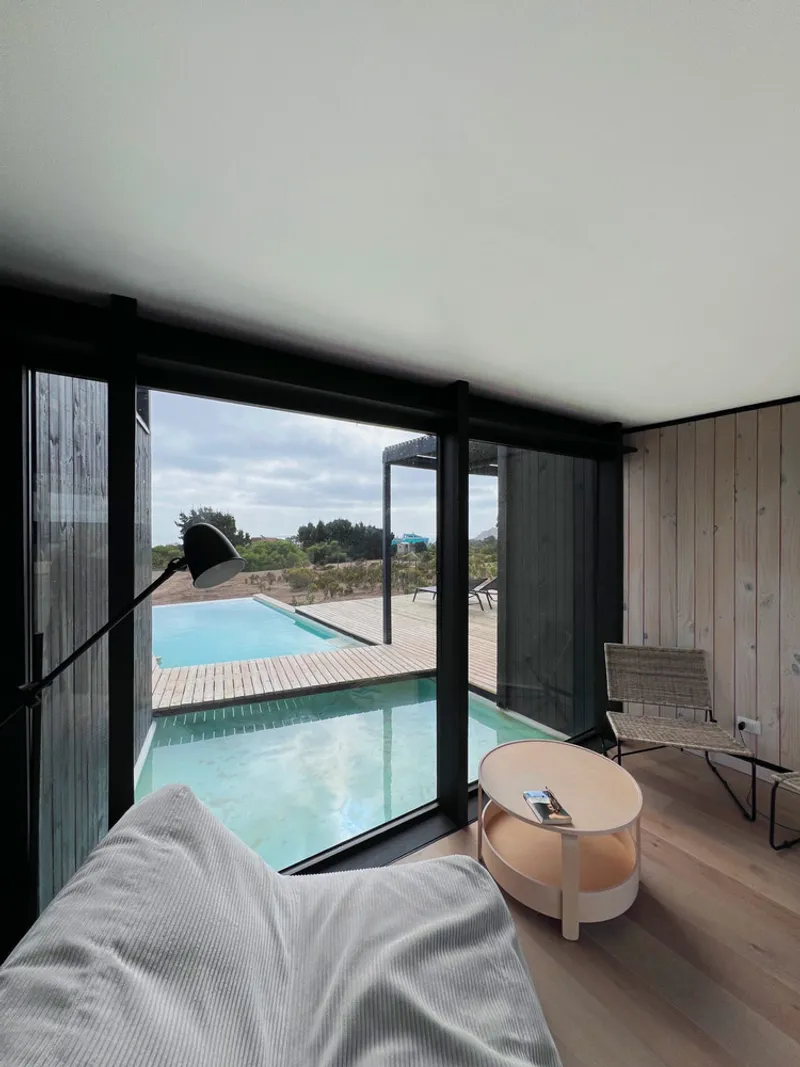
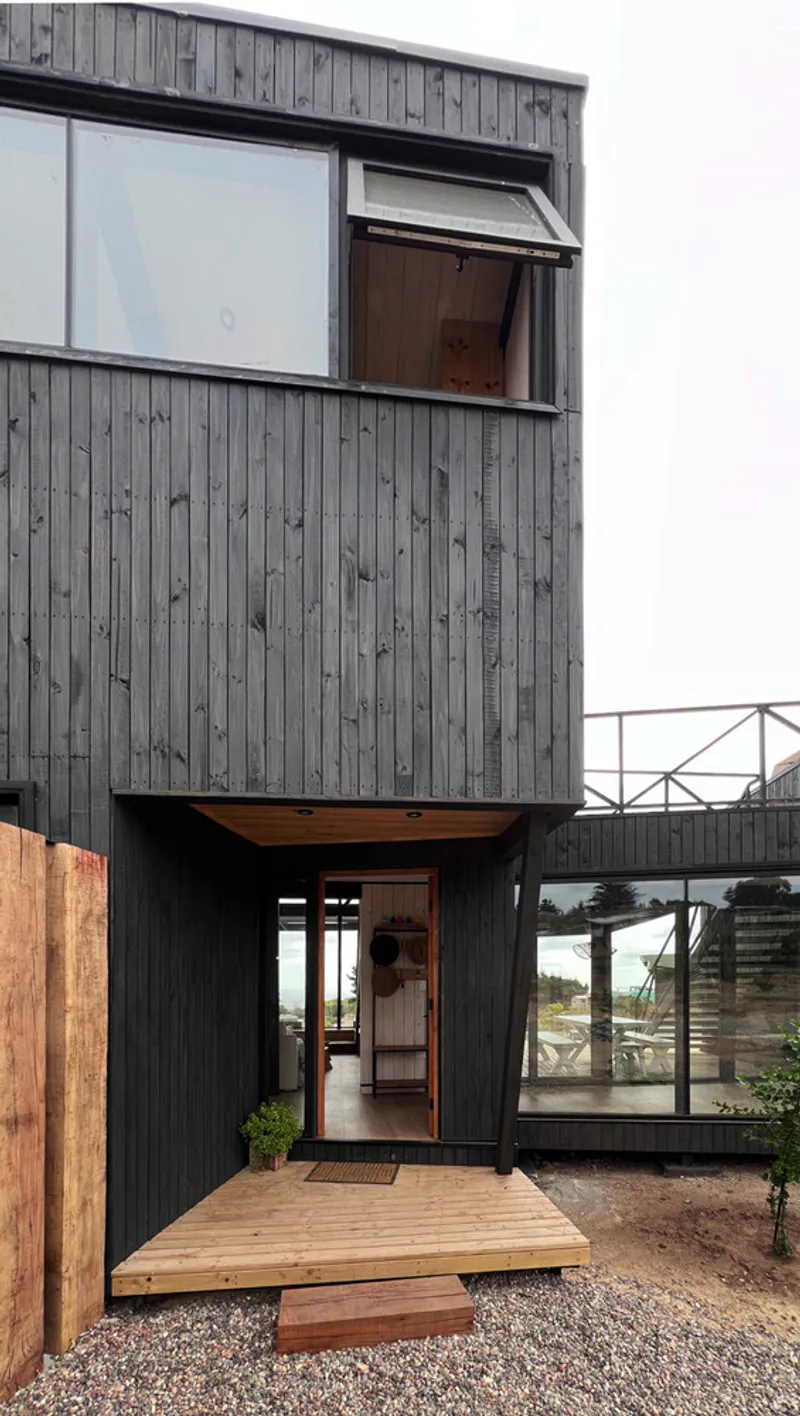
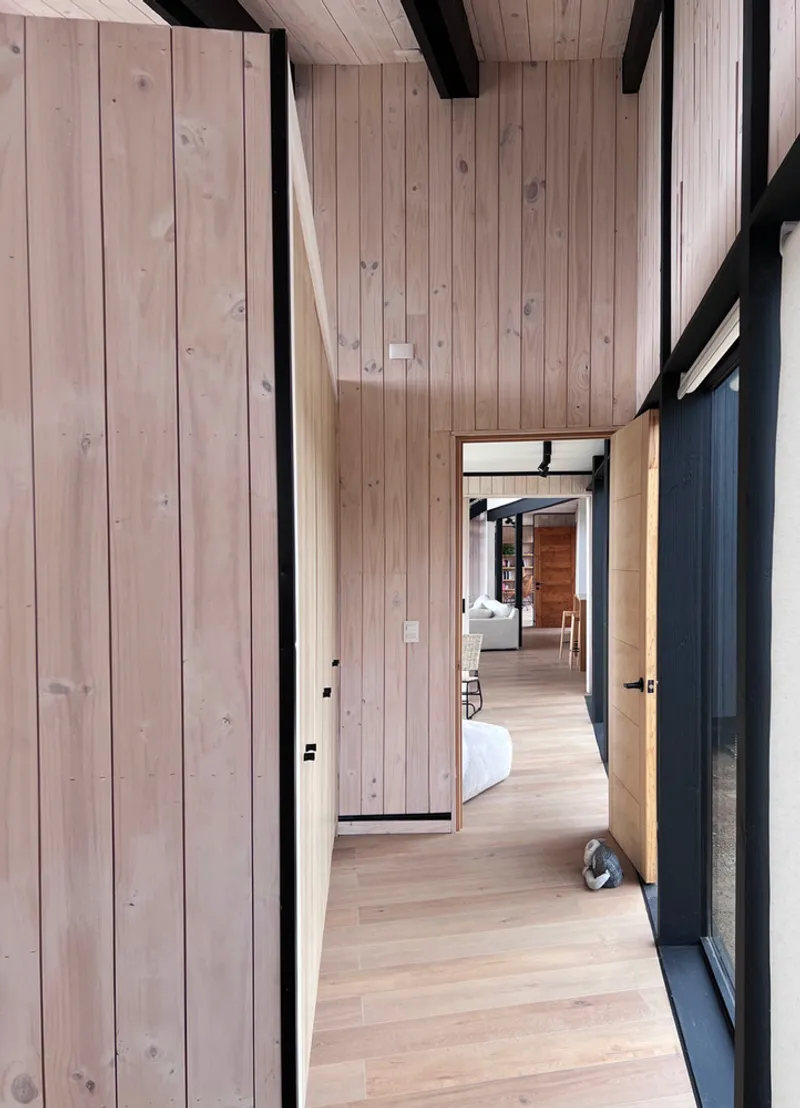
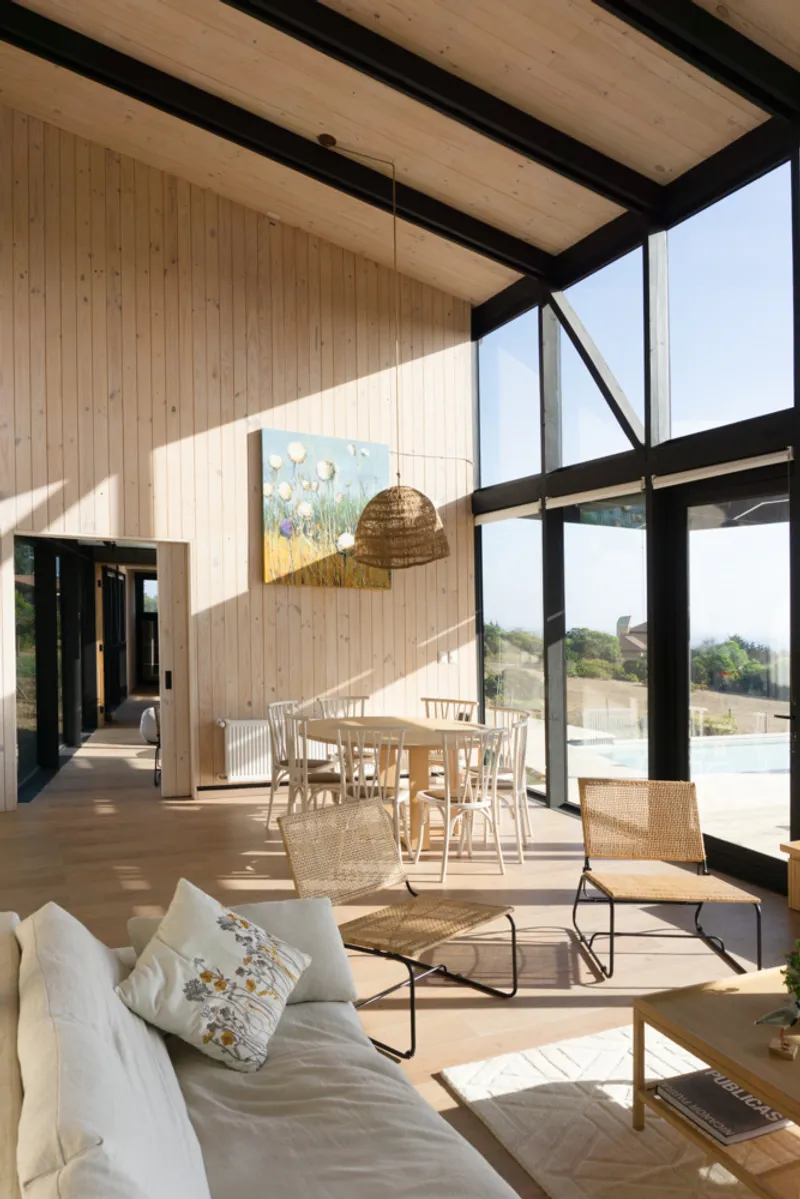
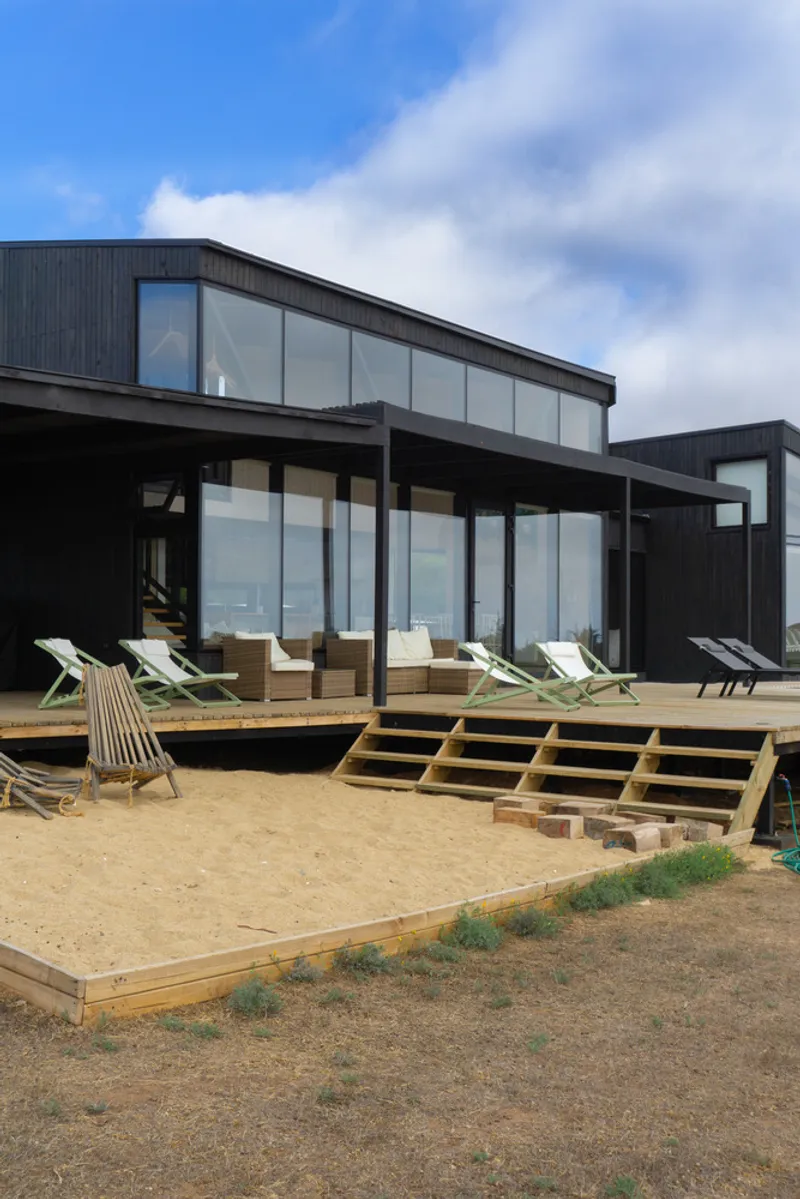
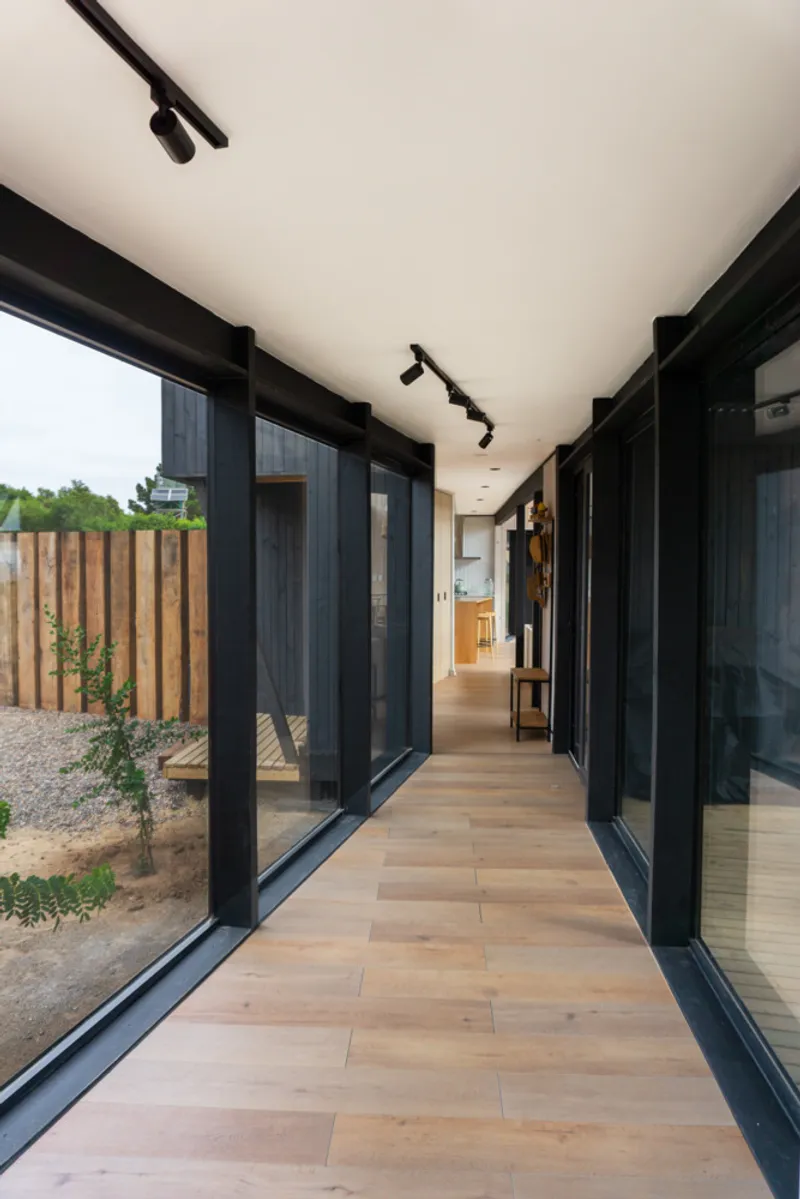
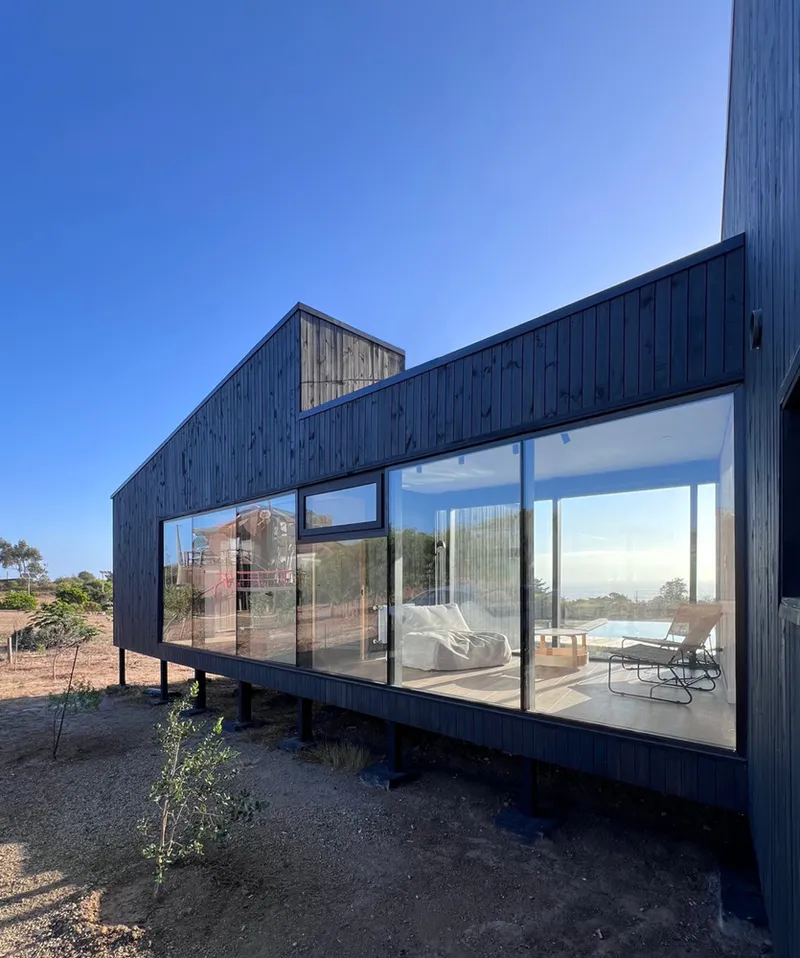
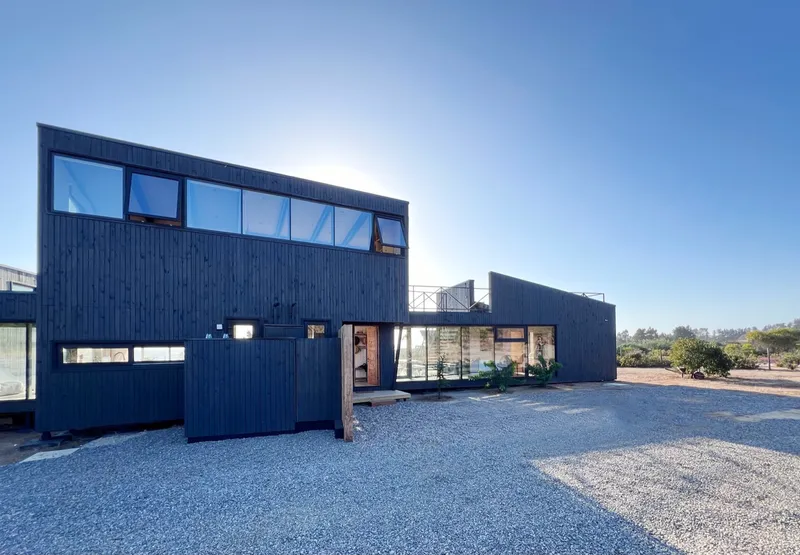
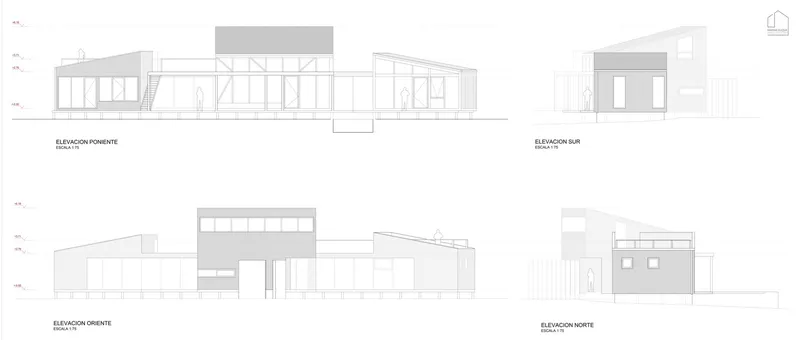
The residence is composed of three independent volumes, each strategically rotated to optimize sightlines and create distinct outdoor spaces. A central circulation axis connects these volumes, allowing a seamless flow between indoor and outdoor environments. Floor-to-ceiling windows ensure that natural light permeates the interiors throughout the day while establishing visual continuity between different areas of the house.

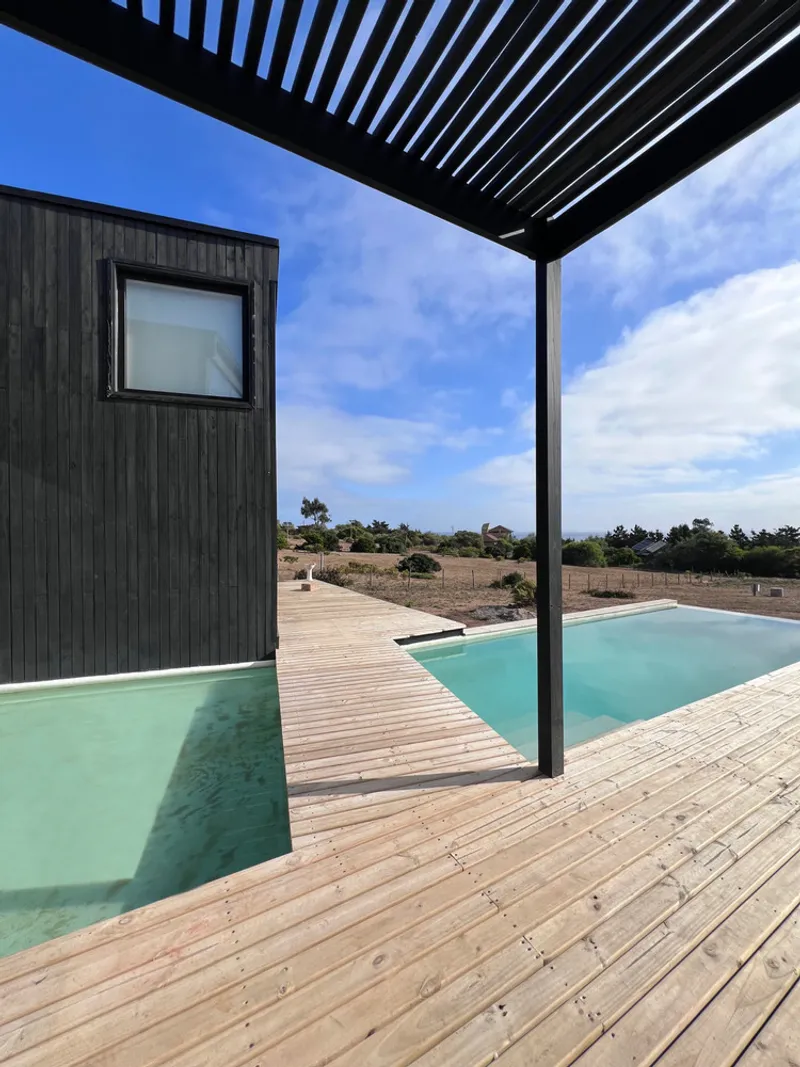
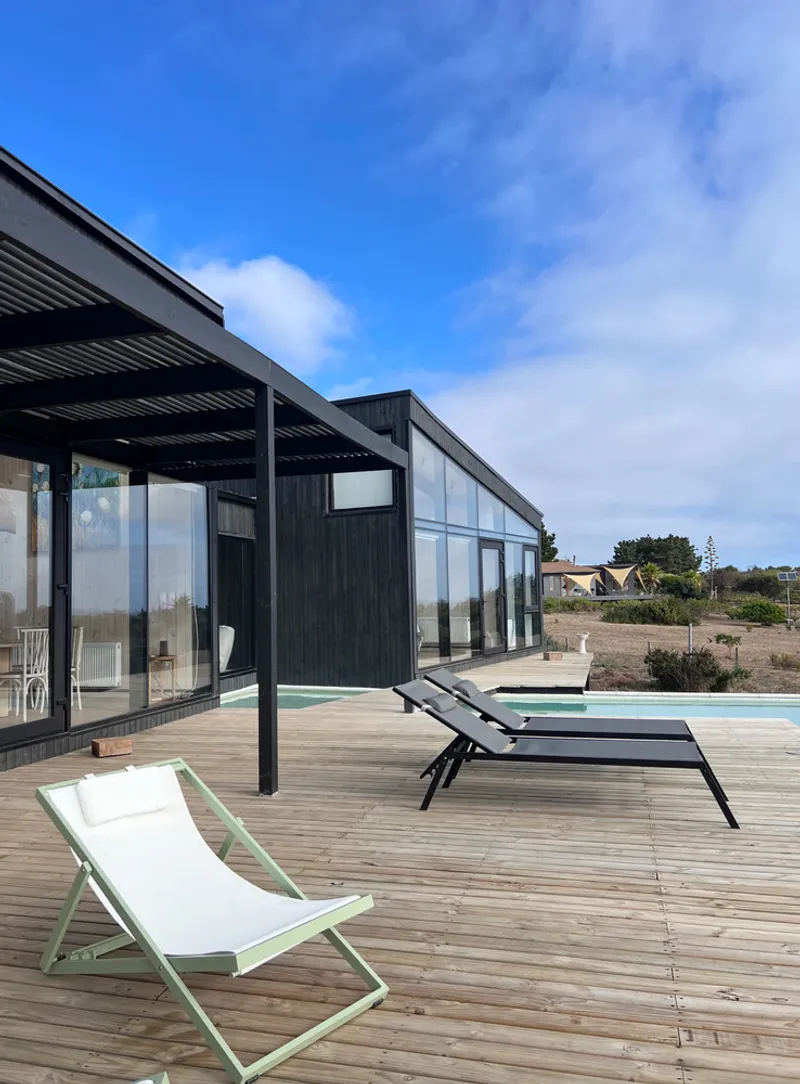
Spatial Organization and Functionality
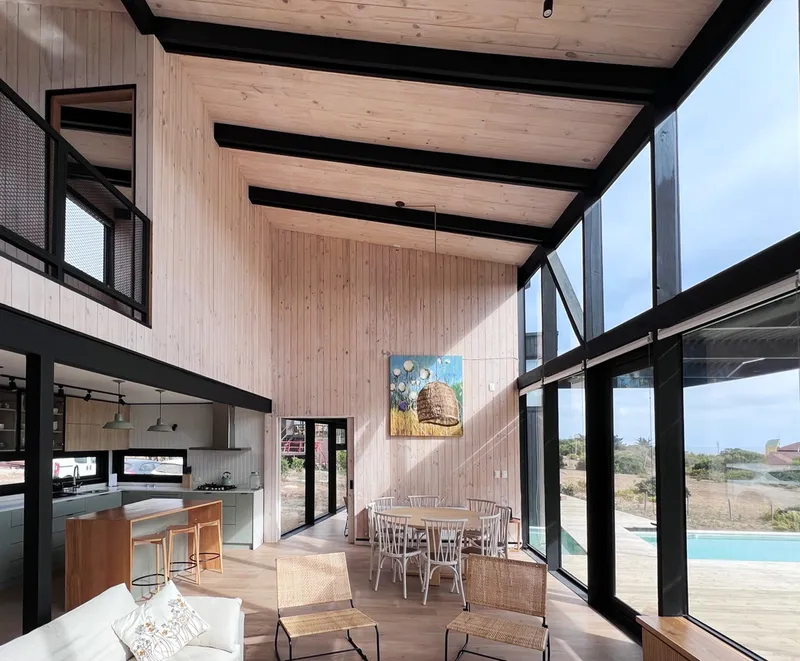
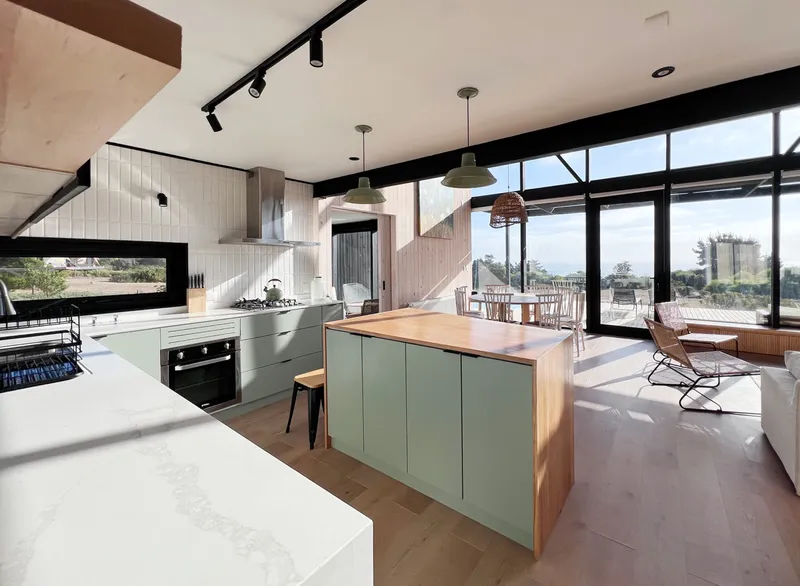
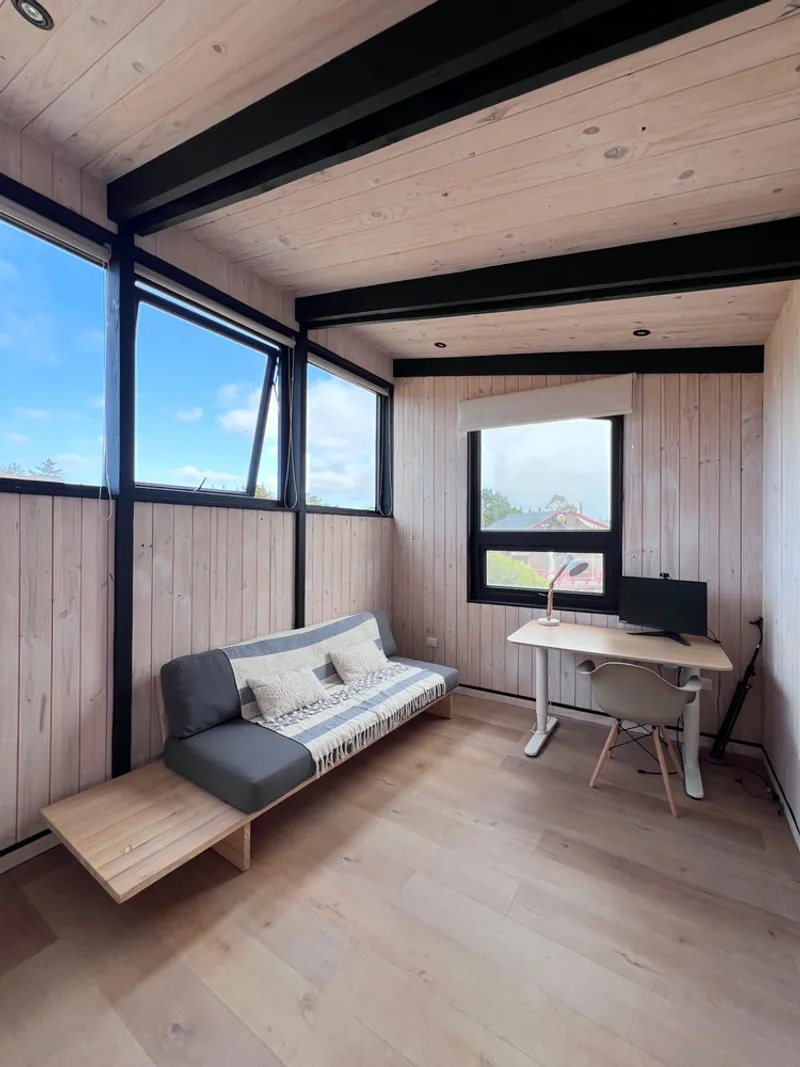
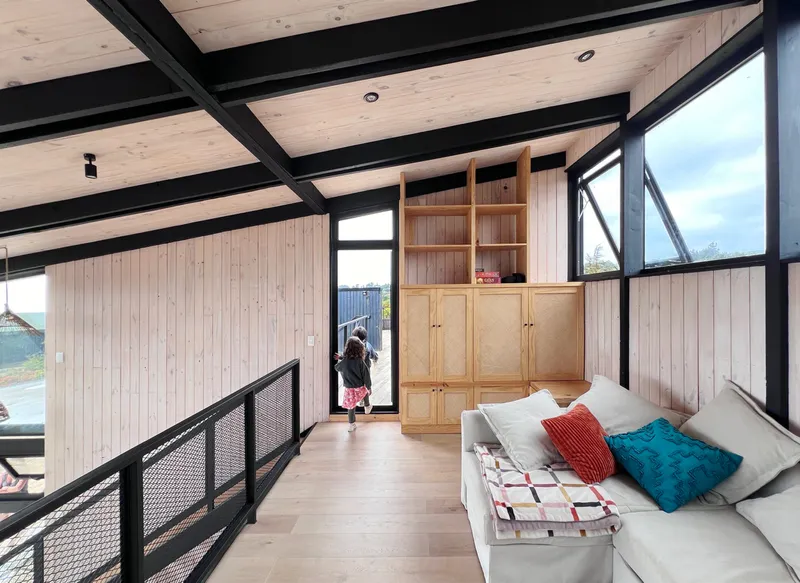
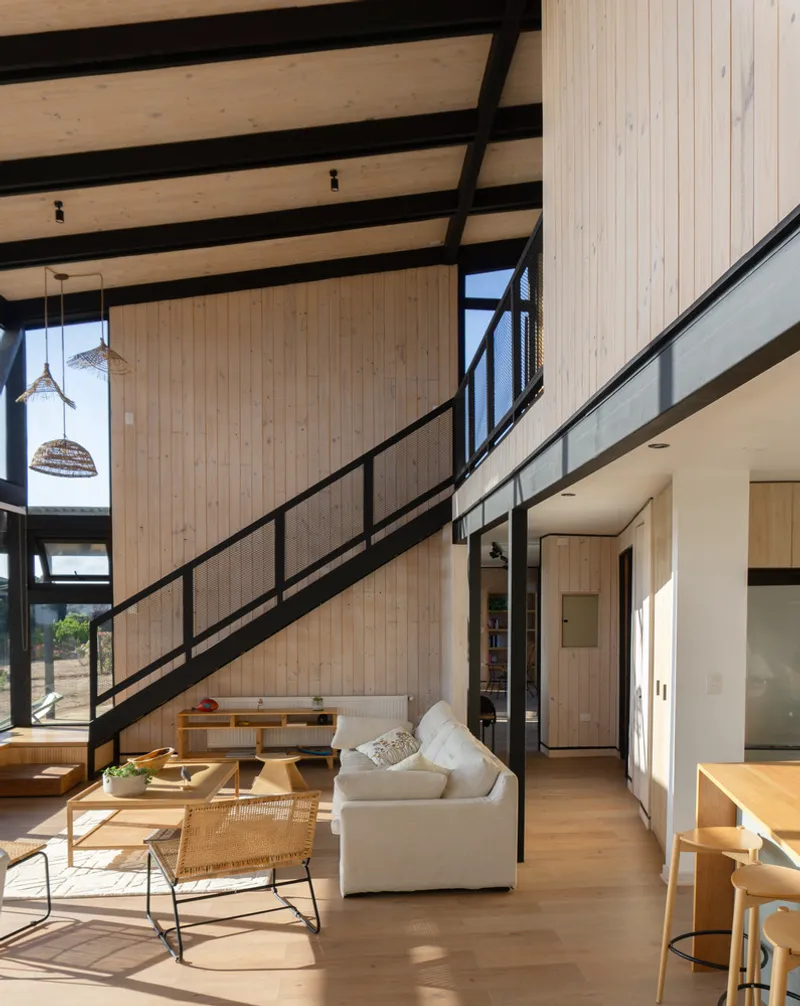
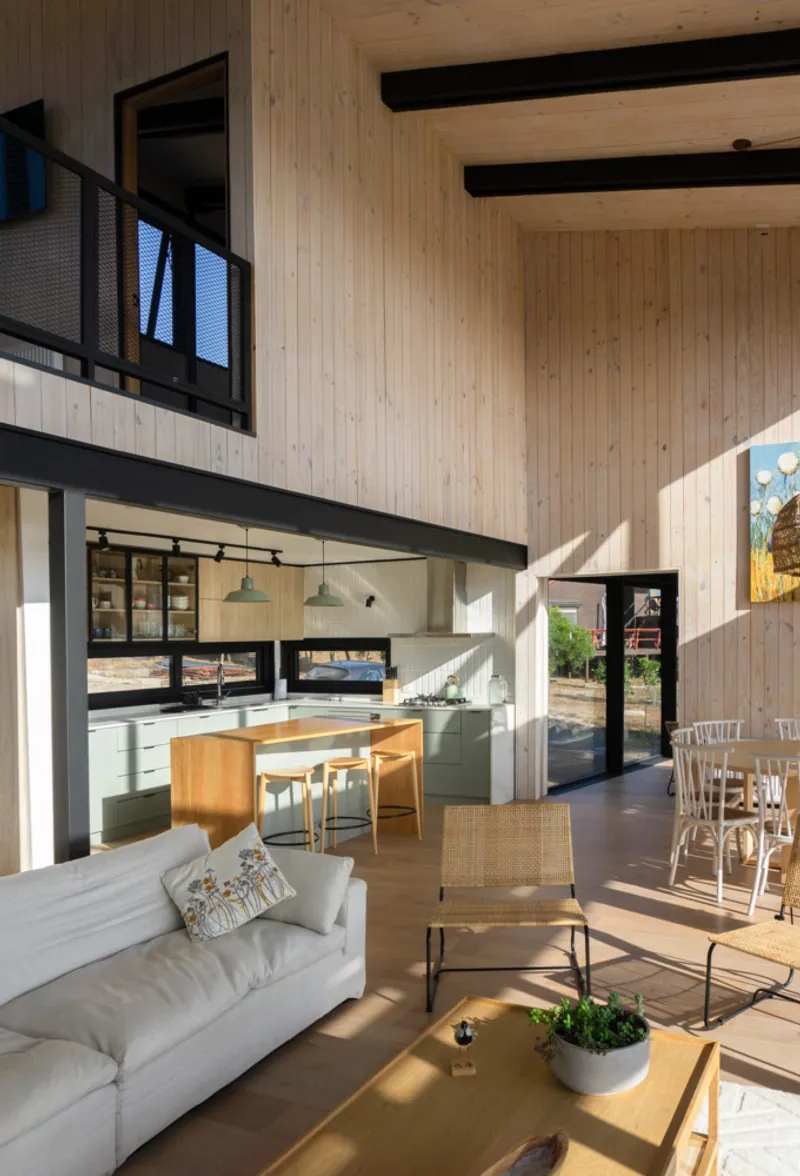
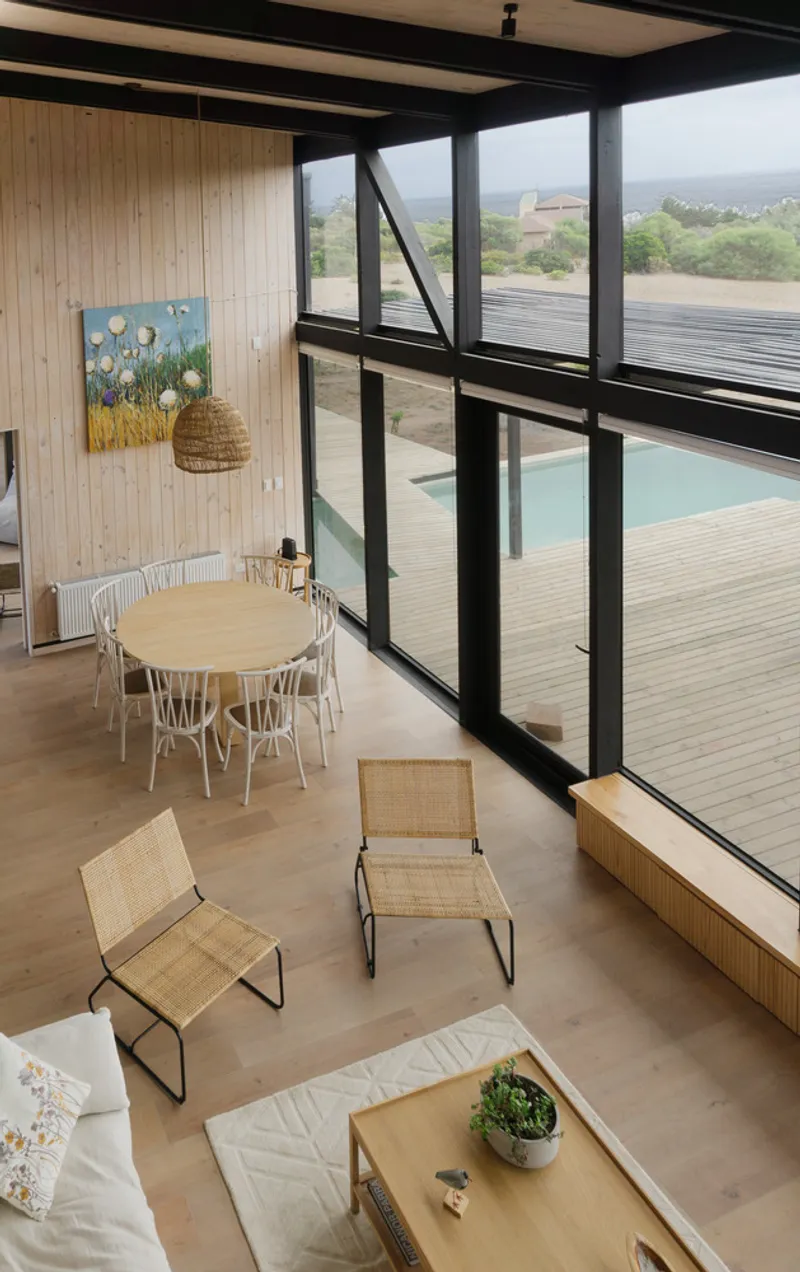
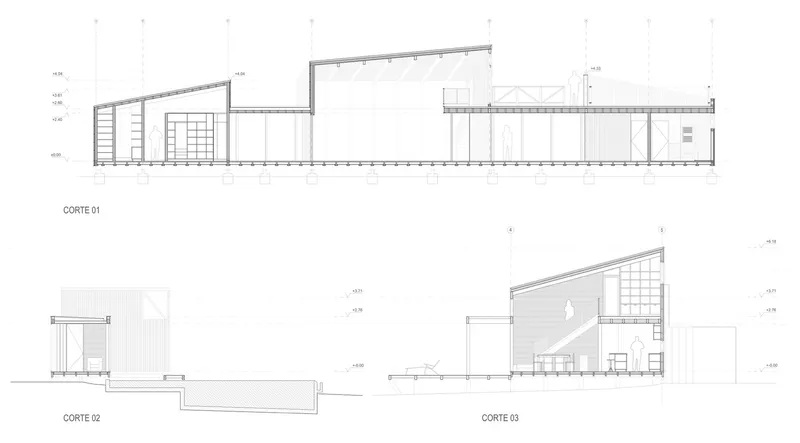
Each volume of SP House serves a distinct function, creating a balance between private and communal spaces. The two end volumes house private living areas, ensuring seclusion and tranquility for residents. The central volume, which is the only one with two levels, serves as the heart of the home, containing the kitchen, dining, and living spaces. Above these shared areas, a second-floor playroom overlooks the living room, maintaining a sense of connectivity while offering a retreat for relaxation and recreation.
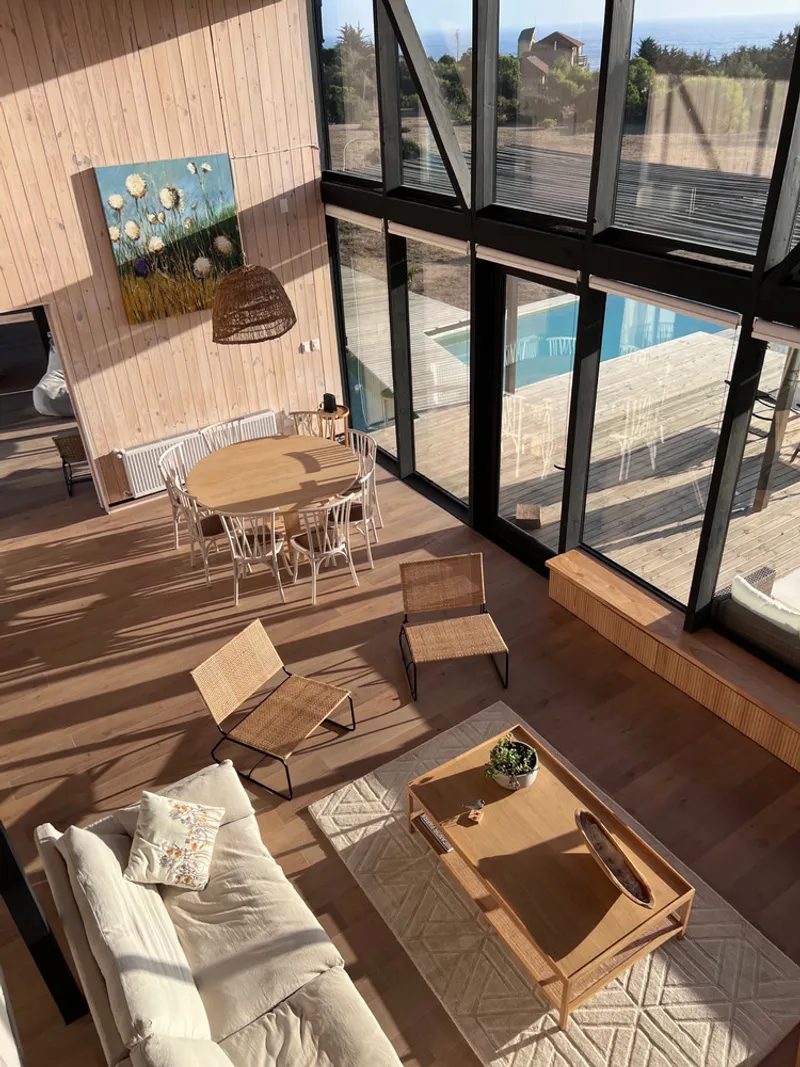
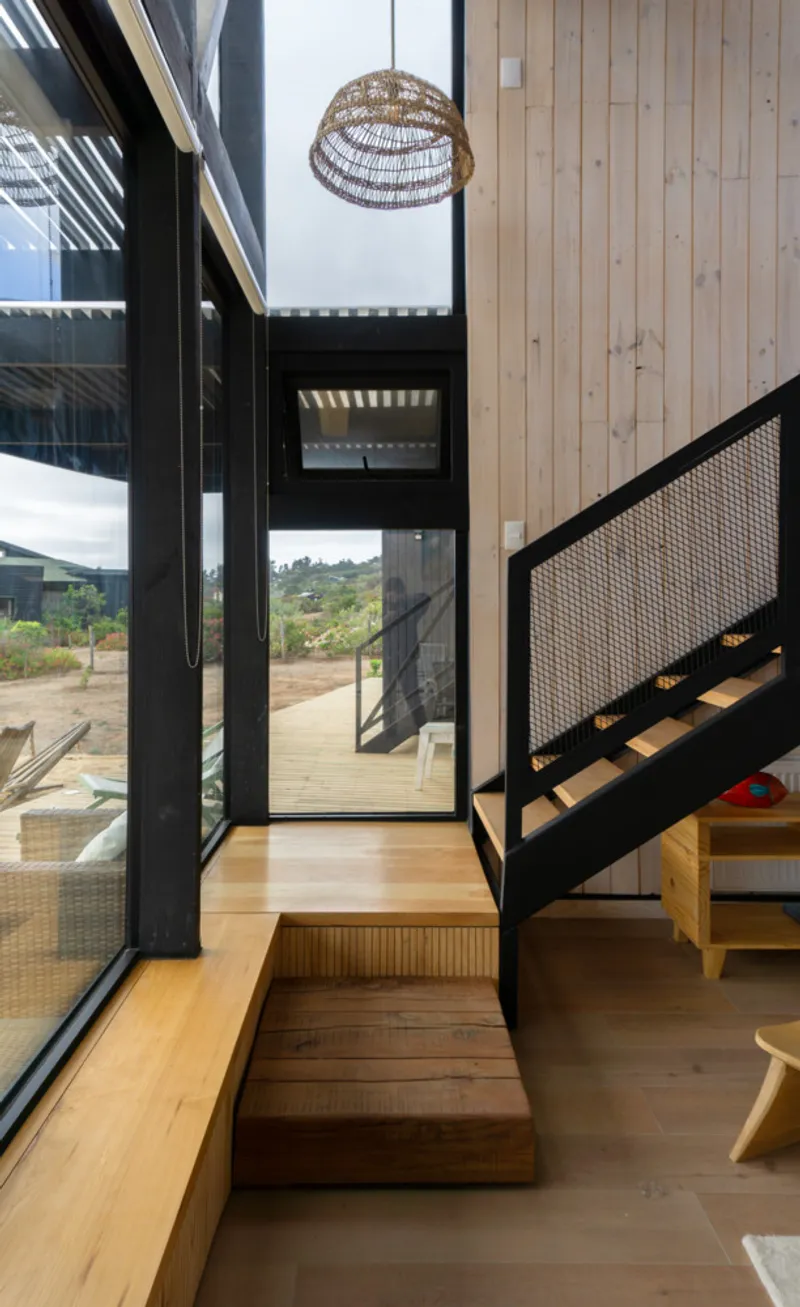
A high window on the eastern facade of the central volume allows the morning light to flood common spaces, enhancing the home’s energy efficiency and natural illumination. The sloped roof and structural beams further guide light and create dynamic spatial experiences, reinforcing the openness of the house.
Seamless Indoor-Outdoor Integration
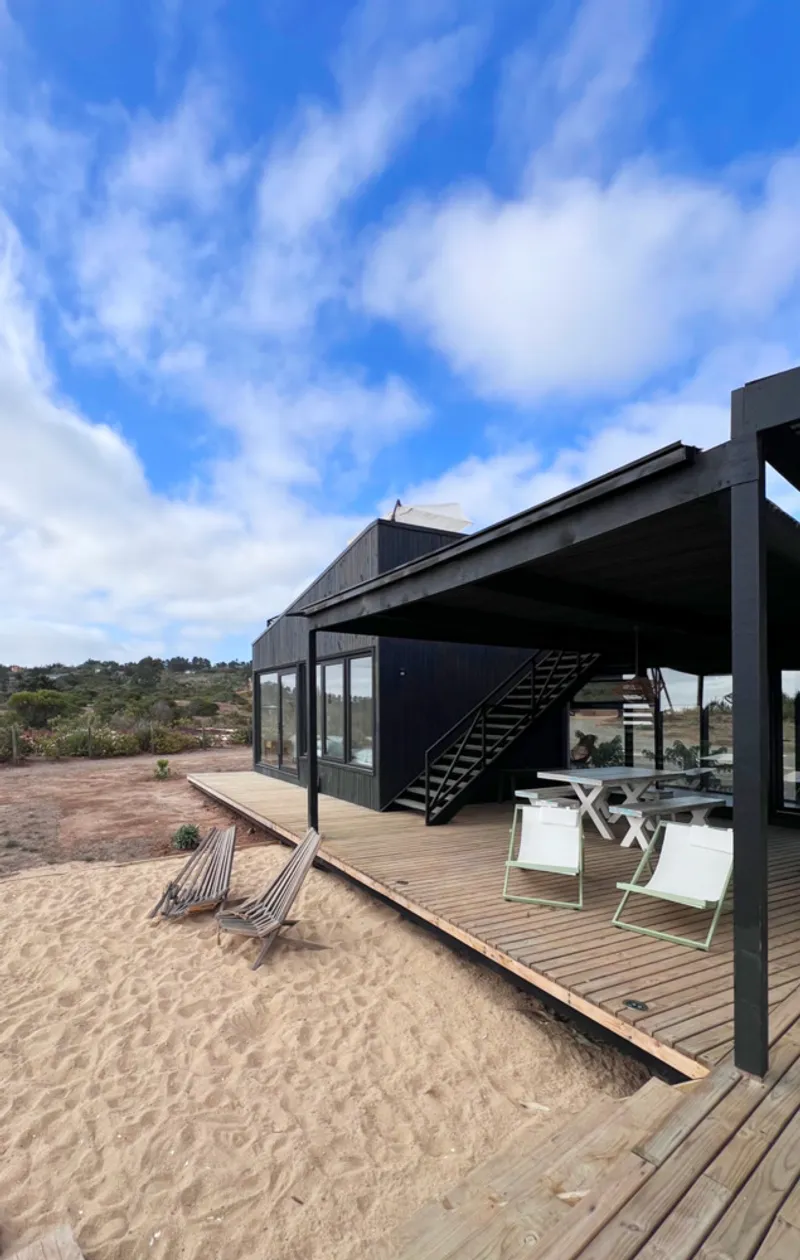
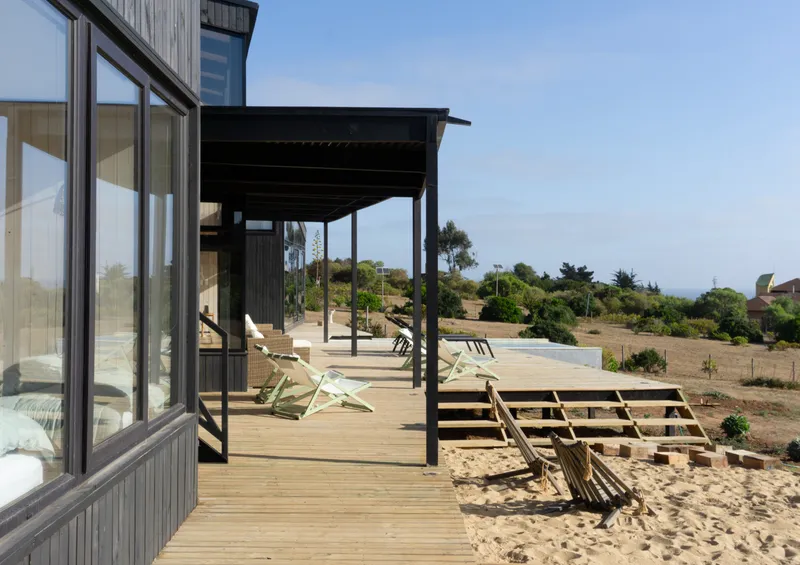
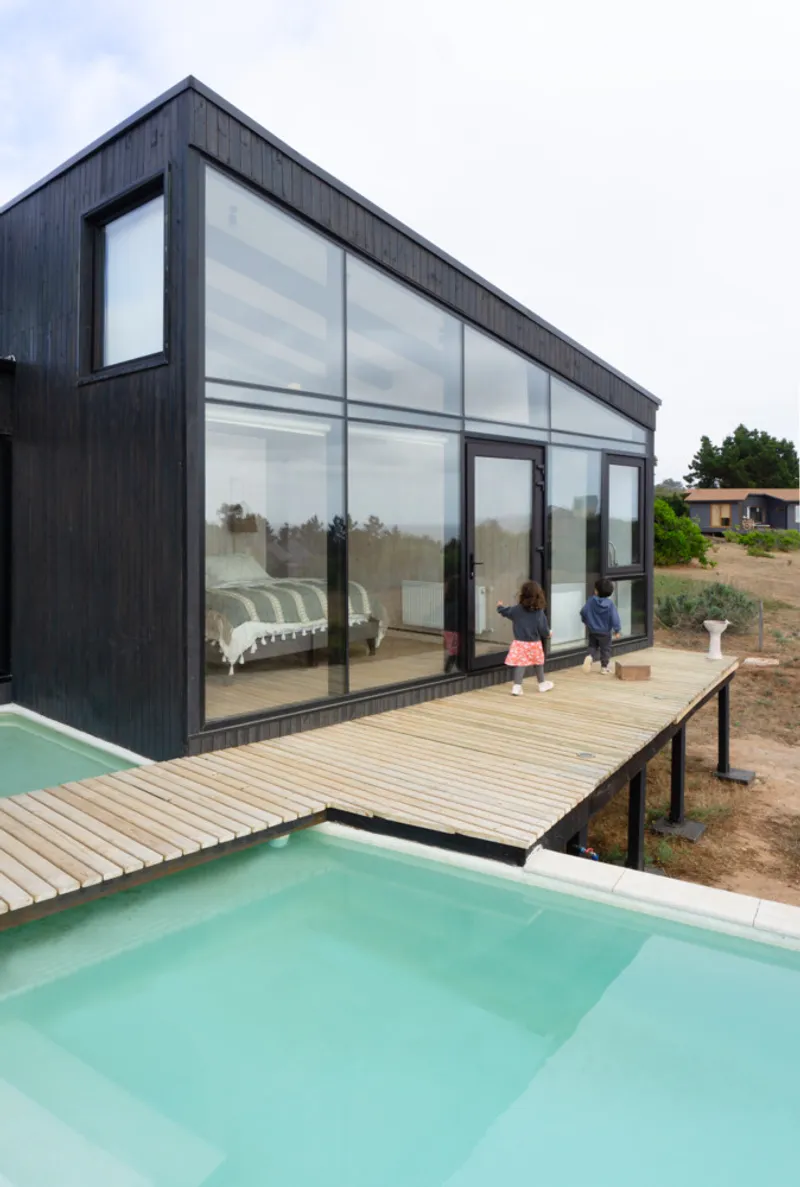
Coastal modern architecture emphasizes fluid transitions between built and natural environments, a principle fully embodied in SP House. The articulation points between the three volumes generate inviting outdoor spaces, including a covered terrace protected from strong coastal winds. A reflecting pool, separated from the main swimming pool by a bridge, enhances the sensory experience, directing attention toward the Pacific horizon.
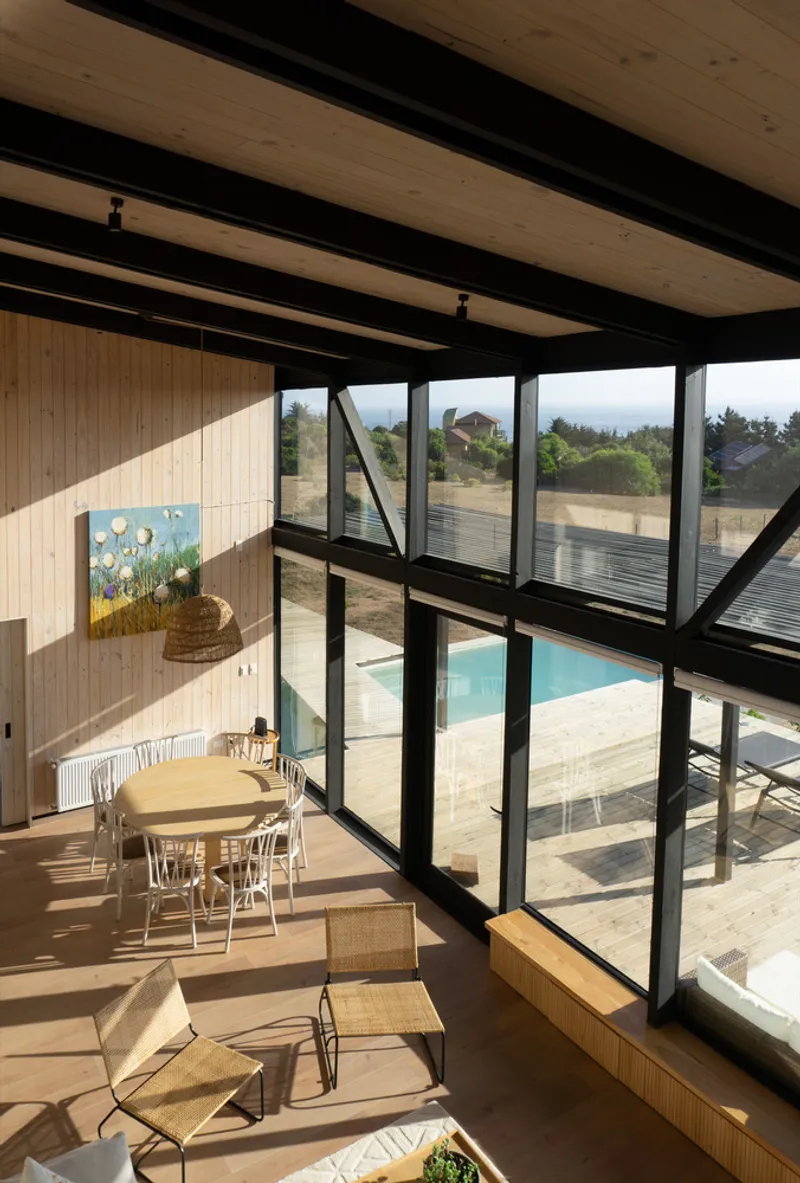
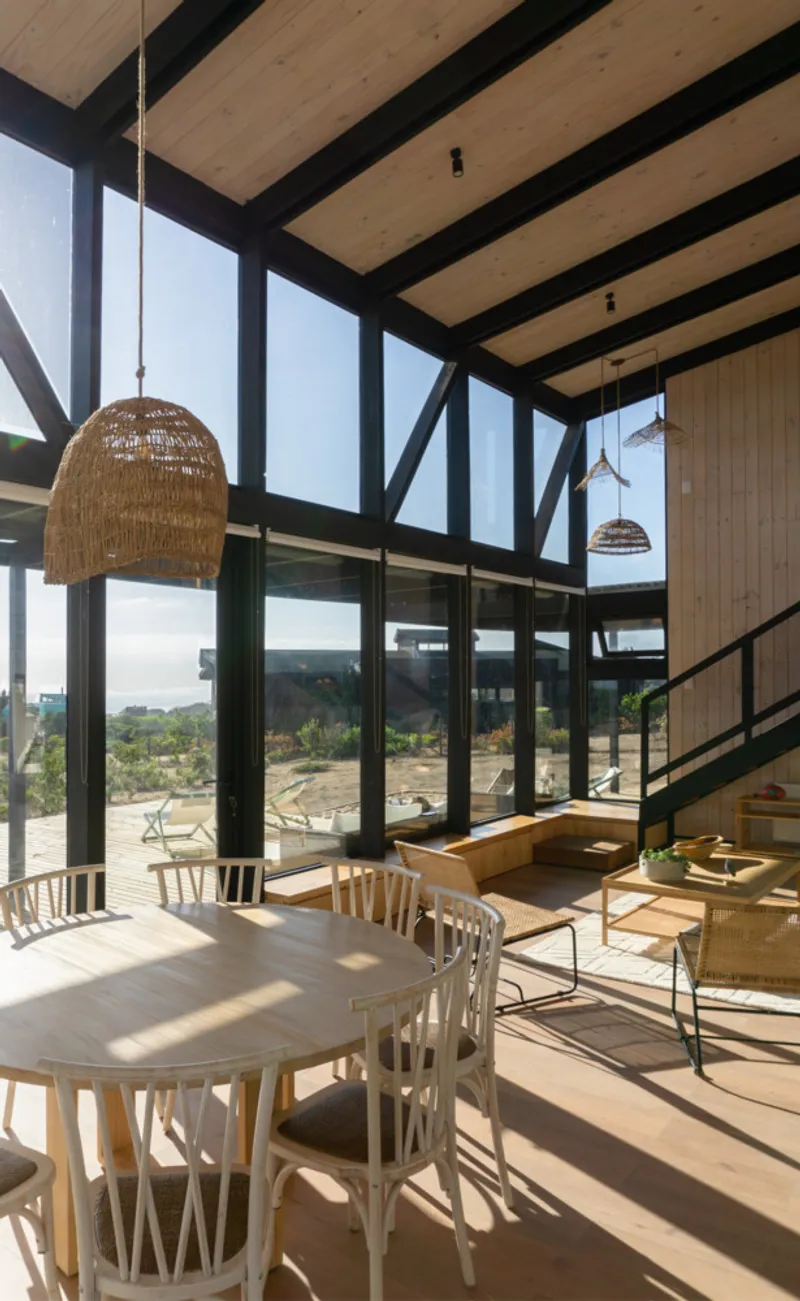
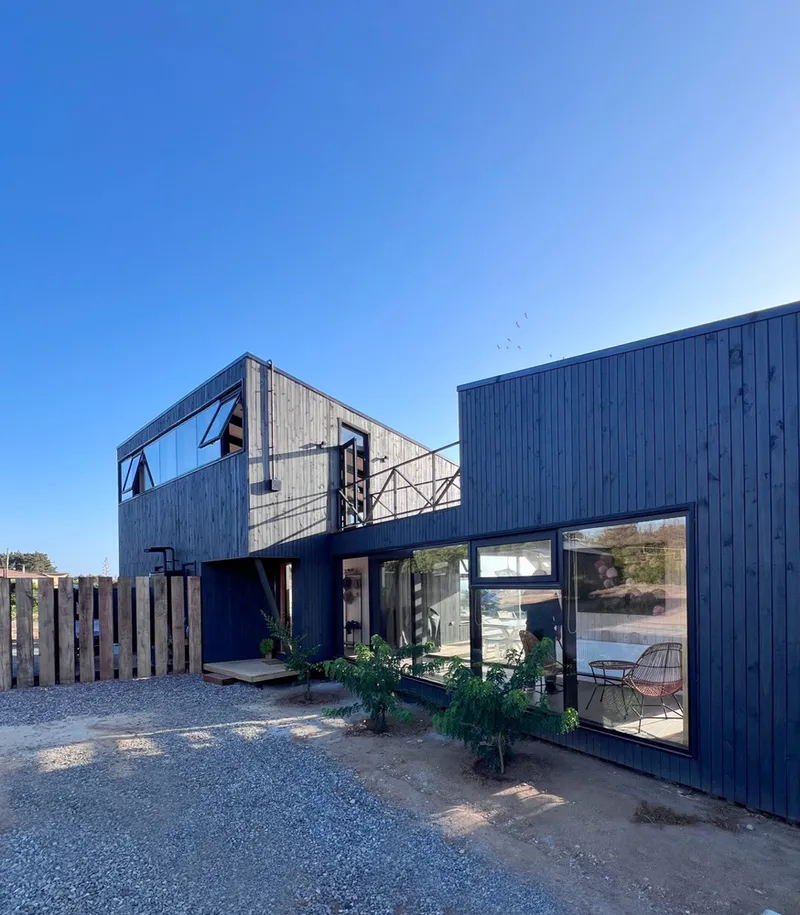
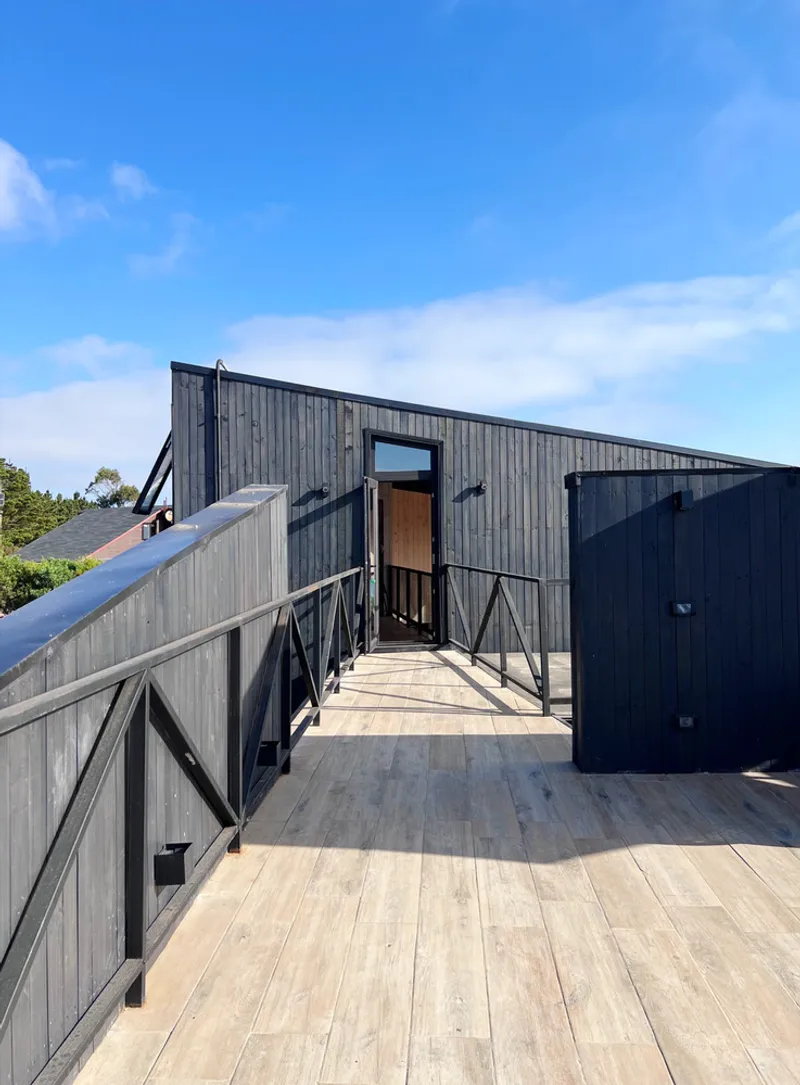
The main living space extends onto a spacious terrace that serves as a communal outdoor area, ideal for enjoying the ocean breeze and uninterrupted sea views. In contrast, a rooftop terrace above the secondary bedrooms offers a sheltered viewpoint toward the ravine’s sclerophyllous vegetation, providing a more intimate outdoor retreat.
Materials and Sustainability
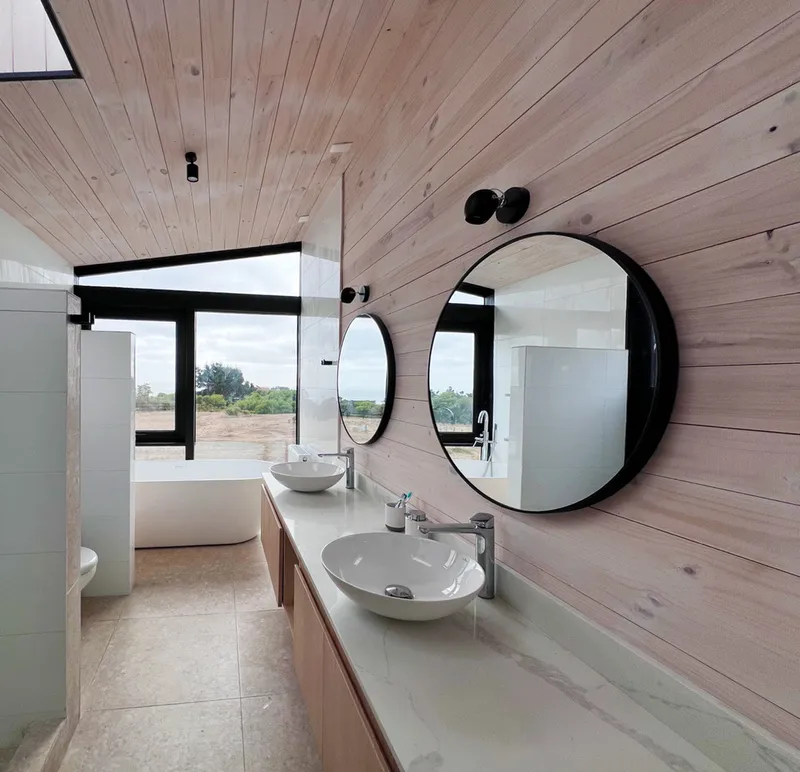
The design philosophy of SP House prioritizes sustainability, using materials that complement the coastal landscape while requiring minimal maintenance. Natural wood and steel form the primary structural elements, lending warmth and resilience to the home. Large glass openings not only frame picturesque views but also reduce the need for artificial lighting, promoting energy efficiency.
By carefully considering the climate and wind patterns of the region, the house’s orientation and design ensure passive cooling and ventilation, reducing reliance on mechanical systems. These thoughtful decisions make SP House a model of environmentally conscious coastal living.

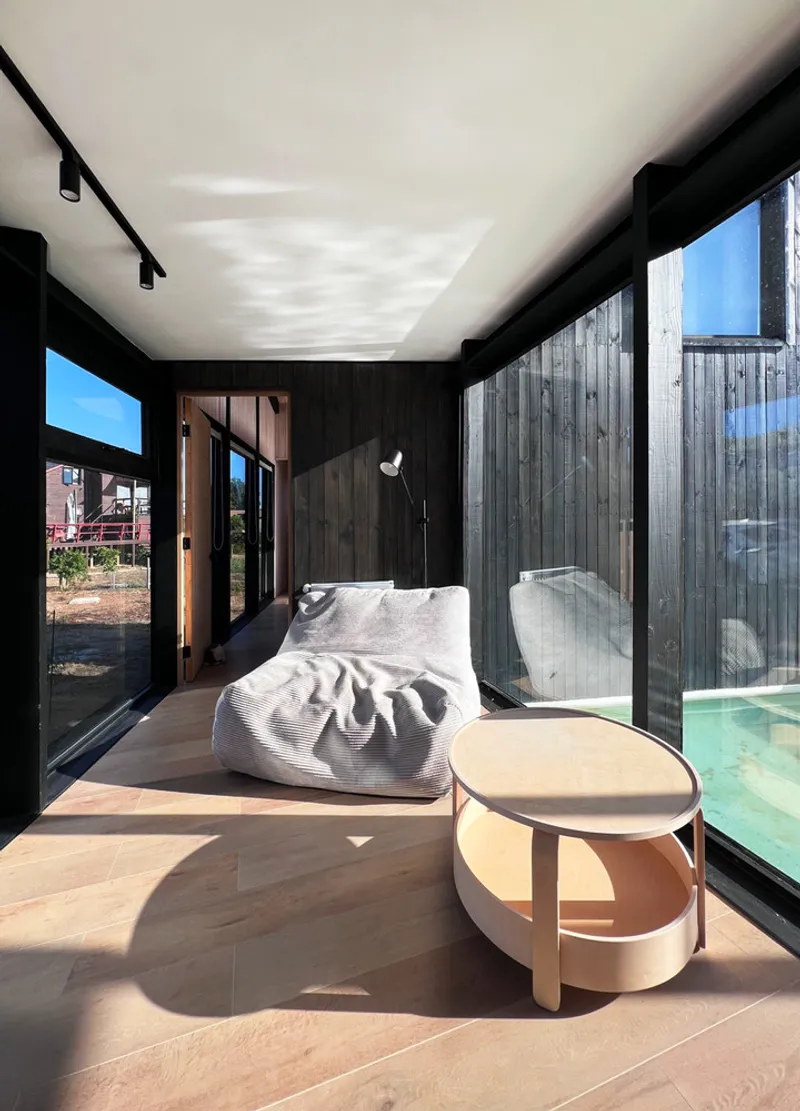
A Refined Expression of Coastal Modern Architecture
SP House by Karina Duque exemplifies the principles of coastal modern architecture, where simplicity, openness, and natural integration define the living experience. Through its careful spatial planning, sustainable material choices, and seamless connection to its surroundings, the home stands as a testament to how contemporary design can enhance, rather than overpower, the beauty of the natural environment.


Popular Articles
Popular articles from the community


S-AR Builds a Five-Square-Meter Concrete Chapel in a Mexican Garden from Thin Walls and Old Bricks
In Santiago, Nuevo León, a tunnel of 8 cm concrete walls tilts down to a steel cross, floored with crushed brick from the chapel it replaced.

Madras Spaces Turns a Tight Rural Plot near Tiruchirappalli into an Inward-Looking Courtyard House
A 92 m² farmhouse in V. Thuraiyur, Tamil Nadu, built from load-bearing brick and reclaimed tile, that hides its openness behind a perforated wall.

Minqa Atelier Steps a 53 m² Teak Refuge Down a Forested Slope in Ecuador's Chocó
In Pedro Vicente Maldonado, Ecuador, stepped teak platforms on river-stone gabions let a small forest house follow the hillside instead of flattening it.


Vietnam S: Rhymes of the River Built From Upturned Boat Hulls and a Shared Rooftop
Timber-ribbed, hull-shaped pavilions gather around a water courtyard, turning a street market into an authentic, dynamic place to chill out.

Similar Reads
You might also enjoy these articles

Hodi-Mandai Geram
Project Function: Preservation and revitalization of the Intangible heritage and socio-spatial identity of the Hodi by Housing, Cultural Memory Center, Sacred Grove, landscape, local tourism economy

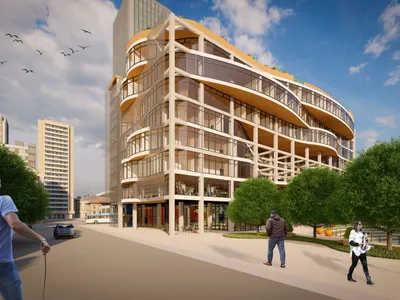
Olio Towers: A Mid-Rise for Performers That Fuses Housing, Rehearsal, and Stage
Located blocks from Houston's Theater District, this modular tower stacks living units around a central performance atrium.
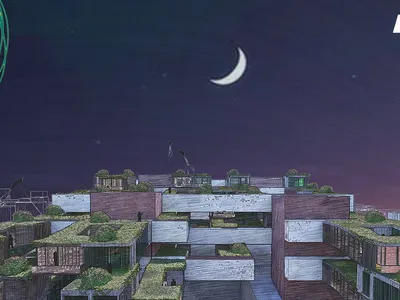
Oasis: Modular Green Housing Carved into Dhaka's Urban Fabric
A shortlisted Plugin Housing entry reclaims unauthorized settlements in Dhaka with stepped concrete volumes, green roofs, and ventilation-driven design.

Black Hole: A Floating Megastructure for the Post-Physical Era
Emiliano Mazzarotto envisions a spherical, self-scaling arena where e-sports, digital hotels, and holographic stadiums replace traditional public space.

Explore Housing Competitions
Discover active competitions in this discipline

Submit a world, not a render

Studio work deserves a jury

The International Standard for Design Portfolios

The Global Benchmark for Architecture Dissertation Awards
Comments (0)
Please login or sign up to add comments
No comments yet. Be the first to comment!